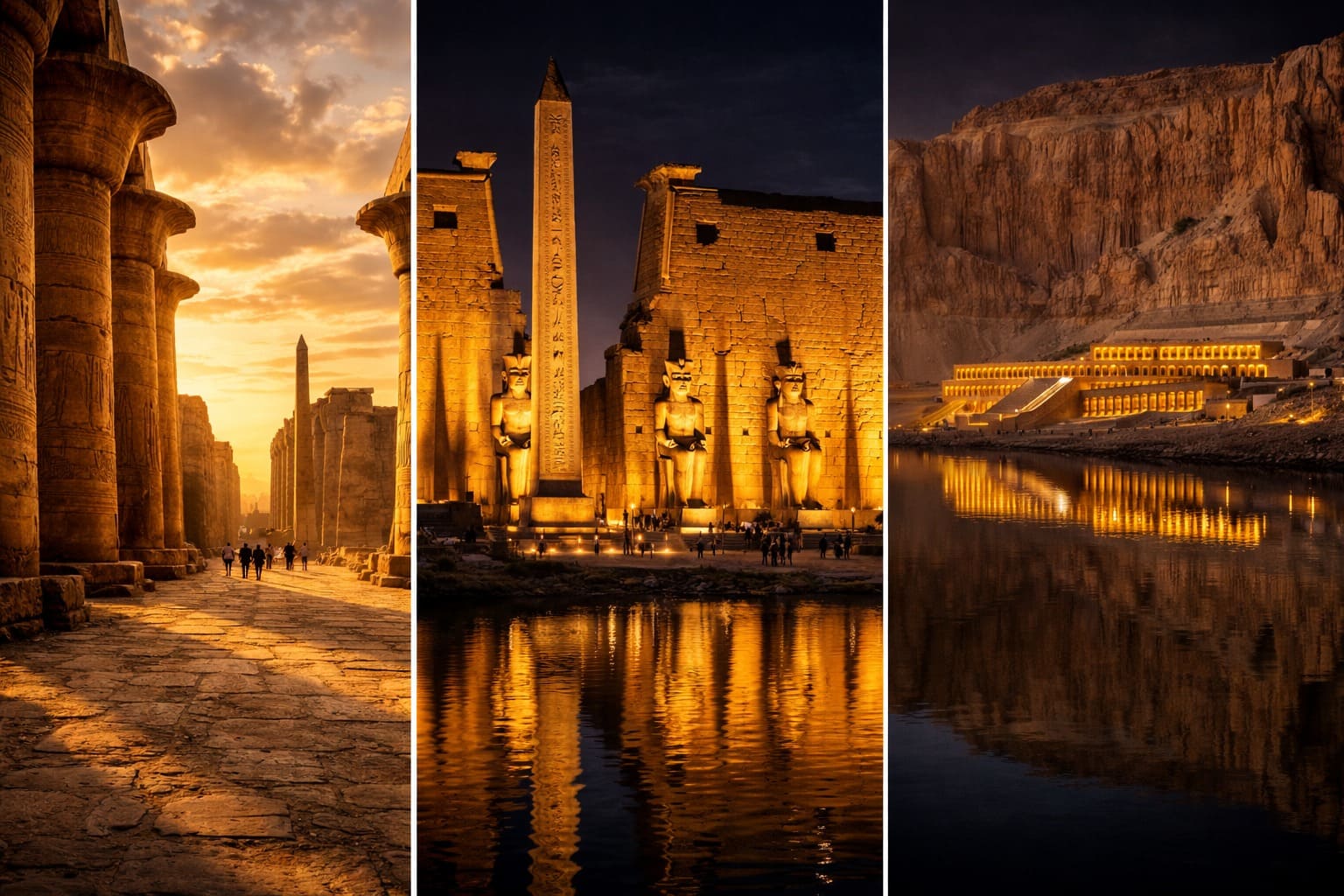


Luxor is often called the world’s greatest open-air museum, and its temples are the main reason. The top temples in Luxor Egypt reveal ancient Thebes through royal ceremonies, sacred rituals, cliffside architecture, battle reliefs and monumental ruins.
Top Temples in Luxor Egypt: Quick Answer
The most important temples in Luxor are Karnak Temple, Luxor Temple, Hatshepsut Temple, Medinet Habu and Ramesseum. Karnak is the largest and most complex, Luxor Temple is the most elegant city temple, Hatshepsut Temple is the most visually dramatic, Medinet Habu is one of the best preserved, and Ramesseum is ideal for travelers who love Ramesses II and monumental ruins.
For most travelers, the best plan is to visit Karnak and Luxor Temple on the East Bank, then dedicate another day to West Bank sites such as Hatshepsut Temple, Medinet Habu, Ramesseum and the Valley of the Kings Tours.
Best Simple Plan
Visit Karnak Temple in the morning, Luxor Temple near sunset or evening, then use a second day for the West Bank temples and royal tombs.
Why Luxor Is the World’s Greatest Open-Air Museum
Many travelers begin their Egypt journey with the Pyramids of Giza Tours, the Great Sphinx and classic Cairo Day Tours. Those experiences are essential, but Luxor reveals a deeper side of ancient Egyptian civilization.
Luxor was ancient Thebes, a city shaped by temples, tombs, gods, kings, festivals and sacred landscapes on both banks of the Nile. The East Bank is stronger for living temples and city monuments, while the West Bank is richer in mortuary temples, royal tombs and afterlife symbolism.
For a wider city overview before choosing your route, start with the Luxor Tours Guide. For guided day routes, compare the available Luxor Day Tours.
1. Karnak Temple: The Largest Religious Complex in Luxor
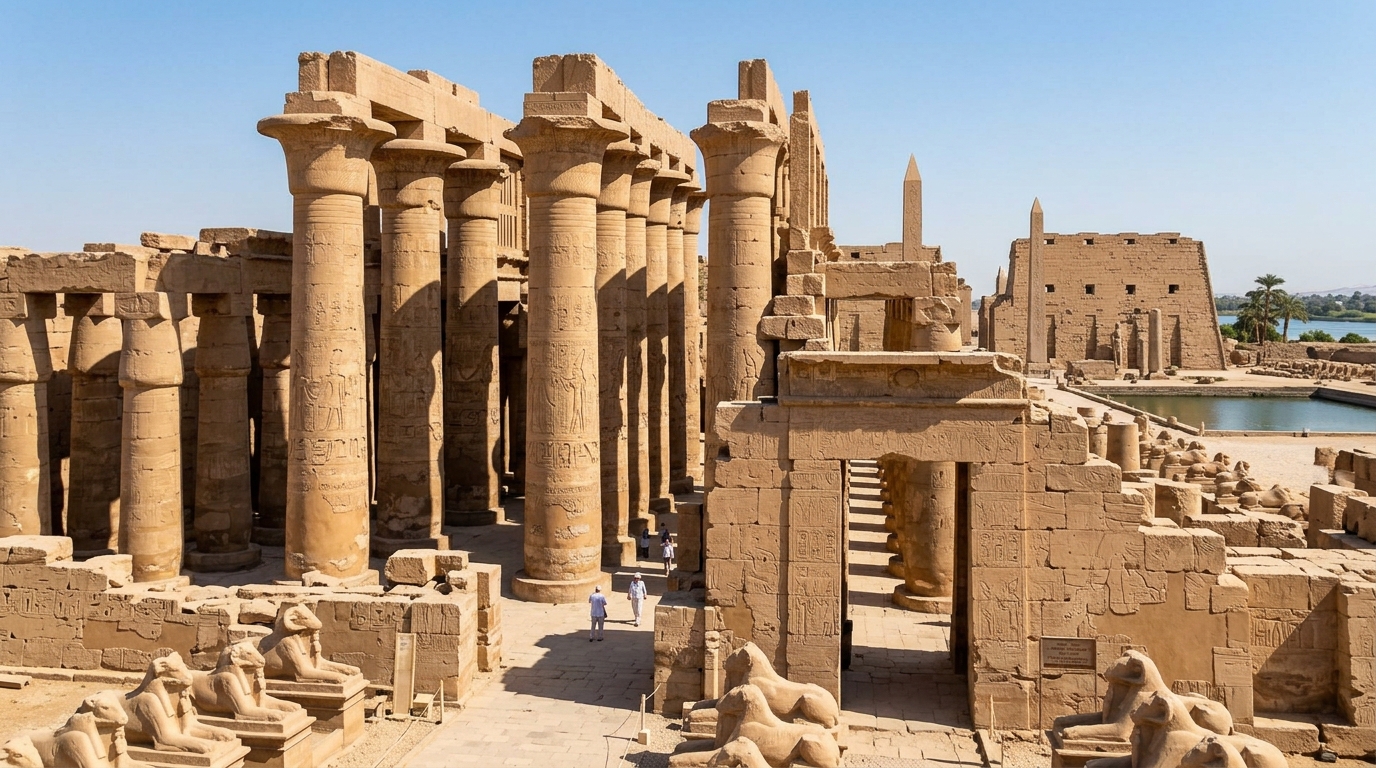
Karnak Temple is not a single temple in the simple sense. It is a vast religious complex of sanctuaries, pylons, courts, chapels, obelisks and sacred spaces developed over many centuries. It was dedicated mainly to Amun-Ra and became the spiritual heart of ancient Thebes.
Great Hypostyle Hall
Its massive columns create one of the most unforgettable architectural spaces in Egypt.
Amun-Ra Worship
Karnak reflects the religious power of Amun-Ra and the priesthood of ancient Thebes.
Obelisks and Courts
Obelisks, pylons and ritual spaces show how kings used architecture to express devotion and authority.
Karnak is one of the most immersive things to do in Egypt because the site rewards slow exploration. It is also the best starting point for travelers who want to understand Luxor before visiting smaller temples.
For a dedicated attraction route, continue with Karnak Temple Tours.
2. Luxor Temple: The Temple of Royal Power
Luxor Temple sits in the heart of the modern city, making it one of the easiest temples to include in a Luxor itinerary. It is smaller than Karnak, but its elegance, symmetry and evening atmosphere make it unforgettable.
The temple was closely connected to royal ceremony and the sacred life of ancient Thebes. Its colonnades, statues of Ramesses II, open courts and connection with the Avenue of Sphinxes help visitors understand how religious and royal power worked together.
| Luxor Temple highlight | Why it matters | Best time to visit |
|---|---|---|
| Colonnade of Amenhotep III | Creates one of the most elegant processional spaces in Luxor. | Late afternoon or evening. |
| Statues of Ramesses II | Show royal power and monumental scale in the heart of the city. | Sunset to evening. |
| Avenue of Sphinxes connection | Links Luxor Temple with Karnak and the wider ceremonial landscape. | Evening walks work especially well. |
Luxor Temple is a strong choice for travelers who want a relaxed and scenic visit after a busy morning at Karnak or the West Bank.
3. Hatshepsut Temple: A Masterpiece of Cliffside Design
The Mortuary Temple of Hatshepsut is one of the most visually striking temples in Luxor. Built for one of Egypt’s most powerful female pharaohs, it rises in terraces against the cliffs of Deir el-Bahari on the West Bank.
Its design is completely different from Karnak or Luxor Temple. Instead of dense courts and columns, Hatshepsut Temple uses terraces, ramps, colonnades and natural cliff scenery to create a dramatic architectural statement.
Dramatic Cliff Setting
The natural background makes the temple one of Luxor’s strongest photo locations.
Queen Hatshepsut
The temple reflects the ambition and authority of one of Egypt’s most remarkable rulers.
West Bank Route
It combines naturally with Valley of the Kings, Colossi of Memnon and other West Bank sites.
For travelers interested in this monument specifically, use Hatshepsut Temple Tours.
4. Medinet Habu: The Best-Preserved Hidden Gem
Medinet Habu is often overlooked by travelers who rush through Luxor, but it is one of the most rewarding temple visits on the West Bank. Its walls, gates, courts and reliefs preserve a powerful sense of ancient scale and detail.
The temple is strongly associated with Ramesses III. Its reliefs include battle scenes, religious imagery and inscriptions that help visitors understand how temples could express both sacred devotion and royal authority.
Why Medinet Habu Deserves More Attention
Medinet Habu is usually quieter than Karnak and Hatshepsut Temple, yet it offers some of the most detailed and atmospheric temple walls in Luxor.
5. Ramesseum: The Mortuary Temple of Ramesses II
Ramesseum was built for Ramesses II, one of ancient Egypt’s most famous pharaohs. Although parts of the temple are ruined, the site still gives a powerful sense of scale, ambition and royal memory.
The fallen colossal statue fragments are among the most memorable features of the site. Ramesseum works especially well for travelers who already visited Karnak and want a more reflective West Bank stop connected to Ramesses II.
Key Differences Between Luxor Temples
Each Luxor temple has a different purpose and emotional effect. Use this comparison to choose the right route instead of treating all temples as the same experience.
| Temple | Main purpose | Style | Best experience type |
|---|---|---|---|
| Karnak Temple | Major religious center dedicated mainly to Amun-Ra. | Massive, complex and layered. | Deep exploration and historical context. |
| Luxor Temple | Royal ceremony and sacred city ritual. | Elegant, compact and atmospheric. | Scenic evening visit. |
| Hatshepsut Temple | Mortuary temple for Queen Hatshepsut. | Terraced, symmetrical and cliffside. | Architecture, photography and West Bank scenery. |
| Medinet Habu | Mortuary temple of Ramesses III. | Fortress-like and richly decorated. | Quiet detail, reliefs and fewer crowds. |
| Ramesseum | Mortuary temple of Ramesses II. | Monumental ruins and colossal fragments. | Royal memory and reflective history. |
Choose the Right Luxor Temple Tour by Travel Style
The best Luxor temple route depends on your available time, heat comfort, walking level and how deeply you want to explore ancient Thebes.
| Traveler intent | Best route | Recommended page |
|---|---|---|
| First-time Luxor visitor | Karnak Temple, Luxor Temple, Hatshepsut Temple and Valley of the Kings. | Luxor Day Tours |
| Temple-focused traveler | Karnak, Luxor Temple, Hatshepsut Temple, Medinet Habu and Ramesseum. | Luxor Tours Guide |
| East Bank focus | Karnak Temple and Luxor Temple with evening atmosphere. | Karnak Temple Tours |
| West Bank focus | Hatshepsut Temple, Medinet Habu, Ramesseum and royal tomb areas. | Hatshepsut Temple Tours |
| Nile route traveler | Luxor temples combined with Aswan temples across a river journey. | Nile Cruise Packages |
| Complete Egypt vacation | Cairo, Giza, Luxor, Aswan and the Nile in one broader itinerary. | Egypt Tour Packages |
Best Route for Most Travelers
If you have two days in Luxor, use one day for Karnak and Luxor Temple, then use the second day for Hatshepsut Temple, Medinet Habu, Ramesseum and the West Bank tomb landscape.
Build My Luxor Route →How to Plan Your Luxor Temple Itinerary
A realistic Luxor itinerary should not overload too many temples into one hot day. The best plan separates the East Bank and West Bank so each area has enough time.
Day 1: East Bank Temples
Start with Karnak Temple in the morning, rest during the hotter part of the day, then visit Luxor Temple near sunset or in the evening.
Explore Karnak Temple Tours →Day 2: West Bank Temples
Visit Hatshepsut Temple, Medinet Habu and Ramesseum, then combine with royal tombs if your pace allows.
Explore Luxor Day Tours →Add the Valley of the Kings
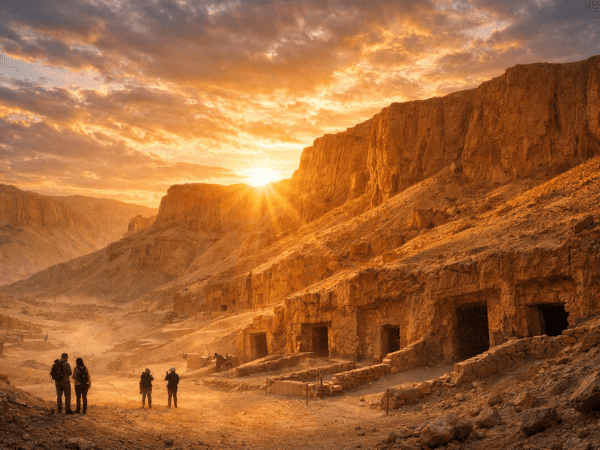
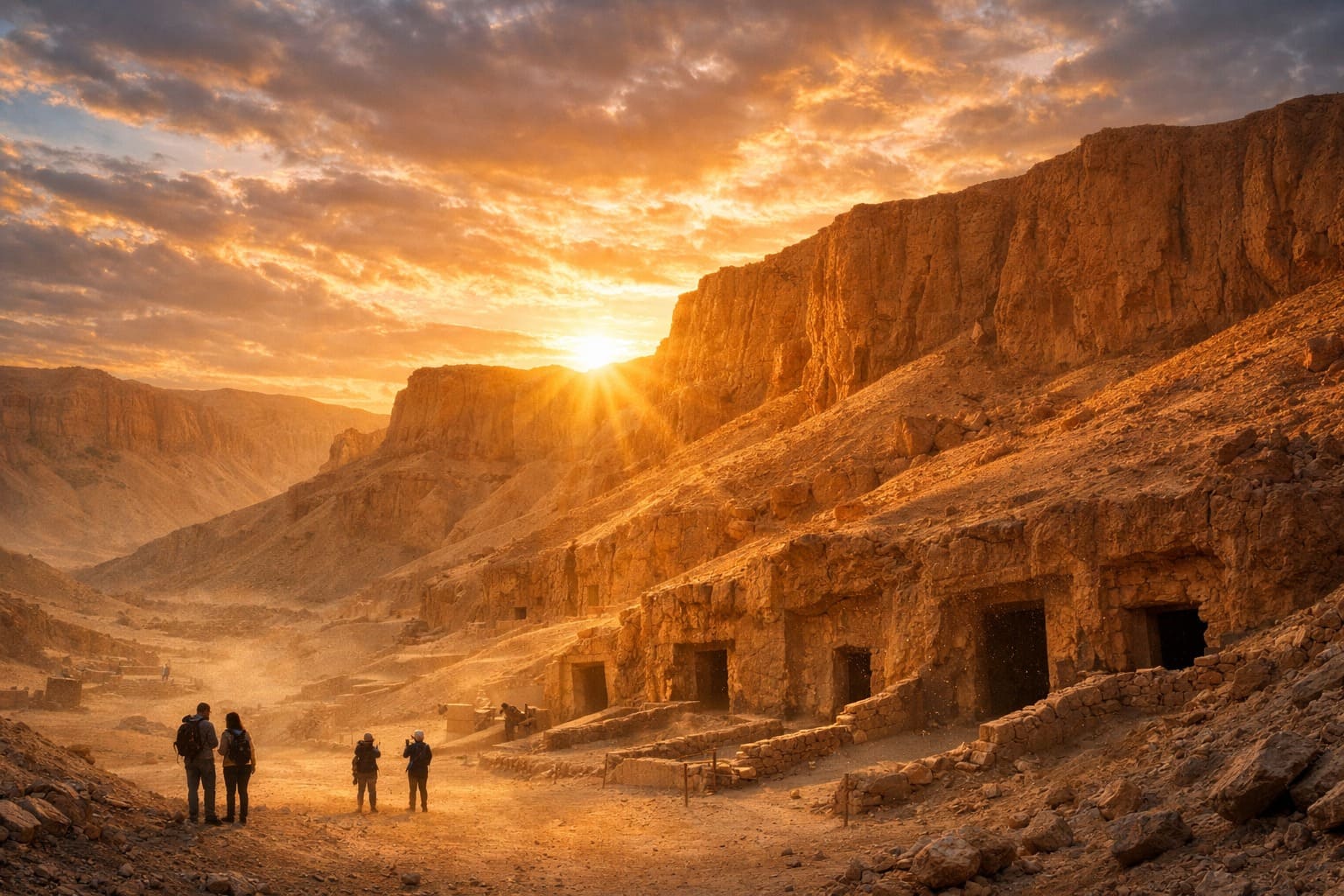
The Valley of the Kings gives tomb context to the mortuary temples on the West Bank.
Explore Valley of the Kings Tours →Continue by Nile Cruise
Many travelers continue from Luxor to Aswan, connecting temple visits along the Nile.
Explore Nile Cruise Packages →Travel Tips for Visiting Luxor Temples
Luxor is rewarding, but temple days can be hot and walking-heavy. A few simple choices make the experience smoother.
Start Early
Morning visits are usually more comfortable, especially on the West Bank.
Wear Good Shoes
Temple floors, sand and uneven stones make supportive footwear important.
Bring Sun Protection
Use a hat, sunglasses and sunscreen, especially around exposed West Bank sites.
Carry Water
Keep water with you and plan short breaks during the day.
Use a Guide
Temples are filled with reliefs, symbols and royal stories that are easy to miss alone.
Plan Photos
Hatshepsut Temple is excellent for architecture; Luxor Temple is beautiful in evening light.
Why Luxor Temples Are Essential for Egypt Tours
Cairo and Giza show Egypt’s most iconic monuments, but Luxor explains the religious and royal depth of ancient Egypt. The temples reveal how kings spoke to gods, how festivals shaped public ritual, and how the afterlife became part of monumental architecture.
That is why a complete Egypt Tour Packages route should not stop at Cairo. Luxor adds the temples, tombs and sacred landscapes that make the journey feel complete.
Best Related Tours, Routes and Itineraries
Use these related Egypt Tours Club pages to plan your Luxor temples, Nile route and complete Egypt journey.