


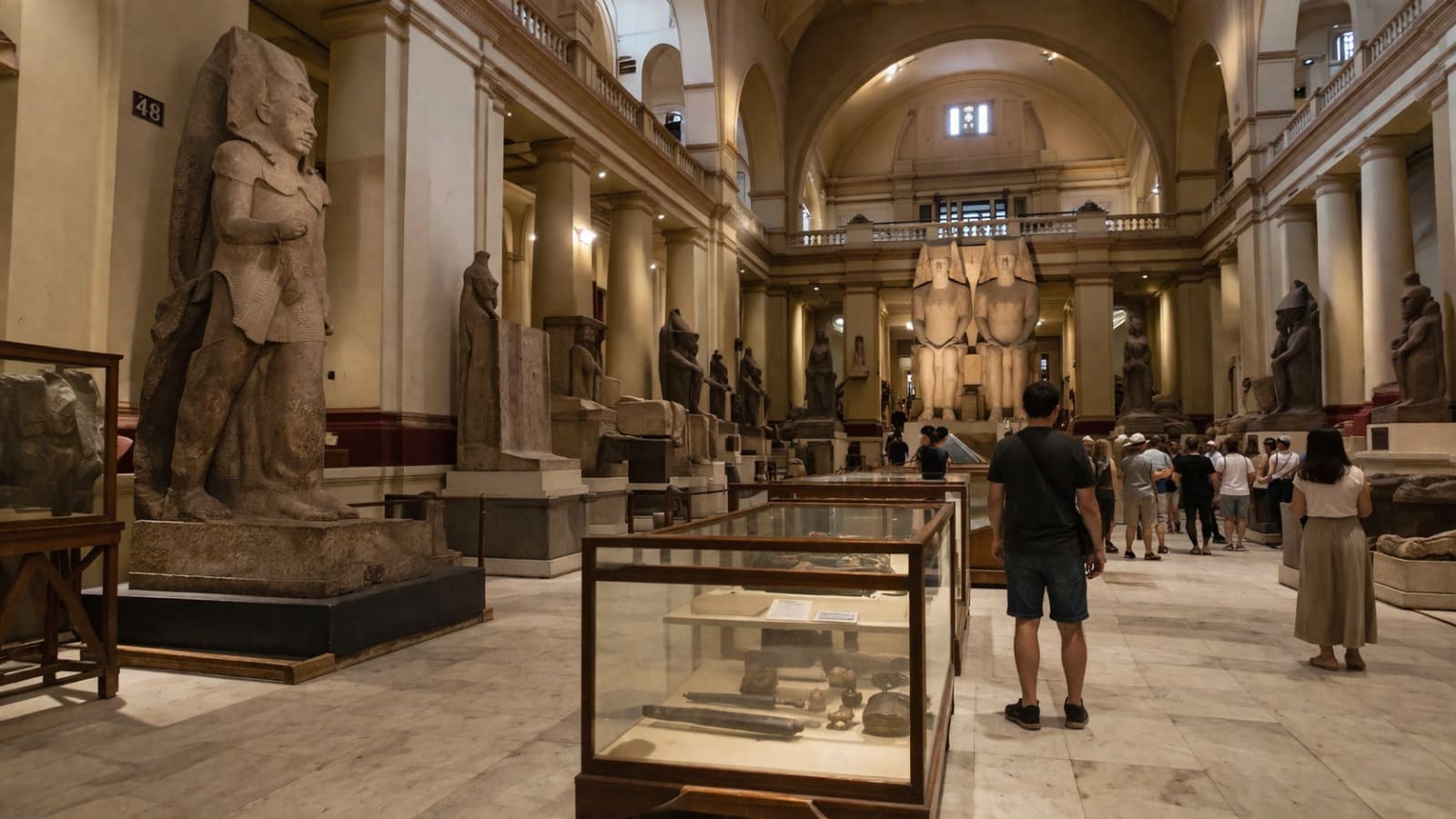
I 15 Principali Reperti del Museo Egizio del Cairo
Segui un percorso mirato tra 15 capolavori ancora associati allo storico Museo Egizio di Piazza Tahrir e scopri dove si trovano oggi Tutankhamon e le mummie reali.
15 capolavori imperdibiliDal Predinastico al Greco-RomanoVisita mirata: 2–3 oreIl Museo Egizio di Piazza Tahrir resta uno dei musei più gratificanti del Cairo, ma una guida aggiornata richiede una correzione importante. La celebre maschera d’oro di Tutankhamon e la collezione completa della tomba appartengono al Grand Egyptian Museum, mentre le grandi mummie reali del Nuovo Regno sono state trasferite al Museo Nazionale della Civiltà Egiziana.
Aggiornamento importante: cosa non si trova più nel Museo di Tahrir?
La maschera d’oro è catalogata nelle Gallerie di Tutankhamon del Grand Egyptian Museum vicino a Giza. Chi è interessato al giovane faraone dovrebbe scegliere il GEM.
Le mummie reali sono state trasferite da Tahrir al Museo Nazionale della Civiltà Egiziana a Fustat. Ramses II, Seti I e altri corpi reali non devono essere promessi al Museo Egizio.
Narmer, Cheope, Chefren, Micerino, Yuya e Thuya, Psusennes I, Tanis, papiri, sarcofagi e gioielli restano tra i principali punti di forza del museo storico.
I 15 principali reperti da vedere nel Museo Egizio del Cairo
Tavolozza di Narmer
Periodo Protodinastico · ca. 3100 BCQuesta tavolozza cerimoniale conserva alcune delle più antiche iscrizioni geroglifiche e presenta immagini reali legate all’unificazione dell’Alto e del Basso Egitto. Osserva Narmer con le due corone e la celebre scena del colpo.
Statuetta d’avorio di Cheope
Antico Regno · 4th dinastiaAlta solo circa 7,5 cm, questa minuscola figura d’avorio è l’unica rappresentazione tridimensionale contemporanea confermata di Cheope, costruttore della Grande Piramide. Le sue dimensioni rendono indimenticabile il contrasto con il monumento.
Statua in trono di Chefren
Antico Regno · 4th dinastiaScolpito in diorite levigata, Chefren siede su un trono mentre il dio falco Horus protegge la parte posteriore della sua testa. La statua unisce regalità, protezione divina e permanenza della pietra.
Triade di Micerino
Antico Regno · 4th dinastiaMenkaure stands between Hathor and a personified province. The balanced pose, joined figures and smooth grey-green stone show how royal sculpture connected the king with gods and the lands of Egypt.
Statue di Rahotep e Nofret
Antico Regno · 4th dinastiaThe painted limestone pair is celebrated for vivid color and inlaid eyes. Their frontal pose, clothing, jewelry and contrasting skin tones make them an exceptional lesson in Old Kingdom portrait conventions.
Statua lignea di Ka-aper
Antico Regno · 5th dinastiaNicknamed Sheikh el-Balad, this rare wooden statue appears strikingly lifelike because of its realistic body, portrait-like face and eyes inlaid with crystal, calcite, copper and dark stone.
Seneb e la sua famiglia
Antico Regno · late 5th–early 6th dinastiaThis intimate group shows the official Seneb beside his wife and two children. The sculptor placed the children beneath Seneb to create a visually balanced composition while preserving the family’s affection and status.
Oche di Meidum
Antico Regno · 4th dinastiaThis painted fragment from a tomb at Meidum is admired for precise plumage, varied species and the rhythmic arrangement of six geese. It demonstrates the observation and color mastery behind Old Kingdom wall painting.
Statua di Mentuhotep II
Medio Regno · 11th dinastiaThe king who reunified Egypt appears with black skin, crossed arms and the tight costume of a jubilee festival. The unusual image links royal renewal with Osiris, death, fertility and resurrection.
Sarcofago della regina Kawit
Medio Regno · 11th dinastiaReliefs on Kawit’s limestone sarcophagus show the queen drinking, receiving personal care and surrounded by symbols of beauty, fertility and rebirth. It is especially valuable for refined scenes of elite daily life.
Statue colossali di Akhenaton
Nuovo Regno · 18th dinastiaThe elongated face, narrow chest and exaggerated forms mark the visual revolution of the Amarna Period. Compare these colossi with earlier royal sculpture to see how Akhenaten reshaped the image of kingship.
Statua familiare colossale di Amenhotep III e Tiye
Nuovo Regno · 18th dinastiaThe enormous limestone group presents Amenhotep III, Queen Tiye and three daughters. It is the largest known ancient Egyptian family group and makes Tiye’s prominence within the royal image immediately visible.
Maschere e corredo funerario di Yuya e Thuya
Nuovo Regno · 18th dinastiaGold-covered cartonnage masks, coffins, furniture and funerary equipment survived from KV46, one of the Valley of the Kings’ richest non-royal tombs. The group offers a remarkably complete view of elite burial before Tutankhamun.
Cofano d’argento di Psusennes I
Terzo Periodo Intermedio · 21st dinastiaThe silver anthropoid coffin from Tanis is one of the museum’s great precious-metal masterpieces. In ancient Egypt silver could be rarer than gold, making the coffin a striking statement of royal wealth and sacred transformation.
Stele della vittoria di Merneptah
Nuovo Regno · 19th dinastiaThis granite monument celebrates Merneptah’s campaigns. Its long inscription is particularly famous because it contains the earliest known Egyptian textual reference to Israel, giving the stele exceptional historical importance.
Come vedere i capolavori senza affaticarsi
| Tempo | Percorso prioritario | Ideale per |
|---|---|---|
| 90 minuti | Narmer, Cheope, Chefren, Micerino, Rahotep e Nofret, Yuya e Thuya, Psusennes I. | Ideale per un programma stretto con un egittologo e senza lunghe soste fotografiche. |
| 2–3 ore | Tutti i 15 capolavori, raggruppati per periodo con brevi pause. | La migliore prima visita e il miglior equilibrio tra storia, dettaglio ed energia. |
| Mezza giornata | I 15 capolavori più sarcofagi, papiri, gioielli e gallerie greco-romane. | Ideale per gli appassionati che vogliono confrontare materiali e cambiamenti artistici. |
Consigli pratici per visitare il Museo Egizio di Tahrir
- Controlla vicino alla visita orari, prezzi dei biglietti e accesso temporaneo alle gallerie.
- Arriva presto per condizioni di viaggio più fresche e più tempo nelle dense gallerie storiche.
- Usa un egittologo che segua una storia per collegare gli oggetti a Giza, Saqqara, Luxor, Valle dei Re e Tanis.
- Pianifica con attenzione la fotografia perché flash, video e attrezzature professionali sono soggetti alle regole attuali.
- Non confondere Tahrir, GEM vicino a Giza e NMEC a Fustat: sono musei separati con collezioni distintive diverse.
- Mantieni flessibilità perché gli oggetti possono essere spostati per conservazione, prestiti o cambiamenti nelle gallerie.
Domande frequenti sui reperti del Museo Egizio
Quali sono i reperti più importanti del Museo Egizio del Cairo?
Inizia con la Tavolozza di Narmer, la statuetta di Cheope, le sculture di Chefren e Micerino, Rahotep e Nofret, Ka-aper, Yuya e Thuya, i tesori di Tanis e la Stele di Merneptah.
La maschera d’oro di Tutankhamon è ancora nel Museo Egizio?
No. La maschera funeraria d’oro fa ufficialmente parte delle Gallerie di Tutankhamon del Grand Egyptian Museum vicino a Giza.
Le mummie reali sono ancora nel Museo Egizio?
Le principali mummie reali del Nuovo Regno sono state trasferite da Tahrir al Museo Nazionale della Civiltà Egiziana a Fustat.
Quanto tempo serve per vedere i principali reperti?
Calcola circa due o tre ore per una prima visita mirata. Novanta minuti possono coprire un breve percorso, mentre gli appassionati possono preferire mezza giornata.
Vale ancora la pena visitare il Museo Egizio dopo l’apertura del GEM?
Sì. Tahrir resta essenziale per l’atmosfera storica e per collezioni come Narmer, la scultura dell’Età delle Piramidi, Yuya e Thuya e i tesori di Tanis.
La posizione dei reperti può cambiare?
Sì. Conservazione, prestiti, lavori nelle gallerie e mostre temporanee possono modificare le posizioni, quindi chiedi al personale dove si trovano gli oggetti prioritari.
Crea una visita mirata al Museo Egizio
Condividi data, hotel, tempo disponibile, lingua della guida e altre priorità al Cairo. Egypt Tours Club può creare un percorso privato realistico tra Tahrir, Giza o il Cairo storico.
Scopri i tour del CairoRichiedi un itinerario su misura