


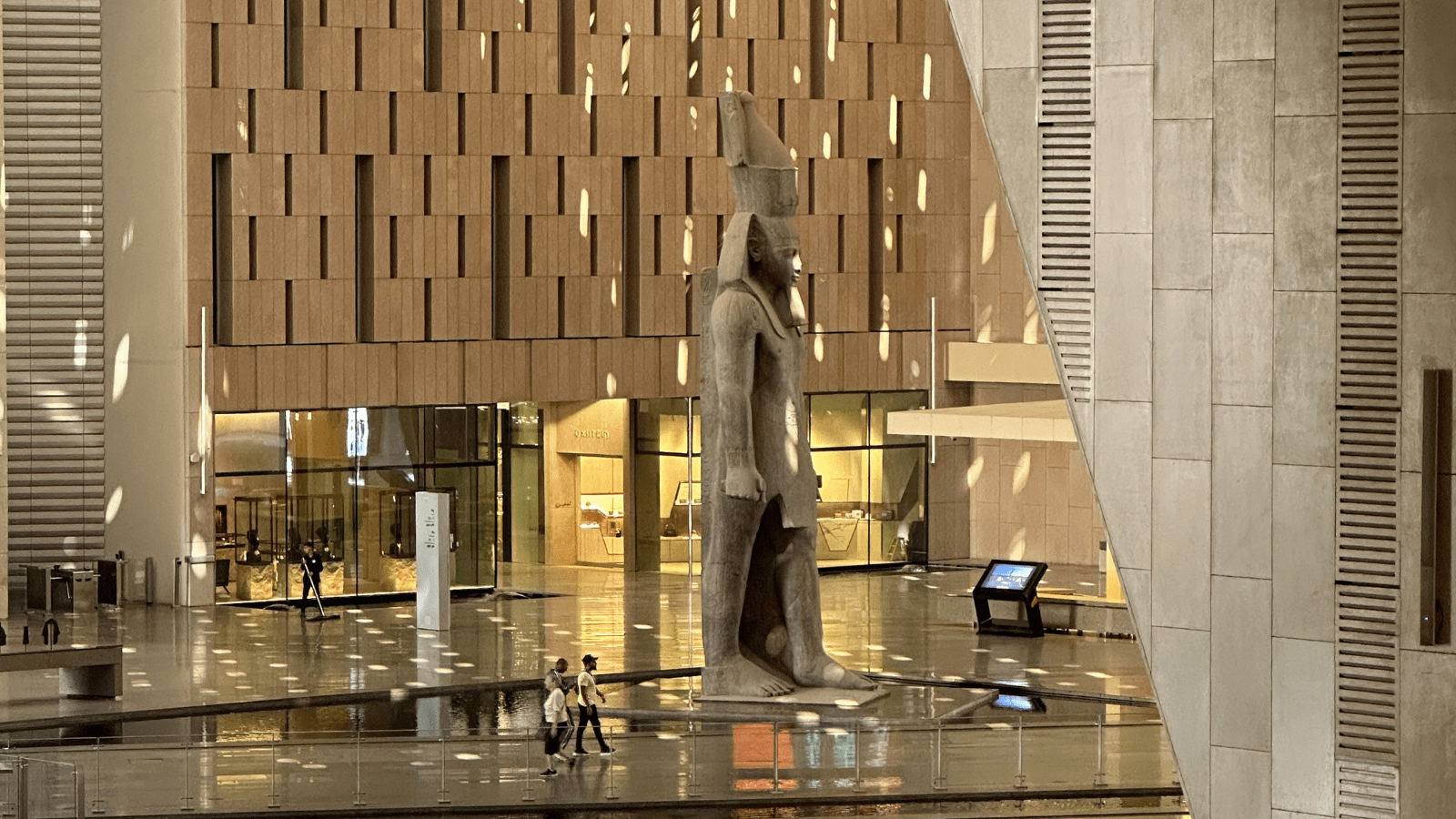
Grand Egyptian Museum Travel Guide: Visiting Tips, Best Time & What to Expect
A practical guide to planning a smooth Grand Egyptian Museum visit, from timing and duration to guided touring, photography and nearby attractions.
3-4 hoursEarly morningWeekdaysLicensed EgyptologistThe Grand Egyptian Museum is a major cultural stop for travelers in Cairo. Because the museum is large and close to the Giza Pyramids, good planning makes a major difference to how much you can see and understand.
What to know before visiting GEM
Near the Giza Pyramids
The museum is located close to the pyramids, making it easy to combine an outdoor archaeological visit with a modern indoor museum experience.
Best Time and Duration
Early morning and weekdays are generally quieter, while the article recommends allowing at least 3-4 hours for a well-paced visit.
Guided Visits Add Context
A licensed Egyptologist helps travelers understand major collections, symbolism, beliefs and historical timelines instead of seeing artifacts without context.
Where Is the Grand Egyptian Museum Located?
Its location makes combining both attractions practical.
One of the transport options mentioned.
Another recommended way to reach and visit the museum.
Suggested to reduce Cairo traffic stress.
Best Time to Visit the Grand Egyptian Museum
Ideal for quieter galleries and better photo opportunities.
Generally less crowded than weekends.
March through May is described as pleasant.
September through November is also recommended.
The article recommends this for a well-paced visit.
Why a Guided Visit Makes a Difference
The museum can feel overwhelming without context.
A guide can help focus attention on major collections.
Highlighted as one of the key collections.
Egyptologists explain religious ideas and historical meaning.
Guided context turns objects into connected stories.
What to Wear and Bring
The galleries are extensive.
Recommended especially in warmer months.
Large bags may need to be checked.
Rules can vary by gallery.
Photography and Museum Rules
Generally allowed according to the article.
Usually prohibited.
Some areas may prohibit photography entirely.
Café and rest areas are available elsewhere in the complex.
Combining GEM with Other Cairo Attractions
The most natural nearby combination.
Can be combined for a broader archaeological day.
Coptic and Islamic landmarks add another historical layer.
The article says this helps provide context for later pyramid, temple and Nile cruise visits.
Frequently asked questions
How long should I spend at the Grand Egyptian Museum?
The article recommends at least 3-4 hours for a well-paced visit.
What is the best time to visit?
Early morning and weekdays are recommended for quieter galleries, while spring and autumn offer pleasant weather.
Is a guide useful at GEM?
Yes. A licensed Egyptologist can explain major collections, symbolism, religious beliefs and historical timelines.
What should I wear?
Comfortable walking shoes and light, breathable clothing are recommended.
Can I take photos?
Photography is generally allowed in public areas, but flash and tripods are usually prohibited and some exhibitions may restrict photography.
What can I combine with GEM?
The Pyramids of Giza, Saqqara and Memphis, or Old Cairo.
Plan a Smarter Grand Egyptian Museum Visit
Combine expert context with a well-paced museum visit and nearby Giza attractions.
View the Grand Egyptian Museum Tour