

Luxor Temple | History, Highlights & Visitor Guide
Luxor Temple . banner

Luxor Temple

Egypt Tours Club

Luxor Temple planning · East Bank routes · Complete Egypt tour packages

Luxor Temple · Ancient Thebes · East Bank · Visitor Planning

Explore the Ancient Temple on Luxor's East Bank

Luxor Temple is a ceremonial monument in the heart of ancient Thebes, shaped especially by Amenhotep III and Ramesses II and historically linked with Karnak through the Avenue of Sphinxes. Use this visitor guide to understand the temple's history, architecture, major highlights, walking sequence, visit timing, photography and practical East Bank planning.

Quick Travel Answer

How should a first-time visitor explore Luxor Temple?

Allow about 1–2 hours and follow the monument in sequence: the First Pylon and Ramesses II statues, Great Court, Amenhotep III colonnade and court, inner temple areas, later historical layers and the Avenue of Sphinxes connection.

For a fuller East Bank day, combine Luxor Temple with Karnak Temple. If you also want the West Bank, keep the tombs earlier in the day and use Luxor Temple later rather than rushing both banks continuously.
Historic SettingAncient Thebes · East Bank
Recommended Visit1–2 Hours
Natural PairingKarnak Temple
Major BuildersAmenhotep III & Ramesses II
Best ForHistory, architecture & evening atmosphere

Understand the Temple

Essential monuments, architecture and historical layers

Luxor Temple developed in phases. Use these six stops to understand the monument as a ceremonial sequence rather than a single building created by one pharaoh.

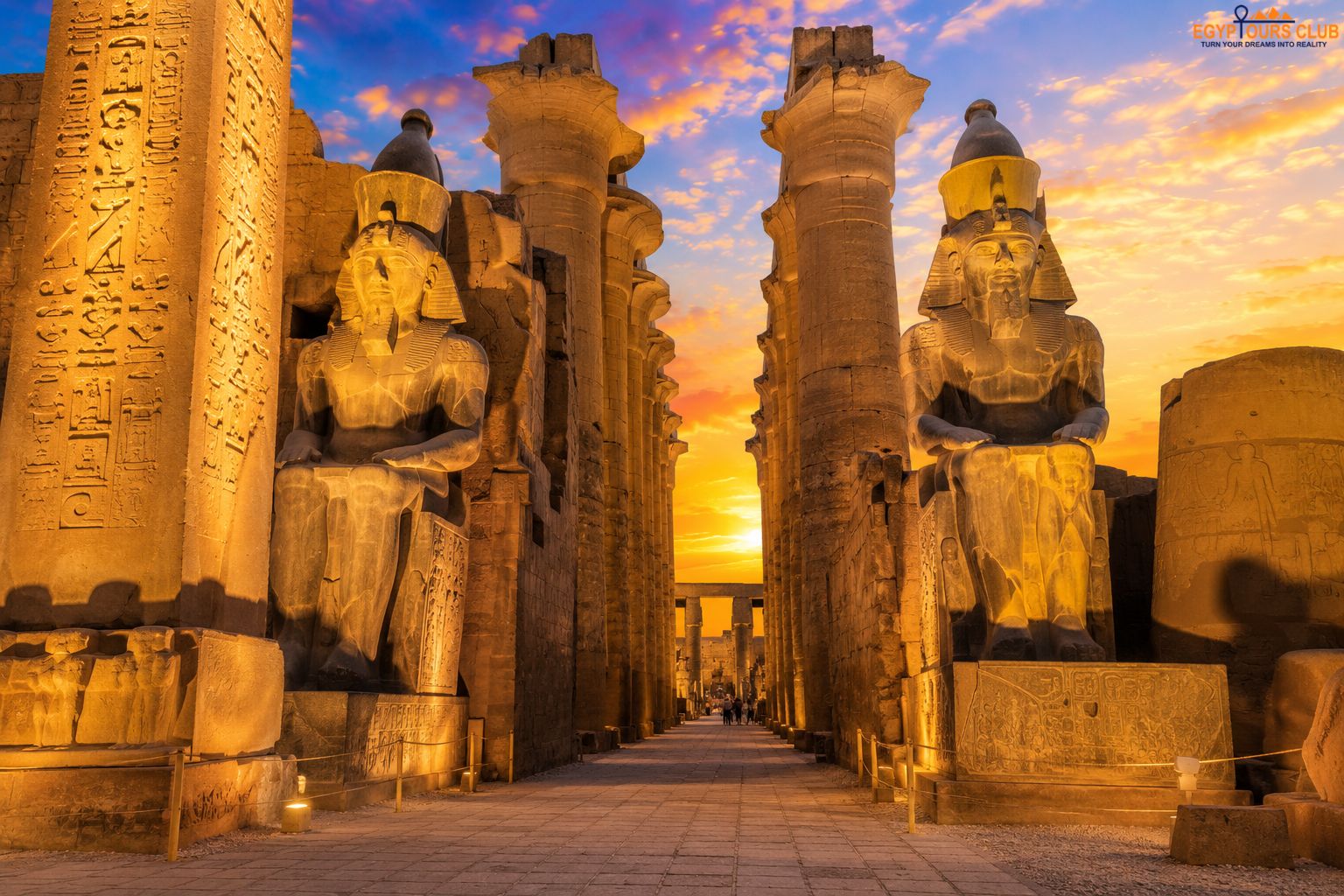
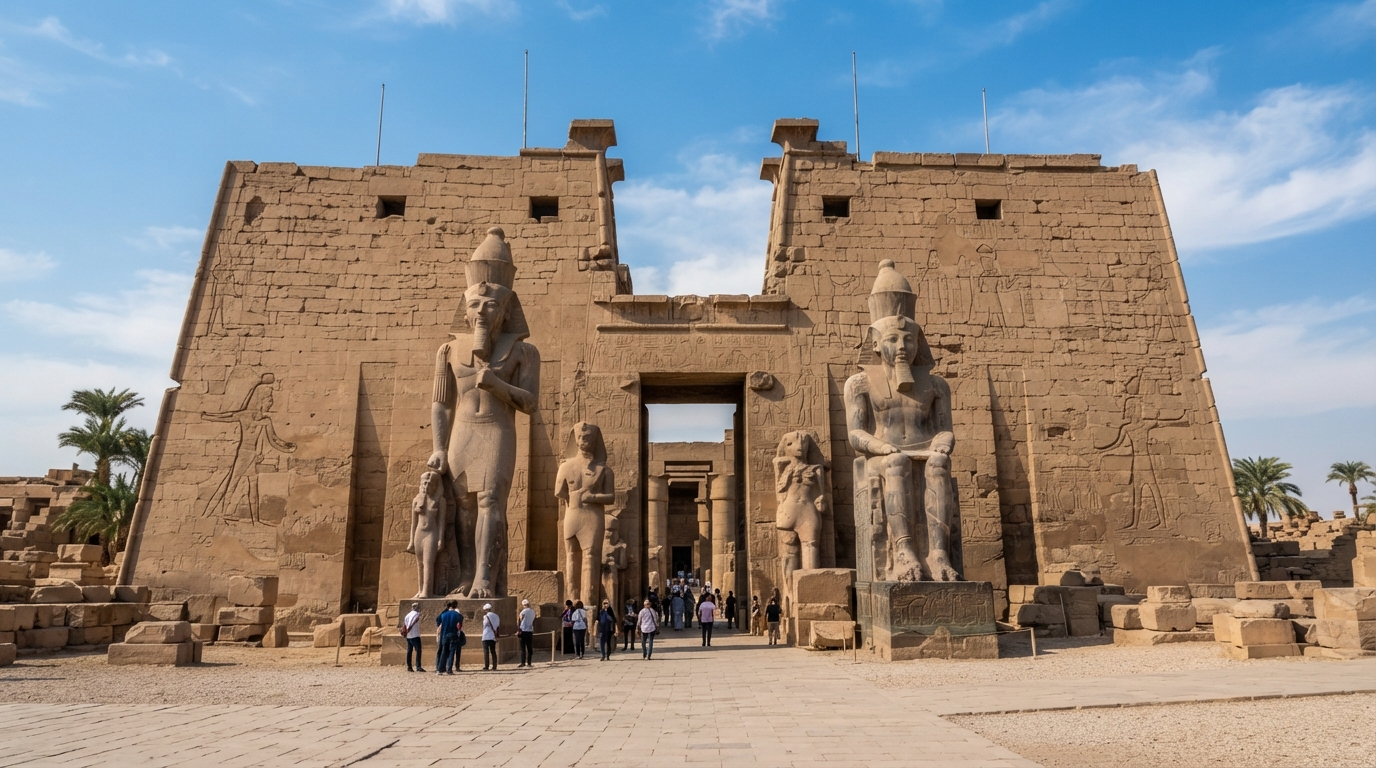
First Pylon and Ramesses II statues at Luxor TempleMonumental Entrance

First Pylon & Ramesses II Statues

Ramesses IIMain entrance

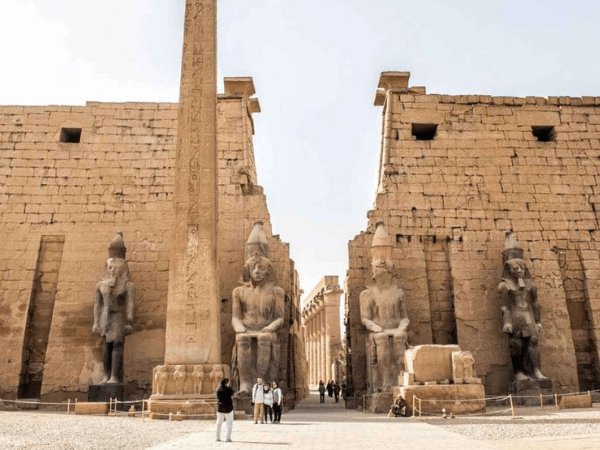
Begin with the surviving obelisk, monumental pylon and royal statues. This is the clearest place to understand how Ramesses II expanded an older ceremonial complex.

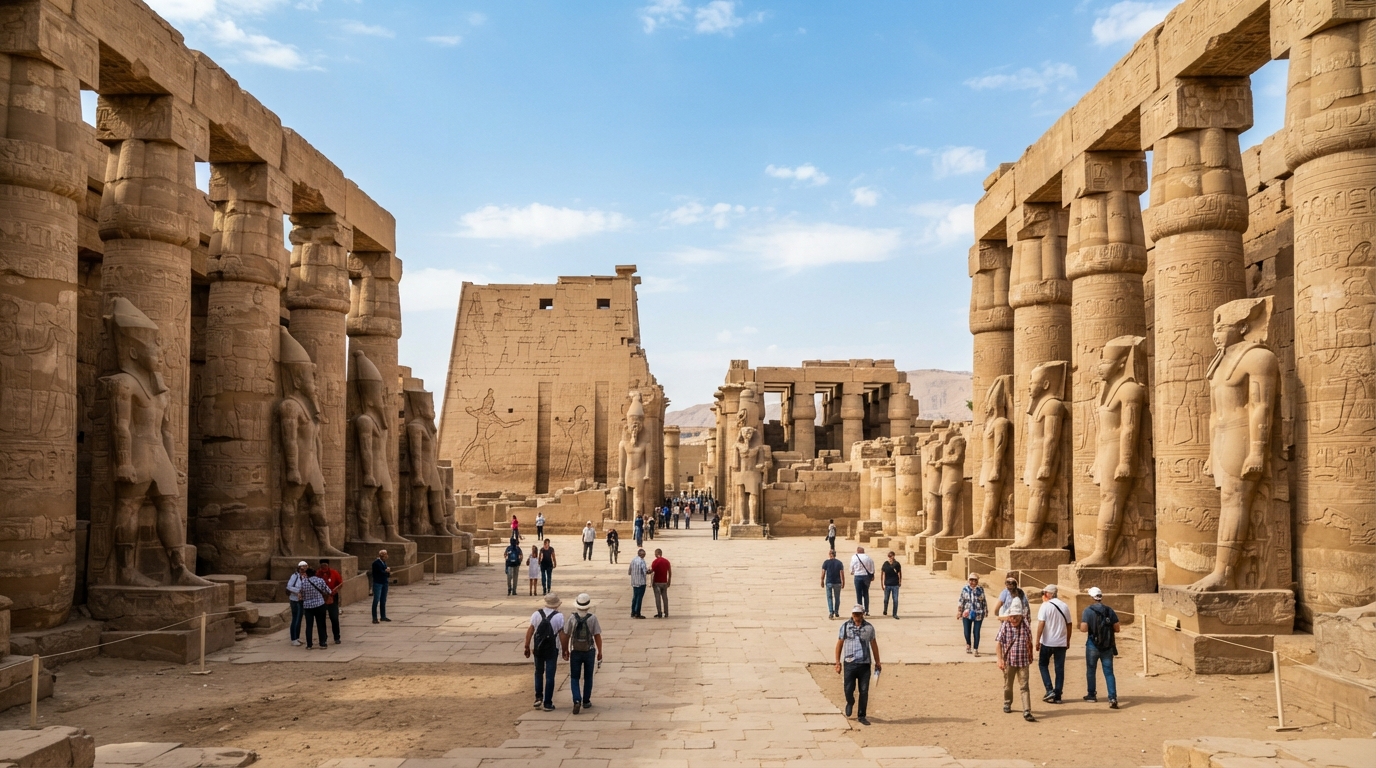
Great Court of Ramesses II at Luxor TempleRoyal Court

Great Court of Ramesses II

New KingdomRoyal imagery

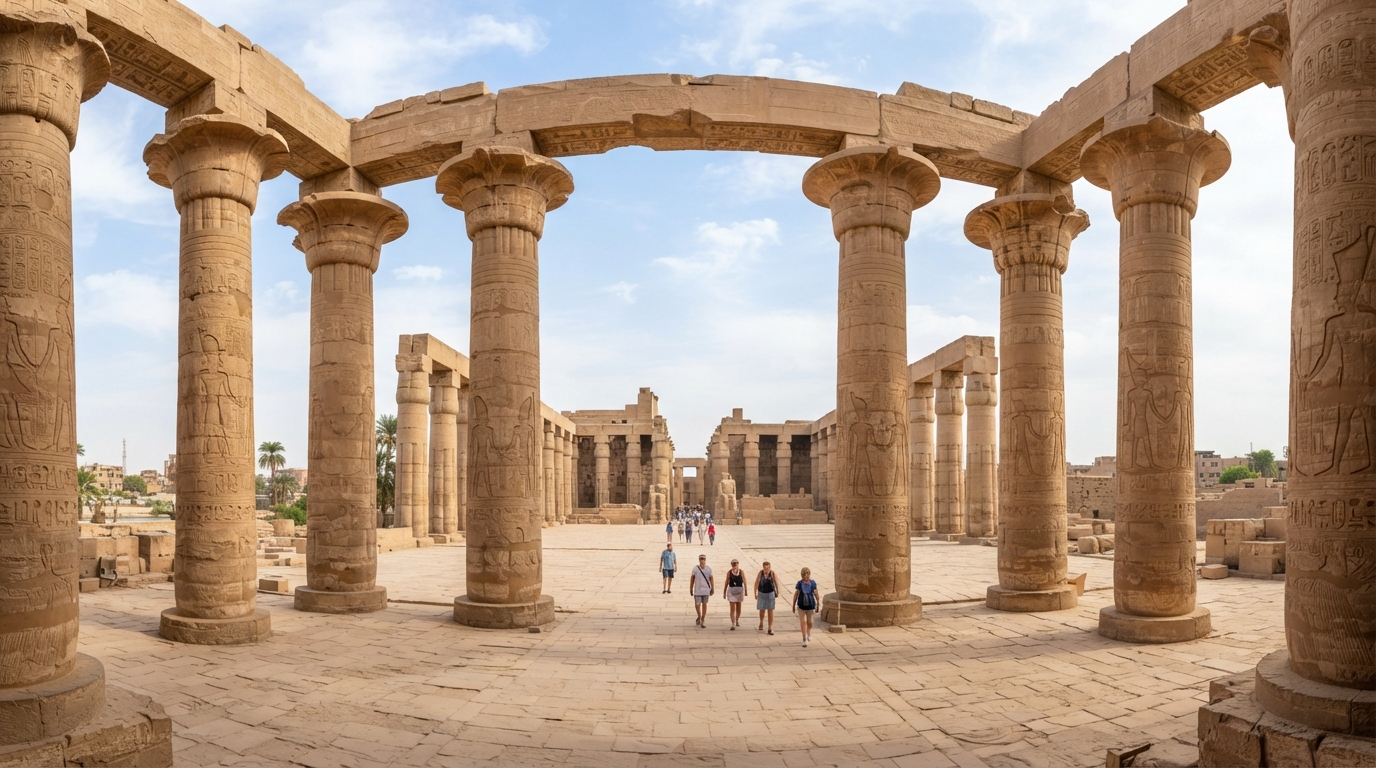
The open court combines columns, statuary and royal imagery while also revealing how later buildings became integrated into the ancient temple.

Amenhotep III Colonnade and Court at Luxor TempleArchitectural Core

Amenhotep III Colonnade & Court

Amenhotep IIICore temple

Amenhotep III established much of the main surviving temple. The colonnade and court form the architectural core of the monument's New Kingdom identity.

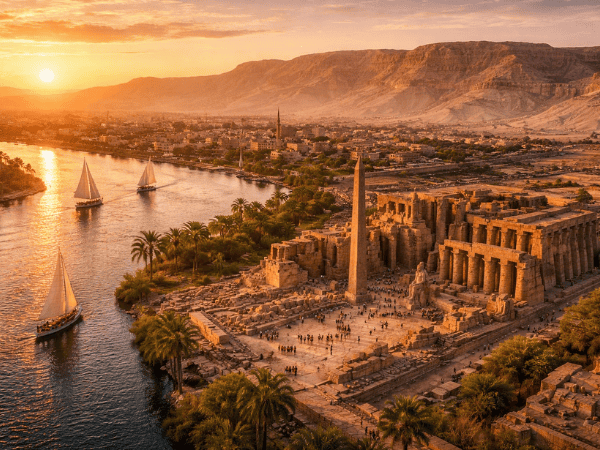
Avenue of Sphinxes at Luxor connecting Luxor Temple and KarnakCeremonial Link

Avenue of Sphinxes

Ancient ThebesKarnak connection

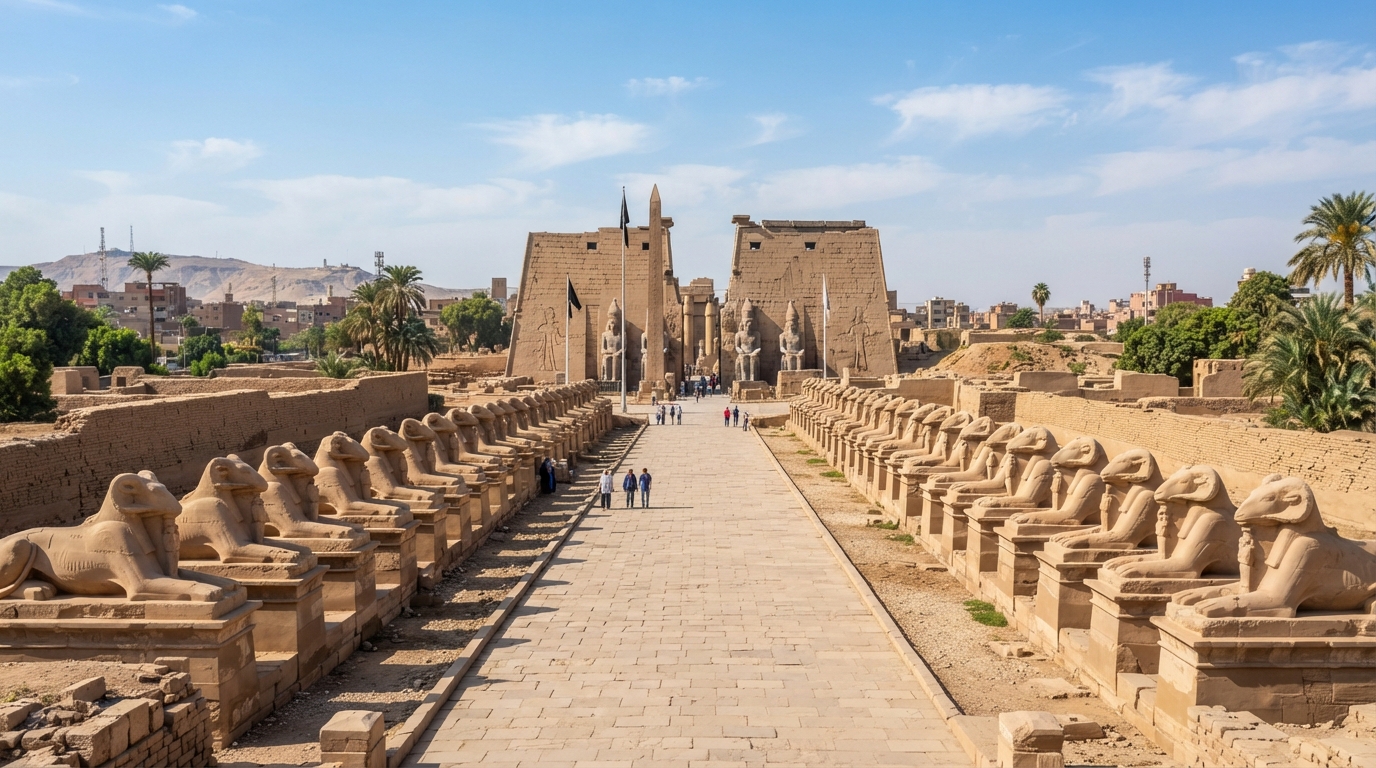
The processional avenue historically linked Karnak and Luxor Temple and helps explain the Opet Festival and the ceremonial geography of ancient Thebes.

Luxor Temple showing later historical layers within the cityLayered History

Roman, Christian & Islamic Layers

Long afterlifeLiving city

Luxor Temple remained in use and was adapted long after the New Kingdom. Roman-period changes, Christian traces and the Abu al-Haggag Mosque show the site's long urban life.

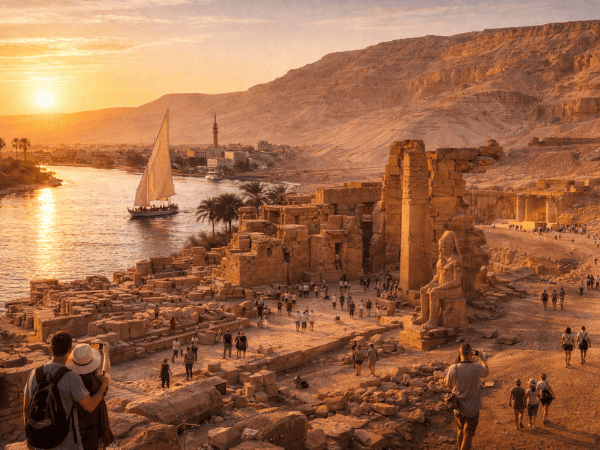
Luxor Temple illuminated in the eveningEvening Atmosphere

Luxor Temple at Sunset & Evening

PhotographyAtmosphere

Later light can give the pylon, statues and colonnades stronger depth and atmosphere. Confirm current visitor hours before planning a specific evening schedule.

History & Architecture

History of Luxor Temple

Luxor Temple developed in phases rather than under one ruler. Its surviving architecture helps explain the ceremonial role of ancient Thebes, the relationship between Amenhotep III and Ramesses II, and the site's long life after the New Kingdom.

What Is Luxor Temple?

Luxor Temple is a ceremonial temple complex on the East Bank of the Nile in the modern city of Luxor. It belonged to the sacred landscape of ancient Thebes and is more compact and urban than the much larger Karnak Temple complex.

Amenhotep III & Ramesses II

Amenhotep III established much of the surviving architectural core, including the colonnade, court and inner temple areas. Ramesses II later expanded the northern entrance with the First Pylon, Great Court and monumental royal statues.

First Pylon & Obelisk

The monumental entrance added under Ramesses II forms the public face of the temple. The surviving obelisk, pylon and colossal statues create the strongest introduction to the ruler's additions.

Court of Ramesses II

The large open court combines repeated columns, royal imagery and later historical layers. It is a useful place to see how the temple remained part of a living urban environment over time.

The Great Colonnade

The great processional colonnade associated with Amenhotep III creates one of Luxor Temple's most dramatic architectural sequences and marks the transition toward the older core of the monument.

Avenue of Sphinxes

The ancient processional avenue historically connected Luxor Temple with Karnak. It helps explain the ceremonial relationship between the two East Bank complexes and the wider context of the Opet Festival.

Roman & Later History

Luxor Temple continued to be reused after the pharaonic period. Roman-period adaptations, Christian traces and the Abu al-Haggag Mosque are later layers in the monument's long urban history.

Luxor Temple vs Karnak Temple

Karnak is a vast sacred complex expanded over many centuries. Luxor Temple is smaller, more linear and embedded in the city, making its ceremonial route and relationship with Karnak easier to understand during a focused visit.

Explore the Temple

Choose the part of Luxor Temple you want to understand first

Use these six themes as a quick orientation before opening the deeper history, route and visitor-planning sections below.

🏛

Ramesses II

Focus on the monumental entrance, pylon, court and surviving royal statuary.

𓂀

Amenhotep III

Understand the older architectural core, colonnade, court and processional sequence.

🛤

Avenue of Sphinxes

Place Luxor Temple within the ceremonial landscape connecting it with Karnak.

📚

History Through Time

Read the pharaonic, Roman, Christian and Islamic layers as one long urban story.

📸

Photography

Use the pylon, statues, colonnade and evening illumination as separate visual moments.

🌙

Evening Visit

Plan later light when current operating conditions make it practical.

Suggested Walking Route

A practical first visit through Luxor Temple

Follow the monument in sequence so the architectural changes remain easy to understand and the visit does not become a rushed checklist.

Stop 1

First Pylon & Ramesses II

  • Begin with the surviving obelisk, pylon and royal statues.
  • Use the entrance to understand Ramesses II's monumental additions.
Stop 2

Great Court

  • Move through the open court at a slower pace.
  • Look for the relationship between columns, royal imagery and later structures.
Stop 3

Great Colonnade

  • Pause for the long column perspective and surviving decoration.
  • Notice the transition from the Ramesside entrance to Amenhotep III's core.
Stop 4

Amenhotep III Court & Inner Temple

  • Continue toward more enclosed ceremonial spaces.
  • Allow extra time here if using a licensed Egyptologist guide.
Stop 5

Later Historical Layers

  • Read Roman, Christian and Islamic additions as part of the monument's history.
  • Avoid treating the site as if its story ended in the New Kingdom.
Stop 6

Avenue of Sphinxes

  • Finish by placing Luxor Temple within its ceremonial connection to Karnak.
  • Decide how far to continue based on time, heat and current access.

Practical Visitor Planning

How to plan your visit to Luxor Temple

Luxor Temple is more compact than Karnak, but timing, route order and current operating details still shape the quality of the visit.

Suggested Visit Route

Start at the First Pylon and Ramesses II statues, continue through the Great Court and Amenhotep III colonnade, then move toward the inner temple and later historical layers before finishing with the Avenue of Sphinxes context.

Karnak Pairing

Karnak and Luxor Temple are a natural East Bank combination. For many visitors, Karnak works well earlier in the day and Luxor Temple later, with enough time between the two for transport, rest and heat management.

How Long to Spend

About 1–2 hours is a practical estimate for a focused first visit. Add more time for detailed interpretation, photography or a slower walking pace.

Tickets & Visitor Planning

Avoid relying on old screenshots or cached prices. Check current official information close to your visit date because ticket categories, hours and access rules can change.

Check Current Official Ticket Information

Best Time to Visit

Morning can work well for a compact itinerary, while late afternoon and evening can provide softer light and a stronger illuminated atmosphere. Heat and current operating conditions should guide the exact choice.

Photography Tips

Use the pylon, royal statues, colonnade perspective and evening illumination as distinct compositions. Follow current rules for tripods and professional equipment.

Visiting with Children

Keep the visit focused, allow water and rest breaks, and avoid stacking too many exposed archaeological sites into the hottest hours.

Accessibility & Limited Mobility

Expect stone and occasionally uneven surfaces. Ease of access varies by area, so travelers with limited mobility should confirm current arrangements and plan a slower sequence.

Before You Arrive

Before You Visit Luxor Temple

A little preparation makes the temple easier to enjoy, especially in warmer weather or when it is part of a longer East Bank or full-Luxor day.

Wear Comfortable Shoes

Stone surfaces and extended standing make supportive footwear useful even on a relatively compact route.

Carry Water

Luxor can be hot, especially when the temple is part of a longer sightseeing day.

Choose the Right Time

Morning is efficient; later light is often more atmospheric. Plan around heat and the rest of your Luxor day.

Check Official Tickets

Review current ticket categories, visitor hours and photography rules before travel.

Photography Tips

Plan the best photo moments without rushing the temple

First Pylon

Use the entrance, obelisk and royal statues for the temple's strongest monumental composition.

Great Colonnade

Use the long column perspective for depth and symmetry, especially when light enters from the side.

Avenue of Sphinxes

Use the processional avenue to show the temple within the wider ceremonial landscape of ancient Thebes.

Evening Light

Illumination can reveal reliefs, column depth and silhouettes differently from daytime conditions.

Visiting with Children

Use a shorter interpretive route, build in breaks and keep the story visual with statues, sphinxes, columns and royal imagery.

Accessibility Notes

Some surfaces are uneven and access can differ across the monument. A focused route can reduce unnecessary walking for travelers who need it.

Continue Planning

Continue from Luxor Temple to the next useful page

Use the related attraction guides for deeper monument research, the Luxor guide for city planning, and the day-tour or package pages only when you are ready to compare bookable routes.

Interactive Visit Planner

Build a practical Luxor Temple route

Choose your preferred timing, sightseeing depth and pickup point. This planner appears after the visitor-guide content so the attraction remains the primary focus of the page.

1. Preferred timing

2. Route style

3. Starting point

Your suggested Luxor Temple plan

Compare Luxor Day Tours

Choose by Time and Pace

Practical ways to continue after planning Luxor Temple

Choose a focused temple visit, a popular East Bank combination or a broader Luxor day without turning the itinerary into a rushed checklist.

1–2 hours

Luxor Temple Focused Visit

  • First Pylon and Ramesses II
  • Great Court
  • Amenhotep III colonnade and court
  • Avenue of Sphinxes context
Compare Luxor Day Tours
East Bank

Karnak + Luxor Temple

  • Karnak Temple
  • Avenue of Sphinxes context
  • Luxor Temple
  • Flexible timing based on heat and pace
Explore the East Bank Tour
Full Luxor Day

West Bank + East Bank

  • Valley of the Kings earlier
  • Hatshepsut Temple
  • Karnak Temple
  • Luxor Temple later in the day
Explore Full-Day Luxor Tours
Planning rule: Luxor Temple works best when it has enough time to be understood as a monument, not treated as a five-minute final photo stop after a crowded sightseeing day.

Continue Your Egypt Journey

Egypt itineraries that include Luxor

Use package pages only when your planning moves beyond one attraction and into a multi-day Egypt journey.

Private Planning

Tailor-Made Egypt Tours

  • Private pacing
  • Hotel and cruise coordination
  • Licensed guides
  • Flexible city combinations
Plan a Tailor-Made Trip
Luxor Temple on the East Bank of Luxor

Official and Authoritative Sources

Check current visitor information before you go

History and archaeological relationships are stable. Ticket prices, opening hours, photography rules and visitor-access arrangements can change, so verify them close to your visit.

Operational details can change. Confirm current information before travel rather than relying on cached prices or old screenshots.

Company and Operator

Who is behind Egypt Tours Club?

The traveler-facing brand and the licensed operating company are clearly distinguished.

Egypt Tours Club

Egypt Tours Club is the traveler-facing travel brand operated by Vagus Travel Co. It provides destination information, private tours, day trips, multi-day packages and tailor-made trip planning.

  • Traveler-facing Egypt travel brand
  • Private day tours, packages and tailor-made planning
  • Local support for Luxor, Nile cruises and wider Egypt routes

FAQ

Luxor Temple visitor questions

Practical answers about the temple's history, architecture, timing, walking, photography and combining it with Karnak or the West Bank.

What is Luxor Temple?

Luxor Temple is a ceremonial temple complex on Luxor’s East Bank, within ancient Thebes. Much of the surviving monument was developed under Amenhotep III and Ramesses II, with later historical layers added over time.

Where is Luxor Temple located?

Luxor Temple stands in the modern city of Luxor on the East Bank of the Nile, close to the riverfront and south of Karnak Temple.

Why is Luxor Temple important?

It was closely connected with royal and religious ceremony in ancient Thebes, including the Opet Festival, and preserves pharaonic, Roman-period, Christian and Islamic historical layers.

Who built Luxor Temple?

Luxor Temple developed in phases rather than under one ruler. Amenhotep III established much of the main temple, Ramesses II added major monumental elements, and later rulers and communities also modified the site.

How old is Luxor Temple?

The main surviving New Kingdom development dates largely to the reigns of Amenhotep III and Ramesses II, although the site contains earlier and later phases.

What is Luxor Temple famous for?

It is known for the First Pylon and Ramesses II statues, Amenhotep III’s colonnade and court, the Avenue of Sphinxes connection to Karnak, and its layered later history.

What should I see inside Luxor Temple?

Prioritize the First Pylon and Ramesses II statues, Great Court, Amenhotep III colonnade and court, inner temple areas, later historical layers and the Avenue of Sphinxes connection.

How long should I spend at Luxor Temple?

Around 1–2 hours is a useful planning estimate for a focused first visit. Allow longer for detailed interpretation, photography or a slower walking pace.

Is Luxor Temple on the East Bank?

Yes. Luxor Temple is on the East Bank of the Nile in the modern city of Luxor.

How is Luxor Temple different from Karnak Temple?

Karnak is a vast sacred complex expanded over many centuries. Luxor Temple is more compact, embedded in the modern city, and strongly associated with ceremony and the processional relationship with Karnak.

What is the Avenue of Sphinxes?

It is the ancient processional avenue that historically linked Karnak and Luxor Temple and formed part of the ceremonial landscape of ancient Thebes.

Does the Avenue of Sphinxes connect Luxor Temple and Karnak?

Yes. The avenue provides the historic ceremonial connection between the two East Bank temple complexes.

Can you walk between Karnak and Luxor Temple?

The avenue connects them historically, but heat, practical walking conditions and current access arrangements should be considered before walking the full route.

Can Karnak and Luxor Temple be visited on the same day?

Yes. They are a natural East Bank combination. Many visitors prefer Karnak earlier and Luxor Temple later in the day.

What was the Opet Festival?

The Opet Festival was an important ancient Theban religious celebration associated with Amun and the ceremonial relationship between Karnak and Luxor Temple.

Which pharaohs are most associated with Luxor Temple?

Amenhotep III and Ramesses II are the rulers most visibly associated with the surviving monument, although other rulers and later communities also contributed to its history.

What is the Great Colonnade?

The Great Colonnade is a major processional architectural feature associated with Amenhotep III and forms a dramatic transition toward the older core of the temple.

What is the First Pylon?

The First Pylon is the monumental northern gateway added under Ramesses II, fronted by large royal statues and the surviving obelisk.

Does Luxor Temple have Roman and later history?

Yes. The complex contains later Roman-period, Christian and Islamic layers that reflect centuries of reuse within the city.

Is Luxor Temple better during the day or evening?

Both can work. Daylight is useful for architectural detail, while late afternoon and evening can provide softer light and a strong illuminated atmosphere.

What is the best time to visit Luxor Temple?

Morning works well for a compact itinerary, while late afternoon and evening can be more atmospheric. Heat, crowds and current access should guide the exact choice.

How do I check current Luxor Temple ticket prices and opening hours?

Use the official Egyptian monuments ticket portal or current Ministry of Tourism and Antiquities information shortly before visiting.

Can I take photos at Luxor Temple?

Photography rules can change by equipment type or operational policy. Follow current on-site signs and staff instructions.

Is Luxor Temple suitable for children?

Yes, with realistic pacing. Keep the visit focused, allow water and rest breaks, and avoid stacking too many exposed archaeological sites into the hottest hours.

Can I combine Luxor Temple with the West Bank?

Yes, but avoid overloading the day. Many travelers prefer West Bank tombs earlier and Luxor Temple later in the afternoon or evening.

Private Luxor Planning

Plan Your Visit to Luxor Temple

Explore Luxor Temple on a private Luxor day tour, combine it with Karnak Temple for a focused East Bank route, or include Luxor's East and West Bank highlights in a longer Egypt or Nile itinerary.