


Ancient Roman Egypt: Hidden Sites You Should Know
Explore the monuments where Egyptian religion, Greek art and Roman power created one of antiquity’s most fascinating cultural landscapes.
After Cleopatra VII, Egypt became a Roman province in 30 BCE. Older Egyptian beliefs continued while Greek artistic traditions and Roman administration reshaped cities, temples and daily life.
Hidden Roman sites to know
A multi-level burial complex blending Egyptian symbols, Greek aesthetics and Roman funerary architecture beneath Alexandria.
Marble tiers, mosaics and surrounding remains offer a rare view of performance and public life in Roman Alexandria.
Roman rulers added decoration and inscriptions to this unusual double temple dedicated to Sobek and Horus.
The exceptionally preserved sanctuary remained active into Roman rule, showing the continuity of Egyptian worship.
Villas, mosaics, baths and public-building remains reveal more of Roman urban life beyond the major monuments.
How the cultures came together
Egyptian religion endured
Traditional gods, rituals and temple institutions remained central under foreign rulers.
Greek art stayed influential
Hellenistic forms continued to shape sculpture, decoration and elite culture.
Rome controlled administration
Imperial government, taxation and trade connected Egypt closely to the wider Roman world.
Local traditions adapted
The result was a distinctive hybrid culture visible in art, tombs and temple architecture.
Plan a meaningful Roman Egypt route
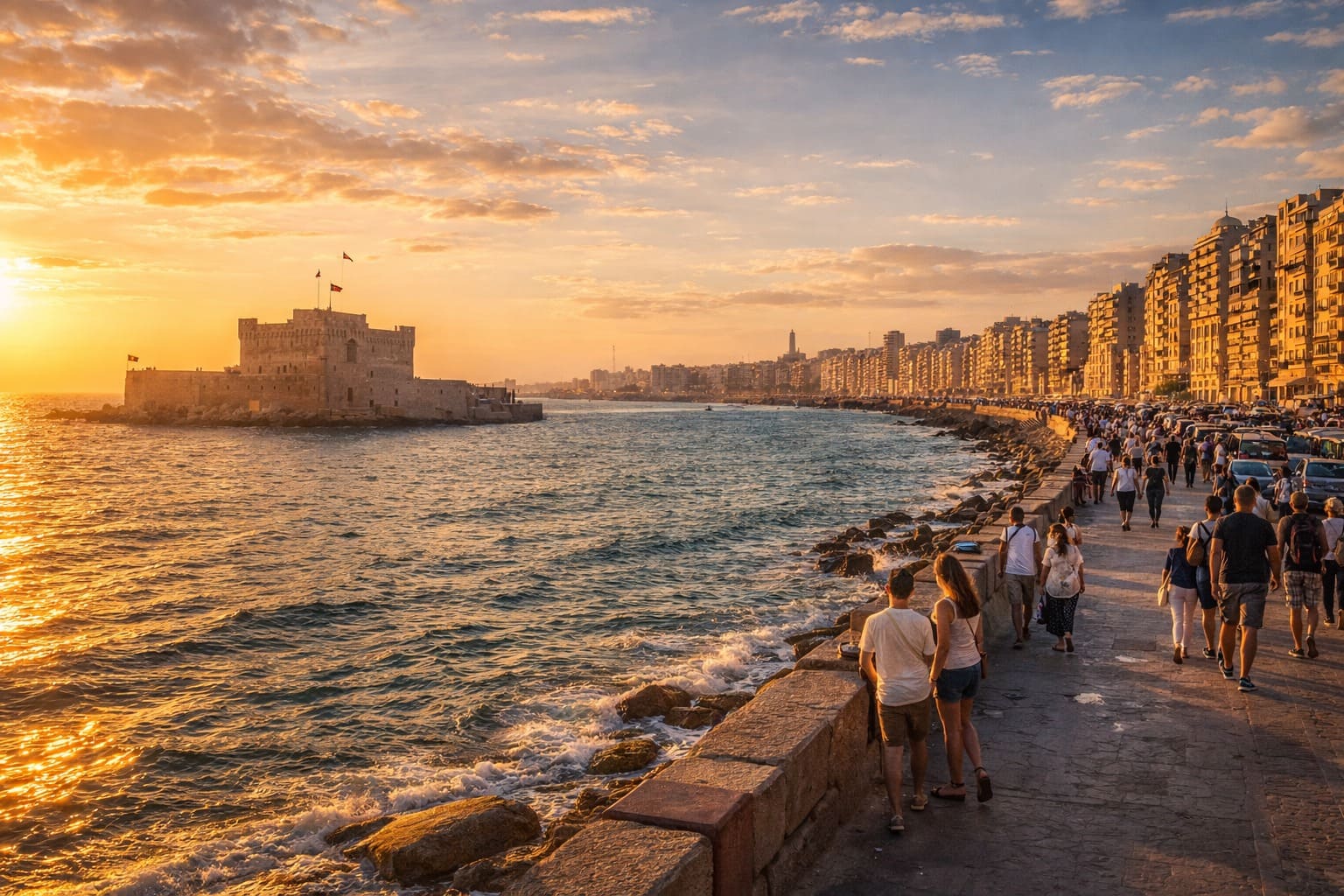
Pair the Catacombs with the amphitheatre, Pompey’s Pillar and the city’s Mediterranean character.
Visit Kom Ombo and Edfu between Aswan and Luxor, ideally with an expert guide.
Settlements along the river reveal how grain, goods, armies and ideas moved through Roman Egypt.
October through April normally brings more comfortable conditions for archaeological exploration.
Frequently asked questions
When did Egypt become part of the Roman Empire?
Egypt became a Roman province in 30 BCE after the defeat of Cleopatra VII and Mark Antony.
What is the best Roman site in Alexandria?
Kom El Shoqafa is the strongest single example because its tombs visibly combine Egyptian, Greek and Roman traditions.
Are Kom Ombo and Edfu Roman temples?
They are primarily Ptolemaic Egyptian temples, but both remained active and received additions or decoration during Roman rule.
Can the sites be visited in one day?
Alexandria’s sites can fit into one day, but Kom Ombo and Edfu require a separate Upper Egypt itinerary.
Why are Roman sites less crowded?
Many visitors prioritize pharaonic monuments, leaving Roman-period archaeology outside the standard first-trip route.
Discover Egypt beyond the pharaohs
Build a private route through Alexandria and the Nile Valley with expert historical context and realistic travel times.
Plan My Roman Egypt Tour