

Eye of Ra vs Eye of Horus: What Is the Difference?
Separate two famous Egyptian eye symbols that overlap in protection but belong to different myths and divine roles.
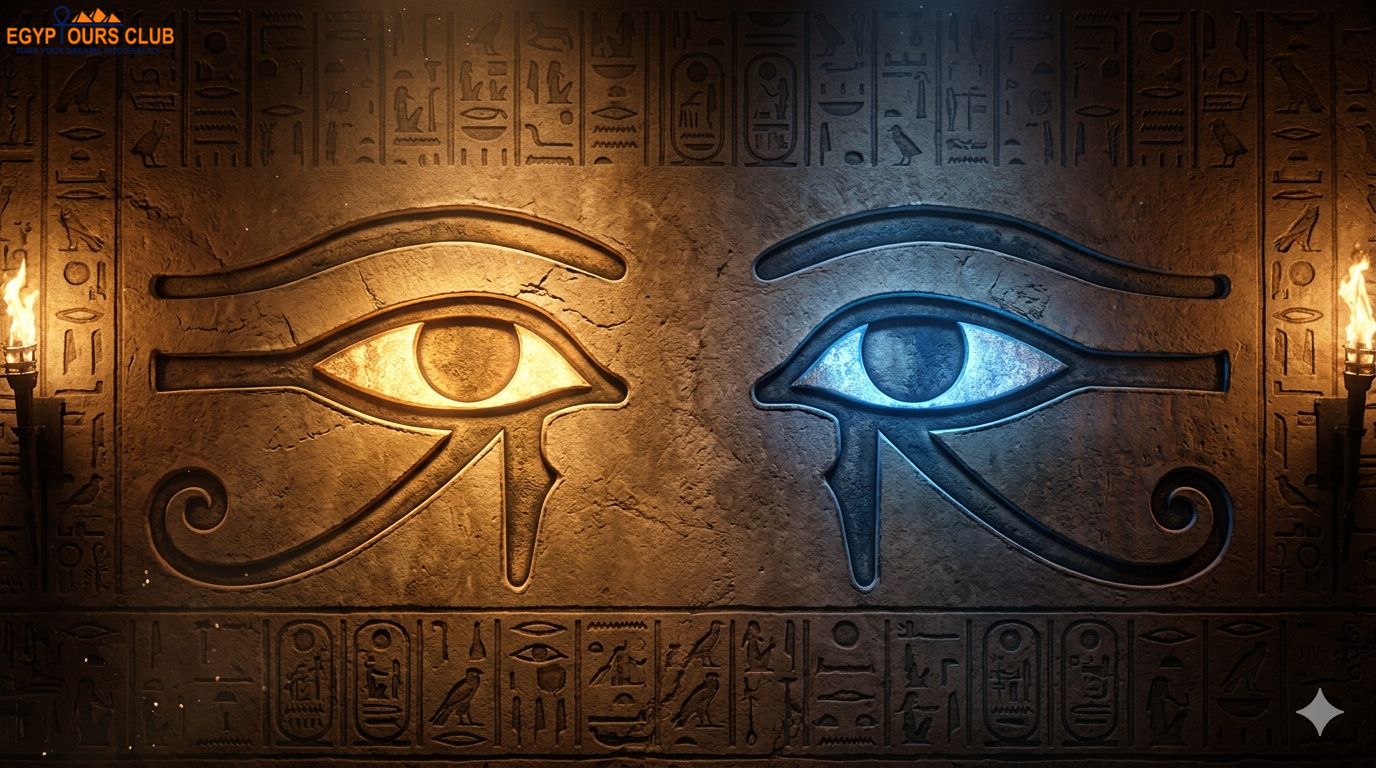
Modern jewelry often treats every Egyptian eye as the same symbol. Ancient sources are more flexible and complex: divine eyes could overlap, merge and change identity according to text, deity and ritual setting.
The key differences
Horus’s damaged eye was healed after conflict with Seth, making it a symbol of wholeness, recovery and protection.
The Eye of Ra could act independently to defend the sun god, punish enemies and restore divine authority.
The Eye of Horus often carries lunar and cyclical healing associations; the Eye of Ra is strongly solar.
The Wedjat Eye became a widespread amulet, while the Eye of Ra could be personified by goddesses such as Hathor, Sekhmet or Bastet.
How the two myths work
Horus fights Seth
In the struggle for kingship, Horus’s eye is injured, lost or divided depending on the version.
The eye is restored
Thoth or another divine power repairs it, turning damage into a model of healing and completeness.
Ra sends his eye
The solar god’s Eye can search, protect, destroy rebellion or return after becoming distant.
Fierce power is pacified
Stories of the Distant Goddess show dangerous solar force calmed and brought back into cosmic balance.
Symbols and where to see them
Common in museums and burials, these objects protected the living and dead.
Painted eyes allowed symbolic sight and protection within burial traditions.
Inscriptions and neighboring deities help identify whether an eye belongs to Horus, Ra or another divine context.
Lioness and cow goddesses reveal the Eye of Ra’s fierce and nurturing dimensions.
The GEM, Egyptian Museum and regional museums display amulets, jewelry, coffins and ritual objects.
Frequently asked questions
Are the Eye of Ra and Eye of Horus the same?
No, although their protective roles can overlap and Egyptian theology sometimes connected divine eye traditions.
Which eye represents healing?
The Eye of Horus, or Wedjat Eye, is especially associated with restoration and wholeness.
Which eye represents power?
The Eye of Ra strongly represents solar authority, protection and potentially destructive power.
Is one always left and the other right?
That simplified rule is unreliable by itself; use inscriptions and context.
Can visitors see original eye amulets?
Yes. Major Egyptian museums display many ancient Wedjat amulets and eye-decorated objects.
Decode Egyptian symbols with an expert
Explore temples, tombs and museums with an Egyptologist who explains each eye symbol in its original context.
Plan My Symbolism Tour