


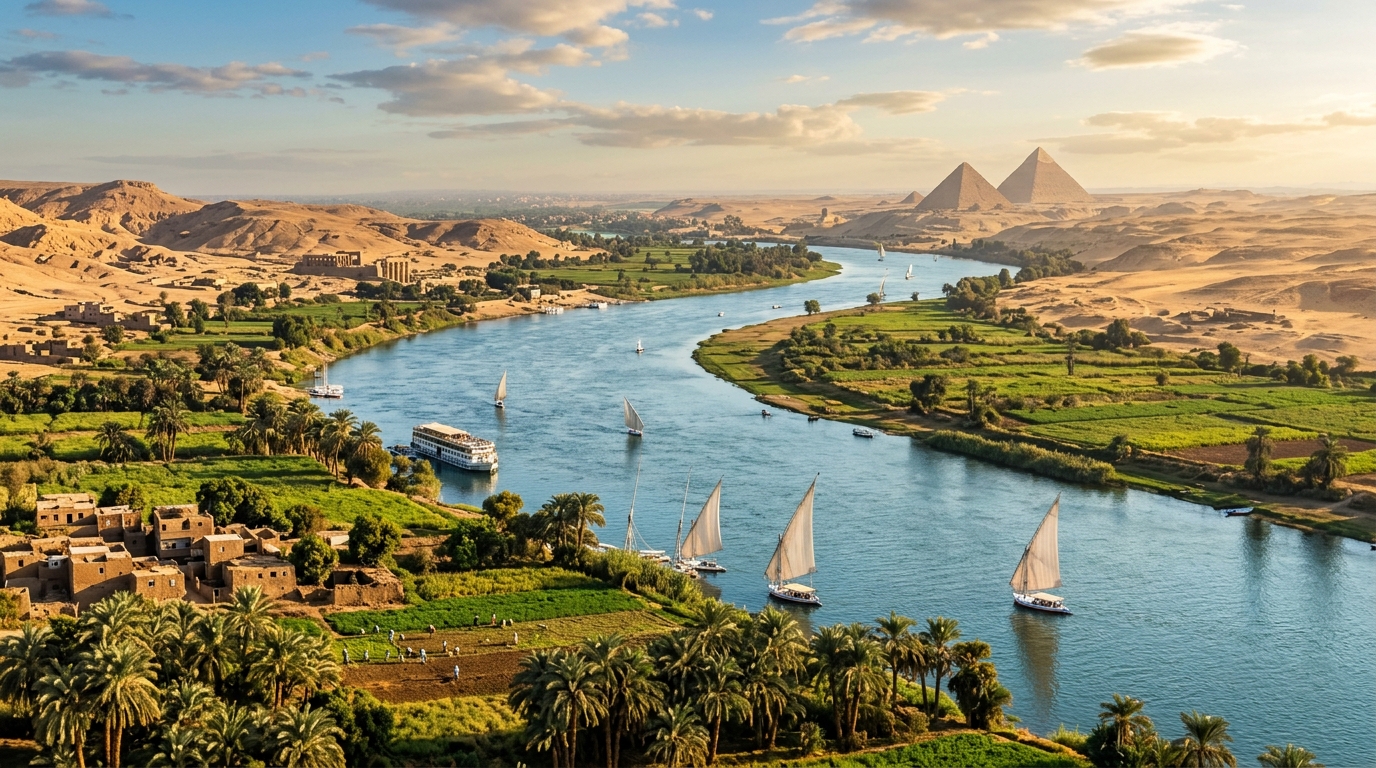
For thousands of years, the Nile River has been the undeniable lifeblood of civilization in North Africa. Snaking its way through vast deserts and bustling modern cities, this majestic waterway has captivated explorers, historians, and modern travelers alike. But when looking at a map, one of the most common questions that arises is regarding its sheer scale.
Understanding the length and geography of the Nile is the first step toward appreciating the monumental history scattered along its banks. Once you grasp its magnitude, you will quickly see why booking carefully curated Egypt tour packages is one of the most effective ways to experience its magic firsthand.
Helpful travel answer: You do not need to travel the full Nile to feel its importance. Most travelers experience the strongest historical part of the river through Cairo, Luxor, Aswan, Abu Simbel and a Nile cruise between Luxor and Aswan.
Length
About 4,132 miles / 6,650 kilometers, depending on the measurement method used.
Direction
The Nile flows from south to north before emptying into the Mediterranean Sea.
Best Egypt route
Cairo first, then Luxor and Aswan, with an optional Abu Simbel extension.
Just How Long is the Nile River?
The Nile River is widely considered the longest river in the world, stretching a mind-boggling 4,132 miles, or approximately 6,650 kilometers. To put that enormous length into perspective, if you were to stretch the Nile in a straight line across the United States, it would comfortably reach from New York to Los Angeles and then some.
The river flows from south to north, an unusual geographic phenomenon that empties into the Mediterranean Sea. It is primarily fed by two major tributaries:
- The White Nile: Originating in the Great Lakes region of central Africa, with its most distant source still debated between Rwanda and Burundi, this tributary provides a steady flow of water year-round.
- The Blue Nile: Beginning at Lake Tana in Ethiopia, the Blue Nile is responsible for much of the water and fertile soil that historically caused the Nile to flood annually.
These two rivers meet in Khartoum, Sudan, before making their grand final journey north through the heart of Egypt. Because the river spans such a massive distance, exploring even a fraction of it requires strategic Egypt itinerary planning, especially for travelers comparing 7, 8, 9 or 10-day routes.
Experiencing the River: Cruising the Lifeline of Egypt
While the river flows through eleven countries, its most famous historical stretches are found in Egypt. Today, the tourism industry is built around this waterway, offering spectacular Egypt travel packages designed to highlight the temples and tombs resting on its shores.
If you are hoping to sail these ancient waters, timing is everything. The best time for Nile cruise departures is between October and April. During these cooler months, daytime temperatures are more comfortable for exploring outdoor temples, while the evenings offer a refreshing breeze as you sail from one ancient marvel to the next.
When booking, travelers frequently weigh the benefits of a private guide vs group tours. Group tours can be useful for socializing and keeping costs low, while a private guide offers the flexibility to explore crowded temples at your own pace, ask deeper questions, and absorb the history of the Nile's banks without feeling rushed.
Crafting Your Nile Journey: Essential Stops
Because the river is so vast, you cannot see it all in one trip. The best Egypt tours divide the country into manageable, distinct regions that match your available days, travel pace and interests.
1
Cairo: The Northern Delta
Before the Nile spills into the Mediterranean, it passes through Cairo. Booking a few Cairo day tours is essential for any visitor. Your main priority here will be the ancient wonders sitting just on the edge of the city. A comprehensive Giza Pyramids visiting guide will usually recommend arriving right at opening time, often around 8:00 AM, to beat the harsh midday sun and the heavy tourist bus crowds.
While exploring the capital, take time to experience the local culinary scene. A good traditional Egyptian street food guide will point you toward Koshari, a hearty mix of lentils, macaroni, rice and spicy tomato sauce, and freshly fried Ta'ameya, the Egyptian falafel made from fava beans.
2
Luxor and Aswan: The Heart of Antiquity
Moving south along the Nile, you will reach Luxor, often described as the world’s greatest open-air museum. To get here, you have a few Cairo to Luxor travel options. You can take a quick domestic flight, board a scenic overnight sleeper train, or arrange a private vehicle depending on your time, budget and comfort level.
Once in Luxor, securing your Valley of the Kings entry early in the morning is crucial. Standard tickets normally allow access to a selection of tombs, but you should budget extra if you want a special ticket for famous royal tombs such as Seti I or Tutankhamun.
Further south lies Aswan, the traditional starting point for many Nile cruises. From here, you can venture down to the very edge of the Egyptian border. If you plan to do this, keep these Abu Simbel day trip tips in mind: the journey requires a very early morning start, often around 3:00 AM. Bring a travel pillow for the long drive through the desert, and wear layers because desert mornings can be surprisingly cold.
3
Beyond the River's Banks
While the Nile is the star of the show, Egypt's varied geography offers even more. If you plan to visit the breathtaking White or Black Deserts, an Egyptian desert packing list is non-negotiable. Ensure you pack high-SPF sunscreen, a wide-brimmed hat, sturdy closed-toe shoes and thermal layers, as desert temperatures can drop dramatically at night.
For those looking to relax after a long week of temple hopping, heading east to the coast is highly recommended. There are magnificent luxury Red Sea resort options in cities like Sharm El-Sheikh and Hurghada, offering world-class scuba diving, snorkeling and all-inclusive relaxation.
Practical Planning for Your Egypt Adventure
Understanding the length of the Nile is easy; navigating the logistics of an international trip requires a bit more preparation. Through high-quality Egypt tours, many of these details can be handled for you, but independent knowledge is still valuable.
Visas and Budgets
Before you even pack your bags, Egyptian tourist visa access is required for most nationalities. Many travelers can use the official e-Visa process or obtain a visa on arrival, depending on nationality and current entry rules. Always check the latest requirements before travel.
Travelers constantly ask: how much does an Egypt trip cost? The answer depends heavily on your travel style. Egypt can be budget-friendly for backpackers, with simple stays and street food costing far less than luxury travel. Mid-range travelers should expect to budget more for domestic flights, boutique hotels, entrance fees and guided sightseeing, while luxury travelers booking five-star Nile cruises and private Egyptologists will naturally spend significantly more.
Staying Safe and Savvy
Egypt is a welcoming, hospitable country, but it operates at a fast, high-energy pace that can initially cause culture shock.
- City safety: Staying safe in Cairo is primarily about common sense and traffic awareness. Crossing the street in Cairo’s busy traffic is an art form; the best strategy is to walk confidently beside locals when possible. Violent crime is uncommon in tourist areas, though petty pickpocketing in crowded bazaars can happen anywhere in the world.
- Avoiding scams: Be aware of common Egypt tourist scams. At the Giza Pyramids, a frequent example involves someone offering a “free” gift or camel ride and then demanding a large tip. Politely but firmly say “La, shukran” — no, thank you — and keep walking.
- Solo female travel: Many travelers ask: is Egypt safe for solo women? The short answer is yes, with mindful preparation. Modest dress, covering shoulders and knees, can help reduce unwanted attention. Many solo female travelers also find that booking day tours or hiring a reputable guide gives them a comfortable buffer in busy markets and major sightseeing areas.
Best Nile River Itinerary Ideas
The right route depends on how much time you have. A short Cairo stay introduces the Nile and the Pyramids, but the river becomes far more powerful when you add Luxor, Aswan and a cruise section.
The Takeaway
The Nile River is a geographical marvel. At approximately 6,650 kilometers long, its waters have sustained life, inspired myths and witnessed the rise and fall of one of history’s greatest empires. While you cannot traverse the entire length of the river in a single vacation, visiting its most culturally rich shores is entirely within reach.
Whether you are marveling at the sheer scale of the Pyramids, tasting spices in Cairo, or drifting peacefully on a cruise ship past ancient temples, Egypt offers an experience unlike any other. By carefully selecting your Egypt tour packages, researching your routes and planning with the climate in mind, your journey along the world's longest river can be nothing short of extraordinary. Start outlining your itinerary today, and prepare to be humbled by the timeless flow of the mighty Nile.
Plan Your Nile Journey with Egypt Tours Club
Send your travel dates, arrival city, hotel level, preferred pace and must-see places. Egypt Tours Club can recommend a prepared Nile route or build a private itinerary around Cairo, Luxor, Aswan, Abu Simbel and the Red Sea.
Helpful Travel Answers About the Nile River
How long is the Nile River?
The Nile River is widely described as approximately 4,132 miles, or 6,650 kilometers, long. Exact measurements may vary slightly because river length depends on how the source and route are measured.
Is the Nile the longest river in the world?
The Nile is widely considered the longest river in the world, although some studies compare it closely with the Amazon. For most travel and educational references, the Nile remains the classic answer to the longest-river question.
Which countries does the Nile flow through?
The Nile basin is connected to eleven African countries, including Egypt, Sudan, South Sudan, Ethiopia, Uganda, Kenya, Tanzania, Rwanda, Burundi, the Democratic Republic of the Congo and Eritrea.
What are the two main tributaries of the Nile?
The two main tributaries are the White Nile and the Blue Nile. They meet in Khartoum, Sudan, before the Nile continues north through Egypt toward the Mediterranean Sea.
What is the best way to experience the Nile in Egypt?
The most popular way is to combine Cairo with a Nile cruise between Luxor and Aswan. This route allows travelers to see the Pyramids, Valley of the Kings, Karnak Temple, Philae Temple, Kom Ombo, Edfu and optional Abu Simbel.
What is the best time for a Nile cruise?
October to April is usually the most comfortable season for a Nile cruise because temperatures are cooler for temple visits and outdoor sightseeing.