


Khufu, the Great Pyramid
The largest pyramid on the plateau and the only surviving monument of the traditional Seven Wonders. Interior access is a separate, physically demanding visit.
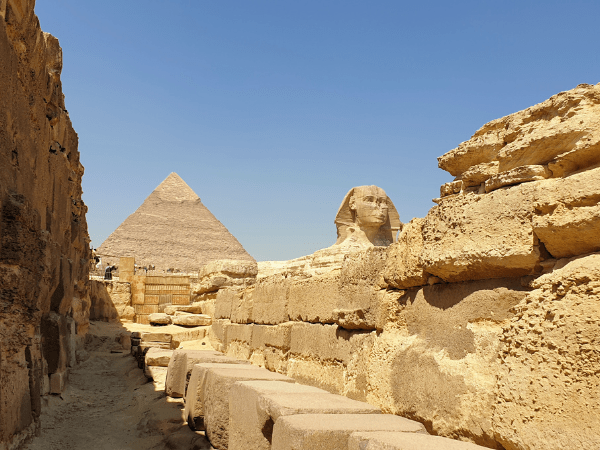
A clear plan for the Great Pyramid of Khufu, Khafre, Menkaure, the panoramic viewpoint and Great Sphinx, with ticket advice, realistic timing and the best Cairo tour combinations.
The best first visit to the Giza Pyramids takes around three to four hours. Start with the Great Pyramid of Khufu, continue to Khafre and Menkaure, stop at the panoramic viewpoint, and finish at the Great Sphinx and Valley Temple area. Arrive early when practical, keep pyramid-interior entry optional, and confirm current operating rules before travel.
The Giza Plateau contains the Fourth Dynasty royal pyramid complexes of Khufu, Khafre and Menkaure, plus associated temples, subsidiary pyramids, tombs, causeways and the Great Sphinx. It forms part of UNESCO’s wider World Heritage property, Memphis and its Necropolis – the Pyramid Fields from Giza to Dahshur.
The pyramids were once clad in fine limestone that reflected sunlight. Khafre's pyramid retains a visible portion near its summit. Today, the contrast between the smooth surviving casing and the exposed stone core is one of the best clues to how these royal monuments once appeared.
Open the dedicated ETC Giza visitor guide · Read the UNESCO listing
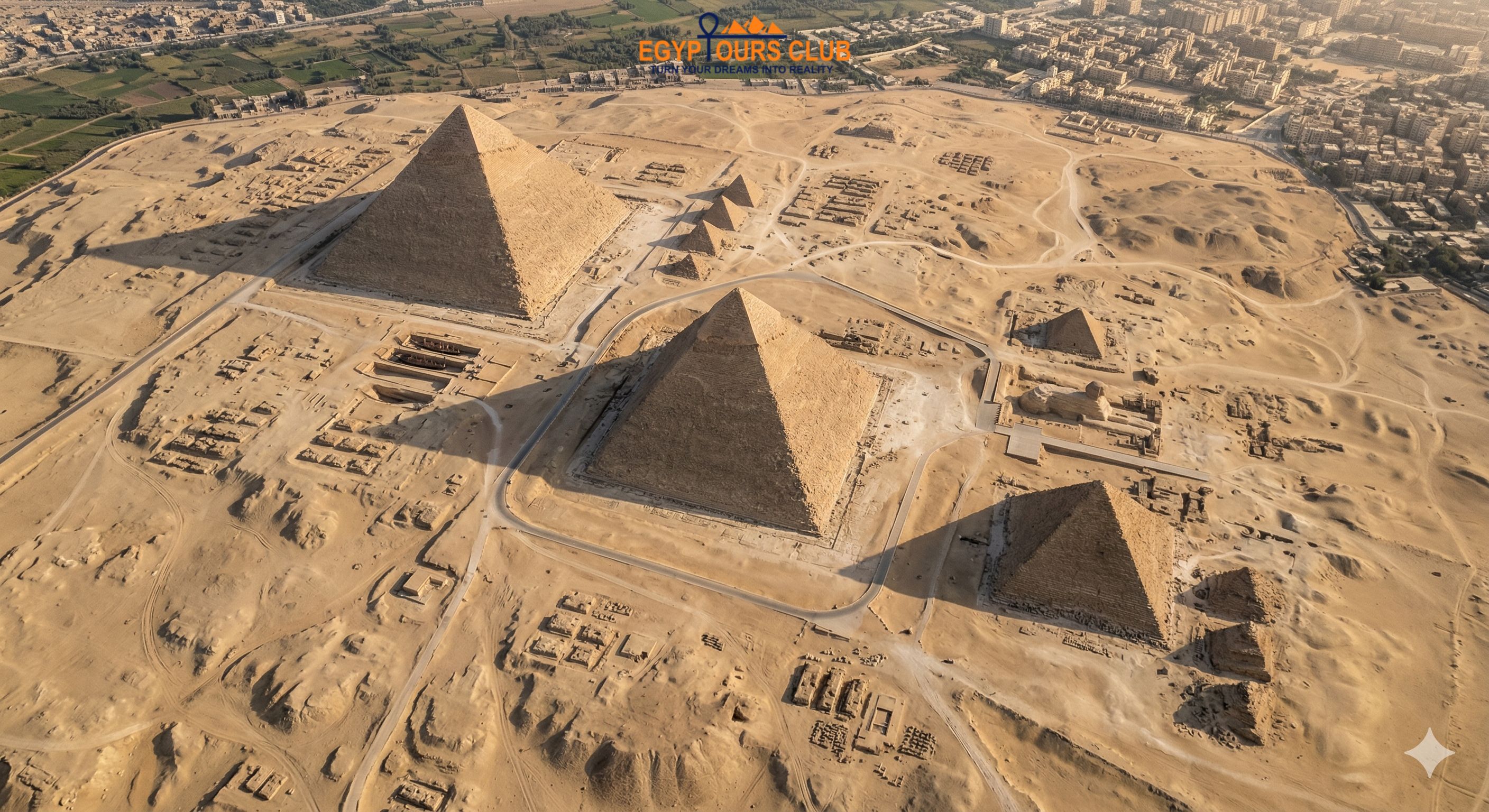
The largest pyramid on the plateau and the only surviving monument of the traditional Seven Wonders. Interior access is a separate, physically demanding visit.
Often appears taller from some viewpoints because of its elevated bedrock position. Its surviving upper casing is particularly distinctive.
The smallest of Giza's three major royal pyramids, valuable for seeing the range and development of Fourth Dynasty funerary architecture.
The exact driving and walking circuit depends on the active visitor entrances, transport arrangements and any temporary restrictions. Use this order as the sightseeing sequence, not as a promise that every point connects by a direct walking path.
Study its scale, the stone courses and the surrounding funerary context before deciding whether to spend extra time on an interior visit.
Compare the profile of the pyramid with Khufu and look for the surviving fine limestone casing near the top.
Use the smaller pyramid and surrounding structures to understand the complete Fourth Dynasty landscape.
This is where the three principal pyramids make the strongest single composition. Allow time for wider photographs, not just a quick stop.
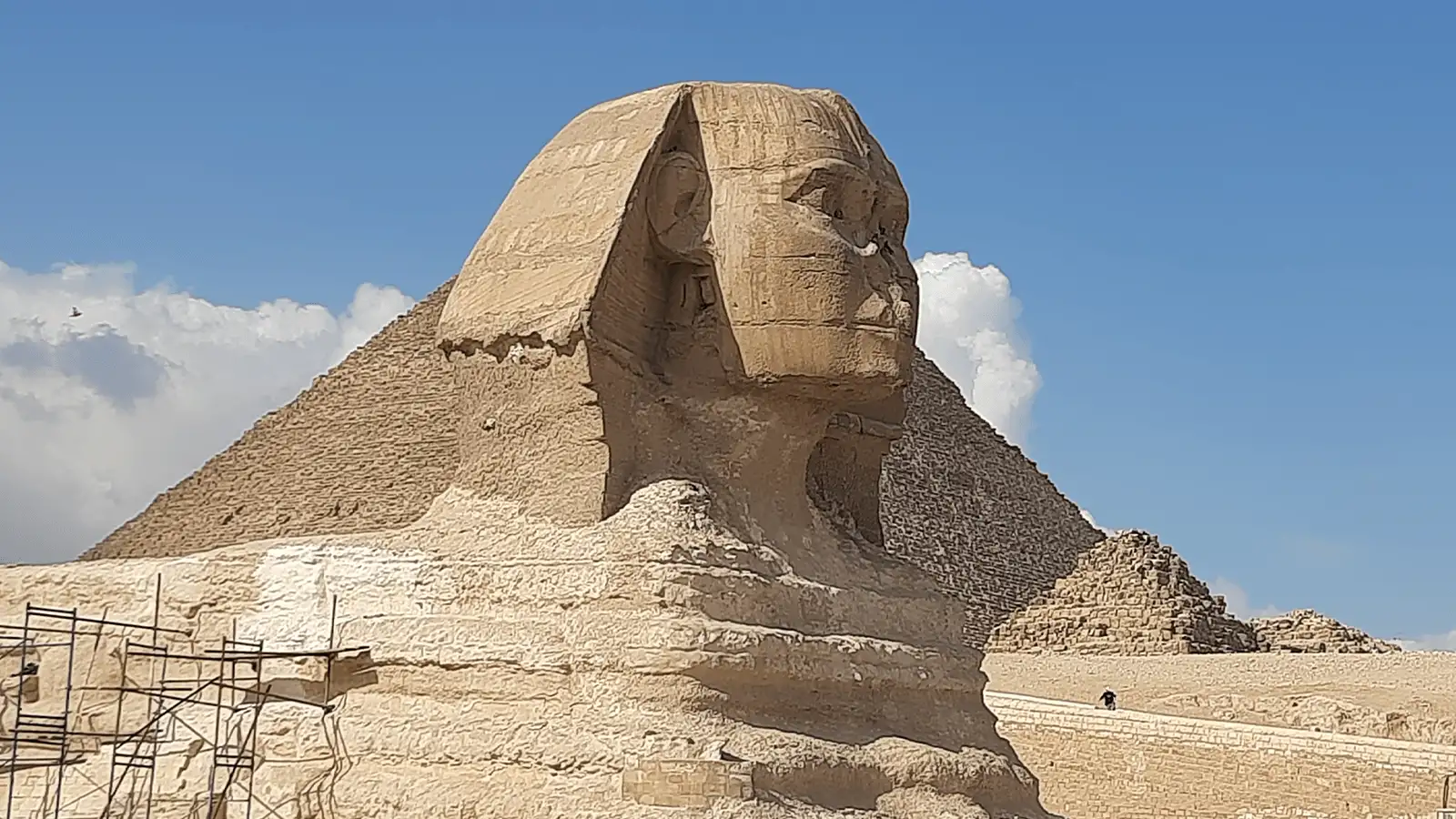
Read the lion-bodied monument in the context of Khafre’s complex and the Valley Temple. Visitor access and approved paths may vary.
General plateau admission and entering a pyramid are not the same ticket. The standard archaeological-site ticket covers the main outdoor visit, while access to selected pyramid interiors requires additional admission where available. The museum has its own ticketing arrangements.
| Admission or activity | What to check | Important distinction |
|---|---|---|
| Giza Plateau | Current site entry category, date and visitor rules | Basis of the outdoor archaeological visit |
| Inside the Great Pyramid | Separate ticket, access and physical suitability | Not automatically covered by plateau admission |
| Other pyramid interiors | Which interior is open and its ticket category | Availability can change |
| Grand Egyptian Museum | Separate date and admission time | Different attraction and ticket system |
| Camel or horse rides | Agreed provider, price, duration and route | Optional activity, not standard admission |
Inside the pyramid you encounter steep or narrow passages and the King's Chamber. There are no decorated wall scenes to expect. Heat, confined space and the effort of ascending passages may make the experience unsuitable for some visitors.
A well-guided external visit is not a lesser experience. Choose based on interest and physical comfort, not pressure.
Khufu's first funerary boat was moved from its former museum beside the Great Pyramid to the Grand Egyptian Museum in August 2021. The old plateau building is no longer the correct destination for that collection.
When planning the GEM, check the current arrangements for the Khufu Boats Museum alongside the galleries.
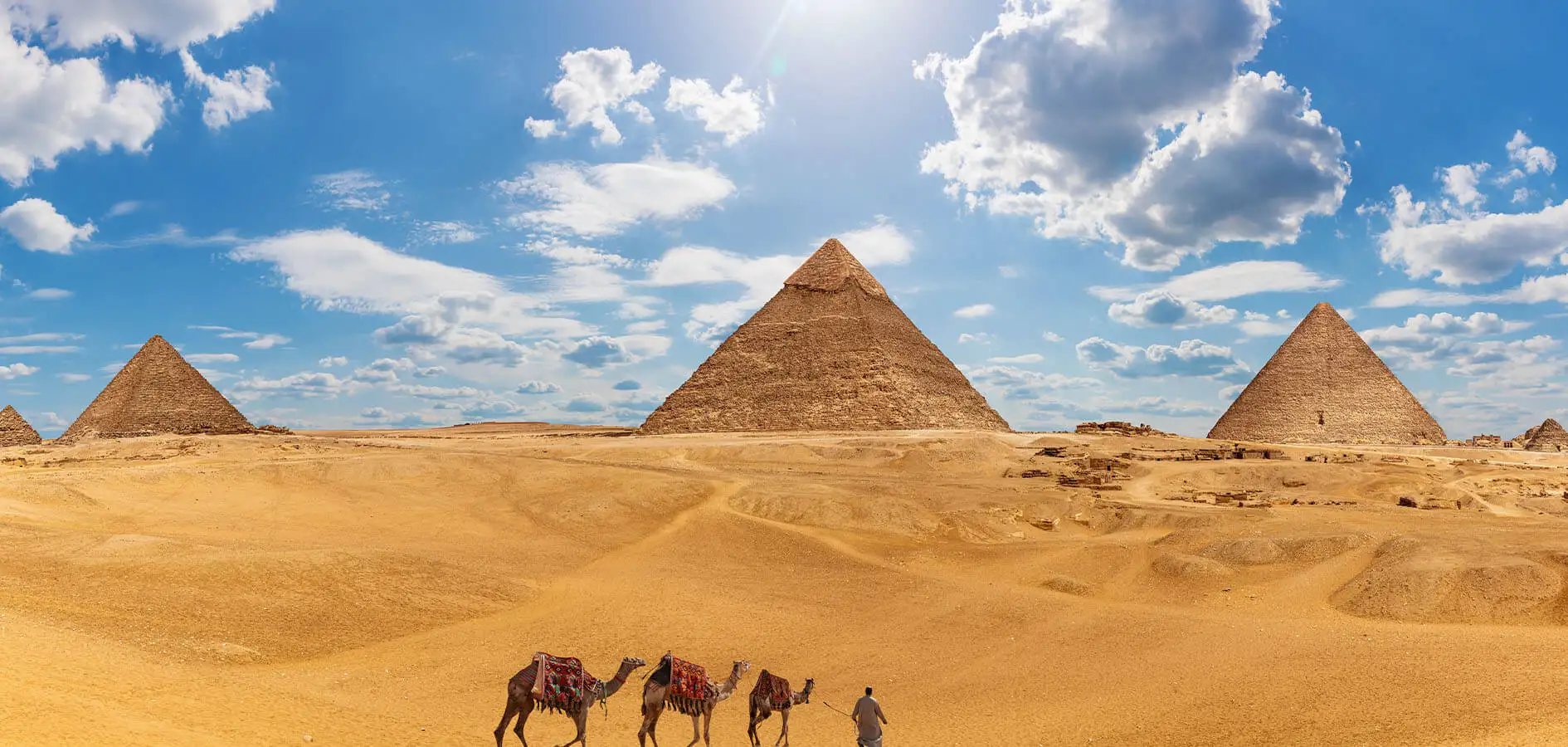
Step away from the monuments to capture all three principal pyramids in one frame. Ask for the official panoramic viewpoint.
Use the designated viewing area for a clear view of the face, body and nearby royal complex. Respect barriers and route instructions.

Only book if it suits you. Confirm the full price, time and permitted route, and choose a responsible animal handler.
The plateau is exposed. Earlier light and lower temperatures are often more comfortable, but confirm the active entry time rather than assuming the old 8:00 AM opening still applies.
Travel time depends on your hotel district and traffic. A central Cairo pickup can take significantly longer than one from a Giza hotel.
Expect stone, sand, uneven ground and distance between stops. Bring water, sunscreen, a hat and a phone or camera with enough battery.
Agree in advance on camel rides, photographs, additional monument admission and any other paid experience. Never assume an unsolicited offer is included.
Children and older guests often benefit from fewer interior visits, more rest stops and a vehicle-assisted route when currently permitted.
Not all areas are step-free. Pyramid interiors are particularly difficult for mobility-limited travelers. Ask about transport and accessible viewing options before booking.
Khufu, Khafre, Menkaure, panorama, Sphinx and Valley Temple. Best for first-time visitors or travelers with limited time.
Outdoor archaeology and museum galleries on one day. Allow substantial museum time; choose two days for a slower experience.
Trace pyramid development from Djoser's Step Pyramid and Dahshur to the monumental Giza royal complexes.
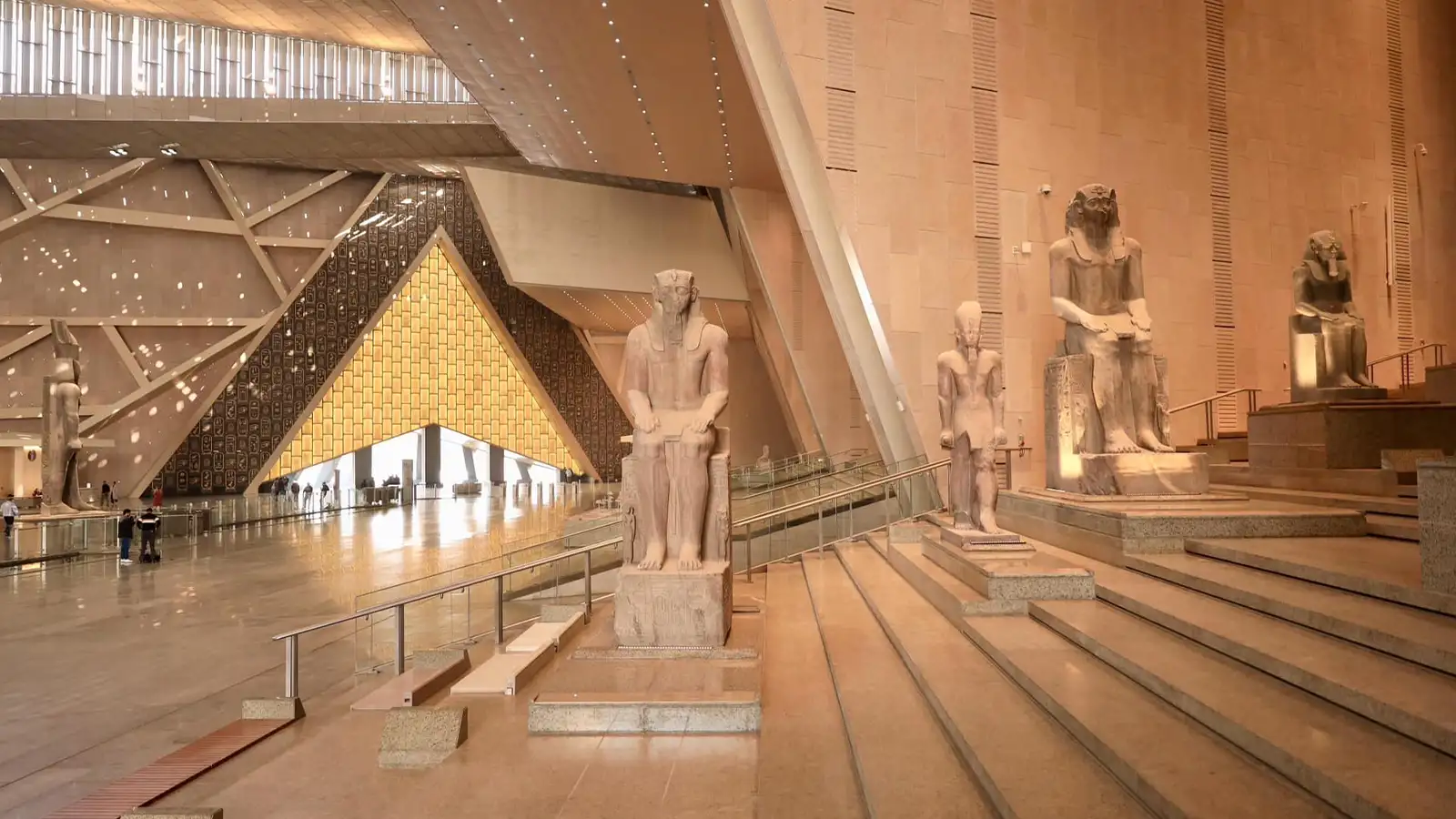
The museum connects the monuments outside with objects, royal history and collections inside. It is no longer a future attraction: its main galleries and visitor spaces are open.
For a thoughtful visit, consider reserving several hours for the museum alone. When your hotel-to-Giza drive is long or your group prefers a slower pace, separate the plateau and museum into different days.
Allow about three to four hours for the main pyramids, panoramic viewpoint and Sphinx. Add more time for pyramid interiors, mobility breaks or photography. A visit with the Grand Egyptian Museum is a full-day plan.
Yes. General Giza Plateau admission does not automatically include access to the interior of the Great Pyramid or other pyramid interiors. Check the current ticket categories and what is open on your visit date.
An early visit is usually more comfortable for walking and often provides softer light. Confirm the current opening and last-entry times from the official visitor information before setting your pickup.
Yes. It is a logical pairing, but allow a full day and keep expectations realistic. For visitors who want a detailed museum experience and a relaxed archaeological visit, separate days can be better.
They are part of the wider Giza archaeological landscape and are standard stops on a classic plateau route. Confirm the current visitor route and any access restrictions at the site.
Yes, independent visiting is possible. A qualified Egyptologist can add archaeological context and help manage the route, but a guide is not compulsory for every standard visit.
No. Camel and horse rides are optional services arranged separately. Agree on the route, duration and total price before accepting, and choose an operator that treats animals responsibly.
No. Khufu’s first boat was moved from the former Giza Plateau display to the Grand Egyptian Museum in August 2021. Check the museum’s current Khufu Boats arrangements when planning a visit.
Not necessarily. Some interior passages are narrow, steep, warm and physically demanding. Assess each person’s comfort and mobility; viewing the pyramids from outside is a complete experience in itself.
Bring drinking water, comfortable walking shoes, sun protection and your booking details. Allow for uneven ground, exposed areas and traffic from your hotel. Keep your admission ticket available while on site.
Use official sources for archaeology and the latest site rules; use ETC tour pages to compare guiding, pickup and included services. Entry prices and opening arrangements are not fixed in this article because they can change.
Request a private Egyptologist, air-conditioned transportation and a realistic itinerary for Giza, with museum or Saqqara extensions when your travel dates allow. Check the exact inclusions, ticket categories and optional expenses before confirming.
Editorial note: updated 27 November 2026. Confirm visitor entrance procedures, plateau access, ticket categories, interior availability, tour inclusions and photo rules close to your visit. All article photographs are drawn from Egypt Tours Club's own media-library URLs.