


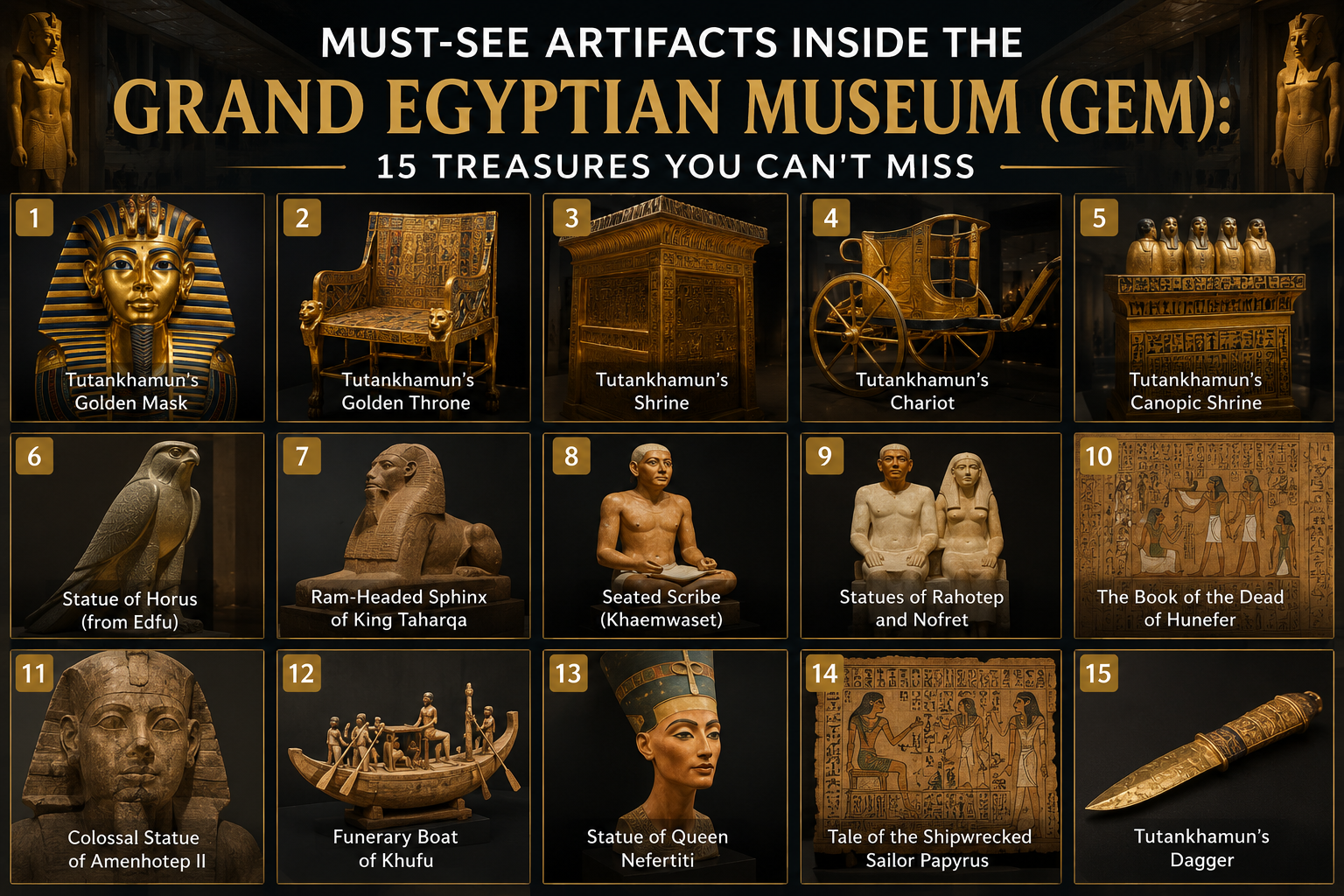
Must-See Artifacts Inside GEM: 15 Treasures You Can’t Miss
From Tutankhamun’s golden masterpieces to monumental royal sculptures and the ancient vessel of Khufu.
The Grand Egyptian Museum presents royal treasures, monumental sculpture and everyday objects across thousands of years of Egyptian history. The following 15 highlights create a practical route for a first visit.
Treasures of Tutankhamun
The Golden Burial Mask
The most recognisable treasure from Tutankhamun’s tomb. Made from solid gold and inlaid with precious materials, it portrays the king in divine, eternal form.
Tutankhamun’s Royal Diadem
This elaborate gold headband was found beneath the funerary mask and carries the vulture and cobra symbols of royal authority over Upper and Lower Egypt.
The Golden Throne
A celebrated royal chair showing Tutankhamun and Ankhesenamun in an intimate palace scene beneath the rays of the Aten.
The King’s Nested Coffins
The richly decorated anthropoid coffins formed part of the protective sequence surrounding the young king’s mummy.
The Canopic Shrine
An elegant gilded shrine protected by four goddesses and created to guard the king’s preserved internal organs in the afterlife.
Tutankhamun’s Guardian Statues
Two dark, gilded statues stood like silent sentinels at the sealed entrance to the king’s burial chamber.
The Ceremonial Chariots
Tutankhamun’s chariots reveal royal ceremony, transport, hunting and highly sophisticated ancient craftsmanship.
The Alabaster Wishing Cup
A delicate lotus-shaped vessel whose inscription expresses a wish that the king’s spirit might live for millions of years.
The Golden Sandals
These extraordinary pieces demonstrate how even royal footwear could carry ritual meaning and exceptional artistry.
The Funerary Beds
Animal-shaped ritual beds associated with rebirth and divine protection were placed among the king’s burial equipment.
Monumental Masterpieces
Colossal Statue of Ramses II
The monumental king dominates the Grand Hall and provides one of the museum’s most dramatic first impressions.
The Hanging Obelisk
Displayed so visitors can walk beneath it, the obelisk reveals royal inscriptions that are normally impossible to examine from below.
Ramses II, Ptah and Sekhmet
This colossal red-granite group presents Ramses II between the creator god Ptah and the lioness-headed goddess Sekhmet.
Ramses II and a Goddess
A powerful Grand Staircase sculpture shows the king beside a protective goddess, probably the foreign war deity Anath.
A Vessel from the Pyramid Age
Khufu’s Ancient Boat
The remarkably preserved royal vessel discovered beside the Great Pyramid offers exceptional evidence of Old Kingdom shipbuilding and royal funerary belief.
Best Route for Seeing the Highlights
- Begin with the Hanging Obelisk and Ramses II.
- Continue through the sculptures of the Grand Staircase.
- Enter the Tutankhamun Galleries with at least 75–90 minutes available.
- Explore selected Main Galleries.
- Finish at Khufu’s Boats Museum.
Practical Tips
- Book a timed ticket through the official GEM portal.
- Allow 4–5 hours for a balanced first visit.
- Wear comfortable walking shoes.
- Do not use flash, tripods or selfie sticks.
- Consider a licensed Egyptologist guide for historical context.
- Save the museum map or identify priority sections before entering.
Frequently Asked Questions
Is Tutankhamun’s golden mask at GEM?
Yes. The official GEM collection identifies it as a highlight of the Tutankhamun Galleries.
How long should I spend in the Tutankhamun Galleries?
Allow approximately 75–90 minutes for a meaningful first visit.
Is Khufu’s boat included?
The official ticket portal currently lists Khufu’s Boats Museum among the included museum areas.
Can I photograph the artifacts?
Personal photography is generally allowed subject to gallery restrictions, but flash and professional equipment are prohibited.
Discover GEM with an Egyptologist
Egypt Tours Club can coordinate your tickets, private transfers and a structured tour of the museum’s greatest treasures.
Explore Cairo Day Tours Create a Tailor-Made Trip