

Photography Tips at Giza: Capture Stunning Photos of the Pyramids Like a Pro
Master the light, viewpoints, composition and camera settings that turn a busy visit into memorable pyramid photographs.
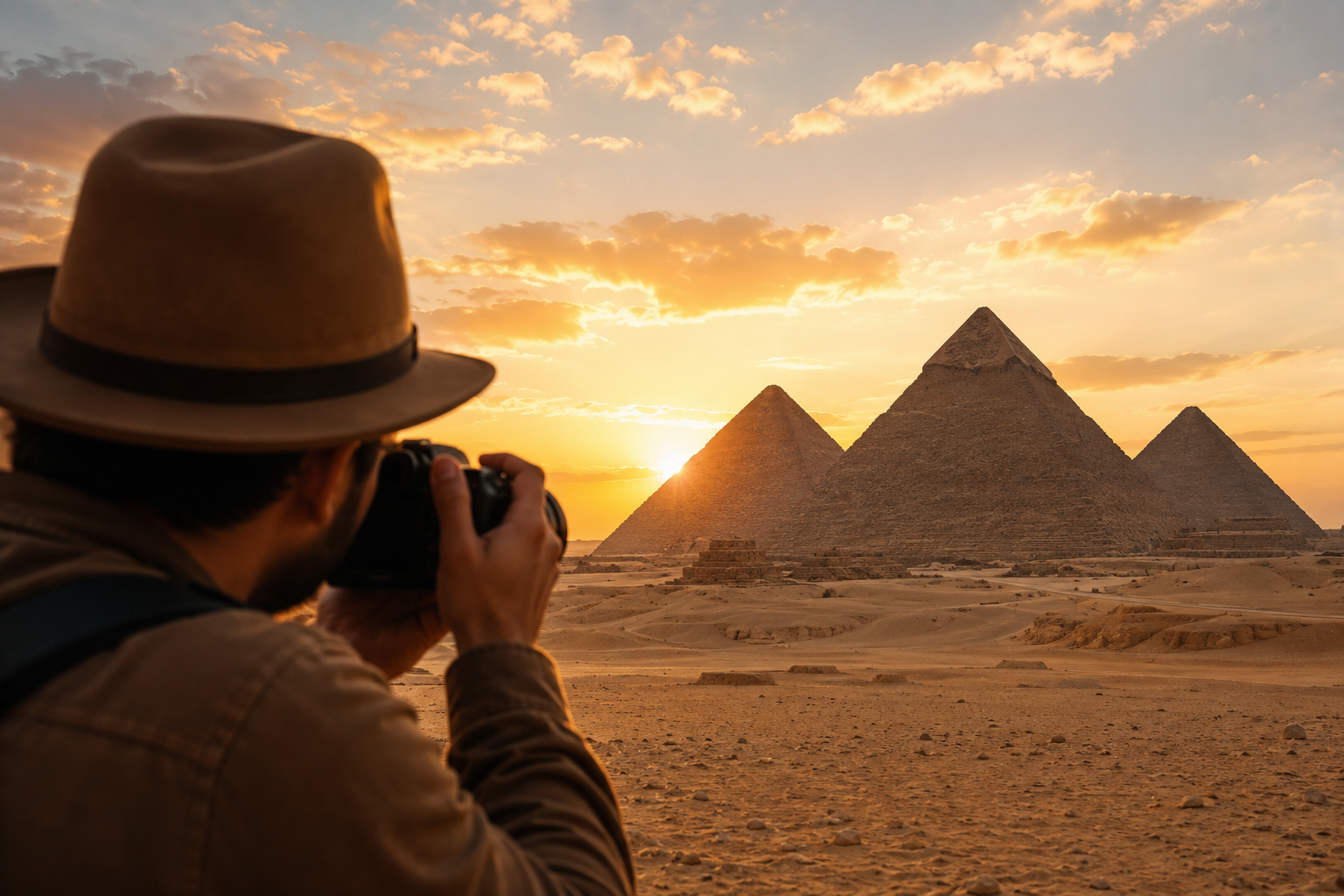
The Pyramids of Giza look simple from a distance, but their huge scale, pale desert light and busy visitor areas make thoughtful photography essential. This guide works for phones, compact cameras and interchangeable-lens cameras.
Choose the best light
Best Giza photo locations

Panoramic viewpoint
The classic place to align the three principal pyramids. A medium telephoto lens compresses the distances more dramatically.

Sphinx viewpoint
Move laterally within the designated viewing area to balance the Sphinx with Khafre’s pyramid instead of centering both.

Cemetery paths
Accessible mastabas provide foreground layers, texture and quieter perspectives of the Great Pyramid.
Composition techniques that work
- Place the pyramid slightly off-centre and leave space in the direction of a person or camel.
- Use a doorway, stone wall or temple opening as a natural frame.
- Step farther back: proximity exaggerates scale but can remove the pyramid’s recognizable shape.
- Include a person for scale, but ask permission before photographing identifiable people.
- Keep vertical edges intentional and check the horizon before shooting.
- Capture wide, medium and detail frames at every stop.
Simple camera settings
Shoot RAW when available, protect bright highlights and check the histogram. Avoid over-processing: pyramid stone should retain warm texture without orange saturation.
Smartphone photography tips
- Clean the lens before every major stop.
- Tap the brightest stone and lower exposure slightly.
- Use the main lens for quality; avoid excessive digital zoom.
- Use portrait mode carefully around complex stone edges.
- Turn on the grid and keep the horizon straight.
- Record short vertical clips as well as still photographs.
What to bring
A phone or camera, spare battery, lens cloth, compact power bank, protective bag and water are enough for most travelers. A wide-to-standard zoom is more useful than carrying several lenses. Do not assume tripods, drones or commercial equipment are permitted.
Common mistakes
- Arriving after the site becomes crowded and hot.
- Using only ultra-wide compositions that make pyramids look small.
- Ignoring haze and blown highlights.
- Standing in restricted areas for a “unique” angle.
- Photographing local people without permission.
- Forgetting to enjoy the site beyond the screen.
Frequently asked questions
Can I take photos at the Giza Pyramids?
Personal non-commercial photography is generally allowed, subject to current site rules and restrictions inside particular monuments.
Do professional cameras need a permit?
Rules can depend on equipment and intended use. Confirm current requirements at the official ticket office; commercial shoots and substantial lighting setups require prior authorization.
Can I use a drone at Giza?
Do not bring or operate a drone without explicit authorization from the relevant Egyptian authorities.
Which lens is best?
A standard zoom is the most versatile. A wide lens helps near monuments, while a medium telephoto creates strong layered panorama shots.
Is sunrise photography possible inside the plateau?
Normal visitors are limited by official opening hours. Never assume access before opening; arrange any special shoot through authorized channels.
Plan a photo-friendly Giza tour
Explore the plateau with an Egyptologist and a route timed around light, crowds and the viewpoints you want to photograph.
Explore Cairo ToursCreate a Tailor-Made Tour