


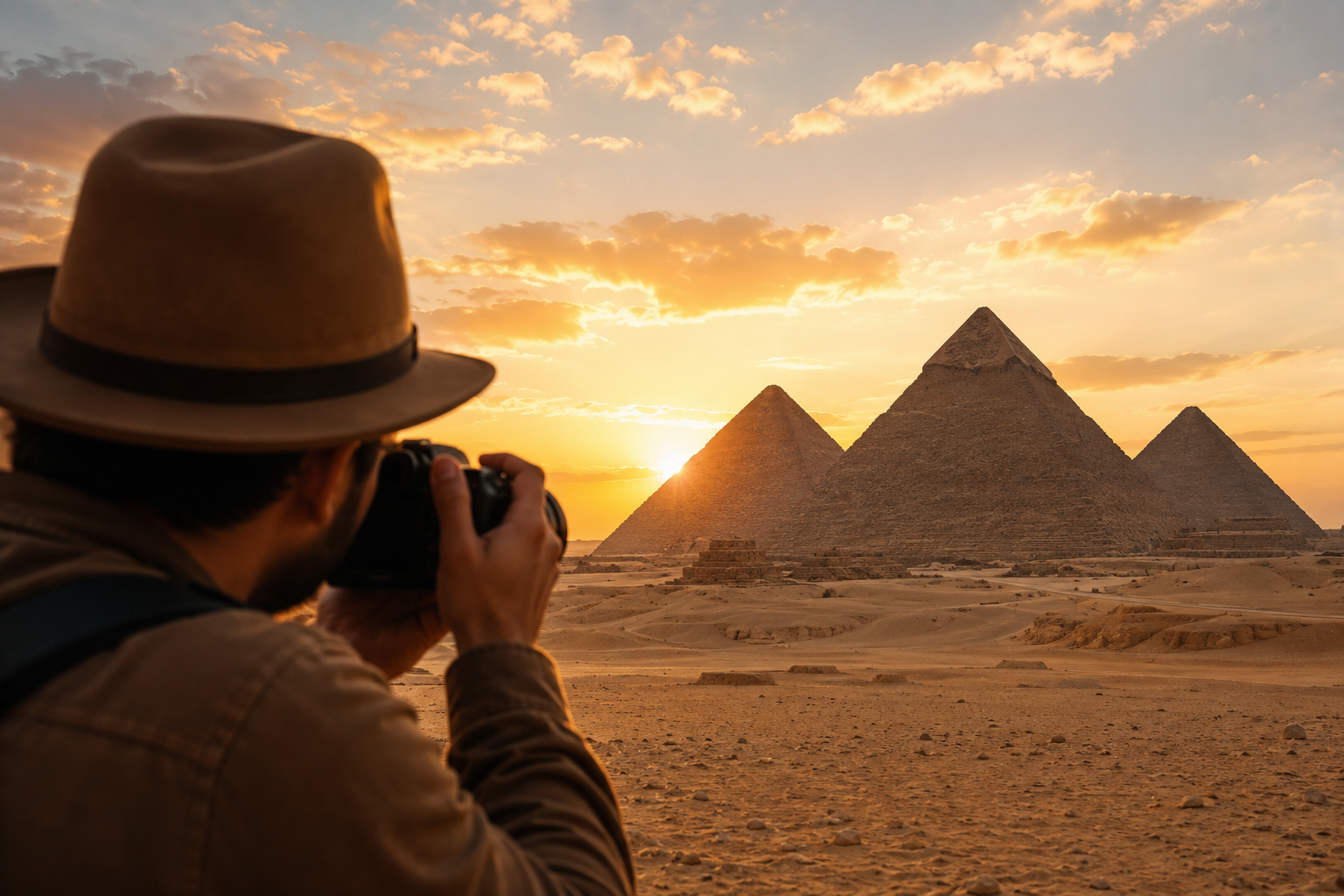
Photography Tips at Giza: Capture Stunning Photos of the Pyramids Like a Pro
The Pyramids of Giza are among the most photographed landmarks in the world. Whether you're a professional photographer, a travel blogger, or simply capturing memories with your smartphone, the Giza Plateau offers endless opportunities for breathtaking images.
From the towering Great Pyramid of Khufu to the mysterious Great Sphinx, every angle tells a different story. However, knowing where to stand, when to visit, and how to use the light can transform an ordinary snapshot into an unforgettable photograph.
This guide shares the best photography tips to help you capture the magic of Giza.
Visit at the Right Time
Lighting is one of the most important elements in photography.
Early Morning (8:00–10:00 AM)
This is the best time for most visitors.
Benefits include:
- Soft natural light
- Cooler temperatures
- Fewer tourists in your photos
- Clearer skies
- Comfortable walking conditions
Morning light beautifully illuminates the eastern faces of the pyramids.
Late Afternoon (3:00 PM–Closing)
Many photographers prefer the afternoon because of the warm golden sunlight.
You'll enjoy:
- Rich golden colors
- Longer shadows
- Dramatic desert atmosphere
- Beautiful sunset tones
- Excellent panoramic views
Avoid the harsh midday sun whenever possible, especially during summer.
The Best Photography Spots at Giza
1. The Panoramic Viewpoint
This is the most famous photography location on the Giza Plateau.
From here you can capture:
- All three pyramids in one frame
- Camel silhouettes
- Desert landscapes
- Wide-angle panoramic shots
This is the classic postcard view of Giza.
2. The Great Sphinx
The Sphinx offers some of the most iconic compositions in Egypt.
Try photographing:
- The Sphinx with the Great Pyramid behind it
- Side profiles during golden hour
- Low-angle shots to emphasize its size
Morning light works especially well here.
3. Close-Up of the Great Pyramid
Walk close to the base of the Great Pyramid.
Capture:
- Massive limestone blocks
- Texture and weathering
- Perspective looking upward
- Human subjects for scale
These images highlight the incredible engineering of ancient Egypt.
4. The Desert Edge
Moving slightly away from the main visitor paths allows you to photograph the pyramids surrounded by open desert rather than crowds.
This creates a timeless atmosphere that looks almost unchanged from ancient times.
5. Elevated Restaurant and Hotel Views
Several restaurants and hotels near the Giza Plateau offer spectacular rooftop views.
These locations are perfect for:
- Sunrise photography
- Sunset photography
- Night photography
- Time-lapse videos
Camera Settings
Landscape Photography
Recommended settings:
- Aperture: f/8–f/11
- ISO: 100–200
- Tripod (where permitted)
- Wide-angle lens (16–35mm)
Portrait Photography
Use:
- Aperture: f/2.8–f/4
- 50mm or 85mm lens
- Soft morning or evening light
Position the pyramids in the background while keeping enough distance for proper composition.
Smartphone Photography Tips
Modern smartphones can produce outstanding results.
For better photos:
- Clean your camera lens.
- Use HDR mode.
- Avoid digital zoom.
- Tap to focus on the subject.
- Slightly lower the exposure to preserve the sky.
- Shoot in landscape orientation for panoramic scenes.
Composition Tips
Professional photographers often use simple composition techniques.
Rule of Thirds
Place the pyramid slightly off-center to create a more balanced image.
Leading Lines
Use pathways, stone blocks, or desert tracks to guide the viewer's eye toward the pyramids.
Include People
Adding a person helps demonstrate the enormous scale of the pyramids.
Frame the Subject
Use natural openings, archways, or camel riders to frame the pyramids creatively.
Drone Photography
Drone photography is generally not permitted over the Giza Plateau without special authorization from the relevant Egyptian authorities.
Always check the latest regulations before bringing a drone to Egypt.
Photography Etiquette
Help preserve this incredible UNESCO World Heritage Site by following a few simple rules:
- Stay on designated paths where required.
- Never climb the pyramids.
- Respect barriers and restricted areas.
- Avoid blocking walkways while taking photos.
- Ask permission before photographing local people, camel handlers, or vendors.
Responsible photography ensures everyone can enjoy the site.
What Camera Equipment Should You Bring?
Recommended equipment includes:
- DSLR or mirrorless camera
- Smartphone with a good camera
- Wide-angle lens
- Standard zoom lens (24–70mm)
- Polarizing filter
- Extra batteries
- Spare memory cards
- Lens cleaning cloth
- Lightweight camera bag
If you are visiting during summer, protect your equipment from heat and dust.
Photography During Different Seasons
Winter (October–April)
- Comfortable temperatures
- Clear skies
- Excellent light throughout the day
Ideal for photography.
Summer (May–September)
- Bright sunlight
- Very hot afternoons
- Best to shoot early morning or late afternoon
Bring plenty of water and protect both yourself and your camera from direct sunlight.
Can You Take Photos Inside the Pyramids?
Photography policies inside pyramid interiors and museums may change over time.
Some monuments allow photography, while others have restrictions or prohibit flash photography.
Always follow the instructions of the site staff and check the current rules when purchasing your entrance ticket.
Frequently Asked Questions
What is the best time of day to photograph the Pyramids of Giza?
Early morning between 8:00 and 10:00 AM offers cooler temperatures, fewer crowds, and beautiful natural light. Late afternoon is ideal for golden-hour photography.
Where is the best photo spot at Giza?
The Panoramic Viewpoint is the most popular location because it allows you to photograph all three pyramids together with the surrounding desert.
Can I use a professional camera at Giza?
Yes. Professional cameras are generally permitted for personal photography, although certain equipment or commercial photography may require additional permissions.
Is a smartphone good enough?
Absolutely. Modern smartphones are capable of producing excellent images, especially when used during the best lighting conditions.
Should I hire a photographer?
If you're celebrating a honeymoon, engagement, family vacation, or special occasion, hiring a professional local photographer can be a great way to capture unforgettable memories.
Final Photography Tips
The Giza Plateau is one of the most extraordinary places on Earth, and every visit offers unique photographic opportunities. By arriving at the right time, choosing the best viewpoints, and using thoughtful composition, you'll return home with images that truly capture the beauty and history of Ancient Egypt.
Don't rush from one monument to another—take your time, experiment with different angles, and enjoy the experience behind the lens.
Capture the Best of Giza with Egypt Tours Club
At Egypt Tours Club, our expert Egyptologists know the best viewpoints, the quietest times to visit, and the hidden angles that many travelers miss. Whether you're traveling with a smartphone or professional camera equipment, we'll help you capture unforgettable photographs while discovering the incredible history of the Giza Plateau.
Our guided tours also include visits to other iconic photography locations across Egypt, including Saqqara, Dahshur, Luxor, Aswan, Abu Simbel, and the Grand Egyptian Museum, giving you endless opportunities to create memories that last a lifetime.
👉 Explore our Egypt tour packages:
https://egypttoursclub.com/en/package-tour/
👉 Read more Egypt travel guides:
https://egypttoursclub.com/en/blog/