


Temple of Amun-Ra: History, Significance & Why You Must Visit
Explore the monumental heart of Karnak and understand how architecture, ritual and royal power shaped its sacred landscape.
The Karnak complex grew for more than a thousand years. At its center, the precinct of Amun-Ra linked the hidden power of Amun with solar creation and royal authority, making it one of ancient Egypt’s most influential sacred institutions.
Must-see features of the temple
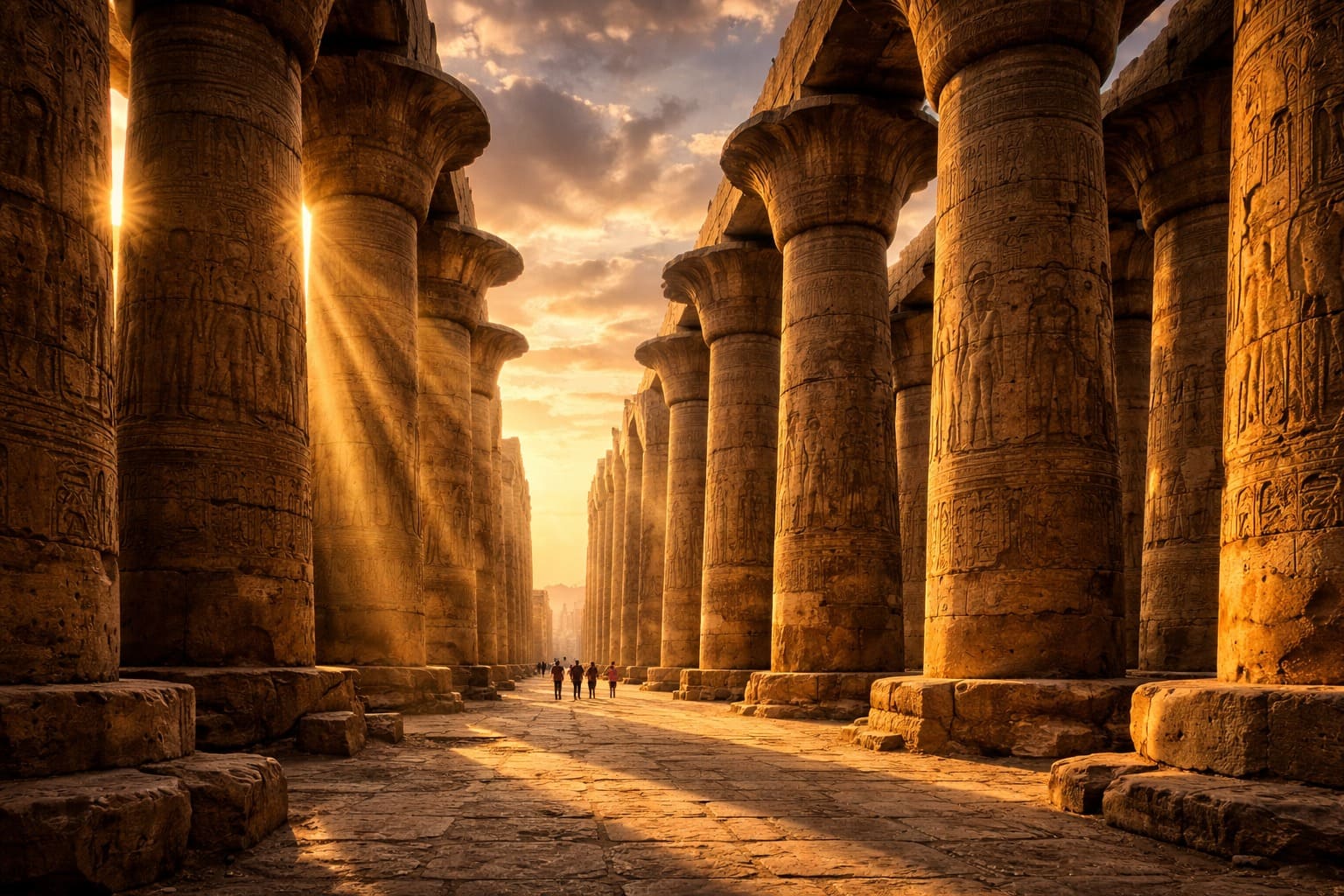
Great Hypostyle Hall
A forest of colossal columns created under Seti I and Ramesses II, with raised central columns admitting filtered light.
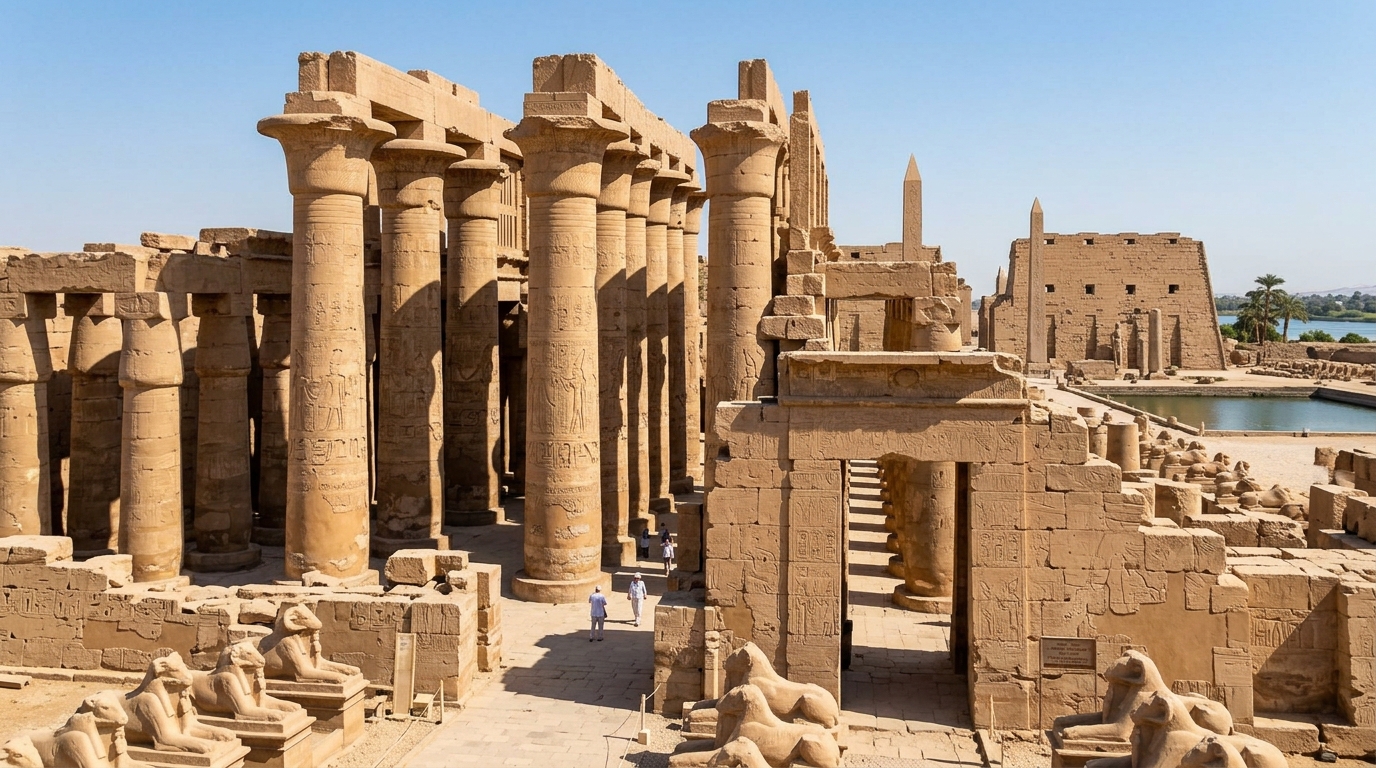
Obelisks of Hatshepsut and Thutmose I
Granite monoliths celebrated solar symbolism, royal devotion and the technical power of the state.
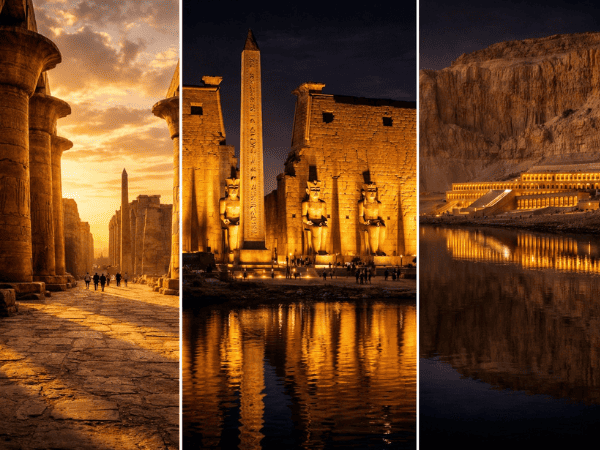
Sacred Lake
Used in priestly purification and temple ritual, the lake also helps explain the complex as an active sacred institution.
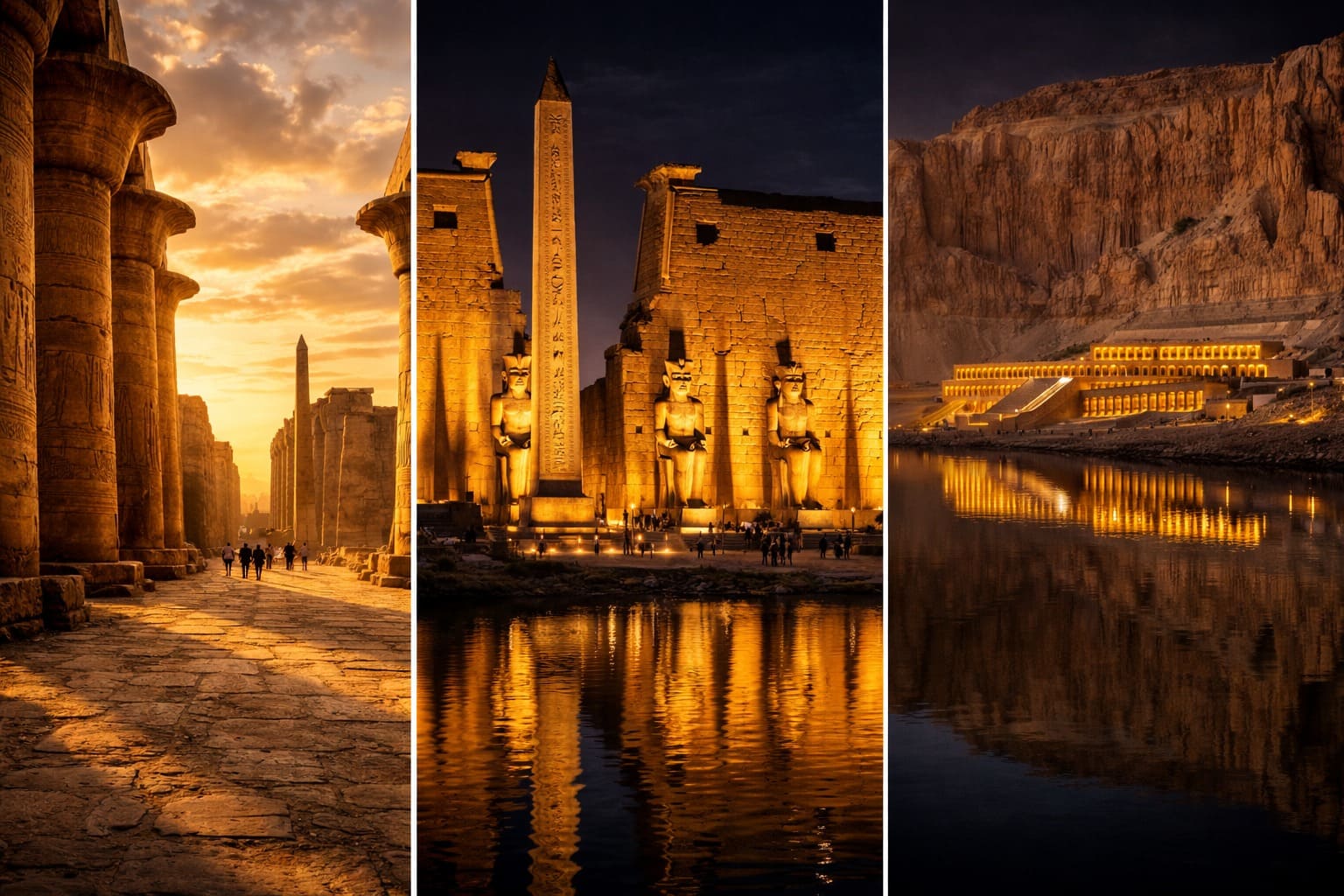
Pylons and processional axis
Successive gateways marked expansion and controlled movement toward increasingly sacred zones.
How Amun-Ra rose to power
A local Theban god expands
Amun gained prominence as Thebes became politically powerful.
Amun joins solar theology
Association with Ra created Amun-Ra, combining hidden and visible aspects of divine power.
Kings invest in Karnak
New Kingdom rulers funded pylons, courts, obelisks and chapels to express devotion and legitimacy.
Festivals connect the city
During Opet, divine images moved between Karnak and Luxor Temple, renewing kingship and cosmic order.
How to experience Karnak well
Begin on the main axis
Move from the first pylon toward the Hypostyle Hall while noticing how space, scale and light change.
Slow down in the Hypostyle Hall
Look upward, compare column sizes and search for surviving color away from the busiest path.
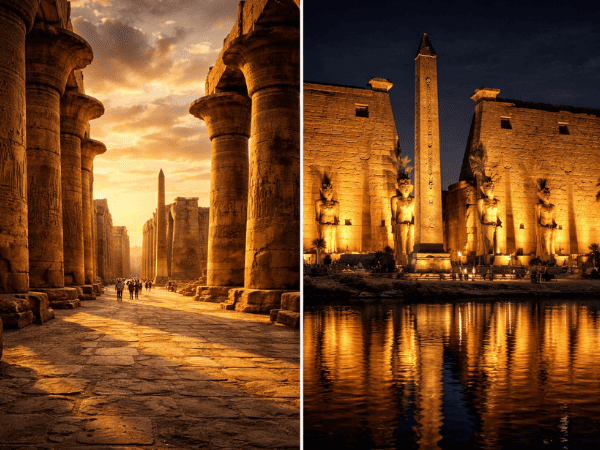
Find Hatshepsut’s obelisk
Its inscriptions and position open a discussion of queenship, kingship and solar devotion.
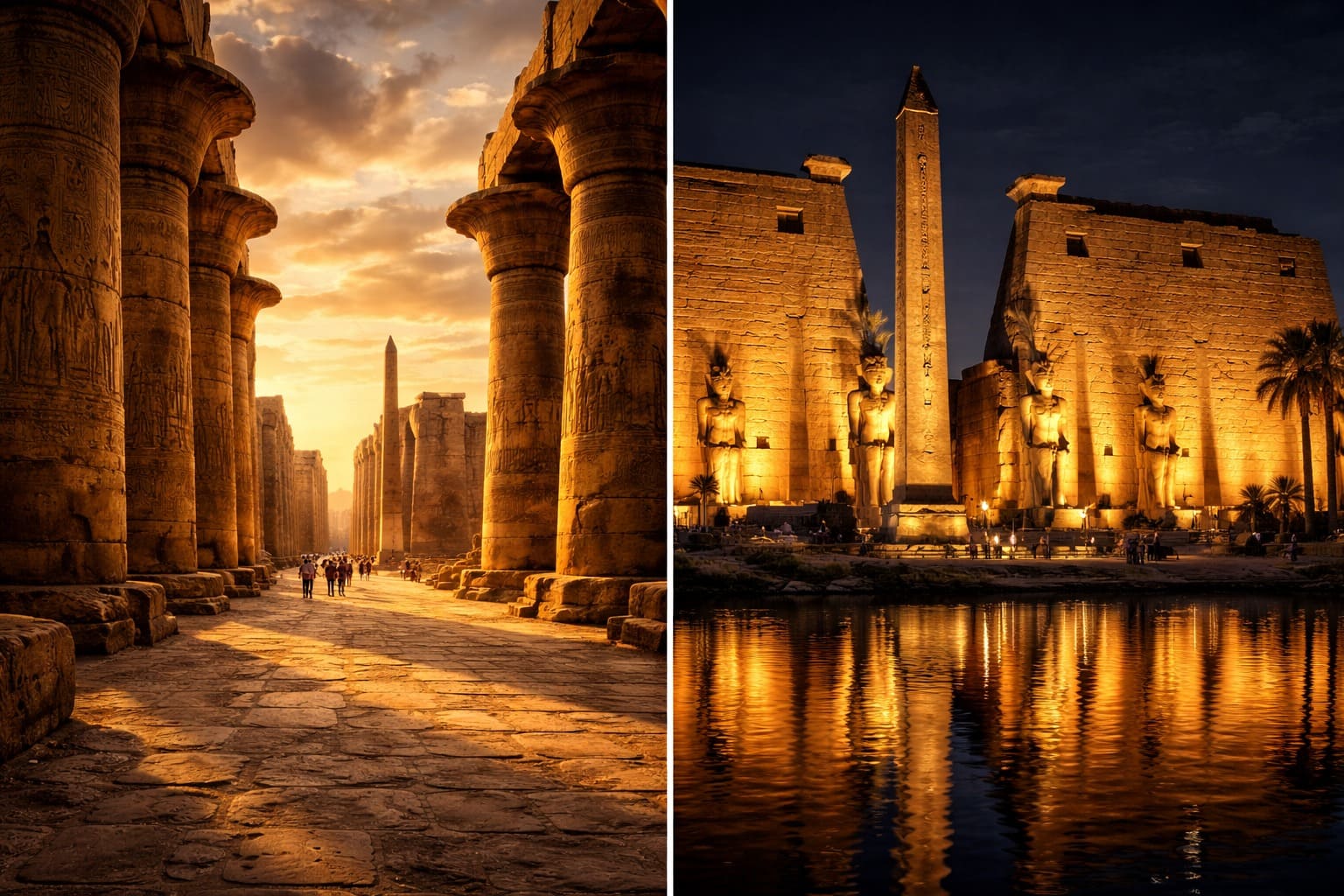
Walk to the Sacred Lake
This quieter area helps explain purification, priesthood and daily temple service.
Add the Open-Air Museum
When accessible, reconstructed chapels reveal earlier monuments reused in later building phases.
Frequently asked questions
Is the Temple of Amun-Ra the same as Karnak?
It is the largest central precinct within the wider Karnak complex, which also includes other sacred precincts and temples.
Who built the temple?
Many rulers contributed over centuries, including Senusret I, Hatshepsut, Thutmose III, Seti I and Ramesses II.
How long should I spend at Karnak?
Allow at least two to three hours for the main precinct; specialists can spend much longer.
What is the best time to visit?
Early morning generally offers cooler temperatures and fewer groups; late afternoon can provide attractive light.
Why was Amun-Ra important?
He became a leading state deity associated with creation, kingship and the political power of Thebes.
Explore Karnak with an Egyptologist
Decode the Temple of Amun-Ra’s building phases, rituals and royal inscriptions on a private Luxor tour.
Plan My Karnak Tour