


The History of the Egyptian Museum Cairo: A Journey Through Time
Follow the museum’s story from the early years of archaeological discovery and preservation to its opening in Tahrir Square and its continuing place in Egypt’s cultural history.
Opened in 1902Tahrir SquareEgyptologyThe Egyptian Museum in Cairo is more than a building filled with ancient artifacts. Located in Tahrir Square, it has served for more than a century as an important guardian of Egypt’s antiquities and as a symbol of the country’s commitment to preserving its past.
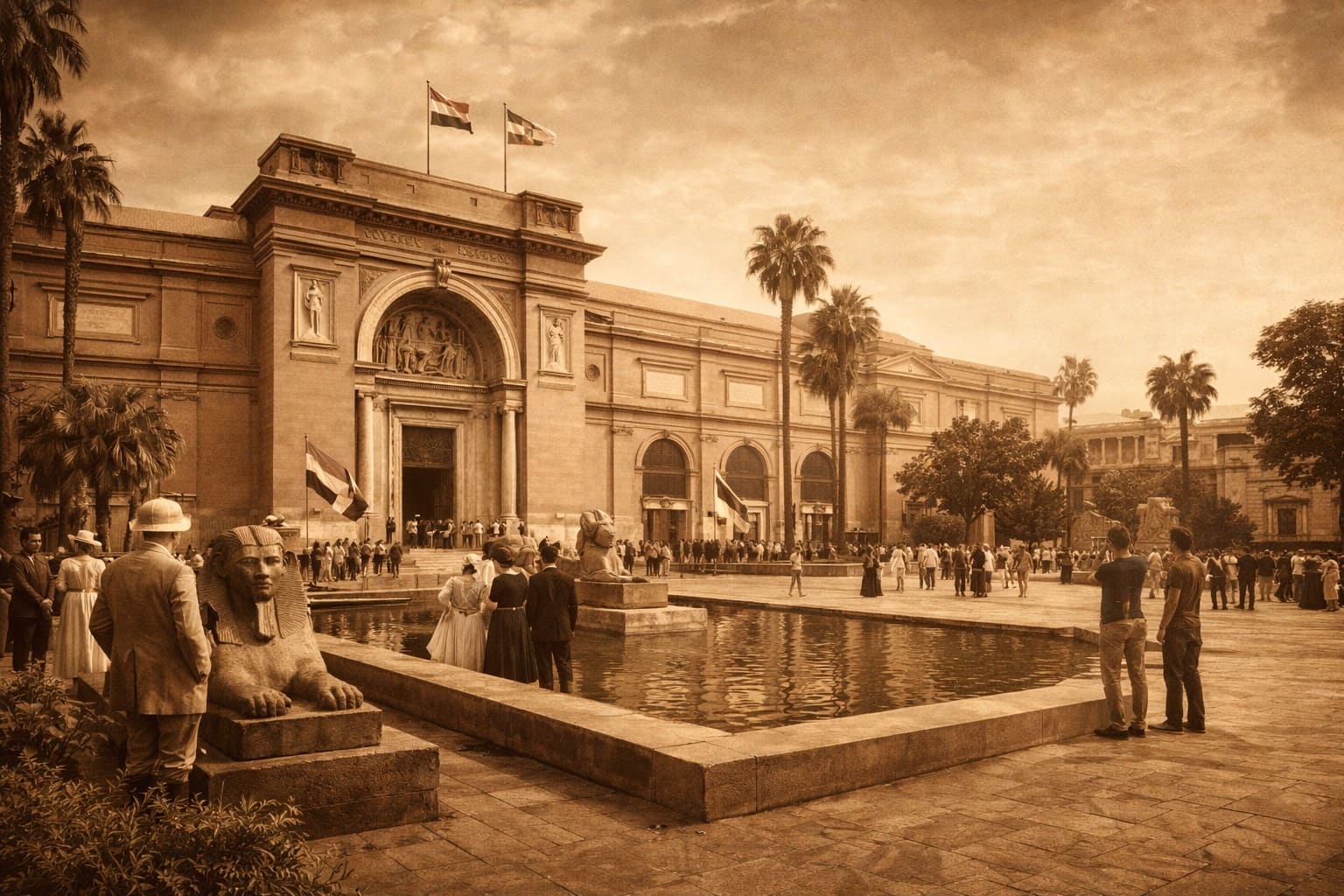
The origins of the Egyptian Museum
The museum’s story began before the construction of its Tahrir Square building. During the 19th century, European explorers, archaeologists and adventurers traveled to Egypt as interest in the country’s ancient ruins grew.
Excavations revealed temples, tombs, statues and other artifacts that had remained buried for thousands of years. However, many discoveries were removed from Egypt and placed in foreign museums or private collections.
The loss of this cultural heritage increased concern among Egyptian authorities and scholars and demonstrated the need for stronger protection and preservation.
The effort to protect Egyptian antiquities
Nineteenth-century excavations produced increasing numbers of statues, objects, manuscripts and funerary materials.
The export and removal of antiquities created an urgent need for organized protection inside Egypt.
Preservation efforts led toward the creation of a centralized institution capable of housing Egypt’s growing collection.
Auguste Mariette played an important role in this period. He helped establish Egypt’s Antiquities Service, worked to prevent looting and supported the creation of storage facilities and a permanent museum.
These efforts established the foundation for the institution that would later become the Egyptian Museum in Cairo.
The museum opens in Tahrir Square
The Egyptian Museum officially opened in 1902. It became the first purpose-built museum in the Middle East devoted entirely to ancient Egyptian antiquities.
The building was designed by French architect Marcel Dourgnon in a neoclassical style. Its location in Tahrir Square helped establish it as both a Cairo landmark and a symbol of national pride.
A collection that continued to grow
When the museum opened, it already contained thousands of artifacts recovered from excavations across Egypt. Its halls and galleries were created to hold a collection that continued to expand throughout the 20th century.
Royal monuments
The collection expanded to include monumental statues of pharaohs and objects connected with royal life.
Life and belief
Jewelry, everyday objects, religious artifacts and funerary items helped present different aspects of ancient Egyptian life.
Writing and records
Papyrus manuscripts and ancient texts added further depth to the museum’s account of Egyptian civilization.
Unlike many modern museums, the Egyptian Museum became known for displaying large numbers of objects throughout its galleries. This traditional presentation created a sense of abundance and discovery that became part of the institution’s character.
Tutankhamun and a defining discovery
A major moment in the museum’s history followed the 1922 discovery of Tutankhamun’s tomb by British archaeologist Howard Carter.
The tomb contained thousands of objects, including the famous golden mask, jewelry, furniture and ceremonial items. The treasures were transported to the Egyptian Museum and became a centerpiece of its collection.
The discovery attracted worldwide attention, increased international interest in Egypt’s cultural heritage and strengthened the museum’s reputation as an important archaeological institution.
The museum and Egypt’s cultural identity
Over time, the Egyptian Museum became a central stop for visitors exploring Cairo and Egypt. Its collections provide historical context for the temples, tombs, pyramids and monuments found throughout the country.
The museum also represents Egypt’s efforts to reclaim, protect and celebrate its heritage following the challenges created by the early removal of antiquities.
Transition in the modern museum era
The development of the Grand Egyptian Museum near the Pyramids of Giza introduced a new chapter in the presentation of Egypt’s history. Artifacts from the Egyptian Museum, including the Tutankhamun collection, have been part of this transition.
Despite these changes, the historic Egyptian Museum remains important because of its location, atmosphere, architectural character and place in the history of archaeology.
Its galleries connect the discoveries of the 19th century, the museum’s opening in 1902 and the continuing development of Egyptian museums in the modern era.
A living legacy in Cairo
The Egyptian Museum continues to represent more than a century of preservation and discovery. Even as parts of its collection are relocated, its historic role remains closely connected to the way Egypt’s ancient civilization has been studied, presented and understood.
The museum stands as a bridge between the early history of Egyptology and the modern presentation of Egyptian heritage.
Frequently asked questions
When did the Egyptian Museum in Cairo open?
The purpose-built Egyptian Museum officially opened in Tahrir Square in 1902.
Why was the Egyptian Museum created?
It developed from the need to protect Egyptian antiquities, prevent their removal and provide a permanent institution for preserving the country’s growing archaeological collection.
Who played an important role in its early development?
Auguste Mariette helped establish Egypt’s Antiquities Service, worked against looting and supported the creation of storage facilities and a permanent museum.
How did Tutankhamun’s discovery affect the museum?
Objects from the tomb, including the golden mask, jewelry, furniture and ceremonial items, became a centerpiece of the museum’s collection and attracted worldwide attention.
Does the Egyptian Museum remain important today?
Yes. Its historic building, traditional galleries and long role in archaeology and preservation continue to give it a distinctive place in Cairo’s cultural history.
Continue exploring the Egyptian Museum
Discover more about the historic museum in Tahrir Square and its place within Cairo’s ancient Egyptian story.
Explore the Egyptian Museum