


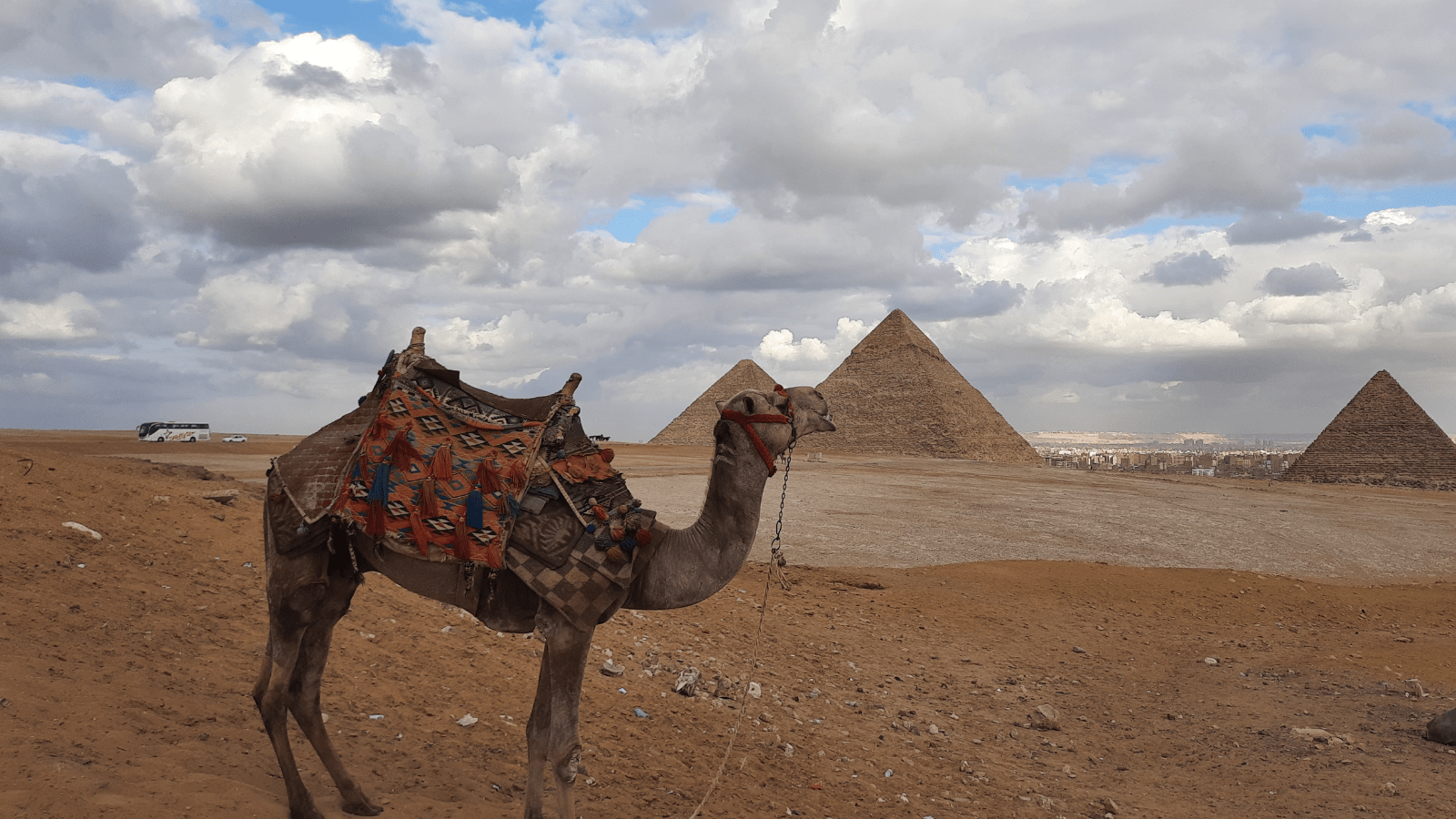
The Pyramids of Giza: A Timeless Symbol of Ancient Egyptian Civilization
More than 4,500 years old, the Pyramids of Giza remain a defining expression of ancient Egyptian engineering, royal power and beliefs about the afterlife.
4,500+ yearsCheopsChephrenMykerinosThe Giza Plateau is not just a collection of monuments. The article presents it as a carefully planned sacred landscape where architecture, belief and royal authority were designed to work together.
Why the Giza Plateau remains extraordinary
Built for Eternity
The pyramids were designed as royal tombs and eternal gateways to the afterlife for Egypt’s Fourth Dynasty rulers.
Engineering on a Massive Scale
The Great Pyramid originally stood at 146 meters and was built with more than 2.3 million limestone blocks.
A Sacred Funerary Landscape
The pyramids, Great Sphinx and Valley Temple formed part of a larger religious and mortuary complex.
The Giza Plateau: Where History Began
The plateau offered a stable foundation for massive construction.
The site became the burial place of major royal rulers.
The article highlights the accuracy of the monuments’ placement.
The layout reflects more than engineering alone.
The Great Pyramid of Cheops
The Great Pyramid is the largest and oldest of the three.
The article gives its original height as 146 meters.
Its construction involved an immense quantity of limestone.
The pyramid is linked to the pharaoh’s ascent toward the heavens.
The Pyramids of Chephren and Mykerinos
Recognizable by surviving casing stones near the summit.
Chephren appears taller because of its elevation.
The smallest of the three pyramids.
Together the three structures show changing construction approaches over generations.
The Great Sphinx: Guardian of the Necropolis
The form combines strength, wisdom and divine protection.
The monument was cut directly from the bedrock.
Its placement near the Valley Temple reinforces the sacred nature of the site.
The Sphinx remains one of ancient Egypt’s most recognizable images.
The Valley Temple and Ancient Rituals
The article connects the temple with royal mummification ceremonies.
Its massive blocks reflect advanced building skill.
These are cited as evidence of sophisticated planning.
The temple formed part of the funerary process before burial.
Why a Half-Day Tour Is a Strong Introduction
A few hours can cover the plateau’s major highlights.
The format is presented as especially useful for newcomers.
Professional guides explain symbolism, construction and hidden details.
The article presents the half-day format as a balance between efficiency and meaning.
A Living Legacy
The monuments reflect royal power and spiritual belief.
Their engineering continues to inspire modern visitors.
The pyramids embody ancient Egyptian ideas about eternal life.
The article describes Giza as a core stop for understanding the origins of Egyptian civilization.
Frequently asked questions
How old are the Pyramids of Giza?
The article states that they were built more than 4,500 years ago.
Which pyramid is the largest?
The Great Pyramid of Cheops, also known as Khufu.
How tall was the Great Pyramid originally?
The article gives an original height of 146 meters.
How many blocks were used in the Great Pyramid?
More than 2.3 million limestone blocks, according to the article.
What does the Great Sphinx symbolize?
Strength, wisdom and divine protection.
Why is a guided half-day tour useful?
Because it combines the main sights with expert explanation of symbolism, construction and historical context.
Explore the Giza Plateau with Expert Context
See the pyramids, Sphinx and Valley Temple with a licensed guide who can connect the monuments to the beliefs and engineering behind them.
View the Pyramids Half-Day Tour