


Tutankhamun’s Tomb Discovery: The Greatest Archaeological Find
Follow the search, sealed doorway and extraordinary objects that turned a little-known pharaoh into a global icon.
Tutankhamun ruled near the end of Egypt’s Eighteenth Dynasty and died young. His modest tomb escaped the complete destruction suffered by many royal burials, preserving thousands of objects that transformed modern knowledge of royal funerary culture.
The discovery story
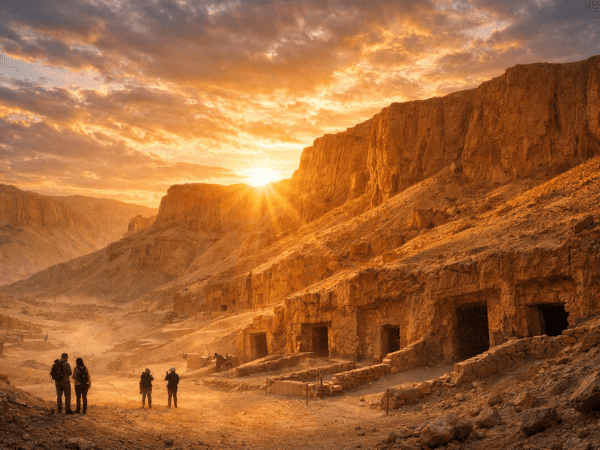
Years of searching
Howard Carter systematically cleared areas of the Valley of the Kings with financial support from Lord Carnarvon.
The first step
On 4 November 1922, workers uncovered a stone step that led downward toward a sealed doorway.
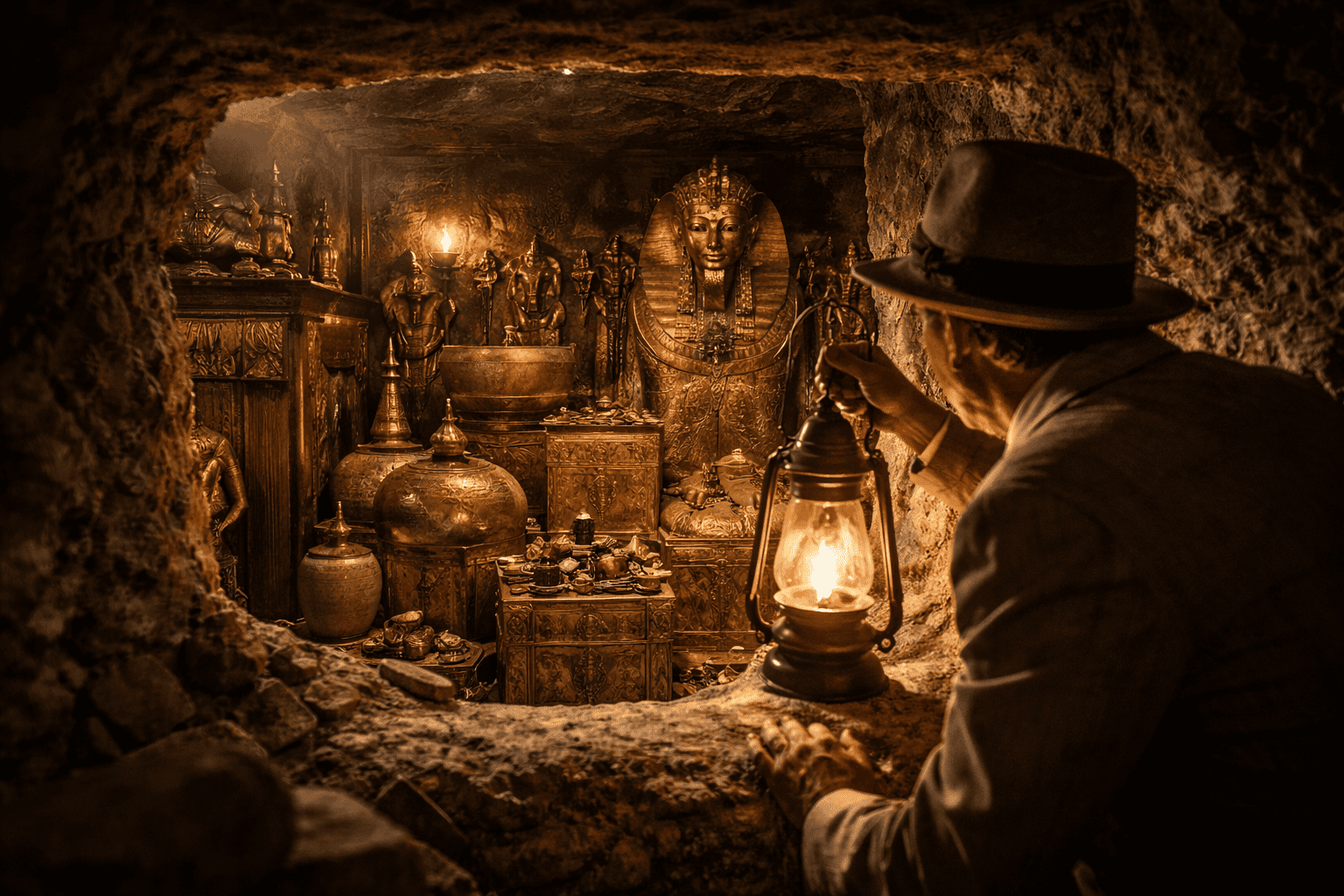
“Wonderful things”
Carter made a small opening and saw gilded objects inside the antechamber by candlelight.
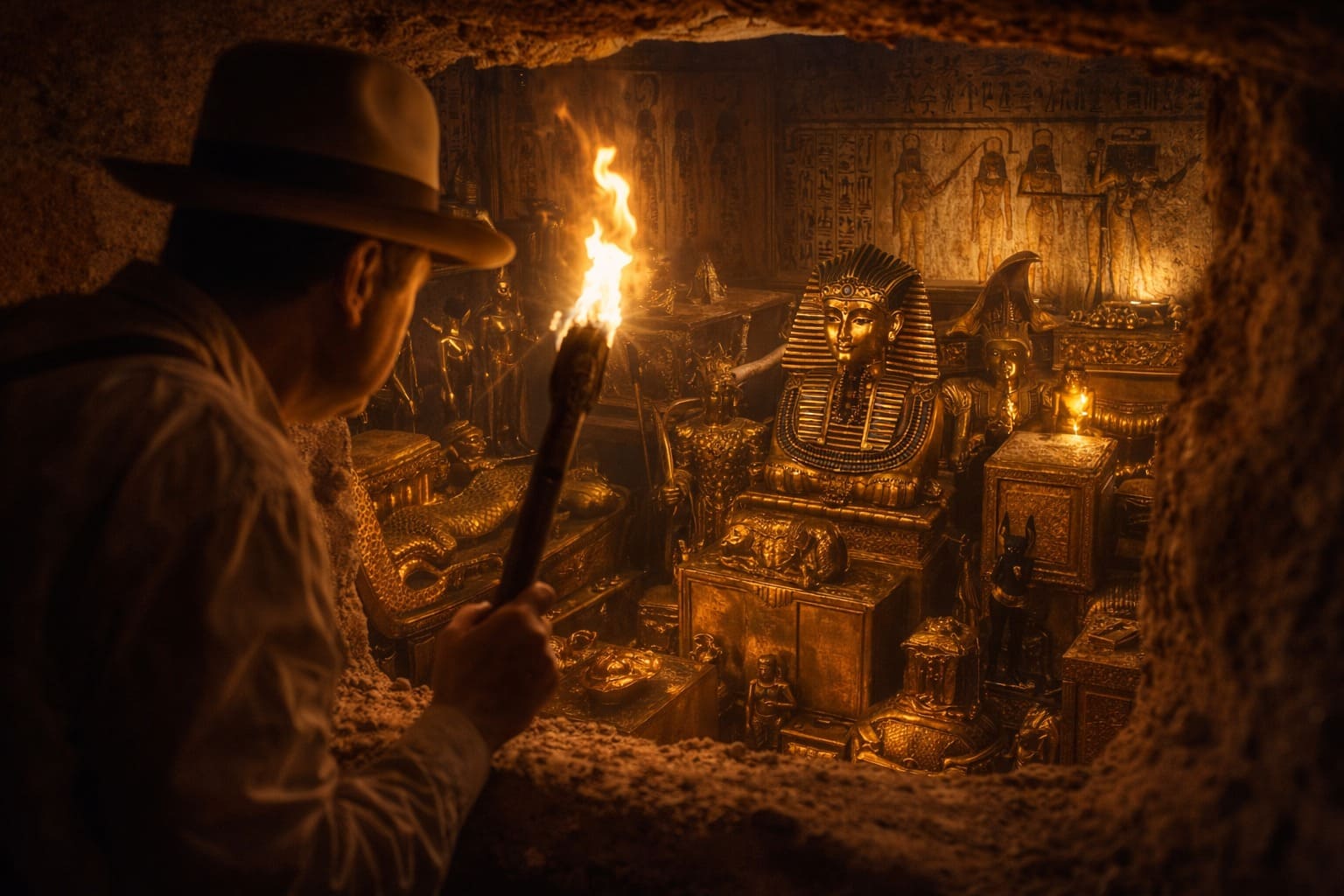
Opening the burial chamber
In February 1923, the sealed burial chamber revealed nested shrines surrounding the king’s sarcophagus.
Why the discovery changed archaeology
A royal collection survived
Furniture, chariots, jewelry, clothing, food, weapons and ritual objects preserved an extraordinary burial assemblage.
Documentation became essential
Carter’s team numbered, photographed, stabilized and recorded objects before removal—a process lasting years.
Conservation shaped the work
Fragile materials required careful treatment, showing that excavation is preservation, not simply uncovering treasure.
Tutankhamun became global
News, exhibitions and design trends created an international fascination often called “Tutmania.”
Where to experience the story today
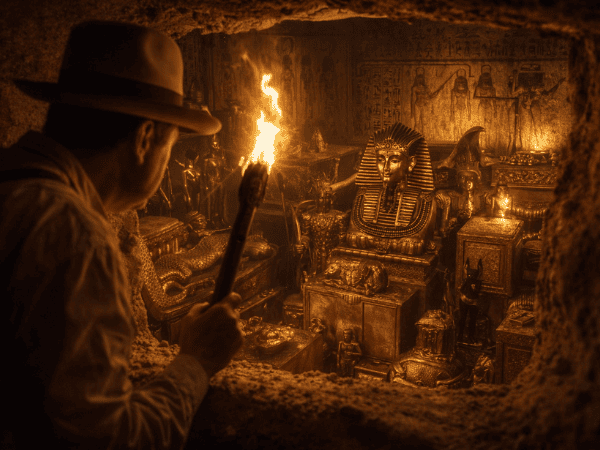
KV62 in the Valley of the Kings
The compact tomb preserves wall paintings and the burial place; access normally needs a separate ticket when open.
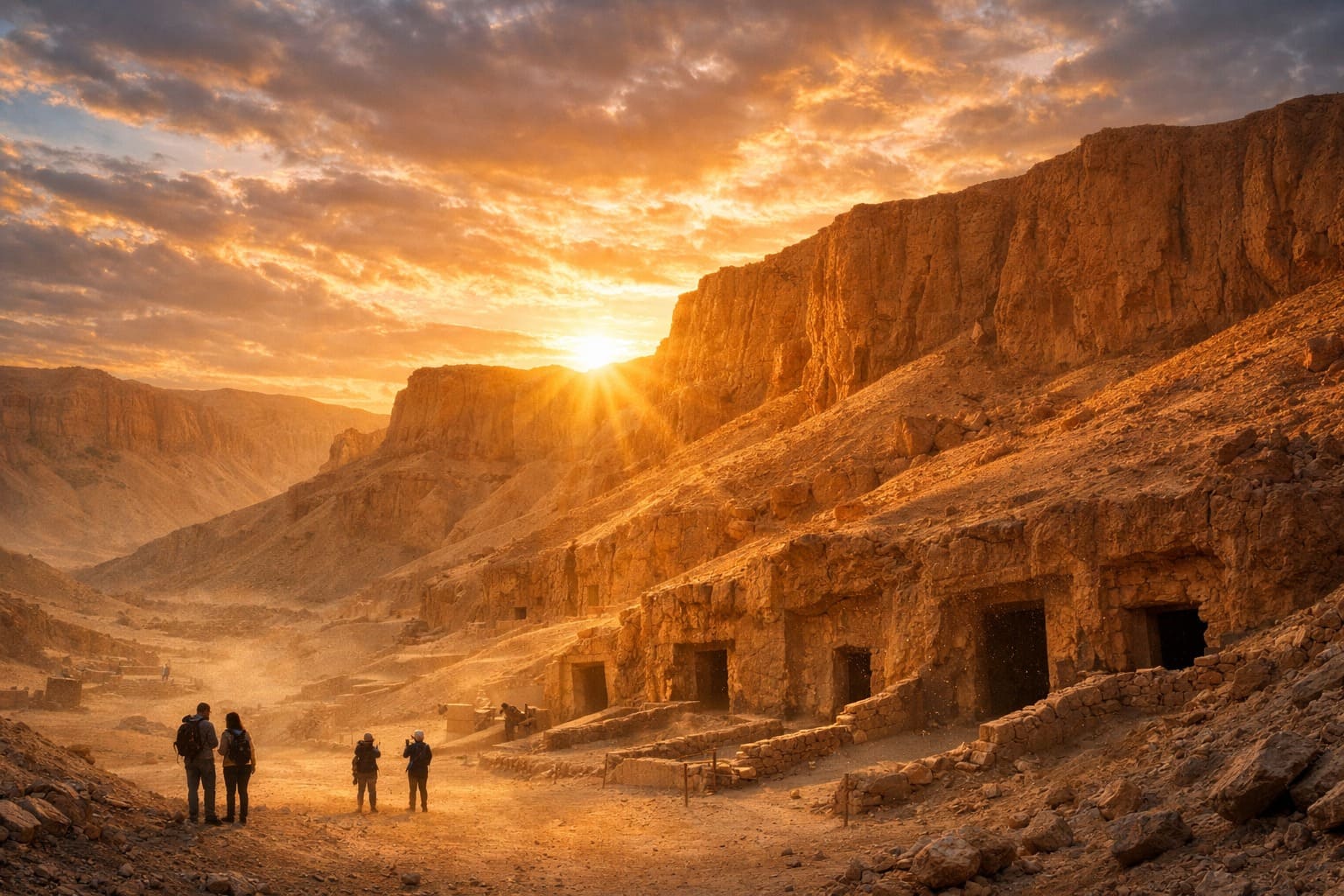
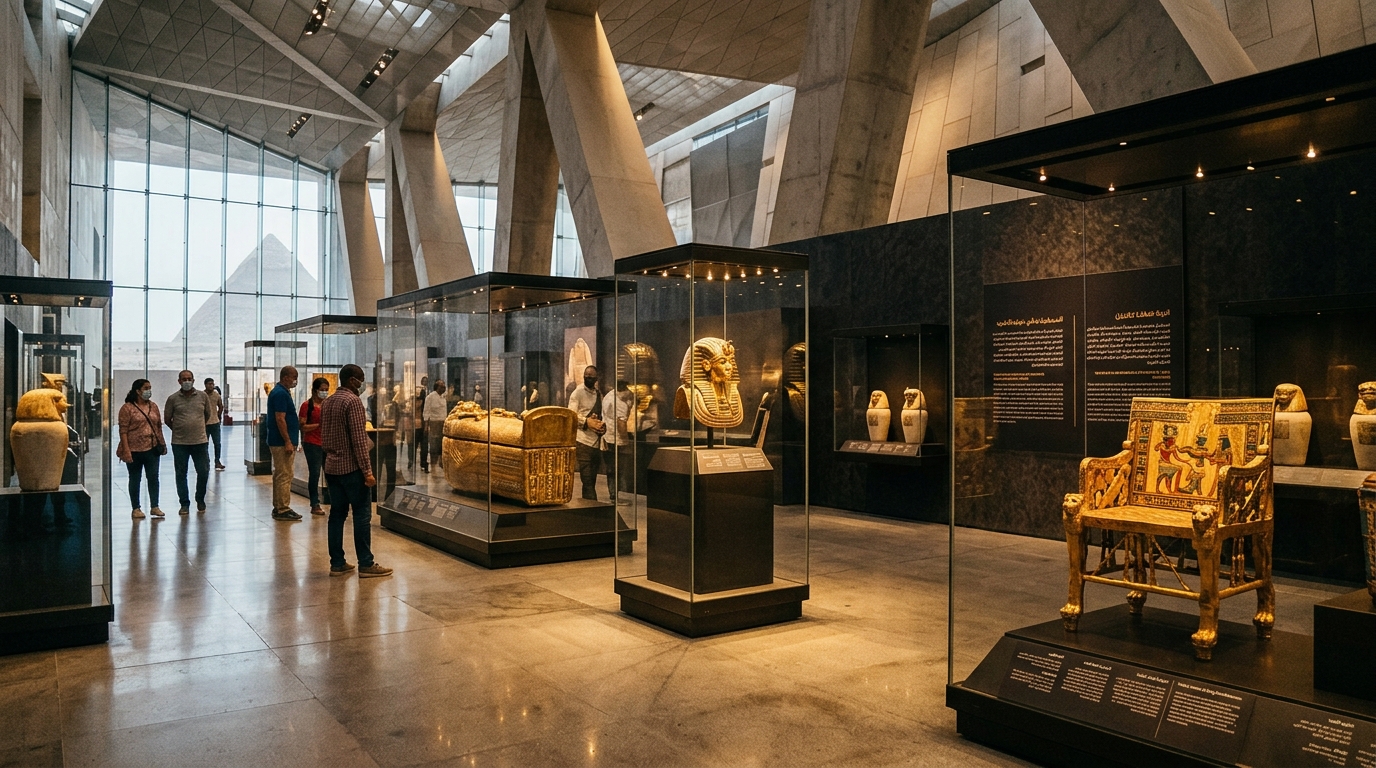
Grand Egyptian Museum
The Tutankhamun galleries bring together the king’s collection with modern conservation and interpretation.
The golden mask and treasures
The burial objects reveal royal craftsmanship, symbolism and the practical equipment prepared for eternity.
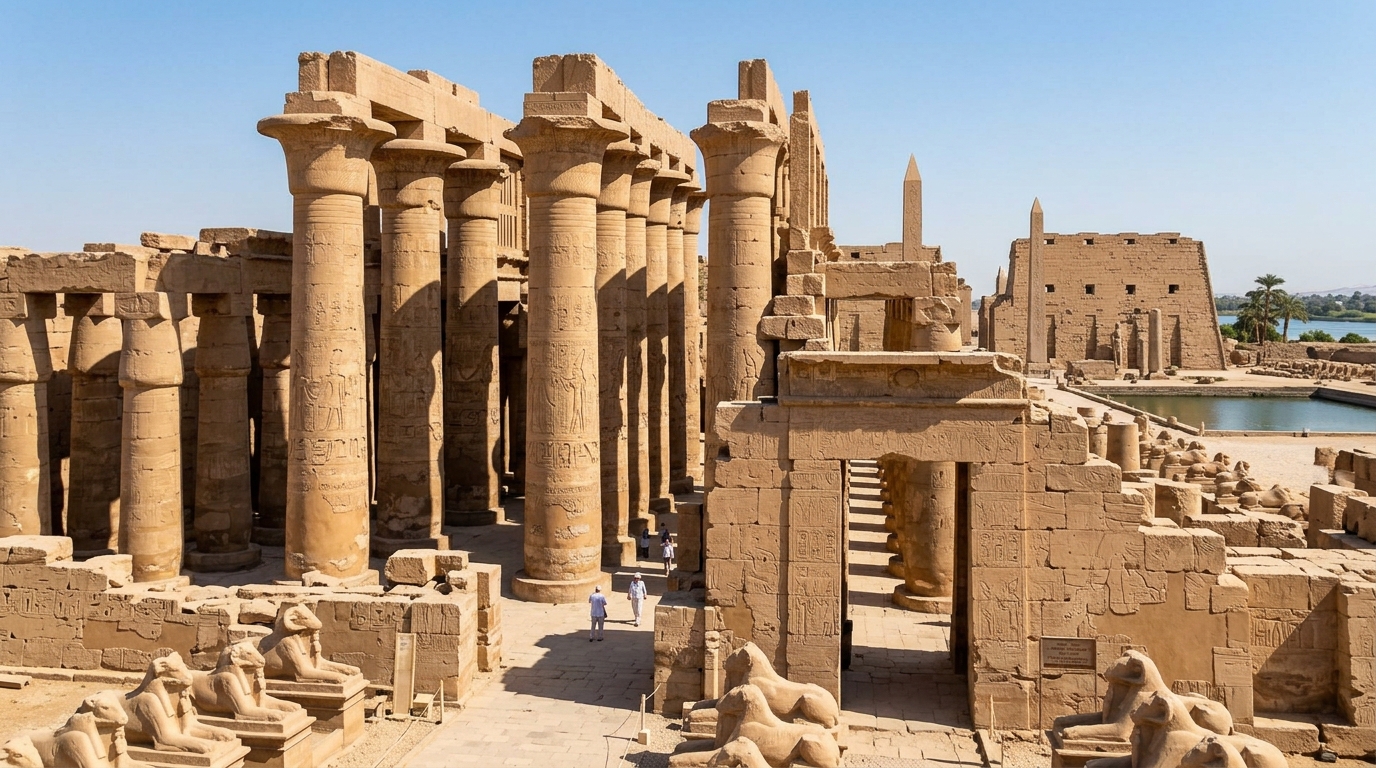
Luxor’s West Bank
The wider landscape connects KV62 with royal tombs, workers, temples and the New Kingdom capital.
.jpeg)
Howard Carter House
Near the West Bank, the restored house adds context about the excavator’s life and working environment.
Frequently asked questions
Who discovered Tutankhamun’s tomb?
British archaeologist Howard Carter led the excavation, funded by Lord Carnarvon, with a large Egyptian workforce.
When was the tomb discovered?
The first step was found on 4 November 1922; major openings and documentation continued afterward.
Was Tutankhamun’s tomb completely untouched?
No. Evidence suggests limited ancient robbery and resealing, but much of the burial equipment survived.
Why is the tomb called KV62?
KV means Valley of the Kings; 62 is the tomb’s catalog number.
Can visitors enter Tutankhamun’s tomb?
Usually yes when open, with a separate ticket. Current access and photography rules should be confirmed.
Follow Tutankhamun’s story in Luxor and Cairo
Combine KV62 with the Valley of the Kings and the Tutankhamun collection with a private Egyptologist.
Plan My Tutankhamun Tour