


Bahariya Oasis
A major oasis with local settlements, palms and archaeological heritage. Many Cairo departures arrange their desert vehicle and logistics here.
Illustrative view; photo origin unconfirmed.
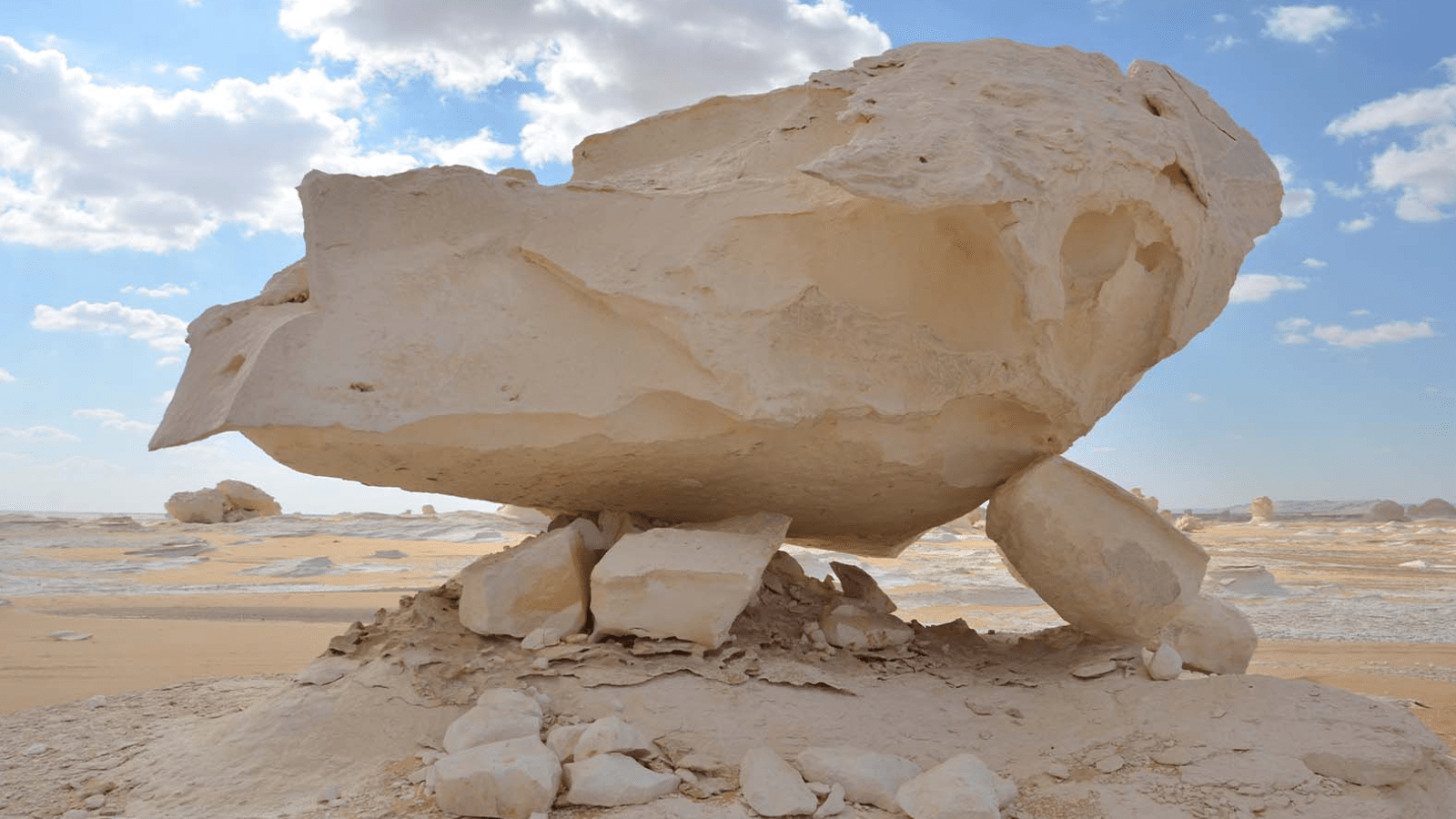
A sea of white chalk, dark volcanic hills, oasis settlements and nights beneath an open sky. Discover Egypt’s Western Desert, how to reach it from Cairo and what to know before booking a guided overnight safari.
The White Desert is worth visiting if you have at least two days for a guided journey from Cairo. Its sculpted chalk landscape is unlike the Nile Valley’s monuments, and an overnight expedition allows time to see the Black Desert, Crystal Mountain and the White Desert itself. Three days can make the road journey and photography more relaxed. Arrange permits, an official guide, a suitable vehicle and approved camping before leaving.
White Desert National Park is in the northern part of the Farafra Depression in New Valley Governorate. It is a protected natural landscape, not another name for Farafra Oasis. For journeys starting in Cairo, Bahariya Oasis is a practical northern gateway. The park lies roughly 35 to 40 km north of Farafra itself.
A major oasis with local settlements, palms and archaeological heritage. Many Cairo departures arrange their desert vehicle and logistics here.
Illustrative view; photo origin unconfirmed.
Dark rock scattered over golden hills creates a striking contrast with the pale chalk farther south.
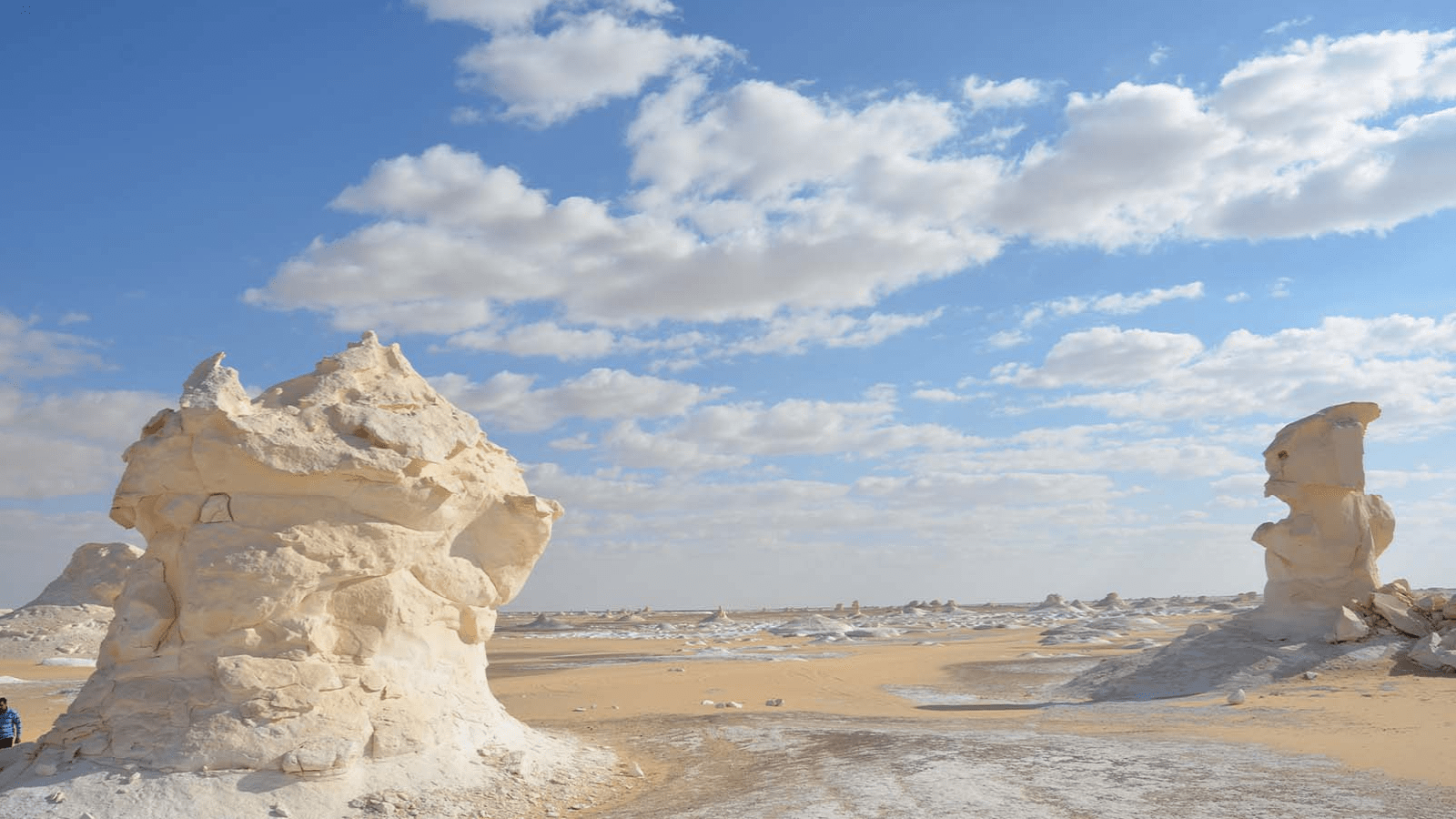
Bright chalk plains, rock stacks and escarpments distinguish the protected area near Farafra.
The best itinerary combines distinct landscapes rather than racing from one photograph to another. Exact stops depend on the approved route, travel conditions and time available.
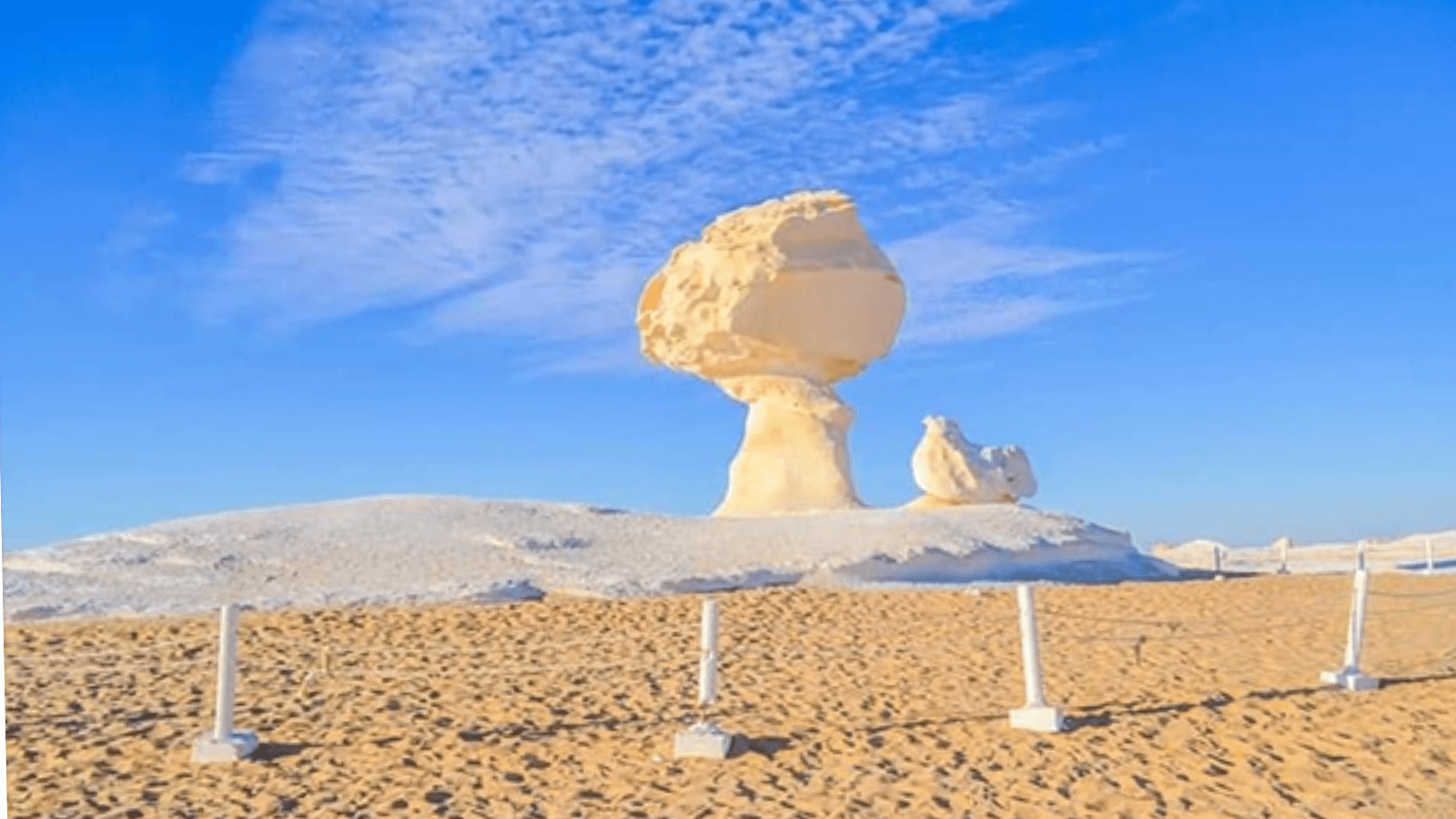
Some rocks have rounded caps on slender bases; others look like animals or abstract sculptures. Their forms are created by erosion, not carved by people. Explore from stable ground, respect the marked boundaries and avoid climbing or leaning on the fragile chalk.
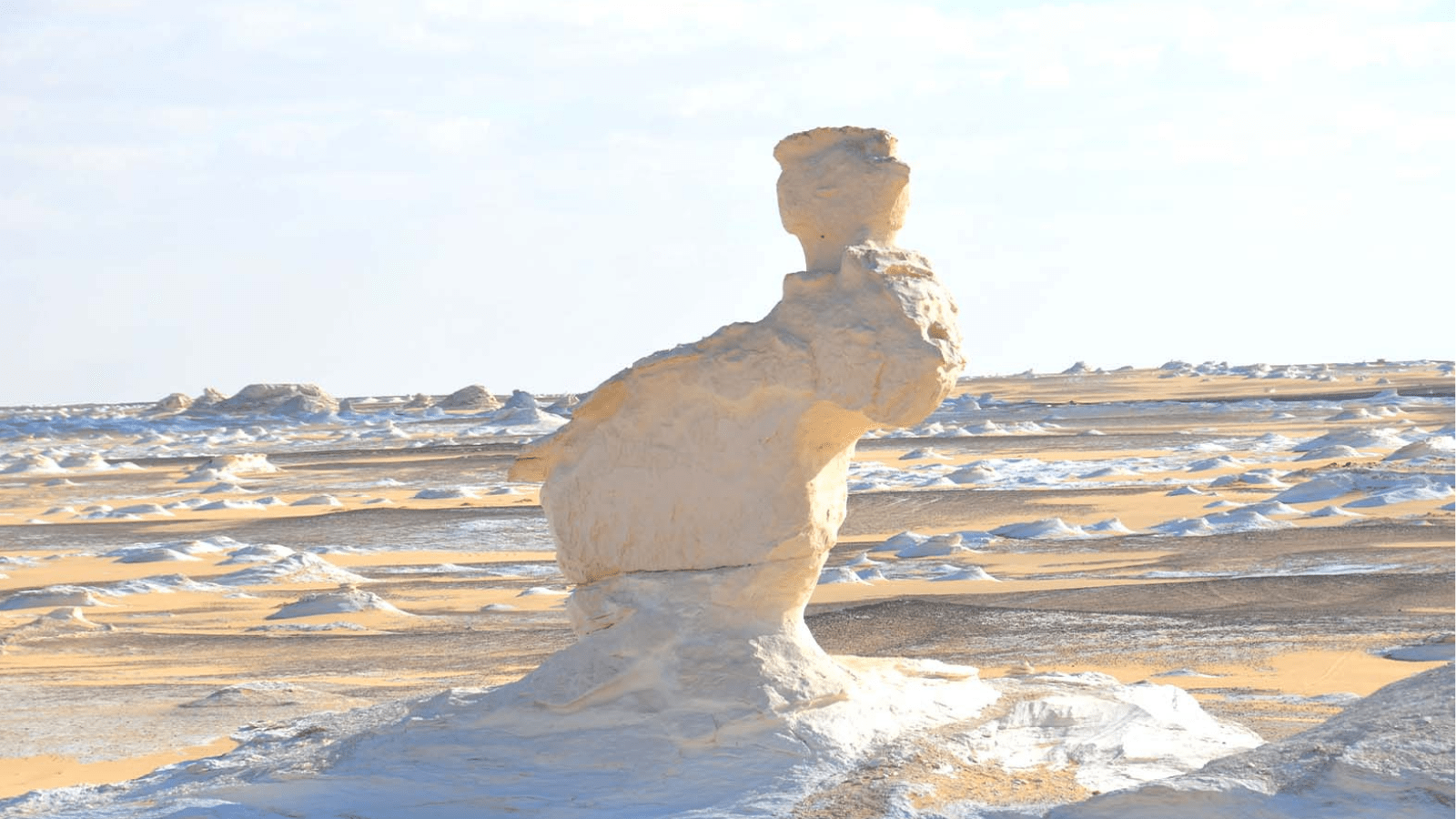
Low sunlight can turn pale stone cream and gold while long shadows reveal its texture. Plan time for photography, but let the guide select authorized stops and safe timing. Clear skies and a particular sunset cannot be guaranteed.
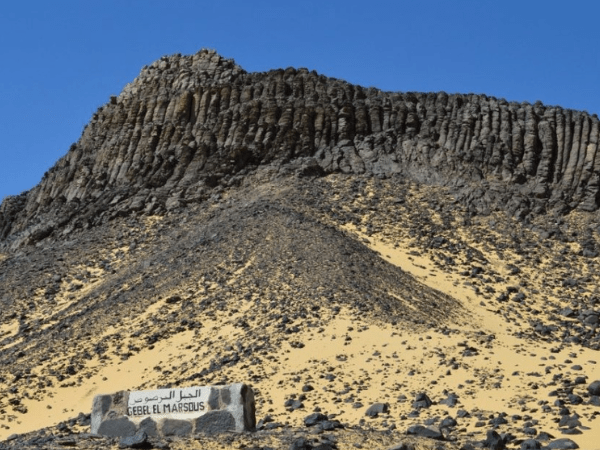
The dark rocky slopes south of Bahariya look dramatically different from the chalk plains farther along the route. Short walks can be worthwhile on approved ground, but loose stones and steep slopes make suitable footwear and careful pacing important.
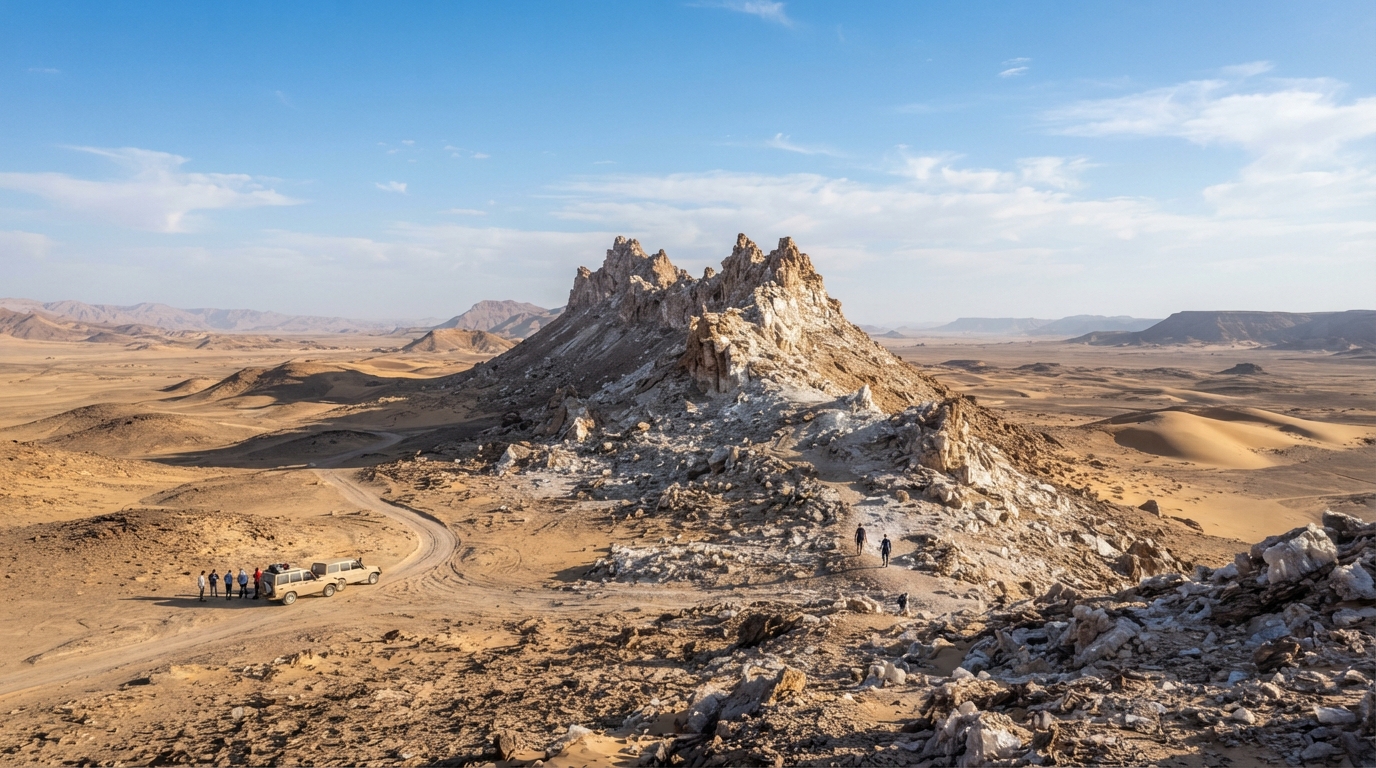
Crystal Mountain is a small mineral-bearing ridge, not a major mountain peak. Its exposed crystals are often described as quartz in tourist advertising, but geological accounts document calcite. Admire the glittering rock and its small natural arch without collecting pieces or scratching the surface.
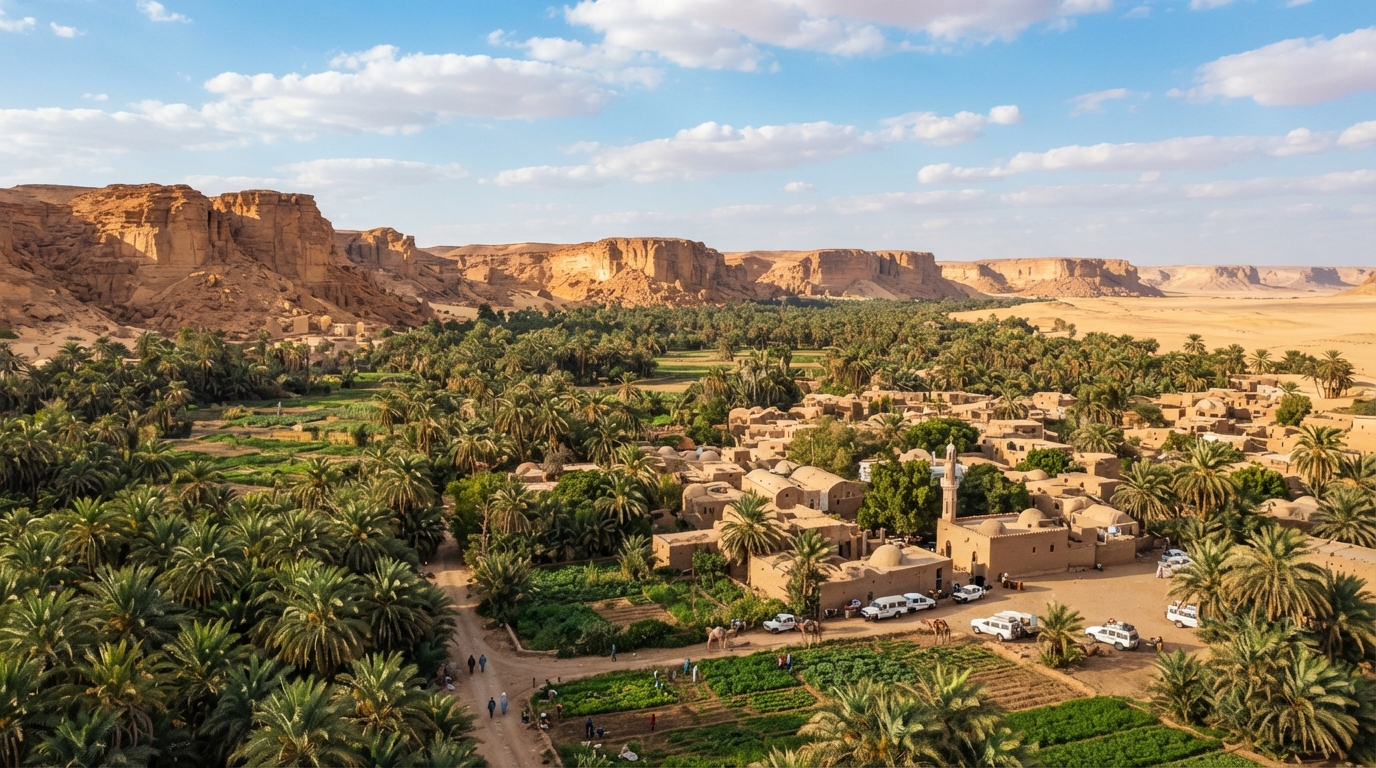
Bahariya offers a change of scenery before or after the 4x4 route. A visit may include local agricultural landscapes, a spring or accessible archaeological stops such as the Tomb of Bannantiu. Select these with the operator according to opening arrangements and the available time.
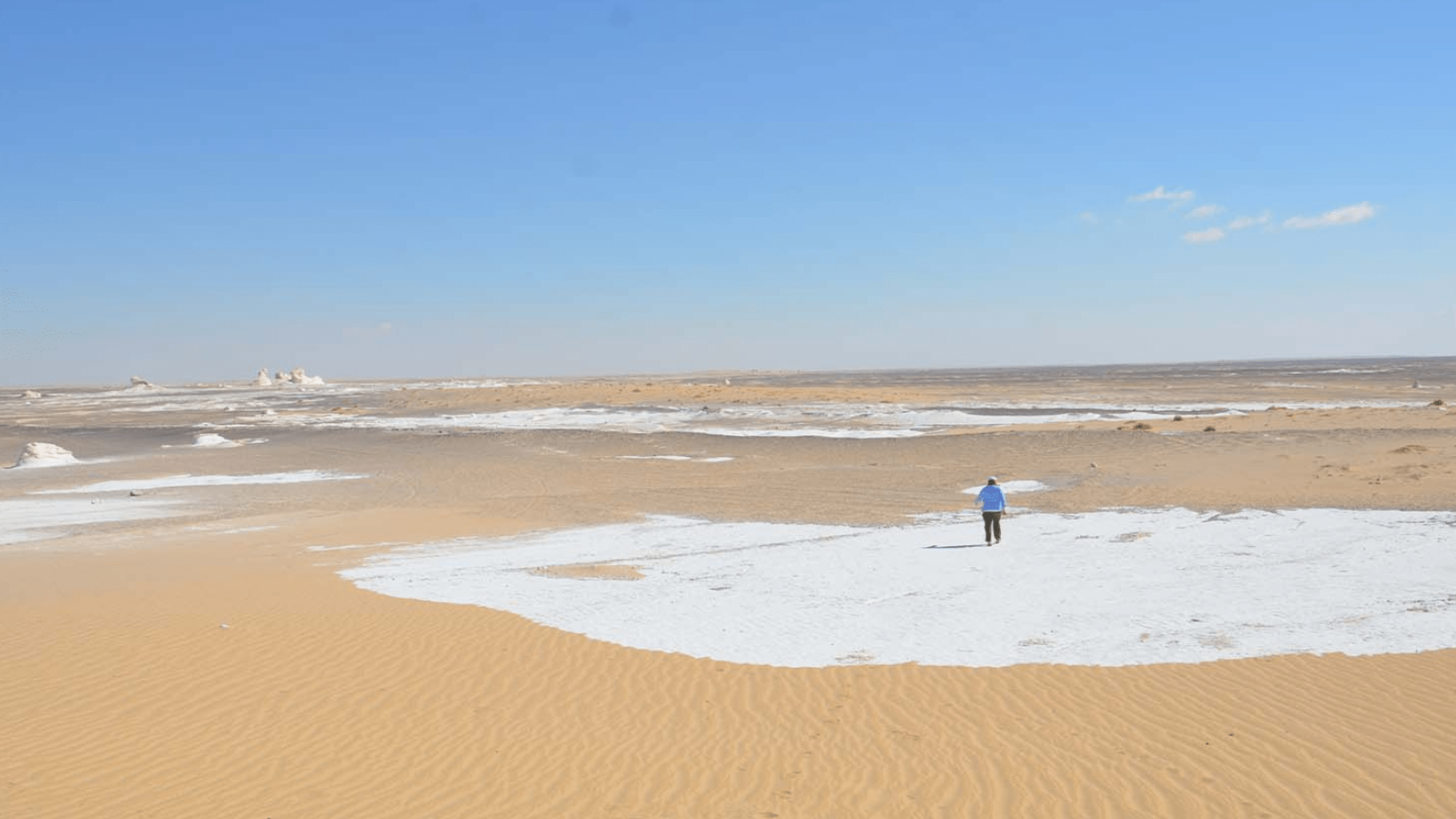
Farafra Oasis is a separate settlement south of the national park. If you want time for local culture or a guesthouse stay, ask for a longer route that specifically includes the oasis. Most short Cairo-to-White Desert tours focus on the desert corridor rather than promising a visit to Farafra town.
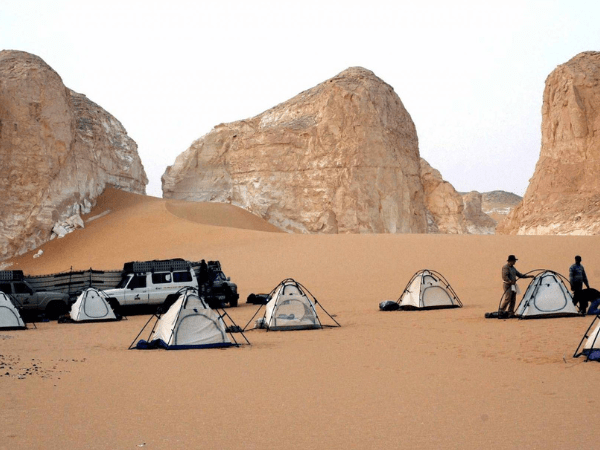
The overnight experience is about open space, a slower evening and, when conditions are clear, a dark sky. Expect a basic camp rather than a resort. Confirm bedding, toilet arrangements, meals, drinking water and the actual campsite. Fires are allowed only under applicable rules; never feed wildlife.
Remote desert travel requires a suitable vehicle and a knowledgeable local team. The safari connects distinct geological landscapes and gives you the freedom to pause at permitted viewpoints. Avoid unapproved driving or optional activities that have not been assessed for the weather, access and your group’s needs.
Each location contributes something different. The following windows are planning estimates for individual stops, not total driving times or guaranteed access.
| Photo | Experience | Best for | Suggested time | Planning note | Visitor guide |
|---|---|---|---|---|---|
| White Desert | Chalk formations and photography | Several hours or overnight | Fragile rock; approved camping only | White Desert guide |
| Black Desert | Dark rocky hills and geology | 30–90 minutes at selected stops | Uneven rock and loose gravel | Black Desert guide |
| Crystal Mountain | Mineral-rich outcrop | 30–60 minutes | No crystal collecting; illustrative image | Crystal Mountain guide |
| Bahariya Oasis | Settlements, springs and heritage | Half day or more if sightseeing | Confirm specific stops; illustrative image | Bahariya guide |
| Desert camp | Dark skies and quiet evenings | One night | Confirm bedding, toilet and permit arrangements | Overnight tour |
On small screens, swipe the table sideways. The photo of the camp illustrates a possible arrangement; oasis and Crystal Mountain images are illustrative.
Cairo to Bahariya is a long overland journey, and onward desert travel takes additional time. Do not try to squeeze the full Western Desert experience into a standard Cairo sightseeing day.
Compare the published private itineraries below, then request a written quote specifying the approved route, inclusions and camping equipment. The tailor-made option is a planning service, not a fixed package.
A focused desert journey from Cairo, with oasis stops, chalk formations and one camping night. Confirm the final route order and camping location.
View 2-day tour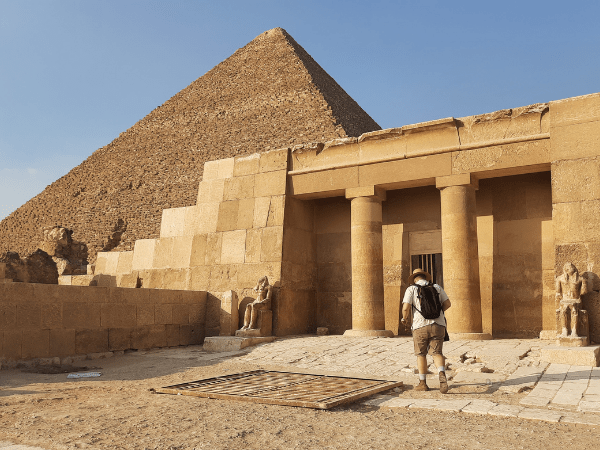
Giza and Historic Cairo combined with a Western Desert overnight expedition and a final hotel night in Cairo.
View 5-day package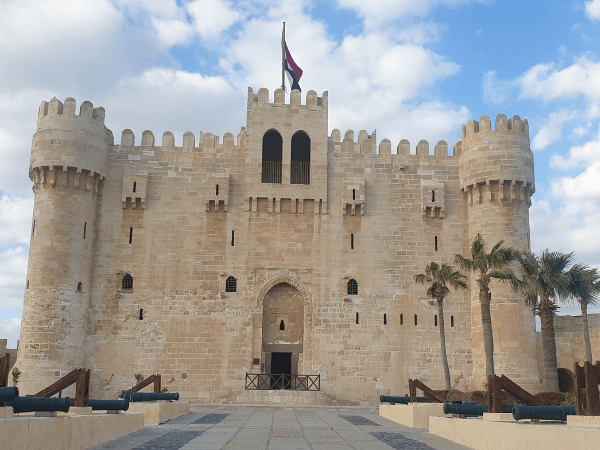
Combine Cairo history, the overnight desert journey and a separate Alexandria heritage excursion.
View 6-day package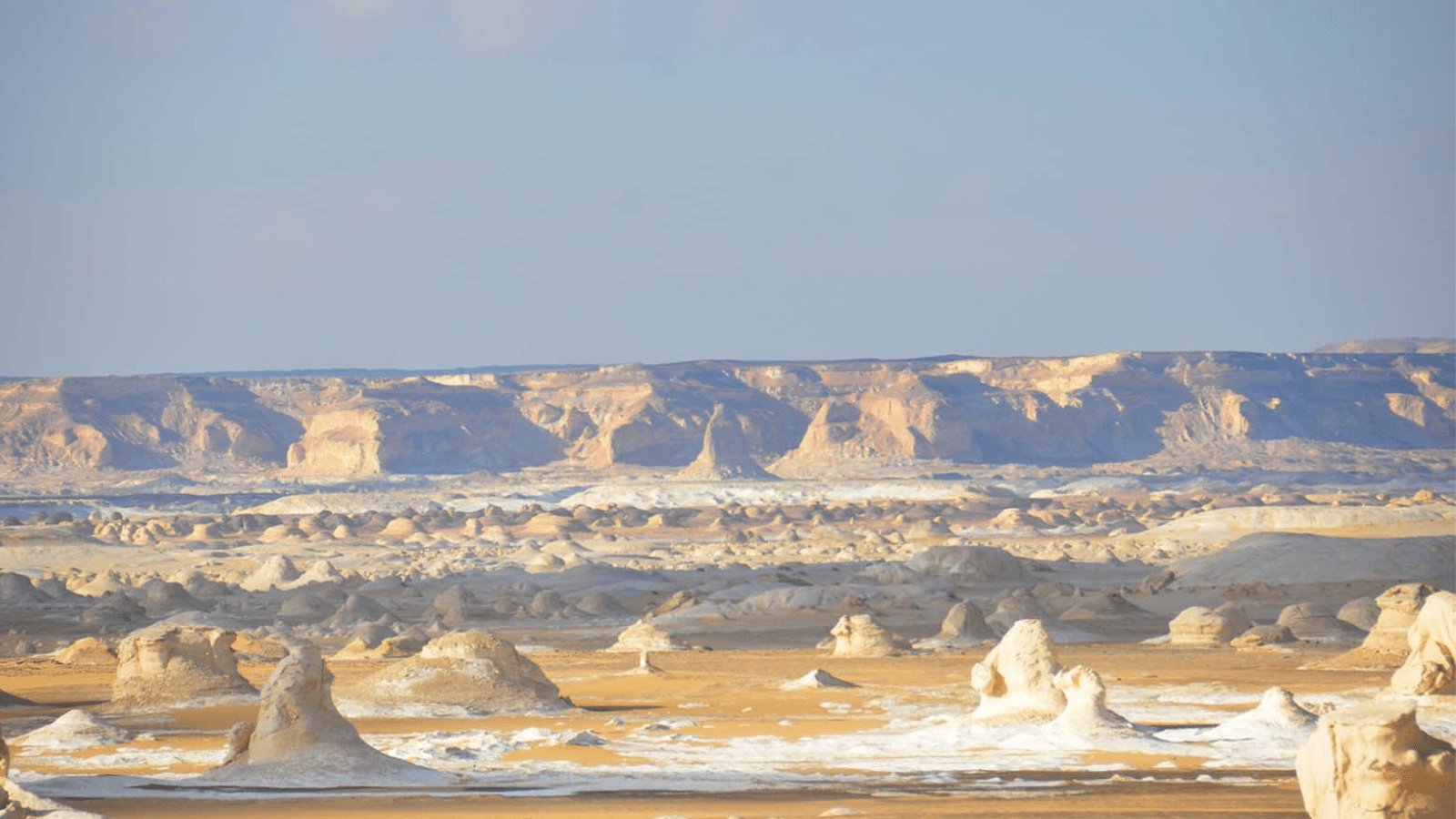
Request a slower route, specific comfort requirements or a longer Egypt vacation including a Nile cruise. All additions require confirmation.
Request a custom tripThe White Desert is remote. Proper planning makes a meaningful difference to comfort, access and emergency preparedness. Do not rely on a mobile phone signal or nearby medical care.
Daytime heat is generally more manageable, but winter desert nights can become very cold. Summer travel requires a separate assessment of heat, shade, water and the operating plan.
Ask who arranges your advance permits, what documents and lead time are required, and how the itinerary will change if access is denied. Follow official guide and checkpoint instructions.
Confirm a suitable 4x4, experienced driver, drinking water, emergency communication and recovery plan. Avoid independent off-road travel in an ordinary rental car.
Bring closed shoes, breathable clothes, sunscreen, sunglasses, a hat, warm night layers, a headlamp, power bank, personal medication and dust protection for electronics.
Ask about sleeping bags, blankets, mattresses, toilet arrangements, camp meals, dietary requirements, drinking water and whether the campsite is approved. Facilities are basic unless upgraded and confirmed.
Stay on permitted tracks, take all waste out, keep away from fragile rocks, and never collect crystals or fossils, carve stone or feed wildlife. Follow local instructions for cooking and fires.
Review current government travel advice and use environmental or geological publications for background. Older management documents do not establish today’s entry charges, route permissions or camping rules.
White Desert National Park is in the Farafra Depression of Egypt’s Western Desert, north of Farafra Oasis in New Valley Governorate. Bahariya Oasis is a common gateway for Cairo departures.
Its pale appearance comes from exposed chalk and limestone. Long-term erosion has shaped the rock into towers, rounded stacks and mushroom-like forms.
A same-day return is not recommended for most travelers because of the long road journey. Allow at least two days and one night, or choose a slower three-day route.
Yes. Arrange the required advance permits and an official guide through an authorized local operator. Confirm the current requirements for your nationality, route and activities before departure.
Camping is possible where currently authorized. Confirm the approved campsite, equipment, water, meals, toilet arrangements and applicable rules before booking.
October to April is generally more comfortable for daytime visits. Winter nights can be cold and summer temperatures extreme, so check the actual forecast and operator advice.
The White Desert features pale chalk and limestone erosion forms. The Black Desert has dark volcanic material scattered across hills and golden sand. Both are commonly combined on guided safaris.
Although some tourist descriptions use the word quartz, geological accounts document calcite crystals at the ridge. Do not remove minerals or damage the formation.
The price depends on group size, private transport, route, permits, camp standard, meals and inclusions. Ask for a written quotation and confirm whether park and camping fees are included.
Yes, if you allow additional days and separate the road-based desert journey from your Luxor or Aswan travel. Confirm flight or train times only after allowing enough time to return to Cairo.
Tell Egypt Tours Club your dates, Cairo pickup location, group ages, desired pace and camping preferences. Our local team can propose a suitable itinerary based on current permissions, conditions and confirmed services.
Editorial note: Exact desert routes, campsite locations, access permissions, weather, entry fees and services can change. Reconfirm before travel. Images are hosted by Egypt Tours Club; two site banners are illustrative because their photographic origin is unconfirmed. Camp photographs are examples, not a guarantee of the equipment supplied.