Coptic means Egyptian
The name links Egyptian identity, Christian history and the final stage of the ancient Egyptian language.

Understand what “Coptic” means, why this corner of Old Cairo matters, and how to visit its Roman fortress, living churches, museum and neighboring Jewish heritage site without confusing it with the wider Islamic city.
Coptic Cairo is the historic Christian quarter of Old Cairo around the Roman Babylon Fortress. It is known for the Hanging Church, Abu Serga (Church of Saints Sergius and Bacchus), the Coptic Museum and the nearby Greek Orthodox Church of Saint George. Ben Ezra Synagogue adds an important Jewish heritage layer to the same walking area. The district remains a place of worship as well as a visitor destination.
“Coptic” developed from a word meaning Egyptian. Over centuries, its common usage became associated especially with Egypt's Christian communities. The Coptic language is the final historical stage of the ancient Egyptian language, commonly written with Greek letters plus additional characters drawn from Egyptian Demotic. Today it remains important in religious worship and the study of Egyptian history. Read the Metropolitan Museum’s explanation of Coptic language and identity.
In geography, Coptic Cairo refers to the compact Christian heritage area in Old Cairo near the Roman Babylon Fortress. It is not the name for every old street in the capital, and it is not the same as the medieval Islamic Cairo area around Al-Muizz Street or Khan El Khalili. For a broader heritage route, compare Islamic and Coptic Cairo.
The name links Egyptian identity, Christian history and the final stage of the ancient Egyptian language.
Churches grew in the landscape of the Roman Babylon Fortress; the architecture reflects many later repairs and rebuilding phases.
Fustat, medieval Islamic Cairo and the modern city must be understood as distinct but connected historical areas.
Coptic Cairo is not a single city founded on one date. It is a layered district whose surviving buildings belong to different eras. The Roman fortress predates several of the Christian monuments, and individual churches have been repaired or rebuilt over many generations.
| Historical layer | What changed | What visitors can notice |
|---|---|---|
| Roman Egypt | Fortifications at Babylon occupied this important Nile-side location before the medieval city developed. | Fortress walls, towers and the elevated setting of later churches. |
| Late antique Christianity | Egyptian Christianity grew and developed its own ecclesiastical, literary and artistic traditions. | Church plans, icons, sanctuaries, traditional worship and Christian art. |
| After 641 CE | Fustat was established as Egypt's first Islamic capital near older Christian and Jewish sites. | A close geographical connection between the Roman, Christian, Jewish and Islamic landscapes. |
| Medieval to Ottoman periods | Local communities continued worship and rebuilt, restored and decorated sacred buildings. | Different phases of woodwork, marble, icons and architecture in one monument. |
| Modern preservation | The Coptic Museum opened in 1910; conservation continues across the historic district. | Museum collections and restored monuments that require ongoing protection. |
These stops show why the area matters. Focus on the most meaningful interiors rather than racing through every church. The Coptic Museum can easily be the longest stop for anyone interested in art, manuscripts and Egyptian history.
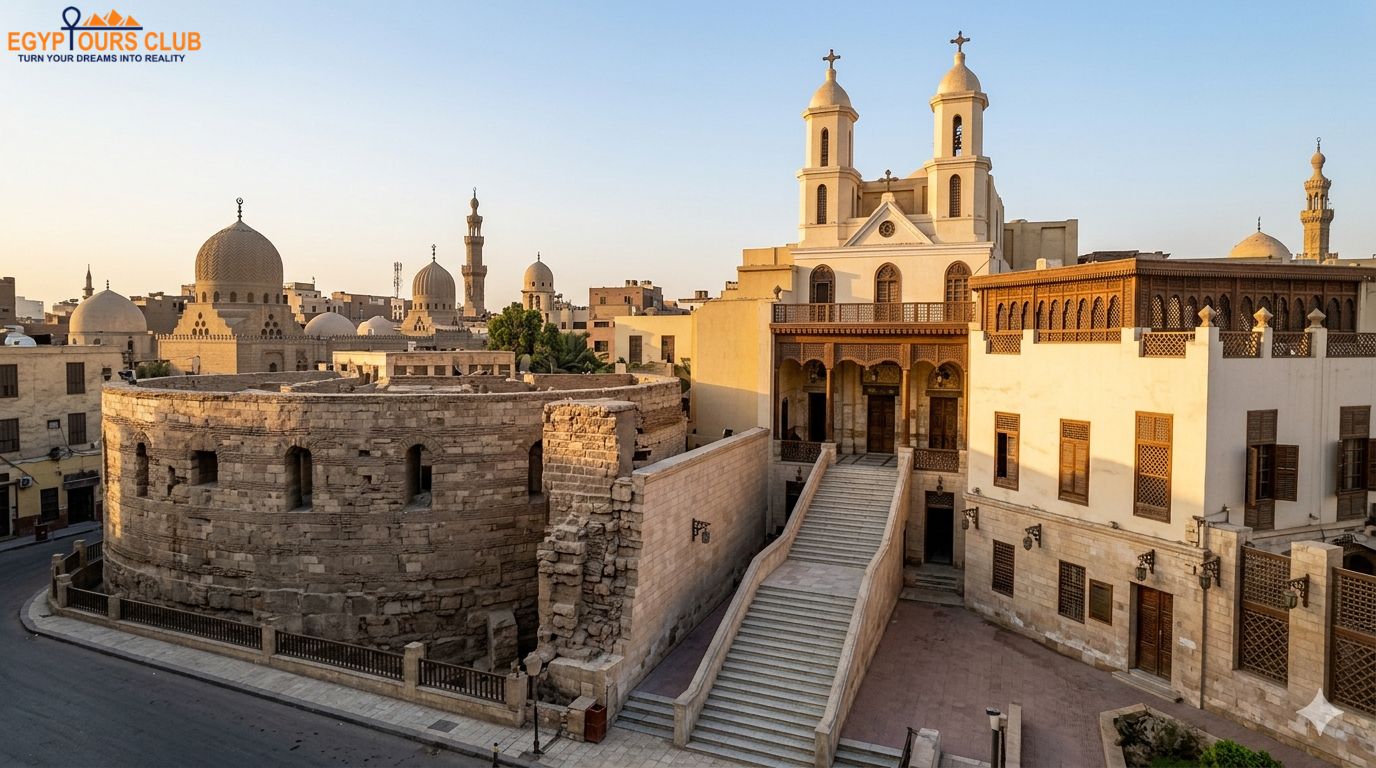
The Church of the Virgin Mary is called “Hanging” because it stands above parts of the Roman Babylon Fortress. Its wooden roof, marble pulpit, sanctuary screens and icons reveal both historic craftsmanship and centuries of active religious life.
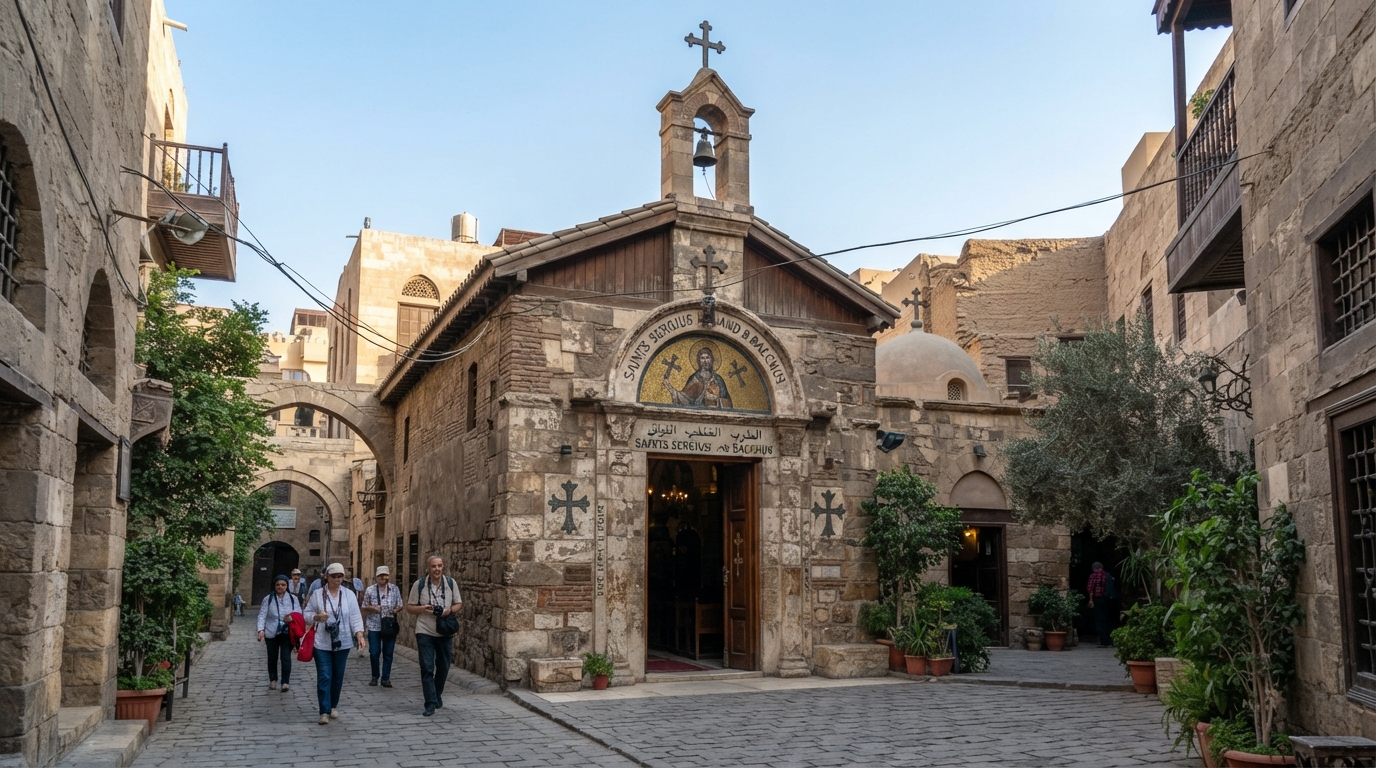
The church is particularly important to pilgrims because of a crypt traditionally linked to the Holy Family’s refuge in Egypt. Treat the sacred association as religious tradition, while appreciating the ancient-looking basilica plan and later architectural additions.
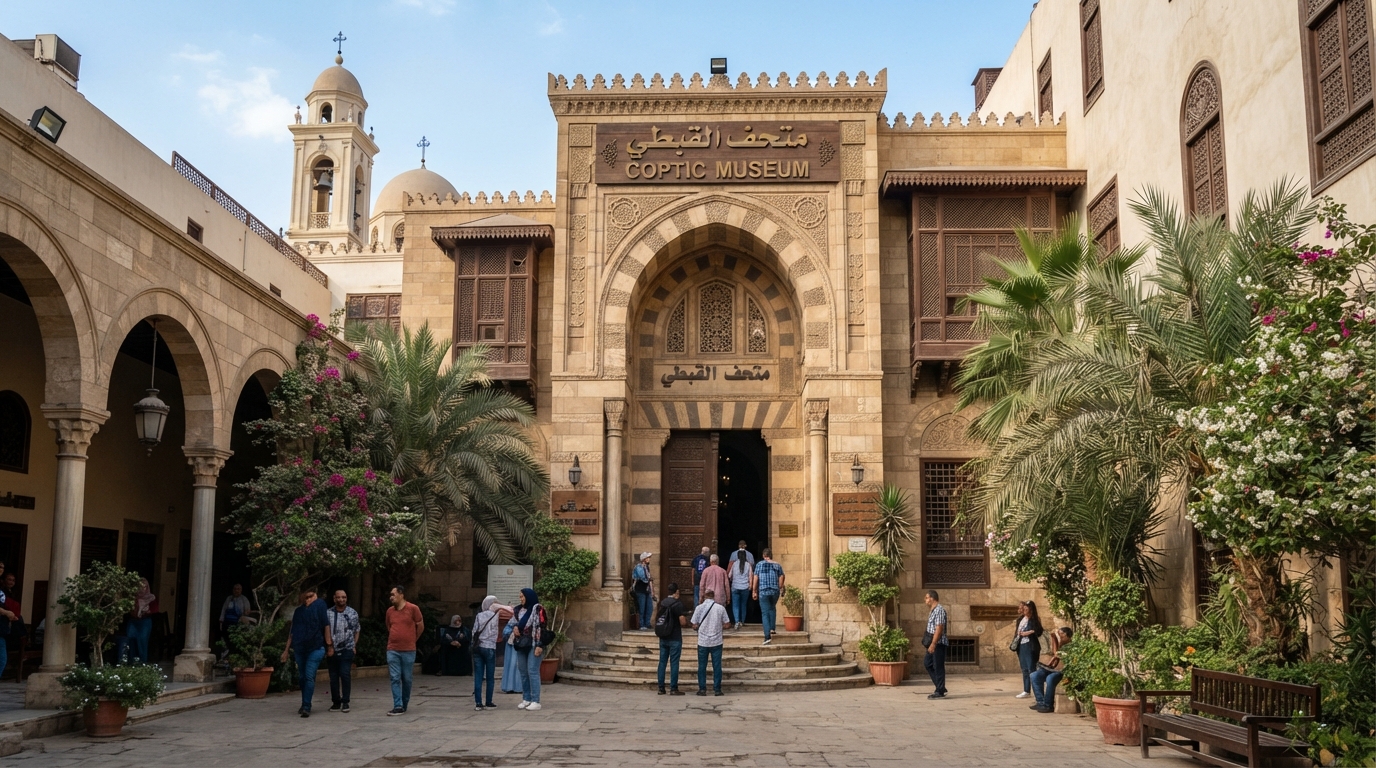
The museum helps turn a church walk into a coherent history lesson. Its collections connect Egyptian Christianity with earlier Egyptian, Greek, Roman and Byzantine traditions through stone reliefs, textiles, woodwork, icons and manuscripts. The museum opened in 1910.
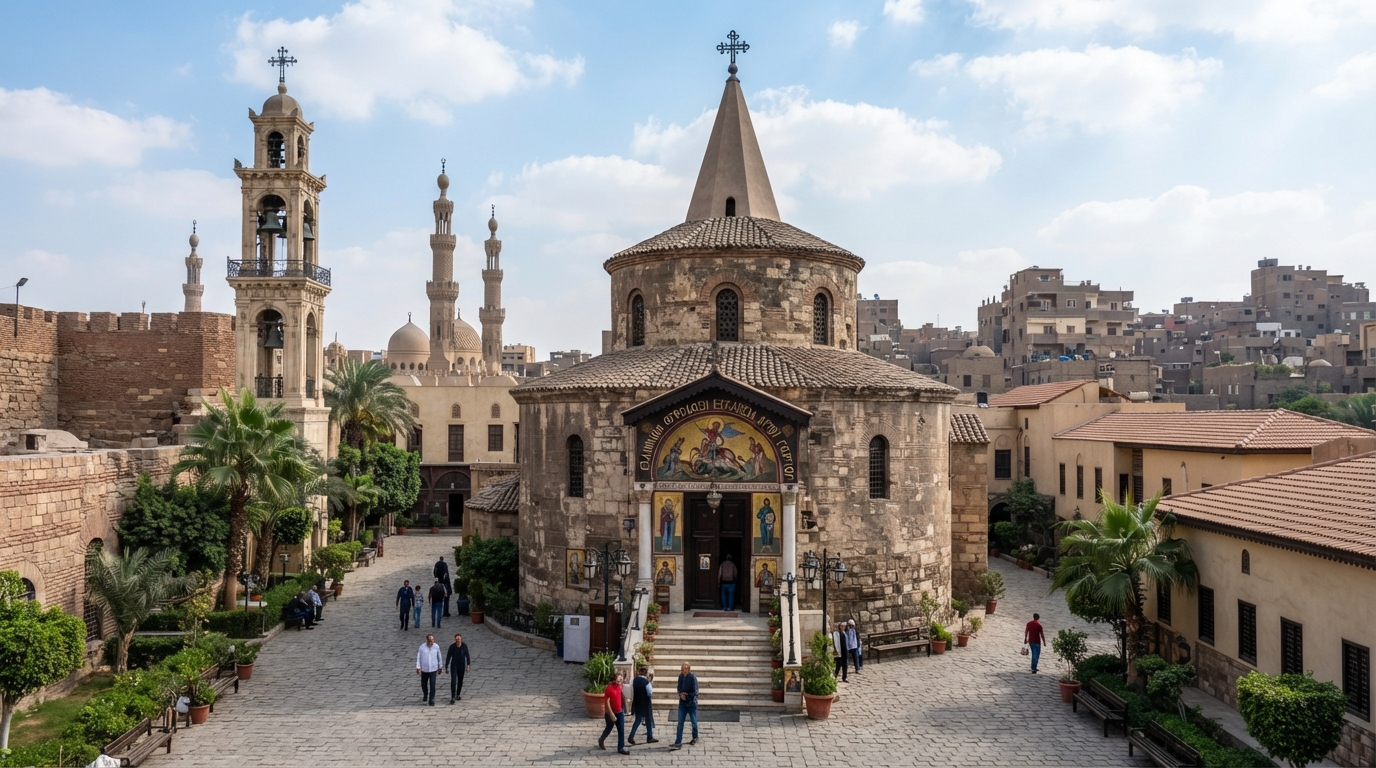
Saint George sits inside the same historic district but belongs to the Greek Orthodox tradition. Its round plan and elevated position offer a useful contrast with the Coptic Orthodox churches. The current church has undergone major rebuilding, so avoid presenting its present fabric as unchanged from antiquity.
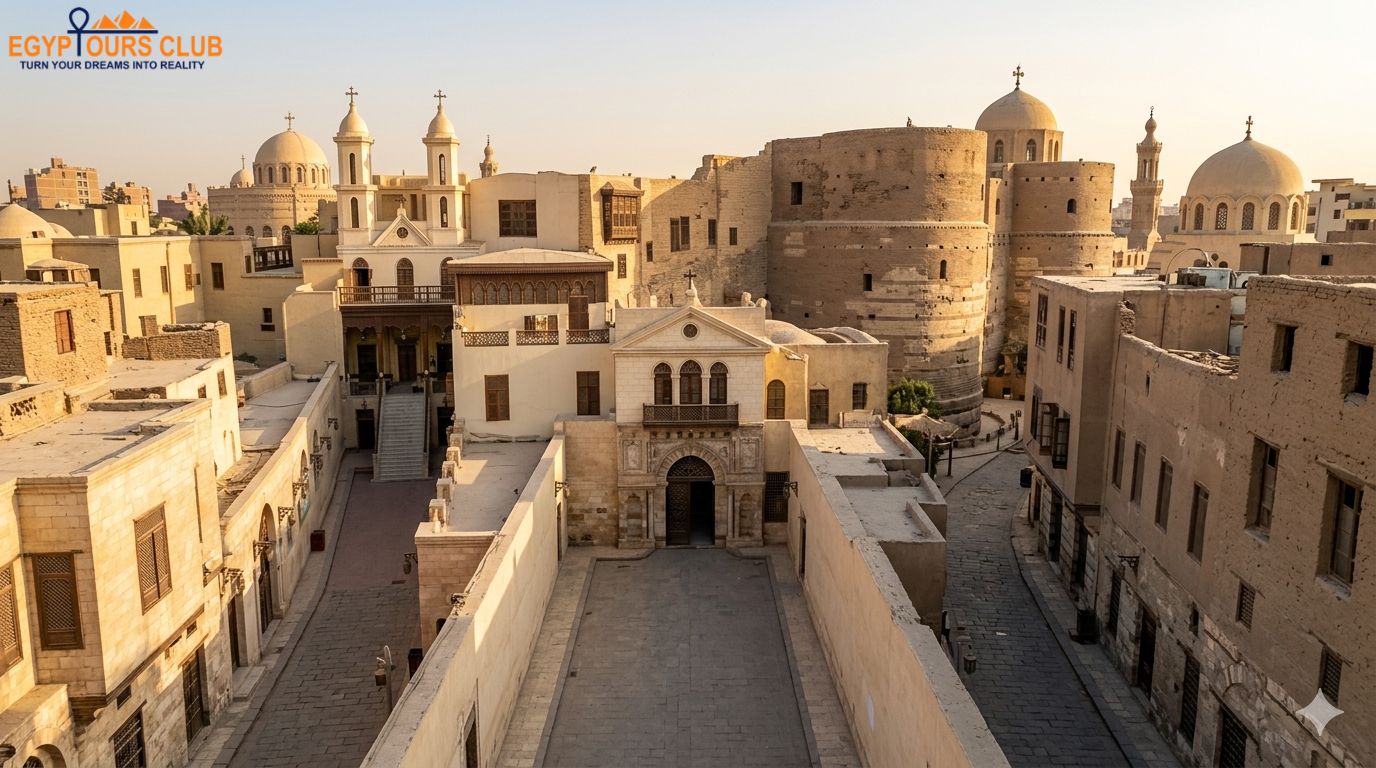
The surviving Roman fortress remains explain the setting shared by the Hanging Church, Saint George and the museum area. The district existed before the later churches and before Fustat became Egypt’s first Islamic capital. Look carefully at where older fortification masonry meets later sacred architecture.
Ben Ezra is not a Coptic church. It is a Jewish heritage landmark in the adjacent Old Cairo precinct, famous for its link with the Cairo Genizah manuscript archive. Including it gives a more accurate picture of the area’s varied religious history. Check access before planning it as a guaranteed interior stop.
Most of the core heritage sites are within a compact pedestrian area. A driver is useful for reaching Old Cairo from your hotel, but not for moving between every nearby church.
Choose based on your interests. The time estimates below are planning allowances, not guaranteed visit durations or published operating hours.
| Place | Best reason to go | Suggested time | Access note | Visitor guide |
|---|---|---|---|---|
| Hanging Church | Architecture, Coptic icons and fortress context | Approx. 30–60 min | Active church; services may interrupt access | Open guide |
| Abu Serga | Pilgrimage tradition and historic church interior | Approx. 30–60 min | Crypt access can vary | Open guide |
| Coptic Museum | Christian Egyptian art, manuscripts and context | Approx. 1–2+ hours | Ticketing and displays may change | Open guide |
| Saint George | Greek Orthodox heritage and circular plan | Approx. 20–45 min | Respect monastery and church rules | Open guide |
| Babylon Fortress | Roman-period layers beneath Old Cairo | Approx. 15–30 min | Some views are from public paths | Open guide |
| Ben Ezra | Jewish history and the Cairo Genizah | Approx. 20–45 min | Check monument access locally | Open guide |
The district represents living religious practice, not a deserted archaeological site. Churches continue to hold services, pilgrims come to places associated with early Christian tradition, and the museum protects fragile manuscripts, textiles and artworks that help explain Egyptian identity over time.
Abu Serga’s crypt is a revered devotional place. A respectful guide explains the tradition without claiming the precise event can be archaeologically proved.
Coptic language, sacred icons, manuscript traditions and church decoration connect modern worship with Egypt’s long cultural history.
Churches, the museum, a historic synagogue and nearby Islamic landmarks reflect different communities and periods, including cooperation and conflict.
It is tempting to describe the area as proof that every religious community lived in uninterrupted harmony. That is too simple. The better interpretation is that several traditions left important and enduring traces in the same urban landscape, even as their relationships and political circumstances changed.
The strongest visit is planned around worship, access and comfortable walking, not a fixed number of photos.
Cairo Metro Line 1 serves Mar Girgis Station beside the main heritage precinct. A private vehicle can drop you near the walking area if you are coming from a hotel in Cairo or Giza.
Wear modest clothing, cover shoulders and knees, and keep your voice low. Do not enter sanctuary spaces or interrupt services without permission.
Opening hours and tickets can change. Feast days, church services, conservation and security procedures can affect what you can visit, especially underground or restricted areas.
Expect steps, historic thresholds and sometimes crowded narrow lanes. Visitors who need step-free access should confirm individual buildings before booking.
For an art-focused visit, allow generous time at the Coptic Museum rather than squeezing it into the final 15 minutes of a walking tour.
Always follow posted instructions and ask before photographing worshippers, altars, icons or sacred rooms. Some spaces and equipment may have special restrictions.
The Christian quarter is one part of Old Cairo. The medieval Islamic city around Al-Muizz is farther away.
Saint George is Greek Orthodox, while the Hanging Church and Abu Serga are Coptic Orthodox. The nearby Ben Ezra site is Jewish.
Holy Family associations are important religious beliefs. Describe them respectfully without claiming archaeological certainty.
These official and museum sources provide the historical and linguistic context used in the guide. Recheck site access shortly before travel.
Coptic Cairo is the historic Christian heritage precinct in Old Cairo, centered around the former Roman Babylon Fortress. It includes the Hanging Church, Abu Serga and other churches, the Coptic Museum and nearby Ben Ezra Synagogue.
The term ultimately comes from a Greek word for Egyptian, transmitted through Arabic. Today it usually refers to Egypt’s Christian communities and their religious, artistic and linguistic heritage. Coptic is also the final stage of the ancient Egyptian language.
No. Coptic Cairo is one compact area within Old Cairo. The broader district also includes Fustat and Islamic-period heritage. The medieval streets around Al-Muizz and Khan El Khalili are farther away and require transport.
The Hanging Church, or Al-Muallaqa, was built above structures associated with the Roman Babylon Fortress. The name refers to its elevated architectural position, not to a building hanging unsupported.
Abu Serga, formally the Church of Saints Sergius and Bacchus, contains a crypt traditionally associated with the Holy Family’s refuge in Egypt. The association is a longstanding Coptic belief, not an archaeologically verified identification.
Many churches welcome respectful visitors, but they are active places of worship. Access may change during liturgies, religious holidays, conservation work and security arrangements. Follow on-site instructions.
Prioritize the Hanging Church, Abu Serga, the Coptic Museum and the Roman Babylon Fortress setting. Add Saint George Church and Ben Ezra Synagogue when access and your available time allow.
Allow two to three hours for a focused church walk or around three to four hours when adding the Coptic Museum. Museum enthusiasts may prefer longer; a full-day extension to Islamic Cairo requires transport.
Use Cairo Metro Line 1 and get off at Mar Girgis Station. The main heritage attractions are close together on foot. Private hotel transfers are also convenient, especially for families or visitors with limited mobility.
No. Ben Ezra is a Jewish heritage monument in the same Old Cairo religious precinct. Its presence helps explain the district’s wider religious and cultural history; it should not be described as a Christian church.
The main heritage precinct is widely visited and compact. Use normal urban precautions, stay together in busy areas, respect security checks and plan for steps or uneven surfaces. Accessibility varies by building.
Egypt Tours Club can arrange a private visit that connects the Hanging Church, Abu Serga, Roman Babylon, the Coptic Museum and other Old Cairo heritage stops according to your time, access needs and interests. Ask about current entry arrangements before confirming your route.
Egypt Tours Club editorial guide, updated 17 November 2026. Estimated sightseeing durations are planning guidance. Active worship, conservation, accessibility and local security arrangements take priority over any sample route. Photo assets are hosted on egypttoursclub.com and selected for their relevance to Coptic Cairo.