


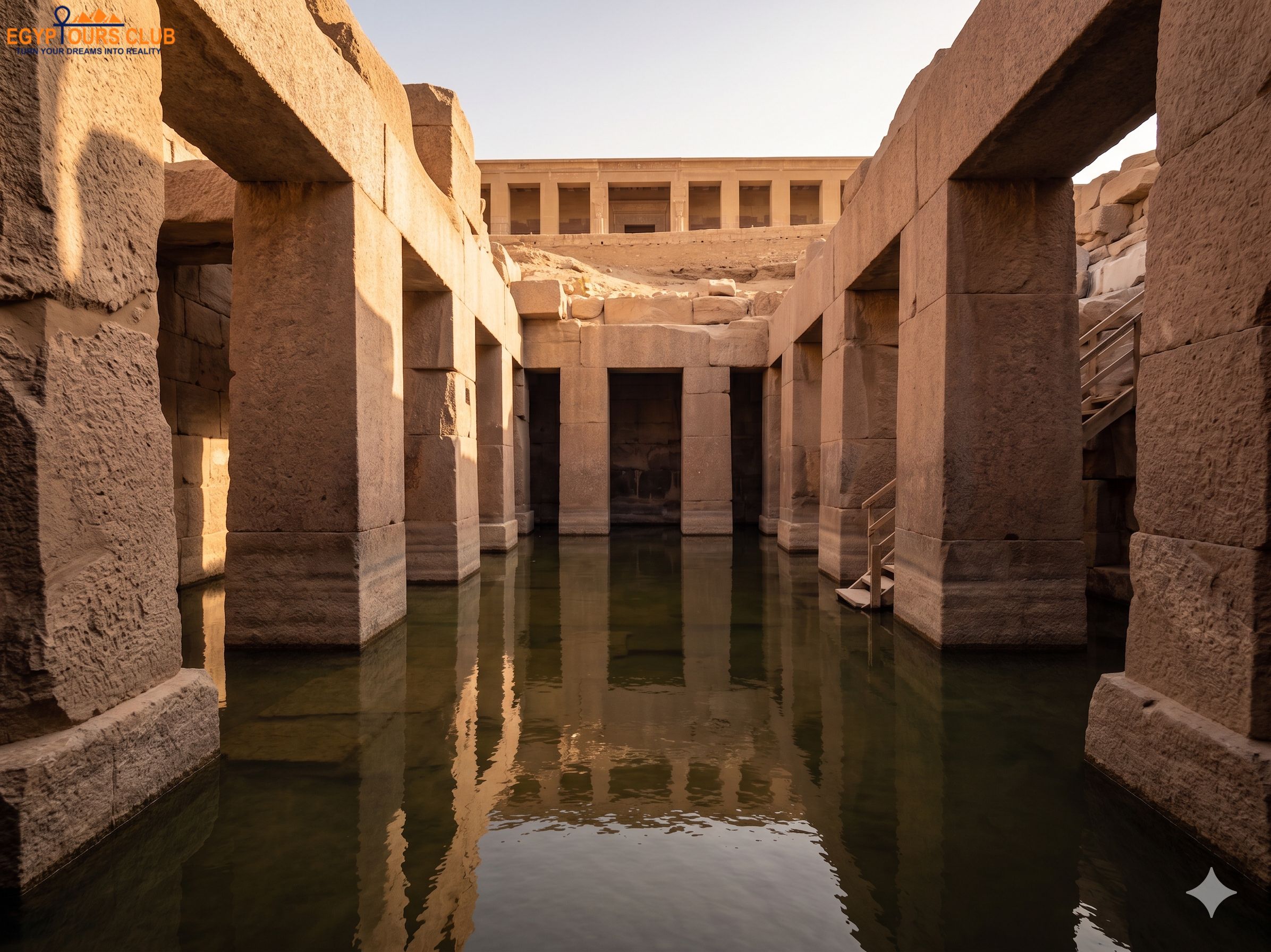
Water Chamber
The surrounding water channel is the feature that gives the Osireion its strongest symbolic and visual identity.
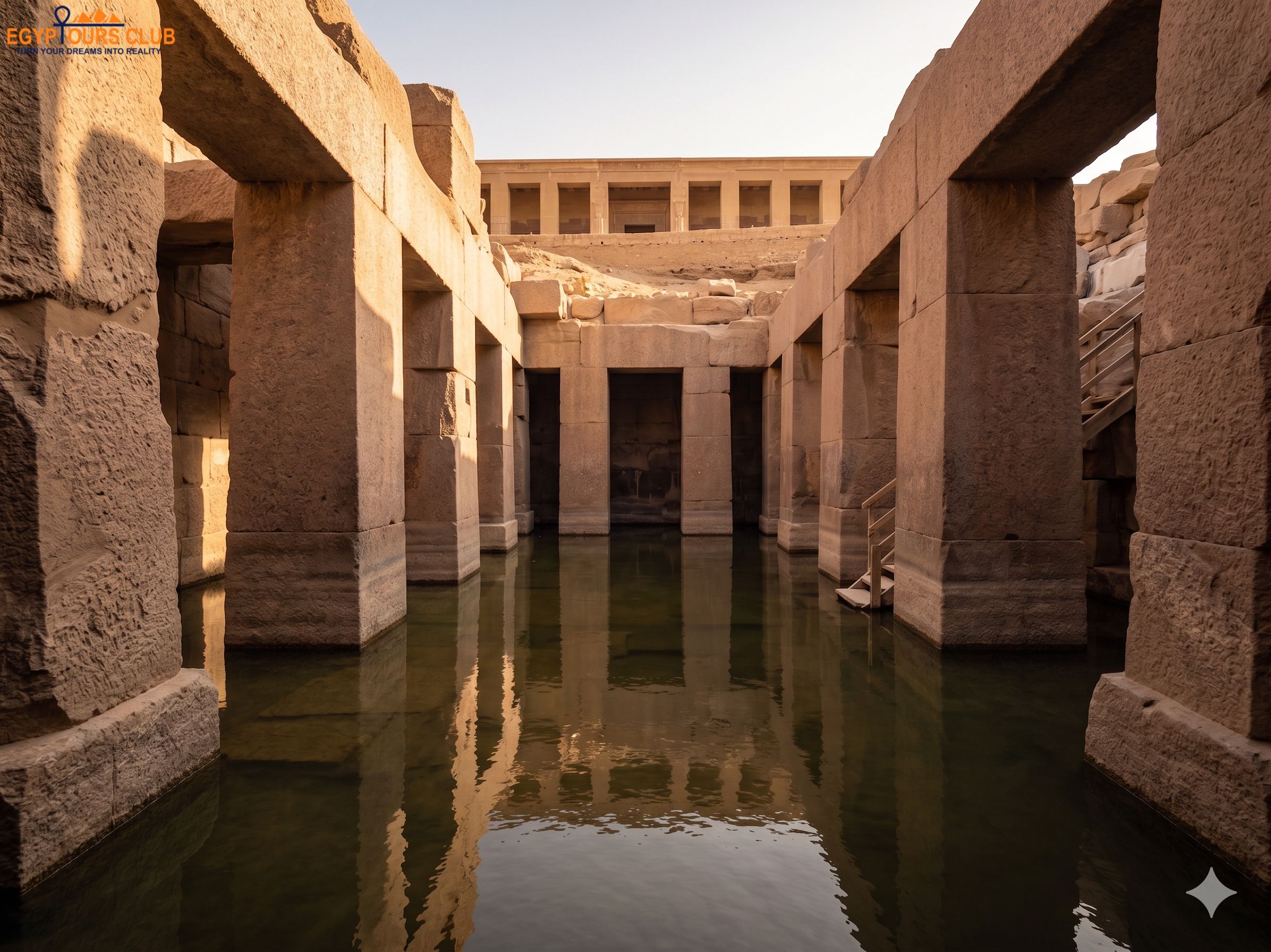
Explore the mysterious Osireion behind Seti I Temple with Abydos sacred history, water symbolism, monolithic pillars and guided Upper Egypt route planning.
The Osireion in Abydos, also written Osirion, is one of Egypt’s most unusual sacred monuments. Located directly behind the Temple of Seti I, it connects Seti I, Osiris symbolism, a water-surrounded central platform and monolithic pillars into a rare archaeological experience that works beautifully with a Dendera and Abydos day trip from Luxor.
Start here: choose the right route based on whether you want the Osireion focus, Abydos Temple of Seti I, Dendera and Abydos from Luxor, or a deeper Upper Egypt archaeology journey.
| Tour / Route | Duration | Main Stops | Best For | Commercial Intent | Action |
|---|---|---|---|---|---|
| Dendera and Abydos Temples Tour from Luxor | Full Day | Dendera Temple, Abydos Temple of Seti I, Abydos King List and Osireion if timing allows | First-time Upper Egypt temple travelers | Dendera and Abydos tour | View |
| Osireion and Abydos Temple Route | Flexible | Temple of Seti I, Abydos King List, Osireion water chamber and sacred context | Archaeology lovers and slow travelers | Osireion Abydos tour | View |
| Abydos Archaeology Route | Flexible | Umm El-Qa’ab, Shunet El-Zebib, Seti I Temple and Osireion | Serious history travelers | Abydos archaeology route | View |
| Egypt Tour Packages with Abydos Add-On | Multi-Day | Cairo, Luxor, Dendera, Abydos, Nile Cruise and Aswan | Travelers comparing complete Egypt travel plans | Egypt tour packages | View |
| Egypt Classic Tour Packages with Luxor | Flexible | Cairo, Luxor, Aswan, Nile Cruise and optional Abydos temple route | First-time visitors who want deeper history | Egypt classic tour packages | View |
| Tailored Upper Egypt Sacred Journey | Flexible | Luxor, Dendera, Abydos, Sohag, Nile route and Aswan extensions | Repeat visitors and specialist-interest travelers | Tailored Egypt travel | View |
The Osireion is a mysterious subterranean monument behind the Temple of Seti I at Abydos, widely interpreted as a cenotaph or symbolic tomb connected with Seti I and Osiris. It is famous for its central platform, monolithic pillars and surrounding water channel, making it one of the most distinctive monuments in ancient Egypt.
Use Egypt Tours Club travel experts to connect the Osireion with Seti I Temple, Abydos King List, Dendera, Luxor and wider Egypt travel packages.
The Osireion is strongest when it is not treated as an isolated stop. Place it inside the wider Abydos sacred landscape with Seti I Temple and nearby monuments.
Best for first-time Upper Egypt temple travelers who want Hathor, Osiris, Seti I and Abydos context in one full-day route.
View strongest route →Best for visitors who want more time for the Osireion water chamber, monolithic pillars and Seti I Temple symbolism.
Request tailored route →Best for guests who want Abydos inside a wider Cairo, Luxor, Nile Cruise, Aswan and Abu Simbel itinerary.
Compare Egypt packages →The Osireion does not impress through bright wall paintings or a towering façade. Its power comes from atmosphere: heavy stone, water, silence, depth and a feeling of descent into a symbolic underworld.
Its location behind the Temple of Seti I is essential. Abydos was one of Egypt’s most sacred landscapes, strongly associated with Osiris, pilgrimage, royal memory and ideas of rebirth. The Osireion turns that sacred context into architecture.
For travelers searching for Osireion Abydos Egypt, Osireion meaning, Seti I Osireion, Osireion water chamber, Osireion monolithic pillars or ancient monument behind Temple of Seti I, this site is one of the most compelling stops in the Abydos cluster.
Water Chamber · Osireion AbydosThe Osireion’s visual identity comes from its water-surrounded platform, massive stone blocks, axial setting and its hidden relationship to the Temple of Seti I.
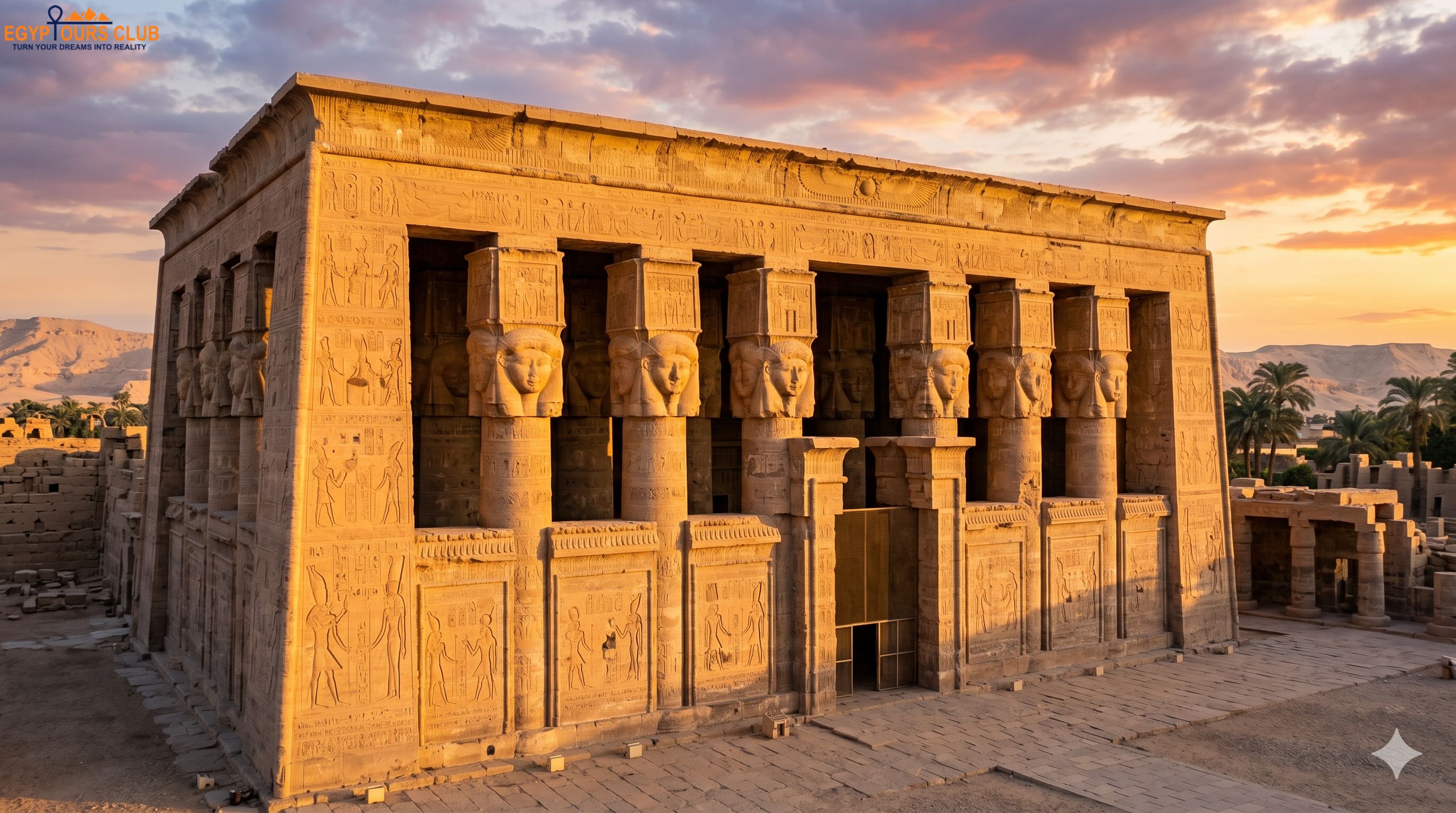
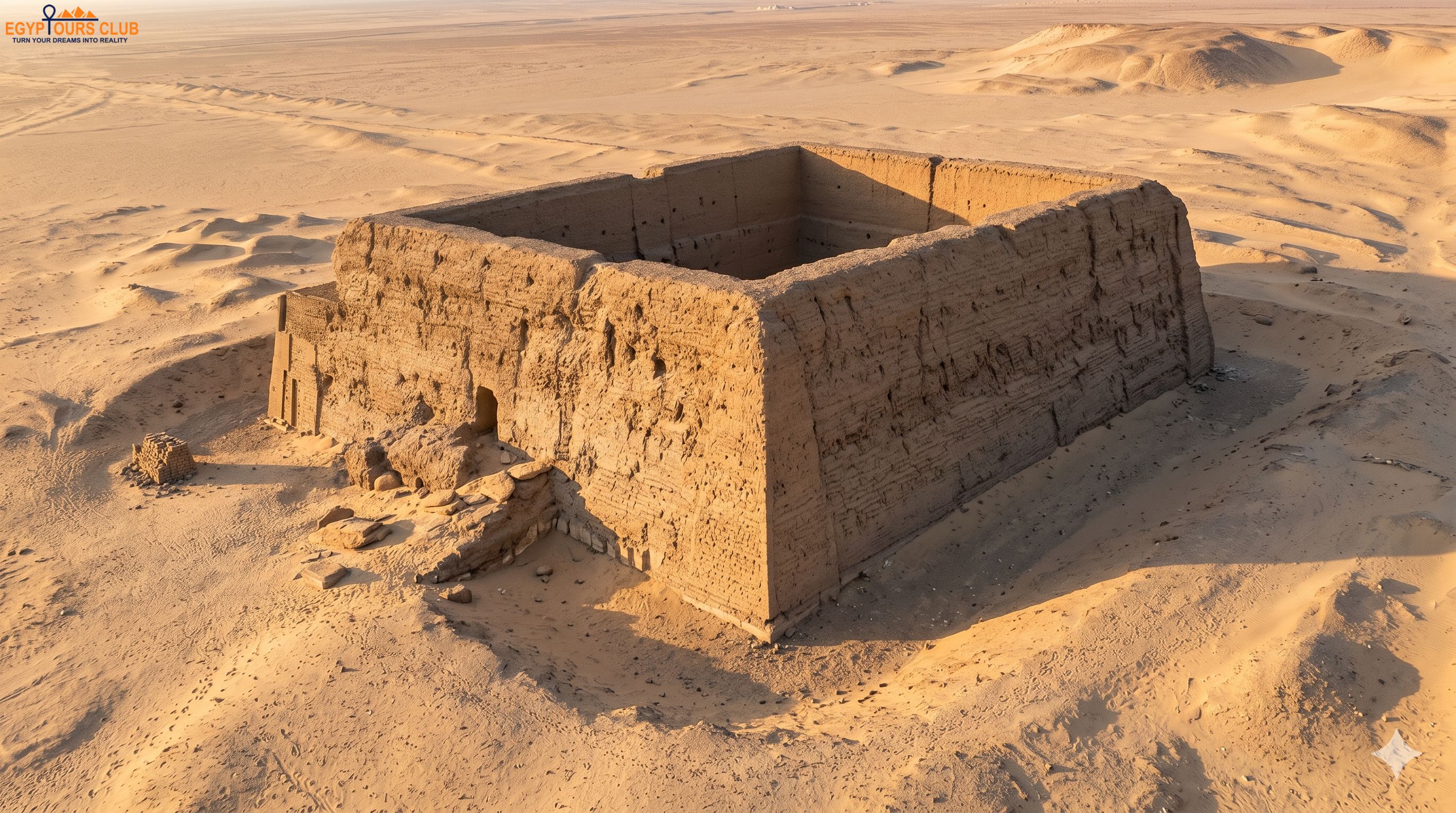
The Osireion attracts attention because it combines a hidden position, monumental stonework, water symbolism and strong links with Osiris, rebirth and royal memory.
The Osireion matters because it adds an underworld-like, symbolic layer to Abydos, connecting Seti I, Osiris and the deeper sacred geography of Upper Egypt.
The surrounding water channel is the feature that gives the Osireion its strongest symbolic and visual identity.
The heavy pillars and stone setting create a stark atmosphere very different from colorful temple halls.
The monument is closely associated with Seti I and sits directly behind his famous temple at Abydos.
The Osireion belongs to a layered site where kingship, pilgrimage, Osiris worship and royal memory overlap.
The hidden, lower setting makes the monument feel like a symbolic descent into a sacred underworld space.
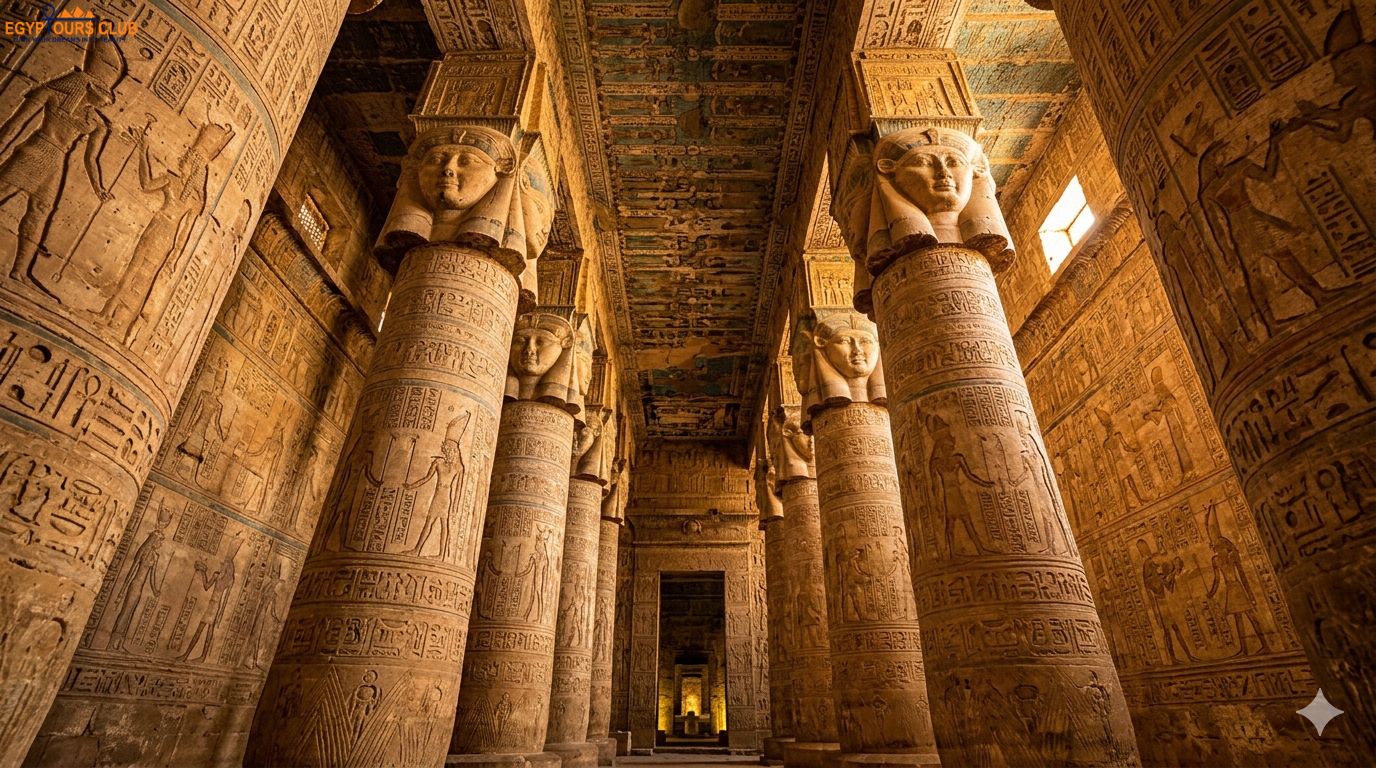
The site becomes especially powerful when paired with Abydos Temple, Shunet El-Zebib and Dendera Temple Complex.
The Osireion is best visited as part of a guided Abydos route, not as an isolated stop. Its meaning depends on Seti I’s temple, Osiris symbolism and the broader sacred landscape.
The strongest Osireion experience connects it with Seti I’s temple, the Abydos King List, early royal monuments and nearby Dendera.
A focused Abydos experience connecting the Temple of Seti I, the King List and the mysterious Osireion behind it.
ViewBest for serious travelers who want Osireion, Shunet El-Zebib, Umm El-Qa’ab and the deeper royal landscape.
ViewPair Abydos heritage with Dendera’s Temple of Hathor for a powerful Upper Egypt temple and symbolism route.
ViewExact access, timing and site order should be confirmed locally, especially for specialist Abydos archaeological stops.
Use these pages to connect the Osireion with the strongest Abydos, Dendera, Luxor and Upper Egypt route structure.
| Route | Best For | Suggested Flow | Useful Link |
|---|---|---|---|
| Classic Abydos Visit | First-time Abydos travelers | Temple of Seti I → Abydos King List → Osireion | Abydos Temple guide |
| Abydos Archaeology Route | Serious history lovers | Umm El-Qa’ab → Shunet El-Zebib → Seti I Temple → Osireion | Specialist route |
| Dendera and Abydos Full Day | Upper Egypt temple travelers | Luxor → Dendera → Abydos Temple → Osireion if timing allows | Dendera and Abydos tour |
| Custom Sacred Landscape Journey | Slow travel and guided interpretation | Luxor → Dendera → Abydos → Sohag → Aswan | Tailor made Egypt tours |
The Osireion is a subterranean monument behind the Temple of Seti I at Abydos, often interpreted as a symbolic tomb or cenotaph connected with Seti I and Osiris.
Yes. Osireion and Osirion are alternate spellings used for the same monument.
It is located at Abydos in Upper Egypt, directly behind the Temple of Seti I.
It is famous for its underground character, water-surrounded central platform, monolithic pillars and mysterious symbolic atmosphere.
The monument is generally associated with Pharaoh Seti I and the sacred program of his Abydos temple.
The water is often understood symbolically in relation to Osiris, rebirth, renewal and the underworld-like character of the monument.
Yes. It is best planned as part of an Abydos visit with the Temple of Seti I and related archaeological sites.
Yes, especially for travelers interested in Osiris symbolism, Seti I, unusual architecture and deeper Abydos archaeology.
Visit the Osireion with an expert guide and connect its water chamber, monolithic pillars and Osiris symbolism with Seti I Temple, the Abydos King List, Shunet El-Zebib and Dendera.