
Ancient Egyptian Gods: Complete Guide for Beginners
Meet the deities who shaped Egyptian ideas about creation, kingship, nature, death and rebirth.
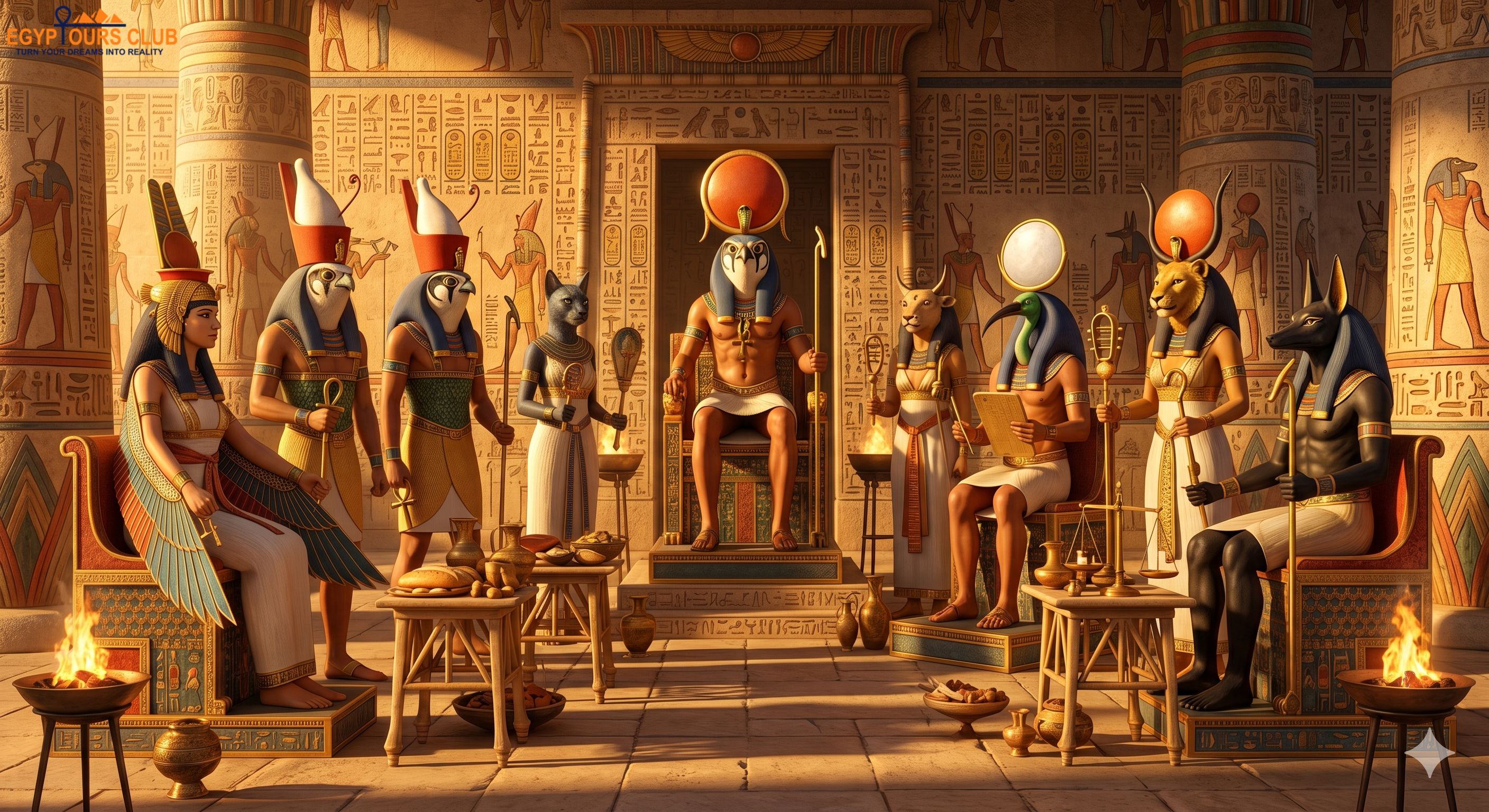
Ancient Egyptian religion developed over more than three thousand years. Gods represented cosmic forces, places, natural cycles and social ideals. Myths varied by region, so different creation stories and divine families could coexist without being treated as contradictions.
Essential gods to know first
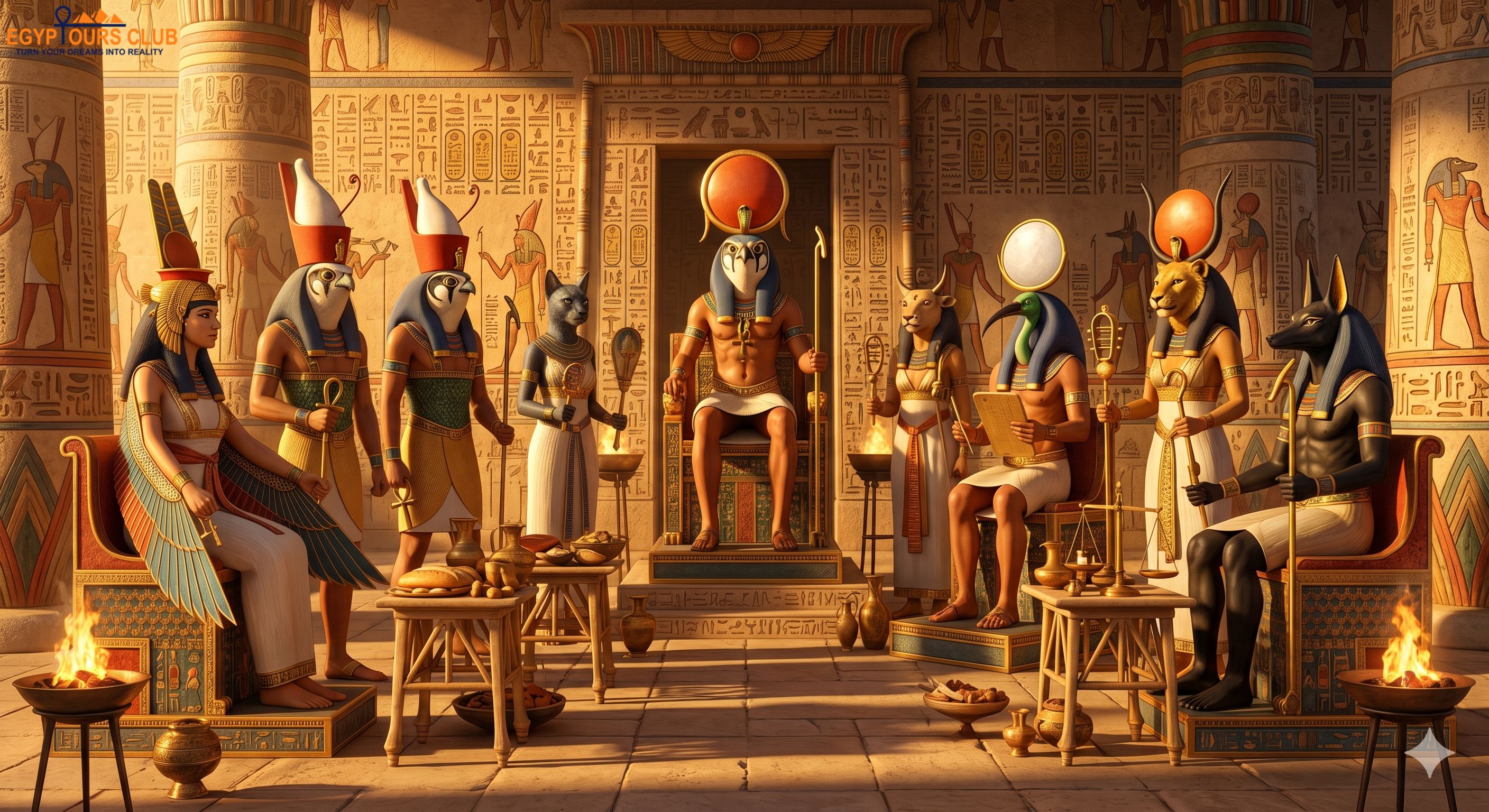
Ra
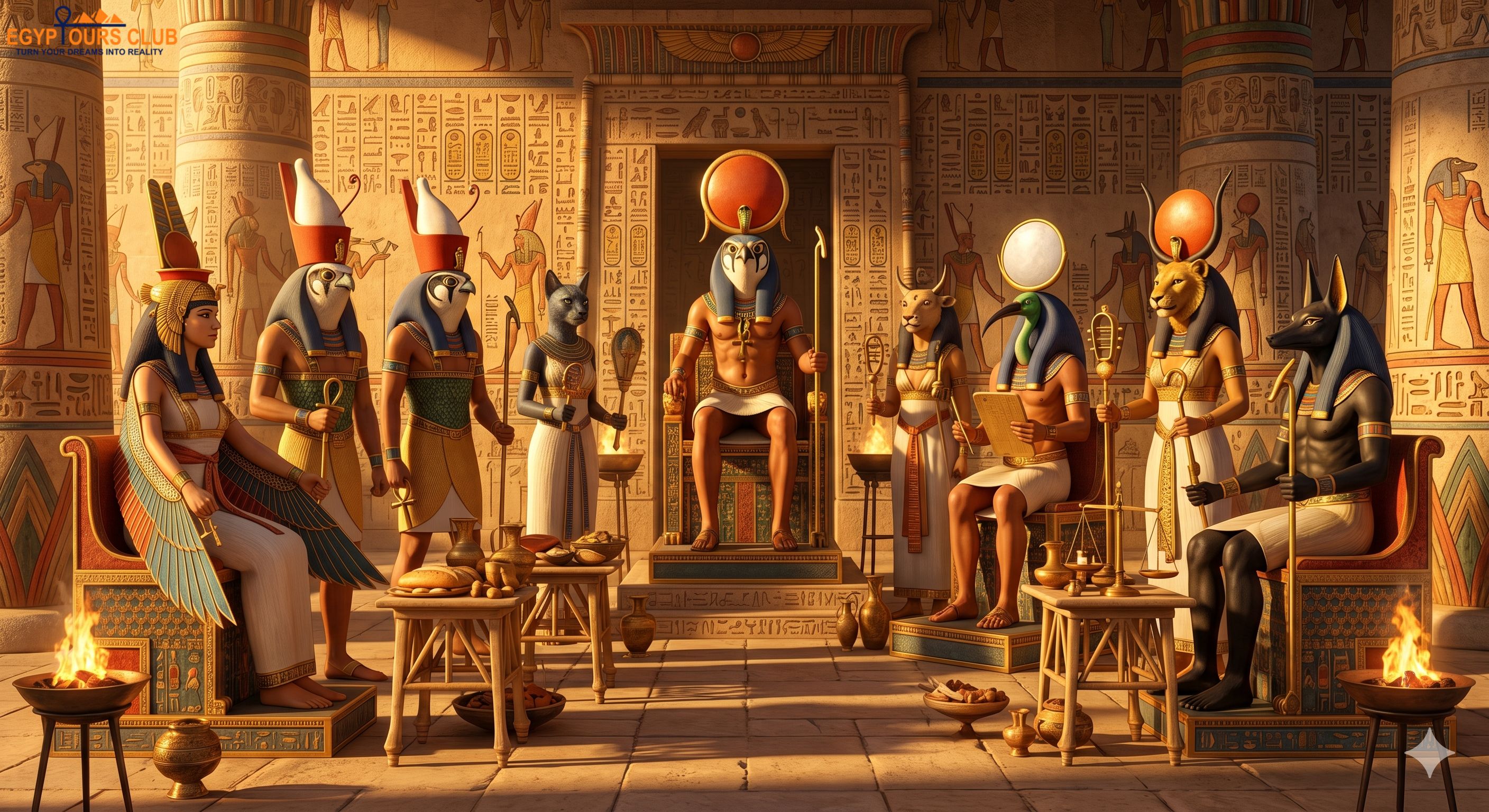
Solar creator associated with the sun’s daily journey, often shown with a falcon head and solar disk.
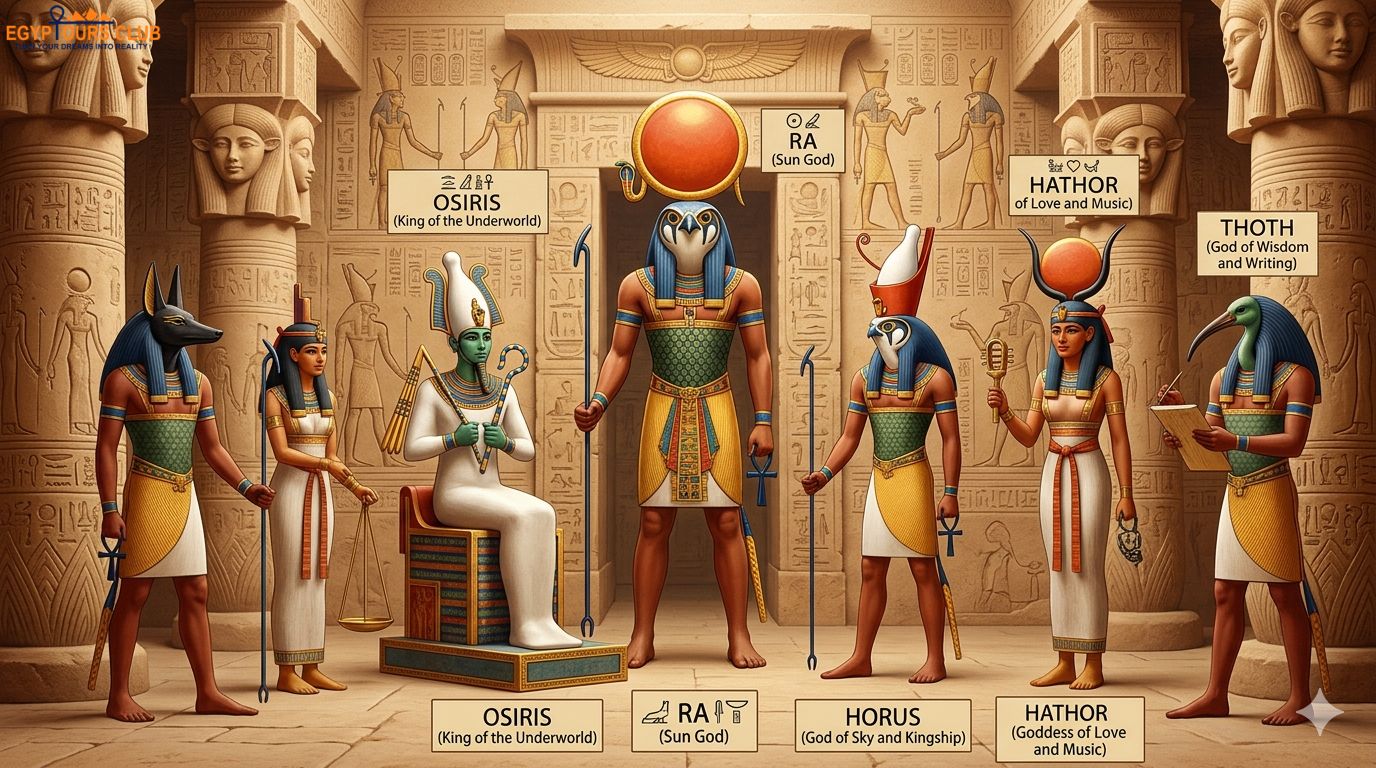
Osiris
Ruler of the afterlife and symbol of regeneration, kingship and renewed life.
Isis
Powerful goddess of magic, motherhood and protection; wife of Osiris and mother of Horus.
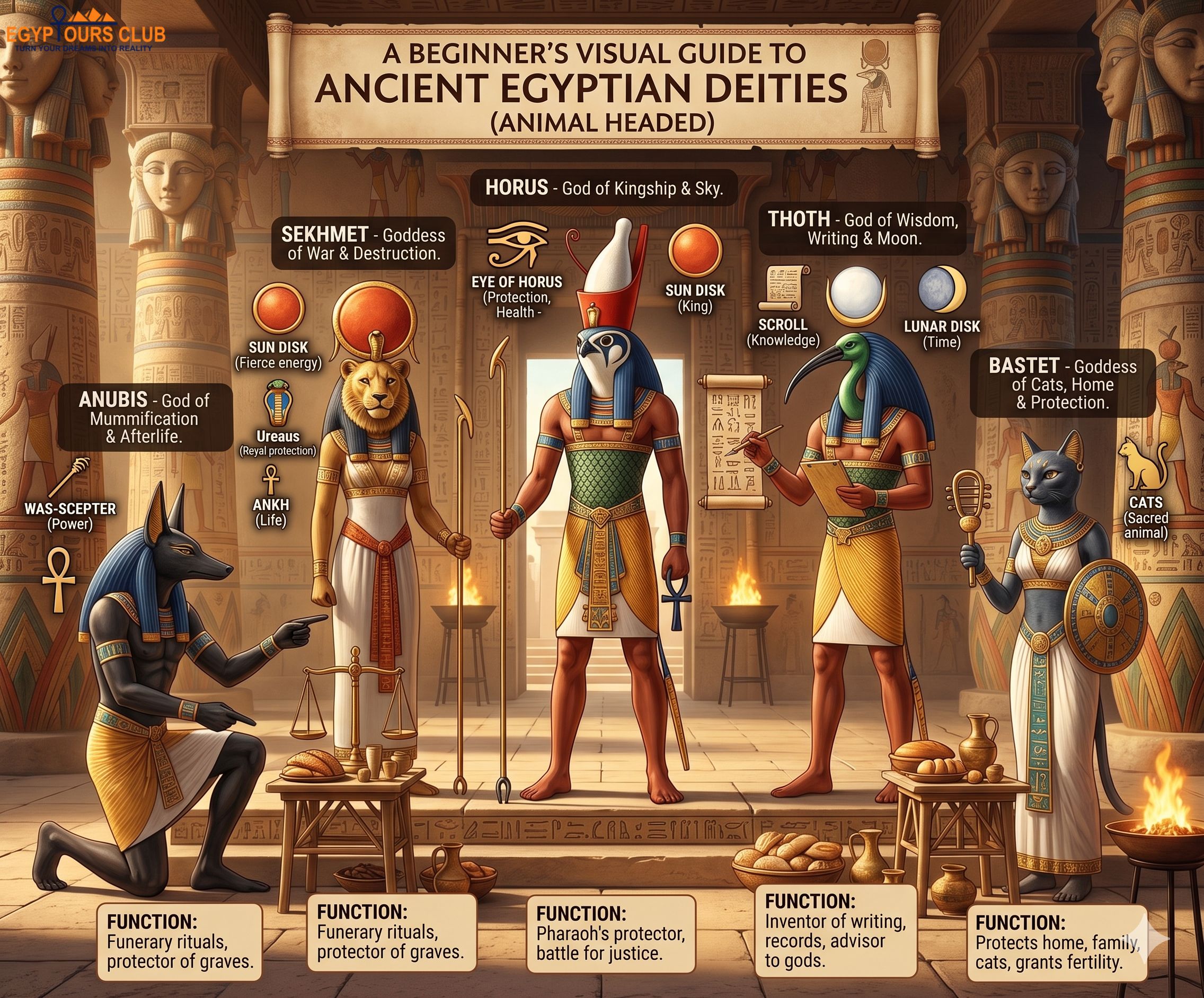
Horus
Sky and kingship god, usually falcon-headed; the living pharaoh was closely associated with him.
How Egyptian mythology works
Names and forms can combine
Amun-Ra joins attributes of Amun and Ra; combined forms express relationships rather than replacing either deity.
Animals are symbolic
A falcon, ibis, jackal or cat communicates divine qualities; Egyptians were not simply worshipping ordinary animals.
Myths have local versions
Heliopolis, Memphis, Thebes and other centers preserved different creation traditions.
Temple ritual maintained order
Offerings, hymns and royal scenes renewed maat—the balance and order of the cosmos.
More gods and where to meet them
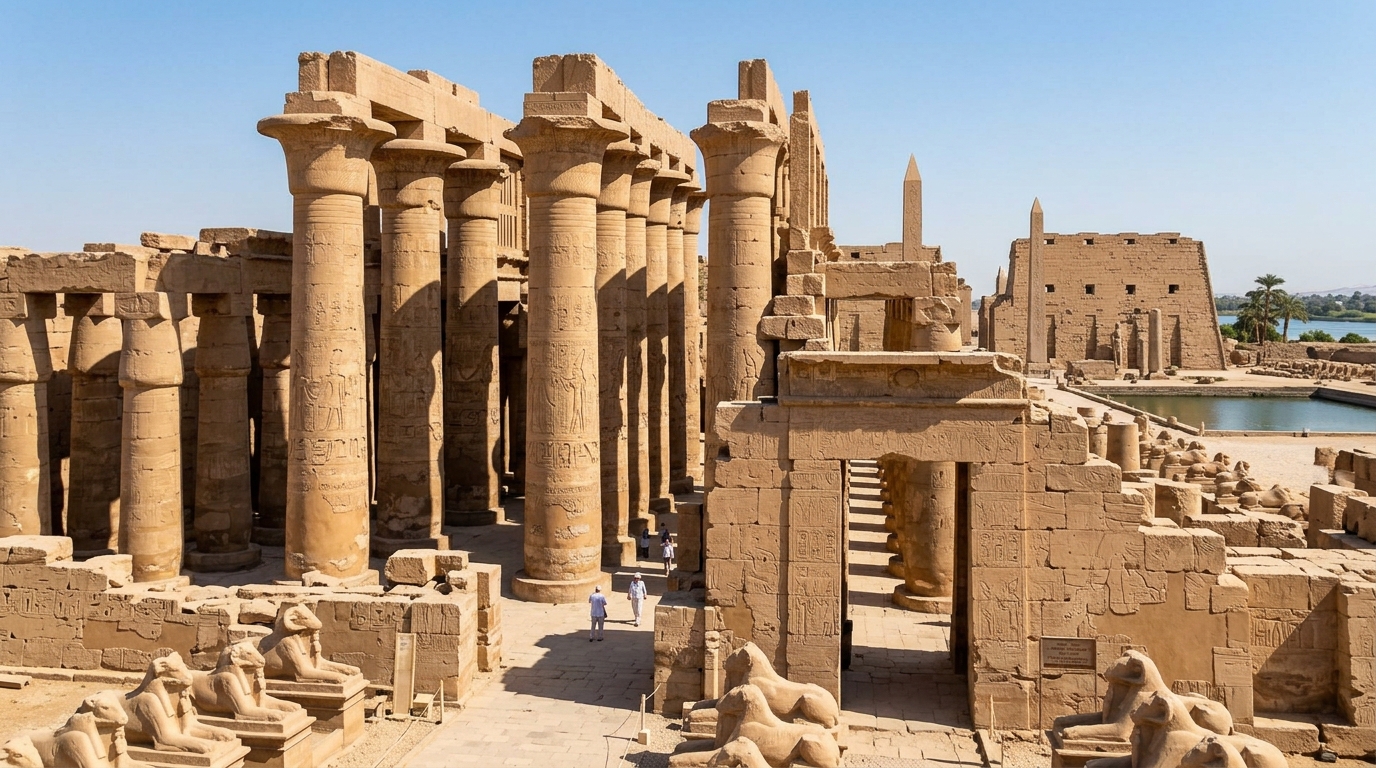
Amun — Karnak
The great Theban state god became closely linked with kingship and Ra; Karnak was his principal monumental center.
.jpeg)
Hathor — Dendera
Goddess of love, music, joy and maternal care; Dendera preserves one of her finest temples.
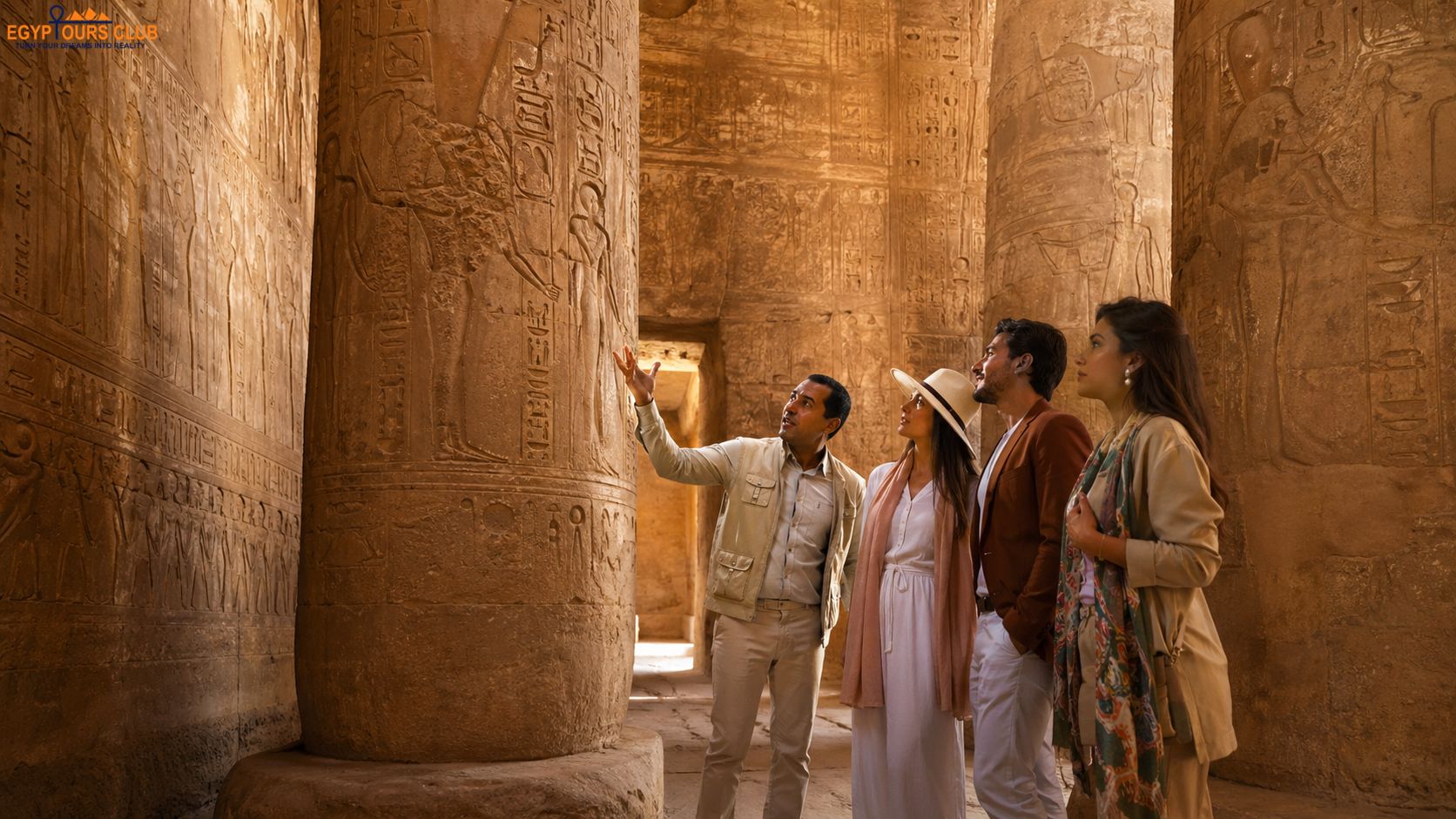
Anubis — tombs and museums
Jackal-associated guardian of cemeteries and embalming, prominent in funerary art.
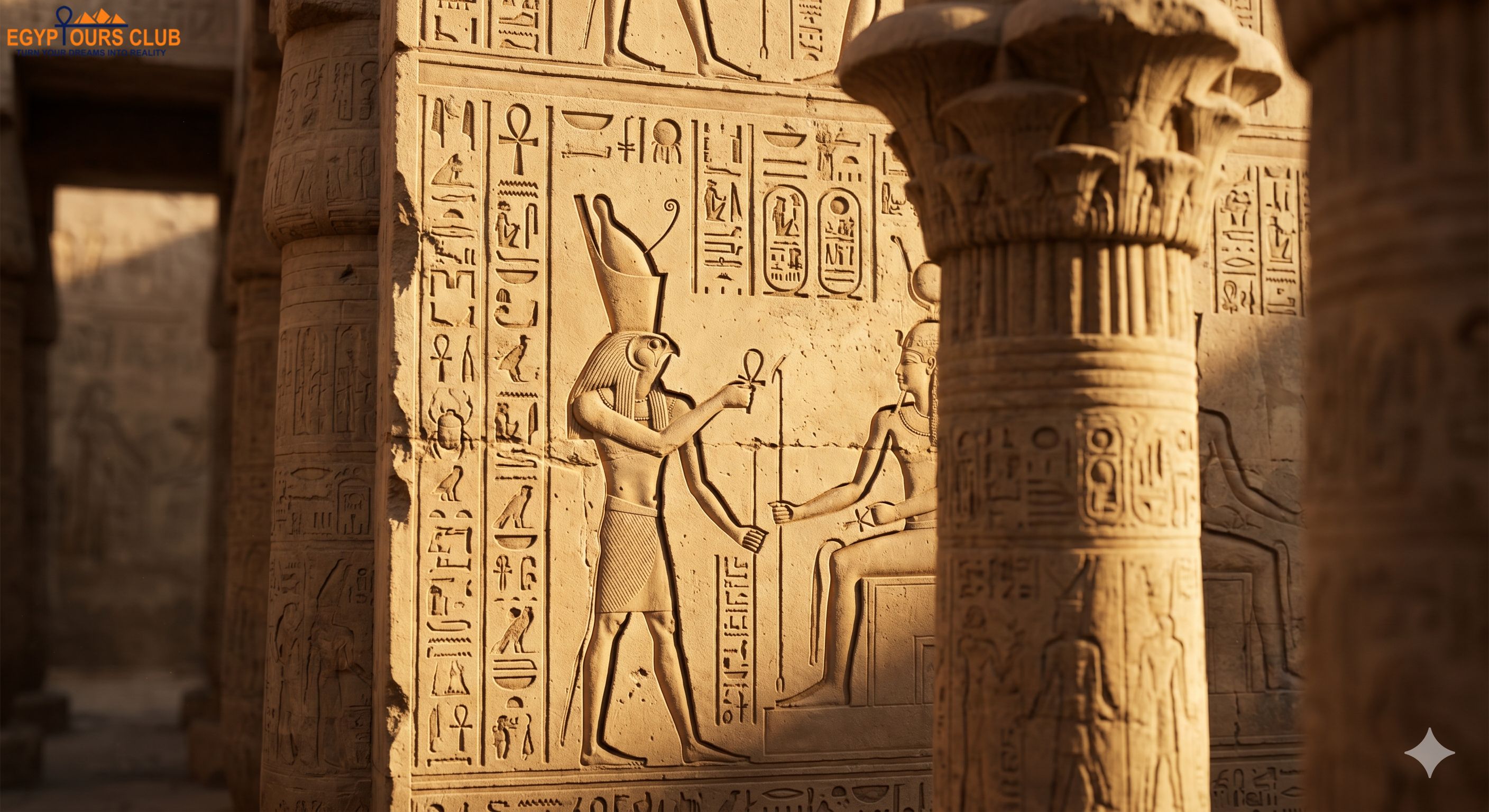
Thoth — Hermopolis tradition
Ibis- or baboon-associated god of writing, wisdom, measurement and the moon.
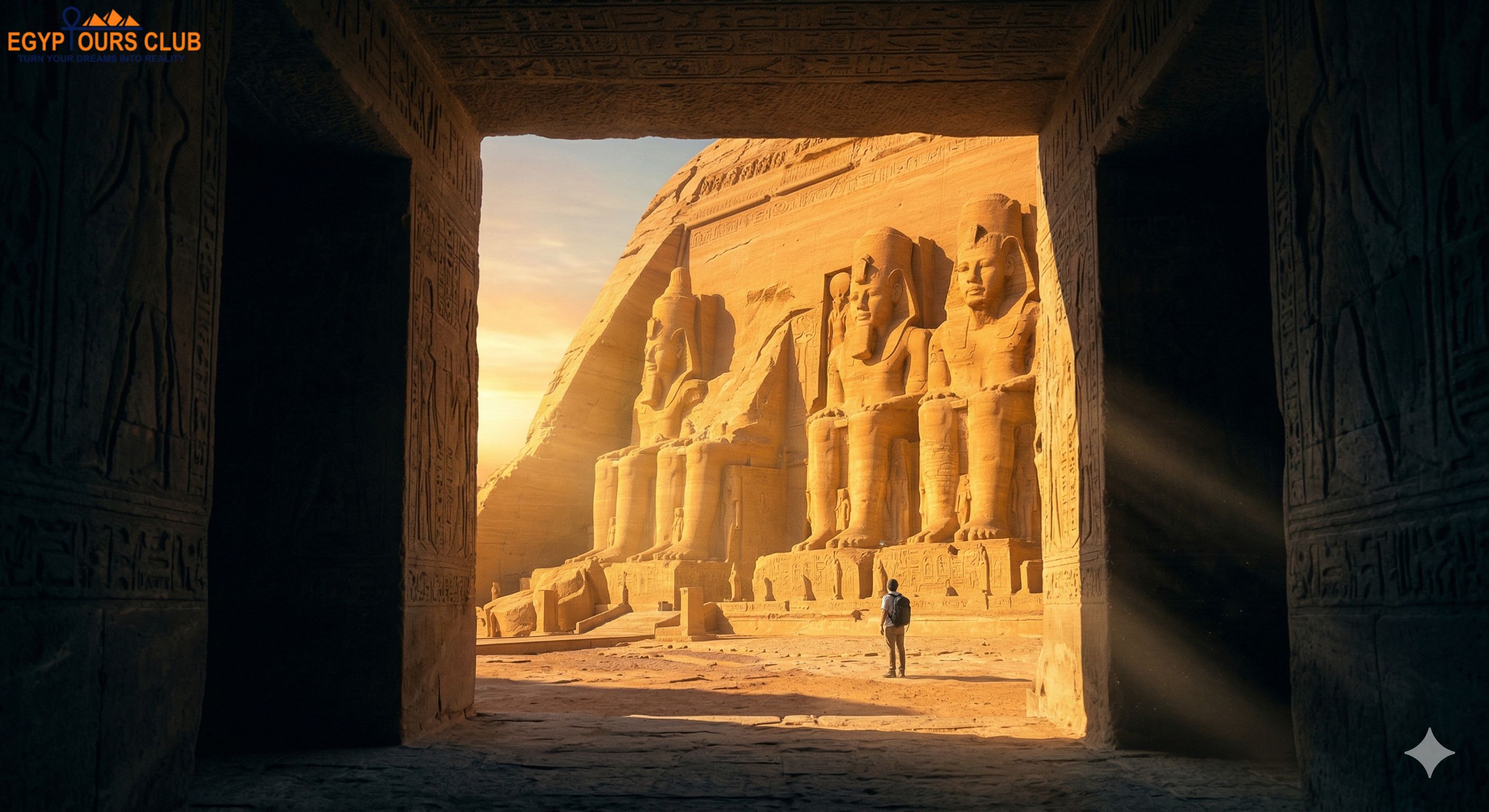
Sekhmet — Luxor collections
Lioness goddess of power, protection and healing; numerous statues were commissioned by Amenhotep III.
Frequently asked questions
Who was the most important Egyptian god?
There was no single answer for all periods. Ra, Amun, Osiris, Isis and Horus became especially influential in different contexts.
How many gods did ancient Egypt have?
Egyptians recognized hundreds of deities, local forms and combined manifestations across more than three millennia.
Why did Egyptian gods have animal heads?
Animal features visually expressed qualities such as falcon vision, jackal connections with cemeteries or lioness power.
Are Ra and Amun-Ra the same?
Amun-Ra is a combined form linking Amun’s Theban importance with Ra’s solar and creator qualities.
Where can I see Egyptian gods in Egypt?
Temple reliefs at Karnak, Luxor, Dendera, Edfu and Philae, royal tombs and major museums provide excellent examples.
Discover Egyptian mythology with an Egyptologist
Explore temples, tombs and museums with a guide who connects each divine image to its original story and setting.
Plan My Mythology Tour