Ancient Egyptian Gods: Complete Guide for Beginners | Egypt Tours Club
Ancient Egyptian Gods: Complete Guide for Beginners . banner

Ancient Egyptian Gods: Complete Guide for Beginners

Ancient Egyptian Gods: Complete Beginner Guide to Names, Symbols & Meanings | Egypt Tours Club
𓂀 Egyptian Mythology Guide

Ancient Egyptian Gods: Complete Guide for Beginners

Meet the most important ancient Egyptian gods and goddesses, understand their meanings and symbols, and learn how to recognize them in Egypt’s temples, tombs, museums, and sacred art.

Egypt Tours Club Updated May 2026 12 min read Egyptology · Gods · Symbols · Cultural Travel

The world of Ancient Egyptian gods is not just a list of names. It is a living map of how ancient Egyptians understood creation, kingship, death, rebirth, nature, justice, protection, and the sacred order of the universe.

Ancient Egyptian Gods: The Beginner-Friendly Foundation

The Egyptian gods shaped temple life, royal ideology, funerary belief, art, mythology, and daily religion across the Nile Valley for more than three thousand years. Ancient Egyptian religion was polytheistic, meaning the Egyptians recognized many divine beings with different powers, forms, and local identities.

A true beginner guide to Egyptian gods should start with one important idea: there was no single closed list. The gods of ancient Egypt changed, merged, rose in importance, and appeared in many forms across different periods and regions.

That is why this guide focuses on the clearest beginner path: who the gods were, what they represented, why Egyptians worshipped many gods, which deities matter most, and how to recognize them visually in temples and museums.

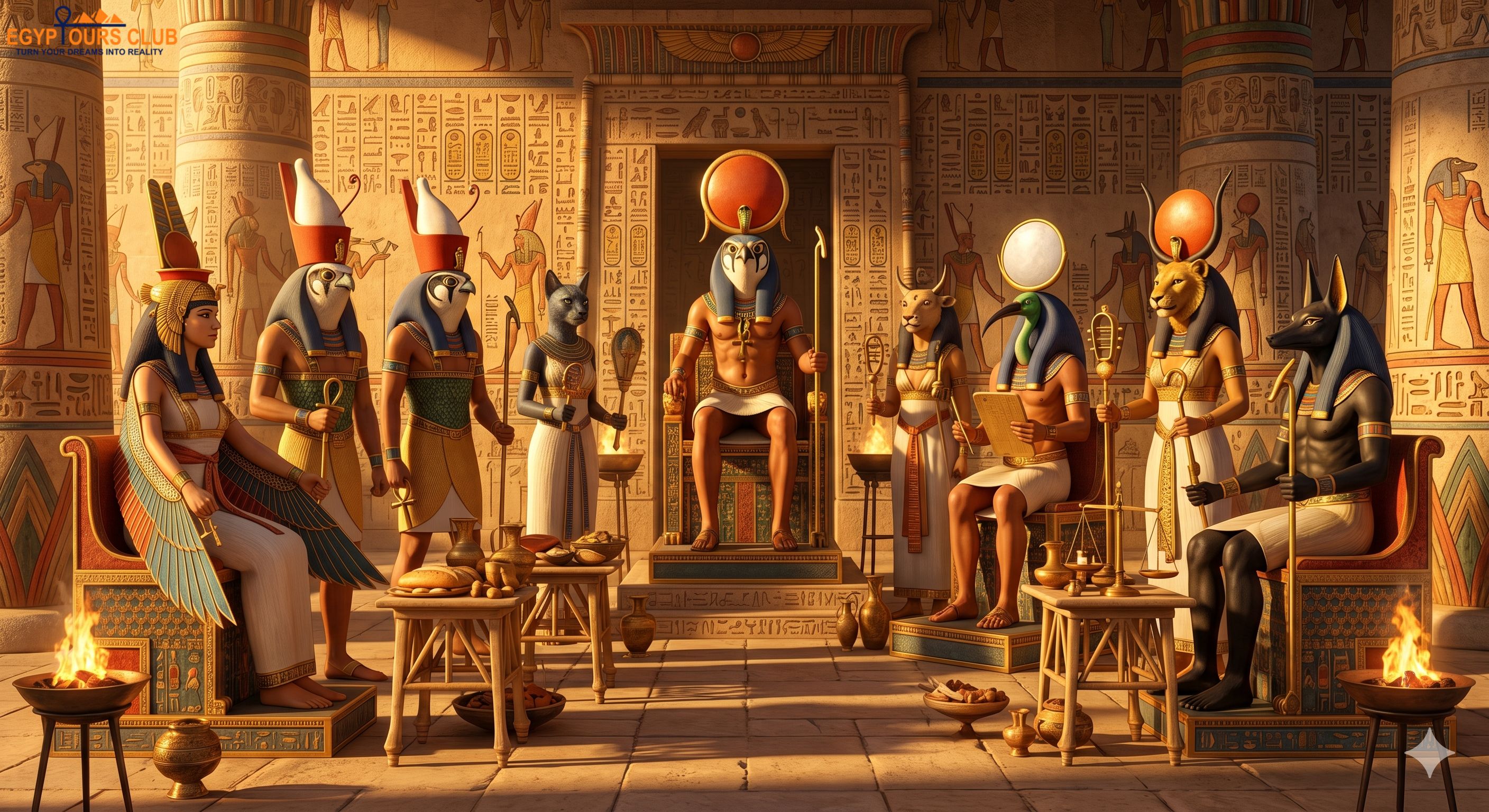
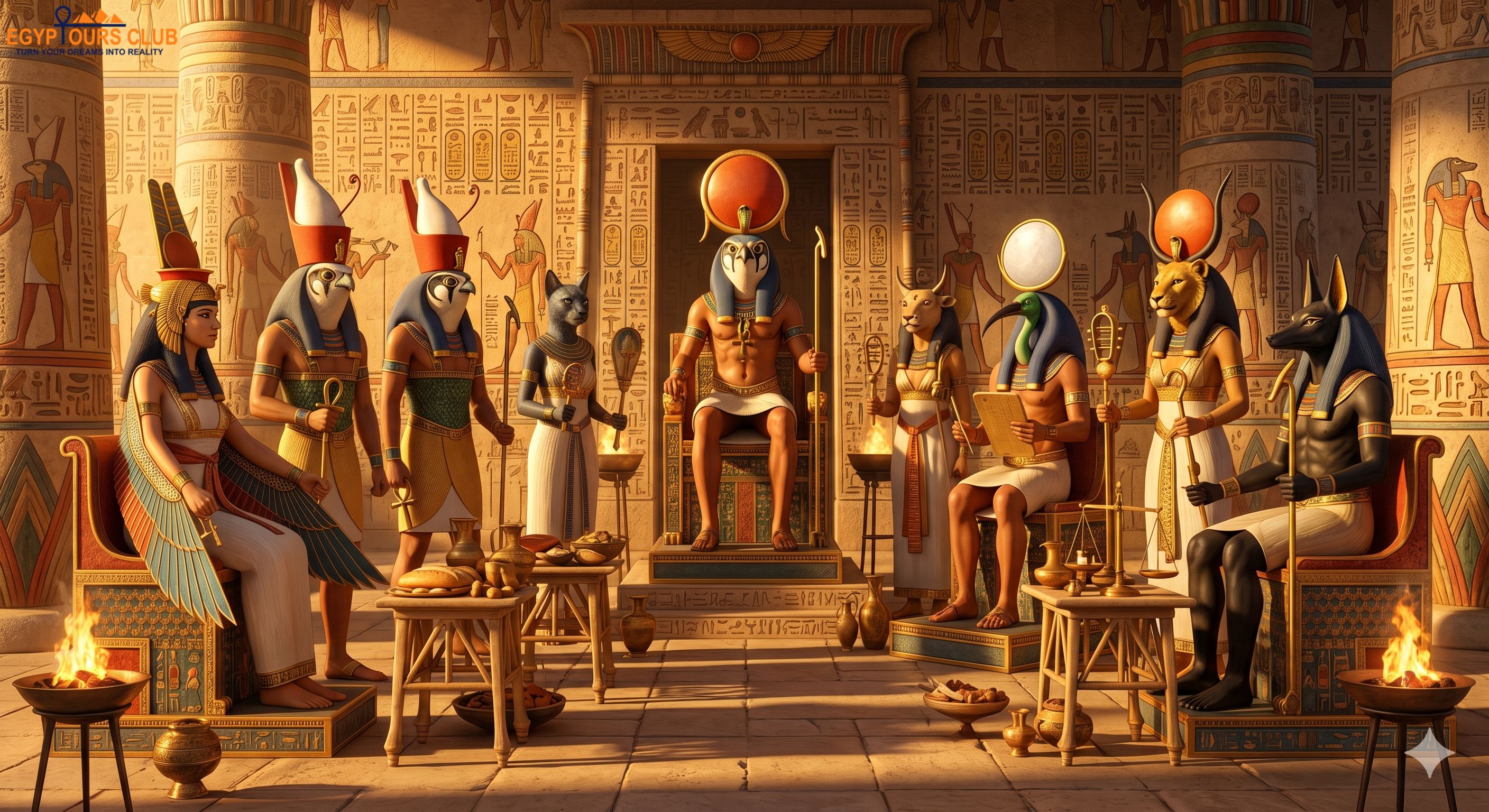
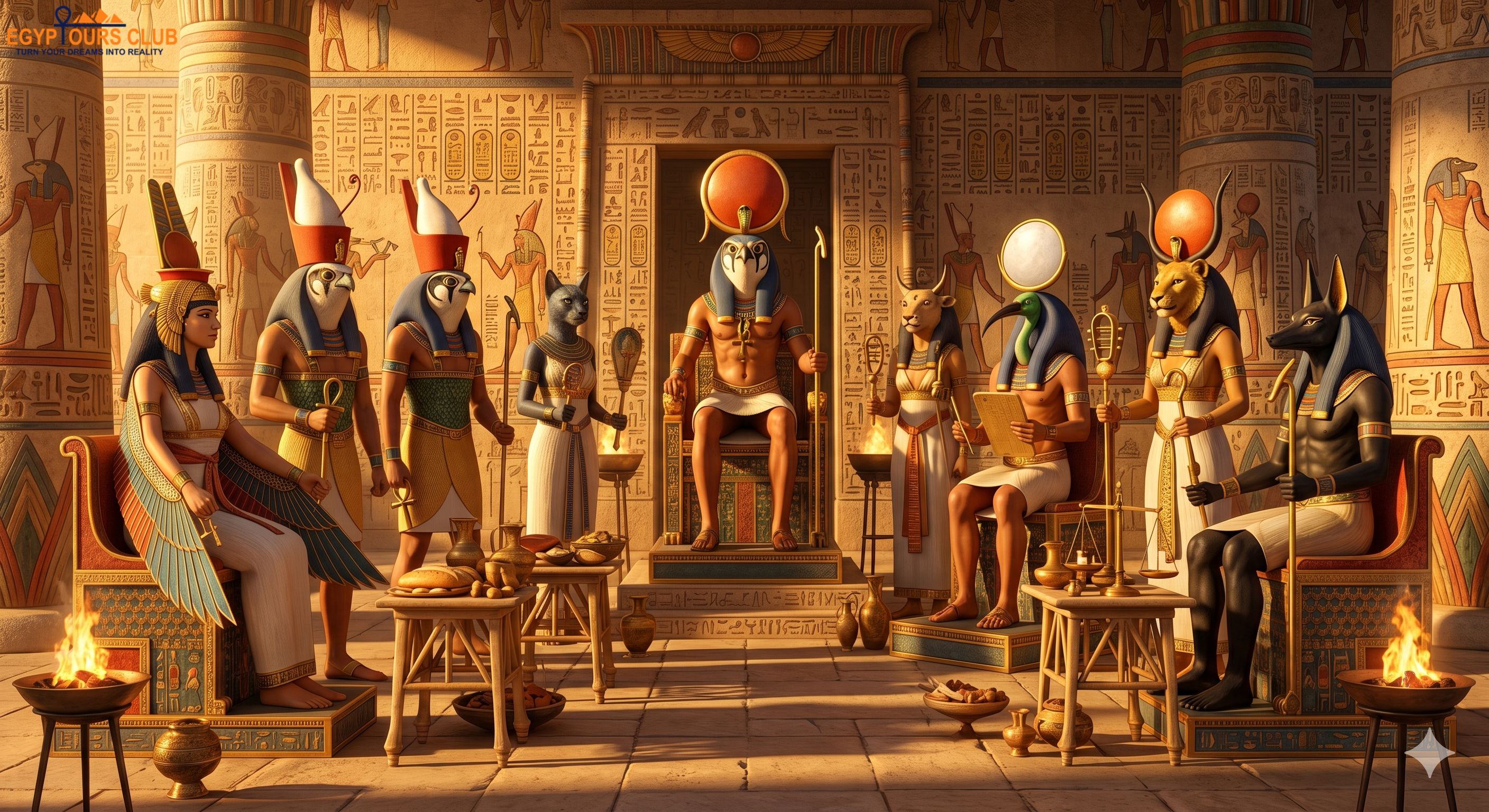
Ancient Egyptian gods and goddesses shown together in a sacred temple scene for a beginner guide to Egyptian mythology
Ancient Egyptian gods appeared in human, animal, and hybrid forms — a symbolic language that helped express divine powers and sacred roles.

Who Were the Ancient Egyptian Gods?

The ancient Egyptian gods were divine beings believed to govern creation, order, kingship, fertility, death, rebirth, writing, healing, protection, war, and the natural world. They were not distant figures outside life. They were active powers woven into the sun, sky, Nile, desert, tomb, temple, king, and afterlife.

In simple terms, ancient Egyptian gods explained means understanding that religion and life were deeply connected. A farmer, priest, scribe, king, and mourner all lived within a world shaped by divine forces.

Many gods also had local identities. A deity could be central in one city, less prominent elsewhere, and later merge with another powerful god. This is how forms such as Amun-Ra became so important: Egyptian religion allowed divine identities to overlap and combine.

Quick Answer

The ancient Egyptian gods were sacred powers connected to nature, kingship, the afterlife, justice, healing, fertility, writing, and cosmic order. They were represented through names, symbols, animals, temples, myths, and rituals.

What Did Ancient Egyptian Gods Represent?

A major beginner question is: what did ancient Egyptian gods represent? The answer is that the gods represented sacred powers, cosmic principles, and practical forces that shaped life.

Some gods were tied to the sun, sky, and creation. Others were linked to death, rebirth, wisdom, writing, protection, motherhood, war, healing, or royal power. Many carried more than one meaning. For example, Osiris was not only connected with the dead; he also symbolized resurrection and renewal. Ra was not only the sun; he was also a creator power and a symbol of kingship.

☀️

Cosmic Powers

Gods such as Ra, Nut, Geb, Shu, and Tefnut expressed the sun, sky, earth, air, and cosmic structure.

👑

Kingship

Horus, Ra, Amun-Ra, and other deities helped explain royal authority and divine legitimacy.

⚰️

Afterlife

Osiris, Anubis, Isis, Nephthys, and Ma’at shaped funerary belief and judgment after death.

✍️

Wisdom & Writing

Thoth represented sacred knowledge, writing, measurement, and intellectual order.

🛡️

Protection

Isis, Bastet, Sekhmet, and other deities protected homes, kings, children, and the dead.

🌾

Fertility & Renewal

Hathor, Osiris, and Nile-linked traditions expressed abundance, rebirth, and continuity.

History of Ancient Egyptian Gods

The history of ancient Egyptian gods is long and layered. Egyptian religion developed from the earliest dynasties through the Old Kingdom, Middle Kingdom, New Kingdom, Late Period, Ptolemaic era, and Roman period.

Some gods remained central for very long periods, especially Ra, Osiris, Isis, Horus, and Hathor. Others rose in importance because of political change, local cults, or royal patronage. This makes the Egyptian pantheon stable in symbolism but flexible in expression.

Period Religious development Beginner takeaway
Early Dynastic Egypt Regional gods and divine kingship identities became more structured. Local gods were already important from the beginning.
Old Kingdom Solar cults and royal theology became especially prominent. Ra and royal afterlife ideas gained major importance.
Middle & New Kingdoms Amun, Osiris, Isis, Horus, and temple religion became increasingly powerful. Gods could rise nationally through politics and theology.
Late & Greco-Roman Periods Egyptian deities continued evolving and sometimes merged with Greco-Roman traditions. Egyptian religion remained active and adaptable for centuries.

Why Did Egyptians Worship Many Gods?

The Egyptians worshipped many gods because they understood the world as complex and layered. One divine being could not fully express creation, death, healing, war, fertility, sky, desert, river, kingship, motherhood, and judgment all at once.

A polytheistic system allowed the gods and goddesses of ancient Egypt to represent many powers while still belonging to one sacred universe. This also explains why beginners ask how many ancient Egyptian gods were there. The exact number depends on time and source, but Egypt’s long history produced hundreds and possibly more than 1,500 named deities across periods and regions.

The short answer is simple: Egyptians worshipped many gods because they saw the divine world as diverse, interconnected, and present in every part of life.

Most Important Ancient Egyptian Gods

If you want the top Egyptian gods you should know, start with these major names. They form the strongest beginner foundation for understanding the Egyptian mythology gods.

Deity Main role Common symbolism Beginner memory hook
Ra Sun and creation Sun disk, solar power, kingship. The central solar creator force.
Osiris Underworld and rebirth Resurrection, afterlife, fertility. The god of death and renewal.
Isis Magic and motherhood Protection, divine motherhood, healing. The great protector and mother.
Horus Sky and kingship Falcon, royal rule, protection. The god linked to the living king.
Anubis Burial and embalming Jackal, funerary care, tomb protection. The guardian of mummification and the dead.
Set Storms and disorder Desert, conflict, chaos power. The complex god of disruption and desert force.
Hathor Love, joy, motherhood Music, beauty, fertility, femininity. The goddess of joy and beauty.
Thoth Writing and wisdom Scribes, knowledge, sacred order. The divine scribe and wisdom god.
Bastet Home and protection Cat symbolism, feminine protection. The protective feline goddess.
Sekhmet War and healing Lioness, fierce power, healing force. The lioness goddess of power and healing.
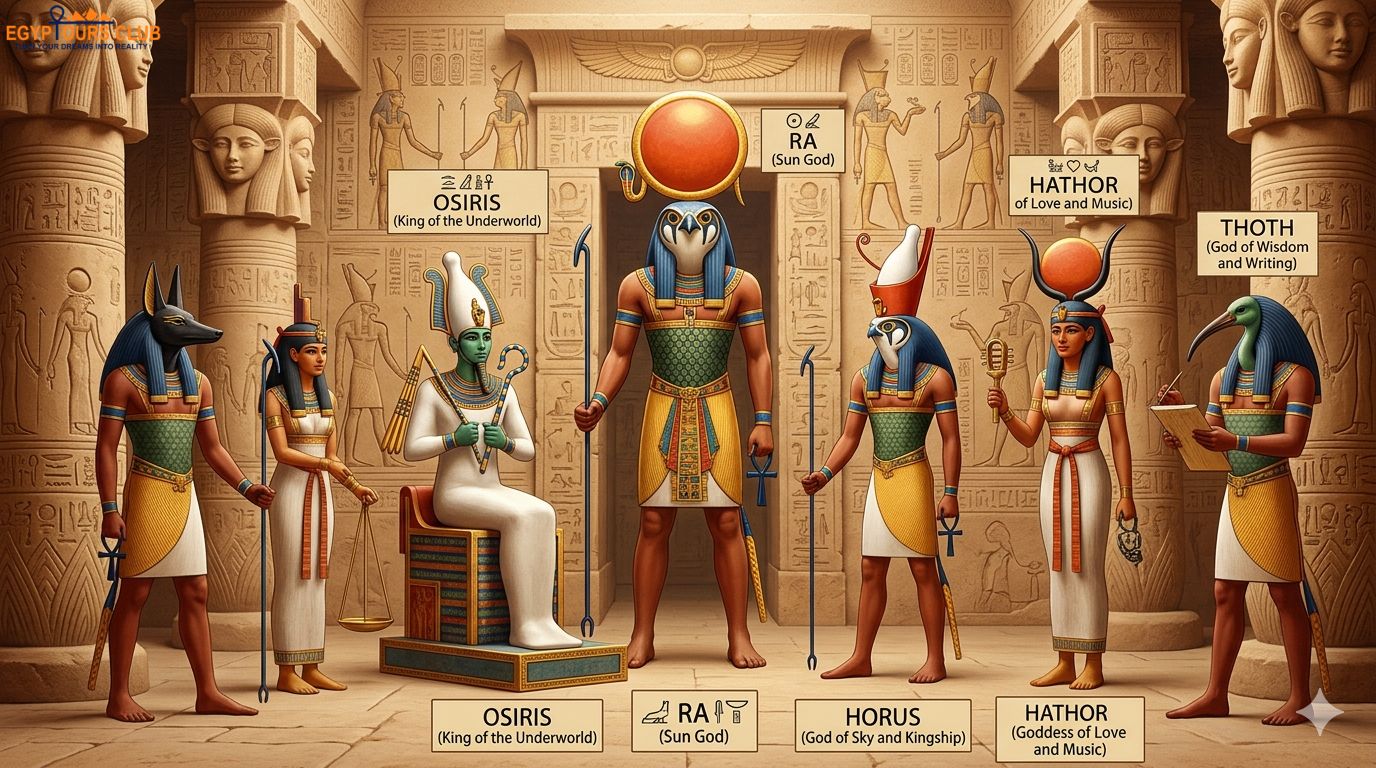
The most important ancient Egyptian gods including Ra, Osiris, Isis, Horus, and Anubis with their symbolic attributes
Start with the core gods first: Ra, Osiris, Isis, Horus, Anubis, Set, Hathor, Thoth, Bastet, and Sekhmet.

Egyptian Gods With Animal Heads Explained

One of the most common beginner questions is why so many Egyptian gods with animal heads appear in art. The short answer is symbolism. Animal forms helped express divine qualities.

The Egyptians used animal traits as a visual language: falcons suggested sky power and kingship, jackals funerary protection, lions ferocity and healing force, cats domestic protection, and ibis or baboon forms wisdom and writing.

God or goddess Animal form Meaning
Horus Falcon Sky, kingship, royal protection.
Anubis Jackal Funerary rites, embalming, tomb protection.
Thoth Ibis or baboon associations Wisdom, writing, calculation, sacred knowledge.
Sekhmet Lioness Fierce power, war, destruction, healing.
Bastet Cat or lioness forms Home, protection, feminine grace.
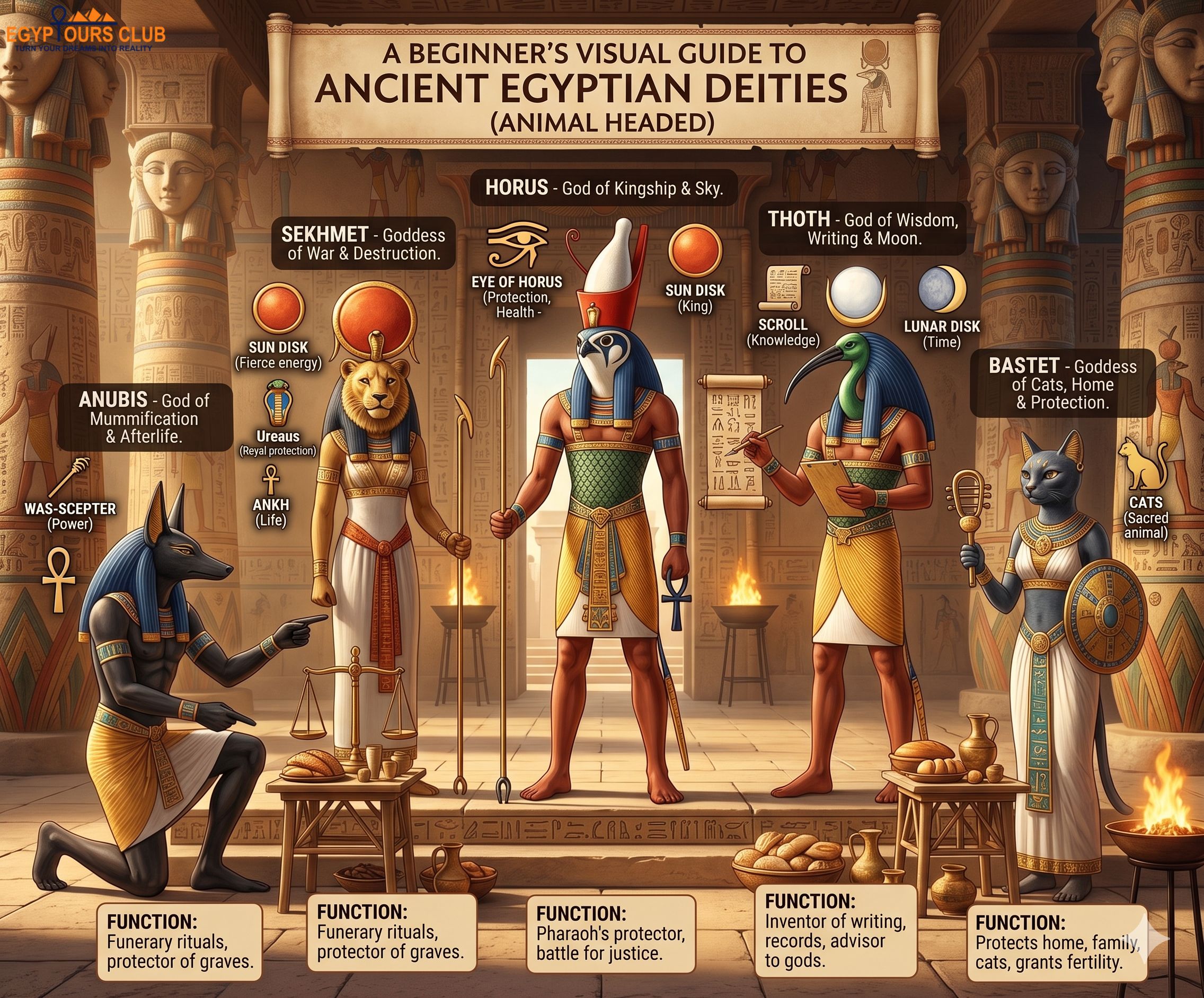
Ancient Egyptian gods with animal heads and sacred symbols explained visually for beginners
Animal-headed gods were not random fantasy figures. They were a sophisticated symbolic language for divine qualities.

Ancient Egyptian Gods Symbols, Statues, and Artwork

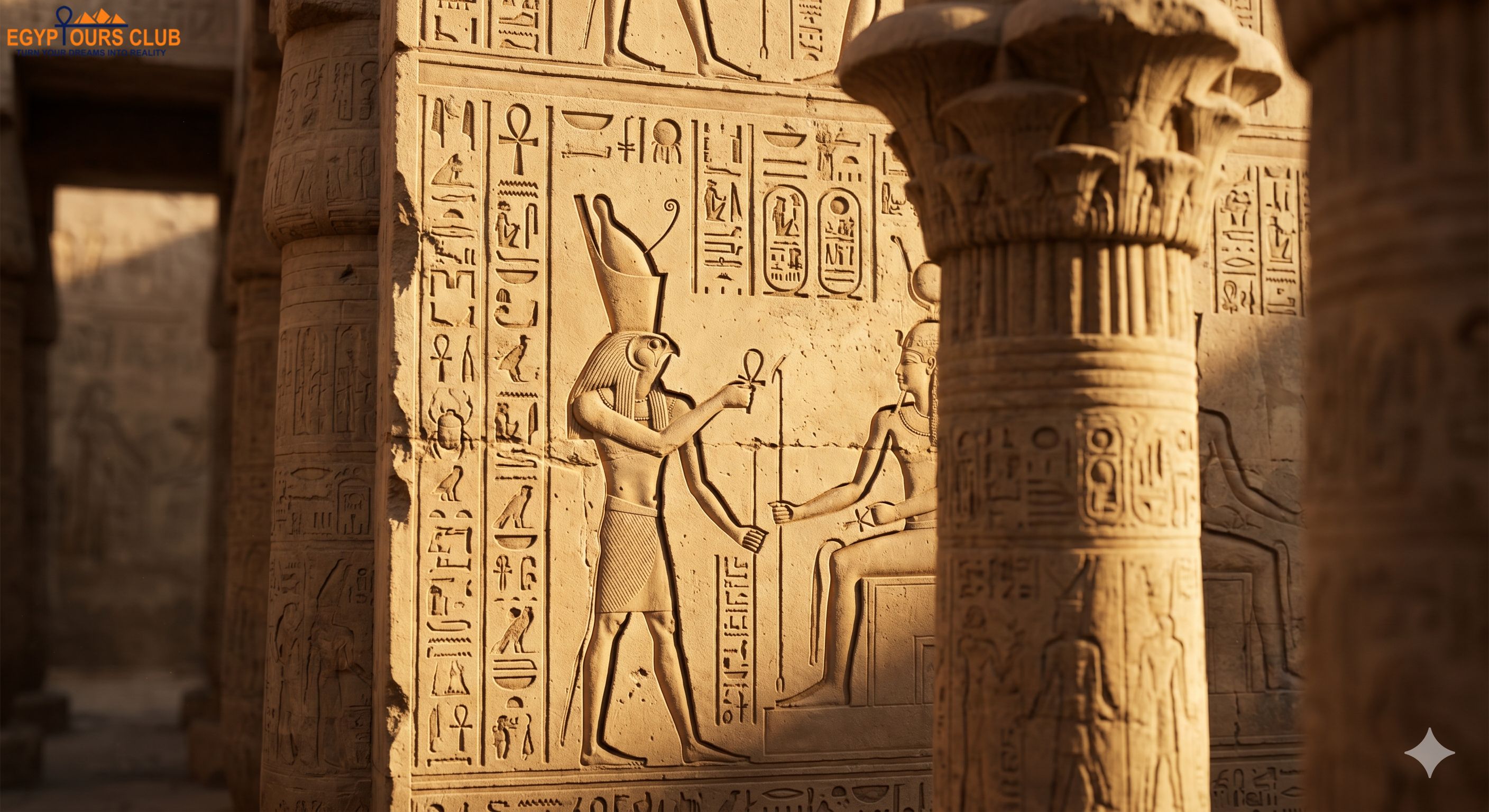
A big part of learning the gods of ancient Egypt is visual. Temple carvings, painted tombs, statues, ritual objects, wall reliefs, crowns, staffs, animal forms, and sacred signs all helped identify the gods.

This is why Egyptian gods artwork, ancient Egyptian gods statues, Egyptian gods temple carvings, Egyptian gods wall art, and ancient Egyptian mythology art are so important. The art is not only beautiful. It is theological. The symbols tell you who the deity is and what power is being shown.

For beginners, the easiest rule is this: if you learn the symbols, you learn the gods faster.

Egyptian Gods Family Tree for Beginners

Many readers search for an Egyptian gods family tree for beginners because mythology is easier to remember when relationships are clear. The best starting point is the Osiris family cycle:

⚰️

Osiris

Linked to death, resurrection, kingship after death, and renewal.

👑

Isis

Wife of Osiris and mother of Horus; goddess of magic, protection, and motherhood.

🌪️

Set

Brother and rival in the mythic cycle; linked to conflict, desert, and disorder.

🕊️

Nephthys

Associated with mourning, protection, and funerary support.

🦅

Horus

Son of Isis and Osiris; sky god and symbol of royal succession.

⚖️

Ma’at

Not part of the same family cycle, but essential for understanding order, truth, and justice.

You do not need to memorize every relationship on day one. For a beginner, it is enough to understand that Egyptian mythology often links deities through family, conflict, protection, kingship, death, and rebirth.

Where to See Ancient Egyptian Gods in Egypt

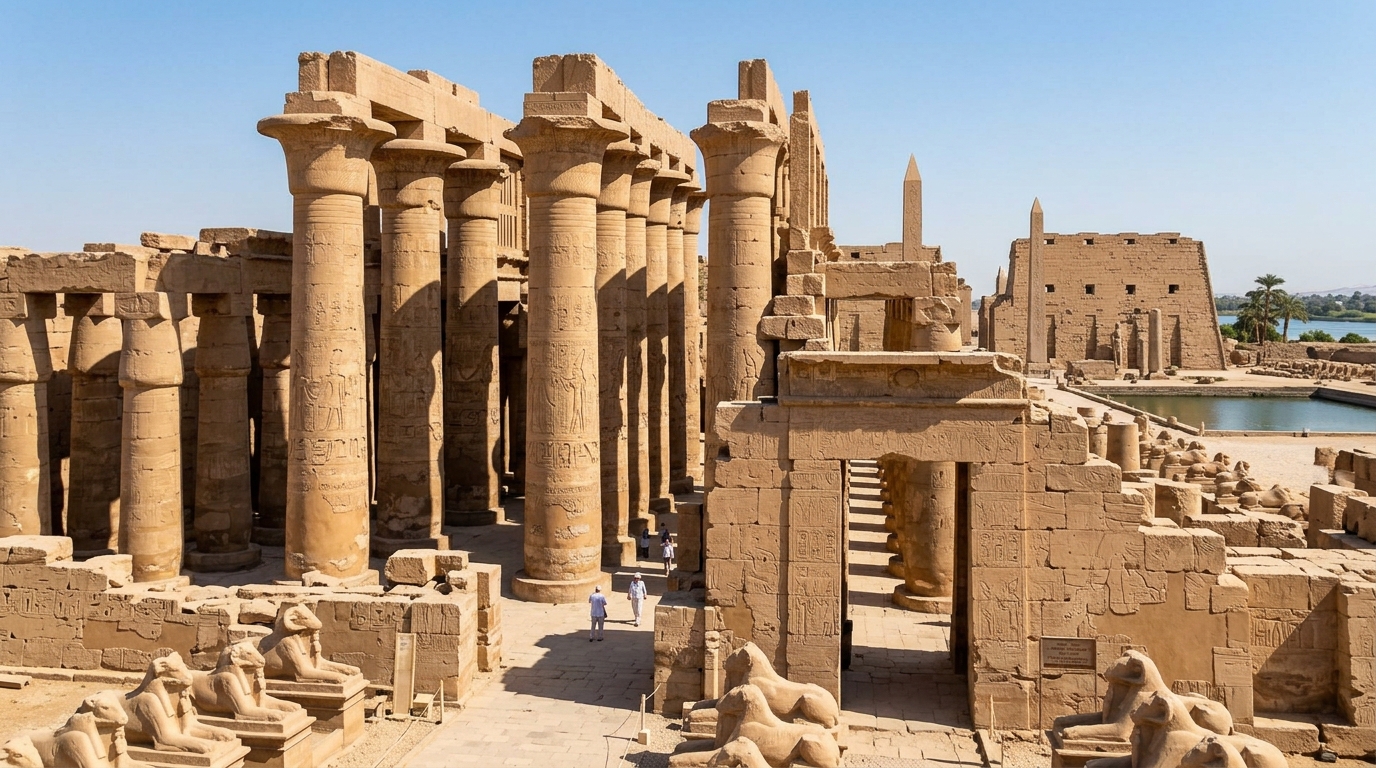
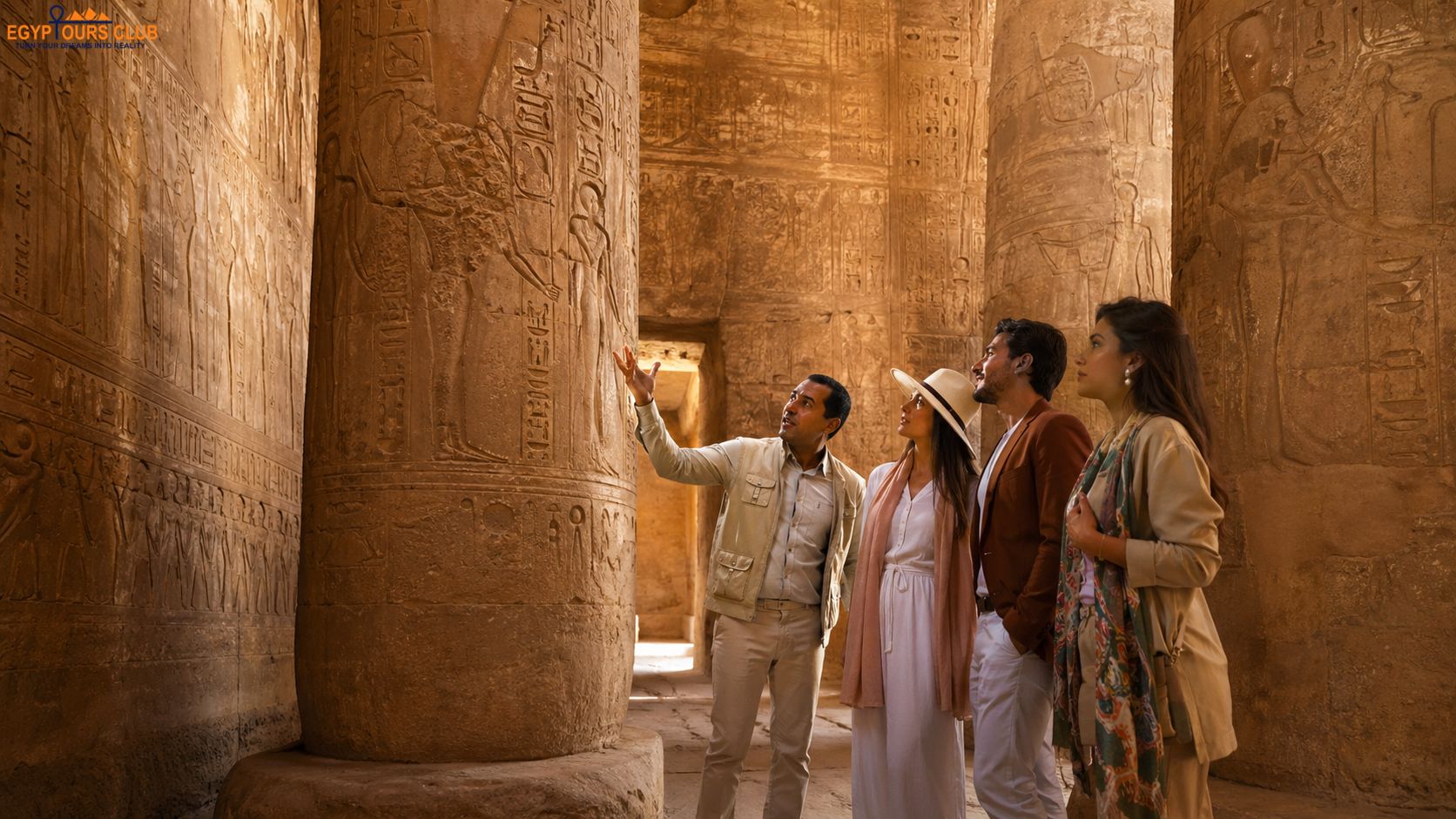
For travelers, the best part of learning ancient Egyptian gods is seeing them in context. Their images appear on temple walls, tomb ceilings, painted corridors, museum statues, and sacred reliefs across Egypt.

Karnak and Luxor Temples

Best for Amun, Mut, Khonsu, royal scenes, divine offerings, and large-scale temple theology.

Explore Luxor Day Tours →

Valley of the Kings

Best for afterlife gods, Osiris, Anubis, Ra, funerary books, and royal tomb symbolism.

Read Valley of the Kings Guide →

Philae Temple

Best for Isis, sacred island atmosphere, late temple art, and mythological storytelling.

Read Philae Temple Guide →

Grand Egyptian Museum

Best for statues, royal objects, symbols, and museum interpretation of gods and kingship.

Read GEM Guide →

Ancient Egyptian Gods List for Beginners

If you want an ancient Egyptian gods and goddesses list that is easy to remember, start with this beginner core:

  1. Ra
  2. Osiris
  3. Isis
  4. Horus
  5. Anubis
  6. Set
  7. Hathor
  8. Thoth
  9. Bastet
  10. Sekhmet

After that, expand into Amun, Ptah, Nephthys, Nut, Geb, Shu, Tefnut, Ma’at, Sobek, Khnum, and many others. This is not the full religion — it is the right starting point.

Explore More on Egypt Tours Club

Continue learning through related guides and tours that help you see Egyptian gods in real temples, tombs, and museums.

FAQs About Ancient Egyptian Gods

Who were the ancient Egyptian gods?
The ancient Egyptian gods were divine beings who governed creation, kingship, fertility, death, protection, wisdom, healing, the sky, the sun, the Nile, and cosmic order.
What did ancient Egyptian gods represent?
They represented sacred powers and principles such as the sun, sky, death, rebirth, magic, justice, healing, motherhood, writing, protection, war, fertility, and kingship.
How many ancient Egyptian gods were there?
There was no single fixed number. Egyptian religion evolved over thousands of years and included hundreds of gods, with many educational summaries describing more than 1,500 deities across Egypt’s long history.
Why did Egyptians worship many gods?
Because they understood reality as complex and layered. Different gods expressed different powers such as creation, death, healing, protection, kingship, fertility, sky, desert, and the Nile.
Who were the most important ancient Egyptian gods?
A beginner core usually includes Ra, Osiris, Isis, Horus, Anubis, Set, Hathor, Thoth, Bastet, and Sekhmet.
Why do Egyptian gods have animal heads?
Animal heads were part of a symbolic visual language used to express divine qualities such as kingship, wisdom, funerary protection, ferocity, healing, and home protection.
Where can travelers see ancient Egyptian gods in Egypt?
Travelers can see them in temple reliefs, tomb paintings, statues, and museum collections at Karnak, Luxor Temple, Philae, Edfu, Abydos, the Valley of the Kings, and the Grand Egyptian Museum.

Final Thoughts: Start With the Gods, Then Read Egypt Differently

The Ancient Egyptian gods are much more than famous names from mythology. They are the key to understanding how ancient Egyptians saw life, death, kingship, nature, art, and the universe itself.

For beginners, the smartest path is not to memorize hundreds of names. Start with the most important gods, learn their symbols, understand their roles, and then see them in context across Egypt’s temples, tombs, and museums.

Create Your Egypt Mythology Tour →