

Book a Private Egypt Temple Tour: The Secrets of Egyptian Temples Explained | Egypt Tours Club
Book a Private Egypt Temple Tour: The Secrets of Egyptian Temples Explained . banner

Book a Private Egypt Temple Tour: The Secrets of Egyptian Temples Explained

Book a Private Egypt Temple Tour: Secrets of Egyptian Temples Explained | Egypt Tours Club
🏛️ Ancient Temples · Egyptology · Private Tours

Book a Private Egypt Temple Tour: The Secrets of Egyptian Temples Explained

Egypt's temples were not just monumental stone buildings. They were sacred landscapes designed around gods, kings, light, ritual movement, hidden meanings, and cosmic order.

Egypt Tours ClubUpdated May 202611 min readTemples · Egyptology · Luxury Cultural Travel

The secrets of Egyptian temples are not fantasy stories hidden behind the stones. They are the sacred layouts, symbolic carvings, solar alignments, ritual pathways, and theological messages that most visitors miss unless an expert explains what the temple is really saying.

Overview: Why Egyptian Temple Secrets Still Fascinate Travelers

The phrase Egyptian temples secrets works because it speaks to two powerful travel emotions: curiosity and awe. A traveler does not only want to see Karnak, Luxor Temple, Philae, Dendera, Edfu, Abydos, or Abu Simbel. They want to understand why these monuments feel so charged with meaning.

Ancient Egyptian temples were sacred worlds. Their gates, courts, columns, reliefs, sanctuaries, and axes were arranged to express divine order, royal legitimacy, cosmic rhythm, and the movement from the ordinary world toward the presence of the god.

This is why a reader may arrive searching for what are the secrets of Egyptian temples, ancient Egyptian temple architecture explained, or hidden meanings in Egyptian temples, then naturally move toward private Egypt temple tour, guided ancient Egyptian temples tour, or luxury Egypt temple tour. The educational intent and booking intent support each other perfectly.

Quick Answer

The real secrets of Egyptian temples are their symbolic architecture, sacred axes, ritual spaces, hidden meanings in wall reliefs, solar relationships, and the way each temple guided priests and kings toward divine presence.

What Are the Secrets of Egyptian Temples?

The best answer is simple: Egyptian temple secrets are not conspiracy theories. They are the layers of meaning built into the architecture and decoration. Without context, a visitor may see huge columns and beautiful carvings. With an Egyptologist guide, the same walls become a readable sacred text.

When we talk about secrets inside Egyptian temples, we mean the deeper logic behind:

🧭

Sacred Layout

Temple movement often led from open exterior courts toward darker and more restricted divine spaces.

☀️

Light & Solar Design

Sunlight was not only natural illumination. In selected temples, it carried ritual and cosmic meaning.

𓀀

Reliefs & Inscriptions

Wall scenes recorded theology, kingship, offerings, myths, festivals, and divine relationships.

🏛️

Columns & Halls

Columns could evoke sacred marshes, papyrus growth, divine order, and a symbolic created world.

👑

Royal Legitimacy

The king was shown serving the gods and receiving authority through ritual scenes.

🔒

Restricted Sanctuaries

The most sacred parts of a temple were not open public spaces in the modern sense.

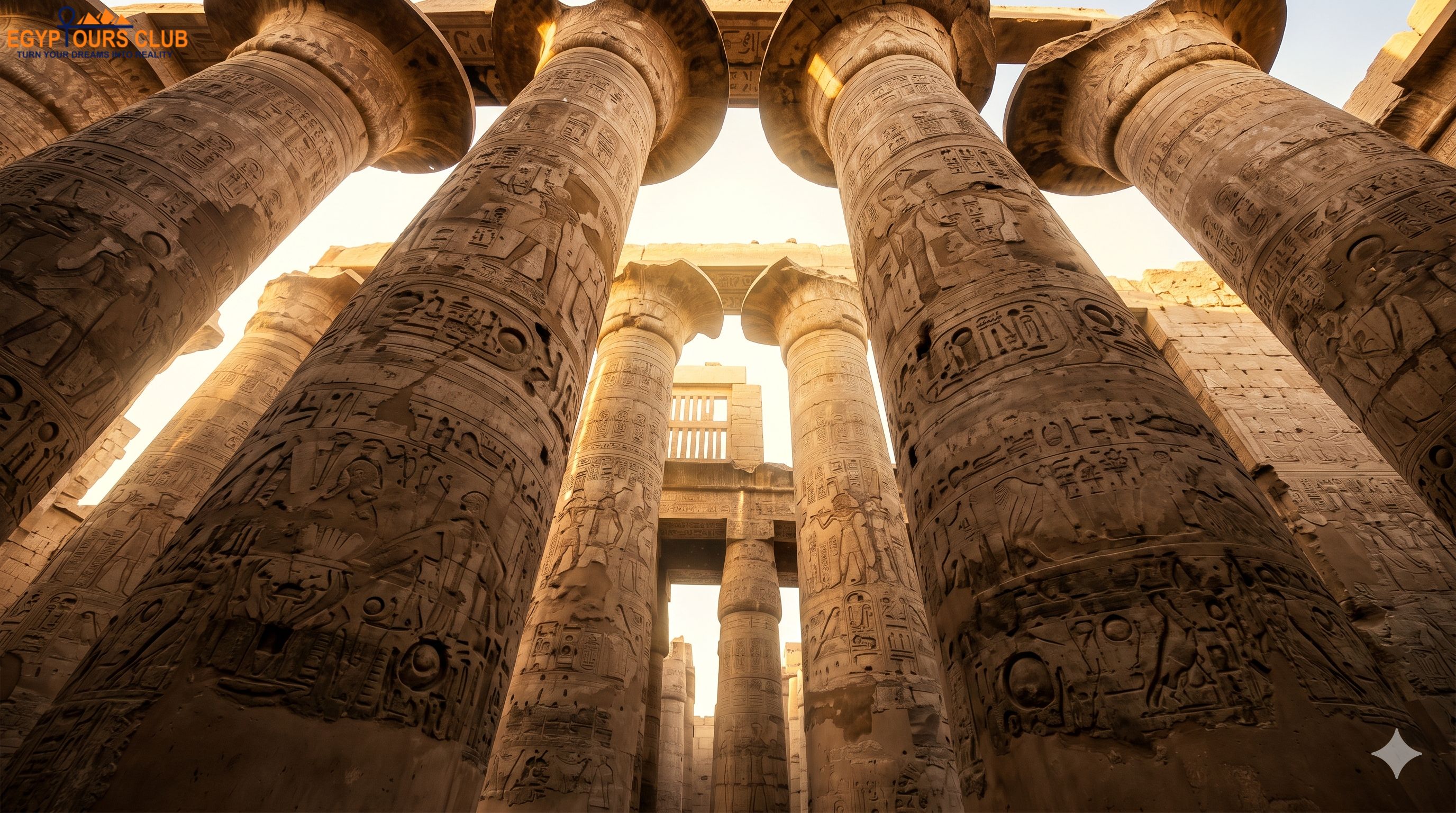
Ancient Egyptian temple interior with columns, carvings, and sacred light revealing temple secrets
Ancient Egyptian temple interiors were carefully designed to move visitors from light and openness toward mystery, ritual, and sacred presence.

Why Were Egyptian Temples Important?

Egyptian temples were important because they were regarded as earthly houses of the gods. They were not simply public monuments or decorative ruins. They were ritual machines where priests maintained divine presence through offerings, purification, hymns, processions, and ceremonies tied to the deity and the king.

This makes phrases like religious meaning of Egyptian temples, how ancient Egyptian temples worked, and story of Egyptian temples central to the article. Temples were sacred, political, cosmic, and artistic at the same time.

Temple FunctionWhat It Meant in Ancient EgyptWhy It Matters to Visitors Today
House of the godThe temple protected the divine presence on earth.Explains why the innermost sanctuary was the most sacred zone.
Ritual centerPriests performed offerings, purification, and festival rites.Gives meaning to altars, halls, processional routes, and sacred rooms.
Royal ideologyThe king appeared as the mediator between gods and Egypt.Helps visitors read repeated offering scenes on temple walls.
Cosmic symbolismThe temple represented order, creation, and divine harmony.Turns architecture into a story rather than a stone structure.
Cultural memoryReliefs preserved myths, victories, deities, festivals, and royal names.Makes every wall part of Egypt's historical and spiritual record.

For travelers, this changes everything. You are not just walking through ruins. You are moving through spaces intentionally designed to separate the outer world from the divine center. That is why a guided ancient Egyptian temples tour can feel completely different from a rushed stop.

Ancient Egyptian Temple Architecture Explained

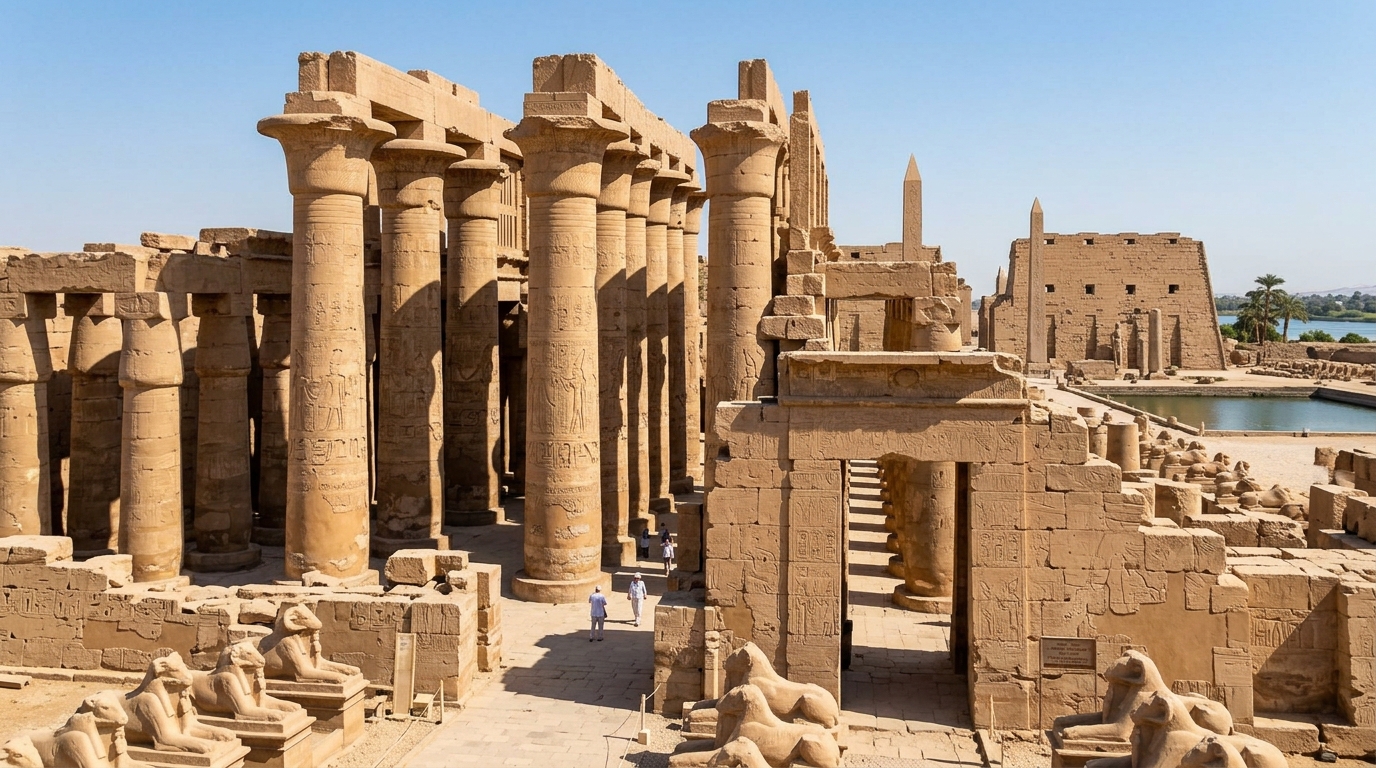
One of the strongest topics for search and conversion is ancient Egyptian temple architecture explained. Egyptian temple design often followed a recognizable progression: monumental pylon, open court, columned hall, inner chambers, and sanctuary. The visitor moved from brightness into shadow, from public approach into restricted sacred space.

This movement is one of the deepest hidden meanings in Egyptian temples. The building itself taught a sacred lesson: the closer you moved to the god, the more controlled, symbolic, and charged the space became.

Temple ElementWhat Visitors SeeHidden Meaning to Explain on Tour
Pylon gatewayMassive entrance towers framing the doorway.A threshold between the outside world and sacred territory.
Open courtLarge sunlit space after the gate.A transitional zone where procession, display, and ritual movement began.
Hypostyle hallForest of columns, often darker and more atmospheric.A symbolic ordered world, sometimes evoking marsh, creation, and divine enclosure.
Relief-covered wallsKings, gods, offerings, festivals, battles, and inscriptions.A visual theology showing how power, order, and divine favor were maintained.
SanctuaryThe most restricted sacred room.The symbolic home of the deity and the ritual heart of the temple.

This is exactly why a private Luxor temple tour or Egypt cultural temple tour has premium value. The architecture is not only impressive; it is readable when someone explains its sequence, symbolism, and ritual logic in real time.

Solar Alignment in Egyptian Temples and the Sacred Axis

One of the most compelling temple secrets is solar alignment in Egyptian temples. Ancient builders often understood light as a sacred force. In selected temples, sunlight interacts with architecture in ways that still fascinate modern travelers.

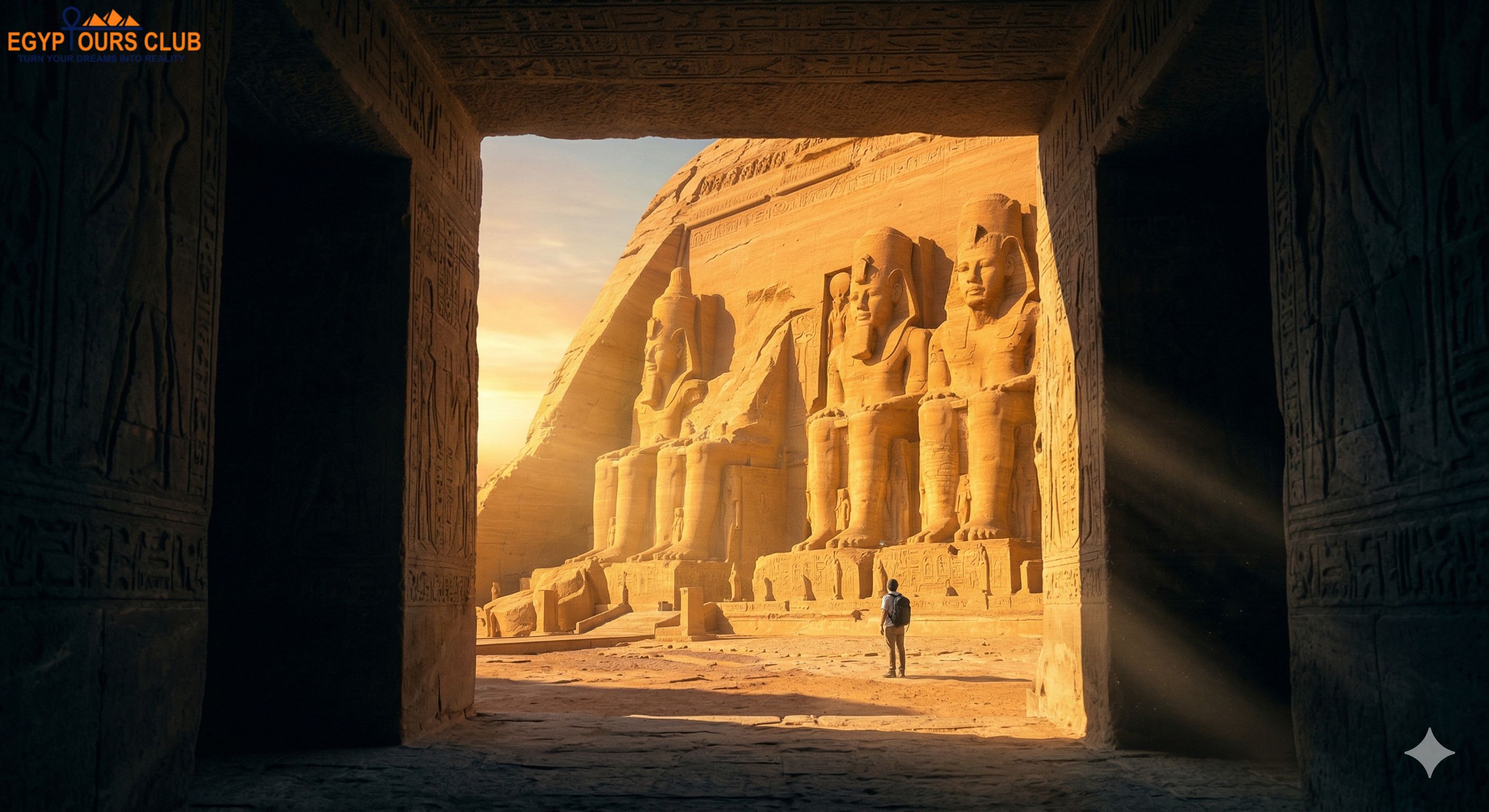
Abu Simbel is the most famous example. The temple is celebrated for the way sunlight reaches the inner sanctuary during specific annual moments. Karnak also has powerful solar interpretation value because its axes, processions, and ritual landscape are deeply connected to sacred movement and cosmic meaning.

This is where Egyptian temple mysteries become extremely persuasive without exaggeration. The mystery is not fake hidden knowledge. The wonder is that ancient architecture could embed light, time, theology, and royal power into stone.

Why This Converts

Travelers who understand that temple light, axes, and sanctuaries have meaning become more likely to book an expert-led temple route instead of treating temples as quick photo stops.

Karnak Temple Secrets, Luxor Temple Secrets, and the Temples That Convert Best

The strongest commercial section of this topic is site-specific. Broad curiosity becomes bookable intent when readers see which temples deliver the deepest experiences.

Karnak Temple is ideal for scale, sacred axis, columns, processions, and the Great Temple of Amun. Luxor Temple offers an iconic Theban experience with strong royal and ritual symbolism. Abu Simbel delivers drama, scale, and solar wonder. Philae Temple brings Isis, island setting, and late Egyptian sacred identity together beautifully.

Dendera Temple and Edfu Temple are excellent for travelers who want readable reliefs, strong symbolism, and clear temple structure. Abydos Temple of Seti I is perfect for deeper cultural travelers interested in sacred narrative, Osiris, and high-quality reliefs.

TempleBest Secret to ExplainWhy It Converts WellBest Tour Angle
KarnakSacred axis, hypostyle hall, Amun theology, solar context.Huge scale and unforgettable atmosphere.Luxor temple deep-dive with Egyptologist guide.
Luxor TempleRoyal ritual, Theban processions, symbolic urban setting.Central, iconic, easy to combine with Karnak.Evening or half-day Luxor cultural tour.
Abu SimbelSolar illumination, royal power, rock-cut sacred drama.High visual impact and bucket-list appeal.Private Aswan to Abu Simbel journey.
PhilaeIsis worship, island sanctuary, late temple symbolism.Beautiful setting plus strong mythology.Aswan heritage and temple tour.
DenderaHathor symbolism, zodiac ceiling, preserved reliefs.Rich detail and strong photography appeal.Dendera add-on from Luxor.
AbydosOsiris meaning, Seti I reliefs, sacred narrative.Depth, exclusivity, and serious Egyptology appeal.Dendera and Abydos private day trip.
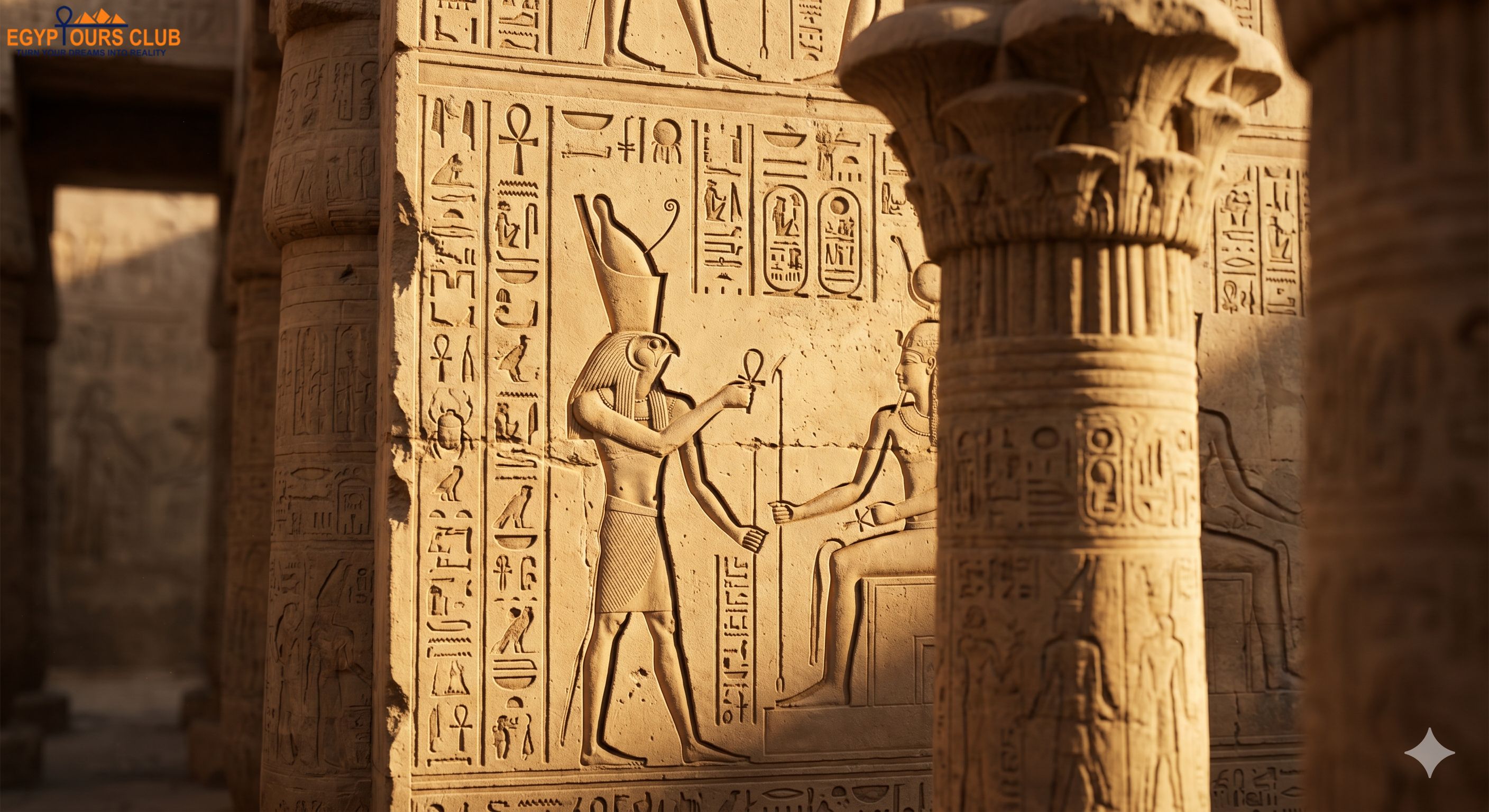
Egyptian temple carvings and wall reliefs in a major temple complex such as Karnak or Luxor
Temple walls were not decoration only. They preserved theology, kingship, offerings, rituals, and sacred stories in visual form.

Where to Visit Egyptian Temples in Egypt

Once travelers understand the secrets of Egyptian temples, the next question is practical: where should they go? The strongest routes are built around temple clusters, not isolated stops.

Luxor & Karnak

Best for first-time temple discovery, grand scale, sacred axes, columns, royal scenes, and New Kingdom power.

Explore Luxor Day Tours →

Dendera & Abydos

Best for deeper travelers who want symbolic reliefs, Osiris traditions, Hathor imagery, and fewer rushed crowds.

Plan a Custom Dendera & Abydos Trip →

Edfu & Philae

Best for preserved temple structure, readable iconography, Isis symbolism, and Nile-side atmosphere.

Explore Aswan Day Tours →

Abu Simbel

Best for dramatic rock-cut architecture, royal messaging, solar wonder, and an unforgettable southern Egypt experience.

Build Abu Simbel Into Your Itinerary →

For a premium operator, the best positioning is not “rush through more temples.” It is better pacing, expert interpretation, stronger historical explanation, and a route based on meaning rather than only fame.

Why a Private Egypt Temple Tour Sells Better Than a Standard Visit

A standard temple stop often gives the visitor scale but not meaning. A private Egypt temple tour turns the site into a guided story. The traveler learns why the walls are carved that way, why the sanctuary is hidden, why the columns feel like a sacred forest, and why light matters.

Standard VisitPrivate Egyptologist-Guided Temple Tour
Visitor sees impressive ruins.Visitor understands sacred architecture and symbolic design.
Photos without context.Reliefs, inscriptions, and offering scenes are explained clearly.
Generic route and limited pacing.Flexible timing, better stops, and a route shaped around interest.
Temples feel similar after several visits.Each temple becomes distinct: Karnak, Luxor, Philae, Dendera, Abydos, Abu Simbel.
Mostly sightseeing.A deeper cultural experience with emotional and educational value.

The real selling point is interpretation. The visitor understands the monument, not just sees it. That is why the topic naturally converts into guided ancient Egyptian temples tour, private Luxor temple tour, VIP Egypt temple experience, and book Egypt temple tour.

Best Conversion Hook

Discover what most visitors miss in Egypt's temples: the hidden meanings behind temple walls, sacred axes, carvings, light, columns, and sanctuaries.

Egyptian Temple Photos, Interiors, and the Visual Side of Conversion

This topic also benefits from strong visual-intent phrases such as ancient Egyptian temple photos, Egyptian temple interior, Egyptian temple carvings, Egyptian temple columns, ancient Egyptian temple art, and Egyptian temple wall reliefs.

These are not filler keywords. They support conversion because travelers often move from inspiration to planning through visuals. A page that explains what they are seeing in those visuals performs better than one that simply shows beautiful pictures.

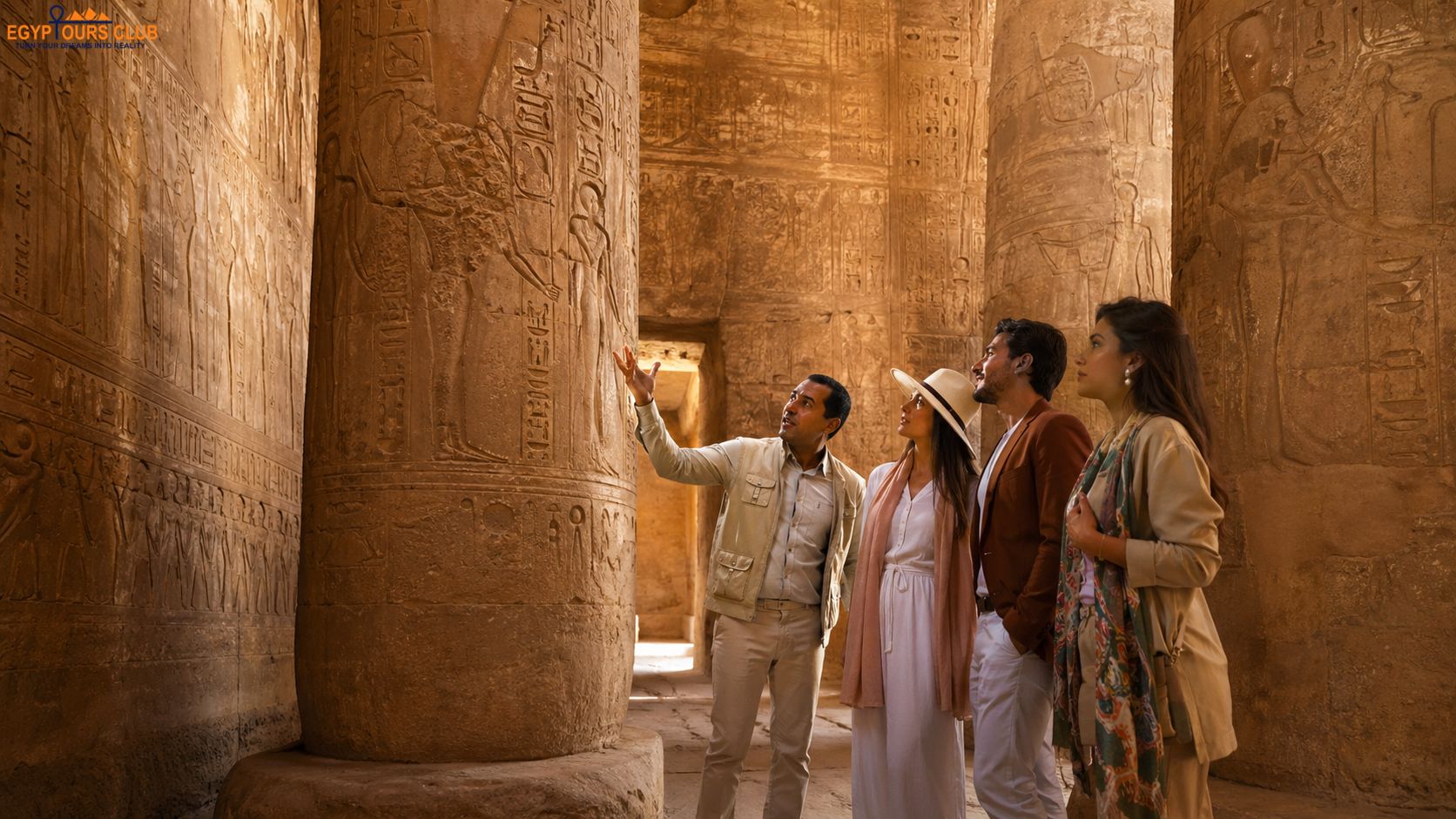
Travelers exploring ancient Egyptian temple interiors with a private Egyptologist guide in Egypt
A private guide transforms temple photography into interpretation: every column, relief, doorway, and sanctuary begins to make sense.

Explore More on Egypt Tours Club

Continue exploring Egypt's temples, sacred symbols, cultural attractions, and guided journeys through these related pages.

FAQs About the Secrets of Egyptian Temples

What are the secrets of Egyptian temples?
The secrets are their sacred layouts, symbolic reliefs, ritual pathways, solar relationships, restricted sanctuaries, and hidden meanings in architecture and decoration.
Why were Egyptian temples important?
They were houses of the gods and centers of ritual, offerings, purification, kingship symbolism, divine presence, and cosmic order.
Which temples are best for understanding Egyptian temple symbolism?
Karnak, Luxor Temple, Abu Simbel, Philae, Dendera, Edfu, and Abydos are among the strongest choices because of their scale, preserved reliefs, sacred axes, and rich iconography.
Why book a private Egypt temple tour?
A private tour helps visitors understand carvings, inscriptions, sacred spaces, temple axes, solar alignments, and ancient Egyptian beliefs instead of only seeing impressive ruins.
What is the best way to explore temples in Egypt?
The best option is usually a guided ancient Egyptian temples tour that links Luxor, Karnak, Philae, Dendera, Abydos, Edfu, and Abu Simbel according to your route, time, and interests.
Are Egyptian temple carvings only decoration?
No. Temple carvings recorded theology, offerings, royal legitimacy, festival scenes, divine relationships, and symbolic ideas about order, power, and sacred life.

Final Thoughts: The Real Secret Is Meaning

The secrets of Egyptian temples are powerful because they sit between mystery and truth. They attract travelers through wonder, then reward them with real historical depth: sacred design, temple symbolism, solar alignment, royal theology, reliefs, inscriptions, and ritual spaces.

For travelers, the smartest next step is not just to visit a temple. It is to understand it. A private Egypt temple tour turns stone into story, walls into meaning, and a sightseeing stop into one of the most memorable cultural experiences in Egypt.

Create Your Private Temple Tour →