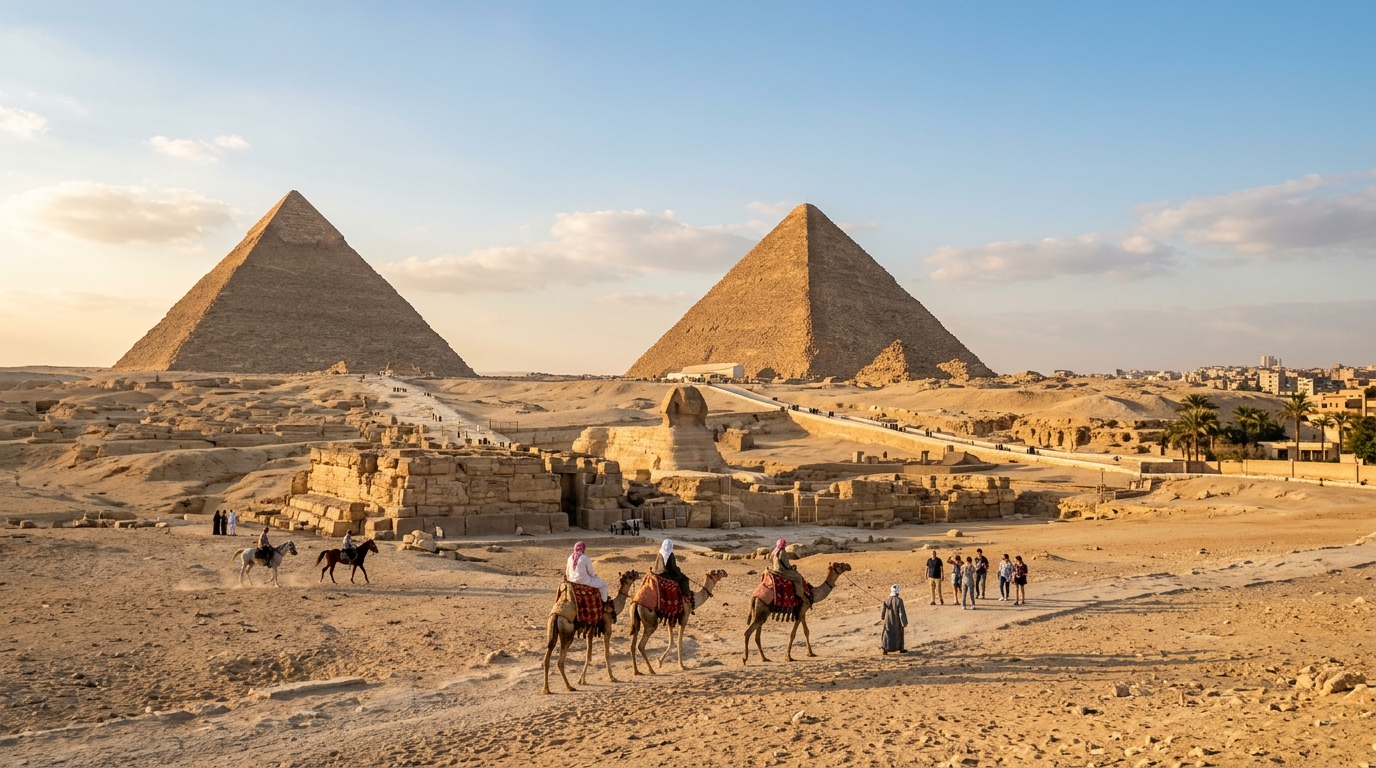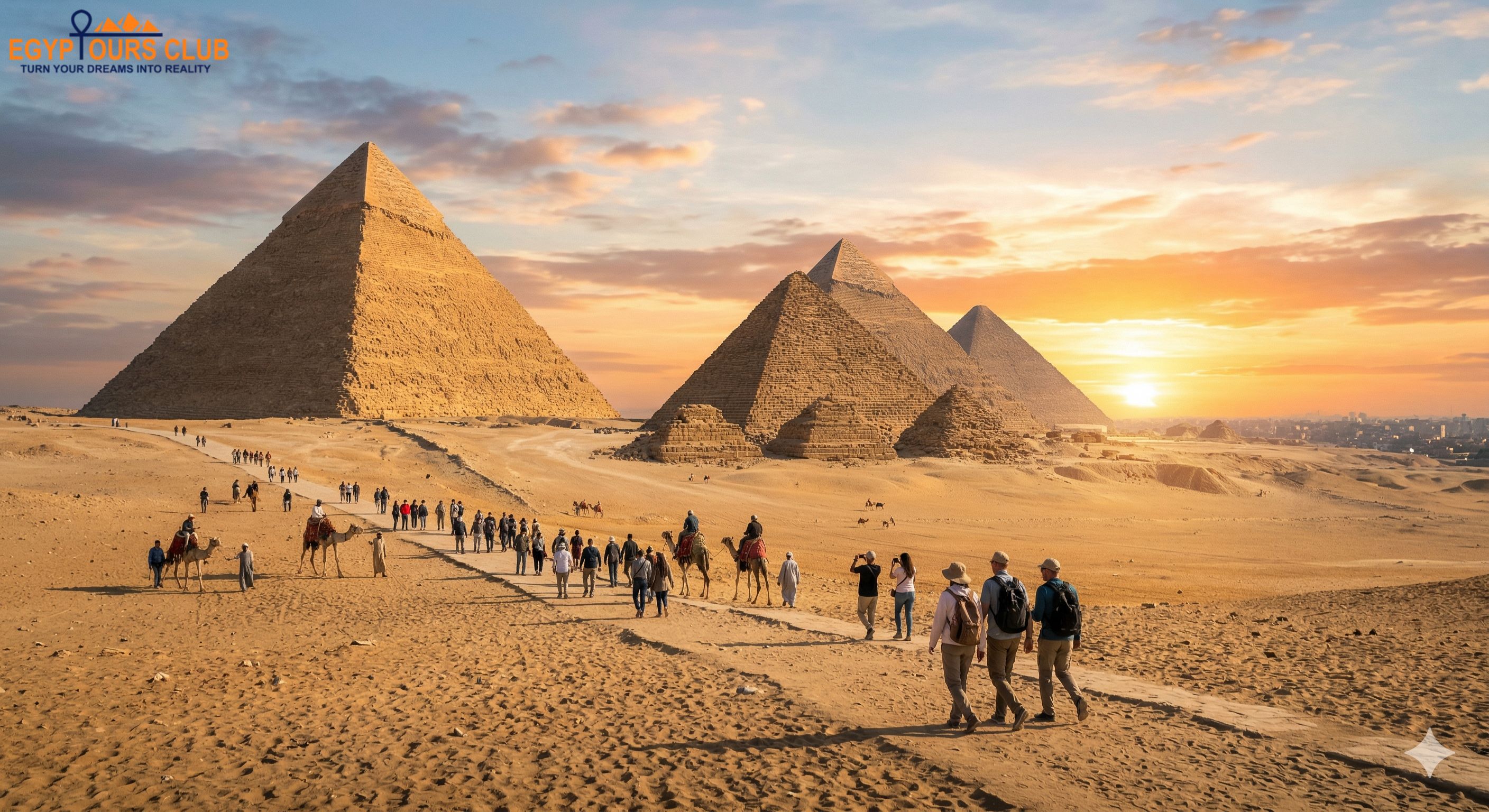


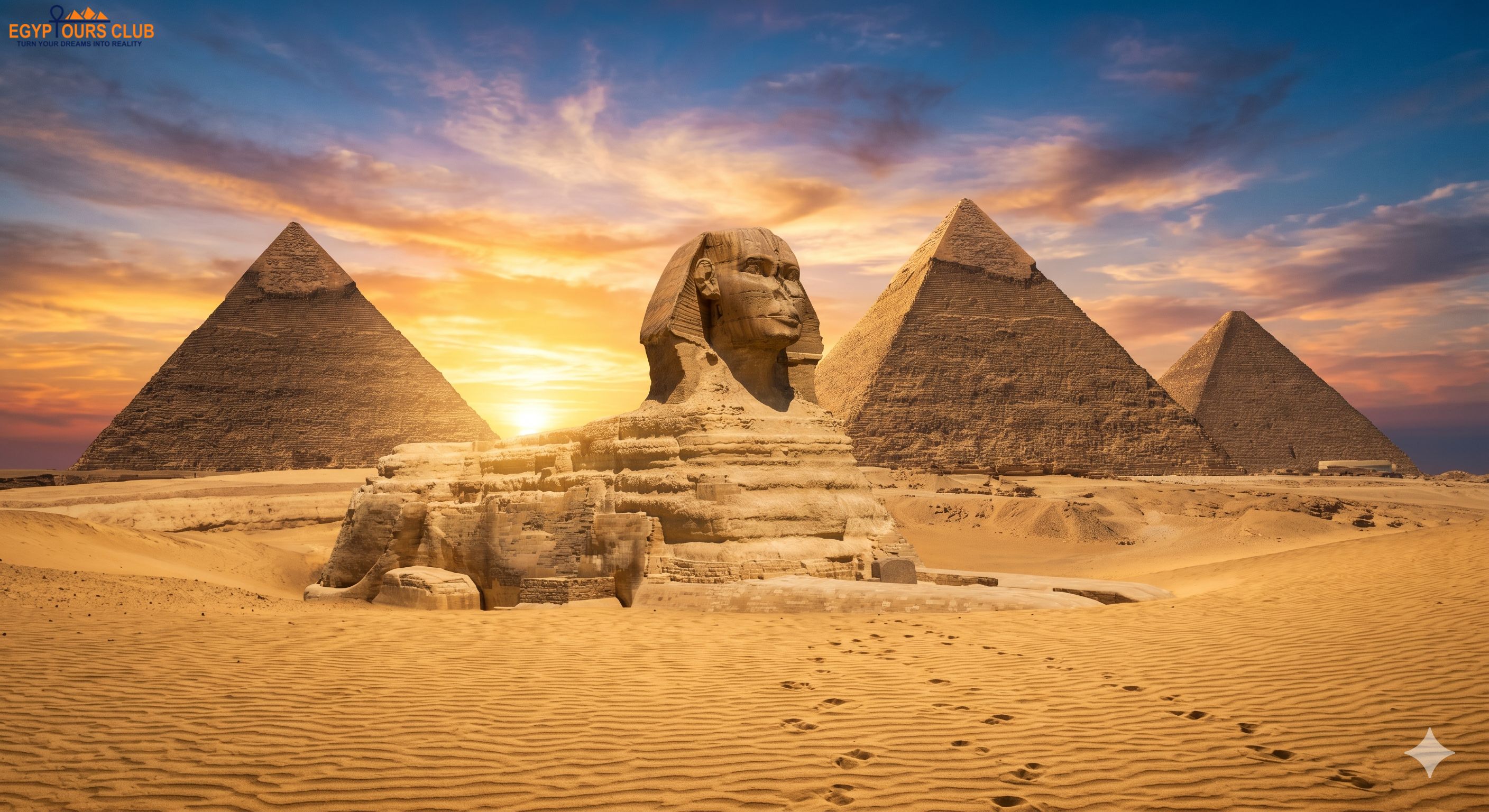
The story behind the Sphinx is not only a famous mystery. It is one of Egypt’s most powerful travel stories — a meeting point between Old Kingdom kingship, solar religion, desert landscape, restoration history, and the myths that made the Great Sphinx of Giza unforgettable.
Why the Story Behind the Sphinx Still Captivates Travelers
The Great Sphinx of Giza story has fascinated travelers for centuries because it combines everything people love about Egypt: scale, mystery, archaeology, legend, royal symbolism, and direct visual impact. The Sphinx is not a monument people simply read about. It is something they want to stand beside, photograph, question, and understand.
This is why phrases such as Sphinx myth vs reality, who built the Great Sphinx of Giza, truth about the Sphinx, and Great Sphinx of Giza tour work so well together. They start with curiosity, but they naturally lead to a travel decision: how can I experience this monument properly?
For a stronger Giza journey, readers can connect this article with our complete Pyramids of Giza and the Great Sphinx guide, or go directly to our Grand Egyptian Museum, Giza Pyramids and Sphinx private day tour.
What Is the Story Behind the Sphinx?
The best answer is that the Great Sphinx of Giza story is a layered one. It begins with Old Kingdom royal power, continues through later restoration and solar symbolism, and then expands into centuries of myths about hidden knowledge, lost chambers, and desert secrets.
The reality is more valuable than the exaggeration. The Sphinx was carved from the natural bedrock of the Giza Plateau and is usually associated by scholars with King Khafre of the Fourth Dynasty. Its body, face, position, and relationship to the surrounding pyramid complex all make it one of the most important monuments in ancient Egypt.
The myth side includes claims about impossible origins, secret civilizations, or hidden chambers presented without solid evidence. The reality side is stronger: a colossal royal monument embedded in the sacred landscape of Giza, later interpreted through solar religion and restored by ancient Egyptian kings themselves.
Quick Answer
The story behind the Sphinx is a mix of royal sculpture, sacred symbolism, sand burial, restoration history, and later myth-making. Most scholars connect it with Khafre, while its later solar identity and the Dream Stele add deeper meaning to the monument.
Who Built the Great Sphinx of Giza? Myth vs Reality
One of the strongest search questions is: who built the Great Sphinx of Giza? The mainstream answer links the monument to Khafre, whose pyramid complex stands close by. This interpretation remains the strongest because it fits the monument’s setting, archaeological context, and relationship to the Giza Plateau.
That does not mean every debate is finished. Alternative theories have proposed other builders, including Khufu or Djedefre. But a serious Sphinx myth vs reality article should not pretend every dramatic claim has equal weight. The best approach is to explain the best-supported view clearly, while acknowledging that the monument’s mystery is part of its enduring appeal.
| Question | Best-supported answer | Why it matters on a tour |
|---|---|---|
| Who built the Sphinx? | Most scholars associate it with King Khafre. | It helps connect the Sphinx to Khafre’s Pyramid and the surrounding funerary landscape. |
| Is the Sphinx older than the pyramids? | Mainstream Egyptology places it in the Old Kingdom Giza context. | It helps separate evidence-based history from unsupported mystery claims. |
| Was it always visible? | No. It was buried by sand at different periods and later restored. | It gives the monument a powerful second story beyond its original construction. |
| Why does it face east? | Its orientation supports solar and symbolic readings. | It adds meaning to sunrise, light, and royal symbolism during a Giza visit. |
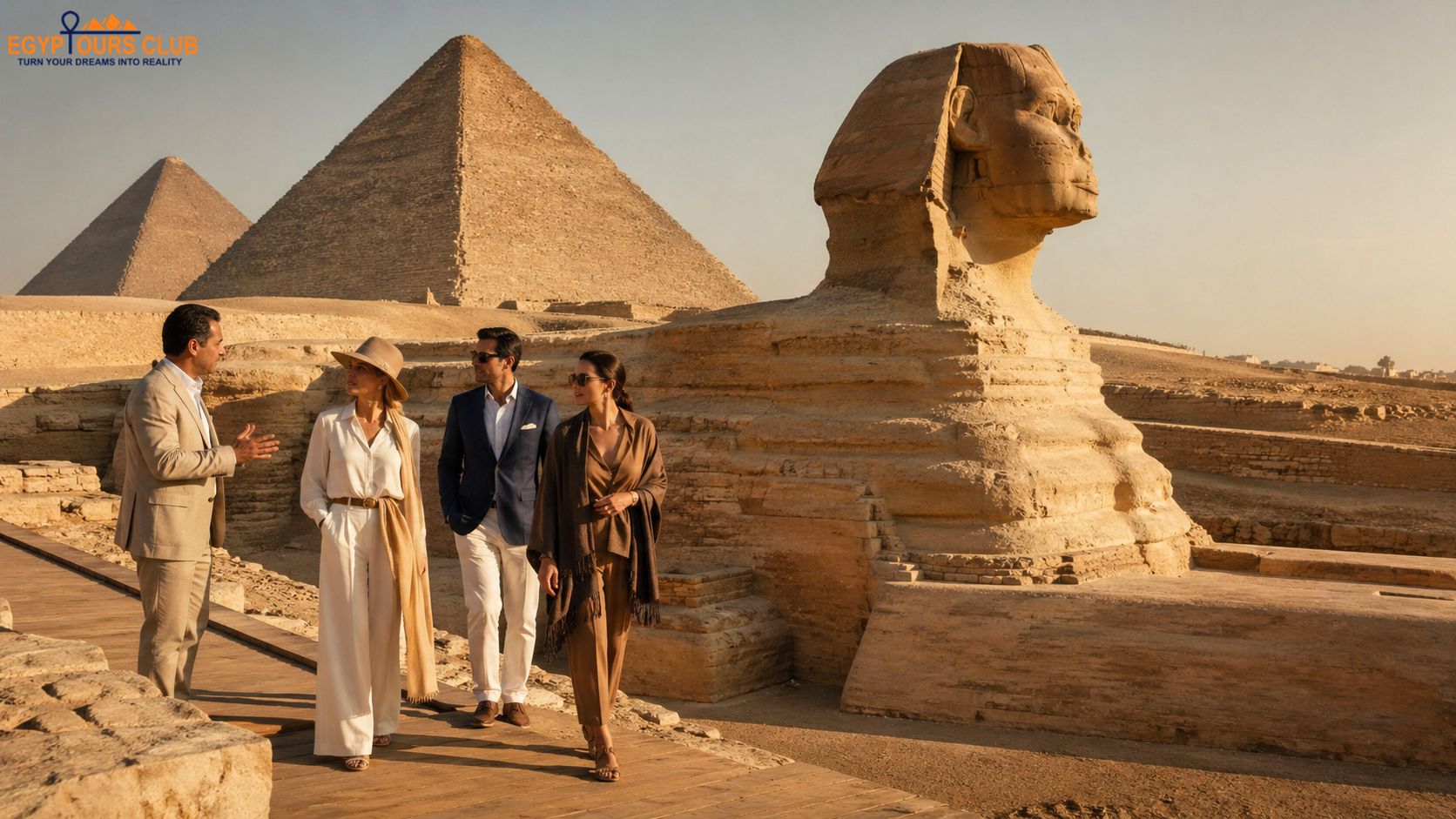
For travelers, this is exactly why a private Sphinx tour Egypt can be far more rewarding than a quick photo stop. A good Egyptologist guide links the Sphinx to the pyramids, the causeway, the valley temple, solar symbolism, and the full story of Giza.
Why Is the Sphinx Important?
The Great Sphinx of Giza matters because it sits at the intersection of kingship, sacred landscape, solar identity, and Egyptian national memory. It is not only a giant statue. It is a royal image, a guardian-like presence, and one of the visual anchors of the entire Giza Plateau.
By the New Kingdom, the Sphinx was linked with the solar identity Hor-em-akhet, often translated as Horus in the Horizon. This solar layer makes the monument much deeper than a simple royal portrait. It becomes part of Egypt’s sacred relationship with light, horizon, kingship, and rebirth.
Royal Power
The Sphinx is commonly associated with Khafre and the royal landscape of Old Kingdom Giza.
Solar Meaning
Its later identity as Hor-em-akhet connects the monument to the horizon and solar symbolism.
Giza Landscape
The monument gains meaning from its placement beside the pyramids, temples, and desert plateau.
Dream Stele
The stele of Thutmose IV adds a New Kingdom restoration story and royal legitimation layer.
Iconic Views
The Sphinx and pyramids together create one of the world’s most famous travel images.
Guided Context
Interpretation turns the visit from sightseeing into a real cultural and historical experience.
| Visitor motivation | Why it helps booking |
|---|---|
| Wants the real story | Makes Egyptologist-guided explanation more valuable. |
| Interested in myth vs reality | Encourages longer, richer private tours. |
| Wants iconic photos | Supports premium timing, viewpoints, and smoother route planning. |
| Wants context, not only sightseeing | Increases appeal of private and VIP Giza experiences. |
Hor-em-akhet, the Dream Stele, and the Truth Behind the Sphinx
One of the most powerful real stories at the Sphinx is the Dream Stele, placed between the monument’s paws by Thutmose IV. Instead of vague mystery, this gives visitors a genuine ancient Egyptian story: a young prince, a dream, a buried monument, restoration, divine promise, and kingship.
The Dream Stele matters because it proves something fascinating: the Sphinx was already ancient to the ancient Egyptians themselves. By the New Kingdom, it had become an object of reverence, restoration, and royal meaning. This is far more compelling than most modern conspiracy claims because it is rooted in the monument’s own historical life.
During a Great Sphinx of Giza tour, this story changes how visitors see the monument. They are no longer only looking at an Old Kingdom sculpture. They are looking at a monument that later kings reinterpreted, restored, and used to express divine legitimacy.
Great Sphinx of Giza Photos, Best Views, and What Travelers Actually Want
Searches such as Great Sphinx of Giza photos, Sphinx and pyramids view, Sphinx face Egypt, and Great Sphinx of Giza travel photos show that visual intent is extremely strong. But a conversion-focused page should go beyond pretty images.
Travelers want the best moment, the best angle, fewer rushed stops, and the best explanation. That is where a VIP Giza Plateau tour or luxury Giza and Sphinx tour becomes more persuasive. The value is not only transportation. It is timing, route design, photo positioning, and interpretation.
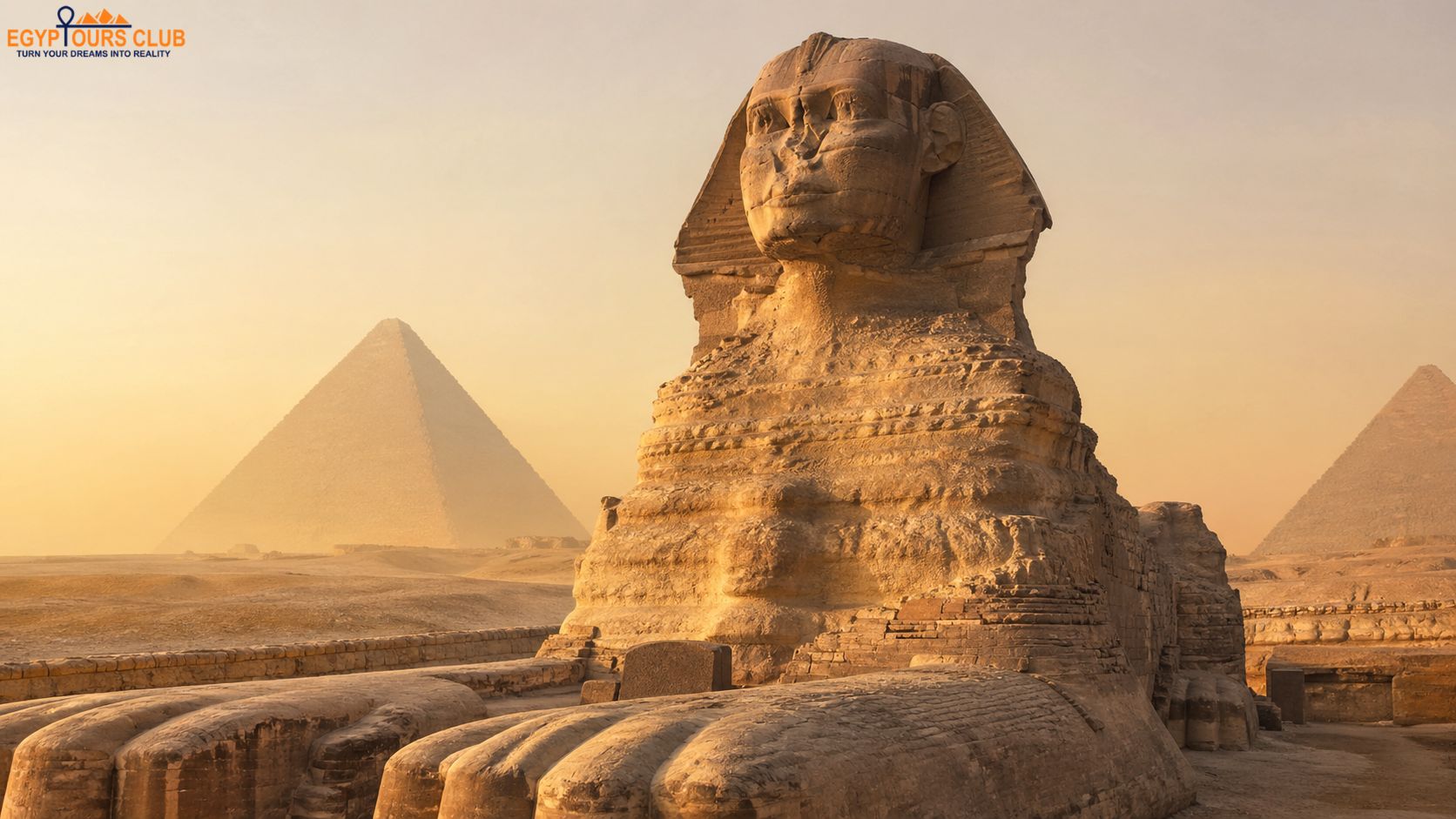
Classic Sphinx Front View
The most recognizable photo angle, especially powerful when combined with a guided explanation of the body, paws, face, and Dream Stele.
Sphinx and Pyramid Alignment
The view that connects the monument visually to the broader Giza landscape and gives the strongest sense of place.
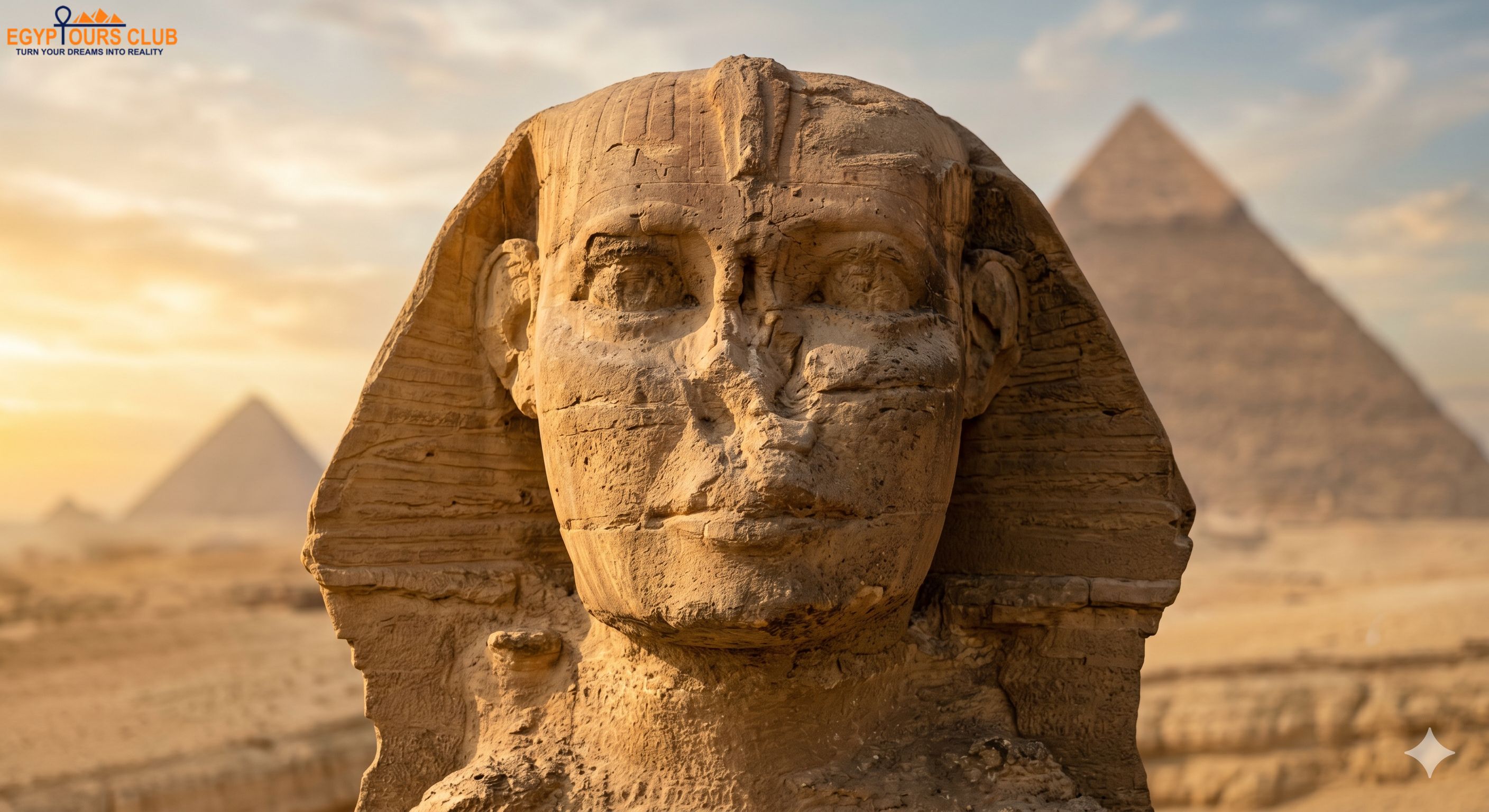
Close-up Face Perspective
Best for discussing erosion, restoration, identity, and why the monument has generated so much debate.
Plateau Context View
Helps travelers understand that the Sphinx is not isolated but part of a royal architectural and sacred landscape.
Great Sphinx of Giza Tour: Why Booking Matters More Than Ever
A traveler searching for visit the Great Sphinx of Giza, Sphinx Egypt visitor guide, things to do at the Sphinx Egypt, or Great Sphinx of Giza tour is already in planning mode. The best way to convert that search intent is to show why the monument is more meaningful inside a complete Giza experience.
The Sphinx gains meaning from context: its relationship to Khafre, its position on the plateau, its visual connection to the pyramids, the Dream Stele, and its later solar symbolism. Without that context, many travelers leave with photos only. With a curated tour, they leave with a story.
Best Booking Angles for Conversion
- Great Sphinx of Giza tour for first-time visitors who want the essential story.
- Giza pyramids and Sphinx tour for travelers wanting the classic route in one guided day.
- Private Sphinx tour Egypt for visitors who want depth, comfort, and better pacing.
- VIP Giza Plateau tour for premium travelers who value privacy, timing, and atmosphere.
- Luxury Giza and Sphinx tour for clients seeking elevated service and curated interpretation.
Why Private Guidance Changes the Visit
The Sphinx is famous enough to photograph in minutes, but layered enough to explain for much longer. A private guide connects the monument to Khafre, the plateau, the Dream Stele, solar symbolism, and the pyramids — turning a quick stop into a real Egyptology experience.
Sphinx Egypt Visitor Guide: How to Turn Curiosity into a Better Experience
A useful Sphinx Egypt visitor guide should do more than say “go see it.” It should help readers understand how to visit intelligently.
- Start with the full story of the Great Sphinx, not just the photo stop.
- Separate myth vs reality Sphinx Egypt claims clearly.
- Connect the monument to kingship, solar identity, and the Giza Plateau.
- Use an Egyptologist-guided route to understand what most visitors miss.
- Combine the Sphinx with the pyramids, the Grand Egyptian Museum, or a wider Cairo day tour.
Great Sphinx of Giza Facts That Help Sell the Experience
These facts are useful because they answer informational intent while making the value of guided interpretation clear:
- The Sphinx is carved directly from the natural bedrock of the Giza Plateau.
- Most scholars associate it with Khafre and the Fourth Dynasty.
- It later acquired solar meaning under the name Hor-em-akhet.
- The Dream Stele of Thutmose IV stands between its paws.
- It is one of the core monuments of the Giza Plateau and one of the world’s most iconic archaeological images.
| Fact | Why it matters for visitors |
|---|---|
| Bedrock carving | Shows the monument’s engineering uniqueness and deep connection to the landscape. |
| Khafre connection | Gives visitors a stronger historical anchor and connects the Sphinx to the pyramid complex. |
| Dream Stele | Adds story, restoration history, and royal symbolism to the visit. |
| Giza Plateau setting | Makes combined Giza tours more valuable than isolated stops. |
| Solar meaning | Turns sightseeing into cultural understanding and connects the Sphinx to Egyptian religion. |
Explore More Before You Book
Continue building your Giza and Egyptology journey through these related Egypt Tours Club pages.