Egyptian Symbols and Their Meanings Explained
Learn how ancient Egyptian symbols expressed life, protection, rebirth, royal power, truth and the journey to the afterlife.
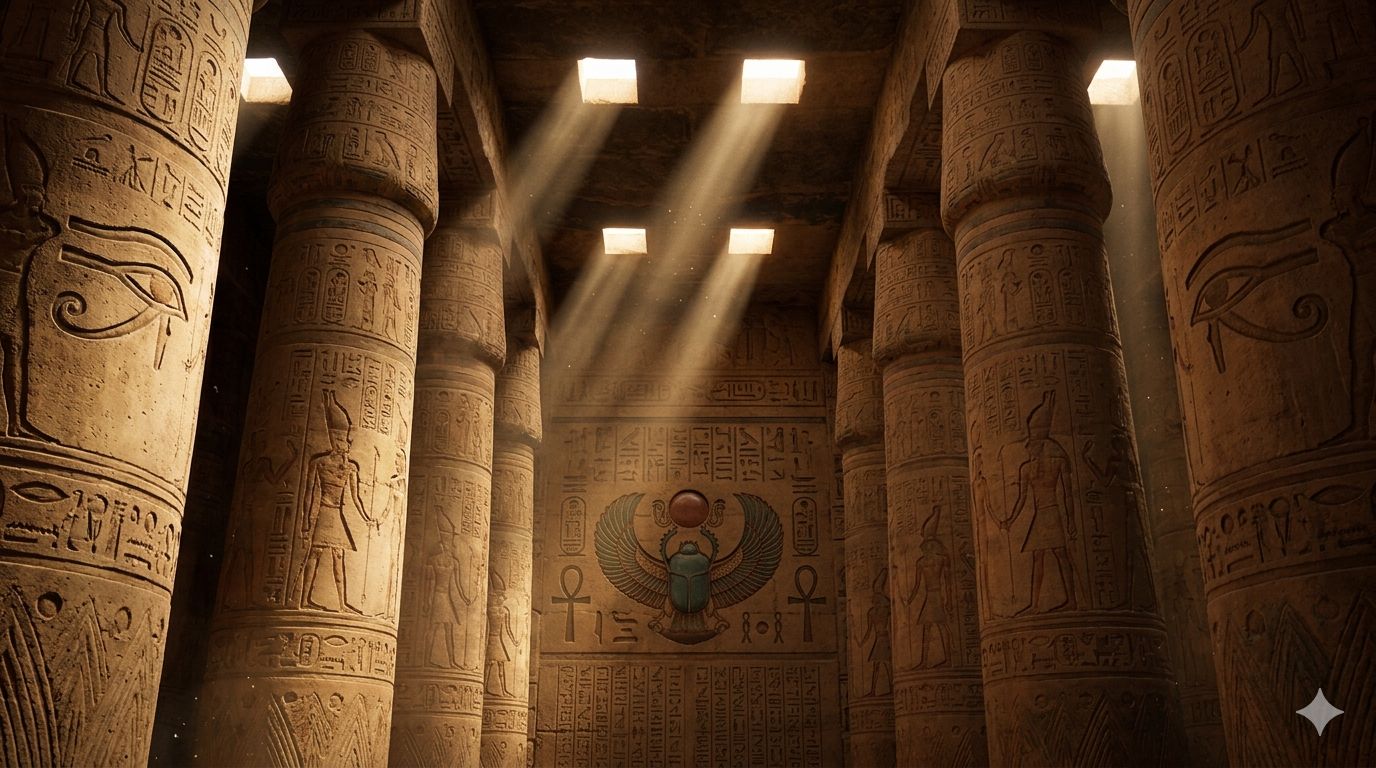
AnkhEye of HorusScarabAncient Egyptian symbols appeared in temples, tombs, jewelry, amulets, coffins, statues and hieroglyphic writing. Understanding them makes sacred scenes easier to read.
What Egyptian symbols meant
Ancient Egyptian symbols appeared in temples, tombs, jewelry, amulets, coffins, statues and hieroglyphic writing. Understanding them makes sacred scenes easier to read.
Most important symbols and meanings
| Symbol | Main meaning | Connected god or idea | Where it appears |
|---|---|---|---|
| Ankh | Life, divine breath, eternal existence and renewal. | Gods, kingship and renewal | Temple reliefs, tombs, amulets and statues |
| Eye of Horus | Protection, healing, restoration and wholeness. | Horus, safety and kingship | Jewelry, amulets, coffins and tomb scenes |
| Eye of Ra | Solar power, divine force and fierce protection. | Ra, kingship and cosmic order | Temple scenes, royal imagery and solar symbolism |
| Scarab | Rebirth, renewal, transformation and resurrection. | Khepri, sunrise and renewal | Jewelry, seals, burial items and amulets |
| Djed Pillar | Stability, endurance, strength and resurrection. | Osiris, afterlife and permanence | Tombs, coffins and religious scenes |
| Was Scepter | Power, dominion and divine authority. | Gods, pharaohs and control over chaos | Temple carvings and royal scenes |
| Ma'at Feather | Truth, justice, balance and cosmic order. | Ma'at and judgment of the dead | Afterlife scenes and funerary texts |
| Lotus | Creation, rebirth, beauty and daily renewal. | Sunrise, renewal and divine birth | Columns, jewelry and temple decoration |
| Shen Ring | Eternity, completeness and divine protection. | Kingship and cosmic order | Royal and protective scenes |
| Tyet Knot | Protection, healing and divine motherhood. | Isis, magic and sacred protection | Amulets, coffins and funerary objects |
Why symbols were so important
The Eye of Horus and Tyet Knot protected the living and the dead.
The Ankh, Scarab and Lotus expressed life, rebirth and eternal existence.
The Was Scepter and solar symbols reinforced divine and royal power.
The Feather of Ma'at represented justice, balance and moral order.
Symbols inside tombs helped guide and protect the soul.
Temple walls used symbols to tell sacred stories and express divine presence.
Eye of Horus vs Eye of Ra
| Feature | Eye of Horus | Eye of Ra |
|---|---|---|
| Main meaning | Protection, healing, restoration and wholeness. | Solar power, divine force, protection and destruction of chaos. |
| Associated deity | Horus, the falcon god linked with kingship. | Ra, the sun god and creator deity. |
| Symbolic mood | Healing and protective. | Fierce, royal and solar. |
| Common use | Amulets, jewelry, coffins and protective scenes. | Solar imagery, temple scenes and royal divine power. |
Egyptian symbols in modern culture
Today the Ankh, Eye of Horus and Scarab often appear in jewelry, tattoos, art, fashion and spiritual design. Their original ancient meanings remain richer because they were part of religion, ritual, writing and sacred art.
Where to see Egyptian symbols in Egypt
Royal names, offering scenes, Amun-Ra symbolism and sacred reliefs.
Afterlife symbols, protective gods, solar journeys, judgment and rebirth.
Hathor symbols, celestial imagery, sacred ceilings and ritual carvings.
Amulets, royal objects, jewelry, coffins, statues and symbolic artifacts.
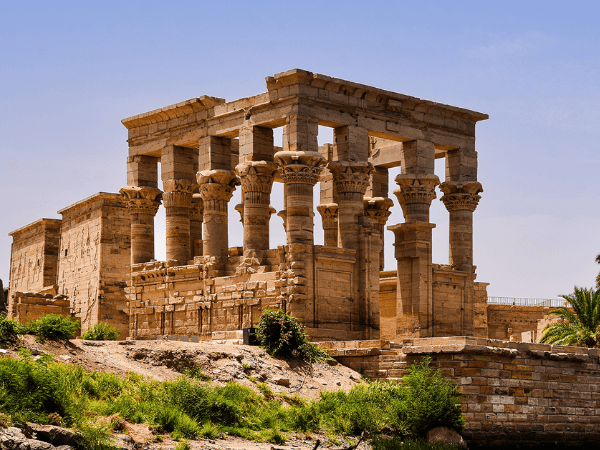
Isis symbolism, sacred protection, Nile landscapes and late temple art.
Temples, tombs and museums where symbols can be seen in context.
Why a guided tour helps
| Without a guide | With an Egyptologist guide |
|---|---|
| You may recognize famous symbols but miss deeper meanings. | You understand their roles in religion, kingship and the afterlife. |
| Temple scenes can look repetitive. | Scenes become readable sequences of ritual and divine power. |
| Symbols may feel decorative only. | You learn why each symbol appears in a specific context. |
| Links between gods and symbols may be missed. | You connect Osiris, Horus, Ra, Isis and Ma'at with their signs. |
FAQs about Egyptian symbols
What do Egyptian symbols mean?
They represent life, protection, power, rebirth, truth, divine authority and the afterlife.
What is the most famous Egyptian symbol?
The Ankh and Eye of Horus are among the most famous. The Ankh represents life, while the Eye of Horus represents protection and healing.
What does the Ankh mean?
Life, divine breath and eternal existence.
What is the difference between the Eye of Horus and Eye of Ra?
The Eye of Horus is linked with protection and restoration, while the Eye of Ra is linked with solar power and fierce divine authority.
Where can I see Egyptian symbols?
Karnak, Luxor Temple, the Valley of the Kings, Dendera, Philae, the Egyptian Museum and the Grand Egyptian Museum.
Are Egyptian symbols still used today?
Yes. They remain popular in jewelry, tattoos, art, fashion and spiritual design.
See Egyptian symbols where they belong
Explore symbols, gods and sacred stories in temples, tombs and museums with an Egyptologist guide.
Explore Luxor day toursPlan a tailor-made symbols tour-min.png)
.png)