
.png)
Ancient Egyptian Gods: Principal Deities, Symbols and Sacred Temples
Meet the gods and goddesses who shaped ancient Egyptian beliefs about creation, kingship, protection, death and rebirth—and discover the temples where their stories still survive.
Ancient Egyptian gods were not distant characters in a single fixed mythology. They were active powers connected with sunlight, the Nile, kingship, childbirth, healing, writing, death and rebirth. People honoured them in temples, household shrines, festivals, prayers and funerary rituals.
Belief also changed across time and place. A local deity could become nationally important, two gods could be combined into one form, and the same deity could take different names or appearances. That is why no single list can explain every god for Egypt across more than three thousand years of history.
How Ancient Egyptian Religion Worked
Ancient Egyptian religion was polytheistic, but that did not mean every god had equal importance everywhere. Each temple normally focused on a principal deity, a divine family or a local sacred tradition. At the same time, Egyptians accepted that several gods could express different aspects of creation, protection or royal power.
Ma’at: order and balance
Religion aimed to preserve ma’at, the ideal of truth, justice, balance and cosmic order. Kings presented offerings to the gods because royal ritual was believed to help maintain this order.
Temples and daily ritual
Priests washed, clothed, perfumed and presented food to the divine image inside the sanctuary. Most ordinary worshippers did not enter the innermost rooms.
Festivals and processions
During major festivals, sacred statues travelled outside the sanctuary in ceremonial boats, allowing communities to participate more directly.
Household devotion
People also appealed to protective deities at home, especially for childbirth, health, fertility and protection from dangerous animals or illness.
Why Did Egyptian Gods Have Animal Heads?
Animal-headed forms were visual theology. They communicated a deity’s qualities quickly and memorably. A falcon suggested the sky and kingship, a lioness expressed fierce solar power, an ibis represented knowledge, and a crocodile embodied both danger and the life-giving Nile.
- Falcon: Horus and Ra, associated with the sky, sunlight and kingship.
- Jackal: Anubis, linked with cemeteries and protection of the dead.
- Lioness: Sekhmet, expressing destructive force, royal protection and healing.
- Ibis or baboon: Thoth, associated with writing, calculation and the moon.
- Crocodile: Sobek, connected with power, fertility and the Nile.
- Cat: Bastet, later associated with the home, protection and celebration.
Major Ancient Egyptian Gods at a Glance
| Deity | Main role | Common symbol or form | Important place to connect with the deity |
|---|---|---|---|
| Ra | Sun, creation and royal authority | Falcon-headed man with solar disk | Heliopolis tradition and major museum collections in Cairo |
| Amun | Hidden power, kingship and creation | Double-plumed crown | Karnak Temples in Luxor |
| Osiris | Afterlife, resurrection and fertility | Mummiform king with atef crown | Abydos and funerary monuments throughout Egypt |
| Isis | Motherhood, magic, healing and protection | Throne sign or cow horns with solar disk | Philae Temple near Aswan |
| Horus | Sky, kingship and royal legitimacy | Falcon or falcon-headed man | Edfu Temple |
| Hathor | Love, music, joy, motherhood and the sky | Cow horns and solar disk | Dendera Temple |
| Anubis | Embalming, cemeteries and protection of the dead | Jackal or jackal-headed man | Saqqara, tomb art and museum collections |
| Thoth | Writing, knowledge, calculation and the moon | Ibis or baboon | Hermopolis tradition and museum collections |
The Principal Deities of Ancient Egypt

Ra
Ra was one of Egypt’s most important solar gods. He represented the sun’s daily journey, creative power and the order that sustained the world. In later theology he was frequently combined with other deities, including Amun as Amun-Ra and Horus as Ra-Horakhty.

Amun and Amun-Ra
Amun rose from a local Theban deity to national importance. His great cult centre was the monumental Karnak Temple complex, where generations of kings expanded sacred spaces dedicated principally to Amun, Mut and Khonsu.

Osiris
Osiris ruled the realm of the dead and symbolized resurrection. In the famous mythic cycle, he was killed by Seth, restored through the devotion and magic of Isis, and became father of Horus. His story gave Egyptians a powerful model of death followed by renewed life.

Isis
Isis was a protective mother, healer and master of magic. Her worship became influential far beyond Egypt. The island sanctuary of Philae Temple is the most important surviving destination associated with her cult.
Horus
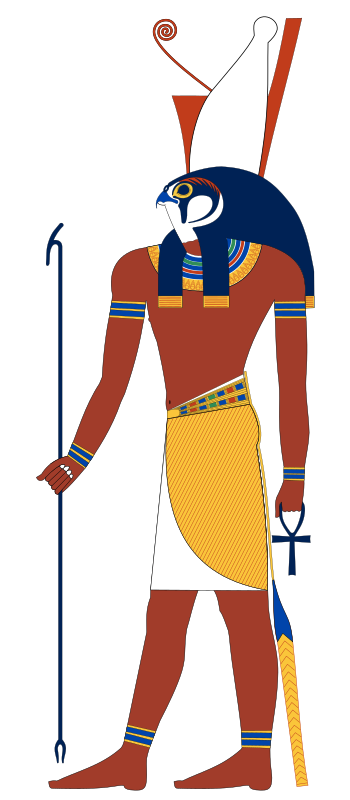
Horus was closely connected with the living king, who was understood as his earthly representative. He commonly appeared as a falcon or falcon-headed man. The Temple of Edfu preserves one of Egypt’s most complete sacred complexes dedicated to Horus.
Seth
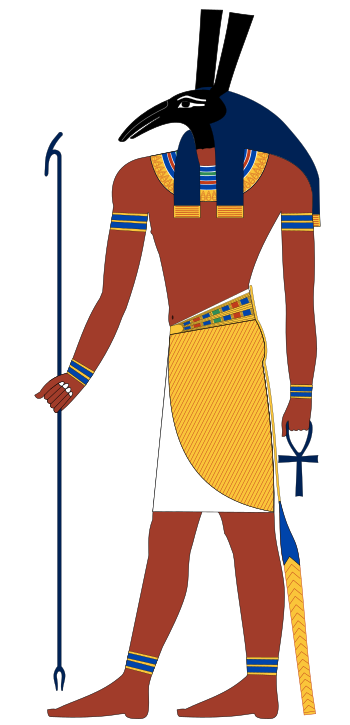
Seth represented the desert, storms, violence and disruptive power. Yet he was not simply an embodiment of evil: in some traditions he defended the solar boat against the serpent of chaos. His meaning changed considerably across Egyptian history.
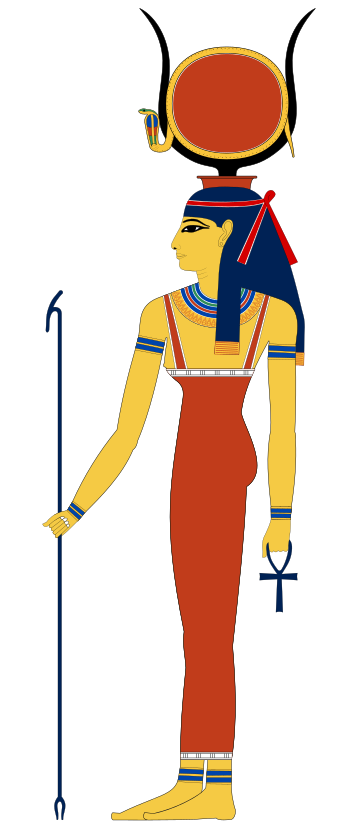
Hathor
Hathor was associated with joy, love, music, motherhood, the sky and the welcoming of the dead. Her principal temple at Dendera contains rich ritual chambers, astronomical imagery and some of the best-preserved sacred decoration in Egypt.
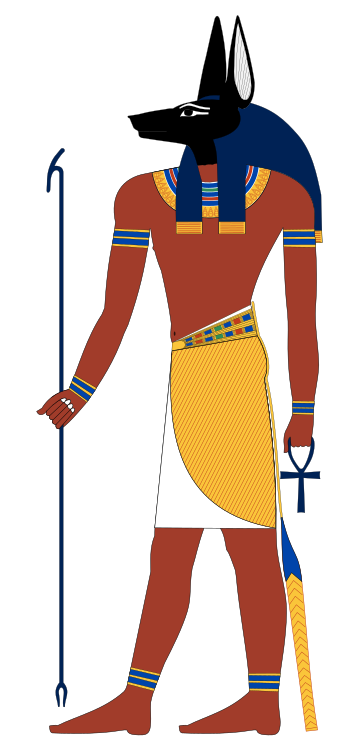
Anubis
Anubis protected cemeteries and guided the preparation of the dead. His jackal form was connected with the desert margins where Egyptians buried their dead. He appears prominently in funerary art and scenes of judgment.
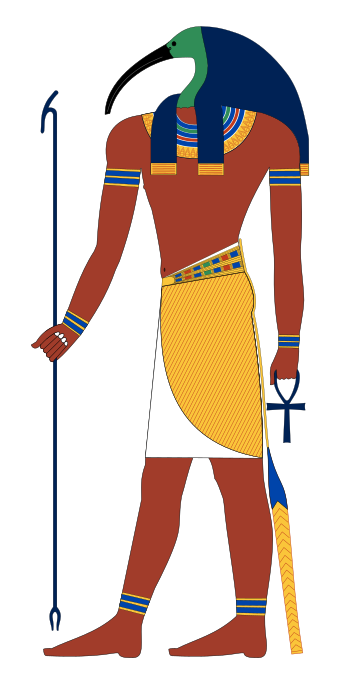
Thoth
Thoth was the divine patron of writing, wisdom, mathematics, timekeeping and learned knowledge. He was usually shown as an ibis-headed man or as a baboon and played a central role in divine judgment and sacred record-keeping.

Ptah
Ptah was the great creator god of Memphis and patron of craftsmen and architects. In Memphite theology he brought the world into being through thought and speech, making him especially important to ideas of intelligent creation.
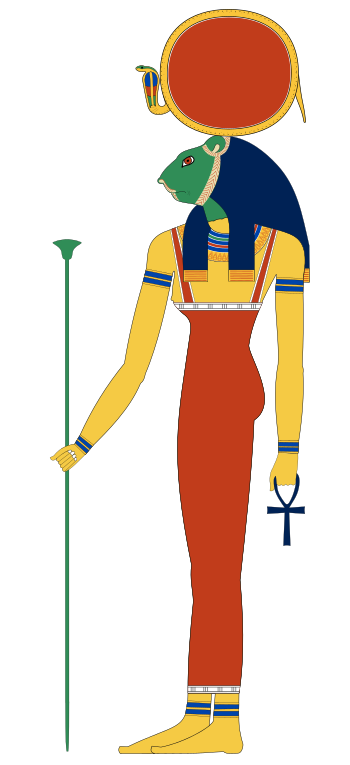
Sekhmet
Sekhmet, the lioness goddess, represented destructive heat, royal power, warfare and healing. Her dual nature expressed the Egyptian idea that dangerous divine force could also protect, cure and restore balance.

Sobek
Sobek was a crocodile god connected with the Nile, fertility, military strength and royal protection. He was particularly important in the Fayoum and at Kom Ombo, where his cult shared a temple with the falcon god Haroeris.

Bastet
Bastet was associated with protection, domestic life, fertility, music and celebration. Her character developed over time from a lioness-like protective force into the familiar cat-headed goddess widely connected with homes and families.
Major Myths That Connected the Gods
Egyptian myths were not preserved in one single sacred book. They appeared in temple inscriptions, funerary texts, hymns, ritual scenes and later literary accounts. Different versions could coexist without being treated as contradictory.
The death and resurrection of Osiris
Osiris was killed by Seth and restored through the actions of Isis. Their son Horus later contested Seth for legitimate rule. This cycle connected family loyalty, kingship, death and renewed life, and it became central to Egyptian ideas about the afterlife.
The daily journey of the sun
Ra crossed the sky by day and travelled through the underworld at night. Each sunrise represented renewal and victory over darkness and disorder. Tomb texts developed detailed accounts of this nocturnal journey.
The Eye of Ra
The Eye of Ra could appear as a powerful goddess, including Hathor, Sekhmet or Bastet in different traditions. The myth explained how protective divine energy could become dangerous, then be calmed and restored to balance.
How People Worshipped the Gods
Formal temple ritual was led by the king in theory and carried out by priests in practice. Worship involved purity rules, offerings, incense, music, hymns and processions. Food offered to the deity was later redistributed among temple personnel.
Ordinary people participated through festivals, votive objects, personal prayers and visits to accessible parts of temple complexes. They also asked deities for help with illness, childbirth, disputes, dreams and protection.
How the Importance of the Gods Changed Over Time
- Old Kingdom: Solar theology and the royal cult were especially prominent, with Ra closely connected to kingship.
- Middle Kingdom: Osiris became increasingly important in funerary belief, extending hopes of rebirth beyond the king.
- New Kingdom: Amun of Thebes rose to exceptional power, especially through the wealth and expansion of Karnak.
- Amarna Period: Akhenaten promoted the Aten and restricted the traditional cults, creating a major religious disruption.
- Late and Greco-Roman Periods: Older cults continued while new combinations and wider Mediterranean forms of worship developed.
Important Divine Families and Sacred Groups
The Osirian Family
Osiris, Isis and Horus form the best-known divine family. Their story linked kingship, family loyalty, death and resurrection. Seth, the rival of Osiris and Horus, represented conflict and instability within this sacred narrative.
The Theban Triad
Amun, Mut and Khonsu formed the principal divine family of ancient Thebes. Their worship is strongly represented across Luxor, especially at Karnak and Luxor Temple.
The Ennead of Heliopolis
The Heliopolitan creation tradition grouped nine deities beginning with Atum and continuing through Shu, Tefnut, Geb, Nut, Osiris, Isis, Seth and Nephthys. This family explained the emergence of air, moisture, earth, sky and the royal-divine order.
Where to See the Gods of Ancient Egypt Today
The clearest travel route follows the Nile, where many of Egypt’s best-preserved temples still stand close to the river. Each destination reveals a different part of ancient Egyptian religion.
Cairo and Giza
Museum collections introduce divine statues, coffins, papyri, amulets and ritual objects. Giza and Saqqara also show how royal religion and funerary belief worked together.
Luxor
At Karnak, visitors encounter the cult of Amun, Mut and Khonsu. Luxor Temple presents divine kingship, procession routes and the renewal of royal power.
Edfu and Kom Ombo
Edfu preserves the cult of Horus in exceptional detail. Kom Ombo presents the unusual shared worship of Sobek and the falcon god Haroeris.
Aswan and Philae
Philae Temple is the major surviving sanctuary of Isis and one of the strongest places to understand her long-lasting cult.
Recommended Tours Covering Egypt’s Sacred Sites
7-Day Egypt Historical Tour & Nile Cruise
Best for travellers with one week. It connects Cairo, Aswan, Philae, Kom Ombo, Edfu and Luxor, covering temples associated with Isis, Sobek, Horus and Amun.
9-Day Egypt Tour with Nile Cruise
A broader route through Cairo, Giza, Aswan, Kom Ombo, Edfu and Luxor, suitable for visitors who want both museum context and major temple sites.
10-Day Historical Egypt Tour
The strongest option for a deeper cultural journey, combining Cairo with Luxor, Aswan and a Nile cruise through the principal sacred centres of Upper Egypt.
Travellers who prefer to compare different durations can browse the complete collection of Egypt Classic Tour Packages or select a dedicated Nile Cruise Package.
Frequently Asked Questions
Who was the most powerful god in ancient Egypt?
There was no single permanent answer. Ra was central to solar religion, while Amun became exceptionally powerful during the New Kingdom. Amun and Ra were combined as Amun-Ra, expressing both hidden and visible creative power.
Who was the god of the dead?
Osiris was the ruler of the afterlife and symbol of resurrection. Anubis was more specifically connected with embalming, cemeteries and protecting the deceased.
Who was the most important Egyptian goddess?
Isis was among the most influential because of her roles in motherhood, magic, healing and royal protection. Hathor, Sekhmet, Mut, Nephthys and Bastet were also major goddesses.
Why did Egyptian gods have animal heads?
Animal forms expressed divine qualities rather than suggesting that Egyptians saw the gods as ordinary animals. Falcons evoked the sky, lionesses power, ibises knowledge and crocodiles the dangerous fertility of the Nile.
Which temples are best for learning about Egyptian gods?
Karnak, Luxor Temple, Dendera, Edfu, Kom Ombo and Philae are especially useful because their architecture and inscriptions preserve major cult traditions.
Follow the Sacred Route of Ancient Egypt
Explore the temples of Amun, Horus, Sobek and Isis with a qualified Egyptologist and a route built around the history that interests you most.
Explore Classic Egypt ToursCreate a Tailor-Made Tour