


Top Temples in Luxor, Egypt: Key Differences & Travel Guide
Compare cult temples and mortuary temples, then build the right route across both banks of the Nile.
Luxor’s temples were built for different religious and political purposes. East Bank complexes served living cult and procession, while many West Bank temples maintained the memory and divine cult of deceased rulers.
Essential Luxor temples
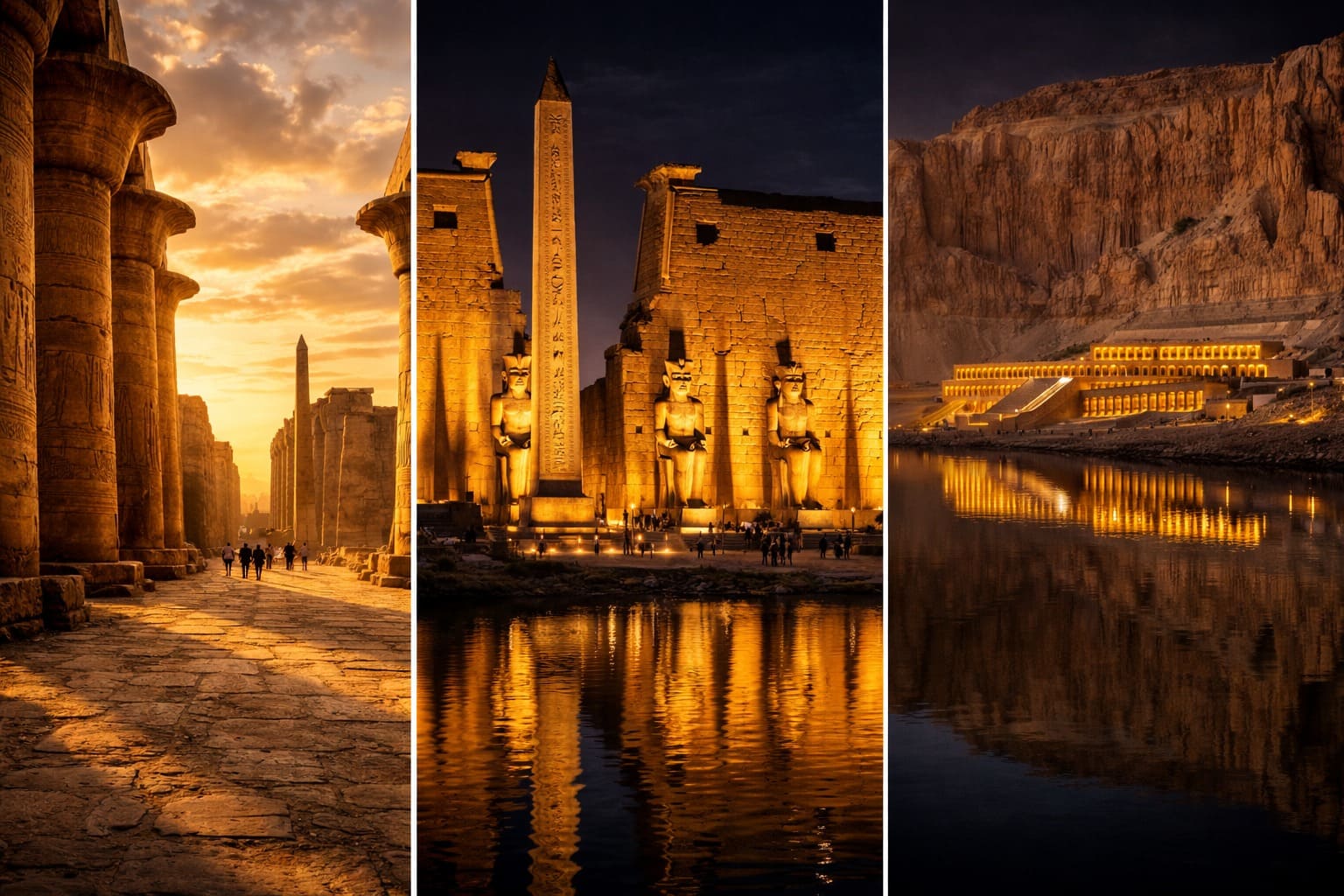
Karnak Temple Complex
Luxor’s largest and most layered sacred complex, famous for the Hypostyle Hall, pylons, obelisks and the cult of Amun.
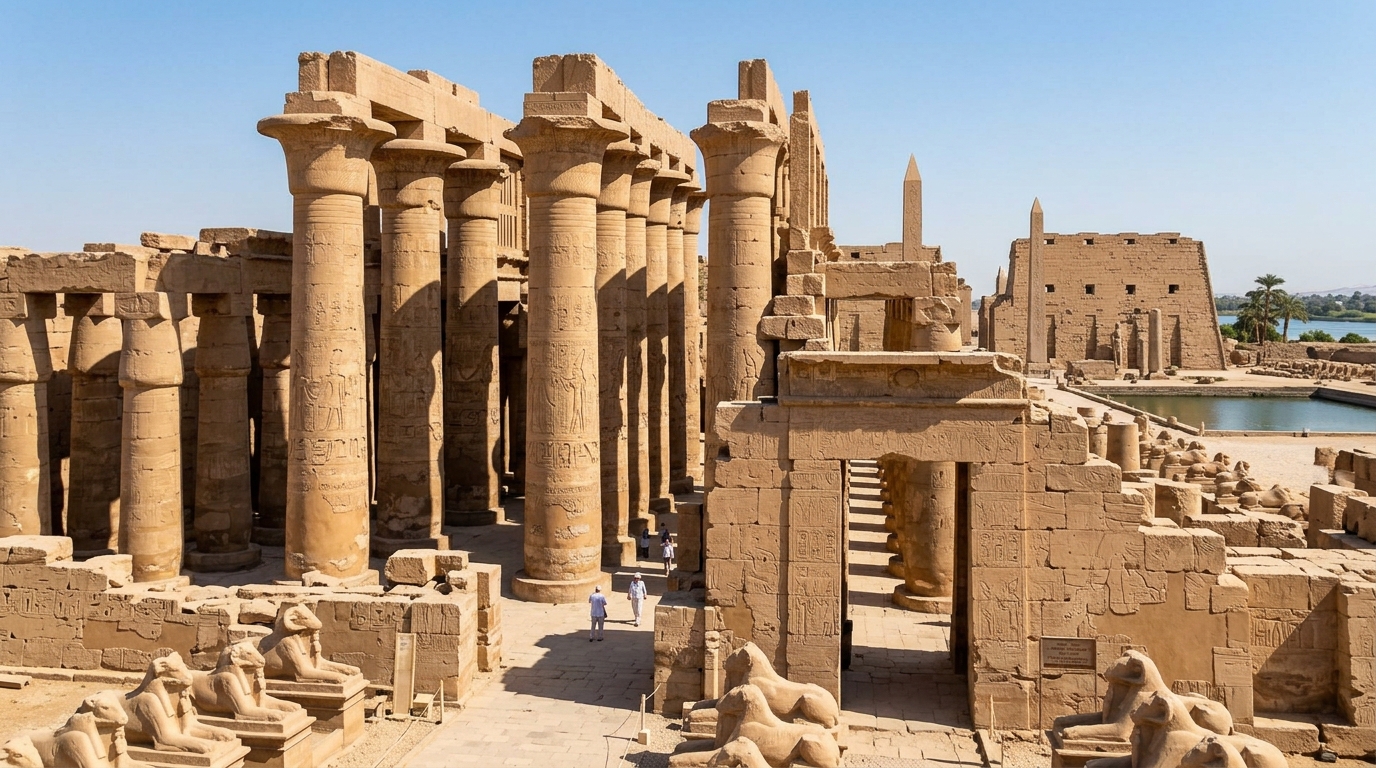
Luxor Temple
A compact city-center temple linked with divine kingship, the Opet Festival and the Avenue of Sphinxes.
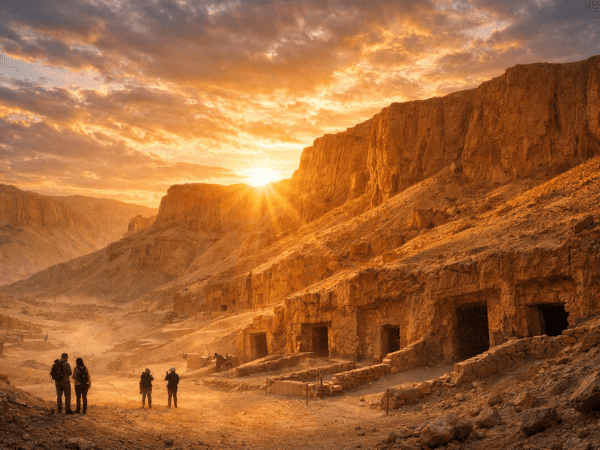
Temple of Hatshepsut
A terraced mortuary temple set against the cliffs of Deir el-Bahari, known for architecture and royal narrative.
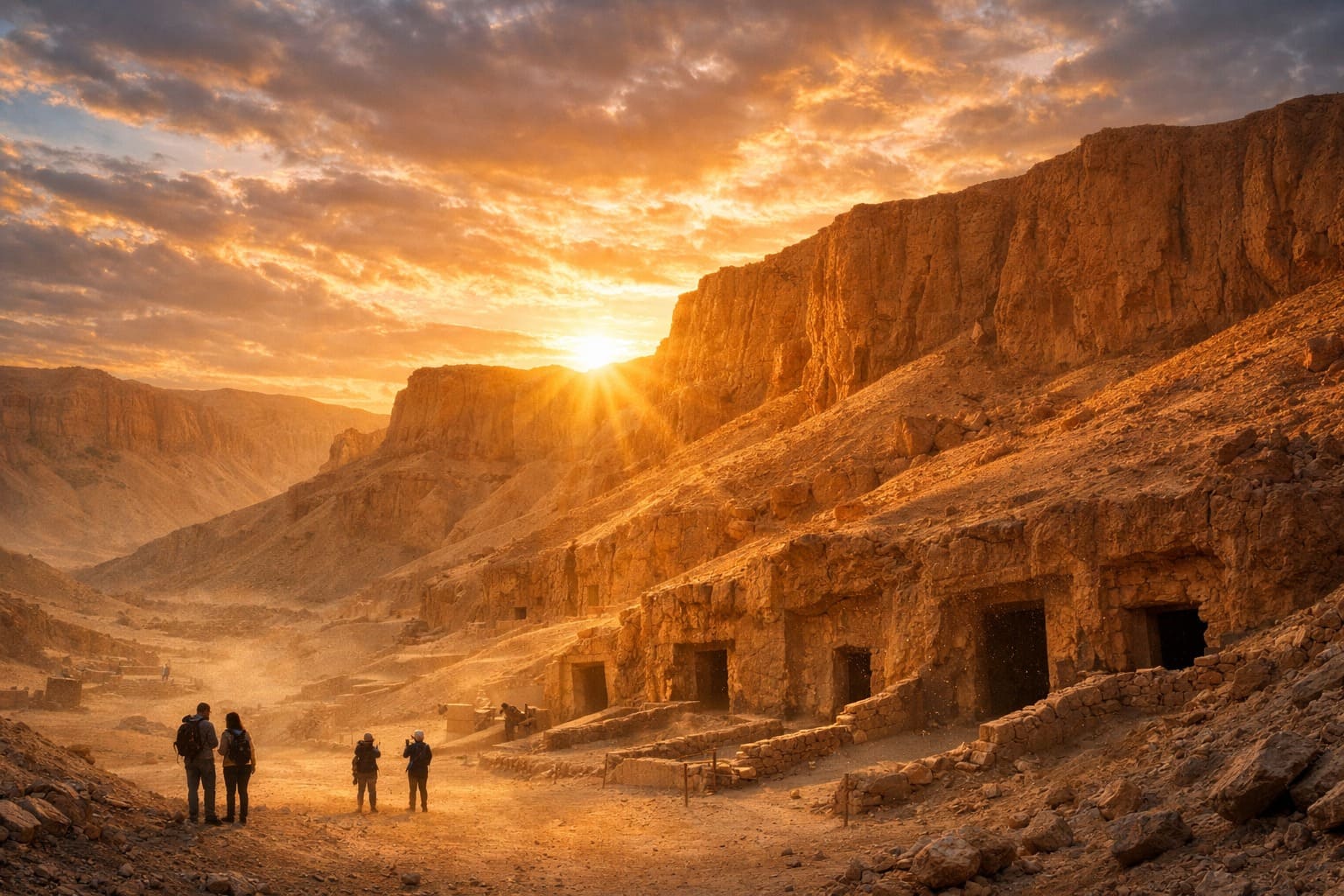
Medinet Habu
The mortuary temple of Ramesses III, celebrated for monumental walls, battle reliefs and surviving color.
Understand the key differences
East Bank vs West Bank
East Bank temples relate strongly to living cult and procession; West Bank monuments emphasize royal memory and the afterlife.
Cult temple vs mortuary temple
Karnak served major gods, while Hatshepsut and Medinet Habu supported the cults of deceased rulers.
Scale vs detail
Karnak rewards broad exploration; smaller West Bank sites often preserve clearer scenes and quieter spaces.
Daylight vs evening
West Bank sites generally close earlier, while Luxor Temple can be especially atmospheric after sunset.
More temples worth adding
Ramesseum
Ramesses II’s mortuary temple preserves colossal fragments, storage areas and reliefs in a quieter setting.
Temple of Seti I at Qurna
A less-visited memorial temple with refined reliefs and important links to the Theban royal cult.
Temple of Mut
Part of the wider Karnak landscape, associated with the goddess Mut and its sacred lake.
.jpeg)
Deir el-Medina temples
Small temples near the workers’ village add context about community worship and later religious history.
Temple of Khonsu
A compact, well-preserved temple inside Karnak that helps visitors understand a complete temple plan.
Frequently asked questions
Which Luxor temple should I visit first?
Karnak is the essential first choice for scale and history; pair it with Luxor Temple for the East Bank.
Can I visit all major temples in one day?
You can cover highlights, but two days provide better pacing: West Bank first, East Bank separately.
Is Hatshepsut Temple inside the Valley of the Kings?
No. It stands at Deir el-Bahari on the West Bank and requires separate admission.
Which temple has the best-preserved color?
Medinet Habu often impresses visitors with surviving color and detailed reliefs.
Do I need a guide?
A licensed Egyptologist adds significant value by explaining rituals, building phases, gods and royal propaganda.
Plan the right Luxor temple route
Compare East and West Bank temples with a private Egyptologist and heat-aware itinerary.
Plan My Luxor Temple Tour