


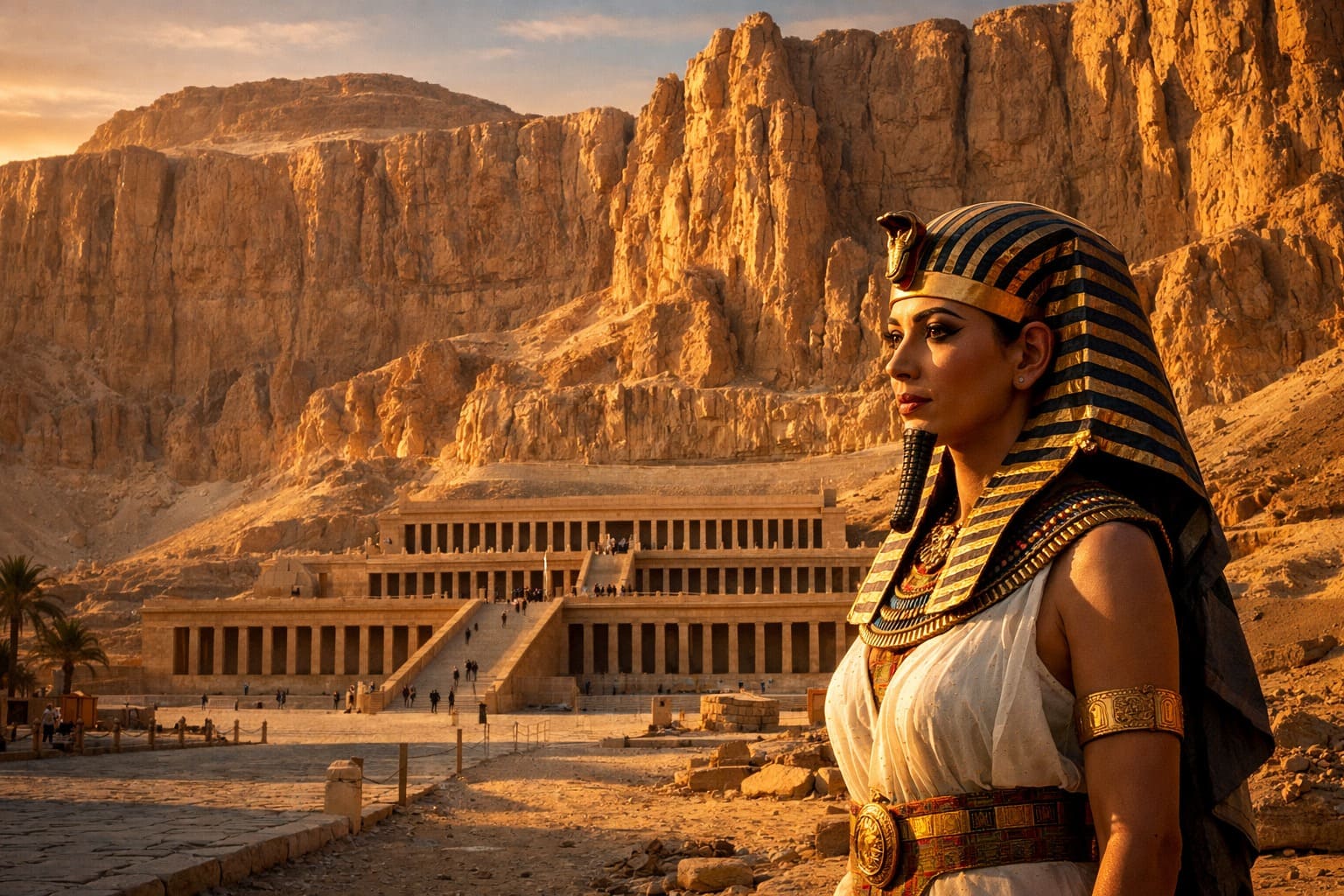
Who Was Queen Hatshepsut? Egypt’s Powerful Female Pharaoh
Follow the extraordinary rise of a royal woman who adopted full kingship and led Egypt through prosperity, trade and monumental building.
Born into the Eighteenth Dynasty, Hatshepsut transformed from royal daughter and God’s Wife of Amun into regent and ultimately one of Egypt’s most successful pharaohs.
From royal princess to pharaoh
.jpeg)
Royal birth and education
Daughter of Thutmose I, Hatshepsut grew within court, temple ritual and state administration.
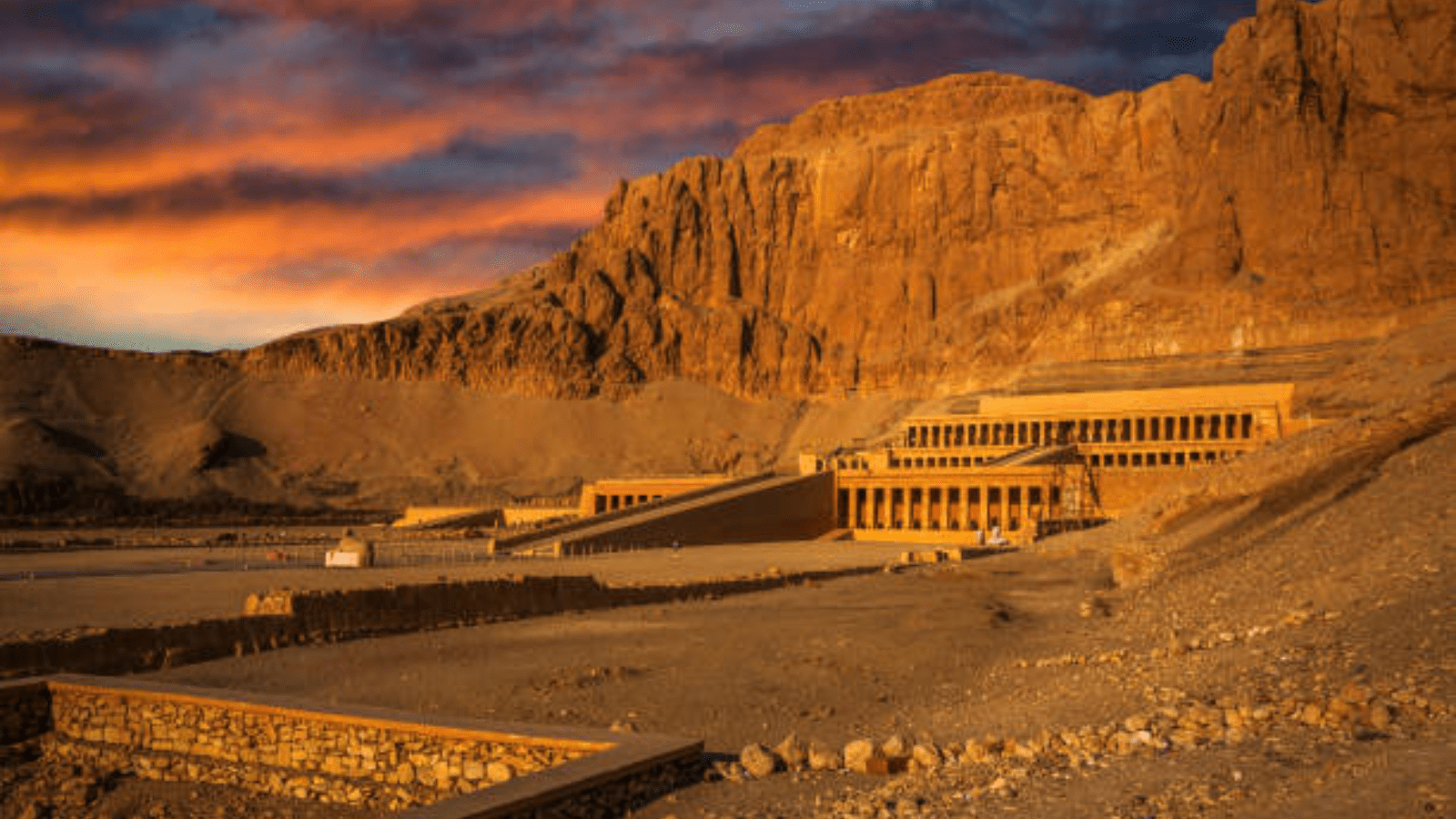
God’s Wife of Amun
This prestigious religious title strengthened her authority within Thebes and the powerful Amun establishment.
.png)
Regent for Thutmose III
After Thutmose II’s death, she initially governed for the young heir.
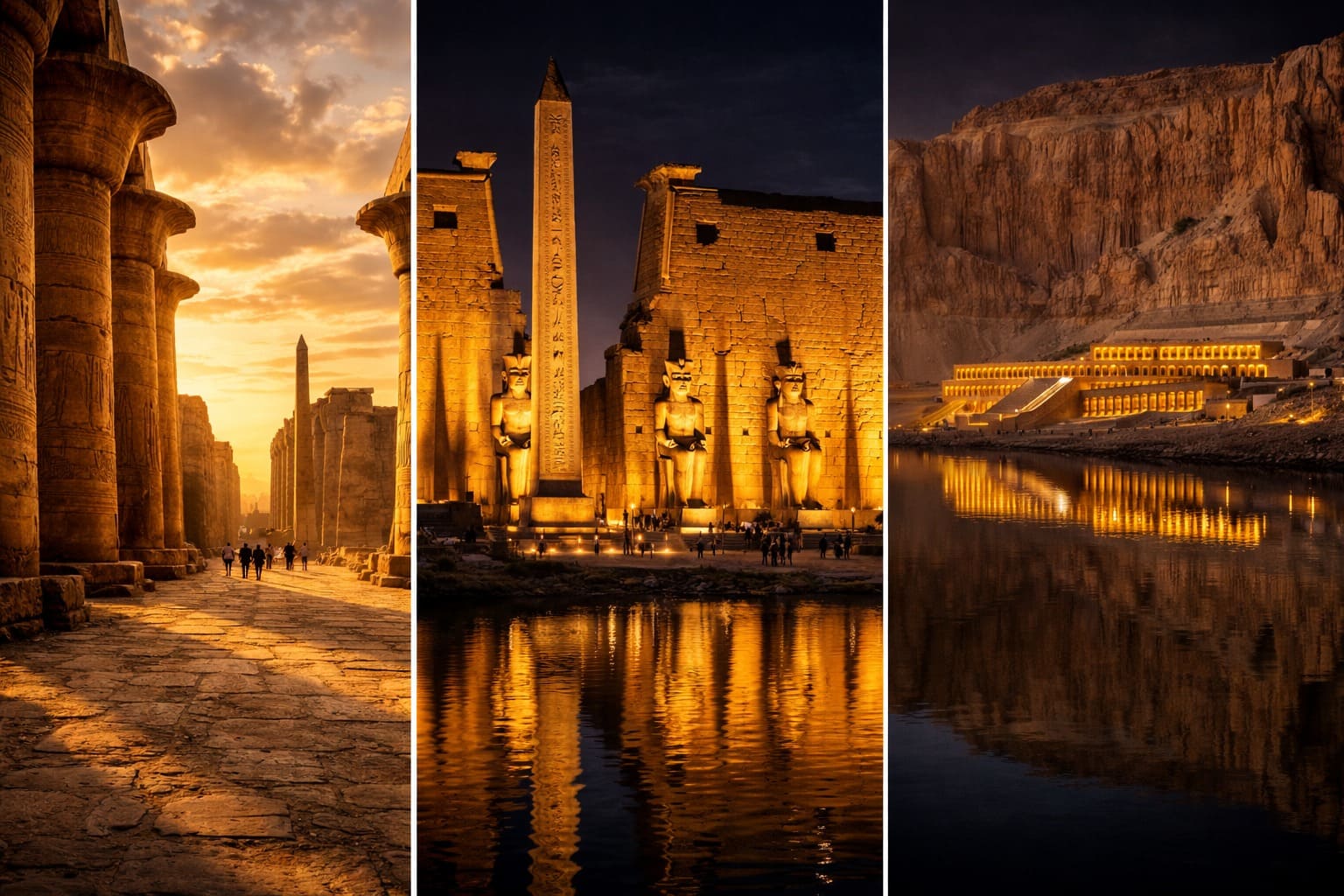
Assuming full kingship
Within several years she adopted pharaonic titles, regalia and authority alongside Thutmose III.
How she legitimized and strengthened her reign
Claim divine birth
Temple reliefs presented Amun as her divine father and her rule as sacredly authorized.
Use royal iconography
Statues show her in kingly dress and the ceremonial false beard associated with office.
Expand trade with Punt
The celebrated expedition returned with incense trees, luxury goods, gold and exotic materials.
Build on a monumental scale
Her projects included Djeser-Djeseru, Karnak obelisks and restoration across Egypt.
Erasure, rediscovery and legacy
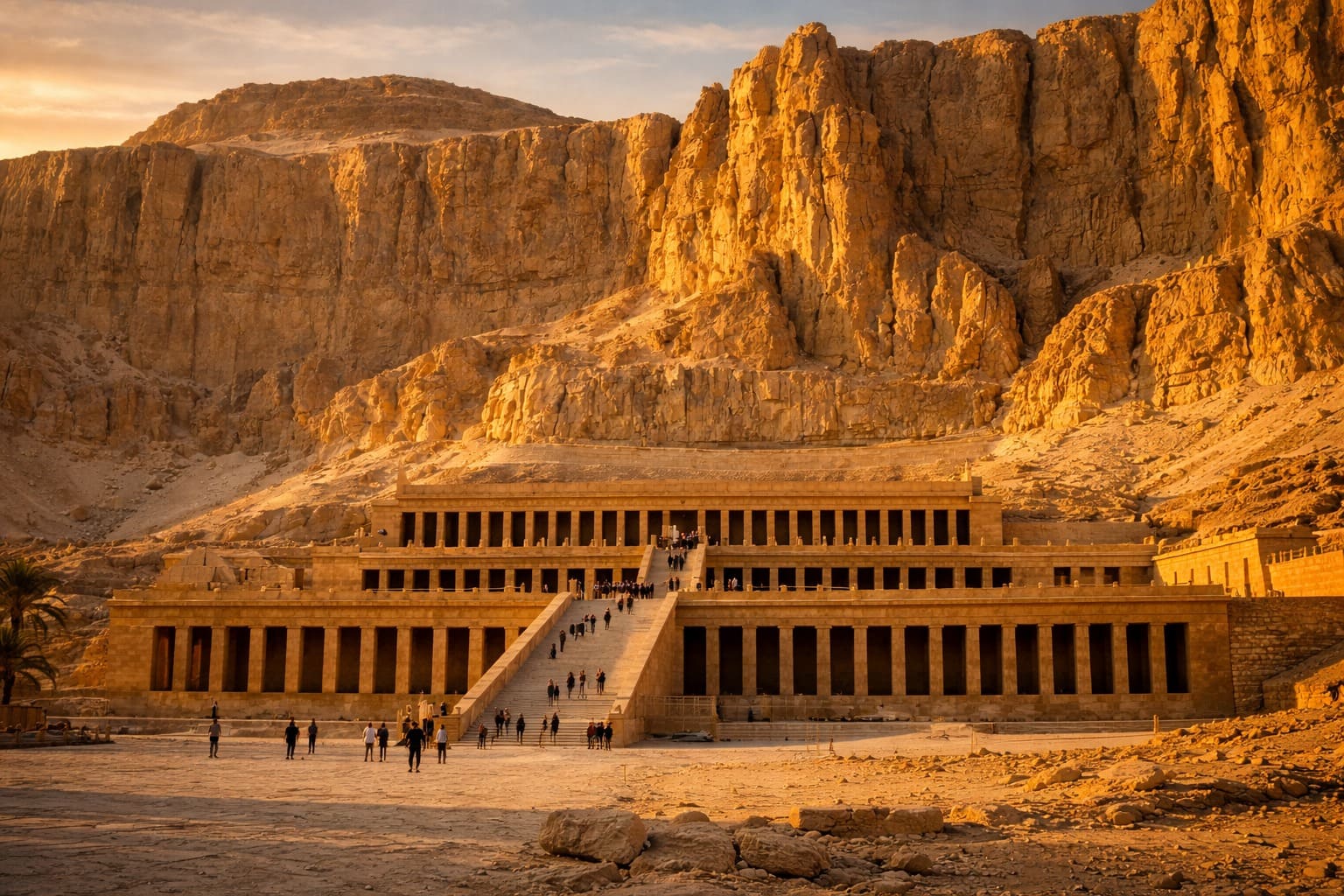
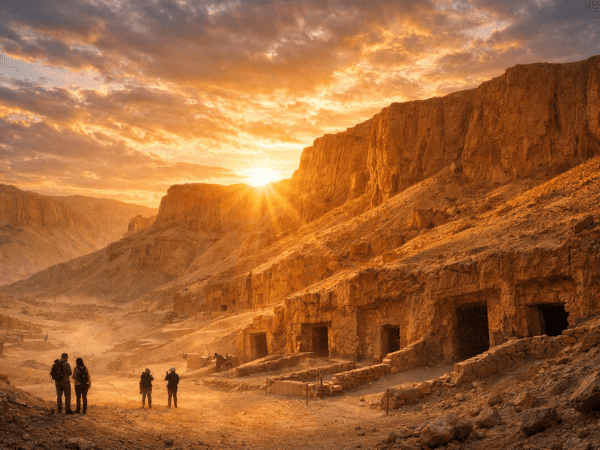
Mortuary Temple at Deir el-Bahari
Three terraces and cliffside architecture preserve her political, religious and artistic programme.
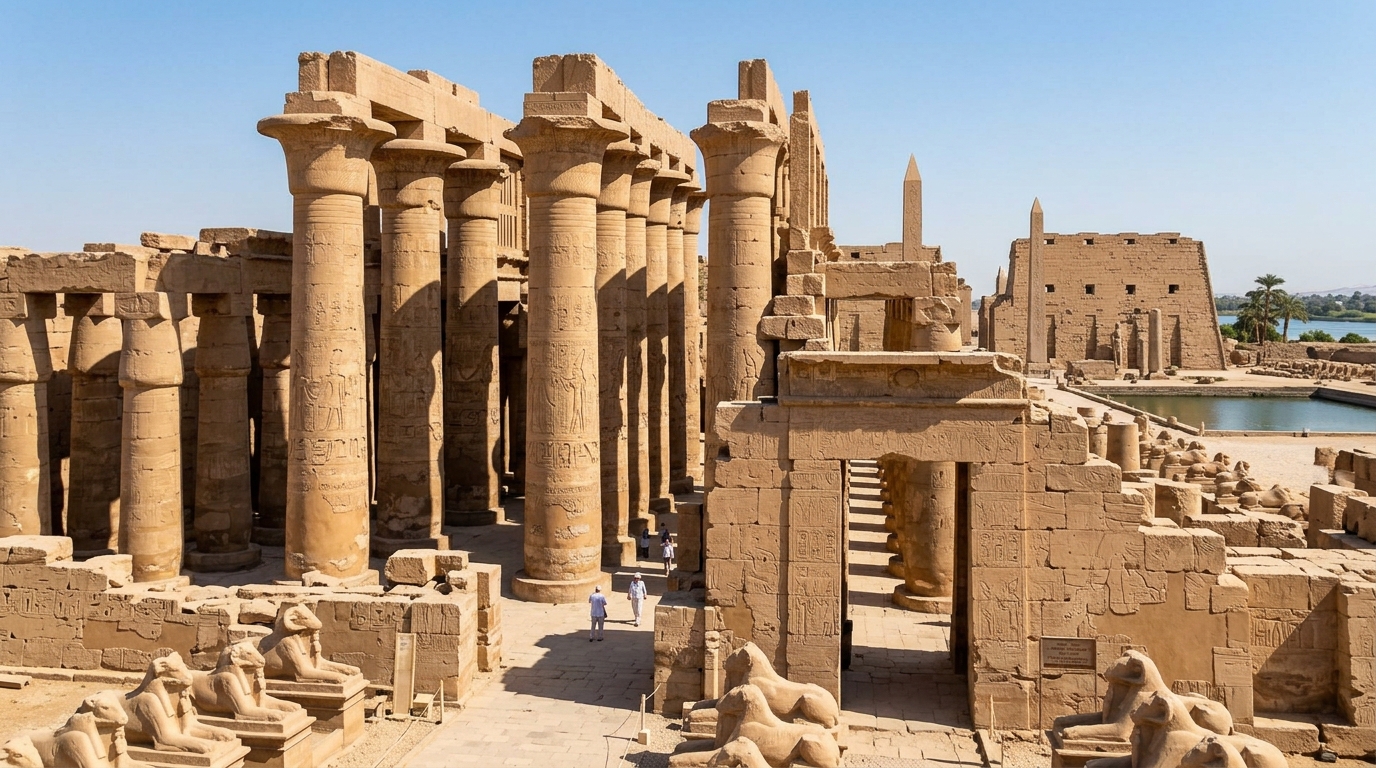
Karnak building projects
Obelisks and additions linked her kingship closely with Amun’s main sanctuary.
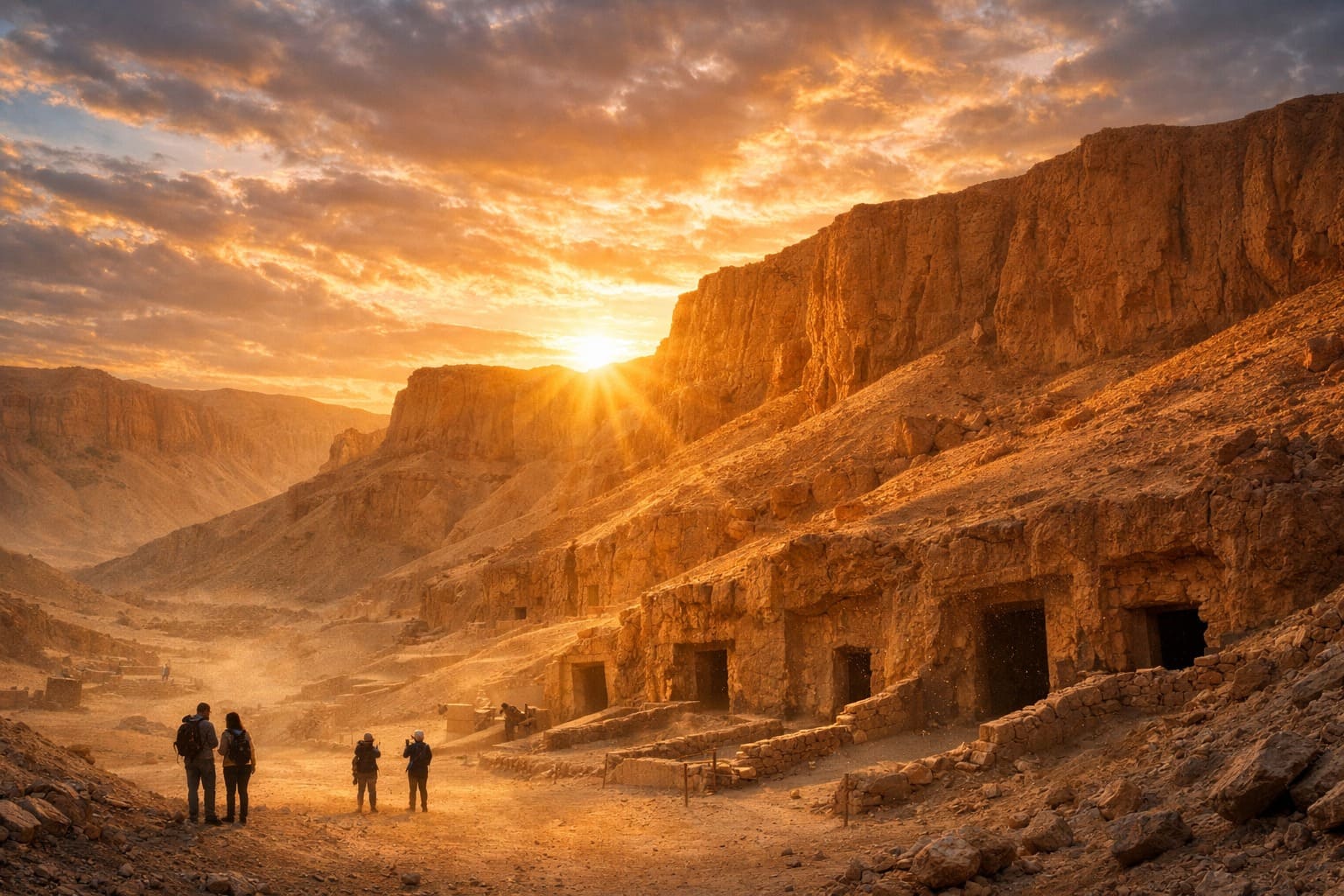
Damage after her death
Names and images were later removed or altered, probably within a complex succession and memory policy.
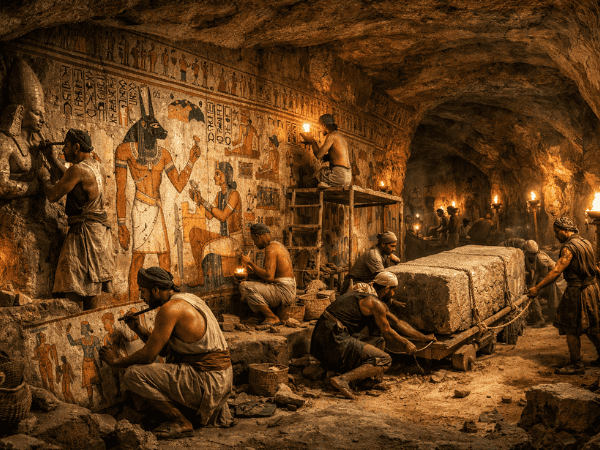
Modern rediscovery
Archaeology reconstructed her reign through inscriptions, statues, monuments and surviving reliefs.
Why she matters today
Her leadership challenges simple assumptions about gender, authority and royal identity in ancient Egypt.
Frequently asked questions
Was Hatshepsut a queen or a pharaoh?
She began as queen and regent but later assumed the full titles and functions of pharaoh.
How long did she rule?
Her reign as king lasted roughly two decades in the fifteenth century BCE.
Why was she shown as a man?
She adopted traditional royal imagery connected with the office of kingship, while her female identity was still known.
What was her greatest achievement?
Her temple at Deir el-Bahari and the Punt expedition are among her most celebrated achievements.
Who tried to erase her?
Alterations occurred under Thutmose III, though their timing and political motives are more complex than a simple personal revenge story.
Discover Hatshepsut’s legacy in Luxor
Connect her statues, temple reliefs, Karnak projects and royal story with a private Egyptologist.
Plan My Hatshepsut Tour