


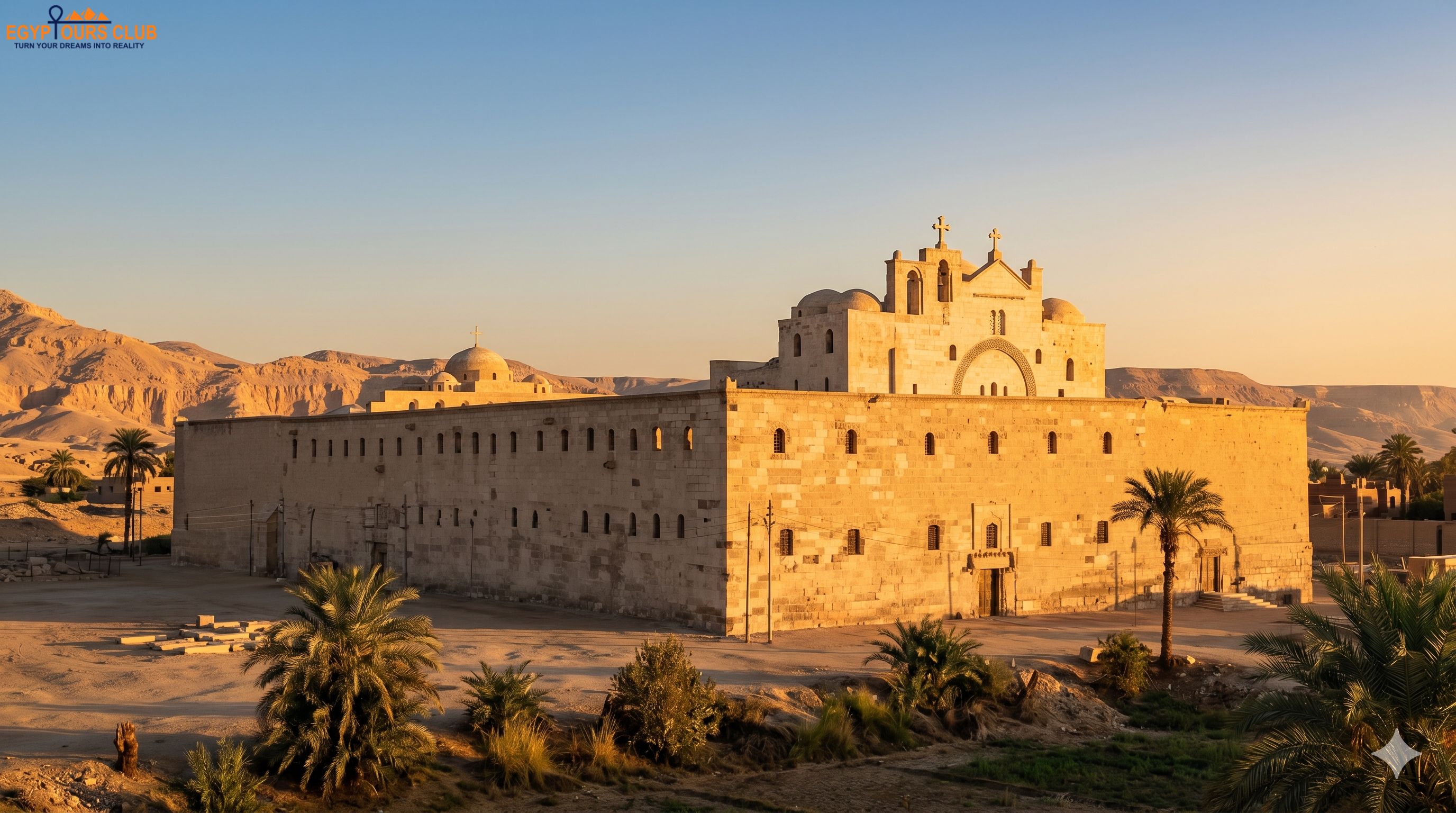
St. Shenouda Legacy
The monastery is closely associated with Saint Shenouda, one of the most important names in the history of Egyptian monastic life.
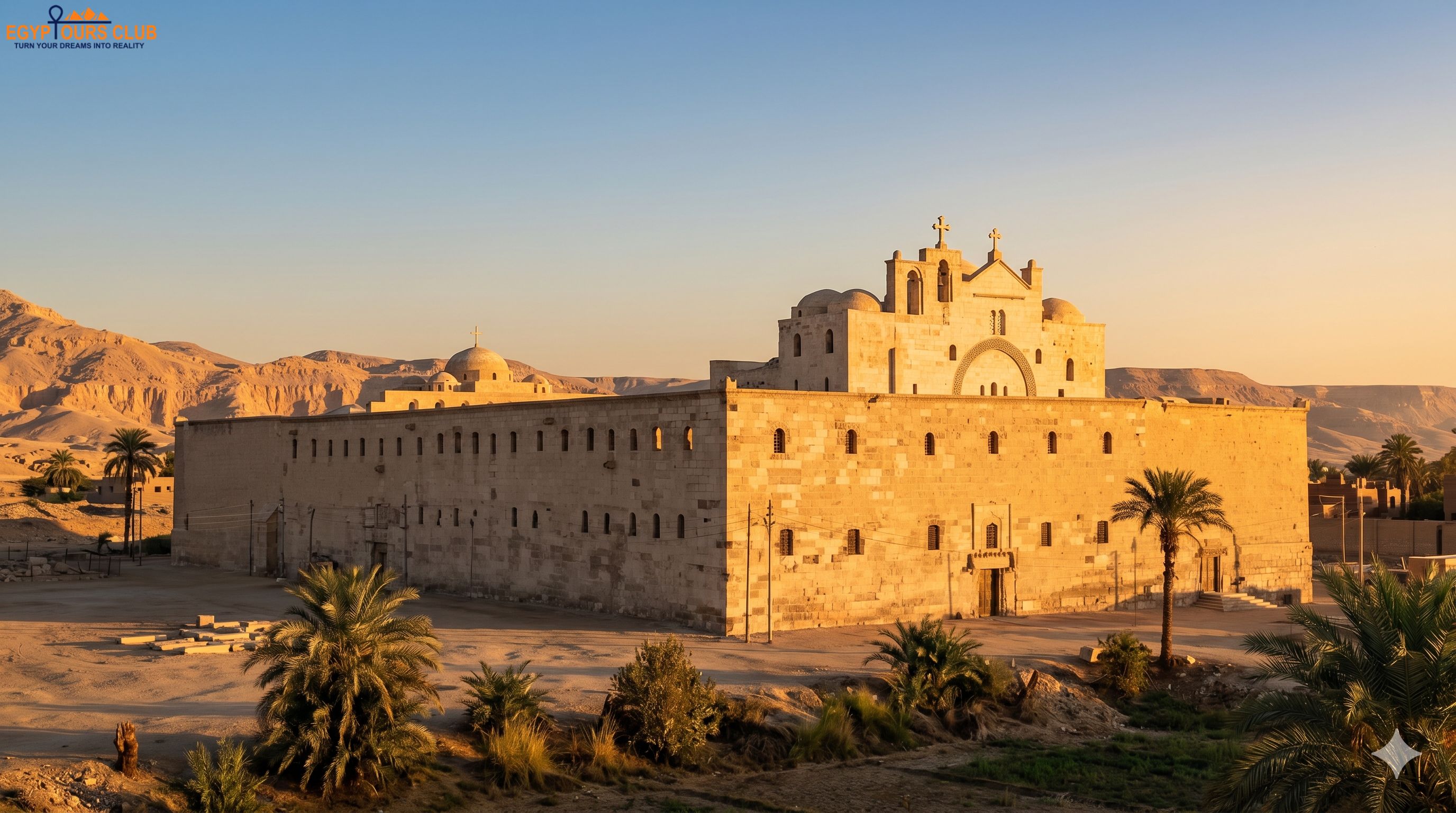
Explore White Monastery, Saint Shenouda’s legacy, Coptic architecture and the powerful White and Red Monasteries route in Upper Egypt.
White Monastery Sohag Egypt, also known as Deir el-Abyad or the Monastery of Saint Shenouda, is one of the most important Coptic monuments in Upper Egypt and a strong stop for Sohag tours, Coptic heritage itineraries and custom Upper Egypt routes. Famous for its white limestone walls, basilica-style church, St. Shenouda history and close link with the Red Monastery Sohag, it creates one of the best White and Red Monasteries tour experiences in Egypt.
Start here: choose the right route based on whether you want a focused Coptic visit, the classic White and Red Monasteries pairing, or a broader Upper Egypt heritage itinerary.
| Tour / Route | Duration | Main Stops | Best For | Commercial Intent | Action |
|---|---|---|---|---|---|
| White and Red Monasteries Sohag Route | Half / Full Day | White Monastery, Red Monastery, St. Shenouda history and Coptic art context | Coptic heritage travelers | White and Red Monastery tour | View |
| White Monastery Focused Visit | Flexible | St. Shenouda Monastery, white limestone architecture and Sohag heritage context | Architecture and Christian heritage visitors | White Monastery Sohag tour | View |
| Sohag, Abydos and Dendera Route | Full Day / Custom | Sohag monasteries, Abydos Temple, Osireion and Dendera Temple Complex | Upper Egypt culture lovers | Upper Egypt cultural route | View |
| Egypt Tour Packages with Sohag Add-On | Multi-Day | Cairo, Luxor, Abydos, Dendera, Sohag monasteries, Nile Cruise and Aswan | Travelers comparing complete Egypt travel plans | Egypt tour packages | View |
| Egypt Classic Tour Packages with Upper Egypt | Flexible | Cairo, Luxor, Aswan, Nile Cruise and tailored Sohag heritage extension | First-time visitors who want deeper history | Egypt classic tour packages | View |
| Tailored Christian Heritage Egypt Itinerary | Flexible | Cairo Coptic sites, Sohag monasteries, Abydos and Upper Egypt cultural stops | Christian heritage and special-interest travelers | Tailored Egypt travel | View |
White Monastery Sohag is a historic Coptic Orthodox monastery in Upper Egypt, associated with Saint Shenouda and known for its monumental white limestone architecture. It is one of Sohag’s most important Christian heritage landmarks and is best visited with the nearby Red Monastery as part of a guided Sohag monastery tour.
Use Egypt Tours Club travel experts to connect White Monastery with Red Monastery, Abydos, Dendera, Luxor and wider Egypt travel packages.
White Monastery can work as a focused visit, but it becomes stronger when paired with Red Monastery and the wider cultural route of Sohag, Abydos and Dendera.
Best for travelers who want St. Shenouda, white limestone architecture, Red Monastery paintings and Coptic heritage in one route.
Request tailored route →Best for adding painted sanctuary art and a strong visual contrast to White Monastery’s pale limestone architecture.
View Red Monastery →Best for guests who want Sohag and Coptic heritage inside a wider Cairo, Luxor, Nile Cruise and Aswan itinerary.
Compare Egypt packages →The White Monastery is not only a religious monument. It is a cultural landmark where early Christian history, monastic life, desert architecture and Sohag’s hidden heritage come together in a powerful setting.
The site is strongly associated with Saint Shenouda, one of the most influential figures in Egyptian monasticism. Its white limestone walls give the monastery its name and make it visually distinct from the nearby Red Monastery.
For travelers searching for White Monastery Sohag, White Monastery Egypt, St. Shenouda Monastery Sohag, Deir el-Abyad Sohag, White Monastery architecture or Sohag monastery tour, this site offers both historical depth and strong travel value.
White Limestone Monastery · SohagThe visual identity of the White Monastery comes from its massive pale stone walls, desert-edge setting, carved entrances and quiet interior spaces.
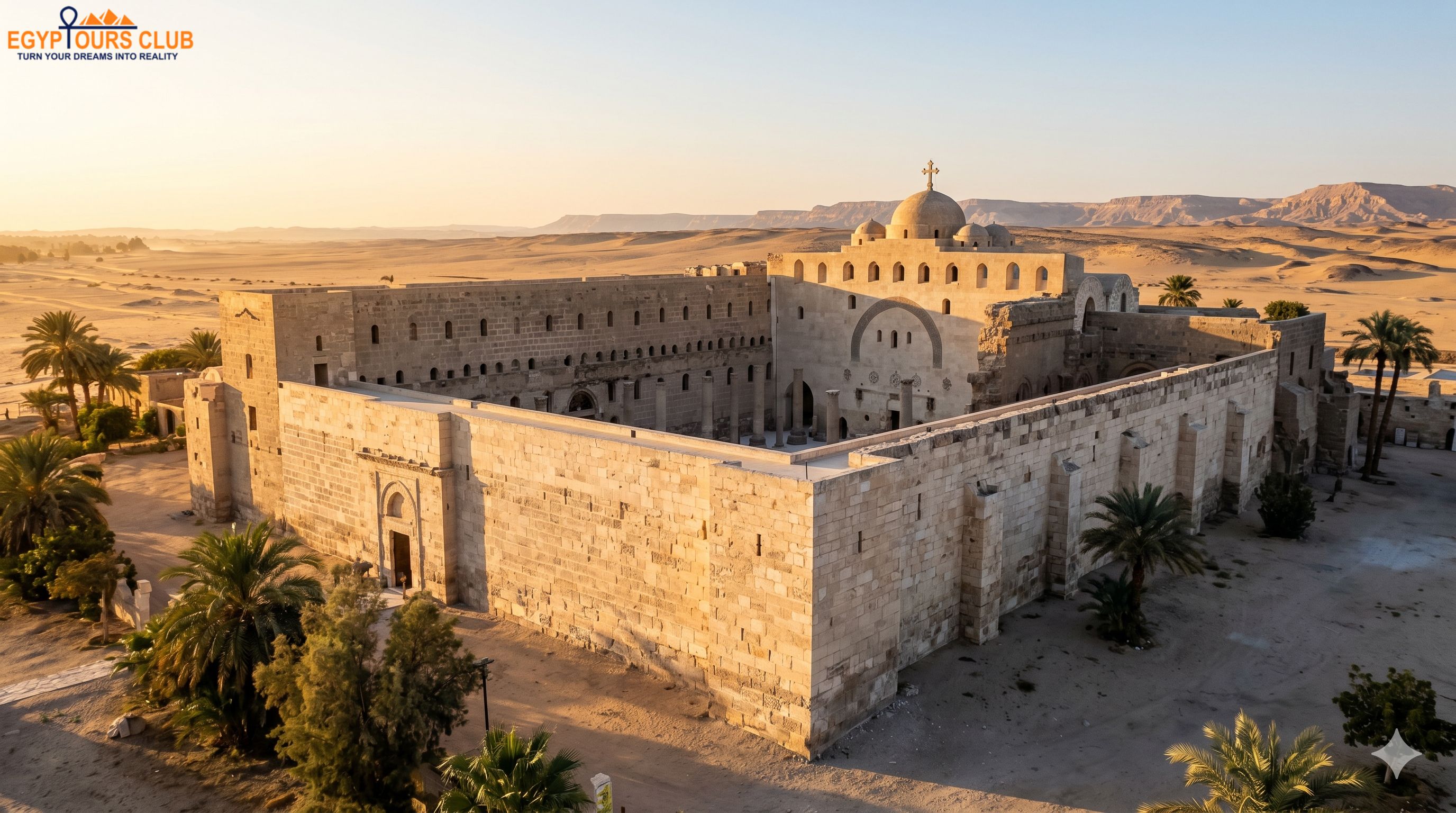
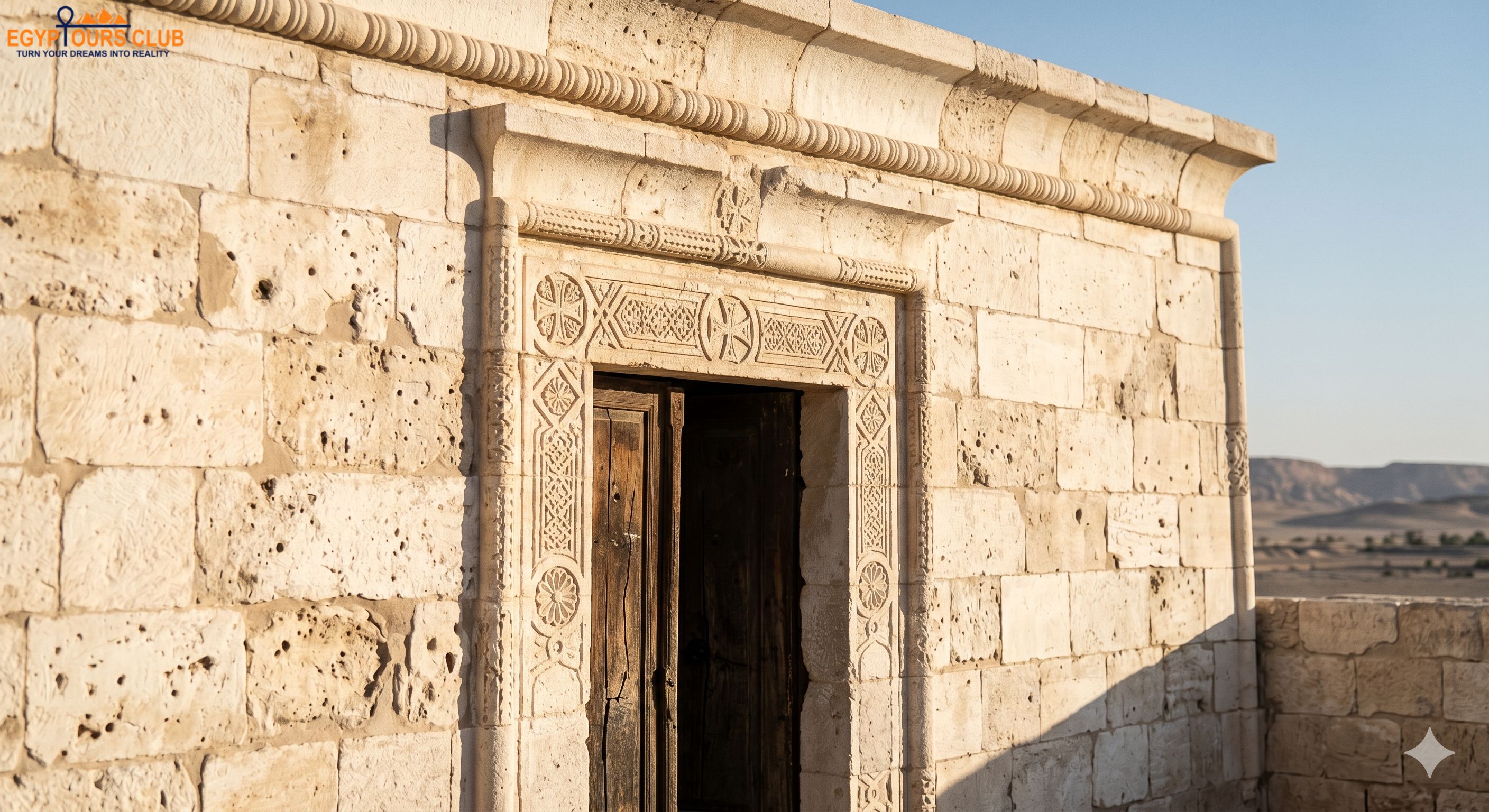
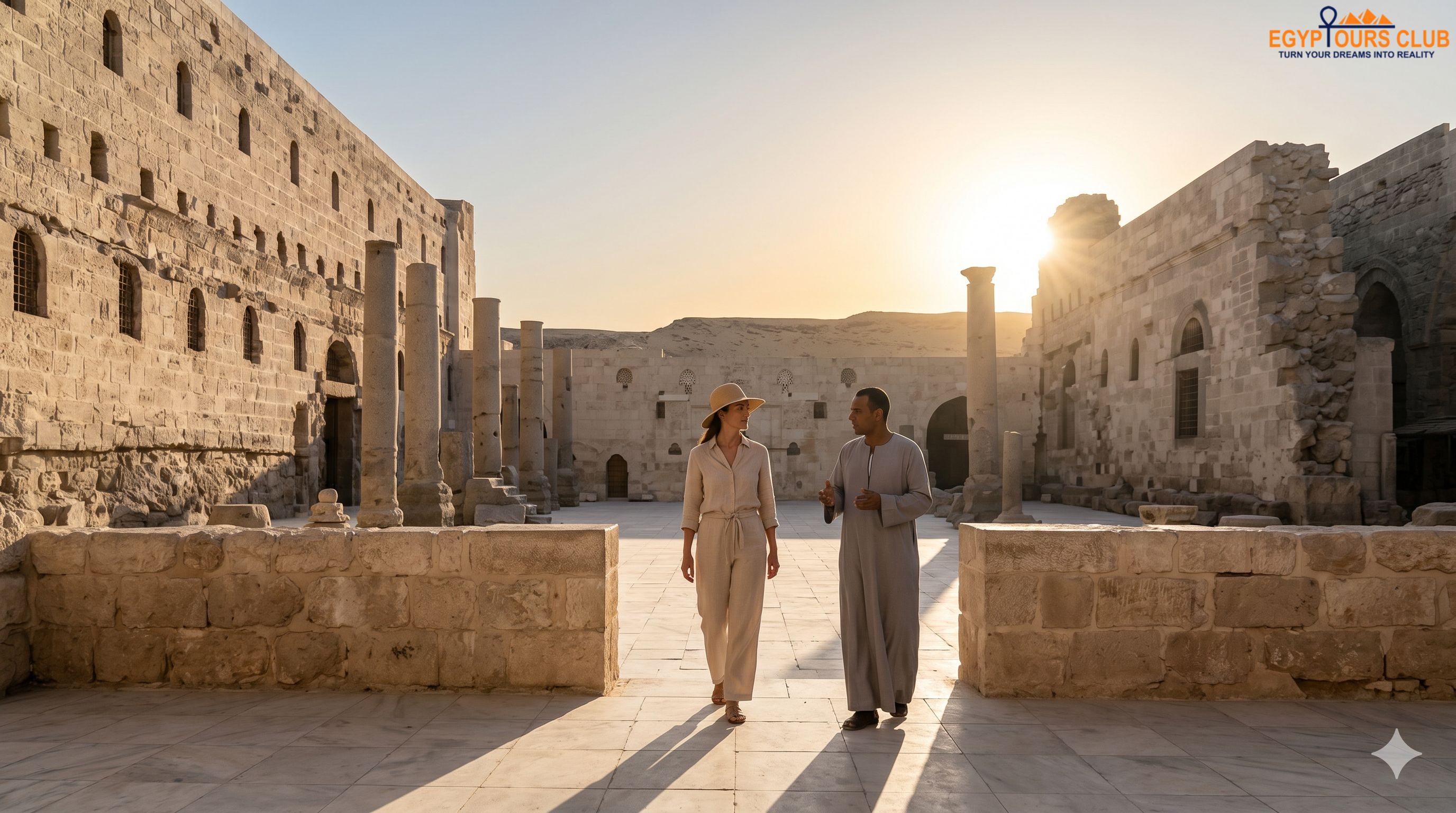
The White Monastery matters because it combines Saint Shenouda’s legacy, early Christian monastic history, monumental architecture and a strong Sohag heritage route.
The monastery is closely associated with Saint Shenouda, one of the most important names in the history of Egyptian monastic life.
The massive white limestone exterior gives the monastery its identity and makes it visually different from other Upper Egypt sites.
The surviving structure reflects a powerful stage in the development of Coptic church architecture in Egypt.
The monastery helps position Sohag as a serious cultural destination, especially for travelers who want less repeated Egypt routes.
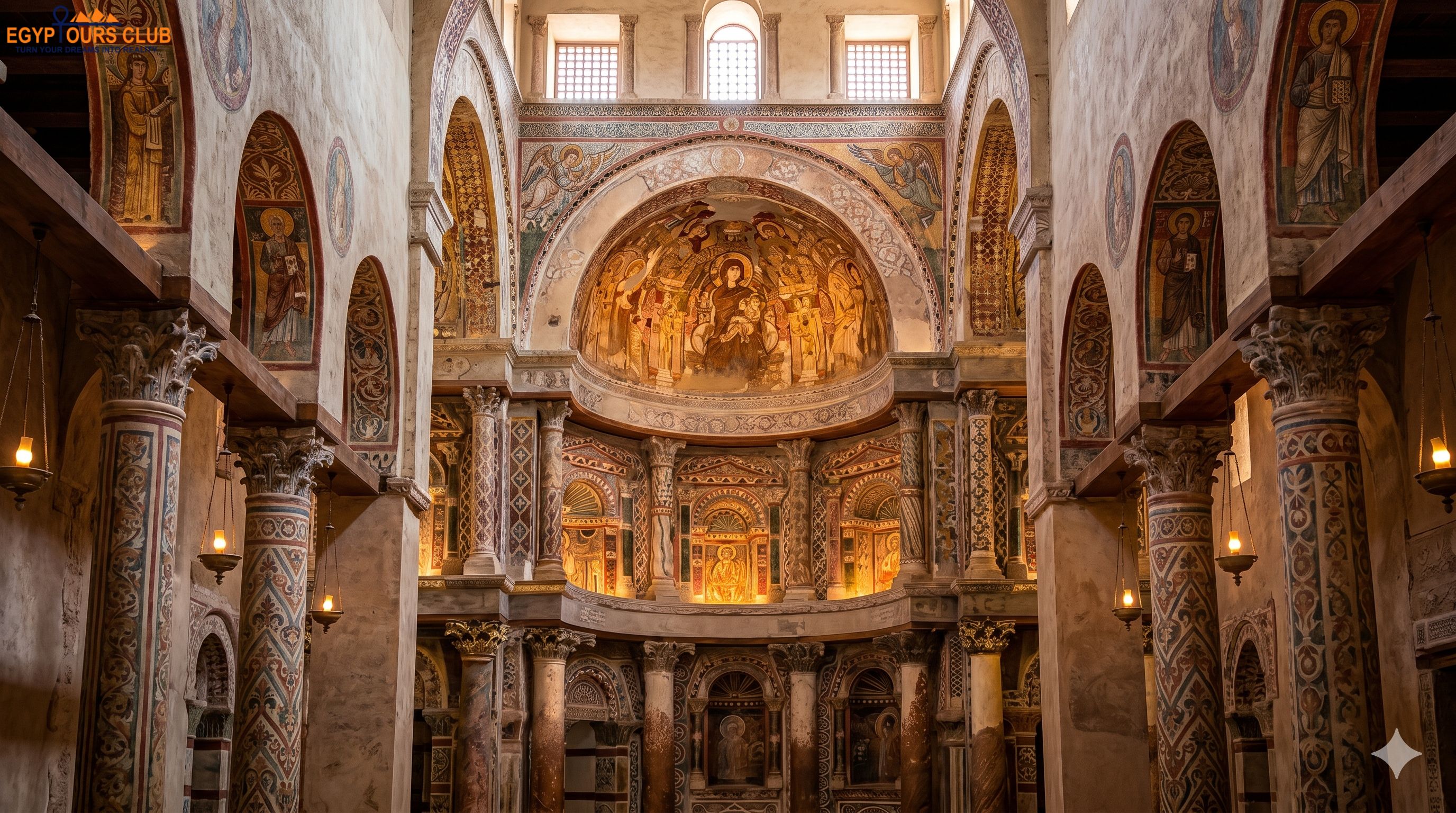
White Monastery and Red Monastery together create one of the strongest Coptic heritage routes in Upper Egypt.
The surrounding landscape gives the visit atmosphere and helps explain the monastic preference for quiet sacred spaces.
The architecture is one of the strongest reasons to visit. The monastery’s pale limestone mass, basilica-style church character and monumental outer walls create a visual identity unlike the Red Monastery or the pharaonic temples nearby.
| Feature | What You Notice | Why It Matters |
|---|---|---|
| White limestone walls | Large pale blocks and bright exterior surfaces | Defines the monastery’s name and visual identity. |
| Monumental massing | A powerful outer form that feels fortress-like but sacred | Makes the monastery dramatic for visitors and photographers. |
| Church layout | Interior and courtyard spaces tied to worship and monastic use | Connects the site with early Coptic architectural tradition. |
| Desert-edge location | Light, silence and open landscape around the structure | Strengthens the spiritual and travel atmosphere. |
White Monastery is powerful alone, but it becomes much stronger when paired with the Red Monastery. Together they show two different faces of early Christian Sohag: monumental limestone architecture and vivid painted Coptic art.
The best way to visit the White Monastery is as part of a guided Sohag heritage route, especially if you want context, smooth logistics and the option to include Red Monastery, Abydos or Dendera.
A focused stop for travelers who want St. Shenouda history, Coptic architecture and quiet heritage travel.
ViewThe best combined route for Coptic art, monastery architecture and early Christian history in Sohag.
ViewA deeper route linking Coptic heritage in Sohag with Abydos and Dendera’s sacred temple landscapes.
ViewFinal route order depends on your starting city, access, available time and whether you want a Coptic-only route or a broader Upper Egypt itinerary.
Use these pages to connect White Monastery with Sohag’s Coptic heritage, Abydos archaeology and wider Upper Egypt travel routes.
| Route | Best For | Suggested Flow | Useful Link |
|---|---|---|---|
| Focused White Monastery Visit | Travelers with limited time | Sohag → White Monastery → guided architecture and history visit | Sohag route |
| White and Red Monasteries Tour | Coptic heritage travelers | White Monastery → Red Monastery → Sohag heritage context | Red Monastery guide |
| Sohag and Abydos Cultural Route | History lovers | White Monastery → Red Monastery → Abydos Temple of Seti I | Abydos Temple guide |
| Upper Egypt Custom Journey | Slow travel and guided interpretation | Luxor → Dendera → Abydos → Sohag monasteries → Aswan | Tailor made Egypt tours |
It is a historic Coptic Orthodox monastery in Sohag, Upper Egypt, associated with Saint Shenouda and known for its white limestone architecture.
It is important because of its early Christian history, Saint Shenouda connection, Coptic monastic legacy and distinctive architecture.
The name comes from the white limestone used in its monumental walls.
Yes. The two monasteries are close enough to be planned together in one Sohag heritage visit.
Yes. It fits naturally into a White Monastery Sohag tour, a White and Red Monasteries route or a wider Upper Egypt itinerary.
Its monumental white limestone walls, church layout and desert-edge setting make it one of Egypt’s most distinctive early Christian architectural sites.
Yes, especially for travelers interested in Coptic heritage, Christian architecture, St. Shenouda and cultural routes beyond standard tourist circuits.
The strongest pairing is Red Monastery. Longer routes can include Abydos, Dendera and other Upper Egypt sites.
Visit the White Monastery with an expert guide and connect Saint Shenouda’s legacy, white limestone architecture, Red Monastery wall paintings, Abydos and Dendera into one meaningful Upper Egypt route.