Cairo Citadel context
Islamic architecture
Visitor route planning
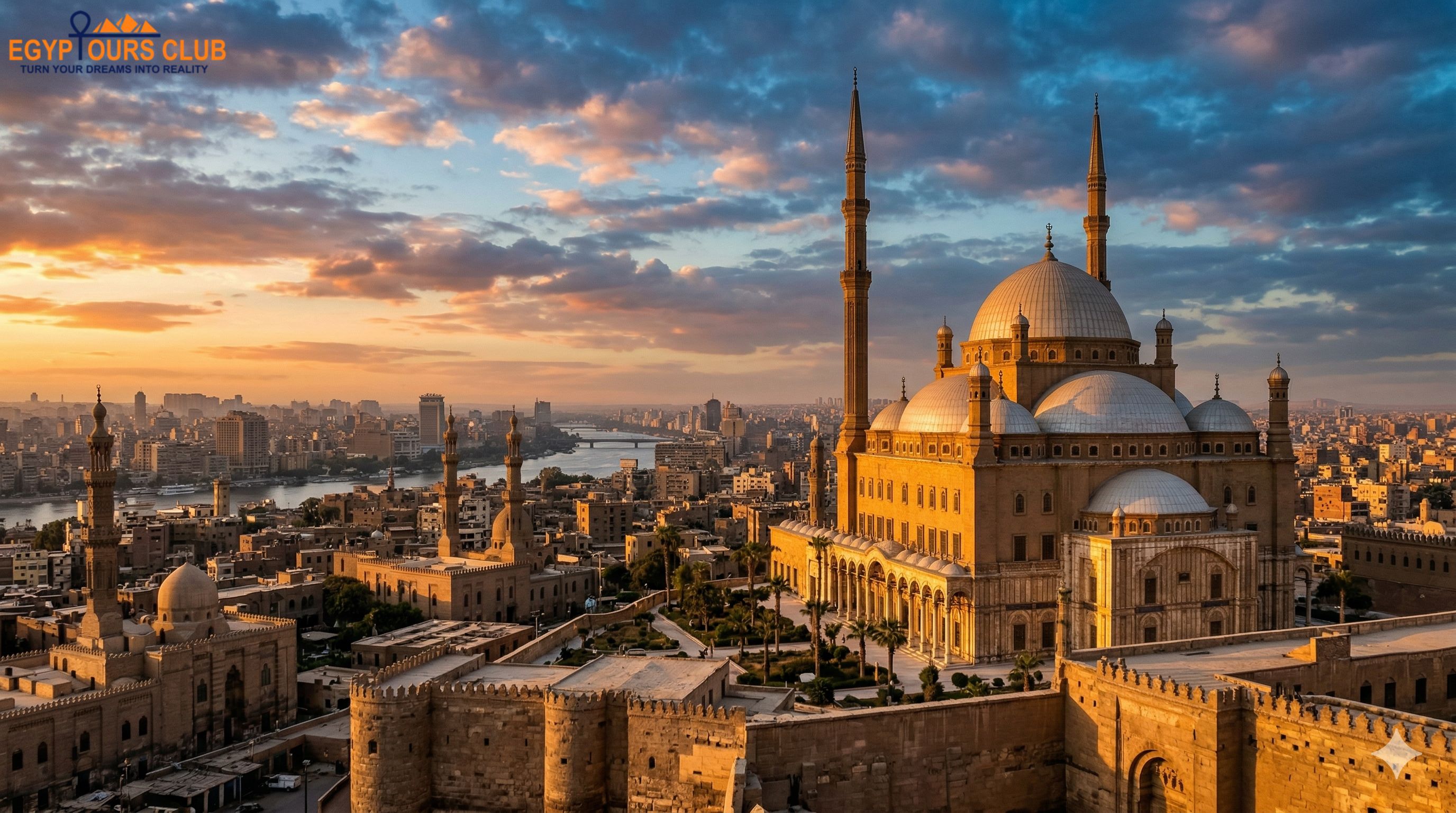
The Mosque of Muhammad Ali is often the first landmark travelers notice from high points across Cairo, but its real value appears when you read it as part of the Citadel’s story. The building stands inside a fortress that controlled Cairo from above, so the setting matters as much as the mosque itself. Before you enter, pause in the open area and notice the difference between the fortified Citadel walls and the elegant domes rising above them. That contrast is the first clue: this is both a religious monument and a statement of authority.
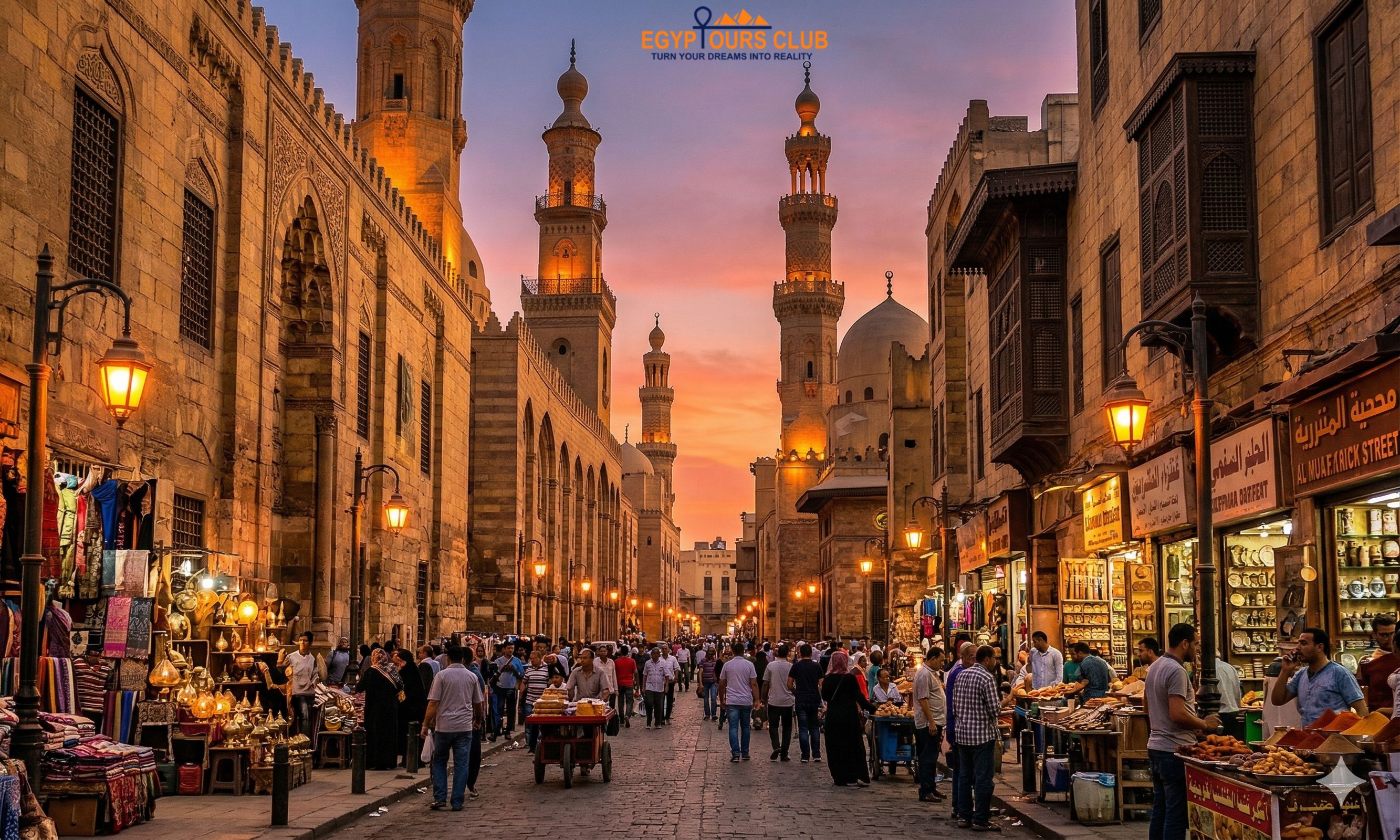
The mosque is widely known as the Alabaster Mosque because of its bright interior surfaces and polished stone details. Its Ottoman-inspired style makes it feel different from older Islamic Cairo monuments such as Sultan Hassan Mosque or the buildings around Al Muizz Street. Instead of the heavy Mamluk vertical drama you see near Sultan Hassan, here you find a central dome composition, tall minarets, rounded forms and an interior that draws your eye upward.
A good Muhammad Ali Mosque tour should not only point at the domes. It should explain why Muhammad Ali Pasha wanted a powerful landmark inside the Citadel, how the mosque became attached to his legacy and why the site still dominates Cairo’s skyline. Inside, look for the balance between grandeur and symmetry: hanging lamps, arches, calligraphy, the mihrab area and the sense of space created under the main dome.
The courtyard is equally important. It is one of the best places to understand the building’s scale and to take wide Mosque of Muhammad Ali photos without rushing. From the Citadel viewpoint, you can also read Cairo as a layered city: historic mosques, dense neighborhoods, modern traffic and, on clear days, distant western horizons. This is why the mosque works better as a guided Cairo Citadel visit than as a fast isolated stop.
For most travelers, the strongest route pairs the Mosque of Muhammad Ali with either Coptic Cairo and the Egyptian Museum for a balanced cultural day, or Sultan Hassan Mosque and Al Muizz Street for a deeper Islamic Cairo route. That choice depends on what you want most: city history, religious heritage, architecture, walking atmosphere or photography.