

Mummification Museum Luxor | Visitor Guide, Ancient Egyptian Embalming & Tickets | Egypt Tours Club
Mummification Museum Luxor . banner

Mummification Museum Luxor

Egypt Tours Club

Luxor museum planning by a licensed local Egypt travel team

Ancient Embalming · Afterlife Beliefs · Luxor East Bank

Mummification Museum Visitor Guide: Ancient Embalming and Eternal Life

Explore Luxor's specialized museum of ancient Egyptian embalming, from natron and surgical tools to canopic jars, protective amulets, human mummies and sacred animal mummies.

Quick Travel Answer

Why visit the Mummification Museum in Luxor?

The Mummification Museum explains how ancient Egyptians preserved human and animal bodies for eternal life. Its compact galleries connect embalming science with beliefs about the Ka, Ba and Akh, while displaying authentic tools, natron, resins, canopic jars, amulets and mummies.

Allow about one to one and a half hours. The museum is fully air-conditioned and works especially well in the late afternoon or evening after outdoor sightseeing.

Compare Private Luxor Tours
Essential Museum Highlights

What to see inside the Mummification Museum

The collection follows the practical and spiritual stages of mummification, helping visitors understand the body, tools, materials and sacred beliefs behind eternal preservation.

Ancient Egyptian funerary objects representing canopic jars and amuletsFunerary protection

Canopic Jars and Protective Amulets

Four Sons of HorusHeart scarab

Understand how preserved organs were protected and how amulets such as the Eye of Horus and heart scarab supported the deceased in divine judgment.

Museum gallery in Luxor representing the mummy of MasahartaHuman mummy

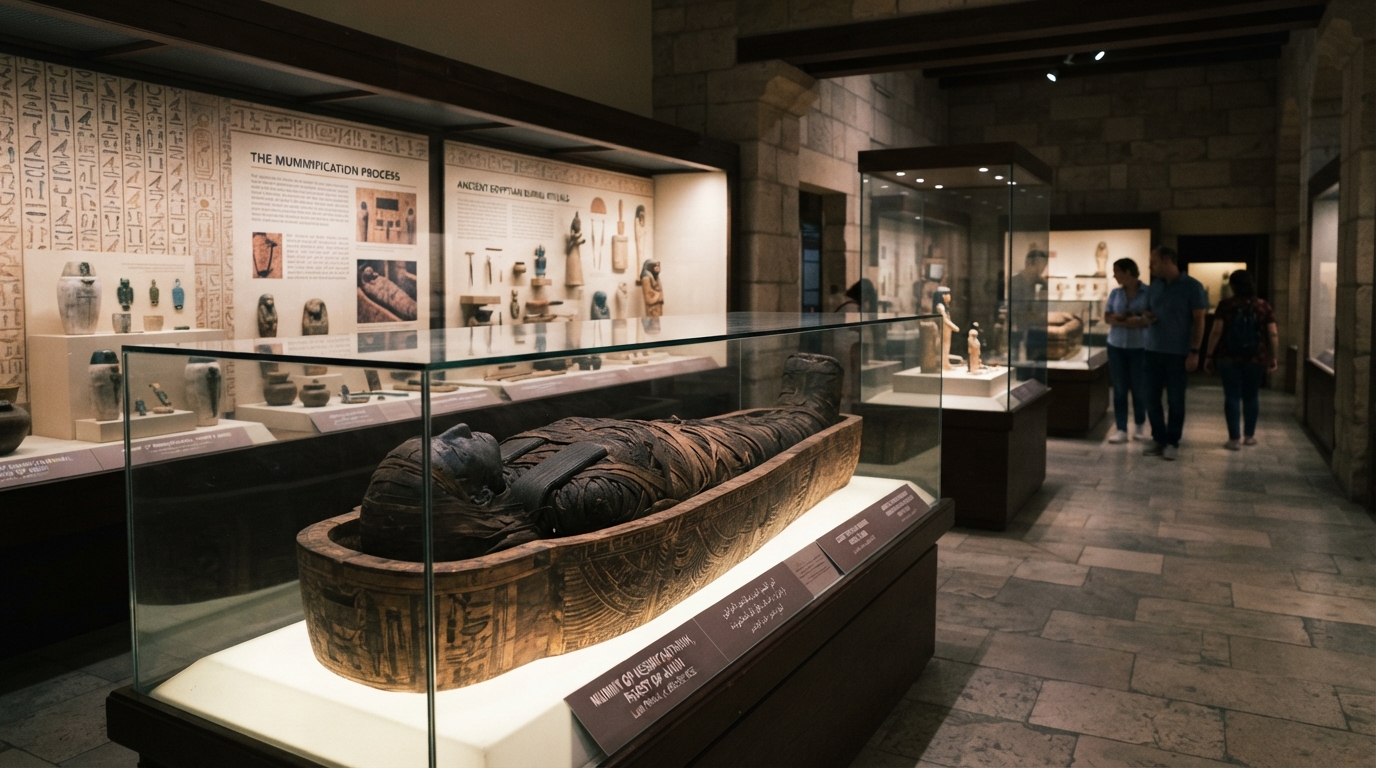
The Mummy of Masaharta

21st DynastyHigh Priest of Amun

The museum's central human exhibit preserves Masaharta, whose facial features, hair and linen wrapping reveal the skill of ancient embalmers.

Ancient Egyptian animal mummy display in LuxorSacred animals

Animal Mummies

Cats and crocodilesIbis and falcons

Discover how animals were preserved as beloved pets, food offerings or sacred manifestations connected with Bastet, Sobek, Thoth and Horus.

Ancient Egyptian linen and resin display representing mummy wrappingSeventy-day ritual

Linen Wrapping and Resin Treatment

Hundreds of linen stripsSacred oils

See how dried bodies were anointed, sealed with resin and wrapped in layers of linen while priests placed protective objects between the bandages.

Luxor Nile Corniche near the Mummification MuseumLuxor setting

Subterranean Tomb-Like Gallery

Opened in 1997East Bank

The compact darkened gallery evokes an ancient tomb chamber and creates a focused environment for understanding funerary beliefs and preservation.

Choose by Available Time

The best ways to include the museum in a Luxor itinerary

Its central East Bank location makes the museum easy to combine with nearby temples, museums and an evening walk along the Nile.

1-2 hours

Focused museum visit

  • Follow the embalming sequence in order.
  • Prioritize Masaharta and the tool collection.
  • Finish with the sacred animal mummies.
Open the Luxor guide
Half day

Luxor Museum and Mummification Museum

  • Compare funerary science with royal sculpture.
  • Walk or transfer along the Corniche.
  • Keep enough time for both collections.
Compare half-day routes
Evening

Museum, Luxor Temple and Nile Corniche

  • Visit the air-conditioned museum first.
  • Continue to illuminated Luxor Temple.
  • Finish with a relaxed Nile-side walk.
Open the Luxor Temple guide

Planning note: Opening hours, ticket arrangements and photography rules can change. Confirm current official information shortly before the visit.

Luxor museum interior representing ancient Egyptian funerary collections

Trusted Heritage References

Continue with authoritative Luxor information

Use official heritage and destination references to verify current visitor arrangements and understand the wider archaeological landscape of ancient Thebes.

External pages open in a new tab. Check official sources close to the visit because schedules and visitor rules may change.

Helpful Travel Answers

Mummification Museum questions before you go

Direct answers help visitors understand timing, exhibits and the museum's role in a wider Luxor itinerary.

How long does a visit to the Mummification Museum take?

A thorough visit usually takes between 45 minutes and 1.5 hours because the museum uses a compact, well-organized single-gallery layout.

Are there human mummies inside the museum?

Yes. The museum displays the mummy of Masaharta, a High Priest of Amun from the 21st Dynasty, together with several animal mummies.

What does the museum explain?

It explains the religious meaning and physical stages of ancient Egyptian mummification, including organ removal, natron dehydration, anointing, wrapping and amulet placement.

Why were animals mummified?

Animals were preserved as pets, food offerings for the afterlife or sacred votive offerings associated with deities such as Bastet, Sobek, Thoth and Horus.

Where is the Mummification Museum?

It is located on Luxor's East Bank Corniche, north of Luxor Temple and within easy reach of central hotels and the Nile promenade.

What should I combine with the museum?

The strongest nearby combinations are Luxor Museum, Luxor Temple, Karnak Temple and an evening walk along the Nile Corniche.

Private Luxor Planning

Add the Mummification Museum to the right Luxor route

Share your hotel or Nile cruise, available hours, group size and main interests. Egypt Tours Club can recommend a focused East Bank route or a balanced multi-day Luxor plan.