

The Karnak Temple in Luxor, Egypt is not just an ancient monument — it is the largest and most awe-inspiring religious complex ever built by humankind. Stretching over 200 acres on the East Bank of the Nile, this sacred city of stone was constructed, expanded, and revered for more than 2,000 years, shaped by the hands of at least 30 different pharaohs. From the thundering columns of the Great Hypostyle Hall to the serene reflection of the Sacred Lake, every corner of Karnak tells the story of Egypt's divine ambition.
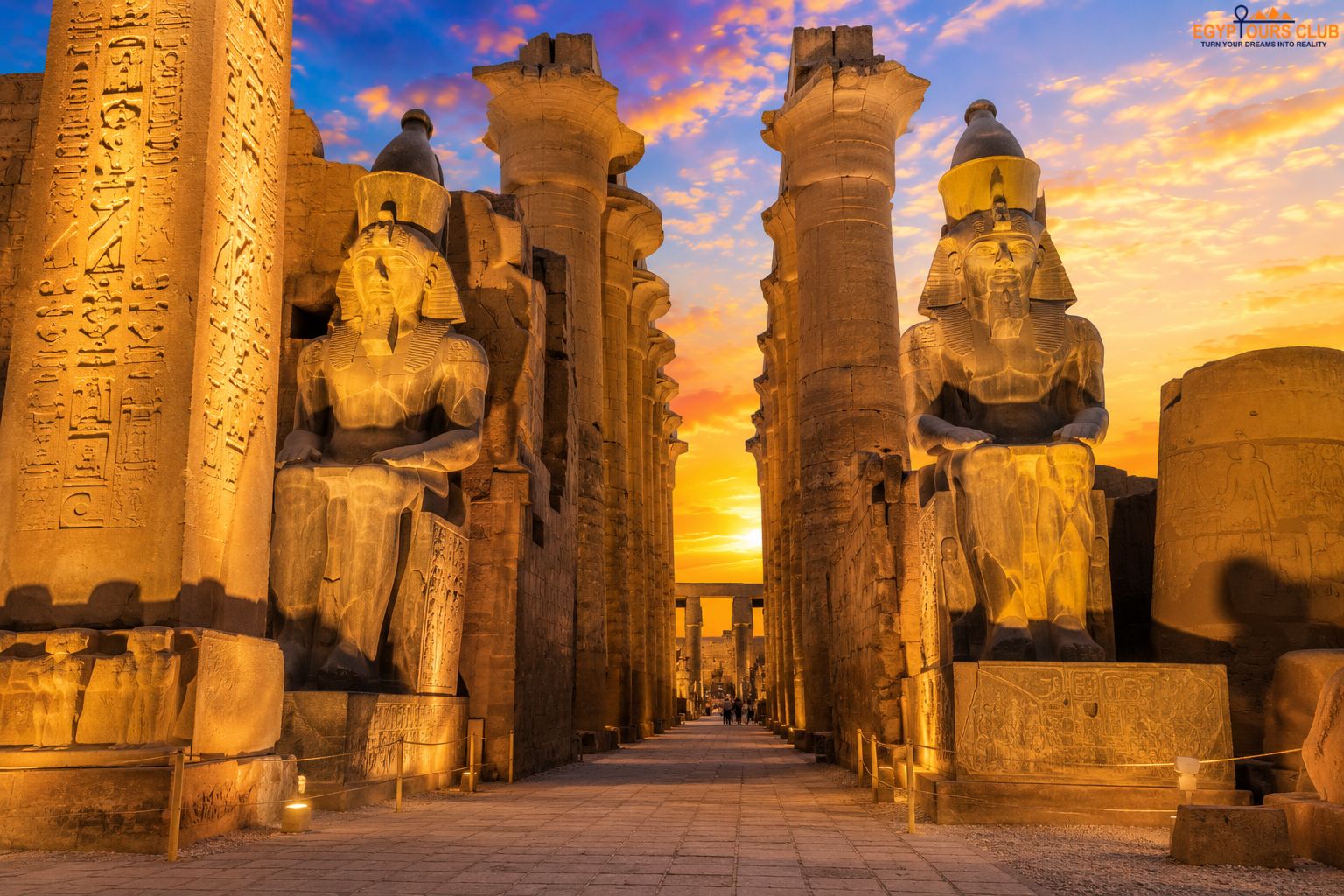
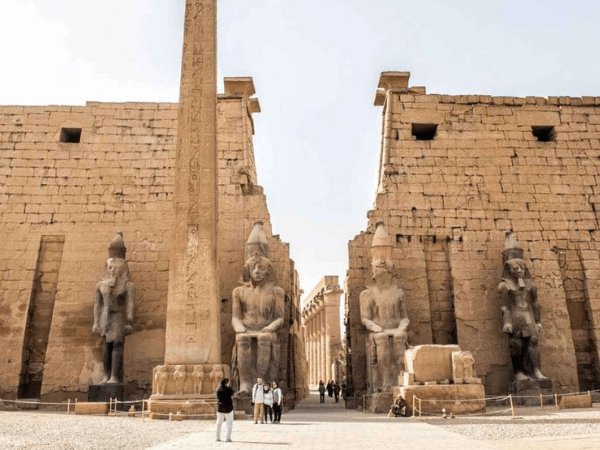
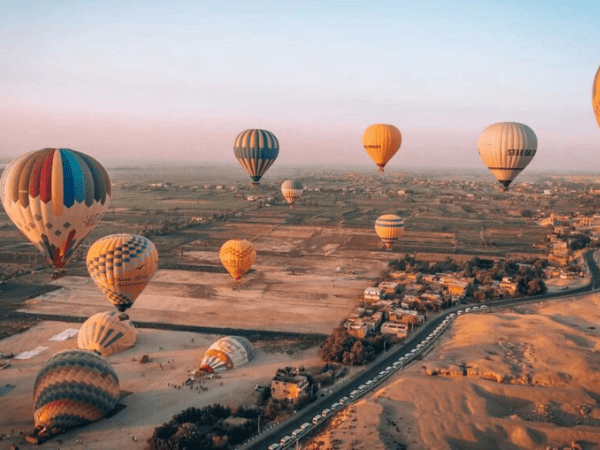
Karnak Temple Gallery
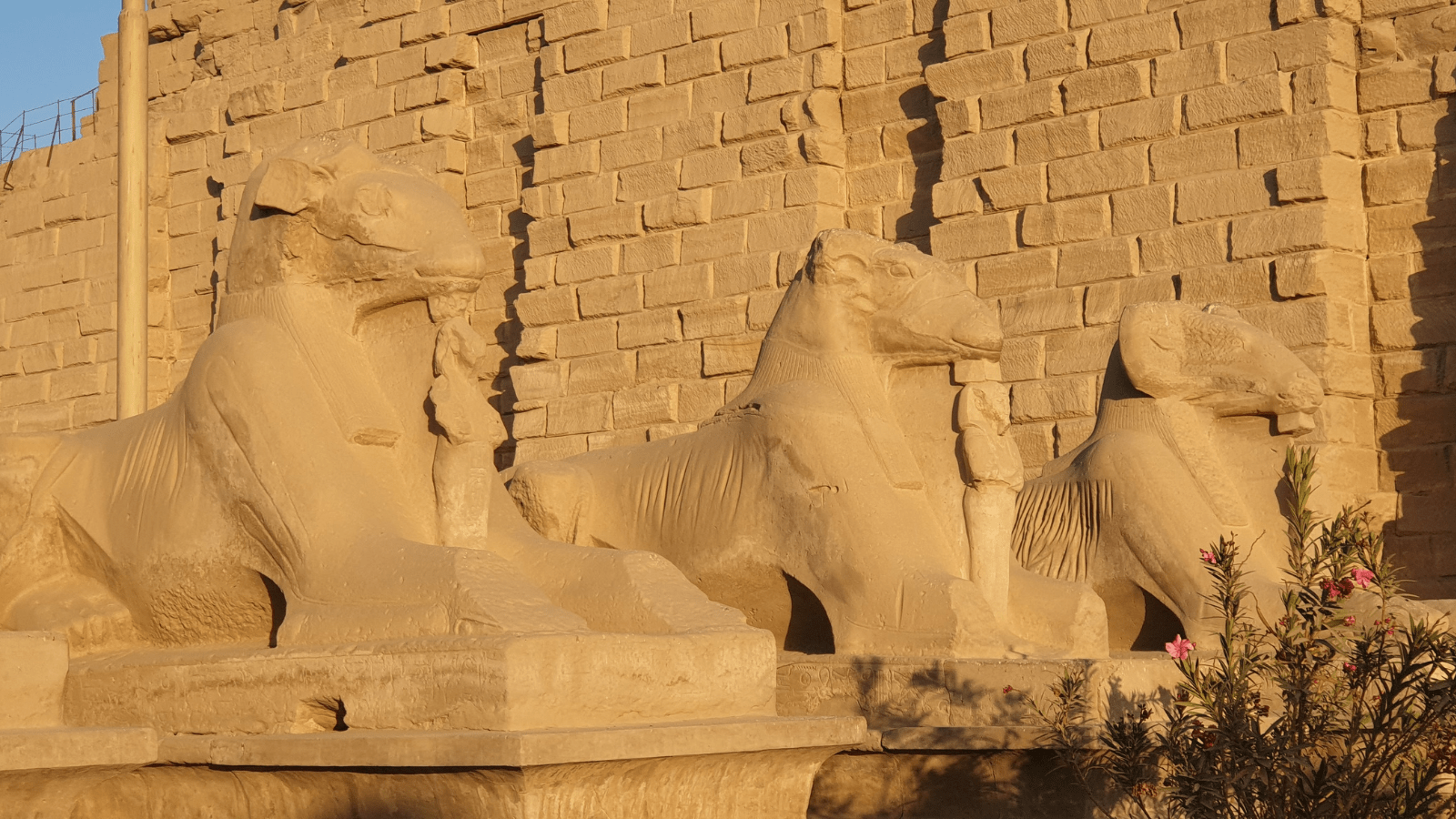
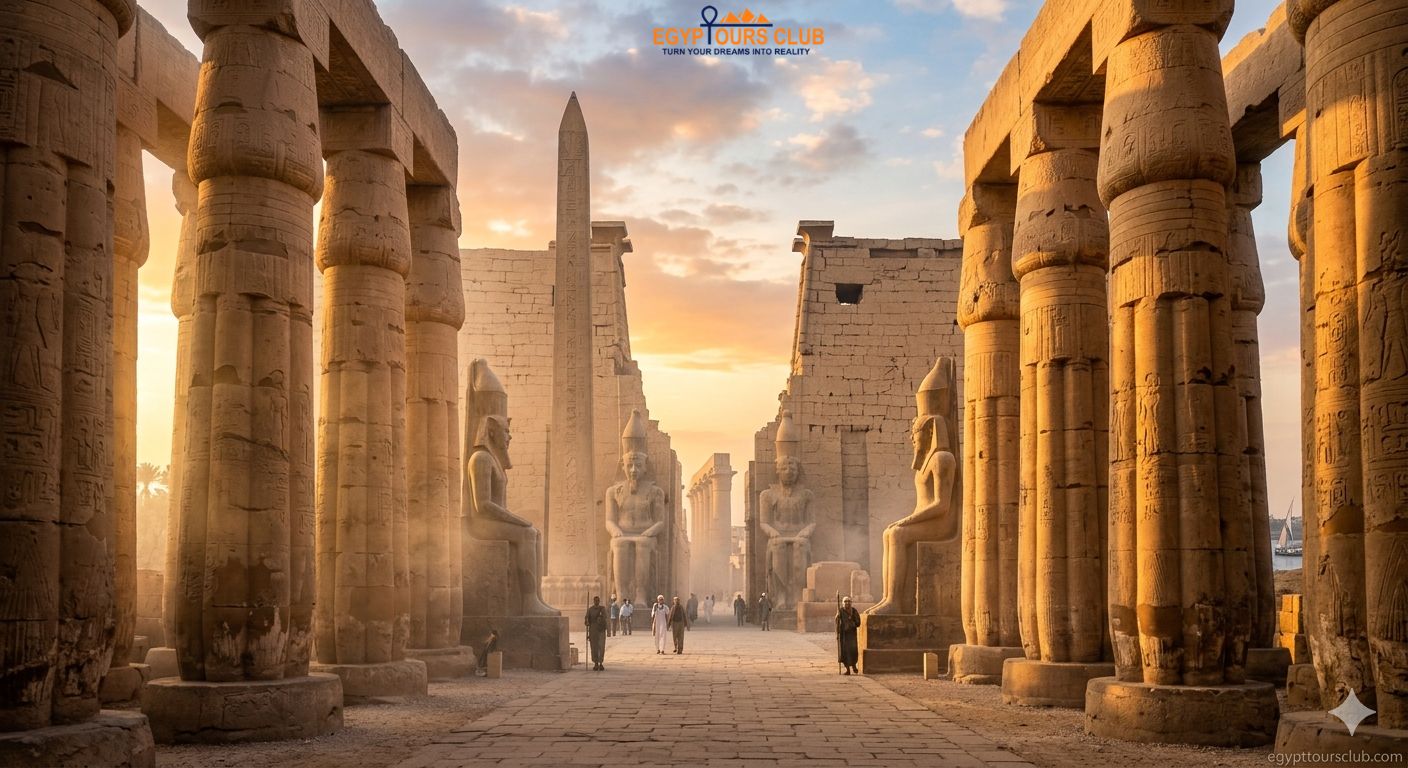
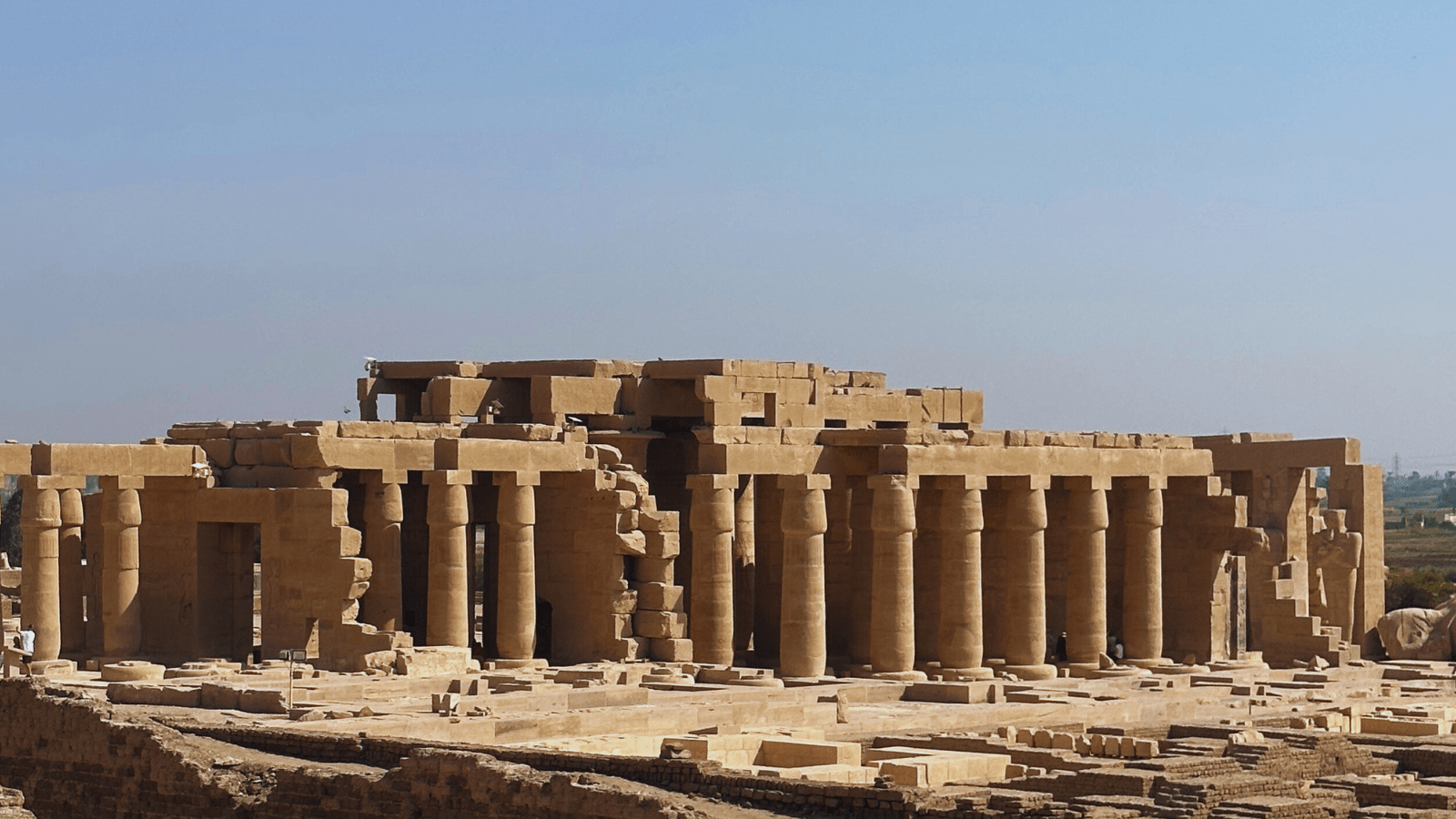
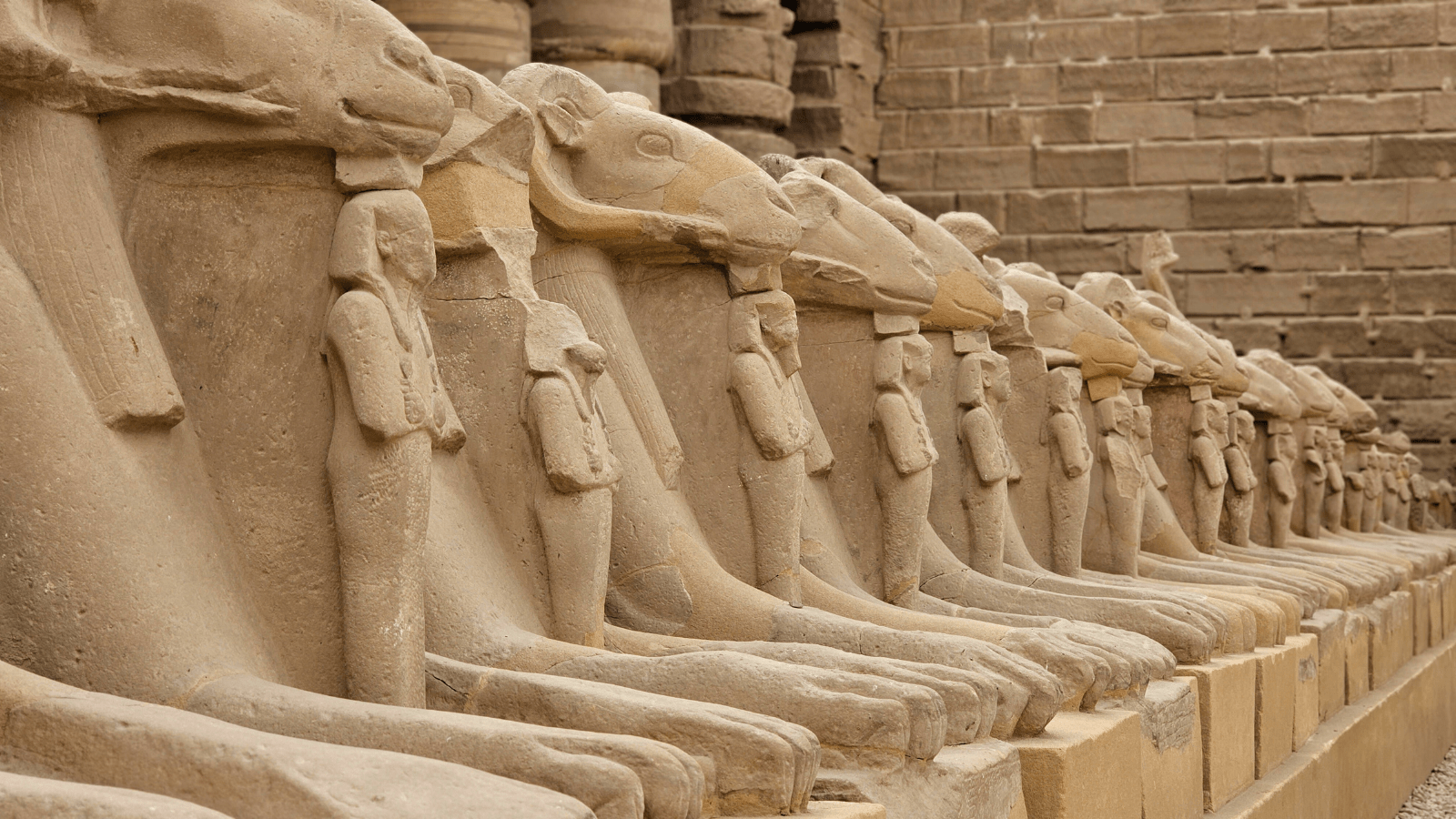
Real photos from the Karnak Temple complex, Luxor
Complete Guide to Karnak Temple
Everything you need to know before your visit
🏛️ What Is Karnak Temple?
The Temple of Karnak is a vast sacred complex located on the East Bank of the Nile in Luxor, Egypt. Unlike a single temple, Karnak is a city of temples — an ever-growing ensemble of sanctuaries, pylons, obelisks, chapels, and processional avenues that expanded dramatically over two millennia. The complex is primarily dedicated to the Triad of Thebes: Amun-Ra (king of the gods), his consort Mut, and their son Khonsu.
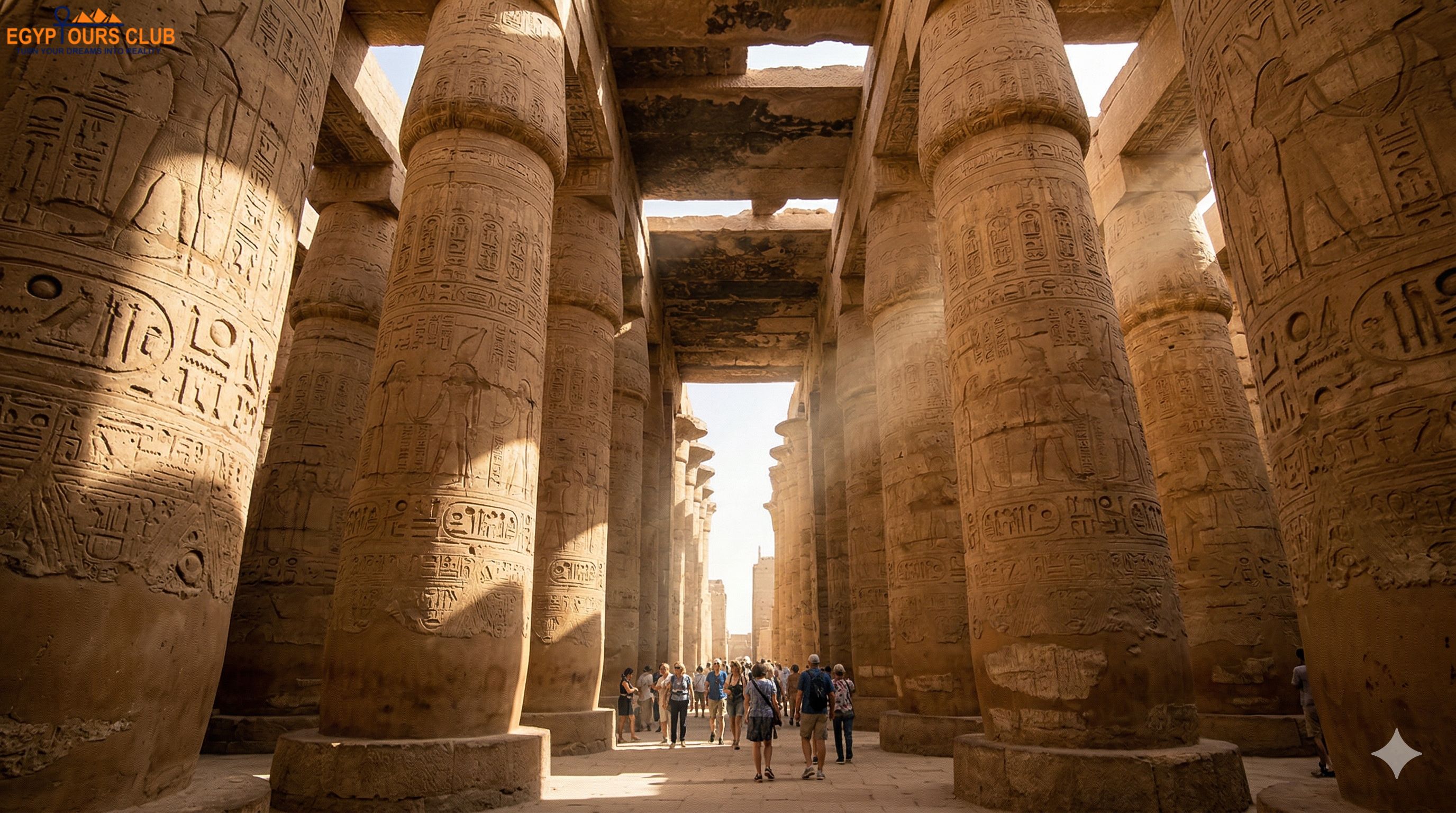
The sheer scale of Karnak defies comparison. The Great Hypostyle Hall alone covers 50,000 square feet and contains 134 massive stone columns, the tallest of which soar 24 meters (80 feet) high. Notre Dame Cathedral could fit inside that hall twice over.
📜 History of Karnak Temple — Who Built It?
The history of Karnak Temple spans from approximately 2055 BC to 100 AD, making it one of the longest-lived sacred sites in world history. Construction began in the Middle Kingdom under Pharaoh Senusret I, but the complex reached its zenith during the New Kingdom (1550–1070 BC), when Egypt was at the height of its power.
- Thutmose I (c. 1504 BC) — erected the first two massive pylons and two towering obelisks
- Hatshepsut (c. 1473 BC) — added her famous obelisks, still standing today at 29.5 meters
- Amenhotep III (c. 1390 BC) — built the stunning colonnaded court and the Sacred Lake
- Seti I & Ramses II (c. 1290–1213 BC) — completed the legendary Great Hypostyle Hall
- Ptolemaic & Roman era — later additions continued until the 1st century AD
Each pharaoh sought to outdo their predecessors, transforming Karnak into an ever-grander statement of divine power. This makes the complex a living encyclopedia of ancient Egyptian art, religion, and history.
🏗️ Karnak Temple Architecture & Must-See Highlights
The Karnak Temple architecture is a product of Egypt's greatest artistic periods. The site is divided into four main precincts, the largest being the Precinct of Amun-Ra. Here is what you must not miss:
- The Avenue of Sphinxes — 3-km processional road lined with ram-headed sphinxes connecting Karnak to Luxor Temple, recently restored and opened to visitors
- The Great Hypostyle Hall — 134 columns covered floor-to-ceiling in vivid painted hieroglyphs; one of the most photographed ancient interiors on Earth
- The Obelisks of Hatshepsut — two granite monoliths originally encased in electrum; the taller stands at 29.5 m
- The Sacred Barque Sanctuary — the innermost holy of holies where the golden statue of Amun resided
- The Sacred Lake — a 120×77 metre artificial lake used for ritual purification; magical at sunrise
- The Open-Air Museum — houses the stunning White Chapel of Senusret I and reconstructed dismantled shrines
- The Scarab Statue of Amenhotep III — legend says walking around it seven times brings good luck
🌊 Why Is Karnak Temple Important?
Karnak was not merely a place of worship — it was the administrative, economic, and political center of ancient Egypt for over 1,500 years. The temple complex owned vast agricultural estates, employed tens of thousands of priests and workers, and controlled massive wealth. Amun's priests at Karnak rivaled the pharaohs in power, accumulating so much influence that they eventually ruled parts of Egypt directly.
For travelers today, Karnak is important because it offers a complete, layered immersion into ancient Egyptian civilization — its religion, art, power, and daily life — all concentrated in one extraordinary place.
It also represents the southern anchor of the ancient city of Thebes (modern Luxor), connected by the Avenue of Sphinxes to Luxor Temple — making a combined visit to both sites an unforgettable full-day experience.
☀️ Best Time to Visit Karnak Temple
Choosing the right time maximizes your experience at the Karnak Temple complex in Luxor:
| Season | Months | Temp | Rating |
|---|---|---|---|
| Winter | November – February | 15–25°C | Best Time |
| Spring | March – May | 20–35°C | Good |
| Summer | June – August | 35–45°C | Very Hot |
| Autumn | September – October | 25–38°C | Warm |
Within any day, aim to arrive at opening (6:00 AM) or visit after 4:00 PM. Midday crowds and heat are at their worst between 10 AM and 2 PM. The Sound and Light Show at night is an entirely different, magical experience.
🎫 Karnak Temple Tickets & Entry Information
Here is what to know about Karnak Temple ticket prices and entry before your visit:
- Standard Adult Ticket: Approximately 220 EGP (~$7 USD) — main temple complex
- Open-Air Museum: Additional 100 EGP — highly recommended for history lovers
- Sound & Light Show: Separate ticket; three shows nightly in multiple languages
- Opening Hours: Daily 06:00 – 17:30 (last entry 17:00)
- Pro Tip: Booking a guided tour package includes all entrance fees and eliminates queuing
🚗 How to Get to Karnak Temple
The Karnak Temple Luxor location is on the East Bank of the Nile, approximately 3 km north of Luxor city center. Getting there is simple:
- Private Tour (Recommended) — hotel pickup in an air-conditioned vehicle; combines Karnak with Luxor Temple for maximum value
- Taxi / TukTuk — widely available from Luxor city center; always agree on fare in advance
- Horse Carriage — a scenic traditional option along the Corniche; great for photographers
- Nile Cruise Stop — most Egypt Nile cruises include a guided Karnak visit
- From Cairo — fly to Luxor (1hr) or combine with a 4-day Cairo & Luxor package
Top Karnak Temple Highlights
Essential Visitor Info
🔗 Best Internal Route After Reading This Karnak Guide
If you are planning a complete Luxor itinerary, start with this Karnak Temple guide, then continue to the Luxor Temple visitor guide because both monuments belong to the East Bank ritual route. For a wider ancient Thebes plan, connect your East Bank visit with the Valley of the Kings guide, the Hatshepsut Temple guide, and the main Luxor tours and travel guide.
For users with booking intent, the strongest commercial path is the Private Karnak Temple and Luxor Temple Tour, followed by the Karnak Sound and Light Show for evening atmosphere, or a complete Cairo and Luxor tour package by flight for international travelers.
Related Karnak Temple Tours
Hand-picked tours by our expert Egyptologists
Frequently Asked Questions
Karnak Temple is the world's largest ancient religious complex, located in Luxor on Egypt's East Bank. It is famous for its immense scale — over 200 acres — its 134-column Great Hypostyle Hall, towering obelisks, and 2,000 years of continuous construction by more than 30 pharaohs. It served as the center of ancient Egyptian religion, politics, and economics. Book a guided tour to truly understand its significance.
Standard Karnak Temple tickets cost approximately 220 EGP (~$7 USD) for adults and 110 EGP for students. The Open-Air Museum within the complex costs an additional 100 EGP. The Sound and Light Show has a separate ticket. Booking a private guided tour from Egypt Tours Club includes all entrance fees and eliminates the hassle of individual ticketing.
The best season is winter (November–March) when temperatures are pleasant at 15–25°C. Within any day, visit at opening time (6:00 AM) for the best light, fewest crowds, and comfortable temperatures. Alternatively, the late afternoon (after 4 PM) offers beautiful golden light for photography. Avoid visiting between 10 AM and 2 PM during summer months when heat reaches 45°C.
Allow at least 2–3 hours for a meaningful visit to Karnak Temple's main highlights. Our Luxor East Bank half-day tour combines Karnak with Luxor Temple in 4 hours total, which is the most efficient way to experience both sites with full expert commentary.
Absolutely — and we highly recommend it. Our Luxor East Bank Half-Day Tour covers both Karnak Temple and Luxor Temple in a single morning. You can even add the Karnak Sound and Light Show in the evening for a full day immersed in ancient Luxor's grandeur.