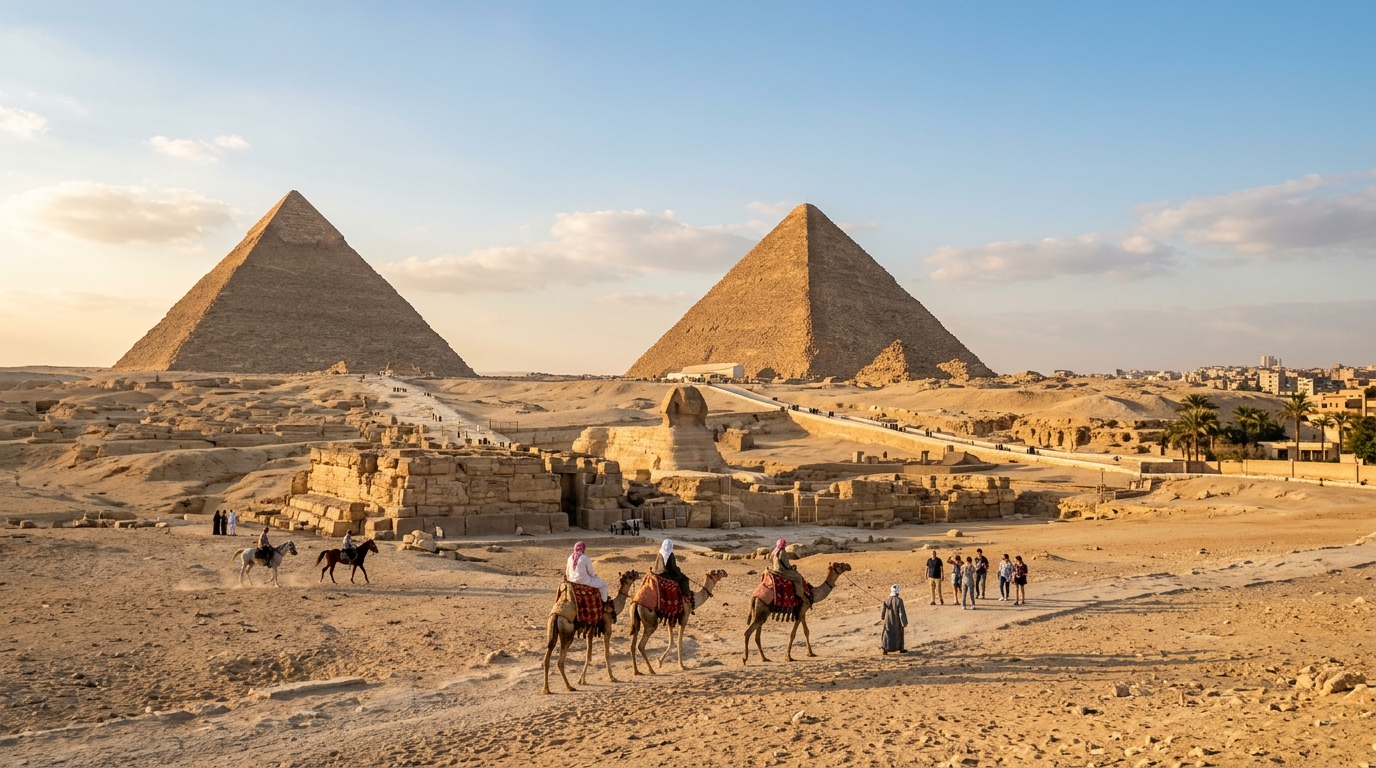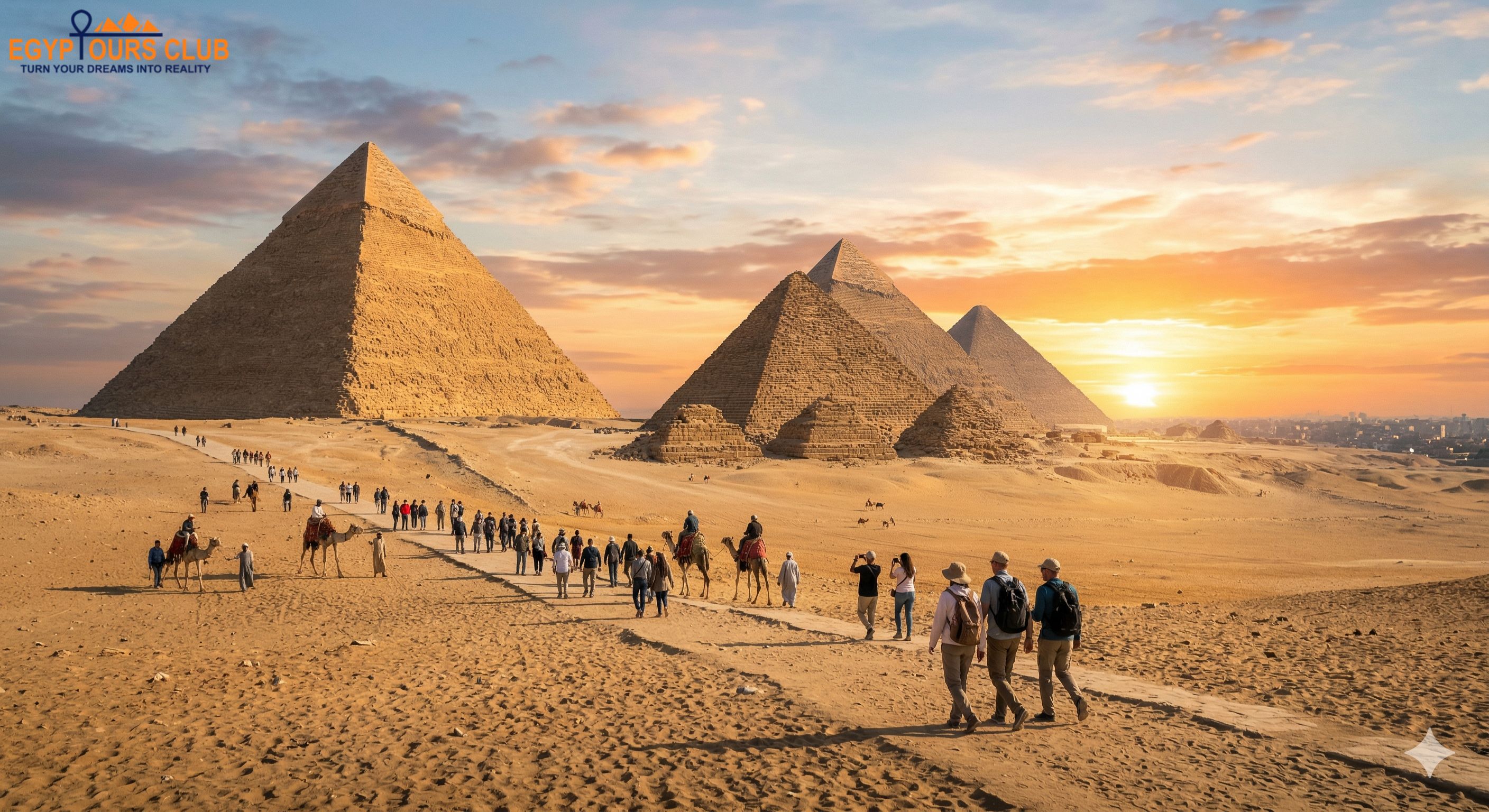


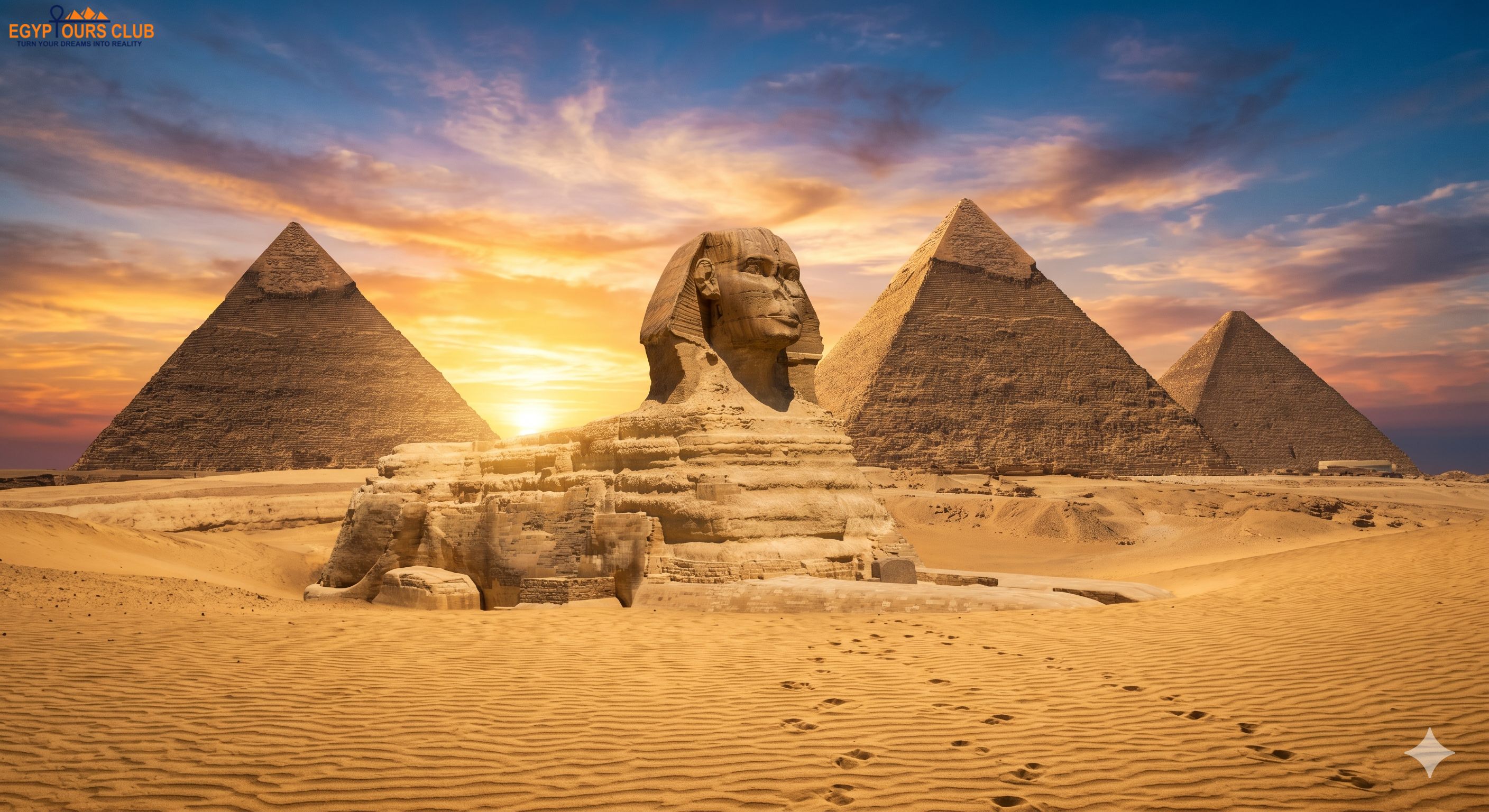
Book a Private Giza Pyramids and Sphinx Tour: The Story Behind the Sphinx, Myth vs Reality
✨ Overview
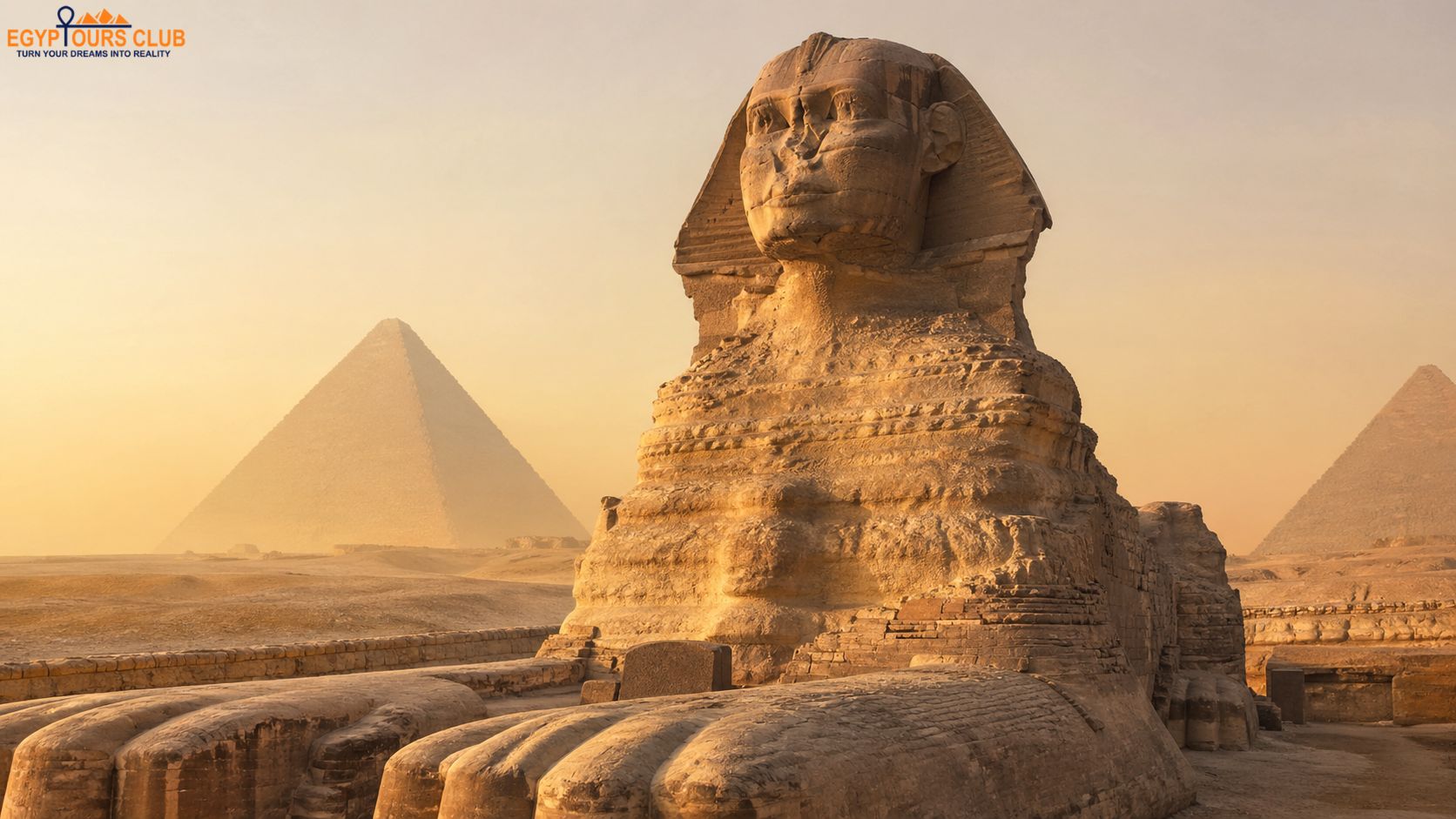
The Story Behind the Sphinx is one of the strongest cultural travel topics in Egypt because it combines legend, mystery, archaeology, and direct visitor appeal. The Great Sphinx of Giza story has fascinated travelers for centuries, but what turns curiosity into booking intent is simple: the Sphinx is not just a symbol you read about. It is one of the most powerful places to experience in person on the Giza Plateau, especially when visited on a well-planned Great Sphinx of Giza tour, a private Sphinx tour Egypt, or a premium Giza pyramids and Sphinx tour. Egypt’s official monuments platform describes the Sphinx as the oldest known monumental sculpture in Egypt, carved directly from the natural bedrock, while Britannica notes that most scholars associate it with Khafre of the Fourth Dynasty.
That makes Sphinx myth vs reality the perfect angle for a tourism-focused page. Visitors are drawn in by questions like who built the Great Sphinx of Giza, what is the story behind the Sphinx, and truth about the Sphinx, but what they often want next is a better experience on the ground: where to stand, what to notice, why a guide matters, and how to turn a short stop into an unforgettable VIP Giza Plateau tour or luxury Giza and Sphinx tour. Egypt’s official Giza Plateau page presents the Sphinx as one of the core monuments of the plateau and part of one of the world’s most iconic archaeological destinations.
🏛️ What Is the Story Behind the Sphinx?
A very common search is: what is the story behind the Sphinx?
The short answer is that the Great Sphinx of Giza story is a mix of historical evidence, royal symbolism, restoration history, and later myth-making. The monument is generally understood to date to the Fourth Dynasty and is most widely linked to King Khafre, although alternative theories continue to circulate. Britannica says most scholars believe the Sphinx was built during the Fourth Dynasty by Khafre, while Egypt’s official site places it in the same general Old Kingdom context and highlights its importance as a colossal bedrock-carved monument.
This is where myth vs reality Sphinx Egypt becomes valuable. The “myth” side includes exaggerated stories about lost chambers, impossible origins, and mystical secrets. The “reality” side is much more useful for serious travelers: the Sphinx was carved from the Giza bedrock, stands within the Khafre complex zone, and later became deeply connected to royal and solar symbolism. That is exactly why a quality Sphinx Egypt visitor guide or private Egypt history tour adds value. Without context, most visitors only see a famous statue. With context, they understand its setting, meaning, and historical debate.

👑 Who Built the Great Sphinx of Giza? Myth vs Reality
One of the highest-intent informational questions is who built the Great Sphinx of Giza. This matters for SEO, but it also matters for conversion because travelers are far more likely to book a guided visit when they realize the monument’s story is not just “obvious” or fully settled.
The strongest scholarly view is that the Great Sphinx of Giza Khafre connection is the most likely. Britannica states that most scholars believe Khafre built the Sphinx, though alternative theories have proposed Khufu or Djedefre. Egypt’s official site also links the monument to the Old Kingdom and highlights its position in the Giza necropolis. That means the best phrase for a balanced, authority-driven article is not “mystery solved forever,” but rather Great Sphinx of Giza explained through the best-supported interpretation.
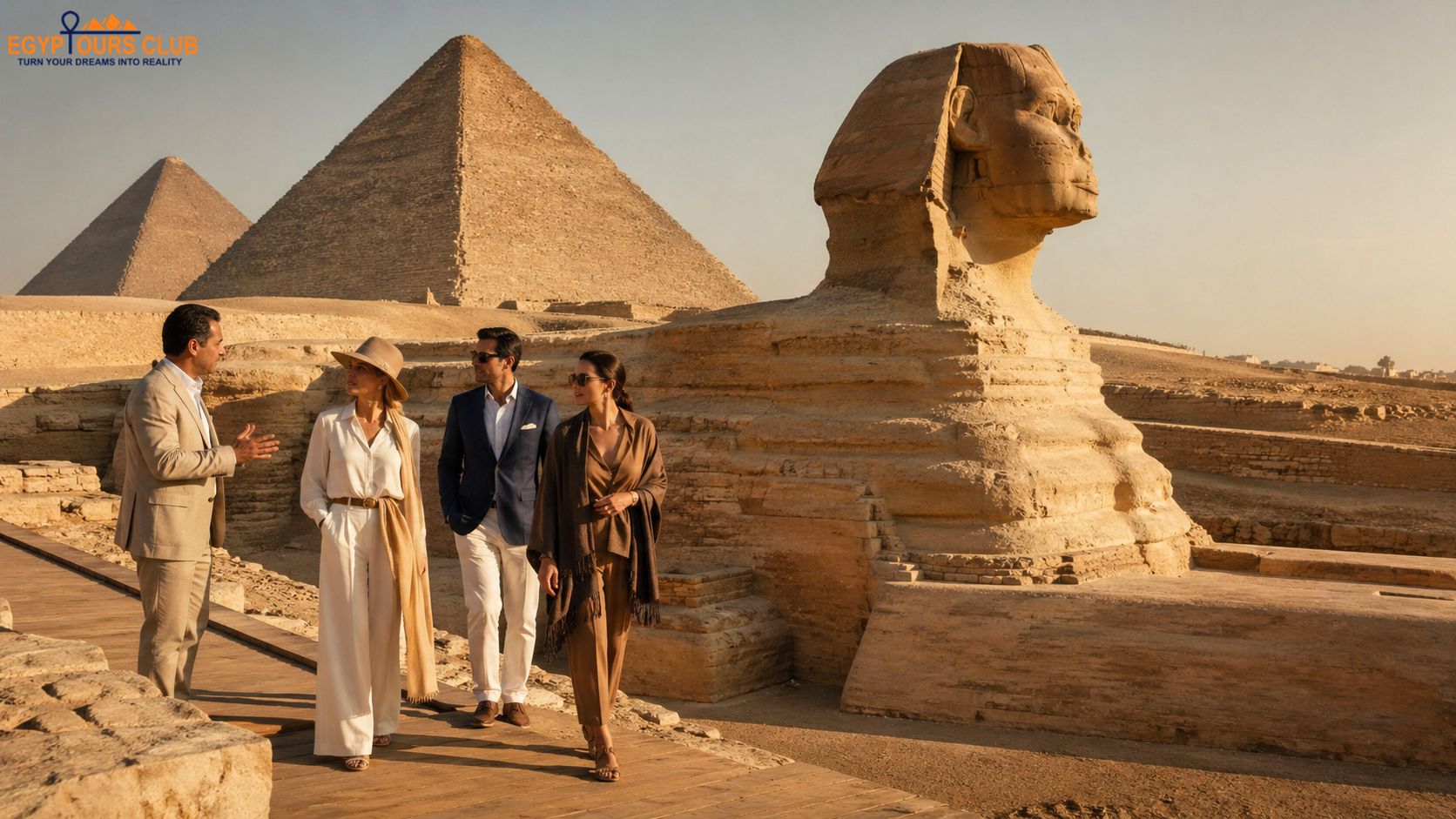
For a tourism company, this is where booking language should begin to dominate. A visitor asking about Sphinx and Khafre pyramid or Giza Plateau Sphinx history is already close to wanting a meaningful on-site explanation. That is why book Giza Sphinx tour, private Sphinx tour Egypt, and Giza pyramids and Sphinx tour belong naturally in this section. The more debated and layered the monument feels, the more valuable an expert-guided visit becomes. High-end market examples for Giza explicitly sell private and VIP access built around the Sphinx and pyramids because interpretation and exclusivity are major parts of the experience.
☀️ Why Is the Sphinx Important?
A major keyword here is why is the Sphinx important.
The Great Sphinx of Giza history matters because the monument sits at the intersection of kingship, sacred landscape, and enduring identity. Egypt’s official Arabic monuments page notes that by the Eighteenth Dynasty the Sphinx had acquired a solar meaning under the name Hor-em-akhet, and it also highlights the Dream Stele Sphinx of Thutmose IV placed between its paws. Britannica likewise treats the Sphinx as a monument of enormous historical and symbolic importance.
This is why phrases like what does the Sphinx represent, Sphinx of Giza symbolism, Great Sphinx solar deity, and Sphinx in ancient Egyptian religion are not just academic. They directly improve conversion on a tourism page. A traveler who understands that the Sphinx is more than a giant statue — that it is a royal, solar, and sacred monument — is much more likely to want a richer private Egypt history tour instead of a rushed photo stop. That is the real commercial power of cultural interpretation.
📊 Why the Sphinx Converts So Well for Travel
| Visitor motivation | Why it helps booking |
|---|---|
| Wants the real story | Makes guided explanation more valuable |
| Interested in myth vs reality | Encourages longer, richer private tours |
| Wants iconic photos | Supports premium sunrise/sunset experiences |
| Wants context, not only sightseeing | Increases appeal of private and VIP tours |
The table above reflects how real visitor intent typically moves from curiosity to booking when the monument has both iconic visuals and a strong interpretive story. This is an inference based on the Sphinx’s official significance and the way premium Giza experiences are marketed.
🌞 Hor-em-akhet, the Dream Stele, and the Truth Behind the Sphinx
A strong authority section for this page is the link between the Sphinx and the Dream Stele Sphinx. Egypt’s official monument page explains that Thutmose IV erected a monumental stele between the Sphinx’s front paws, and the Dream Stele is widely understood as a text of royal legitimation linked to the king’s restoration of the monument. The Dream Stele page also identifies it as a granite monument erected between the paws of the Sphinx in the first year of Thutmose IV’s reign.
This is one of the best “myth vs reality” parts of the article because it lets you replace vague mystery with a compelling real story. The truth about the Sphinx is more interesting than conspiracy: the monument was already ancient in the New Kingdom, it had been buried by sand, and a later king tied himself to it through restoration and divine symbolism. For travelers, this adds a completely new layer to a Great Sphinx of Giza tour. They are not just looking at a statue; they are standing in front of a monument that ancient Egyptians themselves treated as ancient, sacred, and worthy of recovery.
📸 Great Sphinx of Giza Photos, Best Views, and What Travelers Actually Want
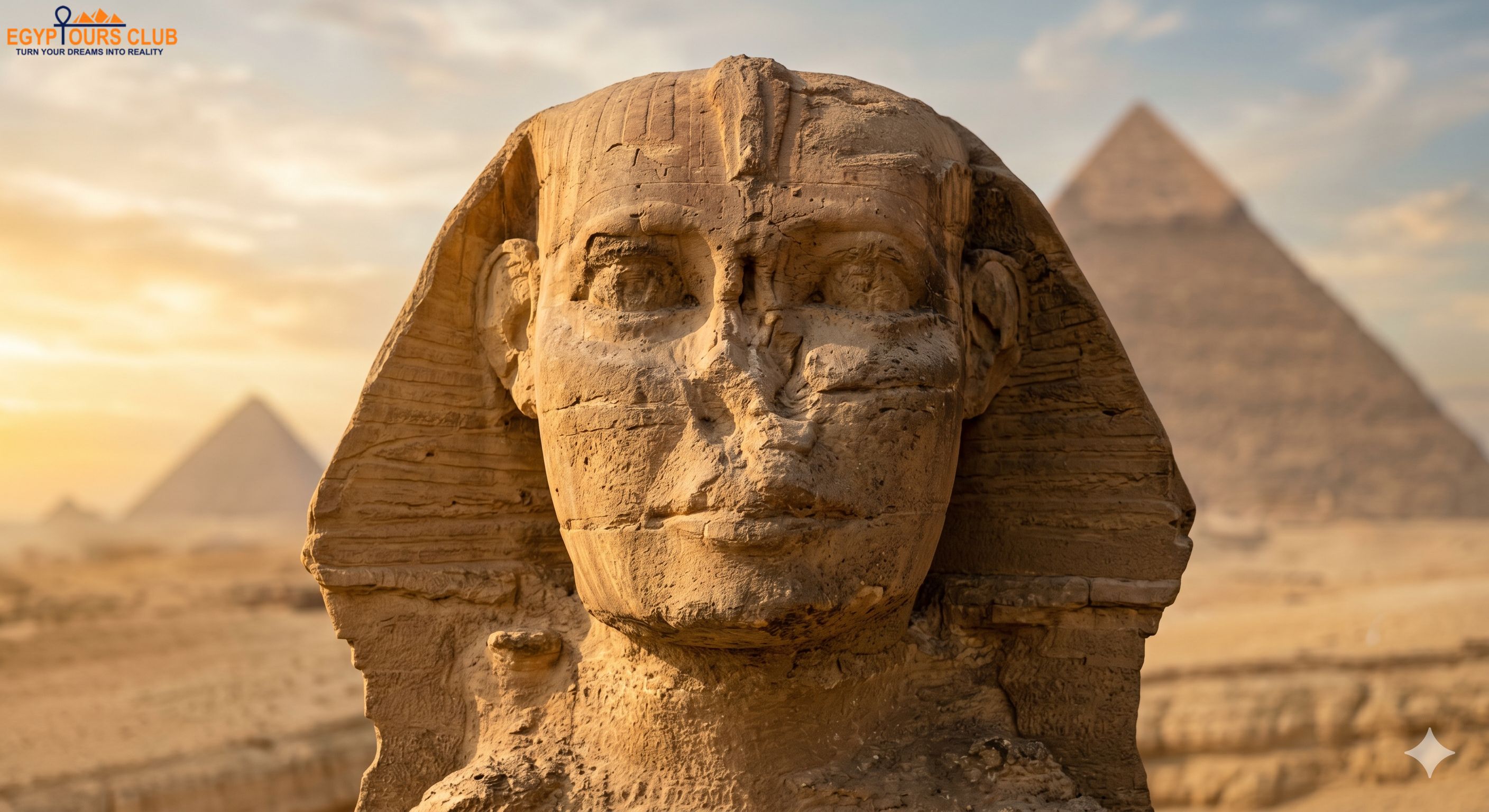
The visual pull of the Sphinx is huge, which is why keyword clusters like Great Sphinx of Giza photos, Sphinx of Giza close up, Sphinx face Egypt, Great Sphinx of Giza body, Sphinx and pyramids view, and Great Sphinx of Giza travel photos are highly relevant.
But on a conversion-focused page, visuals should not be treated as passive. They should support booking. The right angle is this: travelers do not only want Great Sphinx of Giza photos; they want the best moment, the best position, the fewest crowds, and the best explanation. That naturally pushes them toward VIP Giza Plateau tour, luxury Giza and Sphinx tour, and private Sphinx tour Egypt. Premium providers in the Giza market explicitly emphasize private timing, reduced crowding, special access, and Egyptologist guidance because those are exactly the details that upgrade a standard stop into a premium experience.

🚗 Great Sphinx of Giza Tour: Why Booking Matters More Than Ever
This is where the article should lean hardest into commercial intent.
A visitor searching visit the Great Sphinx of Giza, Sphinx Egypt visitor guide, things to do at the Sphinx Egypt, or Great Sphinx of Giza tour is already far beyond basic curiosity. This is planning-stage traffic. The best way to convert it is to explain that the Sphinx is not an isolated attraction; it works best as part of a Giza pyramids and Sphinx tour or a well-curated private Egypt history tour.
Why? Because the Sphinx gains meaning from context:
- its relationship to Khafre
- its placement on the Giza Plateau
- its solar and royal symbolism
- the Dream Stele
- the visual relationship between the Sphinx and the pyramids
Without that, many travelers leave with photos only. With a curated visit, they leave with a real story. That is why book Giza Sphinx tour, private Sphinx tour Egypt, and luxury Giza and Sphinx tour should be some of the most prominent commercial phrases in the article. The value is not just transport or tickets. It is narrative, timing, access, and interpretation.
✅ Best Booking Angles for Conversion
- Great Sphinx of Giza tour for first-time visitors
- Giza pyramids and Sphinx tour for travelers wanting the classic essential route
- private Sphinx tour Egypt for travelers who want depth and comfort
- VIP Giza Plateau tour for premium travelers who value privacy and atmosphere
- luxury Giza and Sphinx tour for clients seeking elevated service and curated timing
These booking angles align with how premium and private experiences are positioned around Giza today.
🧳 Sphinx Egypt Visitor Guide: How to Turn Curiosity into a Better Experience
A practical Sphinx Egypt visitor guide should do more than say “go see it.” It should help readers understand why the site deserves a thoughtful visit.
The best conversion path is:
- teach the reader the story of the Great Sphinx
- explain the myth vs reality Sphinx Egypt angle
- show why the monument matters in religion and kingship
- connect that understanding to a bookable experience
That is exactly why private Egypt history tour, VIP Giza Plateau tour, and book Giza Sphinx tour belong inside a serious article rather than only on a sales page. They are the natural next step after the user understands the site’s significance. Egypt’s official monuments pages place the Sphinx within the larger Giza Plateau destination, which reinforces the value of visiting it as part of a broader curated Giza experience.
🧠 Great Sphinx of Giza Facts That Help Sell the Experience
Here are some of the most useful Great Sphinx of Giza facts for both readers and conversion-focused content:
- The Sphinx is carved directly from the natural bedrock of the Giza Plateau.
- Most scholars associate it with Khafre and the Fourth Dynasty.
- It later acquired solar meaning under the name Hor-em-akhet.
- The Dream Stele Sphinx of Thutmose IV stands between its paws.
- It is one of the core monuments of the Giza Plateau, one of the world’s most visited archaeological zones.
Quick Facts Table
| Fact | Why it matters for visitors |
|---|---|
| Bedrock carving | Shows the monument’s engineering uniqueness |
| Khafre connection | Gives visitors a stronger historical anchor |
| Dream Stele | Adds story and symbolism to the visit |
| Giza Plateau setting | Makes combined tours more valuable |
| Solar-religious meaning | Turns sightseeing into cultural understanding |
❓ FAQs About the Story Behind the Sphinx
Who built the Great Sphinx of Giza?
Most scholars believe the Sphinx was built during the Fourth Dynasty by Khafre, though other theories exist.
What is the story behind the Sphinx?
The real story combines Old Kingdom royal sculpture, later burial by sand, New Kingdom restoration by Thutmose IV, and centuries of myth-making afterward.
Why is the Sphinx important?
It is important because it is one of Egypt’s oldest monumental sculptures, a royal and solar symbol, and one of the defining monuments of the Giza Plateau.
Is the Sphinx worth visiting on a private tour?
Yes. The monument’s story, symbolism, and visual placement make it far more rewarding when visited with context, timing, and space to appreciate it properly. This is an inference from the monument’s complexity and the way premium private experiences around Giza are structured.
What is the best way to visit the Sphinx?
The most valuable option is usually a Giza pyramids and Sphinx tour or a private Sphinx tour Egypt that combines interpretation, smoother timing, and a fuller understanding of the site. This is an inference based on the monument’s placement within the broader Giza Plateau experience and how private tour offerings are structured.
🏁 Final Thoughts
The Story Behind the Sphinx is exactly the kind of topic that can rank, convert, and build authority at the same time. It works because it starts with the user’s deepest curiosity — Sphinx myth vs reality, truth about the Sphinx, who built the Great Sphinx of Giza — and then moves naturally toward travel intent, where the most valuable experiences are Great Sphinx of Giza tour, private Sphinx tour Egypt, and luxury Giza and Sphinx tour.
For a tourism company, that is the winning structure: educate first, inspire next, and make booking feel like the logical final step. When the reader understands that the Sphinx is not only famous, but layered with history, symbolism, restoration, and mystery, the desire to book Giza Sphinx tour becomes much stronger — and much easier to convert