

Expert Guide Insight
The Modern Nile Story Behind Aswan High Dam
The Aswan High Dam is not a temple, tomb or ancient ruin. Its value is different: it explains how Egypt reshaped its relationship with the Nile in the modern period. Before the dam, the Nile flood brought both life and risk. Strong floods could damage villages and farmland; weak floods could leave fields without enough water.
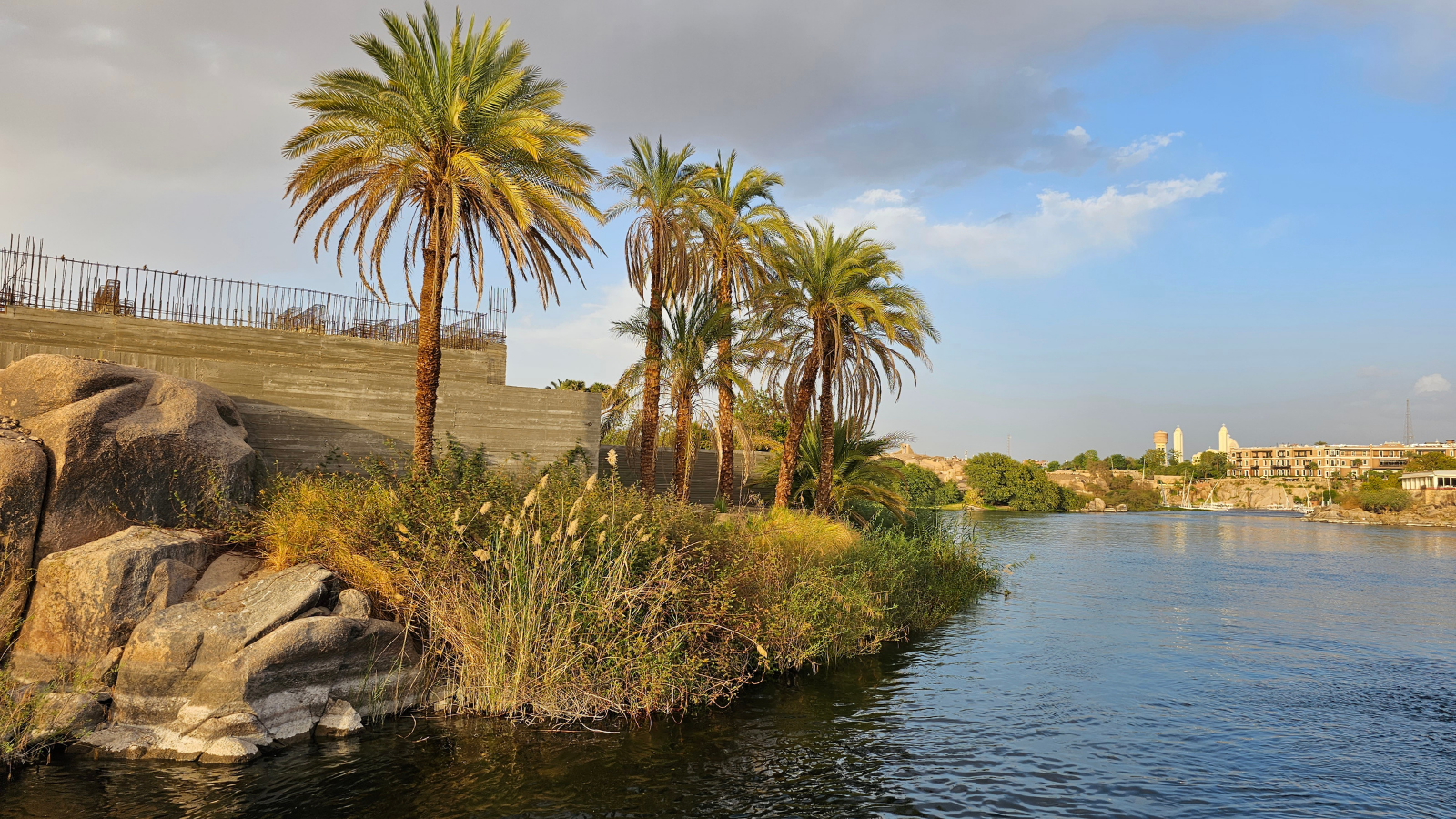
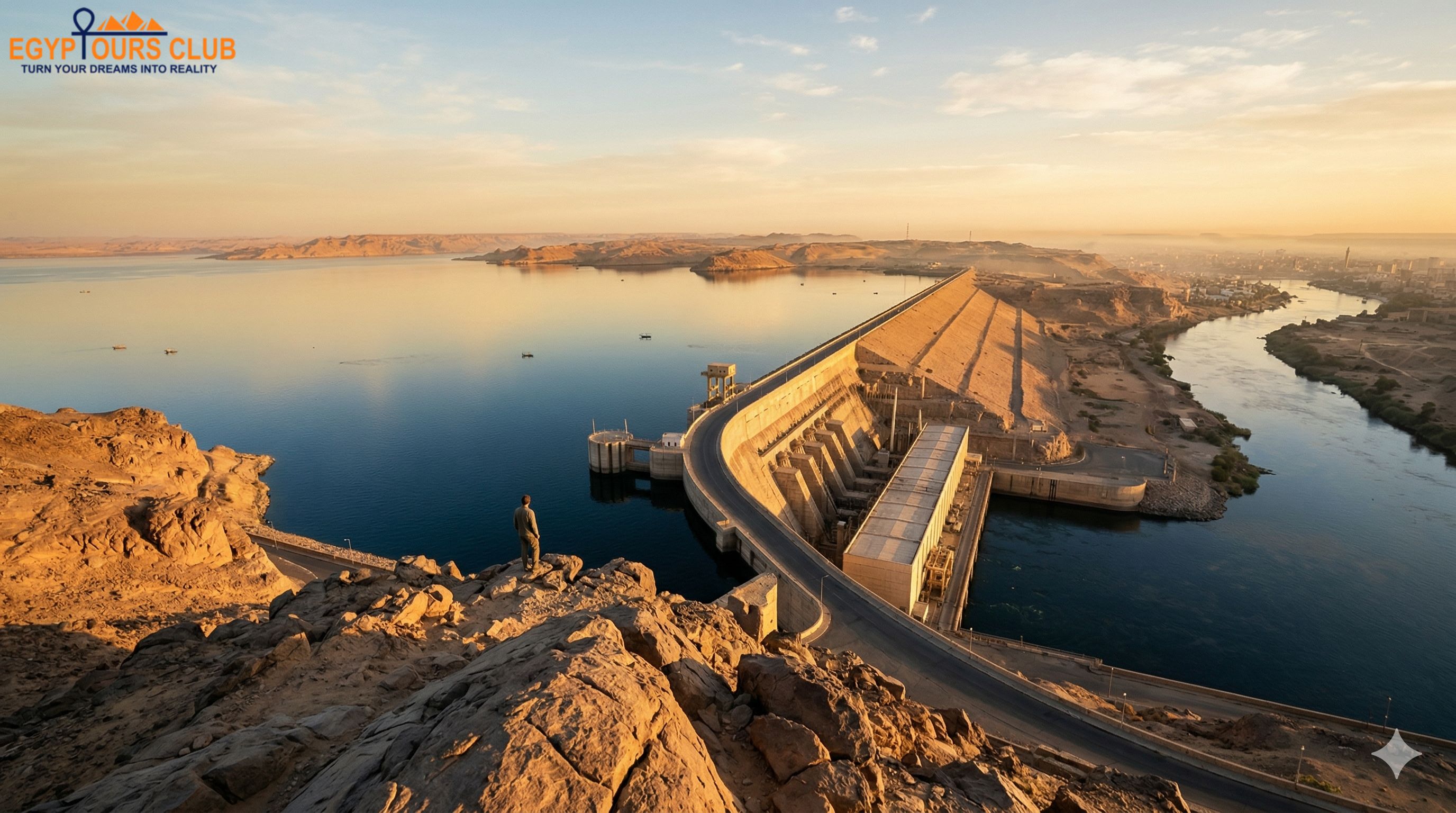
The High Dam changed that rhythm by creating a large water reserve behind it. That reserve is Lake Nasser, the huge lake that stretches south from Aswan. When you stand at the viewpoint, the main thing to understand is not only the concrete structure. It is the scale of water storage, the contrast between lake and desert, and the way the dam made year-round irrigation and hydroelectric power possible.
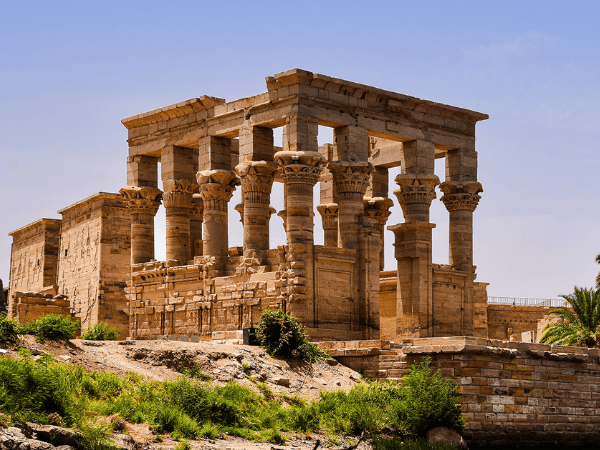
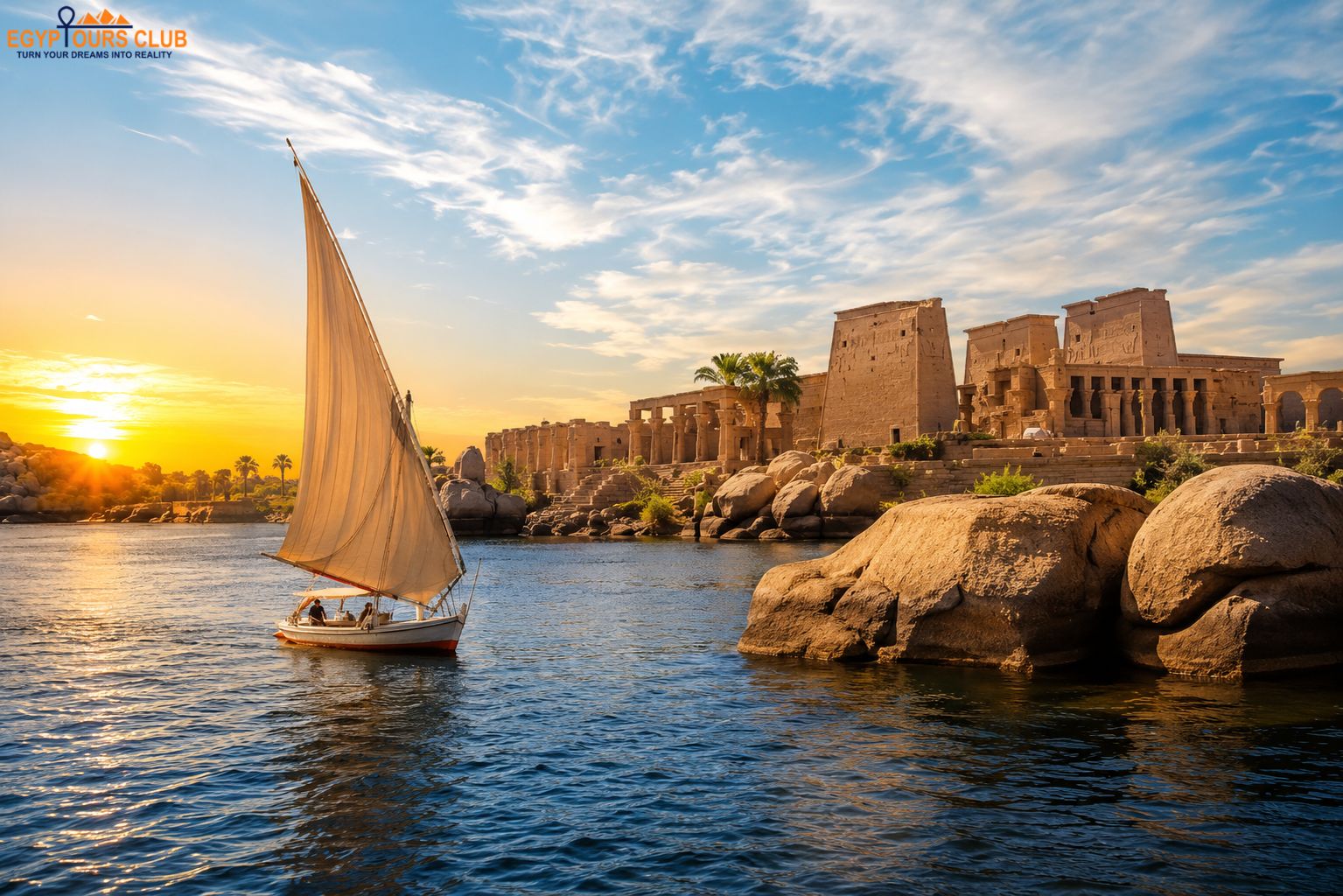
This is why a good Aswan High Dam tour should not rush the stop as a quick photo break. A guide should explain what the dam solved, what it changed, and how it connects with nearby sites. Philae Temple, for example, is part of the same wider water story because many Nubian and ancient monuments had to be protected or moved during the Lake Nasser period.
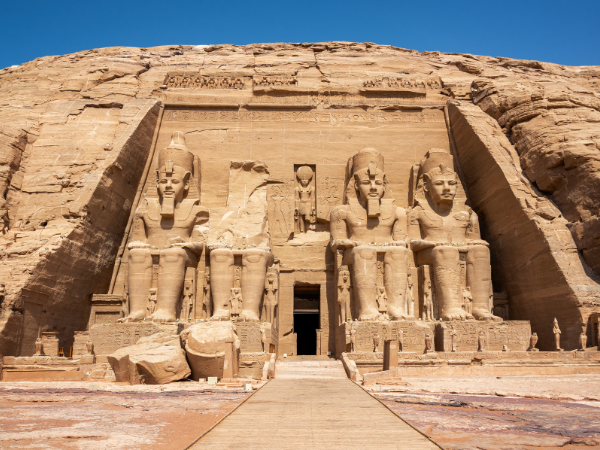
For travelers, the site is strongest when placed between ancient and modern Aswan: visit the dam for the Nile engineering story, then continue to Philae Temple tours for the island temple story, or link it with Abu Simbel tours from Aswan to understand Lake Nasser’s southern landscape.