


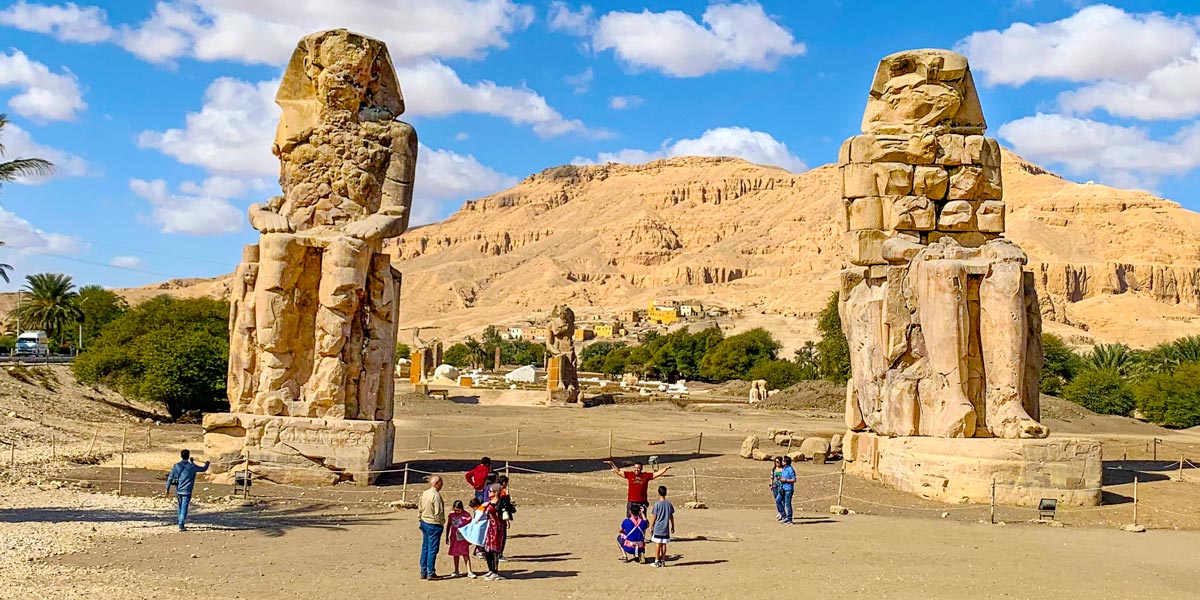
Amenhotep III Statues
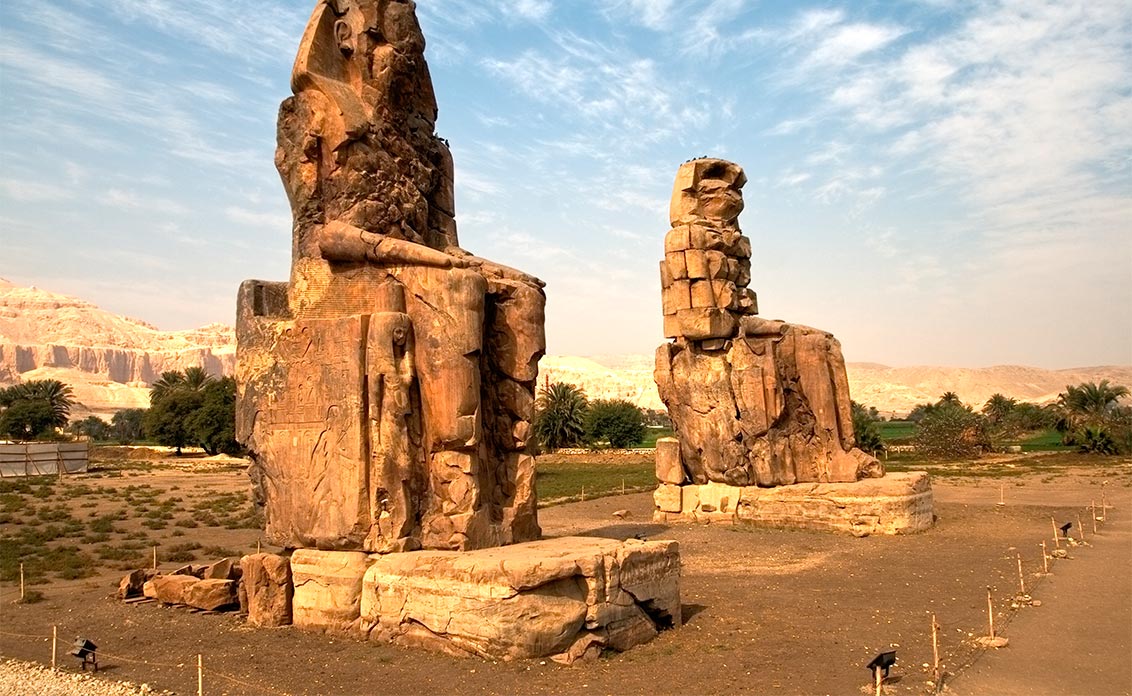
The two seated figures represent Amenhotep III and symbolize royal authority at the entrance of his funerary temple.
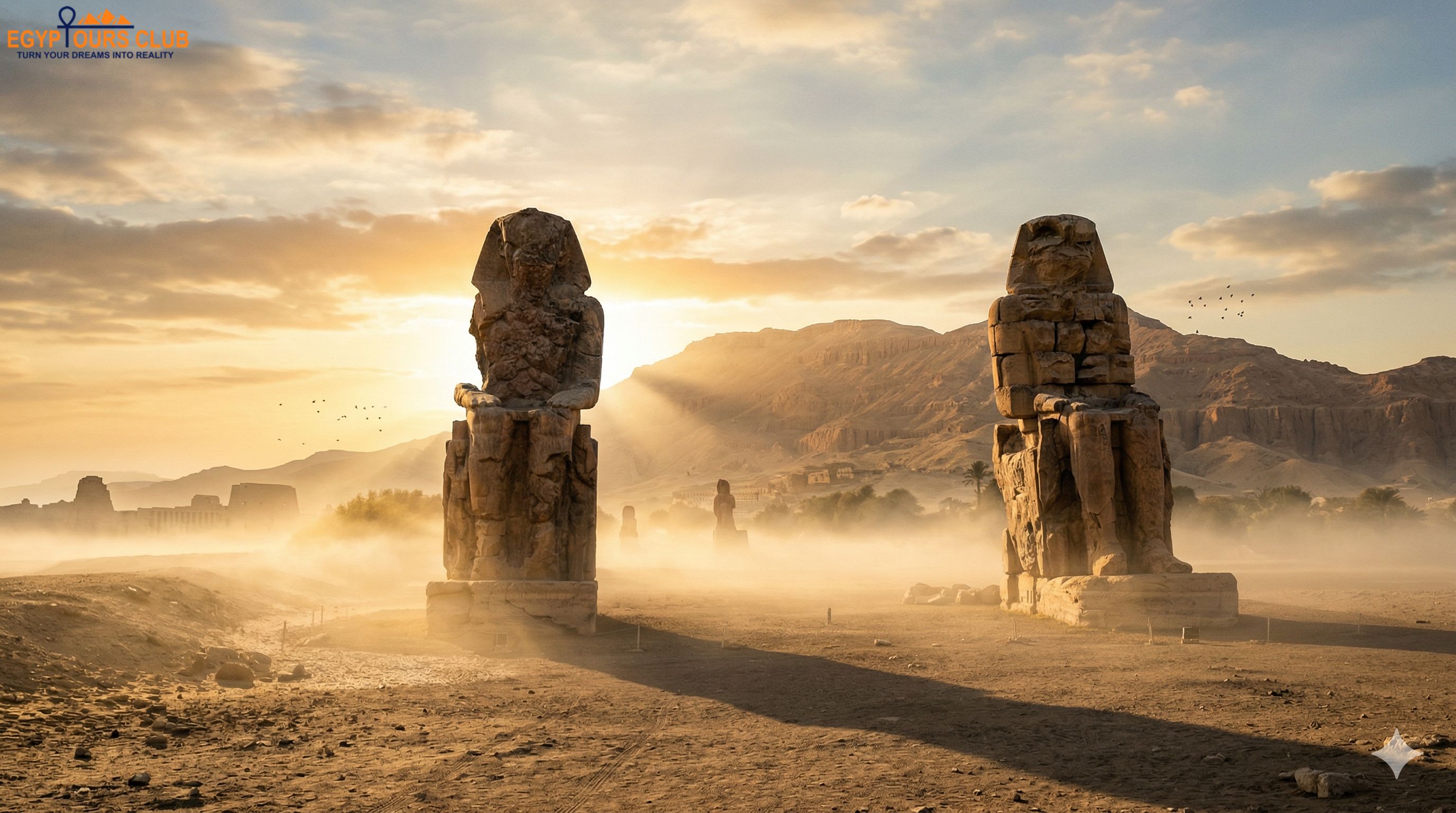
Two giant seated statues still guarding the memory of Amenhotep III’s vanished mortuary temple.
The Colossi of Memnon Luxor are two massive stone statues of Pharaoh Amenhotep III on the West Bank of Luxor. Once standing at the entrance of his enormous mortuary temple, they remain one of the easiest, most photographed and most atmospheric stops on a Luxor West Bank tour.
The Colossi of Memnon are two giant seated statues of Pharaoh Amenhotep III on the West Bank of Luxor. They originally guarded the entrance to his mortuary temple and are now one of the most famous quick stops on Luxor West Bank tours, especially for sunrise photography and ancient Egyptian history.
The Colossi of Memnon are often visited quickly, but their story is much larger than a photo stop. These two statues once stood before the mortuary temple of Amenhotep III, one of the most powerful and prosperous pharaohs of Egypt’s 18th Dynasty.
The temple behind them has mostly vanished, but the statues survived as silent markers of royal scale. Their size, weathered faces and open West Bank setting make them a strong visual introduction before visiting the Valley of the Kings, Valley of the Queens or Hatshepsut Temple.
For travelers searching for Colossi of Memnon Luxor, Amenhotep III statues, Memnon statues Egypt, Luxor West Bank monuments or Luxor day tour Colossi of Memnon, the best use of this site is to place it inside a wider West Bank route rather than treating it as an isolated stop.
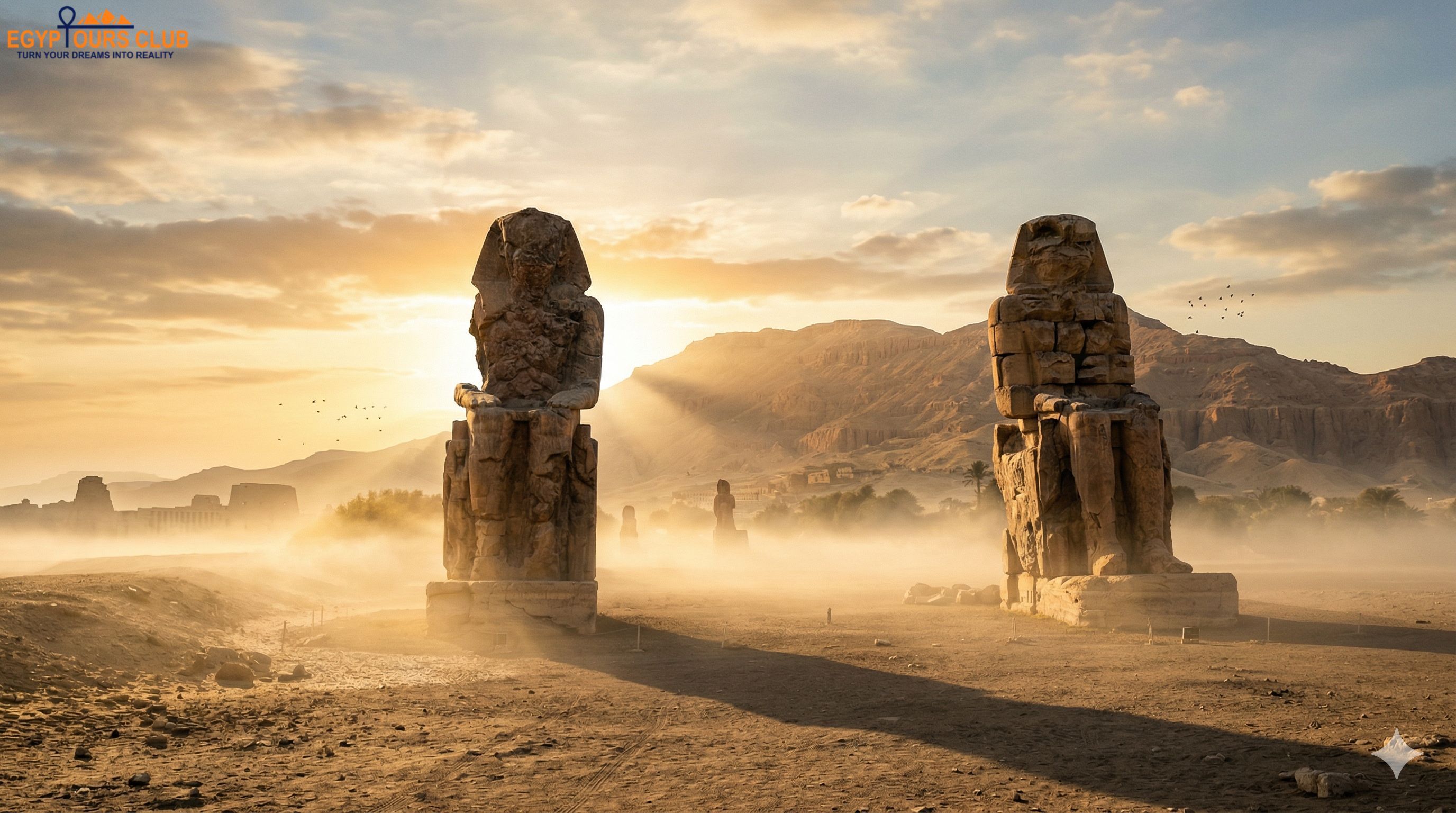 Colossi of Memnon · Luxor West Bank
The visual identity of the Colossi comes from scale: two seated figures standing in open desert light, with the memory of a vast temple complex behind them.


Although the visit is short, the site carries several strong meanings: royal power, lost architecture, sunrise photography and one of Luxor’s oldest travel legends.
The two seated figures represent Amenhotep III and symbolize royal authority at the entrance of his funerary temple.
The original temple has largely disappeared, but nearby West Bank temple architecture helps visitors imagine its scale.
The site is one of Luxor’s easiest sunrise or early morning stops, especially before West Bank sightseeing.

The Colossi work perfectly as the first or final stop on a day exploring Luxor’s tombs and temples.
Ancient visitors associated one damaged statue with mysterious morning sounds, creating the famous Memnon legend.

After the West Bank route, Luxor Temple is a strong evening continuation with a different atmosphere.
The Colossi are easy to include, but they become more valuable when connected to the larger West Bank story.
| Item | Planning Detail | Best Use |
|---|---|---|
| Recommended duration | 15–30 minutes | Enough for photos, guide explanation and route context. |
| Best pairing | Valley of the Kings + Hatshepsut Temple + Valley of the Queens | Classic Luxor West Bank route. |
| Best time | Sunrise or early morning | Best light and smoother pacing before heat increases. |
| Main theme | Amenhotep III and lost mortuary temple | Gives the stop more historical depth. |
| Visitor style | Private guided West Bank tour | Best for context and logistics. |
The Colossi are usually a short stop, so the strongest experience is a complete Luxor West Bank route.
A complete West Bank flow including the statues, royal tombs and major temple stops.
Plan from Luxor →Best for first-time visitors who want iconic West Bank monuments in one smooth route.
Explore Hatshepsut →
A sunrise view over Luxor followed by the Colossi and tombs on the ground.
Explore Balloon →Final routing depends on hotel location, tomb access, temperature, Nile crossing logistics and the pace you prefer.
The Colossi of Memnon connect naturally with Luxor’s royal tombs, West Bank temples, East Bank monuments, Nile cruises and full Egypt itineraries.
| Route | Best For | Suggested Flow | Useful Link |
|---|---|---|---|
| Classic West Bank Day | First-time visitors | Colossi of Memnon → Valley of the Kings → Hatshepsut Temple → Valley of the Queens | Valley of the Kings Guide |
| Sunrise Photo Route | Photography travelers | Colossi sunrise → West Bank tombs → Hatshepsut Temple | Luxor Guide |
| Balloon + Monuments | Experience seekers | Hot air balloon → Colossi → Valley of the Kings → Temple route | Luxor Balloon Guide |
| Luxor Two-Day Route | Balanced travelers | Day 1 West Bank monuments → Day 2 Karnak and Luxor Temple | Karnak Guide |
They are two giant seated statues of Pharaoh Amenhotep III on Luxor’s West Bank, originally built at the entrance of his mortuary temple.
They are famous for their huge size, Amenhotep III connection, sunrise photography and the ancient legend of the singing statue.
They are located on the West Bank of Luxor, near major Theban necropolis sites such as Valley of the Kings and Valley of the Queens.
The statues are about 18 meters high.
Most travelers need around 15–30 minutes for photos and a short guided explanation.
Yes. They are commonly included on West Bank tours with Valley of the Kings, Hatshepsut Temple and Valley of the Queens.
Visit the Colossi of Memnon with a private Luxor guide, then connect the statues to Amenhotep III, the lost mortuary temple and the wider West Bank route of tombs and temples.