


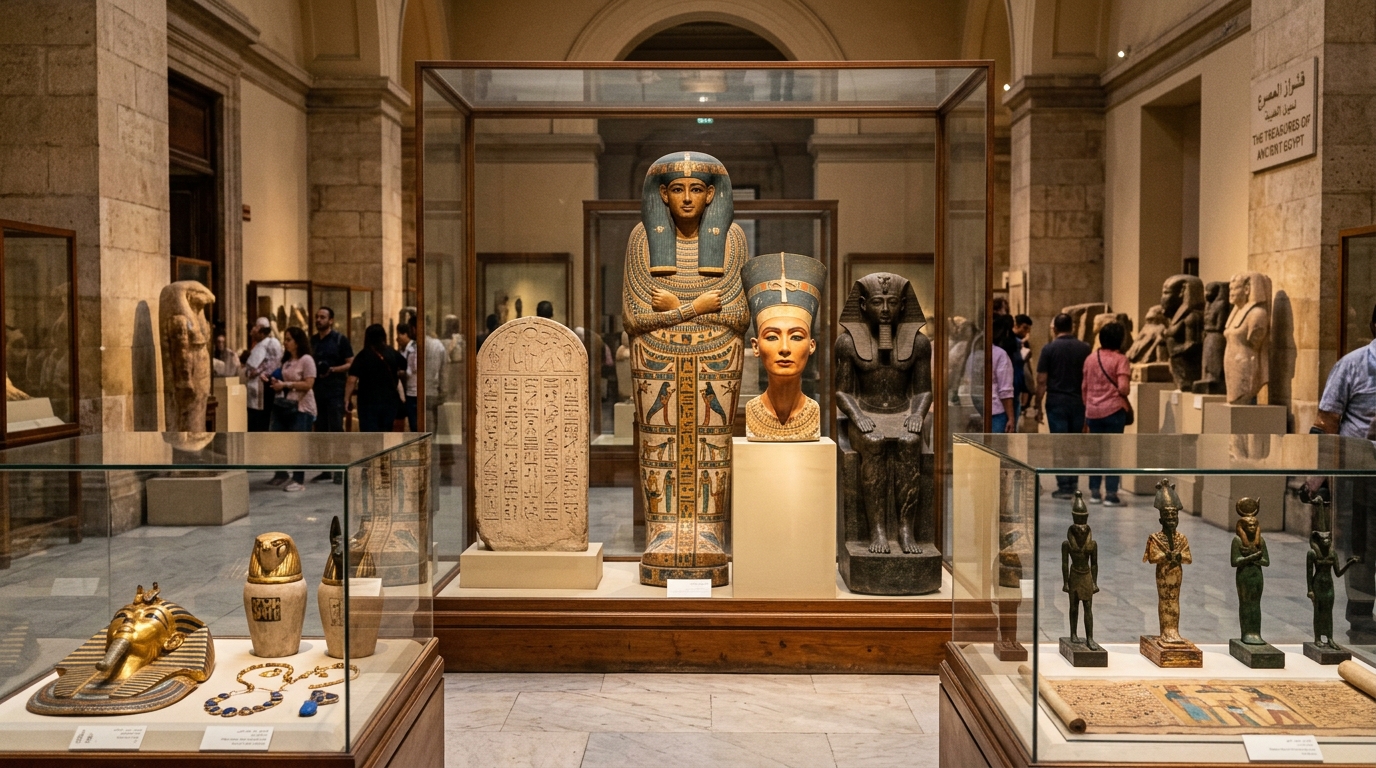
Exploring the Wonders of Ancient Egypt
Connect the Pyramids, temples, royal tombs and Nile landscapes into one understandable journey.
Ancient Egypt becomes easier to understand when its monuments are visited as a timeline rather than a random list. Saqqara and Giza explain pyramid development; GEM connects artifacts and kings; Luxor reveals New Kingdom power; and the Nile leads south to Edfu, Kom Ombo, Philae and Abu Simbel.
Three periods that unlock the story
Saqqara and Giza show pyramid experimentation, centralized kingship and royal funerary belief.
Karnak, Luxor and the Valley of the Kings reveal imperial power, temple religion and royal tomb culture.
Philae, Edfu and Kom Ombo preserve later temple traditions and cross-cultural rule.
Essential wonders of Ancient Egypt
The Great Pyramid is the only surviving ancient wonder. Connect it with the Sphinx, Valley Temple and panoramic plateau.
Giza Pyramids & Great Sphinx →Djoser’s complex explains the architectural leap that came before the true pyramids at Giza.
Saqqara & Step Pyramid →Use GEM to connect royal history, sculpture and objects with the monuments visited outside.
Grand Egyptian Museum →The East Bank presents public religion, royal building and festival processions.
Karnak & Luxor Temple →The West Bank combines royal tombs, painted afterlife texts and monumental mortuary architecture.
Valley of the Kings & Hatshepsut →Southern Egypt adds island temples, Nubian landscapes and Ramesses II’s rock-cut sanctuary.
Philae & Abu Simbel →Why the Nile belongs in the story
The Nile was transport route, agricultural foundation and sacred landscape. A cruise between Luxor and Aswan connects temples at Edfu and Kom Ombo while reducing hotel changes. The river journey is not only transport; it explains why settlements and religious centers developed along this corridor.
Sample Ancient Egypt itineraries
Cairo, Giza and GEM; Luxor East and West Banks; Aswan and Philae with domestic flights.
Add Saqqara, a 3- or 4-night Nile cruise, Edfu, Kom Ombo and Abu Simbel.
Add Alexandria or more Cairo history, a slower Nile route and a Red Sea finale.
How to compare Egypt tour packages
- Check whether transport uses flights, trains or long road transfers.
- Confirm the Egyptologist’s language and number of guided days.
- Ask how much usable time is planned inside major sites.
- Compare private, small-group and coach-group size.
- Confirm cruise ship, cabin, direction, meals and shore visits.
- Separate standard admission from pyramid interiors and special tomb tickets.
Practical planning
October to April is generally easiest for outdoor cultural sightseeing.
Expect uneven ground, exposed courtyards, stairs and narrow tomb passages.
Special tombs, pyramid interiors and temporary exhibitions may require separate tickets.
Continue planning
Frequently asked questions
How many days are best?
Seven to ten days is strongest for most first-time visitors; 12–14 days works better with the Red Sea.
Which places are essential?
Giza, GEM, Luxor, Aswan and the Nile form the core route. Add Saqqara and Abu Simbel when possible.
Is a Nile cruise worth including?
Yes. It links Upper Egypt’s temples while reducing repeated packing and road transfers.
Private or group tour?
Private tours offer flexibility; groups may reduce cost. Choose by pace, mobility and budget.
Turn the ancient wonders into a route that works
Share your dates, must-see places, hotel level and preferred pace.
Build My Egypt Journey