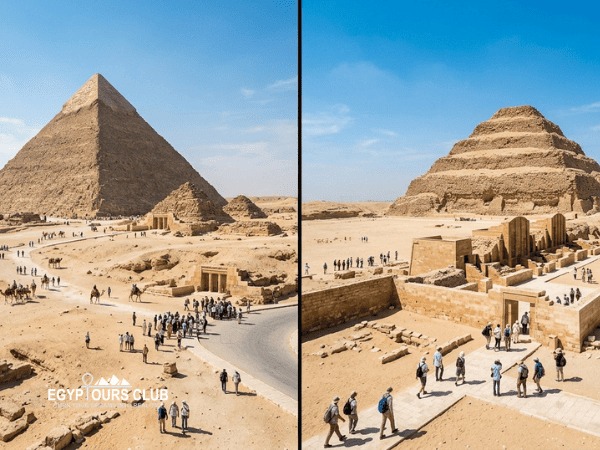
More than three pyramids
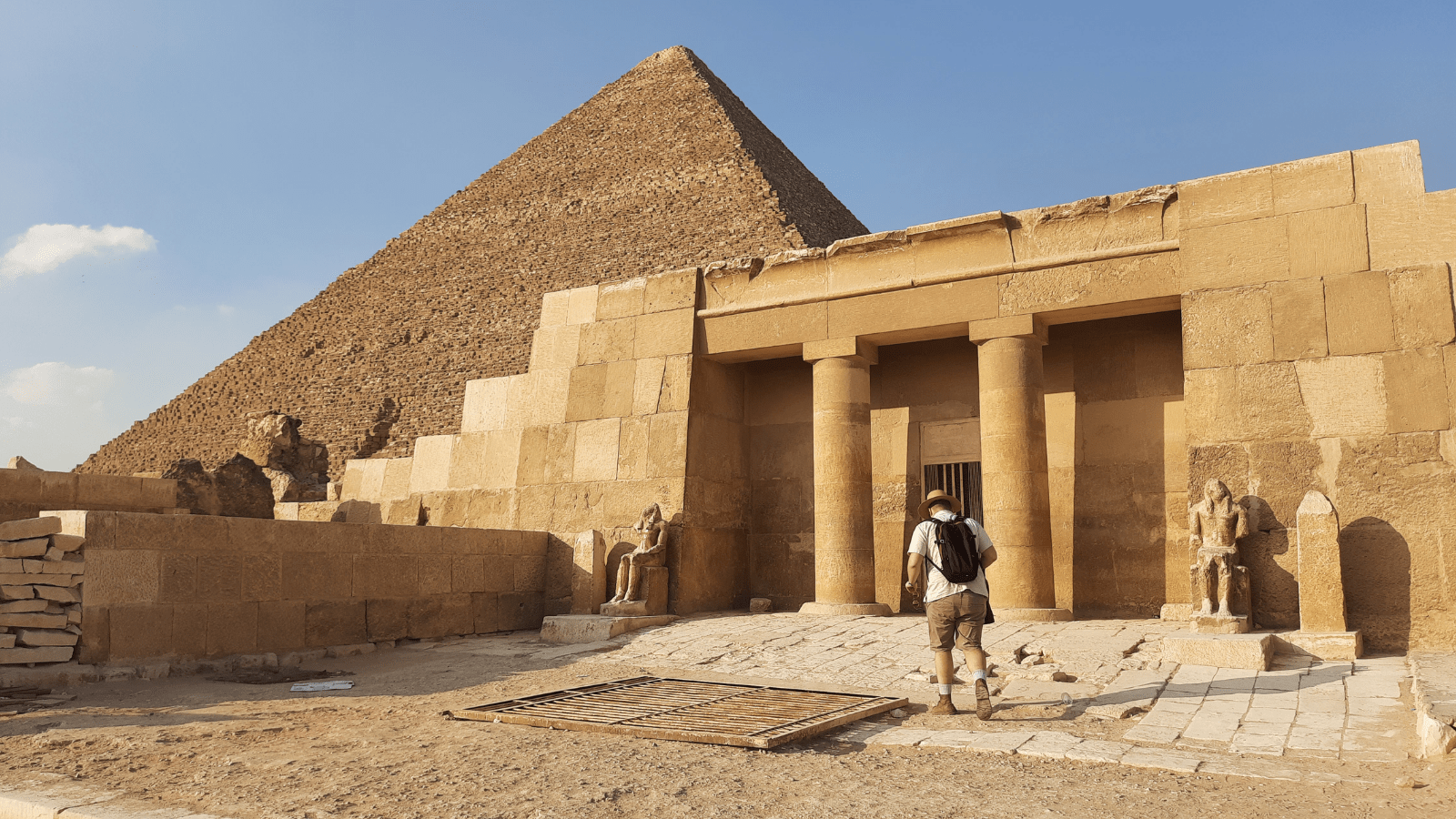
Temples, boat pits, queens' pyramids, mastabas and causeways connect the royal monuments into one carefully planned cemetery.
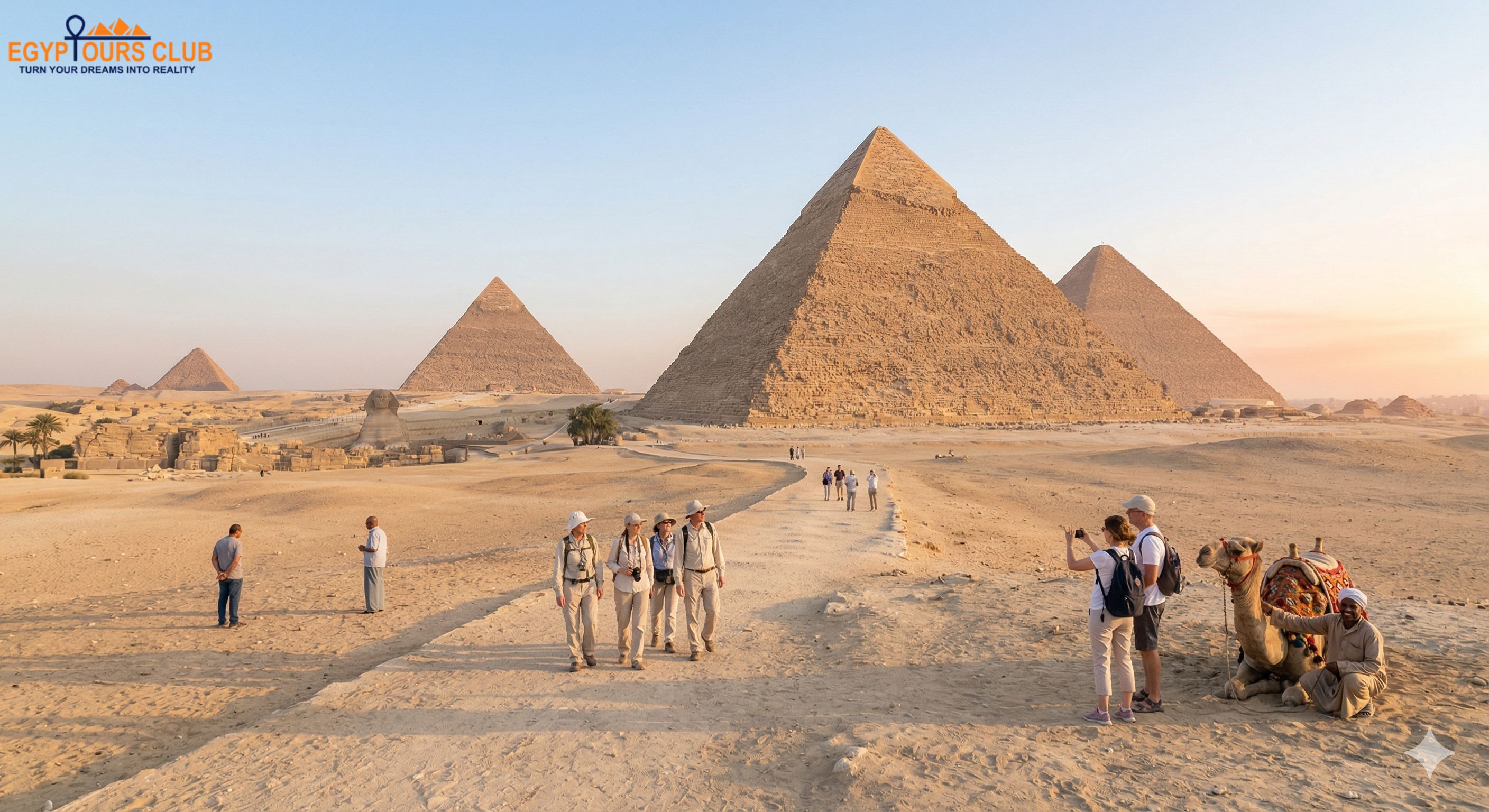
Go beyond the postcard. Understand who built Khufu, Khafre and Menkaure, why these royal monuments mattered, what science has discovered and how to visit the Giza Plateau without rushing it.
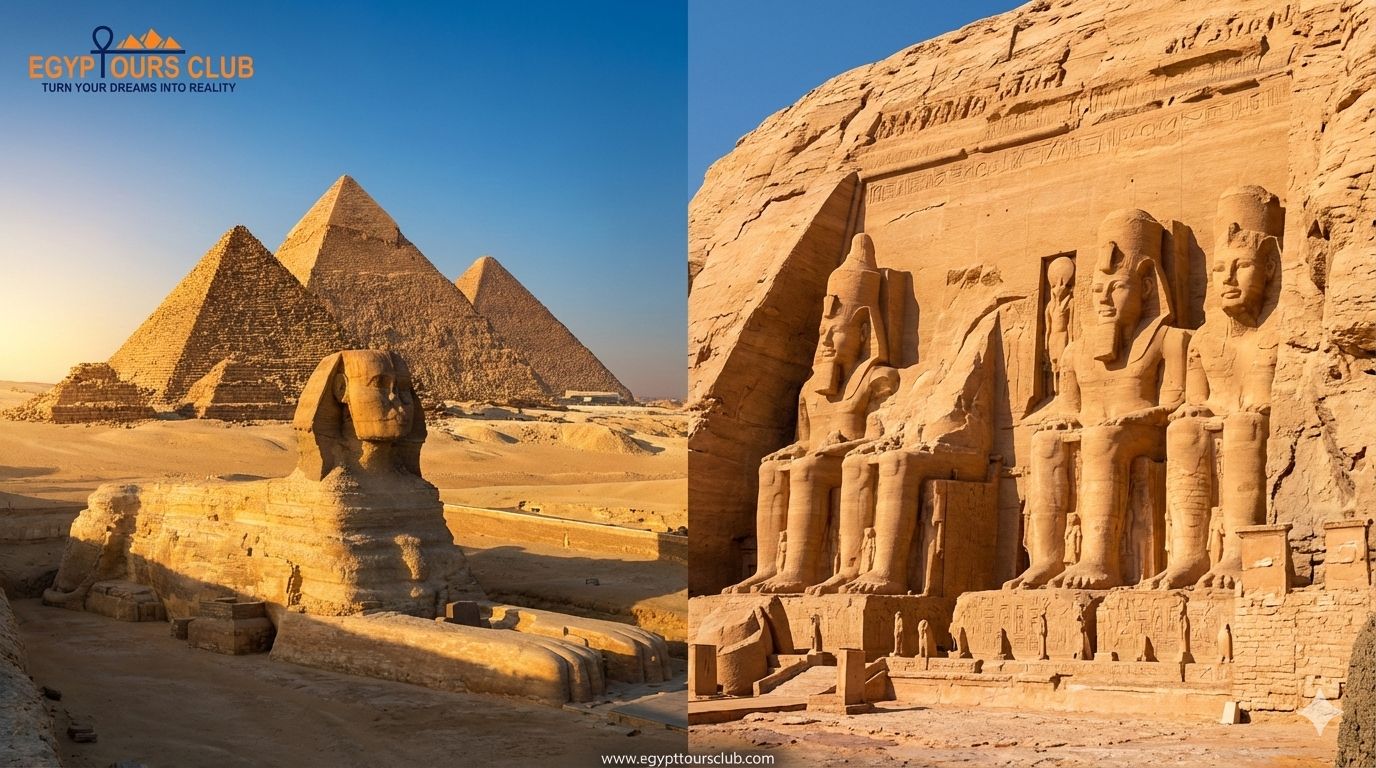
The Pyramids of Giza are three Fourth Dynasty royal pyramid complexes built about 4,500 years ago. The largest was built for Khufu and is the only surviving Wonder of the Ancient World. Khafre and Menkaure completed the principal royal skyline. The Sphinx, smaller pyramids, temples, tombs and causeways make this a connected funerary landscape, not simply three triangular buildings. What remains uncertain is not whether Egyptians built them, but parts of how they organized the construction.
At Giza, the ancient Egyptian state brought together stoneworking, surveying, river transport, large-scale provisioning and religious architecture on an extraordinary scale. The three largest pyramids were royal tombs, but each belonged to a broader complex with temples, causeways, smaller pyramids and cemeteries for members of the royal circle.
The Great Pyramid of Khufu is the last standing member of the traditional Seven Wonders of the Ancient World. Yet treating Giza as a single monument misses the bigger history. The plateau shows how Fourth Dynasty kings presented their authority and planned rituals connected with death and the afterlife. UNESCO lists Giza within Memphis and its Necropolis alongside Saqqara, Dahshur and other pyramid fields.
Temples, boat pits, queens' pyramids, mastabas and causeways connect the royal monuments into one carefully planned cemetery.
Khufu's pyramid originally stood roughly 146.5 meters tall and was covered in fine white limestone casing from Tura.
Excavation, conservation and non-invasive scanning continue to change what archaeologists know about the plateau.
The pyramids are not identical. Their size, setting and associated temples tell different parts of the same royal story. Read the skyline as a family sequence rather than a race to take three photographs.
Built for King Khufu, this was the largest and earliest of the three major Giza pyramids. Its original height was about 146.5 meters, and its precision remains remarkable. Inside are the Grand Gallery and King's Chamber; the king's granite sarcophagus is still present, but no treasure collection is displayed.
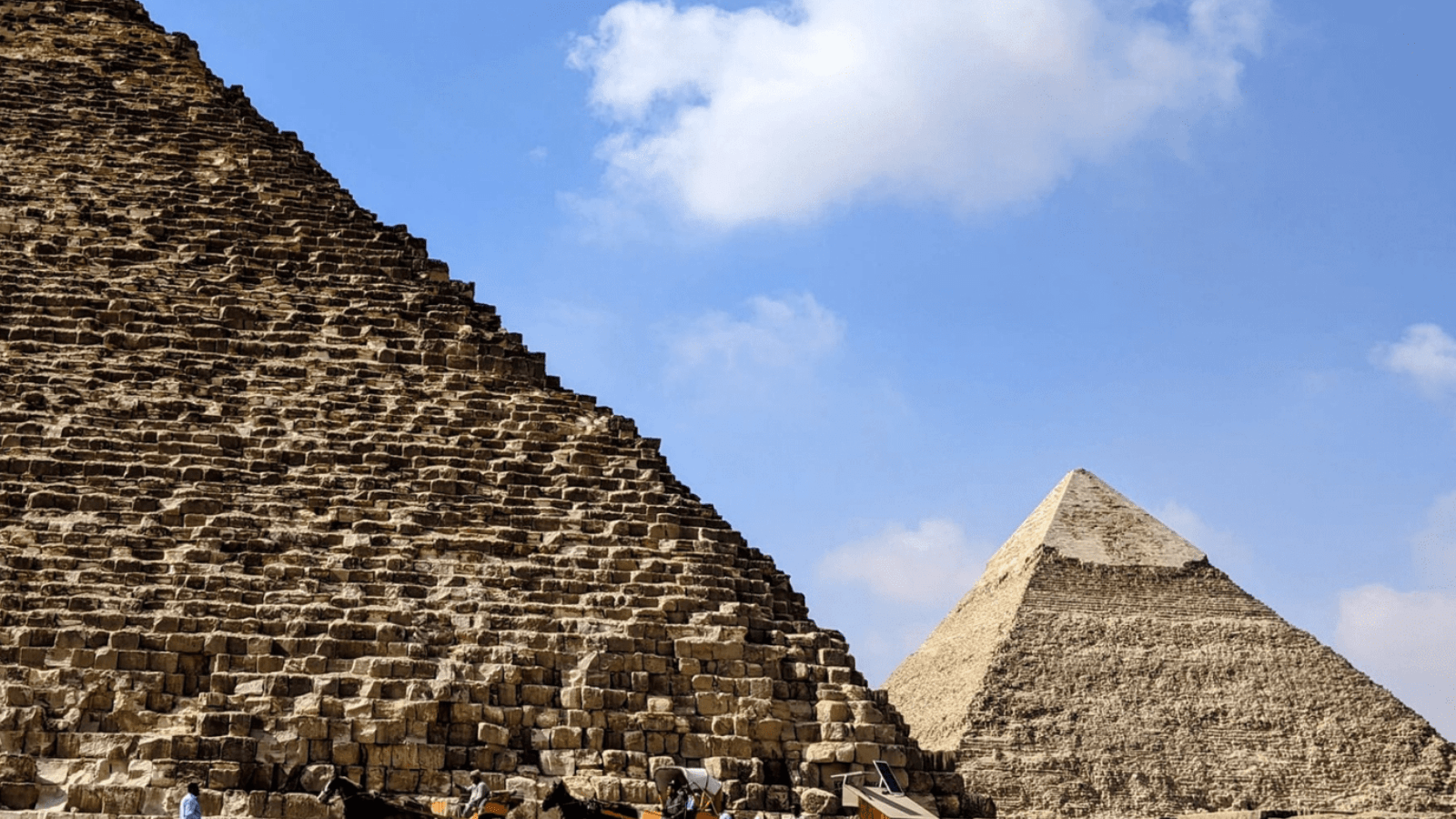
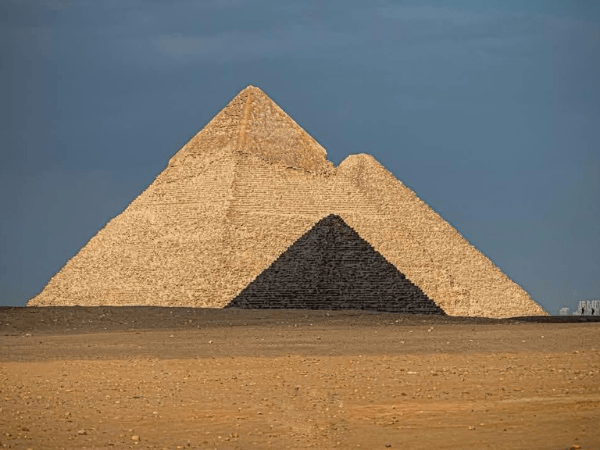
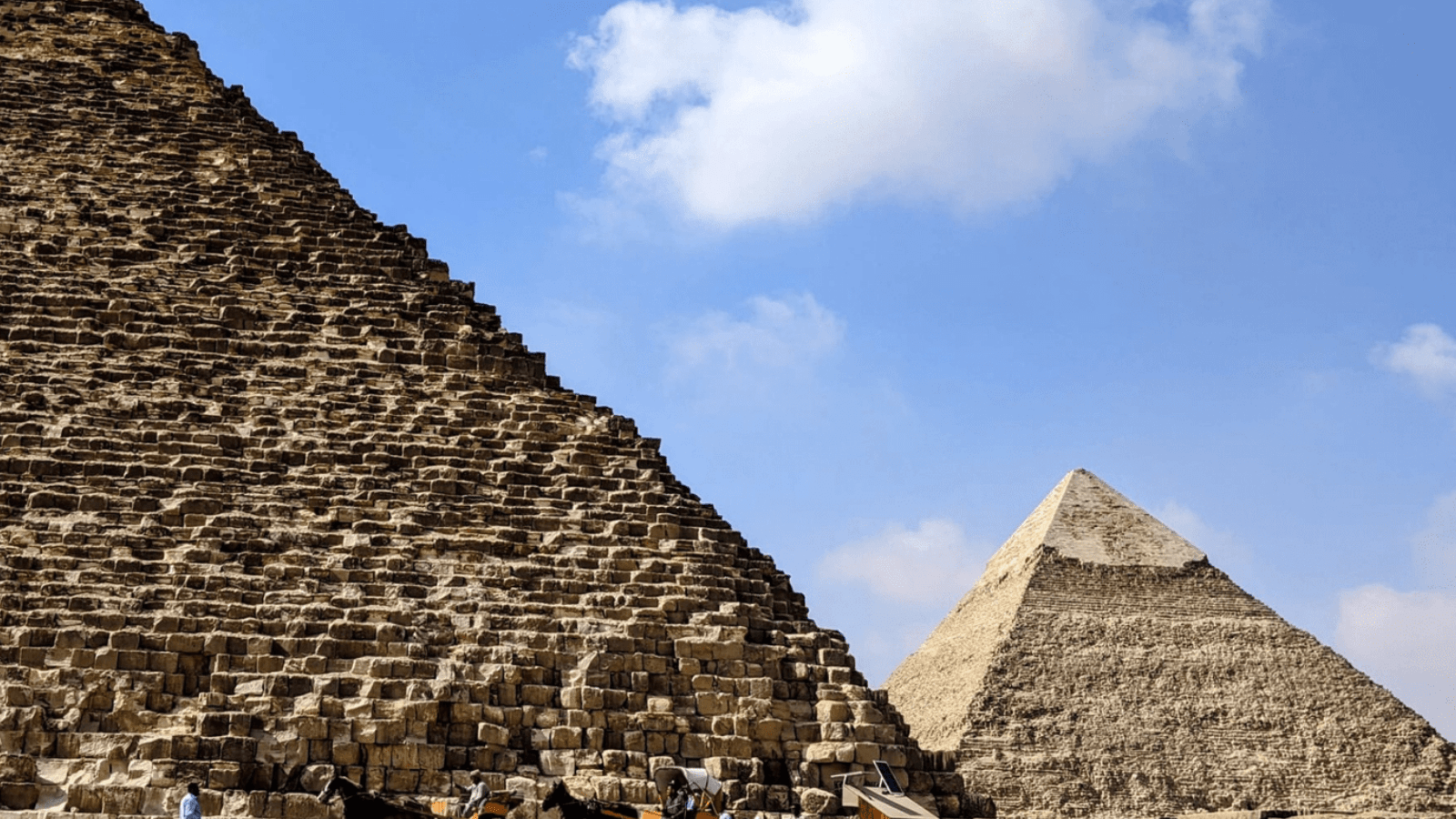
Khafre's pyramid can appear taller from some angles because it stands on higher ground. The surviving smooth casing near its top helps visitors imagine the brilliant limestone surfaces that once covered the pyramids. His Valley Temple and the nearby Sphinx belong to the wider setting most scholars associate with his reign.
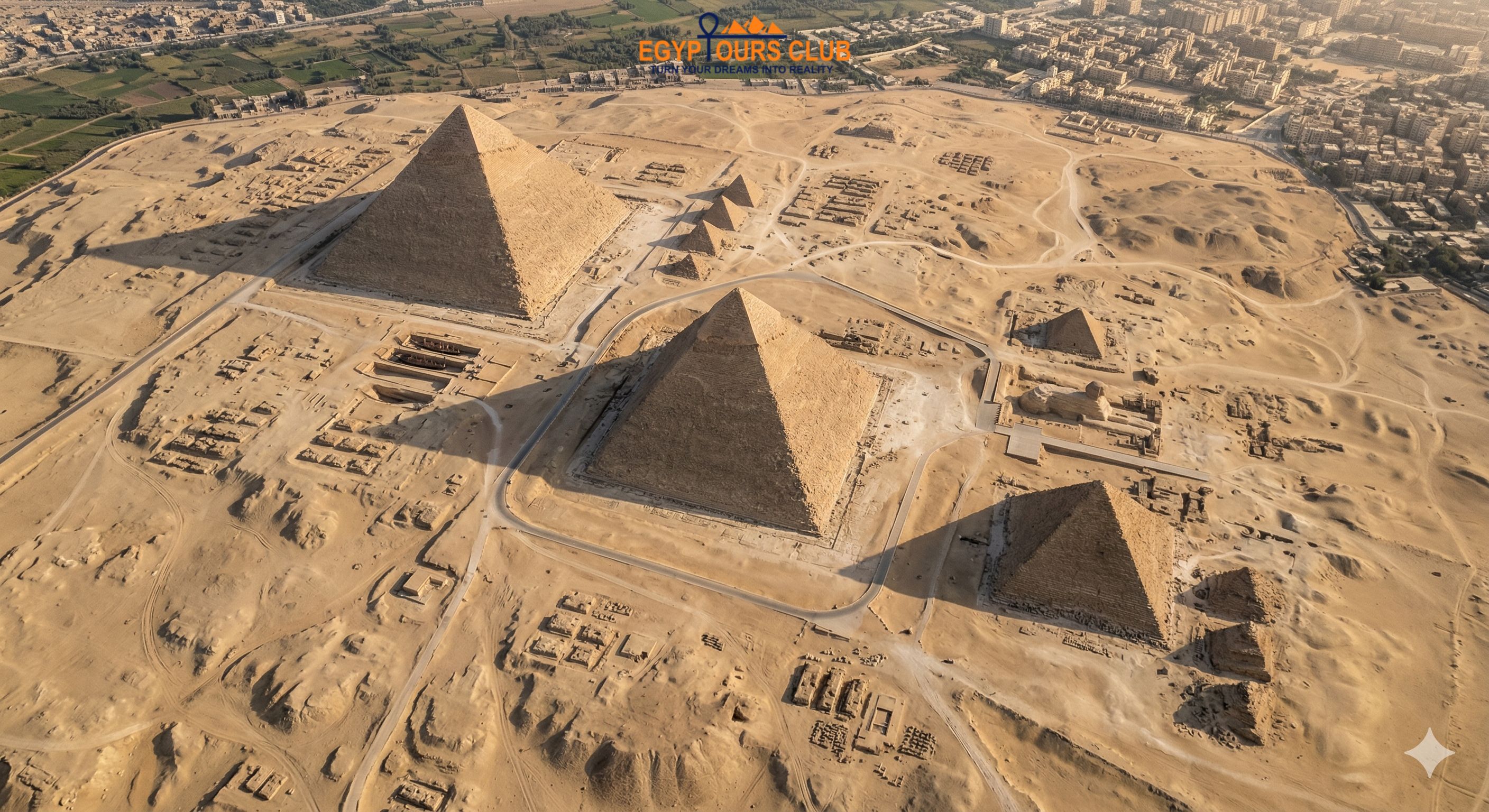
Menkaure's pyramid is smaller, but it is not an afterthought. Its surviving complex, nearby satellite pyramids and temple remains demonstrate how each king created a distinct funerary setting. Seeing it from the plateau's approved panoramic viewpoints makes the differences in scale clear.
There is no surviving step-by-step construction manual for the Great Pyramid. Archaeologists reconstruct the process from quarry remains, copper tools, stone-working traces, workers' settlements, inscriptions and transport records. Teams probably used sledges, ropes, ramps and other lifting methods in a coordinated system, but the precise ramp sequence is still debated.
Much of Khufu's pyramid used limestone quarried at Giza. Fine white casing stones came from Tura across the Nile. An ancient inspector's papyri, commonly known as Merer's diary, record limestone transport associated with Khufu's pyramid project.
Official construction and materials backgroundSettlement remains, workers' burials and provisioning evidence support organized Egyptian labor forces with skilled specialists and rotating teams. This was demanding state-directed work, but the familiar image of hundreds of thousands of chained slaves is not supported by the archaeological record.
Examine the evidence for who built the pyramids Khufu's pyramid contains a descending passage, an unfinished rock-cut subterranean chamber, an upper chamber traditionally called the Queen's Chamber, the ascending Grand Gallery and the King's Chamber. The familiar names are modern labels, not proof that each room served its popularly assumed purpose.
The interior is mostly bare stone. Expect steep, narrow, sometimes warm passages rather than colorful wall paintings or displayed treasure. General plateau admission does not include the separately ticketed Great Pyramid interior.
Compare which pyramids visitors can enter Check official Giza admission categories
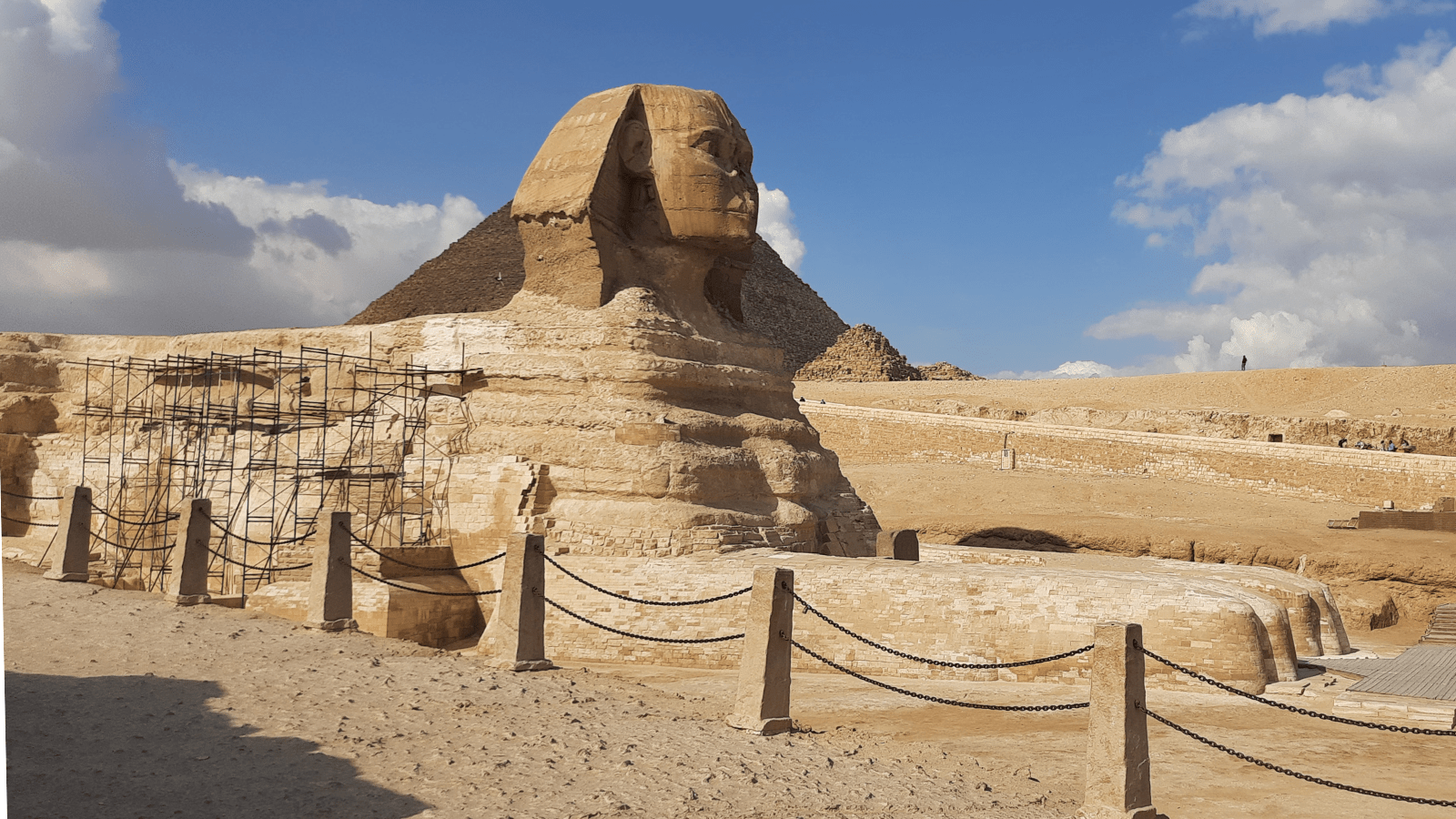
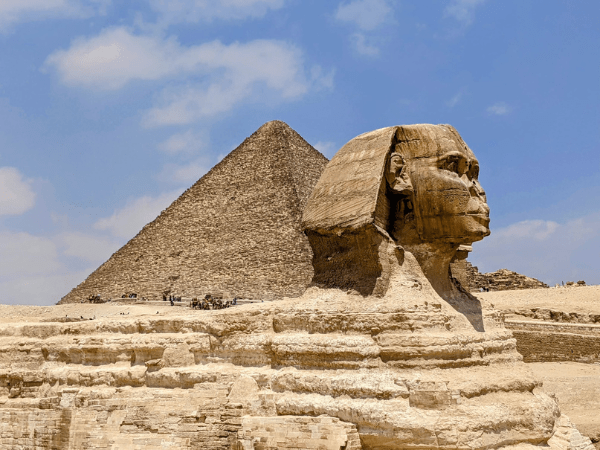
Carved from Giza's limestone bedrock, the Great Sphinx is generally associated with Khafre's Fourth Dynasty complex. That association follows the monument's location and its relationship with nearby temples and causeway. A surviving original inscription naming its builder has not been found, so a responsible guide presents Khafre as the prevailing attribution rather than certainty.
Later Egyptians restored and reinterpreted the Sphinx. Thutmose IV's Dream Stela between its paws records a New Kingdom royal story. View the statue from permitted visitor areas and see the Valley Temple to understand its setting.
New research does not mean that everything about the pyramids was unknown. Good archaeology separates something measured from an interpretation of what it was used for. Modern scanning has made that distinction especially important.
Muon imaging identified a large low-density zone above the Grand Gallery. Its presence is important; its exact purpose remains uncertain.
Researchers confirmed a hidden corridor behind the north-face chevron stones. Follow-up non-destructive research has improved its characterization.
Quarries, crews, transport and tools are documented. How ramps and lifts were arranged at each construction stage remains debated.
For a clear account of the research, read our guide to confirmed voids and corridors and the 2025 peer-reviewed North-Face Corridor research abstract.
A focused classic plateau visit normally takes around three to four hours. Add extra time if you enter the Great Pyramid or select a tomb. Combine it with the Grand Egyptian Museum only when you can protect a full day and enough transfer time.
Choose based on what you value: the overall landscape, ancient engineering, photography or archaeology beyond the obvious monuments.
| Photo | Experience | Best For | Planning Note | Next Step |
|---|---|---|---|---|
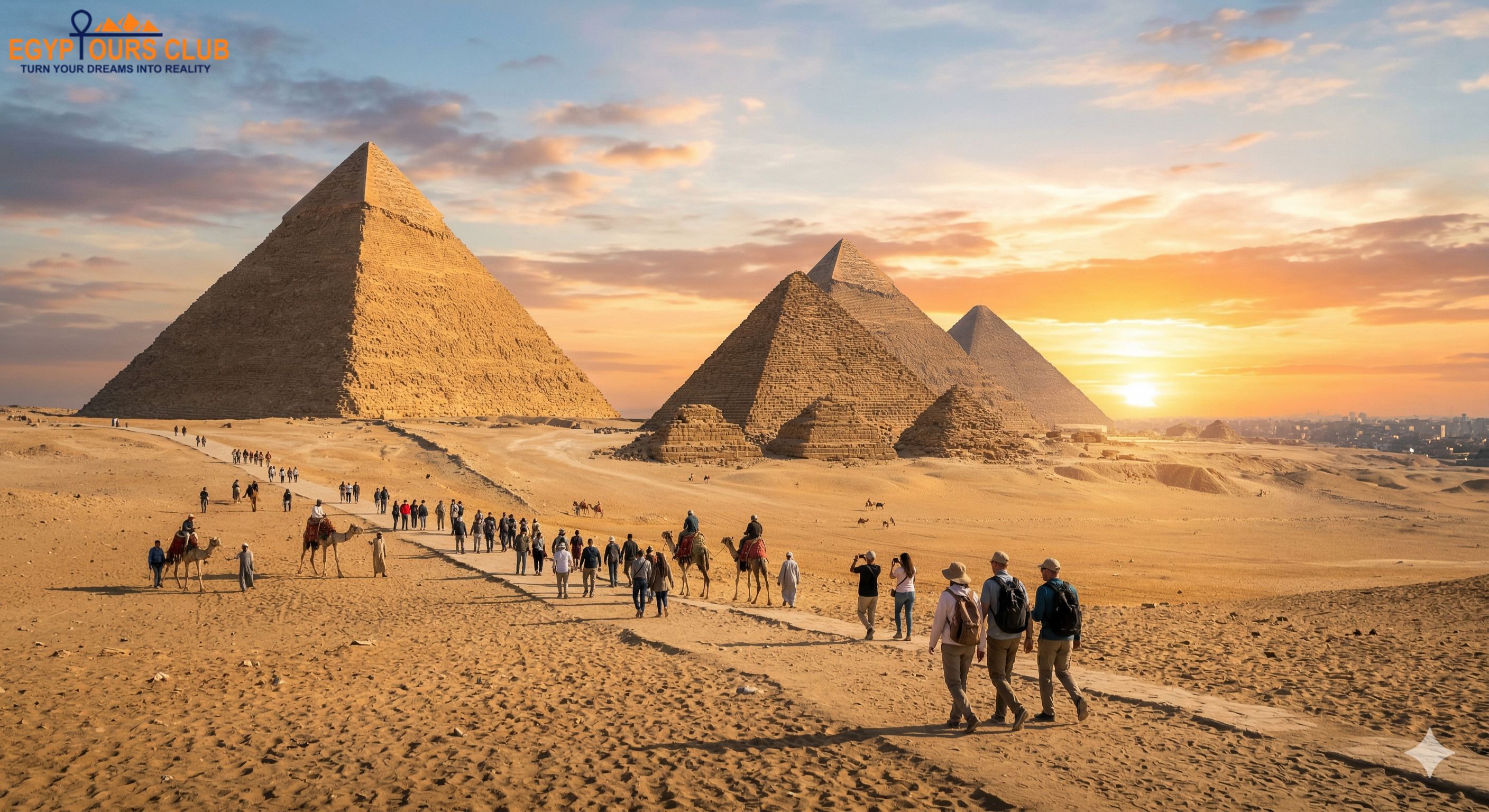 | Classic plateau visit | First-timers, families, photography | Allow about 3 to 4 hours; follow official routes. | Private Giza half-day tour |
| Inside Khufu | Engineering enthusiasts | Separate ticket; steep, confined access. | Compare pyramid interiors |
| Sphinx & Valley Temple | Royal symbolism and architecture | Visit as part of the plateau, not a separate city excursion. | Sphinx visitor guide |
| Deeper archaeology | Tombs, causeways, pyramid history | Additional tomb tickets or openings may be required. | Giza monument guide |
A little preparation avoids the common mistakes: rushed routes, wrong interior tickets, midday heat and unreliable claims about access.
Earlier hours usually offer more comfortable walking conditions and better control of the day. Confirm the current gate and entry procedure before leaving your hotel.
The plateau ticket covers the archaeological area, not every pyramid interior. Check the official Giza ticket page for current categories and availability.
The Sphinx and Valley Temple provide essential context. Do not finish the day after a quick photograph beside Khufu.
The plateau is exposed, with uneven ground and meaningful distances between some monuments. Comfortable shoes matter more than formal outfits.
Research corridors, closed tombs and special-access enclosures are not part of standard visits. Follow guards, barriers and conservation rules.
A qualified guide can connect the history of kings, workers, temples and funerary rituals, instead of repeating unproven stories about hidden powers.
These links point to the actual source material for the historical facts, UNESCO designation, access rules and modern corridor research.
The three principal royal pyramids date to Egypt's Fourth Dynasty, around 4,500 years ago. Their construction belongs to the Old Kingdom, not the much later age of the New Kingdom pharaohs.
Ancient Egyptian builders working for King Khufu built it. Archaeology points to skilled teams, supervisors, supply systems and rotating labor groups, not alien intervention.
Yes. The Great Pyramid of Khufu is the only surviving monument from the traditional Seven Wonders of the Ancient World.
Normally yes, with a separately purchased interior ticket in addition to general Giza Plateau admission. Access and prices may change, and the narrow, steep passages are not comfortable for everyone.
Researchers detected a large low-density space above the Grand Gallery with muon imaging in 2017. Its detailed form and purpose have not been established, and it is not an ordinary visitor-access chamber.
The old image of vast groups of chained slaves does not match the main archaeological evidence. Organized workers, specialist crews, housing, food supplies and administrative records show a more complex labor system.
Most Egyptologists link the Sphinx to Khafre's Fourth Dynasty complex because of its location and architectural setting. The statue does not have a surviving contemporary inscription that definitively names its builder.
Allow about three to four hours for a well-paced classic visit to the plateau. Add extra time for an interior, a decorated tomb, photography or the Grand Egyptian Museum.
No guaranteed all-three access exists. Some interiors close or rotate for conservation, and separate tickets may be required for each open monument.
Egypt Tours Club arranges private Giza visits with licensed Egyptologists and flexible pacing. Tell us whether you want a classic plateau tour, an open pyramid interior, a full archaeology day or a Giza and museum combination.
Editorial note: Ancient monument access and archaeological interpretations may change. The guide separates established evidence from open questions. All article images are from Egypt Tours Club-hosted storage and depict Giza pyramids or the Sphinx. Always verify current access rules before travel.