


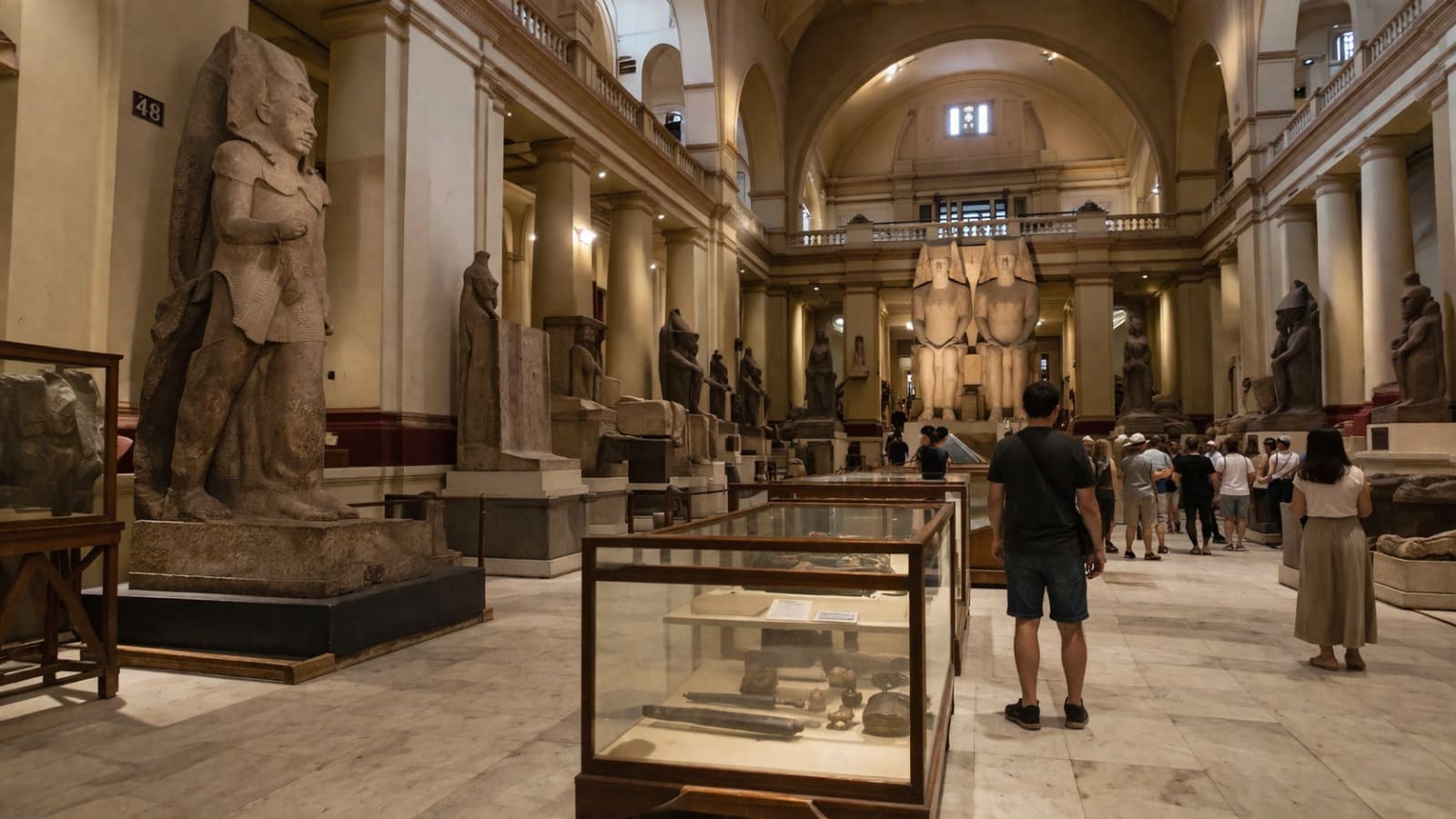
Top 15 Artifacts in the Egyptian Museum Cairo
Follow a focused route through 15 masterpieces still associated with the historic Egyptian Museum in Tahrir Square—and learn where Tutankhamun and the royal mummies are now.
15 must-see masterpiecesPredynastic to Greco-RomanFocused visit: 2–3 hoursThe Egyptian Museum in Tahrir Square remains one of Cairo’s most rewarding museums, but an accurate highlights guide now needs an important correction. Tutankhamun’s famous golden mask and complete tomb collection belong to the Grand Egyptian Museum, while the great New Kingdom royal mummies moved to the National Museum of Egyptian Civilization.
Important update: what is no longer at the Tahrir Museum?
The golden mask is officially catalogued in the Tutankhamun Galleries at the Grand Egyptian Museum near Giza. Travelers focused on the boy king should choose GEM.
The royal mummies transferred from Tahrir to the National Museum of Egyptian Civilization in Fustat. Ramses II, Seti I and other royal bodies should not be promised at the Egyptian Museum.
Narmer, Khufu, Khafre, Menkaure, Yuya and Thuya, Psusennes I, Tanis, papyri, sarcophagi and jewelry remain among the historic museum’s core strengths.
The top 15 artifacts to see in the Egyptian Museum Cairo
Narmer Palette
Early Dynastic Period · c. 3100 BCThis ceremonial palette preserves some of the earliest hieroglyphic inscriptions and presents royal imagery linked with the unification of Upper and Lower Egypt. Look for Narmer wearing the two crowns and the famous smiting scene.
Ivory Statuette of Khufu
Old Kingdom · 4th DynastyAt only about 7.5 cm high, this tiny ivory figure is the only confirmed contemporary three-dimensional representation of Khufu, builder of the Great Pyramid. Its scale makes the contrast with his monument unforgettable.
Enthroned Statue of Khafre
Old Kingdom · 4th DynastyCarved in polished diorite, Khafre sits on a throne while the falcon god Horus protects the back of his head. The statue turns kingship, divine protection and the permanence of stone into one controlled image.
Menkaure Triad
Old Kingdom · 4th DynastyMenkaure stands between Hathor and a personified province. The balanced pose, joined figures and smooth grey-green stone show how royal sculpture connected the king with gods and the lands of Egypt.
Statues of Rahotep and Nofret
Old Kingdom · 4th DynastyThe painted limestone pair is celebrated for vivid color and inlaid eyes. Their frontal pose, clothing, jewelry and contrasting skin tones make them an exceptional lesson in Old Kingdom portrait conventions.
Wooden Statue of Ka-aper
Old Kingdom · 5th DynastyNicknamed Sheikh el-Balad, this rare wooden statue appears strikingly lifelike because of its realistic body, portrait-like face and eyes inlaid with crystal, calcite, copper and dark stone.
Seneb and His Family
Old Kingdom · late 5th–early 6th DynastyThis intimate group shows the official Seneb beside his wife and two children. The sculptor placed the children beneath Seneb to create a visually balanced composition while preserving the family’s affection and status.
Meidum Geese
Old Kingdom · 4th DynastyThis painted fragment from a tomb at Meidum is admired for precise plumage, varied species and the rhythmic arrangement of six geese. It demonstrates the observation and color mastery behind Old Kingdom wall painting.
Statue of Mentuhotep II
Middle Kingdom · 11th DynastyThe king who reunified Egypt appears with black skin, crossed arms and the tight costume of a jubilee festival. The unusual image links royal renewal with Osiris, death, fertility and resurrection.
Sarcophagus of Queen Kawit
Middle Kingdom · 11th DynastyReliefs on Kawit’s limestone sarcophagus show the queen drinking, receiving personal care and surrounded by symbols of beauty, fertility and rebirth. It is especially valuable for refined scenes of elite daily life.
Colossal Statues of Akhenaten
New Kingdom · 18th DynastyThe elongated face, narrow chest and exaggerated forms mark the visual revolution of the Amarna Period. Compare these colossi with earlier royal sculpture to see how Akhenaten reshaped the image of kingship.
Colossal Family Statue of Amenhotep III and Tiye
New Kingdom · 18th DynastyThe enormous limestone group presents Amenhotep III, Queen Tiye and three daughters. It is the largest known ancient Egyptian family group and makes Tiye’s prominence within the royal image immediately visible.
Masks and Burial Group of Yuya and Thuya
New Kingdom · 18th DynastyGold-covered cartonnage masks, coffins, furniture and funerary equipment survived from KV46, one of the Valley of the Kings’ richest non-royal tombs. The group offers a remarkably complete view of elite burial before Tutankhamun.
Silver Coffin of Psusennes I
Third Intermediate Period · 21st DynastyThe silver anthropoid coffin from Tanis is one of the museum’s great precious-metal masterpieces. In ancient Egypt silver could be rarer than gold, making the coffin a striking statement of royal wealth and sacred transformation.
Victory Stele of Merneptah
New Kingdom · 19th DynastyThis granite monument celebrates Merneptah’s campaigns. Its long inscription is particularly famous because it contains the earliest known Egyptian textual reference to Israel, giving the stele exceptional historical importance.
How to see the highlights without museum fatigue
| Time | Priority route | Best for |
|---|---|---|
| 90 minutes | Narmer, Khufu, Khafre, Menkaure, Rahotep and Nofret, Yuya and Thuya, Psusennes I. | Best for a tight schedule with an Egyptologist and no long photography stops. |
| 2–3 hours | All 15 highlights, grouped by period with short pauses. | Best first visit and the strongest balance of history, detail and energy. |
| Half day | The 15 highlights plus coffins, papyri, jewelry and Greco-Roman galleries. | Best for museum lovers who want time to compare materials and artistic change. |
Practical tips for visiting the Egyptian Museum in Tahrir
- Check current admission, opening times, ticket prices and temporary gallery access close to your visit.
- Arrive early for cooler travel conditions and more time in the dense historic galleries.
- Use a story-led Egyptologist to connect the objects with Giza, Saqqara, Luxor, the Valley of the Kings and Tanis.
- Plan photography carefully because flash, video and professional equipment are subject to current rules.
- Do not confuse Tahrir, GEM near Giza and NMEC in Fustat; they are separate museums with different signature collections.
- Allow flexibility because objects can move for conservation, loans or gallery changes.
Frequently asked questions about Egyptian Museum artifacts
What are the most important artifacts in the Egyptian Museum Cairo?
Start with the Narmer Palette, the Khufu statuette, Khafre and Menkaure sculpture, Rahotep and Nofret, Ka-aper, Yuya and Thuya, the Tanis treasures and the Merneptah Stele.
Is Tutankhamun’s golden mask still in the Egyptian Museum?
No. The golden burial mask is officially part of the Tutankhamun Galleries at the Grand Egyptian Museum near Giza.
Are the royal mummies still in the Egyptian Museum?
The major New Kingdom royal mummies transferred from Tahrir to the National Museum of Egyptian Civilization in Fustat.
How long do I need for the top artifacts?
Allow about two to three hours for a focused first visit. Ninety minutes can cover a short highlights route, while enthusiasts may prefer half a day.
Is the Egyptian Museum still worth visiting after GEM opened?
Yes. Tahrir remains essential for its historic atmosphere and major collections including Narmer, Pyramid Age sculpture, Yuya and Thuya and the Tanis treasures.
Can artifact locations inside the museum change?
Yes. Conservation, loans, gallery work and temporary exhibitions can affect display locations, so ask museum staff about priority objects when you arrive.
Build a focused Egyptian Museum visit
Share your date, hotel, available time, guide language and other Cairo priorities. Egypt Tours Club can create a realistic private route through Tahrir, Giza or historic Cairo.
Explore Cairo day toursRequest a tailor-made route