

Aswan High Dam Egypt | History, Facts, Lake Nasser & Tours | Egypt Tours Club
Aswan High Dam . banner

Aswan High Dam

Egypt Tours Club

Aswan · Nile engineering · Lake Nasser · Nubian heritage

Aswan · Lake Nasser · Modern Egypt

Aswan High Dam Visitor Guide: Nile Engineering, Lake Nasser and Nubian Heritage

Discover the 20th-century engineering project that transformed Egypt’s relationship with the Nile, created Lake Nasser, expanded hydroelectric power and triggered one of the greatest archaeological rescue campaigns in history.

Quick Travel Answer

Is the Aswan High Dam worth visiting?

Yes. The visit itself is relatively short, but the High Dam is one of the best places to understand modern Aswan, the regulation of the Nile, hydroelectric generation, Lake Nasser and the transformation of historic Nubia.

It is not an archaeological monument like Philae Temple or Abu Simbel. Its importance lies in what it changed — and in the enormous rescue campaign that followed.


Understand the Dam in Context

Best things to see and understand at the Aswan High Dam

Look beyond the concrete structure to Lake Nasser, flood control, hydroelectric power, Nubian displacement and the international rescue of threatened monuments.

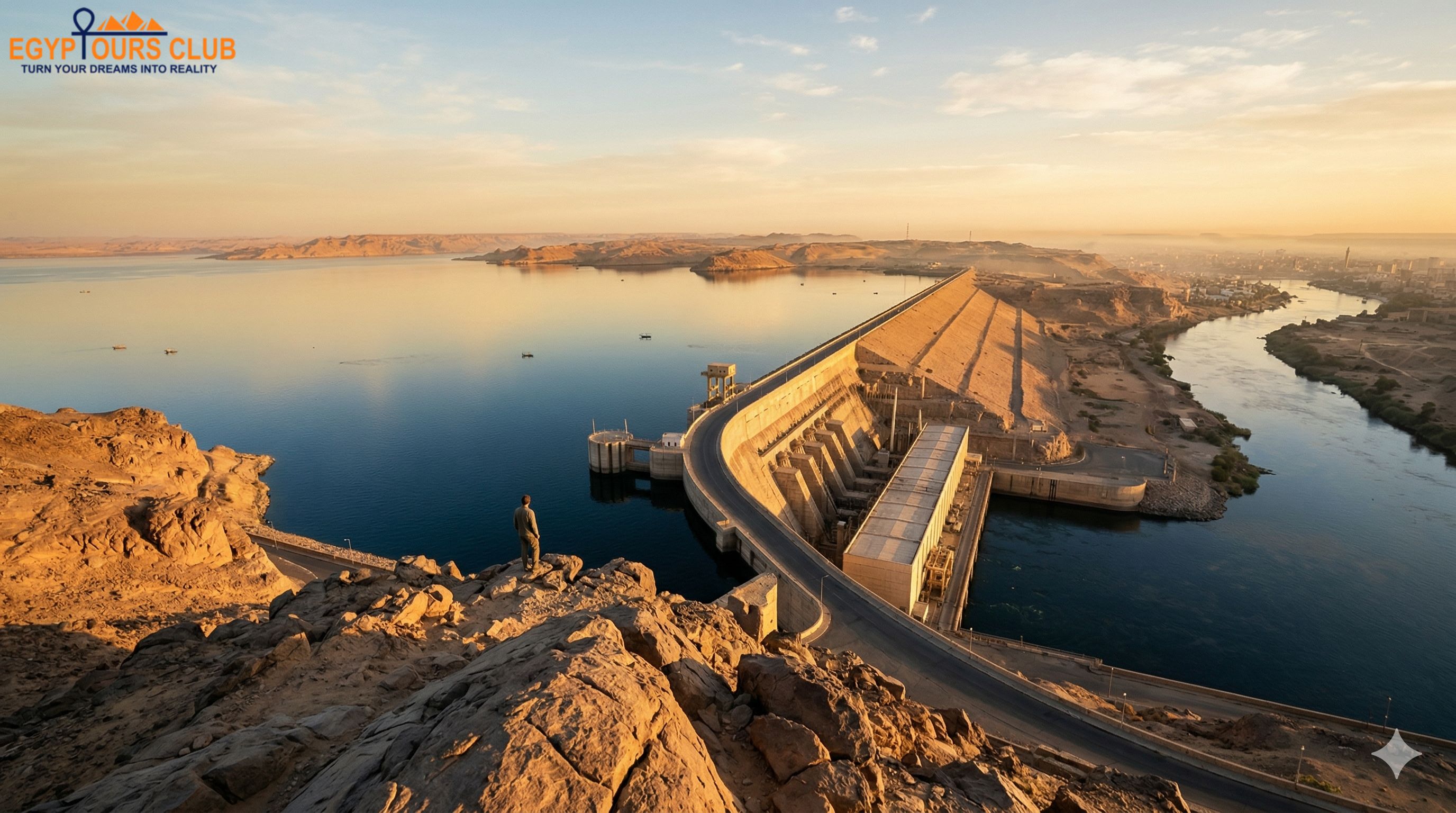
Lake Nasser Panorama near the Aswan High DamLAKE NASSER

Lake Nasser Panorama

Reservoir5,250 km² approx.

The vast artificial reservoir behind the dam is the most visible sign of how dramatically the project transformed the Nile landscape.

Dam Crest and Scale near the Aswan High DamENGINEERING

Dam Crest and Scale

1960Modern engineering

Stand on the massive embankment to appreciate a structure more than 3.5 kilometers long, designed for multi-year water storage and flood regulation.

Hydroelectric Generation near the Aswan High DamPOWER

Hydroelectric Generation

TurbinesElectricity

Water released through the dam drives turbines, turning the stored energy of the Nile into hydroelectric power that supported Egypt’s modernization.

UNESCO RESCUE

Philae and the Nubia Campaign

1960–1980Rescued heritage

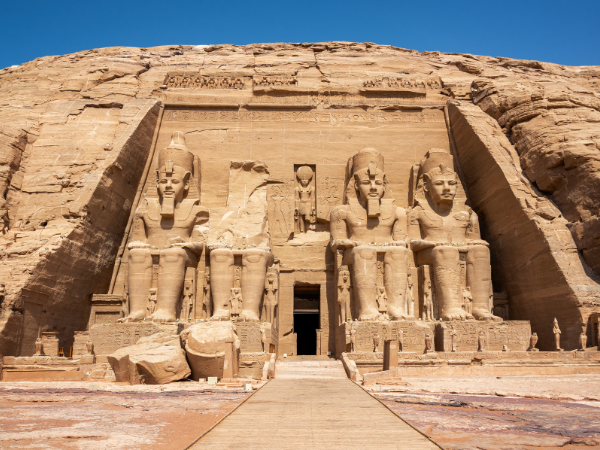
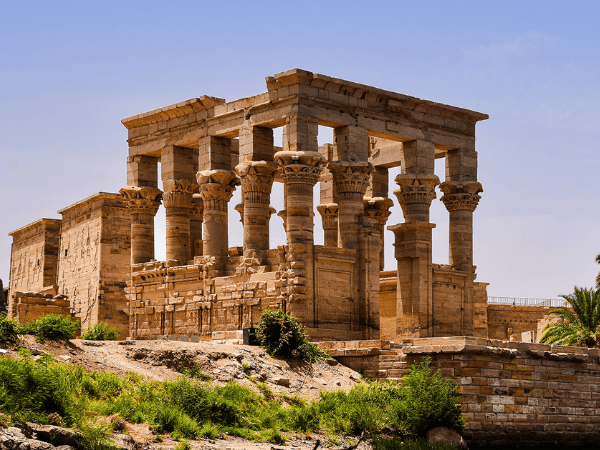
Rising water threatened major monuments. Egypt and UNESCO coordinated an international campaign that moved temples including Philae and Abu Simbel to safer ground.

Nubian Displacement and Memory near the Aswan High DamNUBIAN HISTORY

Nubian Displacement and Memory

Historic NubiaHuman impact

Lake Nasser submerged villages and ancestral landscapes, requiring major population relocation. The Nubian Museum adds essential cultural context.

Relocated Nubian Temples near the Aswan High DamNEW KALABSHA

Relocated Nubian Temples

Lake NasserHeritage landscape

New Kalabsha shows how monuments threatened by the reservoir were dismantled and reconstructed on higher ground near the High Dam.

Internal Link Map

From the High Dam to the exact Aswan page you need

Connect modern engineering with relocated temples, Nubian culture, Nile history and complete Aswan sightseeing.

Choose by Available Time

The strongest Aswan High Dam routes

The dam works best as one component of a wider Aswan sightseeing day rather than as a stand-alone half-day attraction.

30–60 minutes

Focused High Dam Visit

  • Main visitor viewpoint
  • Lake Nasser panorama
  • Construction and flood-control context
  • Hydroelectric power explanation
  • Nubian and UNESCO rescue overview
Open the High Dam guide
Half Day

High Dam + Philae Temple

  • Begin at the High Dam
  • Understand why rising water threatened monuments
  • Continue to the Philae boat landing
  • Explore the relocated Temple of Isis on Agilkia Island
Plan Philae Temple
Full Aswan Day

High Dam + Philae + Unfinished Obelisk + Nubian Museum

  • Modern hydraulic engineering
  • Rescued ancient temple heritage
  • Ancient granite engineering
  • Nubian culture and displacement context
Compare Aswan Day Tours

Planning note: Security checks, photography restrictions, road access and opening arrangements can change because the High Dam is strategic infrastructure. Follow current local instructions.

Continue Across Aswan and Nubia

What to visit before or after the High Dam

Use nearby sites to connect ancient Nile measurement, modern water control, relocated temples and living Nubian heritage.

Ancient Nile

Elephantine Island

Compare the High Dam’s modern river regulation with the ancient Nilometer used to measure natural flood levels.

Explore Elephantine Island
Cultural Context

Nubian Museum

Understand the communities, archaeology and landscapes transformed by Lake Nasser and resettlement.

Visit the Nubian Museum

From One Landmark to a Complete Egypt Journey

Travel routes that naturally include the Aswan High Dam

The dam fits naturally into Aswan city days, Nile cruise extensions, Nubian heritage itineraries and longer Egypt journeys.

Aswan

Private Aswan Day Tours

Compare High Dam, Philae, Unfinished Obelisk, Nubian Museum and Nile combinations.

Browse Aswan Day Tours
Custom

Tailor-Made Aswan and Nubia

Create a private route around your cruise schedule, interests, mobility and preferred guide language.

Create a Tailor-Made Tour
Lake Nasser and relocated Nubian monuments near the Aswan High Dam

Authoritative Heritage and Destination Sources

Confirm the High Dam, Nubian rescue and visitor context

The supplied guide relies on official Egyptian tourism and heritage information and on UNESCO material for the Nubian rescue campaign and World Heritage context.

Security arrangements, photography rules and visitor access can change. Follow current official signage and instructions at the High Dam.

Company and Operator

Who is behind Egypt Tours Club?

Egypt Tours Club provides traveler-facing destination information and private trip planning through its licensed operating company.

Egypt Tours Club

Egypt Tours Club is the traveler-facing travel brand operated by Vagus Travel Co. It provides destination information, private tours, day trips, multi-day packages and tailor-made trip planning.

  • Traveler-facing Egypt travel brand
  • Private Cairo & Giza day tours and cultural planning
  • Multi-city Egypt packages and tailor-made itineraries

Useful Travel Answers

Aswan High Dam questions before you go

Direct answers about construction, Lake Nasser, hydroelectricity, Nubian displacement, UNESCO rescue work, timing and practical visitor rules.

Where is the Aswan High Dam?

It crosses the Nile south of Aswan in southern Egypt.

When was the Aswan High Dam built?

Construction began in 1960, with the 1960s forming the main construction period.

Why was the High Dam built?

Its central purposes were flood regulation, water storage, more reliable irrigation and hydroelectric generation.

What lake did the High Dam create?

It created Lake Nasser, the vast reservoir extending south through historic Nubia and into Sudan.

How large is Lake Nasser?

The supplied guide cites official tourism information describing Lake Nasser as covering approximately 5,250 square kilometers.

Does the High Dam generate electricity?

Yes. Hydroelectric generation is one of its principal functions.

Did the High Dam stop the traditional Nile flood?

It greatly increased Egypt’s ability to regulate and store floodwater, ending the traditional annual inundation pattern downstream in its historic form.

What happened to Nubian villages?

Many communities in areas later covered by Lake Nasser had to be relocated, making displacement a central part of modern Nubian history.

Why did Abu Simbel have to be moved?

The rising reservoir threatened to submerge the temples, so they were dismantled and reconstructed on higher ground; relocation was completed in 1968.

Was Philae Temple moved because of the dam?

Yes. Philae’s monuments were relocated to Agilkia Island during the UNESCO Nubia Campaign.

What was the UNESCO Nubian Campaign?

It was an international effort to document, excavate, dismantle, move and reconstruct monuments threatened by rising water in Nubia. The supplied guide gives 1960–1980 as the campaign period.

Is the Aswan High Dam a UNESCO World Heritage Site?

No. The dam itself is not an inscribed World Heritage Site, but many monuments threatened by its construction were rescued and are included in the Nubian Monuments from Abu Simbel to Philae property.

Can you visit the Aswan High Dam?

Yes. Visitors commonly stop at designated viewpoints, subject to current security and access instructions.

How long should I spend at the High Dam?

Around 30–60 minutes is suitable for most travelers.

What is the best attraction to combine with the High Dam?

Philae Temple is the strongest historical pairing, followed by the Nubian Museum for cultural context.

What should I bring?

Bring sun protection, water and comfortable shoes. The dam is exposed and can also be windy.

Can I take photographs at the High Dam?

Photography rules can change because the dam is strategic infrastructure. Follow signs and security instructions and do not photograph restricted installations.

Private Aswan and Nubia Planning

Build the right Aswan route around the High Dam, Philae and Nubian heritage

Share your date, hotel or cruise, available time, group size and interests. We can connect the High Dam with Philae, the Nubian Museum, New Kalabsha, Abu Simbel and wider Aswan sightseeing.