

Temple of Hibis, Kharga Oasis | History & Visitor Guide | Egypt Tours Club
Temple of Hibis, Kharga Oasis . banner

Temple of Hibis, Kharga Oasis

ETCEgypt Tours Club

Kharga Oasis planning by a licensed local team

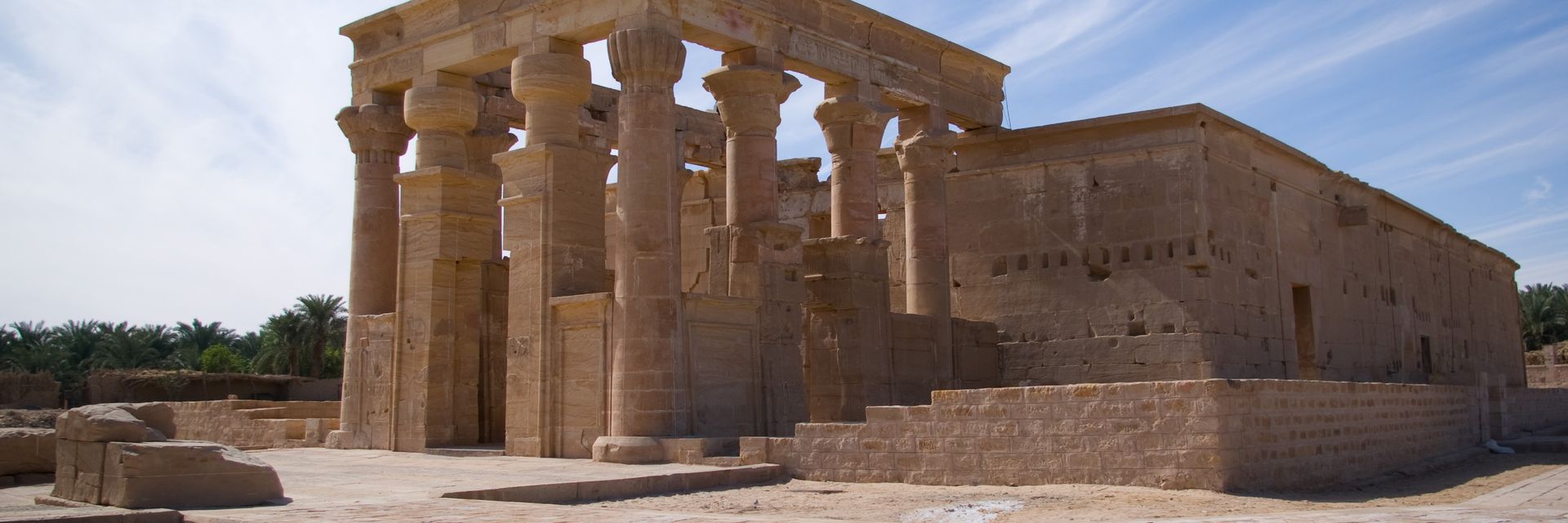
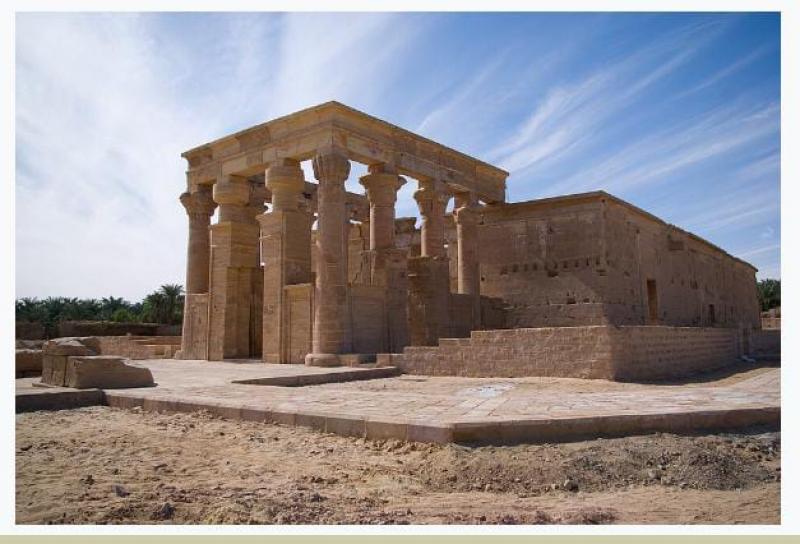
Temple of Hibis and its columned façade in Kharga Oasis

Persian-period temple · Kharga Oasis

Temple of Hibis, Kharga Oasis: Complete Guide to Egypt’s Persian Wonder

Explore Kharga’s best-preserved ancient temple, where Darius I appears as an Egyptian pharaoh and hundreds of divine figures fill a remarkable sanctuary.

Quick answer and historical context

Why the Temple of Hibis matters

The Temple of Hibis is the largest and best-preserved ancient Egyptian temple in Kharga Oasis. Its architecture and inscriptions preserve an unusually complete record of religious life during Egypt’s Saite-Persian era and later periods.

What is the Temple of Hibis?

The limestone sanctuary stood within ancient Hibis, an oasis city whose name is linked with the plough. Construction began before Persian rule, while Darius I was responsible for major decoration that presented him as a legitimate Egyptian pharaoh.

Later Egyptian, Ptolemaic and Roman patrons added gateways, halls and inscriptions. This long history makes Hibis both a coherent Egyptian temple and a layered archive of changing political authority.

Open the official Kharga Oasis guide
Reliefs, architecture and oasis history

Top things to see at the Temple of Hibis

Read the monument from its ceremonial approach to its dense sanctuary, where Persian royal patronage works through traditional Egyptian temple theology.

Temple of Hibis rising above Kharga OasisPersian Egypt

Darius I as an Egyptian pharaoh

Achaemenid patronageRoyal legitimacy

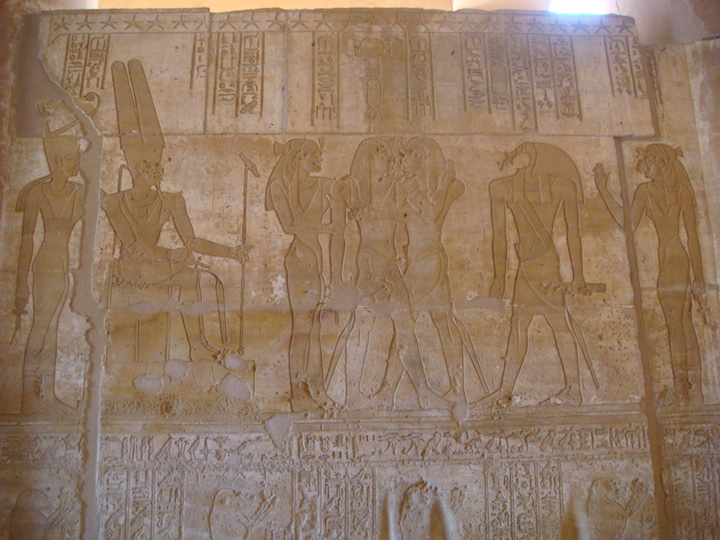
The temple preserves an exceptional meeting of Persian imperial rule and Egyptian sacred tradition. Darius I appears in pharaonic regalia, presenting offerings to Egyptian gods and ruling through established religious imagery.

Carved interior walls of the Temple of HibisSacred center

Sanctuary of Amun of Hibis

Theban theologyHundreds of deities

The richly decorated sanctuary is arranged as a vast divine catalogue. Hundreds of figures, ritual scenes and hymns connect Amun of Hibis with Theban theology, Osiris and the broader Egyptian pantheon.

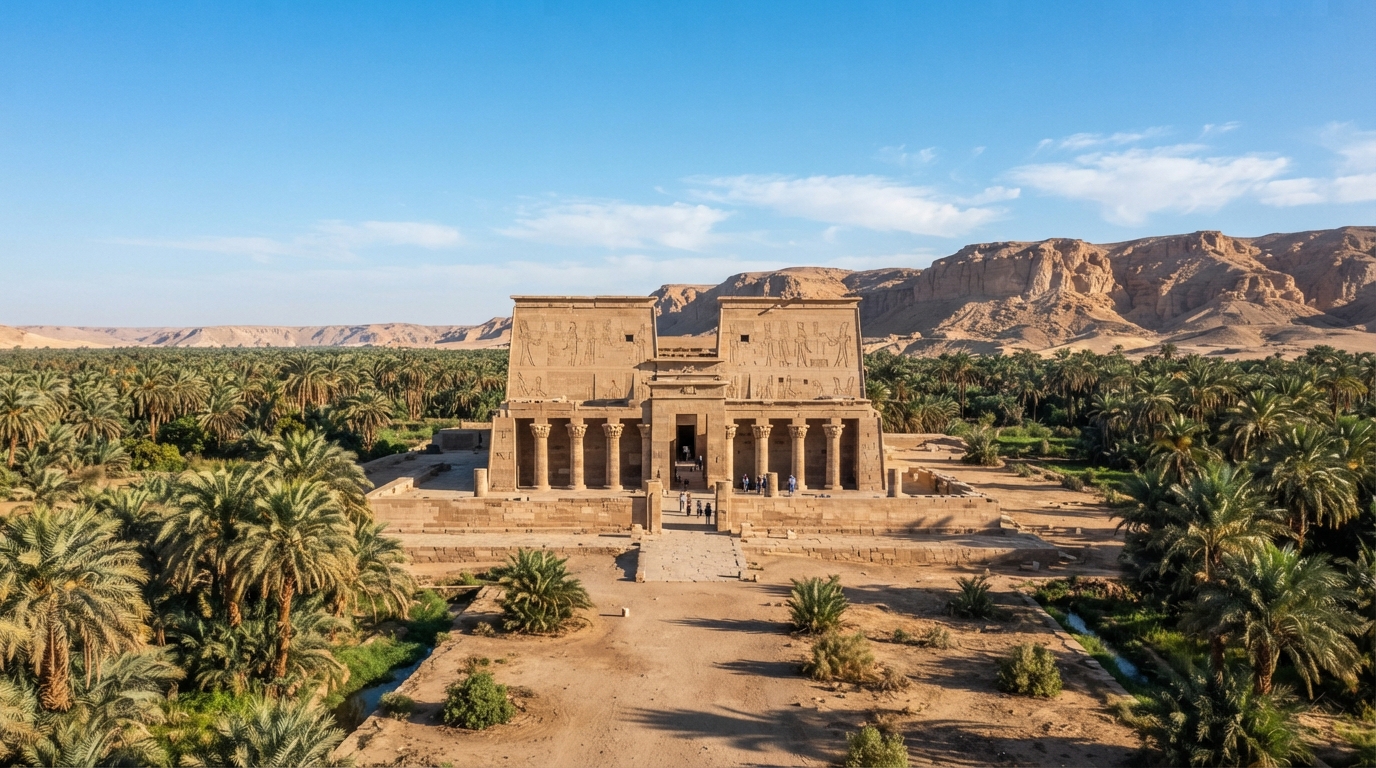
Processional approach and gateways at Hibis TempleCeremonial approach

Gateways and sphinx avenue

Ptolemaic additionsRoman inscriptions

A processional route crossed successive gateways before reaching the temple. Later rulers and officials added architectural elements and inscriptions, making the approach a visible record of centuries of use.

Columns within the hypostyle hall at Hibis TempleMonumental interior

Hypostyle halls and columns

Papyriform capitalsRitual reliefs

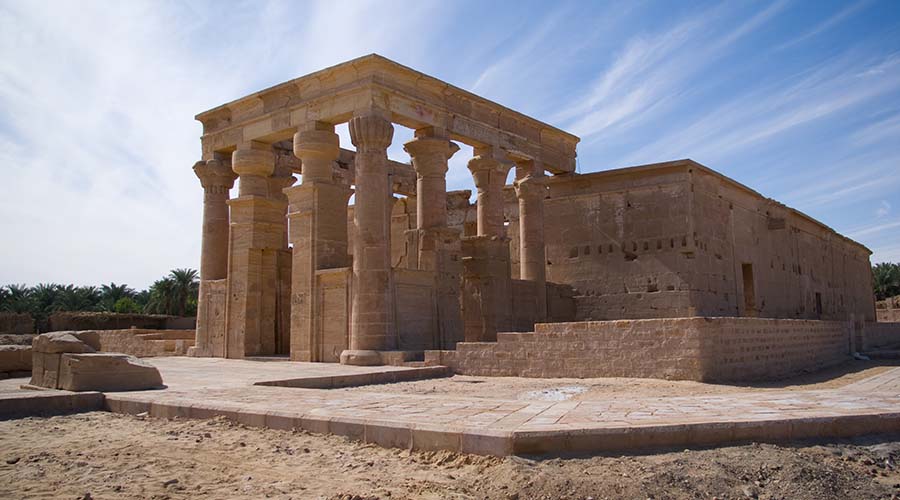
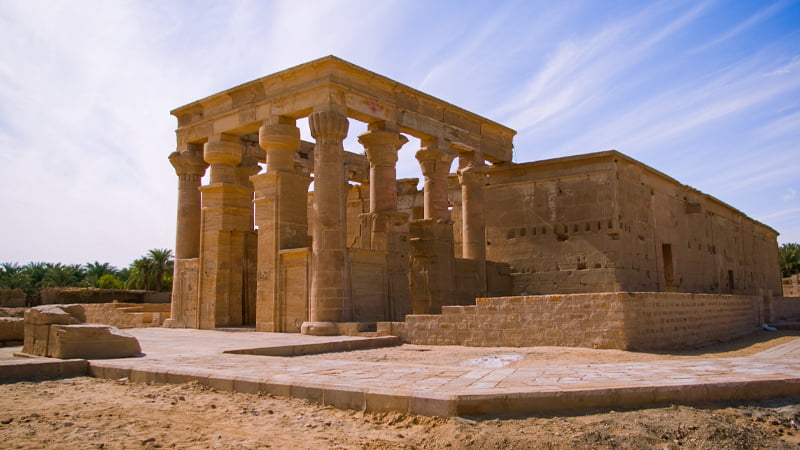
Columned halls lead visitors inward through increasingly sacred space. Carved walls and capitals preserve offering scenes and a traditional Egyptian temple plan adapted across Late Period, Persian, Ptolemaic and Roman phases.

Limestone architecture and palms at Hibis TempleOasis landscape

Ancient Hibis and the desert

City of the PloughPalm groves

The sanctuary belonged to ancient Hibis, an important oasis settlement whose name is associated with the plough. Palm groves and desert horizons still make the temple’s landscape central to the experience.

Temple of Hibis framed by Kharga Oasis palmsRegional circuit

Bagawat and Kharga landmarks

Early ChristianityOasis archaeology

Nearby Bagawat preserves hundreds of early Christian mud-brick funerary chapels. Kharga also offers Nadura, Al-Ghuwaita, Qasr Al-Zayan and the New Valley Museum for a broader oasis itinerary.

Transport and visit planning

How to reach the Temple of Hibis

Hibis is a short drive north of central El Kharga. Reaching Kharga itself involves long desert roads, so a reliable vehicle, realistic timing and advance coordination matter.

From El Kharga

Local taxi or private vehicle

  • Confirm the entrance and current access before departure.
  • Arrange a return pickup if using a local taxi.
  • Visit early during hot weather.
  • Pair with Bagawat on the same outing.
Open the official Bagawat guide
From Luxor

Private desert-road transfer

  • Use a suitable vehicle and experienced driver.
  • Allow substantial time for road conditions and stops.
  • Carry water and basic travel supplies.
  • Consider an overnight stay in Kharga.
Plan from Luxor
Longer oasis journey

From Cairo or Dakhla

  • Treat Cairo as a long transfer, not a casual day trip.
  • Build Kharga into a multi-day oasis itinerary.
  • Confirm fuel, road and permit arrangements.
  • Use local coordination for remote sections.
Ask for private route planning

Visitor note: Opening hours, tickets, road conditions and access procedures can change. Reconfirm current information shortly before travel.

Columns and carved stonework at the Temple of Hibis

Trusted monument and archaeology sources

Authoritative information about Hibis Temple

Egypt Tours Club helps plan the route. Use these official and scholarly sources for Kharga’s monuments, Bagawat and specialist archaeological research.

External pages open in a new tab. Reconfirm current visitor information before travel.

Frequently asked questions

Questions about the Temple of Hibis before you visit

Direct answers cover the monument’s date, builders, theology, location, visit length and nearby attractions.

What is the Temple of Hibis famous for?

It is the largest and best-preserved ancient temple in Kharga Oasis and an exceptionally important surviving monument from Egypt’s Saite-Persian period.

Where is the Temple of Hibis?

The temple is just north of El Kharga city in New Valley Governorate, in Egypt’s Western Desert.

Who built the Temple of Hibis?

Construction began in the Late Period, probably under Twenty-Sixth Dynasty rulers. Persian king Darius I played a major role in its decoration, and later Egyptian, Ptolemaic and Roman rulers added to it.

Which god was worshipped at Hibis?

The temple primarily honored Amun of Hibis and Amun-Ra, while its decoration also incorporates the Theban triad, Osiris and hundreds of other Egyptian divine figures.

What can I see inside the sanctuary?

The sanctuary preserves dense registers of gods, ritual scenes and theological inscriptions, creating one of the temple’s most remarkable visual records.

Can I combine Hibis with Bagawat Cemetery?

Yes. Bagawat is close to Hibis and the two sites form a practical combined visit, contrasting Late Period temple religion with early Christian funerary heritage.

How long should I allow for Hibis Temple?

Allow around 60–90 minutes for the temple, longer with a specialist guide or when combining it with Bagawat and other Kharga landmarks.

What is the best time to visit?

October through April generally offers more comfortable desert conditions. In hotter months, favor early morning, carry water and use strong sun protection.

Private Western Desert planning

Plan your Temple of Hibis and Kharga itinerary

Share your date, starting city, group size, guide language and priority sites. Egypt Tours Club can arrange a private route connecting Hibis, Bagawat and Kharga’s wider oasis heritage.