


The pyramids of Egypt are far more than monumental tombs. They are a visible timeline of architectural innovation, religious belief, royal power and engineering ambition — from the earliest experiments at Saqqara to the perfected geometry of Giza.
Why Pyramid Evolution Matters
Most travelers see the Pyramids of Giza and immediately understand their greatness. But the full story becomes much more powerful when you see how pyramid construction evolved over time.
The journey begins with early mastaba tombs, then moves to the Step Pyramid of Djoser at Saqqara, the experimental Bent Pyramid and Red Pyramid at Dahshur, and finally the iconic Great Pyramid of Giza. Each stage shows how ancient Egyptian builders learned, adapted and refined their methods.
That is why a curated Saqqara Dahshur Giza Pyramid Day Tour is one of the smartest ways to experience Egypt’s pyramid history. Instead of seeing isolated monuments, you follow the full architectural evolution in one meaningful route.
Quick Answer
Egyptian pyramid construction evolved from flat mastaba tombs to the Step Pyramid at Saqqara, then to experimental smooth-sided pyramids at Dahshur, and finally to the highly precise pyramids of Giza. The most complete way to see this story is the Saqqara, Dahshur and Giza Pyramids Day Tour from Cairo.
Best Route to Understand the Evolution of Egyptian Pyramids
The strongest route is simple: start with the Saqqara Step Pyramid, continue to Dahshur for the Bent Pyramid and Red Pyramid, then finish with the Pyramids of Giza Tours. This order helps travelers see the full development from early experimentation to architectural perfection.
Travelers staying in Cairo can use this article as a planning guide, then compare the full Cairo Day Tours collection or choose a deeper route through day trips from Cairo. For travelers building a wider Egypt journey, the pyramid route pairs naturally with the Grand Egyptian Museum Tours, Egypt Classic Tour Packages, and short itineraries such as 4-Day Egypt Tour Packages.
| Traveler intent | Best route | Recommended link |
|---|---|---|
| Full pyramid development | Saqqara, Dahshur and Giza in historical order. | Saqqara, Dahshur & Giza Tour |
| First-time Cairo visit | Giza Pyramids, Sphinx and museum highlights. | GEM, Pyramids & Sphinx Tour |
| Family-friendly planning | Balanced Cairo route with clear pacing and shorter transfers. | Egypt Family Travel Packages |
| Multi-day Egypt route | Cairo plus Luxor, Aswan, Nile Cruise or Abu Simbel. | 6-Day Egypt Tour Packages |
The Evolution of Egyptian Pyramid Construction: Timeline
The history of Egyptian pyramids is not a single leap. It is a sequence of experiments, corrections and breakthroughs.
1. Mastaba Tombs: The Foundation
Before pyramids, elite Egyptians were buried in rectangular mastaba tombs with flat roofs and sloping sides. These structures created the basic idea of monumental burial architecture.
2. Saqqara: The Step Pyramid Revolution
The Step Pyramid of Djoser transformed stacked mastabas into a vertical stone monument, creating the first major pyramid form in Egypt.
3. Dahshur: Trial, Error and Engineering Progress
King Sneferu’s pyramids at Dahshur show experimentation with true pyramid shape, especially through the Bent Pyramid and Red Pyramid.
4. Giza: Pyramid Engineering at Its Peak
The Great Pyramid of Khufu and the pyramids of Khafre and Menkaure represent the most famous and refined stage of Old Kingdom pyramid construction.
Saqqara and the Birth of Pyramid Design
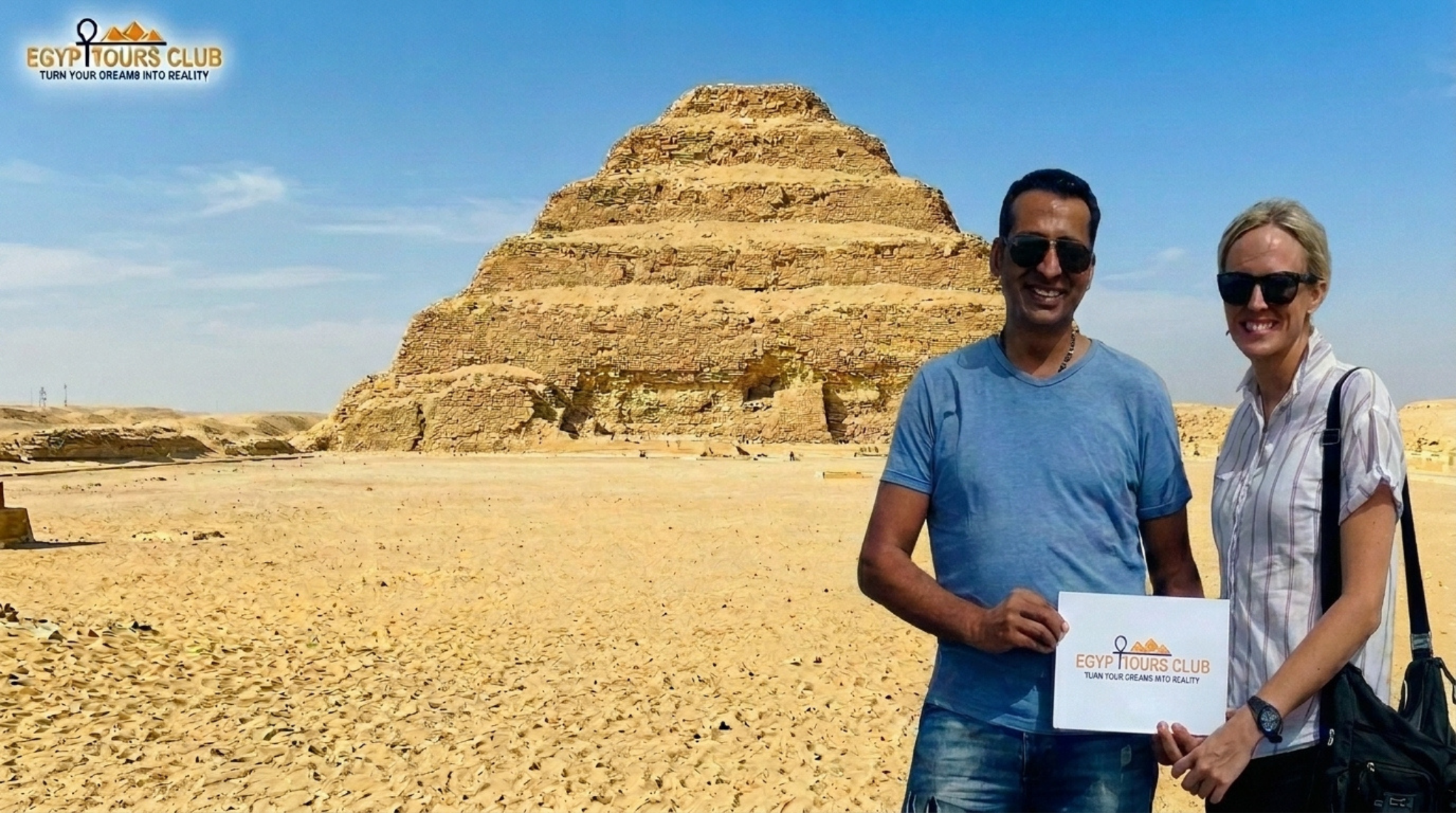
The story of pyramid construction begins at Saqqara, one of Egypt’s most important ancient necropolises. Here stands the Step Pyramid of King Djoser, widely recognized as the first pyramid in Egypt and one of the world’s earliest monumental stone structures.
The genius behind this innovation was Imhotep, the architect and official associated with Djoser’s complex. Instead of building one flat mastaba, the design stacked mastaba-like levels upward, creating a six-step monument that rose toward the sky.
This was not just an architectural change. It was a religious and political statement. The pharaoh’s tomb became a cosmic monument, linking royal power with the heavens and the afterlife.
First Pyramid Form
The Step Pyramid created the basic concept of vertical royal burial architecture.
Stone Innovation
Djoser’s complex marked a revolutionary use of monumental stone construction.
Royal Symbolism
The monument expressed the pharaoh’s sacred status and eternal afterlife journey.
To connect Saqqara with later pyramid sites, explore the Saqqara, Dahshur and Giza Pyramids Day Tour from Cairo.
Dahshur: The Testing Ground of Pyramid Perfection
After Saqqara, the next major chapter in ancient Egyptian pyramid engineering unfolded at Dahshur. During the reign of King Sneferu, builders attempted to move from stepped structures to smooth-sided pyramids.
The Bent Pyramid is one of the clearest examples of engineering learning in ancient history. Its angle changes partway up the structure, showing that builders adjusted the design during construction to improve stability.
Nearby, the Red Pyramid represents a major breakthrough. It is commonly regarded as the first successful true pyramid, with smooth sides and a stable angle that influenced later construction at Giza.
| Dahshur pyramid | What it teaches | Why it matters |
|---|---|---|
| Bent Pyramid | Builders changed the angle during construction. | Shows real-time engineering adaptation and problem solving. |
| Red Pyramid | First successful smooth-sided true pyramid. | Created the stable design that helped lead to Giza. |
| Sneferu’s building program | Multiple pyramid attempts in one reign. | Shows how royal ambition accelerated architectural progress. |
Why Dahshur Is Essential
Dahshur is where pyramid construction moved from experimentation to mastery. Without Dahshur, Giza’s perfection is harder to understand.
Giza: The Peak of Pyramid Engineering
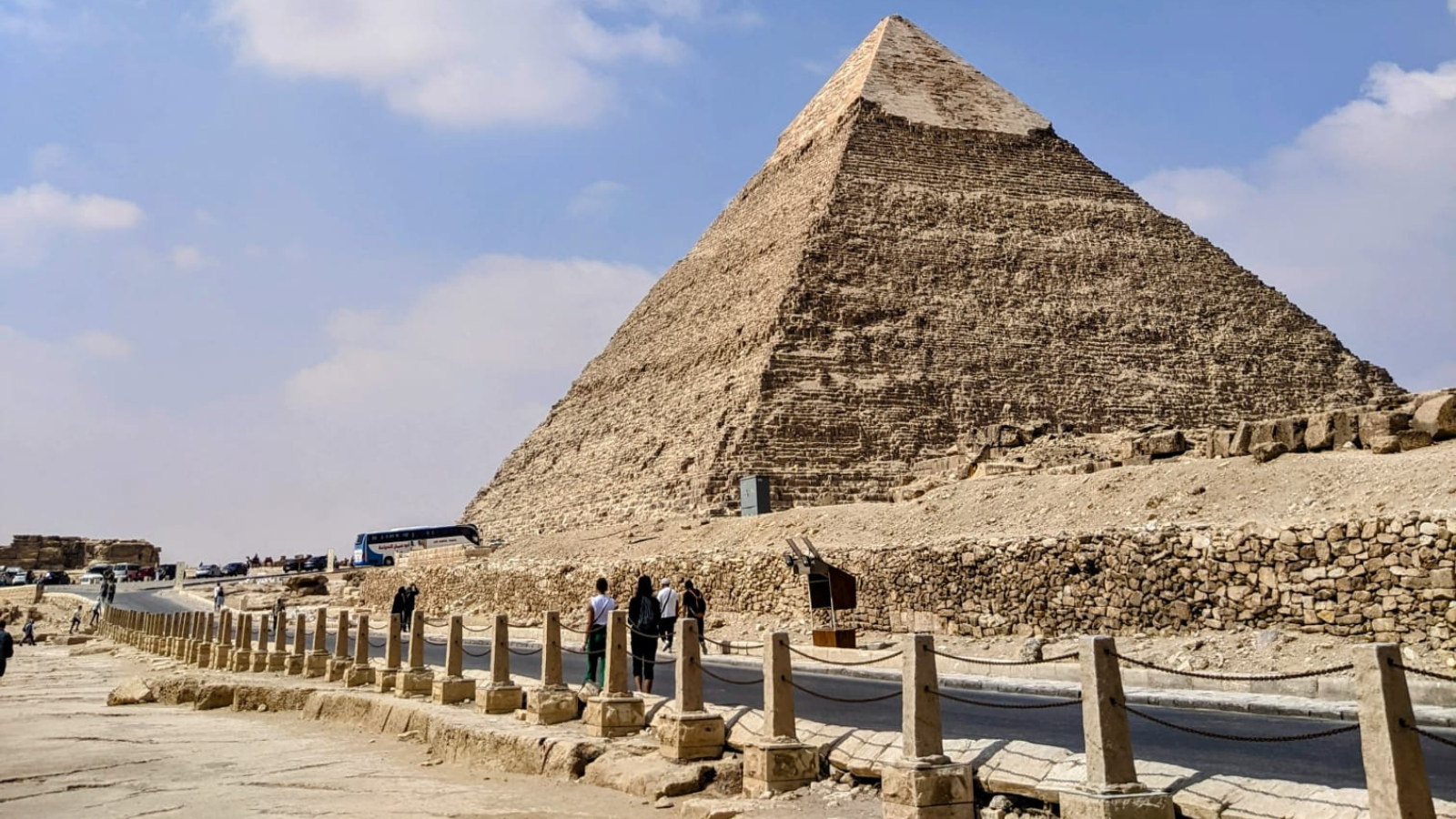
The final and most famous stage of pyramid evolution is the Giza Plateau. Here, the Great Pyramid of Khufu, the Pyramid of Khafre and the Pyramid of Menkaure form Egypt’s most iconic ancient landscape.
The Great Pyramid of Giza stands out for its size, precision and lasting influence. Its alignment, scale and internal design continue to fascinate historians, architects and engineers. But Giza is not only about one pyramid. It is a complete royal landscape with temples, causeways, smaller pyramids, tombs and the Great Sphinx.
For travelers, Giza is best understood after seeing Saqqara and Dahshur. Then the Great Pyramid does not appear as an isolated miracle. It becomes the result of generations of learning.
| Giza monument | Main feature | Travel meaning |
|---|---|---|
| Great Pyramid of Khufu | Largest and most famous pyramid at Giza. | Represents the peak of Old Kingdom royal engineering. |
| Pyramid of Khafre | Appears especially tall because of its elevated position. | Creates one of the most recognizable views of Giza. |
| Pyramid of Menkaure | Smaller but essential to the complete pyramid group. | Shows continuity of royal pyramid tradition. |
| Great Sphinx | Royal guardian with lion body and human head. | Adds mystery, symbolism and visual power to the plateau. |
For a deeper guide to the site itself, read our page on Pyramids of Giza Tours and compare it with the Great Sphinx of Giza Tours.
Religion, Royal Power and the Meaning of Pyramid Design
Pyramids were not built only as tombs. They were sacred royal monuments designed to support the pharaoh’s journey into the afterlife. Their shape, alignment and surrounding complexes reflected beliefs about kingship, resurrection and the sun god Ra.
Each pyramid complex could include temples, causeways, burial chambers, offering spaces and subsidiary tombs. These elements turned the pyramid into a complete sacred landscape, not just a stone structure.
Solar Belief
Pyramids were connected to the sun, rebirth and the pharaoh’s eternal journey.
Royal Authority
Monumental scale reinforced the divine power and legitimacy of the king.
Afterlife Purpose
The pyramid complex prepared the pharaoh for transformation after death.
Cosmic Order
Alignment and geometry reflected balance, order and sacred direction.
Temple Ritual
Mortuary temples supported offerings and long-term royal cult practices.
State Power
Pyramid projects required administration, food, labor, planning and expertise.
To explore the afterlife ideas behind ancient monuments, continue with The Book of the Dead explained simply.
Saqqara vs Dahshur vs Giza: What Each Site Adds
Seeing one pyramid is impressive. Seeing all three major pyramid zones together tells the complete story.
| Site | Main pyramid lesson | Best reason to visit |
|---|---|---|
| Saqqara | Birth of pyramid architecture. | See the Step Pyramid of Djoser and the earliest major stone pyramid complex. |
| Dahshur | Engineering experimentation. | Understand the transition from step forms to true smooth-sided pyramids. |
| Giza | Peak of pyramid precision and scale. | Experience the Great Pyramid, the Great Sphinx and Egypt’s most iconic ancient landscape. |
Why the Saqqara, Dahshur and Giza Pyramid Day Tour Is the Best Route
A well-designed Pyramid Day Tour from Cairo connects the dots. You begin with the Step Pyramid at Saqqara, move to Dahshur’s experimental pyramids, then finish at Giza where the pyramid idea reaches its most famous expression.
This route is especially valuable for travelers who want more than a photo stop. It turns a day of sightseeing into a clear story of design, innovation and belief.
Start at Saqqara
Understand how the pyramid idea began through Djoser’s Step Pyramid and its surrounding complex.
Continue to Dahshur
See how builders experimented with angle, stability and smooth-sided pyramid form.
Finish at Giza
Experience the Great Pyramid, Khafre, Menkaure, the Sphinx and panoramic viewpoints.
Add Expert Interpretation
A guide helps connect engineering, religion, royal power and site sequence into one story.
Recommended Experience
The best way to understand pyramid evolution is to book the Saqqara, Dahshur and Giza Pyramids Day Tour from Cairo, because it follows the historical development in the correct architectural order.
Practical Tips for a Pyramid Evolution Tour
This is a rich day, so comfort and timing matter. A guided tour helps control the pace and makes the route easier to understand.
| Tip | Why it helps |
|---|---|
| Start early | Better light, cooler temperatures and more time at each site. |
| Visit in historical order | Saqqara → Dahshur → Giza makes the evolution easier to follow. |
| Use an Egyptologist guide | Engineering, religion and royal history become much clearer. |
| Wear comfortable shoes | The route involves desert ground, stone paths and large archaeological areas. |
| Carry water and sun protection | Pyramid sites are exposed, especially around midday. |
| Leave time for panoramic views | The best photos and site understanding often come from wider viewpoints. |
Best Egypt Itineraries to Pair with a Pyramid Evolution Tour
A pyramid-focused day can stand alone, but it becomes more valuable when it is connected to museums, Nile temples and wider Egypt routes. Travelers interested in pyramid history often continue with the Grand Egyptian Museum, a Nile Cruise Package, or a complete classic Egypt itinerary.
Cairo Short Stay
Best for travelers who want Giza, Saqqara, Dahshur, the Sphinx and GEM without domestic flights.
View 4-Day Egypt Tour Packages →Cairo + Nile Temples
Best for visitors who want pyramids first, then Luxor, Aswan and temple history along the Nile.
View 6-Day Egypt Tour Packages →Luxury Cultural Route
Best for travelers who want smoother transfers, selected hotels and a refined Egyptology-focused journey.
View Luxury Egypt Tour Packages →Custom Pyramid Focus
Best for travelers who want Giza, Saqqara, Dahshur, Memphis, museums and Old Kingdom history arranged around their dates.
Build a Tailor-Made Egypt Tour →Explore More Egypt Pyramid and Cairo Routes
Continue planning your pyramid journey with these related Egypt Tours Club pages.
.png)