

Sohag Tours | Red Monastery, White Monastery & Coptic Art
Sohag · Red Monastery · White Monastery · Coptic Art
Sohag ToursRed Monastery, White Monastery & Coptic Art
A focused Upper Egypt heritage route for travelers who want painted apses, monastic architecture and a deeper Christian heritage story beyond the standard Nile circuit.
Sohag tours are ideal for travelers who want to understand Upper Egypt’s Christian heritage through the Red Monastery, the White Monastery, painted sanctuary art, early monastic history and cultural pairings with Abydos, Dendera, Luxor or Coptic Cairo.
Start with the route that matches your travel time. The strongest Sohag experience usually combines the Red Monastery and White Monastery, then adds Abydos, Dendera, Luxor or Coptic Cairo only when the timing makes sense.
The best Sohag tour is a guided heritage route that combines the Red Monastery and White Monastery with enough time for Coptic art, painted apses, architectural details and monastic history. If you have a full day or more, Sohag can be paired with Abydos and Dendera for a stronger Upper Egypt cultural route.
Choose the Right Route
Which Sohag Route Fits Your Trip?
Sohag is not a place to rush. Choose the route based on whether you want a focused monastery visit, a broader Christian heritage itinerary or an Upper Egypt sacred-sites journey.
Focused Sohag
Red and White Monasteries
Best for travelers who want a clean Sohag monastery route without adding too many distant stops.
A Deeper Upper Egypt Route for Coptic Art and Monastic Heritage
Many Egypt itineraries move quickly between Cairo, Luxor and Aswan. Sohag gives a different layer of Egypt: quieter, more specialized and rich in Christian heritage. The route is especially valuable for travelers who want to see how monastic life, architecture and painted religious art developed in Upper Egypt.
The main reason to visit is the pairing of the Red Monastery and the White Monastery. Together, they show two complementary sides of Sohag’s heritage: richly decorated sacred interiors, powerful architectural mass, early monastic identity and a setting away from the busiest tourist circuits.
A strong Sohag tour should explain both monasteries as related heritage stops, not as two random photo locations.
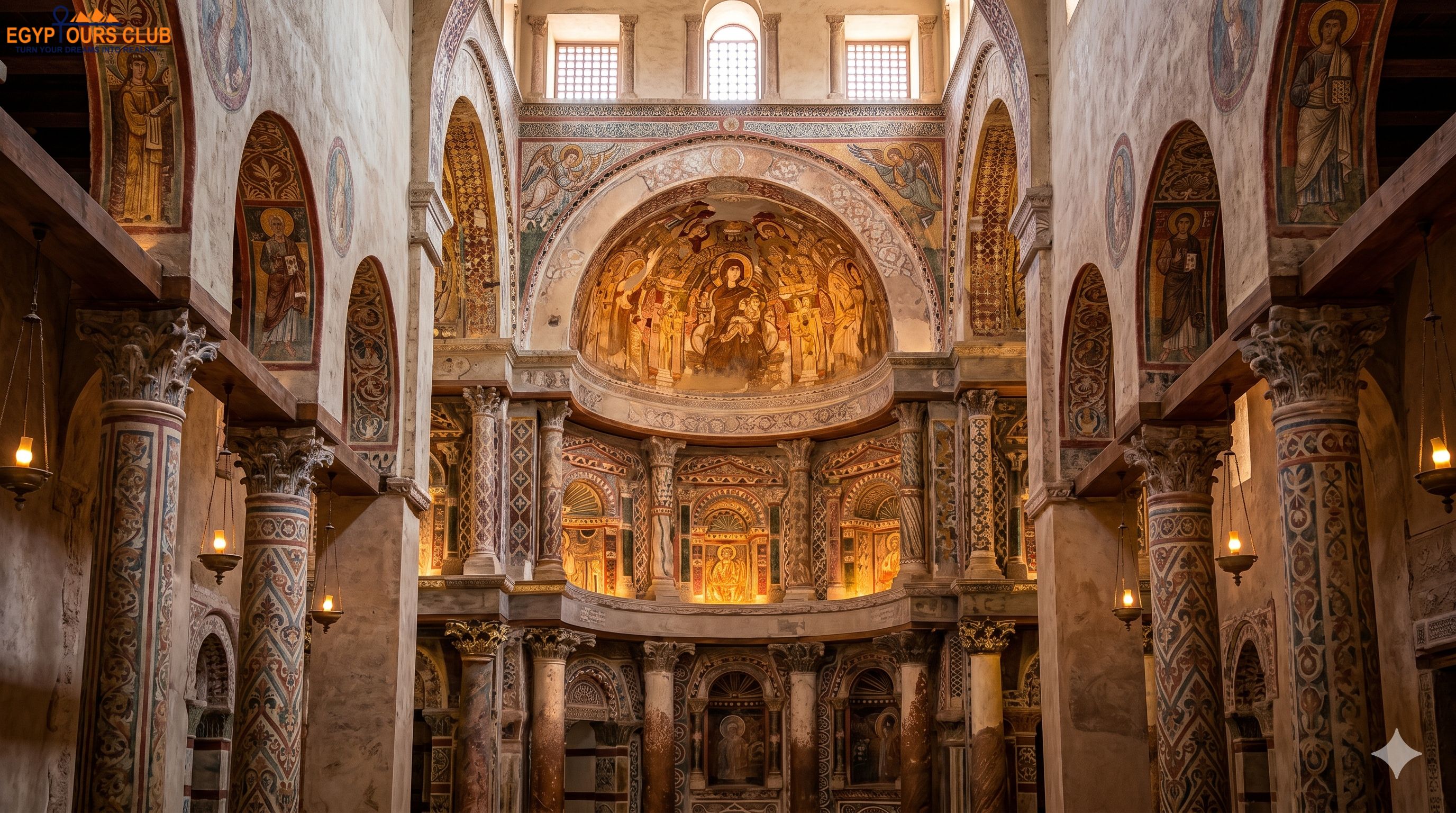
Red MonasteryThe main visual draw is the decorated sanctuary, where painted architectural detail and Coptic religious art create a rare Upper Egypt interior.
White MonasteryA powerful companion site that gives the route architectural contrast and stronger monastic context.Sohag Heritage RouteThe best visit connects art, architecture, religious history and practical travel timing in one coherent route.
Coptic Art Guide
Why Coptic Art Travelers Should Add Sohag
Sohag is especially strong for travelers who care about painted interiors, sanctuary design, early Christian symbolism and the relationship between art and worship.
Painted apsesLook for layered color, sacred figures, architectural framing and the way the sanctuary pulls the eye forward.
Monastic settingThe experience is quieter than major city churches, which makes the history easier to absorb with a guide.
Architecture contrastThe Red and White Monasteries work best together because each one gives the other clearer context.
Route depthPair with Coptic Cairo for church history or Abydos and Dendera for a wider sacred-art journey.
Best Photo Spots
Best Photo Spots on a Sohag Monastery Route
Sohag is not only about wide exterior shots. The strongest visual moments are in sanctuary detail, texture, scale and the contrast between the two monasteries.
Interior Detail
Red Monastery Sanctuary
Use your time slowly here. The painted apse, columns, color layers and sacred framing are the heart of the visit.
Architecture
White Monastery Exterior
Look for mass, symmetry, wall texture and the contrast between the exterior presence and interior atmosphere.
Quiet Details
Icons, Patterns and Light
Ask before taking interior photos and avoid flash where restrictions apply. Respectful photography keeps the site experience calm.
Practical Visit Planner
How to Plan a Sohag Monastery Tour
Sohag rewards travelers who plan the day carefully. The main decision is whether to keep the route focused or combine it with a longer Upper Egypt journey.
Item
Planning Detail
Best Use
Recommended route
Red Monastery + White Monastery
Best core route for first-time Sohag heritage visitors.
Suggested timing
Half day for Sohag only, full day with nearby add-ons
Prevents the monastery visit from feeling rushed.
Best pairing
Abydos, Dendera, Luxor or Coptic Cairo
Useful when building a deeper cultural itinerary.
Best traveler type
Art lovers, Christian heritage travelers and repeat Egypt visitors
Strongest for guests seeking more than classic monument sightseeing.
Guide value
High
A guide helps explain symbolism, architecture and monastic context.
Dress and conduct
Modest clothing and calm movement
Best for active religious sites and respectful heritage travel.
Visitor Tips
Mistakes to Avoid When Planning Sohag Tours
The common problem is treating Sohag as a quick add-on. The monasteries become much stronger when the route gives them enough time and context.
Do not visit only one monastery if time allowsThe Red Monastery and White Monastery explain each other. Together they give a more complete Sohag Coptic heritage route.
Do not overload the same dayIf you add Abydos, Dendera or long transfers, start early and keep the number of stops realistic.
Do not make it only a photo stopThe value is in the sanctuary art, architectural details, monastic history and guide explanation.
Do not ignore etiquetteThese are religious places. Dress modestly, move calmly, and ask before close interior photography.
Do not skip the guide explanationSohag’s strongest value is interpretation: why the paintings matter, how the spaces work, and how the monasteries fit Upper Egypt’s story.
Explore More
Continue Your Coptic and Upper Egypt Journey
These routes connect Sohag with the most relevant Egypt Tours Club pages, heritage routes and flexible trip-planning options.
The best Sohag tour is a guided heritage route combining the Red Monastery and White Monastery with time for Coptic art, painted apses, architecture and monastic history.
Can I visit the Red Monastery and White Monastery together?
Yes. They are the strongest natural pairing for a Sohag Coptic heritage route and should usually be planned together when timing allows.
Why is the Red Monastery famous?
The Red Monastery is famous for its decorated sanctuary, painted apses, architectural detail and importance within Upper Egypt’s Coptic Christian heritage.
What should I combine with Sohag monasteries?
Good pairings include Abydos, Dendera, Luxor, Coptic Cairo or a wider Egypt itinerary depending on your travel route and interests.
Is Sohag good for art lovers?
Yes. Sohag is especially strong for travelers interested in Coptic art, painted religious interiors, early Christian architecture and quieter heritage sites.
How long do I need for a Sohag monastery route?
Plan a focused half day for the two monasteries, or a full day if combining Sohag with longer transfers or nearby Upper Egypt sites.
Is Sohag better with a guide?
Yes. A guide helps turn the route from a simple site visit into a clear story about monastic life, sanctuary art and Upper Egypt Christian heritage.
Can Sohag be added to Egypt tour packages?
Yes. Sohag can be added as a specialized Upper Egypt extension, especially for travelers interested in Coptic art, Abydos, Dendera, Luxor or slower cultural routes.
Egypt Tours Club · Sohag Coptic Heritage Routes
Ready to Plan Your Sohag Monastery Route?
Visit the Red Monastery and White Monastery with a guided Upper Egypt route that connects Coptic art, monastic heritage, Abydos, Dendera, Luxor or Coptic Cairo into one smooth itinerary.