

11 Best Sohag Tours | Red Monastery, White Monastery
Sohag Monasteries . banner

Sohag Monasteries

Egypt Tours Club

Sohag planning · Coptic heritage · Upper Egypt itineraries

Red Monastery · White Monastery · Coptic Art · Upper Egypt

Sohag Monasteries Visitor Guide

Plan a thoughtful visit to the Red Monastery and White Monastery west of Sohag, two major landmarks of Egypt's Coptic monastic heritage. Use this guide to understand what makes each monastery different, what to prioritize, how much time to allow, and how to connect Sohag with the wider cultural landscape of Upper Egypt.

Quick Travel Answer

What is the best way to visit the Sohag Monasteries?

The most useful first visit is to treat the Red Monastery and White Monastery as one paired Coptic heritage experience, not as two isolated photo stops. Allow enough time to compare the Red Monastery's painted sanctuary with the White Monastery's monumental limestone architecture and Saint Shenouda context. For many travelers, a relaxed half day is a practical starting point.

If you want to continue deeper into Upper Egypt, connect Sohag with Abydos Temple or the Dendera Temple Complex, but do not overload one day simply to add more names. Road time, heat and the depth of each visit matter more than the number of stops.

Recommended visitAbout half a day for both monasteries
Main sitesRed Monastery + White Monastery
LocationWest of Sohag in Upper Egypt
Best interestCoptic art & monastic history
Best pairingAbydos or a wider Upper Egypt route

Essential Monasteries & Heritage

What to see at the Red and White Monasteries

The strongest Sohag visit is not a generic list of churches. It is a comparison between painted sacred space, monumental stone architecture, early monastic communities and the living religious context that still shapes the sites today.

Exterior enclosure wall of the Red Monastery near SohagRed MonasteryRoland Unger · Wikimedia Commons · CC BY-SA 3.0

Red Monastery Church

Official Egyptian monument information identifies the Red Monastery as an important early Christian complex west of Sohag. Its surviving church is the key visitor focus, with a distinctive eastern sanctuary and historic painted decoration.

Early Coptic heritageSacred architecture
Entrance of the White Monastery of Saint Shenouda near SohagWhite MonasteryEinsamer Schütze · Wikimedia Commons · CC BY-SA 3.0

White Monastery of Saint Shenouda

The White Monastery is closely associated with Saint Shenouda and takes its common name from the pale limestone used in its monumental church. The site adds architectural scale and monastic context to the Sohag visit.

Saint ShenoudaWhite limestone
Painted north apse in the sanctuary of the Red Monastery at SohagCoptic ArtCtschroeder · Wikimedia Commons · CC BY-SA 4.0

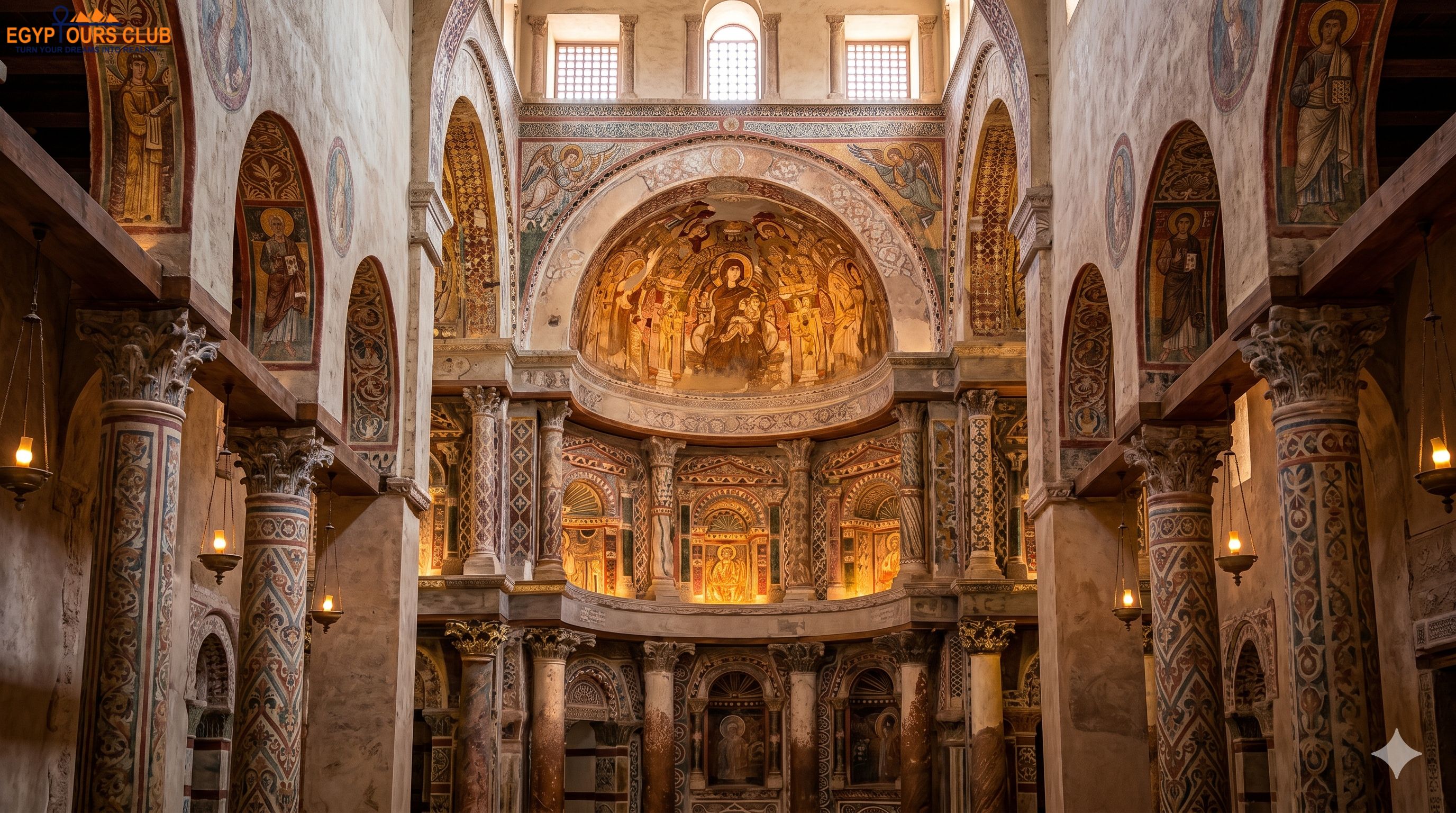
Painted Sanctuary of the Red Monastery

The Red Monastery's painted sanctuary is one of the most important reasons to slow down here. Conservation work has helped reveal a complex program of figures, color, architectural framing and sacred imagery across the eastern end of the church.

Wall paintingsConservation
Pharaonic stone spolia reused in the White Monastery at SohagArchitectureEinsamer Schütze · Wikimedia Commons · CC BY-SA 3.0

White Monastery Basilica & Reused Stone

The White Monastery's church is important for its basilica form, heavy limestone construction and reused ancient Egyptian stone blocks. Look for how earlier material was integrated into a later Christian monument.

BasilicaReused blocks
Red Monastery exterior in the Sohag monastic landscapeMonastic ContextRoland Unger · Wikimedia Commons · CC BY-SA 3.0

Saint Shenouda & the Sohag Monastic Landscape

Saint Shenouda is central to understanding the White Monastery and the wider development of communal monastic life in Upper Egypt. A good visit connects the building with the people and institutions that gave it meaning.

Monastic historyUpper Egypt
Entrance of the active White Monastery of Saint Shenouda in SohagLiving HeritageEinsamer Schütze · Wikimedia Commons · CC BY-SA 3.0

Active Religious Setting

The monasteries should not be approached as static archaeological ruins. Religious practice, local instructions and conservation requirements can influence what is accessible and how visitors should behave on a given day.

Respectful visitCurrent access

Explore the Monastic Landscape

Choose the part of Sohag's Coptic heritage you want to understand first

Different travelers notice different things. Use these themes to decide where to spend your attention rather than trying to absorb every detail at once.

Painted Sacred Space

Focus on the Red Monastery sanctuary, where painting and architecture work together rather than treating the images as isolated decoration.

Stone Architecture

At the White Monastery, compare the pale limestone mass, basilica plan and reused ancient blocks with the visual character of the Red Monastery.

Saint Shenouda

Use the White Monastery to understand why Shenouda became one of the most important figures in Egyptian monastic history.

Early Monastic Life

Look beyond architecture to the communities that occupied, maintained and shaped these places in late antique and Christian Egypt.

Reused Ancient Material

The White Monastery gives a useful opportunity to notice ancient Egyptian blocks reused within later Christian construction.

Conservation & Living Worship

The Red Monastery shows how modern conservation must work alongside the needs of an active religious setting.

Practical Visitor Planning

How to plan a realistic visit to the Sohag monasteries

Operational facts can change, so the most useful plan separates stable guidance from details that should be checked shortly before travel.

Current-hours note: official Egyptian sources currently list 9:00 AM–5:00 PM for both the Red and White Monasteries. The Ministry page for the White Monastery lists 9:00 AM–4:00 PM during Ramadan and advises that the last entry is one hour before closing. Treat these as current operating details, not permanent rules, and verify them again before travel.

Suggested first-visit route

Visit both monasteries as one local sequence. Starting with the White Monastery gives architectural and Saint Shenouda context before the more intensely painted Red Monastery; reversing the order can also work depending on access and transport.

How long to spend

About half a day is a useful planning range for both monasteries together. Add time for transport, prayer/service activity, a guide's explanation, photography permissions and any additional Sohag stops.

Opening & access

Check the latest official hours and local access before leaving. Religious events, conservation or operational changes can affect specific interiors even when the overall site is open.

Tickets & entry

Do not rely on an old blog price or screenshot. Any entry procedure, ticket category or fee should be confirmed from a current official source or your local operator close to the visit date.

Best time of day

Morning is usually the easiest choice for temperature and pacing, especially when the day includes more Upper Egypt travel. Local worship schedules can matter more than photography light.

Guide or self-guided?

You can appreciate the architecture independently, but a knowledgeable guide adds real value for the painted sanctuary, Saint Shenouda, monastic history and the relationship between the two sites.

Families

Older children may enjoy color, architecture and stories of monastic life. Keep the visit focused and avoid adding long road transfers simply to fill the day.

Mobility & accessibility

Historic thresholds, courtyards and uneven surfaces may create barriers. Do not promise full step-free access; confirm current conditions in advance for travelers with limited mobility.

Before You Visit

What to wear, bring and check before leaving for Sohag

Small planning choices make the monasteries easier to understand and more respectful to visit.

Dress for a sacred place

Choose modest clothing suitable for active Christian religious sites. Lightweight fabrics work well in Upper Egypt, but shoulders and knees should be covered appropriately.

Use comfortable footwear

Courtyards, thresholds and older surfaces can be uneven. Comfortable closed or secure walking shoes are more useful than formal footwear.

Carry water & sun protection

Heat can affect the overall day even when much of your attention is indoors. Bring water, sun protection and a hat for transfers or outdoor areas.

Recheck same-day conditions

Confirm opening hours, access, religious activity and photography rules before arrival. Treat online operational details as changeable information.

Local-planner advice: do not judge a Sohag monastery visit by the number of stops. A slower paired visit to the Red and White Monasteries usually creates more value than adding a distant site and cutting the time inside both monasteries.

Photography

How to photograph the monasteries respectfully

The strongest photographs come from understanding the site first. Interior permissions, worship activity and conservation rules should always take priority over the shot.

Red Monastery Sanctuary

If photography is permitted, work slowly with the painted architecture and overall sanctuary composition rather than only isolating decorative fragments.

White Limestone Exterior

The White Monastery rewards wider architectural views that show scale, wall texture and the contrast between pale stone and the Upper Egypt light.

Details & Reused Stone

Look for carved stone, construction details and traces of reused earlier blocks where they are visible without crossing barriers or touching protected fabric.

People & Worship

Ask before photographing clergy, worshippers or services. A sacred space is not a staged cultural performance, and privacy should be respected.

Flash & Equipment

Do not assume flash, tripods or professional equipment are permitted. Follow the instructions given on site and any current conservation restrictions.

Give Yourself Time

A rushed visit leads to repetitive images. Pause to understand the light, architecture and visual differences between the two monasteries.

Internal Link Map

Continue from Sohag to the exact Egypt Tours Club page you need

Use attraction pages for research, destination pages for city planning, day tours when booking intent is clear, and package hubs only when you are ready to plan a longer Egypt trip.

Choose by Time and Intent

Choose a Sohag route that matches your actual travel day

The right route depends on how deeply you want to understand the monasteries and how much road time you are willing to add. These are planning frameworks, not fixed operating schedules.

Focused visit

Red + White Monasteries

  • White Monastery architecture
  • Saint Shenouda context
  • Red Monastery church
  • Painted sanctuary and conservation story
Plan a Private Sohag Visit
Half day

Coptic Art & Architecture

  • Both monasteries
  • Longer interior interpretation
  • Architecture comparison
  • Photography time where permitted
Build a Coptic Art Route
Full day / route dependent

Sohag + Abydos

  • Red Monastery
  • White Monastery
  • Abydos Temple
  • Road timing planned around your start point
Open the Abydos Visitor Guide
Multi-day

Dendera + Abydos + Sohag

  • Dendera Temple Complex
  • Abydos Temple
  • Sohag monasteries
  • Comfortable road pacing instead of one overloaded day
Plan an Upper Egypt Heritage Route
Christian heritage

Coptic Cairo + Sohag

  • Coptic Cairo churches
  • Hanging Church context
  • Red and White Monasteries
  • Multi-day Christian heritage narrative
Open the Coptic Cairo Guide
Flexible

Build a Private Upper Egypt Route

  • Choose your starting city
  • Set the walking and driving pace
  • Keep religious-site timing realistic
  • Add only geographically sensible stops
Create a Tailor-Made Egypt Tour

Planning note: distances, road conditions, local services, opening hours and access can change. Use these route ideas to structure the day, then confirm the current practical details before travel.

Beyond Sohag

Continue through Upper Egypt and Egypt's Christian heritage

Once the monastery visit is clear, these are the strongest next steps for travelers interested in sacred landscapes, ancient temples and broader Christian history.

Abydos

Abydos Temple

Connect Sohag's Christian heritage with one of ancient Egypt's most important sacred landscapes and the Temple of Seti I.

Open the Abydos Temple Guide
Dendera

Dendera Temple Complex

Continue through Upper Egypt to the monumental sanctuary of Hathor and its richly preserved architectural details.

Open the Dendera Guide
Luxor

Luxor Travel Guide

Use Luxor as the main hub for a longer Upper Egypt itinerary of temples, tombs, Nile travel and road connections.

Open the Luxor Guide
Cairo

Coptic Cairo Churches

Compare Sohag's monastic landscape with the historic churches and Christian heritage of Old Cairo.

Open the Coptic Cairo Guide
Cairo

The Hanging Church

Add one of Cairo's best-known Coptic landmarks when building a wider Christian heritage itinerary through Egypt.

Open the Hanging Church Guide
City planning

Cairo → Sohag → Luxor

Use Egypt's city guides and tailor-made planning to create a route that respects travel time rather than forcing distant heritage sites into one day.

Compare Egypt's Top Cities

From Attraction Research to a Complete Trip

Use the right Egypt trip hub when Sohag is part of a longer journey

The monastery page should not pretend that every standard Egypt package includes Sohag. Use these broader trip categories to compare travel styles, then choose tailor-made planning when Sohag needs to be added specifically.

Painted north apse in the sanctuary of the Red Monastery in Sohag

Official & Authoritative Sources

Check current monument, conservation and access information

Use Egypt Tours Club for trip planning and internal route research. For historical monument descriptions and changing visitor conditions, check current Egyptian official sources and specialist conservation references.

External sources open in a new tab. Visiting hours, access, photography conditions and site services can change, so recheck current information close to your travel date.

Company & Operator

Who is behind Egypt Tours Club?

The traveler-facing brand and the licensed operating company should stay clearly distinguished.

Egypt Tours Club

Egypt Tours Club is the traveler-facing travel brand operated by Vagus Travel Co. It provides destination information, private tours, day trips, multi-day packages and tailor-made trip planning.

  • Traveler-facing Egypt travel brand
  • Private tours, multi-day trips and tailor-made planning
  • Local support for Cairo, Upper Egypt and specialist heritage routes

Frequently Asked Questions

Sohag Monasteries visitor questions

These answers focus on practical visitor intent: what the monasteries are, how to plan them, what to prioritize and which details need current verification.

What are the main monasteries to visit in Sohag?

The Red Monastery and White Monastery are the core Coptic heritage pair near Sohag. They are close enough to plan as one coherent visit and offer complementary views of early monastic architecture, sacred art and Christian history in Upper Egypt.

How long should I spend at the Sohag monasteries?

For most first-time visitors, roughly half a day is a practical planning range for the Red and White Monasteries together, including local transfers and unhurried viewing. Total time depends on your starting point, access conditions and whether you add other Upper Egypt sites.

Can I visit the Red Monastery and White Monastery together?

Yes. The two monasteries are only a few kilometres apart and are best understood together. Pairing them gives clearer context for Coptic art, architecture and the development of monastic life around Sohag.

What are the current opening hours of the Sohag monasteries?

Official Egyptian sources currently list 9:00 AM–5:00 PM for both monasteries. The Ministry page for the White Monastery lists Ramadan hours of 9:00 AM–4:00 PM and advises that last entry is one hour before closing. Recheck shortly before travel because operating conditions can change.

Do I need to buy a ticket for the Sohag monasteries?

Entry arrangements and any ticket or access procedures can change. This guide does not hard-code a permanent price. Check current official information or confirm with your local operator before visiting.

Why is the Red Monastery called the Red Monastery?

The Red Monastery is associated with the extensive use of red brick in its historic monastic complex. Its surviving church is also especially important for the richly painted sanctuary.

Why is the White Monastery called the White Monastery?

The White Monastery takes its common name from the pale limestone used extensively in its monumental church and outer architectural fabric.

What is the Red Monastery famous for?

The Red Monastery is best known for its early Coptic church, its tripartite sanctuary and the surviving painted decoration that conservation projects have helped reveal and stabilize.

What is the White Monastery famous for?

The White Monastery is closely associated with Saint Shenouda and is notable for its monumental limestone church, basilica form and reused ancient Egyptian stone blocks.

Who was Saint Shenouda?

Saint Shenouda was one of the major figures of Egyptian monasticism and is strongly associated with the White Monastery. Understanding his role adds important historical context to the site.

What should I prioritize inside the Red Monastery?

Prioritize the church sanctuary and its painted architectural surfaces. Look at the three-part eastern sanctuary, the layered decorative program and the relationship between painting, columns and sacred space.

What should I prioritize at the White Monastery?

Focus on the scale of the pale limestone architecture, the basilica layout, the surviving stonework and the historical connection with Saint Shenouda. Reused ancient blocks add another layer of interest.

Is photography allowed at the Sohag monasteries?

Photography conditions can change, particularly inside active worship spaces or conserved interiors. Ask locally before photographing interiors, clergy or worshippers, and follow any restrictions on flash or equipment.

What should I wear to the Red and White Monasteries?

Wear modest clothing appropriate to active Christian religious sites and comfortable shoes for courtyards, thresholds and potentially uneven surfaces.

Are the Sohag monasteries suitable for children?

They can work well for older children who enjoy art, architecture and historical stories. Keep the visit focused, allow breaks and avoid combining too many distant sites in the same day.

Are the Sohag monasteries wheelchair accessible?

Do not assume full step-free access to every historic or religious area. Courtyards, thresholds and uneven surfaces may create barriers. Confirm current arrangements in advance if mobility support is important.

Do I need a guide for the Sohag monasteries?

A guide is not required simply to see the buildings, but a knowledgeable guide can add substantial value by explaining monastic history, Saint Shenouda, the Red Monastery paintings, architecture and conservation.

What is the best time of day to visit?

Morning is usually the most comfortable planning choice for cooler conditions and a calmer pace. Religious services, seasonal heat and operational changes can affect access, so check locally before travel.

Can I combine the Sohag monasteries with Abydos?

Yes, Abydos can be included in a wider Upper Egypt itinerary, but the day should be planned around realistic road times and the desired depth of each visit. Avoid turning the monasteries into a rushed photo stop.

Can I combine Sohag with Dendera and Luxor?

Yes, but Dendera, Sohag and Luxor are better considered as part of a broader road or multi-day Upper Egypt route. Trying to force too many major sites into one day reduces time at each attraction.

Are the Red and White Monasteries archaeological sites or living religious places?

They are historic Coptic heritage sites with continuing religious significance. Visitors should approach them as both important monuments and sacred places, with respectful clothing and conduct.

Plan Your Visit to the Sohag Monasteries

Keep the Red and White Monasteries at the center of the day

Build the route around the monasteries first, then add Abydos, Dendera, Luxor or Coptic Cairo only when the travel time and your interests make the combination worthwhile.

Related Tours

Coptic Cairo Tour: Hanging Church, Ben Ezra & Cavern Church
Half Day Tour
4 Hours
Coptic Cairo Tour: Hanging Church, Ben Ezra & Cavern Church

Explore Old Coptic Cairo on a private four-hour tour with a licensed Egyptologist, visiting the Hanging Church, Ben Ezra Synagogue, the Cavern Church, and historic sacred alleys.

Mount Sinai Tour from Cairo by Car with St. Catherine’s Monastery
Tour From "Cairo"
2 days and 1 night
Mount Sinai Tour from Cairo by Car with St. Catherine’s Monastery

Travel from Cairo on a private 2-day Mount Sinai journey with an overnight stay at a 4-star hotel, a guided night hike for sunrise, a visit to St. Catherine’s Monastery and private round-trip transfers.

Old Coptic Cairo Day Tour | Hanging Church & Hidden Monastery
10% Day Tour
8 Hours
Old Coptic Cairo Day Tour | Hanging Church & Hidden Monastery

Explore Old Coptic Cairo and the mountain-carved Samaan El-Kharaz Monastery on a private 8-hour tour visiting the Hanging Church, Babylon Fortress, Cavern Church and Ben Ezra Synagogue.

Upper and Lower Egypt Tour Package in 8 Days | Complete Egypt Cultural Journey
Egypt Classic Tour Packages
8 days / 7 nights
Upper and Lower Egypt Tour Package in 8 Days | Complete Egypt Cultural Journey

Discover the essence of Egypt in 8 days. Travel through Upper and Lower Egypt to explore Cairo's iconic pyramids, Alexandria's coastal gems, and the majestic ancient temples of Luxor and Aswan on a seamless cultural adventure.

Small group Egypt tour package for 6 days.
5 to 6 Days Tour Package.
6 days / 5 nights
Small group Egypt tour package for 6 days.
Christmas and New Year Cairo wonders in 4 days
Egypt Christmas & New Year Tours
4 days / 3 nights
Christmas and New Year Cairo wonders in 4 days

Celebrate the holiday season with a private 4-day Cairo tour featuring the Giza Pyramids, Grand Egyptian Museum, Saqqara and the historic treasures of Old Cairo.

5 Day Egypt Budget Historical Package.
Affordable Egypt Tour Packages
5 days / 4 nights
5 Day Egypt Budget Historical Package.

Enjoy a private 5-day budget Egypt tour combining the Giza Pyramids and Saqqara with Luxor’s royal tombs and temples, Old Cairo and overnight train travel.