

Understand Aswan’s Ancient Border
The island stood close to Egypt’s southern frontier, so a guide can explain trade, military movement, Nubian contact and why Aswan mattered for ancient Egypt.
A living island where ancient Egyptian frontier history, sacred temples, Nubian color and Nile scenery meet in one Aswan experience.
Elephantine Island Aswan Egypt sits in the heart of the Nile River and tells one of the oldest stories in southern Egypt. It was a frontier point, a trading gateway, a sacred island linked to the Nile flood, and today one of the most atmospheric places to explore during an Aswan day tour.
This is the main route table for Elephantine Island. It includes routes that naturally support Elephantine Island, Nubian village life, Philae Temple, Unfinished Obelisk, felucca rides, Nile Cruise and Aswan sightseeing planning.
The best Elephantine Island Aswan tour is a guided Aswan route that combines the island’s ancient temples, Nilometer, Nubian village life, Nile views and optional Philae Temple or felucca ride. The island works best when it is not treated as a quick crossing, but as a full Aswan culture and Nile experience.
Elephantine Island can serve different travel goals: a short Nile island stop, a culture route, an archaeology route, or a relaxed Aswan day combined with Philae Temple, the Unfinished Obelisk, felucca sailing or a Nile cruise.
Elephantine Island is not just a pretty island in the Nile. It was one of the most important places in ancient southern Egypt because it stood near Egypt’s historical border with Nubia, where trade, military protection, religion and river life all came together.
For travelers exploring Elephantine Island Aswan Egypt, the island gives travelers more than one experience: ancient ruins, temple remains, a Nilometer used to understand the Nile’s water level, village streets filled with Nubian color, and quiet views across Aswan’s riverbanks.
The strongest way to enjoy the island is to connect it with a wider Aswan travel itinerary. Start with the archaeological side, continue into Nubian village life, then end with a boat ride or sunset view over the Nile.
Elephantine Island · Aswan NileElephantine Island looks quiet, but its value comes from the layers: ancient frontier life, Nile flood measurement, temple worship, village streets and the rhythm of the river. A good visit connects those layers instead of treating the island as only a photo stop.
The island stood close to Egypt’s southern frontier, so a guide can explain trade, military movement, Nubian contact and why Aswan mattered for ancient Egypt.
Khnum Temple, Satet Temple and the Nilometer are easier to understand when they are explained together as part of the Nile flood story.
The best route gives time for ruins, quiet lanes, river views and respectful contact with the island’s local Nubian character.
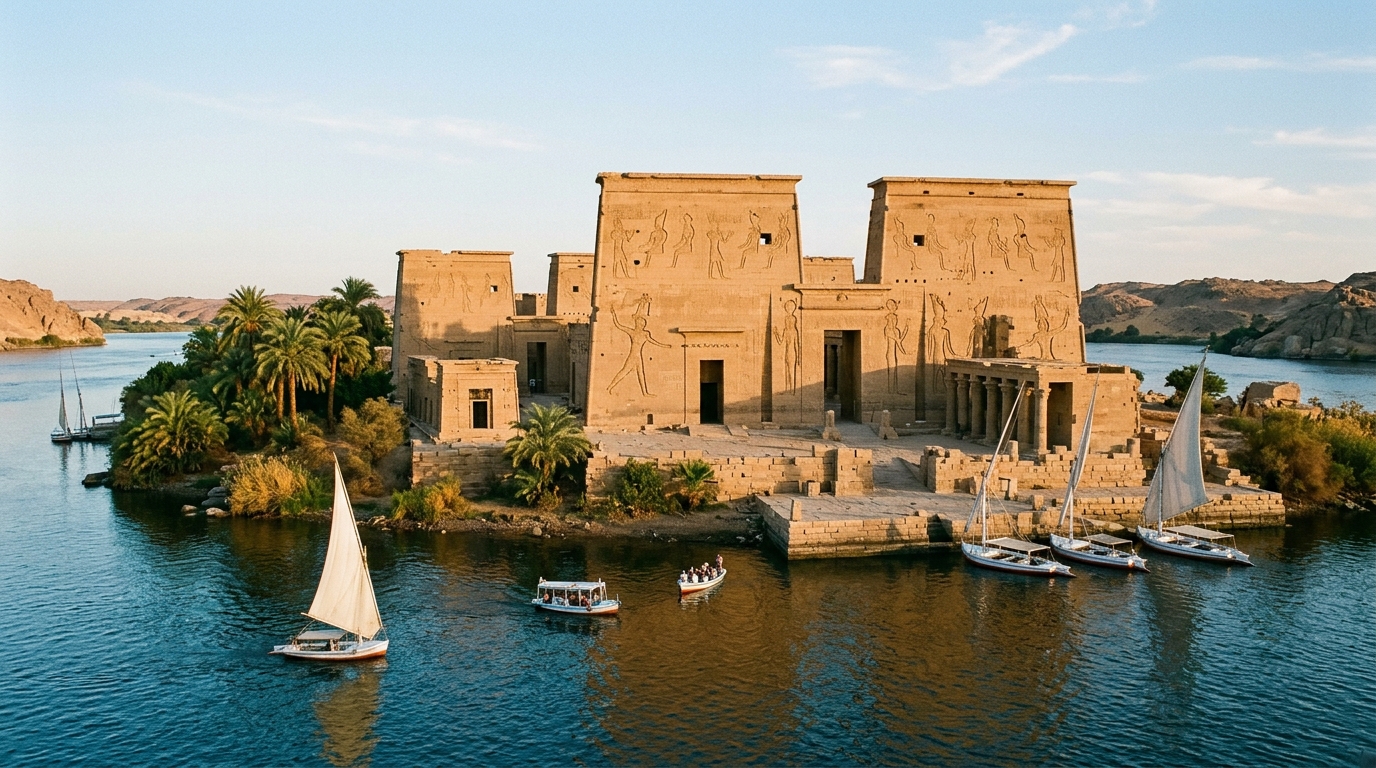
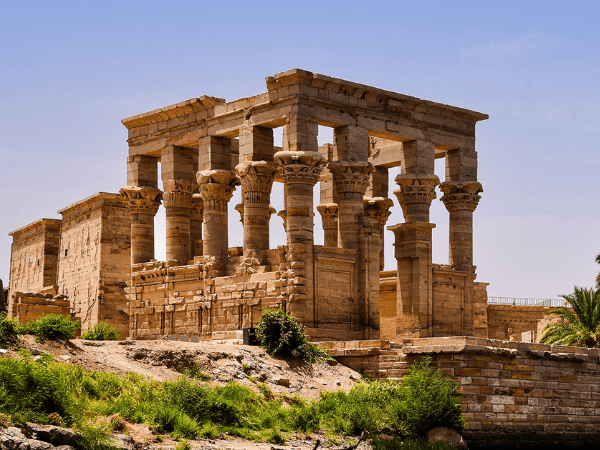
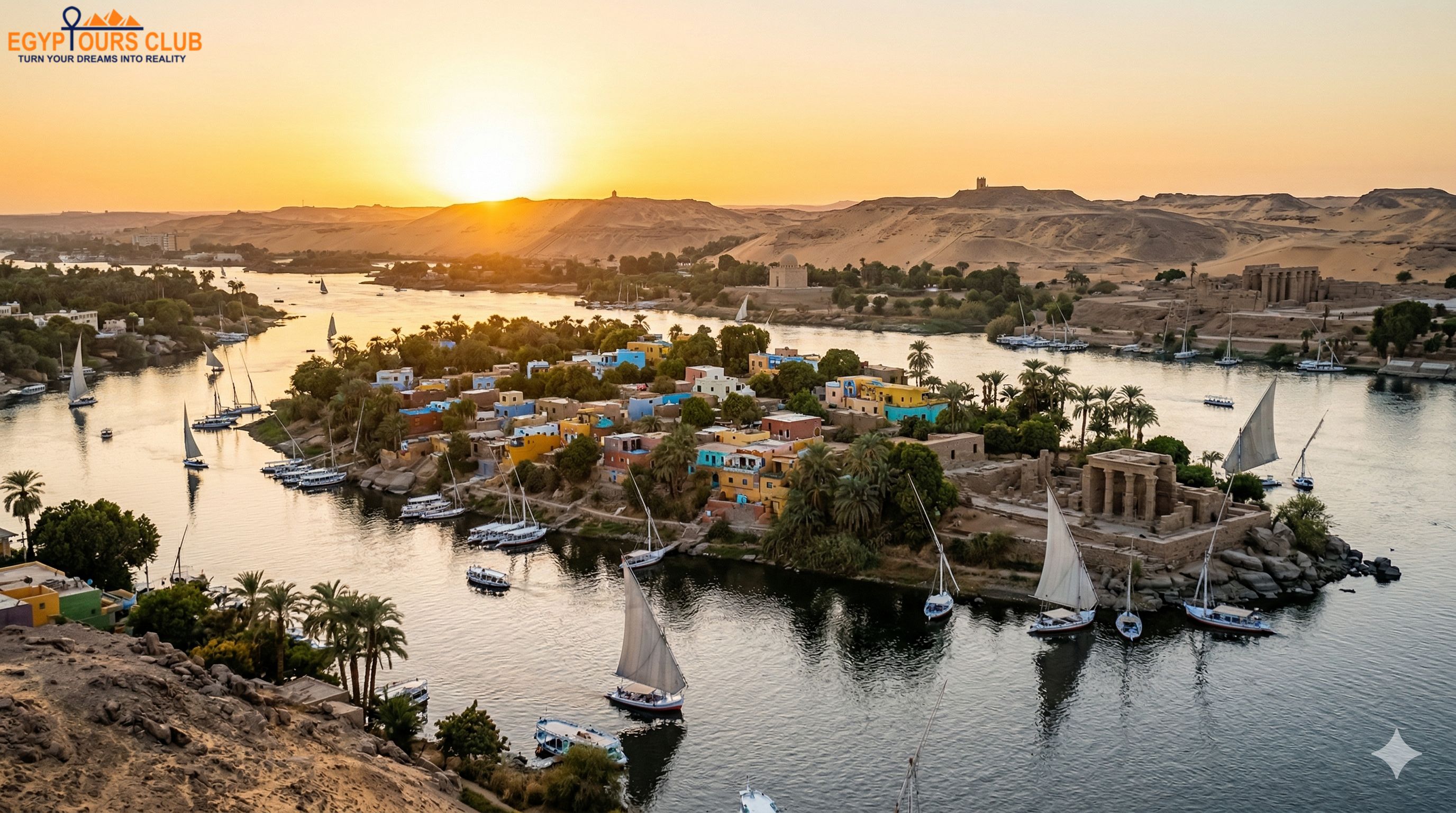
The island is best understood visually: the Nile wraps around it, ancient stone remains sit beside village life, and the desert light turns Aswan into one of Egypt’s most photogenic cities.


The island is most photogenic when you combine Nile light, village color and archaeological details. Sunset is beautiful, but morning is better for temple remains and quieter walking.
Use the short crossing for wide Nile views, feluccas, palm trees and the island rising from the river.
Photograph stone remains, low walls and desert-toned textures, but avoid stepping on restricted archaeological areas.
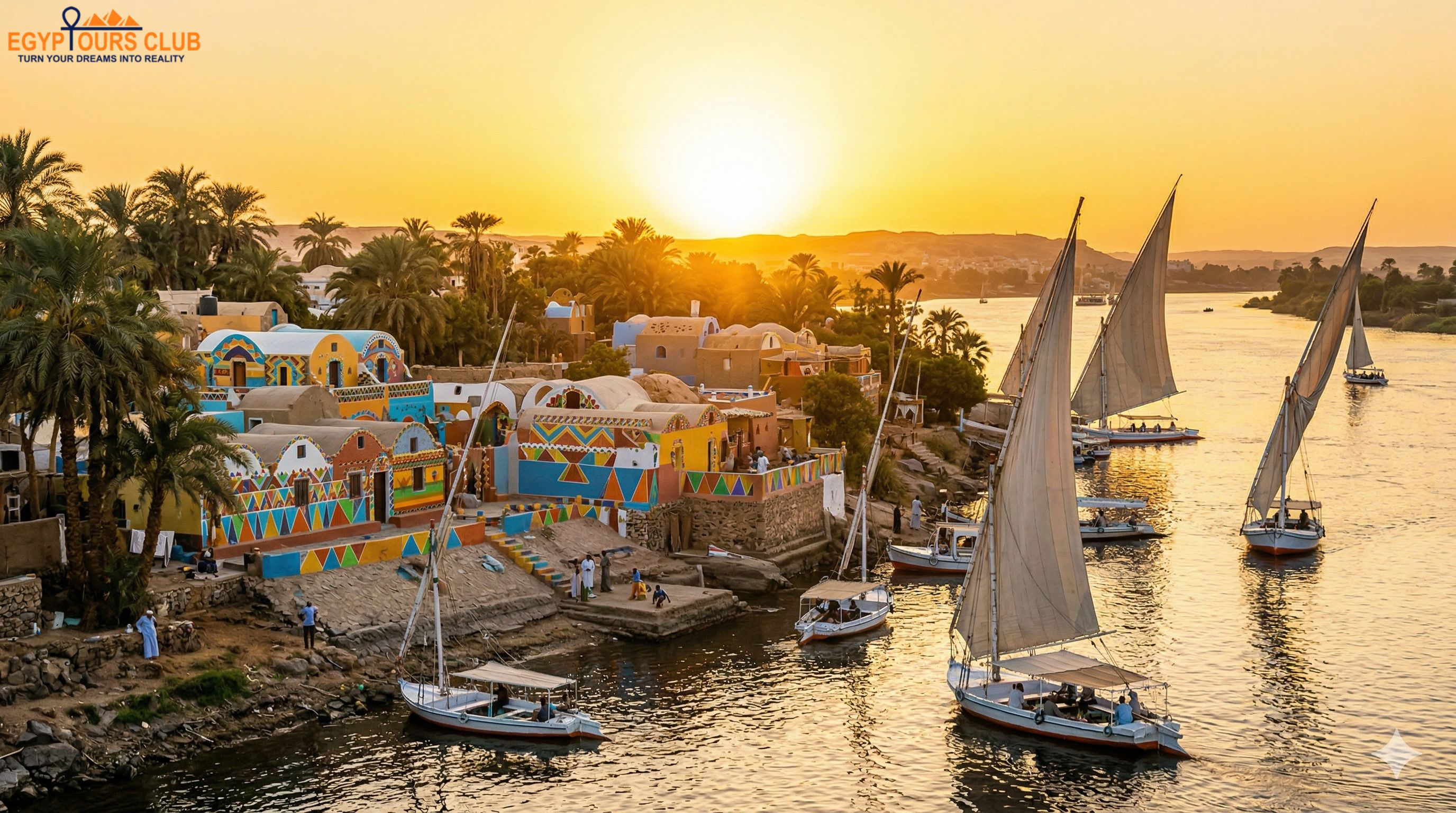
Colorful houses and quiet lanes make strong travel images. Ask before photographing people, homes or private spaces.
Late afternoon gives warmer light, softer river reflections and a peaceful end to an Aswan island walk.
Combine the island with a felucca ride if you want classic Aswan photos from the water.
The strongest images show what makes Elephantine special: ancient Aswan, living Nubian culture and the Nile in one frame.
Elephantine Island brings together the strongest themes of Aswan: ancient Egyptian religion, Nile flood measurement, Nubian culture, river crossings and timeless scenery.

Khnum Temple connects the island with the ram-headed god linked to creation and the Nile’s life-giving water.

Satet was associated with the Nile flood, making her sanctuary central to the island’s spiritual identity.

The Nilometer helped measure the Nile’s level, connecting the island to agriculture, planning and daily life in ancient Egypt.

Colorful homes, warm hospitality and local traditions make the island one of the best places to feel Nubian culture in Aswan.

Elephantine Island is surrounded by classic Aswan scenery: feluccas, granite rocks, palm groves and glowing desert light.

Late afternoon turns the island into one of Aswan’s most peaceful places for photography and quiet river views.
Many travelers see the island quickly, but the visit becomes stronger when you notice how daily Nile life, temple worship and local culture sit side by side.
The island can be a short cultural stop or a deeper half-day experience depending on how much archaeology, village life and Nile scenery you want to include.
| Item | Planning Detail | Best Use |
|---|---|---|
| Recommended duration | 1.5–3 hours | Enough for archaeology, village streets and Nile views. |
| Best route | Elephantine Island → Philae Temple → Unfinished Obelisk | Creates a balanced Aswan history and river route. |
| Best time | Morning or sunset | Morning for ruins, sunset for Nile photography. |
| Main themes | Ancient frontier, temples, Nilometer and Nubian culture | Gives the island more meaning than a simple boat crossing. |
| Access | Short ferry or boat from Aswan riverfront | Best arranged according to hotel location and route timing. |
Elephantine Island is easy to reach, but the experience can feel thin if the timing, route and expectations are not planned well.
The island deserves more than a short crossing. Give time for the Nilometer, temple remains, village lanes and Nile views.
Plan the ferry or boat crossing around your hotel location, Philae Temple timing and sunset plans.
Many visitors focus only on village color and miss the Khnum Temple, Satet Temple and Nilometer story.
Do not force Elephantine, Philae, High Dam, Unfinished Obelisk and Nubian Village without enough time for transfers.
Dress comfortably and respectfully, and ask before photographing people or private homes.
Morning works better for ruins, while sunset works better for Nile scenery and relaxed photos.
| Route | Best For | Suggested Flow | Useful Link |
|---|---|---|---|
| Classic Aswan Day | First-time visitors | Philae Temple → Unfinished Obelisk → Elephantine Island → Nile sunset | View |
| Island and Culture Route | Culture travelers | Elephantine Island archaeology → Nubian village streets → felucca ride | View |
| Temple Island Route | History lovers | Philae Temple → Elephantine Island temples → Nilometer explanation | View |
| Nile Cruise Add-On | Cruise travelers | Embark or disembark in Aswan → Elephantine Island → Nubian dinner or sunset sail | View |
Continue planning from Elephantine Island into the most relevant Aswan routes: day tours, half-day routes, Philae Temple, Nubian culture, Nile cruises and wider Egypt itineraries.
Elephantine Island is a historic Nile island in Aswan known for ancient temple remains, the Nilometer, Nubian village life and scenic views across the Nile.
The best option is a guided Aswan route that combines Elephantine Island with the Nilometer, Nubian village life, Nile views and optional Philae Temple or felucca ride.
Most visitors cross by local ferry or boat from Aswan’s Nile riverfront. The crossing is short and scenic.
Yes. Elephantine Island and Philae Temple make a natural Aswan island route, especially with guided logistics and boat transfers.
The Nilometer was used to measure the Nile’s water level, which helped ancient communities understand flood patterns and agricultural expectations.
Plan around 1.5 to 3 hours depending on whether you want a quick walk, deeper archaeology, Nubian village time or sunset photography.
Visit Elephantine Island with a guided Aswan route that connects ancient temples, Nubian culture, Nile scenery, Philae Temple, the Unfinished Obelisk and a peaceful river experience.