Bahariya Oasis · Golden Mummies · Greco-Roman Egypt · Western Desert archaeology
Archaeology beyond the classic Nile route
Beyond the Pyramids: Egypt's Forgotten Necropolis of Gold
Deep in Bahariya Oasis, a Greco-Roman cemetery preserves gilded funerary faces, painted cartonnage and burial traditions that survived long after the age of the pyramid builders. The Valley of the Golden Mummies is not only a story about gold—it is evidence of cultural continuity, prosperity and changing identity in late ancient Egypt.
Quick Answer
What is the Valley of the Golden Mummies?
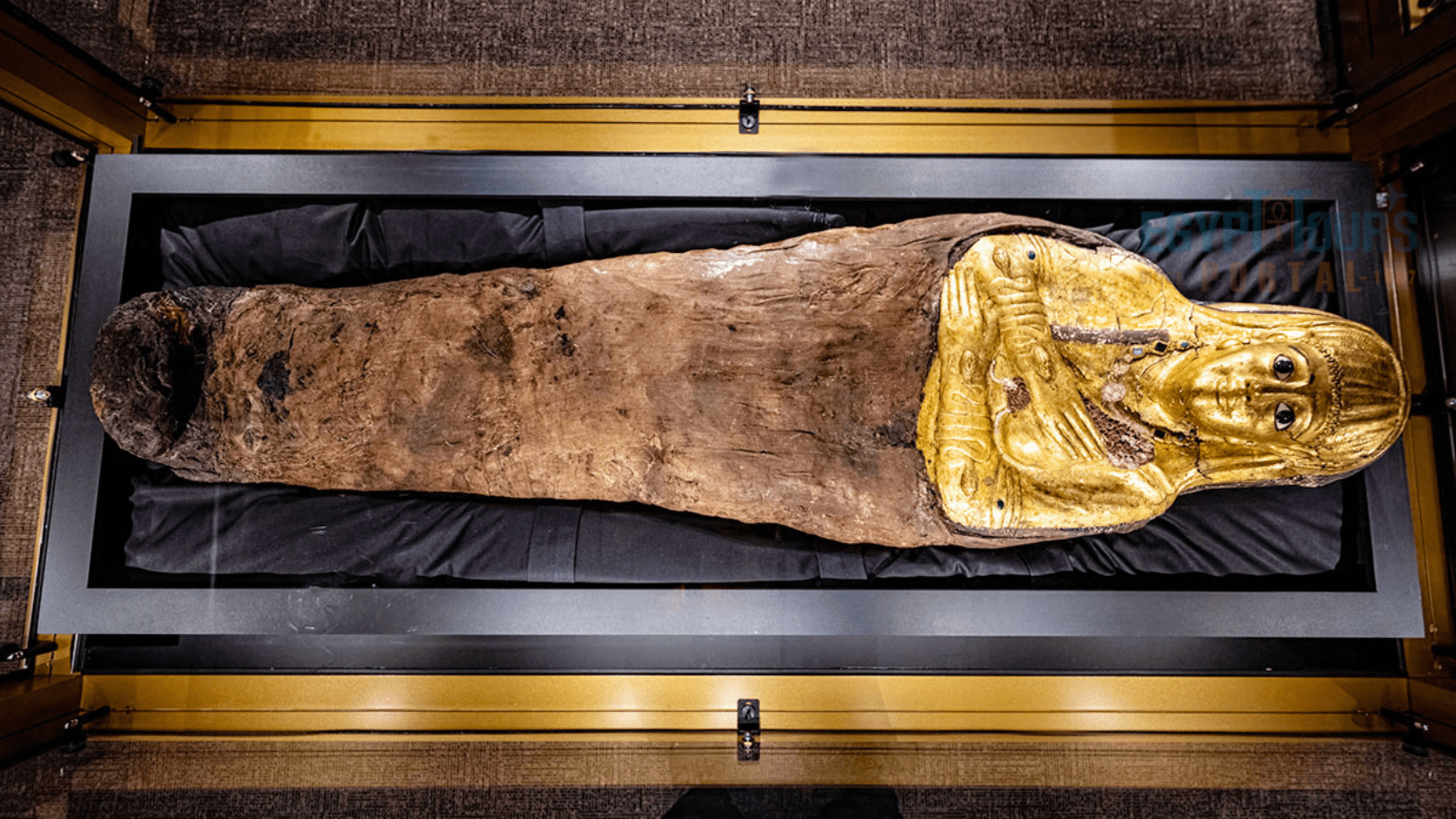
The Valley of the Golden Mummies is a large Greco-Roman cemetery in Bahariya Oasis in Egypt's Western Desert. It became internationally famous after discoveries in the 1990s, including mummies decorated with gilded funerary masks and painted cartonnage.
The cemetery is important because it shows how Egyptian funerary beliefs continued during Ptolemaic and Roman rule. Greek and Roman artistic influences appeared, but ideas about preservation, divine protection and continued existence after death remained strongly Egyptian.
Not every mummy was gilded, and the famous “10,000 golden mummies” claim should not be treated as 10,000 excavated gilded bodies.
Essential Facts
Valley of the Golden Mummies at a glance
| Detail | Information | Plan / Verify |
|---|---|---|
| Location | Bahariya Oasis, Egypt's Western Desert | |
| Nearest main settlement | El-Bawiti / Bawiti | |
| Distance from Cairo | About 370 km southwest by road | |
| Main historical period | Ptolemaic and Roman Egypt | |
| Golden Mummy imagery | Several excavated burials preserve gilded masks, painted cartonnage and other funerary decoration. | |
| Best travel pairing | Bahariya Oasis + Black Desert + Crystal Mountain + White Desert | |
| Recommended trip length | 2 days / 1 night minimum; 3 days for slower archaeology and desert exploration |
Visual Story
Gilded faces, oasis archaeology and Western Desert landscapes
The images are now matched directly to the article subject instead of using generic Egypt photography.

Funerary faces from Greco-Roman Bahariya
Gilding, facial modeling and painted religious details preserve both identity and ancient ideas about eternity.
Wikimedia Commons · Viktor Lazić · CC BY-SA 4.0

A living oasis beyond the Nile Valley
The Golden Mummies belong to a wider landscape of settlements, agriculture, springs, desert routes and archaeological sites.
Wikimedia Commons · Ahmedherz · CC BY-SA 4.0
The Discovery
The accidental find that changed Bahariya
In 1996, an antiquities guard traveling south of El-Bawiti toward Farafra reportedly encountered an opening after his donkey stumbled. The opening led to an ancient tomb containing mummies, some decorated with gold.
Egyptian archaeologists investigated the area and quickly realized that this was not an isolated burial. The find belonged to a much larger cemetery.
Accuracy First
Were 10,000 golden mummies really excavated?
Early work revealed more than one hundred mummies in several tombs, and subsequent investigation demonstrated that the cemetery extended across a much larger area. The archaeological significance is stronger when the scale is described accurately rather than sensationally.

Why Gold?
Gold expressed permanence, divinity and an eternal form of the deceased
Gold's brilliance and resistance to corrosion made it a powerful funerary material. In Bahariya, gilded faces were part of a much larger religious language that still drew on ancient Egyptian ideas about preservation, resurrection and divine protection.
Burial Types
Not every “Golden Mummy” was actually golden
Different burial treatments suggest differences in wealth, workshop practice and social status within the oasis community.
Gilded Mummies
Some faces were covered with gilded funerary masks, and certain bodies carried elaborate chest decoration.
Decorated Cartonnage
Layers of linen or papyrus and plaster could be painted with protective religious imagery.
Pottery-Coffin Burials
Some individuals were placed in pottery coffins rather than receiving extensive gilded decoration.
Linen-Wrapped Burials
Other bodies received simpler treatment and were primarily wrapped in linen.
Who Were They?
These were not pharaohs—and that is exactly why the cemetery matters
A prosperous oasis population
The costly decoration of some burials points to wealth generated by agriculture, local production and trade.
Ancient funerary beliefs survived
Mummification, protective gods and the desire to preserve the body remained important under Greek and Roman political rule.
Egyptian and Mediterranean styles met
Faces, hairstyles and portrait conventions could reflect the Greco-Roman world while religious symbolism remained distinctly Egyptian.
Alexander the Great conquered Egypt.
Egypt was ruled by a Greek-speaking dynasty while Egyptian temples and religious practices continued.
Egypt became part of the Roman Empire after the death of Cleopatra VII.
The Valley of the Golden Mummies shows cultural change and cultural survival happening at the same time.

Bahariya Beyond the Mummies
The oasis was important long before the famous discovery
Bahariya's archaeological record includes Late Period monuments, Greco-Roman sites and later settlements. The Golden Mummies should therefore be understood as one chapter in a much longer history of the oasis.
The Temple of Ain Al Muftella and other local monuments show how Bahariya remained connected to Egyptian political, religious and economic life across multiple periods.
Compare the Necropolises
Valley of the Kings vs. Valley of the Golden Mummies
| Feature | Valley of the Kings | Valley of the Golden Mummies | Learn More |
|---|---|---|---|
| Location | Luxor West Bank | Bahariya Oasis | |
| Main period | New Kingdom | Mainly Greco-Roman period | |
| Who was buried there? | Pharaohs and members of the royal elite | Oasis inhabitants and local elite | |
| Burial architecture | Rock-cut royal tombs with extensive decoration | Large cemetery with several burial treatments | |
| Best for travelers | Royal tomb art, New Kingdom history and Luxor archaeology | Greco-Roman Egypt, oasis archaeology and Western Desert routes |
Travel Planning
Can you visit the Valley of the Golden Mummies?
Visit Bahariya Oasis with realistic expectations: archaeological access can change, and not every excavated tomb or active excavation area is open to visitors.
About 370 km by road
The drive makes Bahariya much better as an overnight or multi-day Western Desert trip than as a rushed conventional day tour.
2–3 days
Two days and one night is a strong minimum; three days gives more time for archaeology, oasis life and desert landscapes.
October to April
Cooler months are generally more comfortable for exposed archaeological areas and desert travel.
Western Desert Extension
Pair Bahariya archaeology with the Black Desert and White Desert
This is the strongest travel structure because it turns a long road journey into a complete archaeology-and-landscape experience.


Best Route
Turn the long drive into a complete Western Desert journey
The strongest structure is not a single archaeological stop. Link Bahariya’s archaeology with the Black Desert, Crystal Mountain and the White Desert so the road time produces a complete experience.
Plan the Details
Archaeology access and desert logistics should be checked separately
Bahariya archaeological access can change with excavation and conservation work, while desert routes depend on vehicle, camp and operator logistics. Treat them as two linked planning decisions.
2026 Archaeology Update
Bahariya is still producing discoveries
Archaeological work in Bahariya remains active. The source article records the announcement of three additional tombs at the Sheikh Soby archaeological site in August 2026, including different burial forms and finds such as mummies, limestone sarcophagi, pottery coffin fragments, vessels, offering tables and terracotta figurines.
Why It Changes the Story
Ancient Egypt did not end when foreign rulers arrived
The Golden Mummies show how a society can absorb new political systems, populations and artistic conventions while maintaining very old religious ideas.
Frequently Asked Questions
Valley of the Golden Mummies FAQ
What is the Valley of the Golden Mummies?
It is a large Greco-Roman cemetery in Bahariya Oasis containing numerous ancient burials, including mummies decorated with gilded funerary masks.
Where is the Valley of the Golden Mummies?
It is in Bahariya Oasis in Egypt's Western Desert, approximately 370 kilometers southwest of Cairo.
When was the famous discovery made?
The discovery that brought the site international attention was reported in 1996.
Were 10,000 golden mummies excavated?
No. Thousands of burials have been estimated across the wider necropolis, but that is not the same as 10,000 excavated gilded mummies.
Were the Golden Mummies pharaohs?
No. The cemetery is associated mainly with people living in Bahariya during the Greco-Roman period rather than New Kingdom pharaohs.
Can tourists visit?
Bahariya's archaeological heritage is visitable, but access to individual tombs and excavation sectors can change. Confirm current access before traveling.
Can Bahariya be combined with the White Desert?
Yes. It is one of the strongest ways to plan the journey because Bahariya is a practical gateway to the Black Desert, Crystal Mountain and White Desert.
How long should I stay?
Two days and one night is a strong minimum; two to three days is better if you want both archaeology and desert exploration.
Research & Image Sources
Use reliable archaeology and current travel sources
The article is grounded in the supplied research document and cross-checked against current official Bahariya information. The Golden Mummy photographs used here are Wikimedia Commons files specifically categorized for the Valley of the Golden Mummies rather than generic mummy imagery.
Go Beyond the Classic Egypt Route
Combine Bahariya's archaeology with the Black Desert and White Desert
The strongest itinerary links archaeology, oasis life and the Western Desert instead of treating the Golden Mummies as an isolated photo stop.