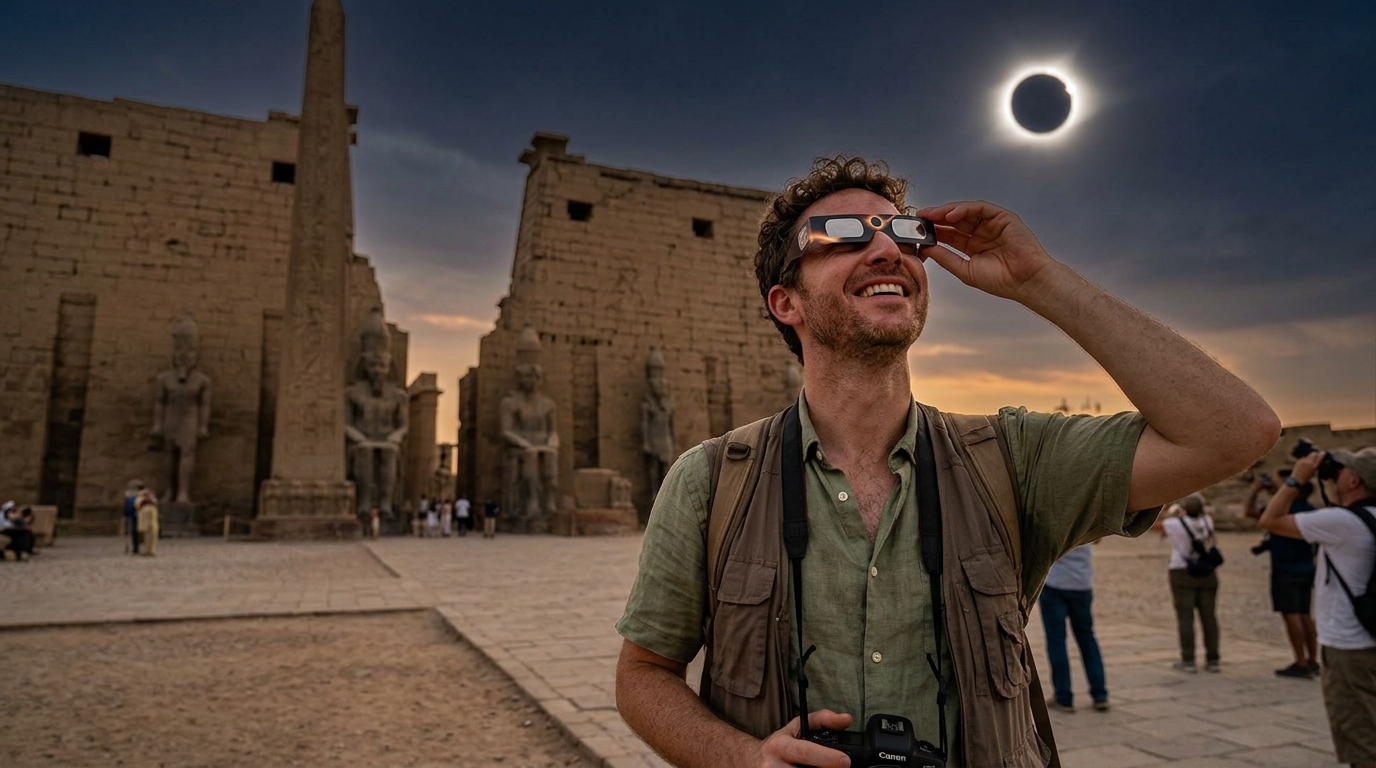


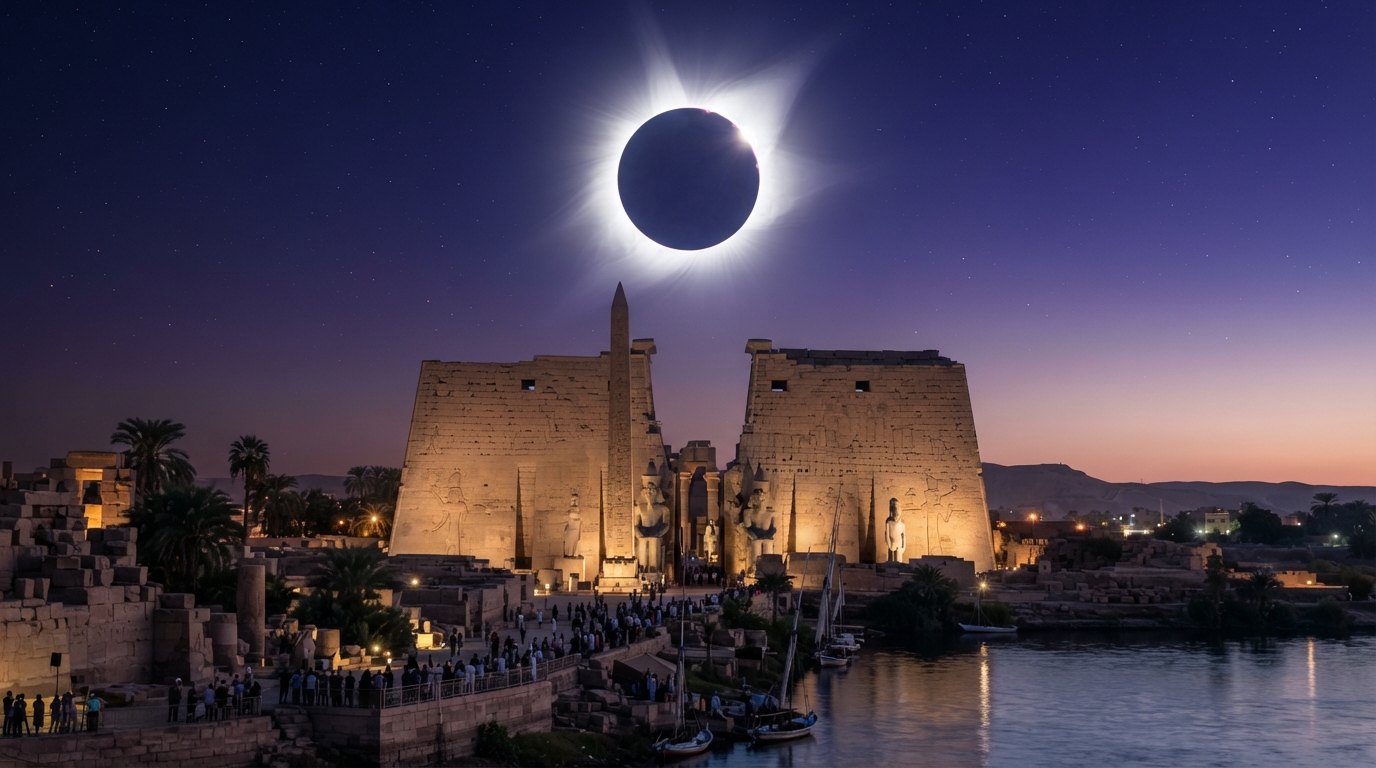
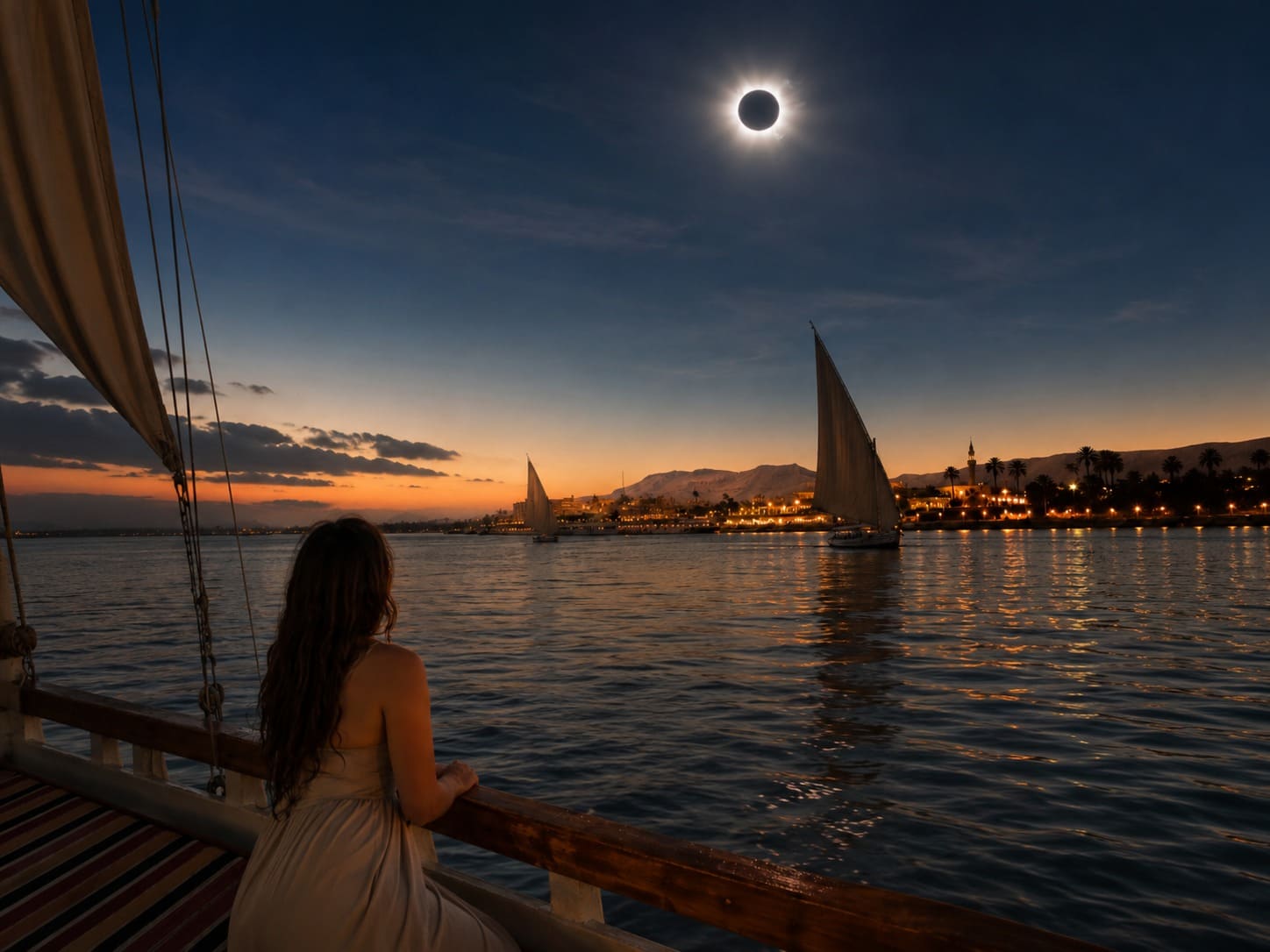
On August 2, 2027, travelers, astronomers and photographers from around the world will gather in Upper Egypt to experience the Luxor Total Solar Eclipse.
Luxor lies directly within the path of totality, making the ancient city one of the most important destinations for observing the 2027 eclipse. During totality, the Moon will completely cover the Sun, the daytime sky will temporarily darken and the solar corona may become visible around the Moon.
The total phase in Luxor is expected to last approximately six minutes and twenty-three seconds, with the maximum eclipse occurring shortly after 1:00 p.m. local time. This makes Luxor one of the strongest land-based viewing locations for the event.
However, the Luxor Total Solar Eclipse is more than an astronomical event. It is an opportunity to combine a rare celestial experience with the temples, tombs and sacred landscapes of ancient Thebes.
Travelers planning to attend should arrange their accommodation, transportation, certified eclipse glasses and organized viewing location well in advance. Purpose-built Egypt Solar Eclipse 2027 Tours can simplify the logistics while connecting the eclipse with Luxor, Cairo, Aswan, Abu Simbel and the Nile Valley.
Quick answer: The Luxor Total Solar Eclipse will occur on August 2, 2027. Luxor lies within the path of totality and is expected to experience more than six minutes of total darkness, making it one of Egypt’s leading eclipse-viewing destinations.
Quick Facts About the Luxor Total Solar Eclipse
- Date: August 2, 2027
- Eclipse type: Total solar eclipse
- Location: Luxor, Upper Egypt
- Expected totality: Approximately 6 minutes and 23 seconds
- Maximum eclipse: Around 1:05 p.m. local time
- Sun position: Very high in the sky
- Best experience: A controlled viewing area within the path of totality
- Required equipment: Certified eclipse glasses or approved solar filters
The partial phase is expected to begin before noon, followed by totality shortly after 1:00 p.m. and the end of the partial phase during the afternoon. Exact circumstances can vary slightly depending on the observer’s precise position around Luxor.
Why Is Luxor One of the Best Places to See the 2027 Eclipse?
Luxor combines three qualities that make it exceptionally attractive for eclipse travelers:
- It lies within the path of totality.
- It offers an unusually long period of total darkness.
- It is surrounded by some of Egypt’s most important archaeological sites.
Unlike an ordinary astronomy destination, Luxor allows travelers to witness a major celestial event within the wider landscape of ancient Thebes.
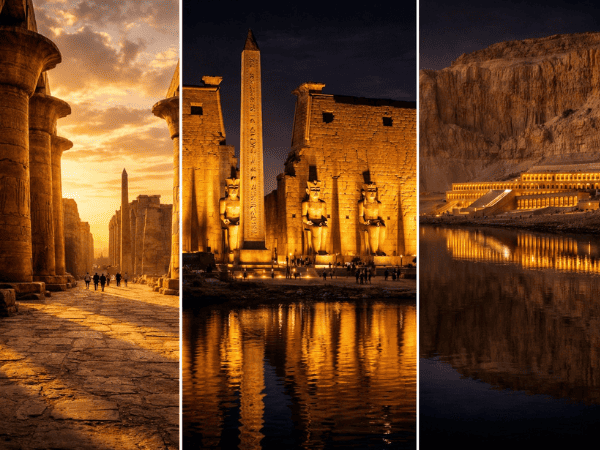
Before or after the eclipse, visitors can explore Luxor’s temples, tombs and private tours, including Karnak Temple, Luxor Temple, the Valley of the Kings and the Temple of Hatshepsut.
The eclipse should not be observed from an archaeological site unless access has been formally authorized and professionally managed. Monument opening arrangements, crowd restrictions and security rules may differ during a major international event.
The safest approach is to use a designated eclipse-viewing site with controlled access, clear horizons, emergency support, transport planning and sufficient shade.
What Time Will the Total Solar Eclipse Occur in Luxor?
Current astronomical calculations indicate the following approximate Luxor timeline:
| Eclipse phase | Approximate local time |
|---|---|
| Partial eclipse begins | 11:40 a.m. |
| Totality begins | 1:02 p.m. |
| Maximum eclipse | 1:05 p.m. |
| Totality ends | 1:08 p.m. |
| Partial eclipse ends | 2:26 p.m. |
The total phase is expected to last approximately six minutes and twenty-one to twenty-three seconds, depending on the exact observation point.
Travelers should arrive at the observation area several hours before totality. Access routes may become congested, while security controls and group check-in procedures could take longer than normal.
Understanding the Phases of a Total Solar Eclipse
A total solar eclipse develops through several stages.
First Contact
The Moon begins to move across the Sun. At first, only a small section of the solar disk appears covered.
Certified eclipse glasses must be used throughout this phase.
Deep Partial Eclipse
The temperature and quality of daylight may begin to change. Shadows can become sharper, and the surrounding landscape may take on an unusual appearance.
The uncovered portion of the Sun remains dangerous to observe without certified eye protection.
Baily’s Beads and the Diamond Ring
Immediately before totality, sunlight may pass through valleys along the Moon’s edge. This can create bright points known as Baily’s Beads, followed by a diamond-ring effect.
These phases are extremely brief. Observers must follow the instructions of qualified eclipse leaders regarding eye protection.
Totality
During totality, the Moon completely covers the bright solar surface.
The sky darkens, stars or planets may become visible and the solar corona can appear around the black lunar disk.
Certified eclipse glasses may only be removed when the Sun is completely covered and only when qualified observers confirm that totality has begun.
End of Totality
The diamond ring returns as the Sun begins to reappear.
Eye protection must be replaced immediately before any bright part of the Sun becomes visible.
How to Watch the Luxor Total Solar Eclipse Safely
Never look directly at the Sun during the partial phases without certified solar-viewing equipment.
Ordinary sunglasses, smoked glass, camera filters and homemade materials do not provide adequate protection.
Use:
- Certified eclipse glasses from a reputable supplier
- ISO-compliant handheld solar viewers
- Professionally installed telescope solar filters
- Solar filters designed specifically for cameras and binoculars
- Indirect projection methods supervised by experienced observers
Do not look through a camera, telescope or binoculars while wearing eclipse glasses. These optical devices concentrate sunlight and require their own front-mounted solar filters.
Children should be supervised throughout the event, particularly during transitions into and out of totality.
Choosing the Best Eclipse Viewing Location in Luxor
The strongest eclipse-viewing location is not necessarily the most famous monument or the closest point to the city center.
A well-managed observation site should offer:
- An unobstructed view of the sky
- Controlled visitor capacity
- Safe vehicle access
- Shade or covered rest areas
- Drinking water
- Toilets
- First-aid support
- Security coordination
- Backup transport arrangements
- Clear emergency procedures
- Enough space for tripods and photography equipment
The Sun will be high in the sky during the eclipse, so the horizon is less critical than it would be during sunrise or sunset. However, visitors will be exposed to the midday summer heat.
A professionally organized Egypt solar eclipse tour can help coordinate viewing access, accommodation, transfers and sightseeing around the eclipse date.
Luxor Weather in August
August is one of the hottest periods in Upper Egypt.
Visitors should prepare for:
- Strong midday sunshine
- High daytime temperatures
- Dry conditions
- Limited natural shade
- Heat reflecting from desert surfaces
- Increased water requirements
Clear skies are common in Upper Egypt during summer, but no operator can guarantee weather conditions for a specific date this far in advance.
Travelers should wear lightweight breathable clothing, a wide-brimmed hat and strong sunscreen. Water should be available continuously, and long periods of standing in direct sunlight should be avoided.
Anyone with a medical condition affected by heat should consult a healthcare professional before planning prolonged outdoor observation.
Visiting Karnak Temple During Your Eclipse Journey
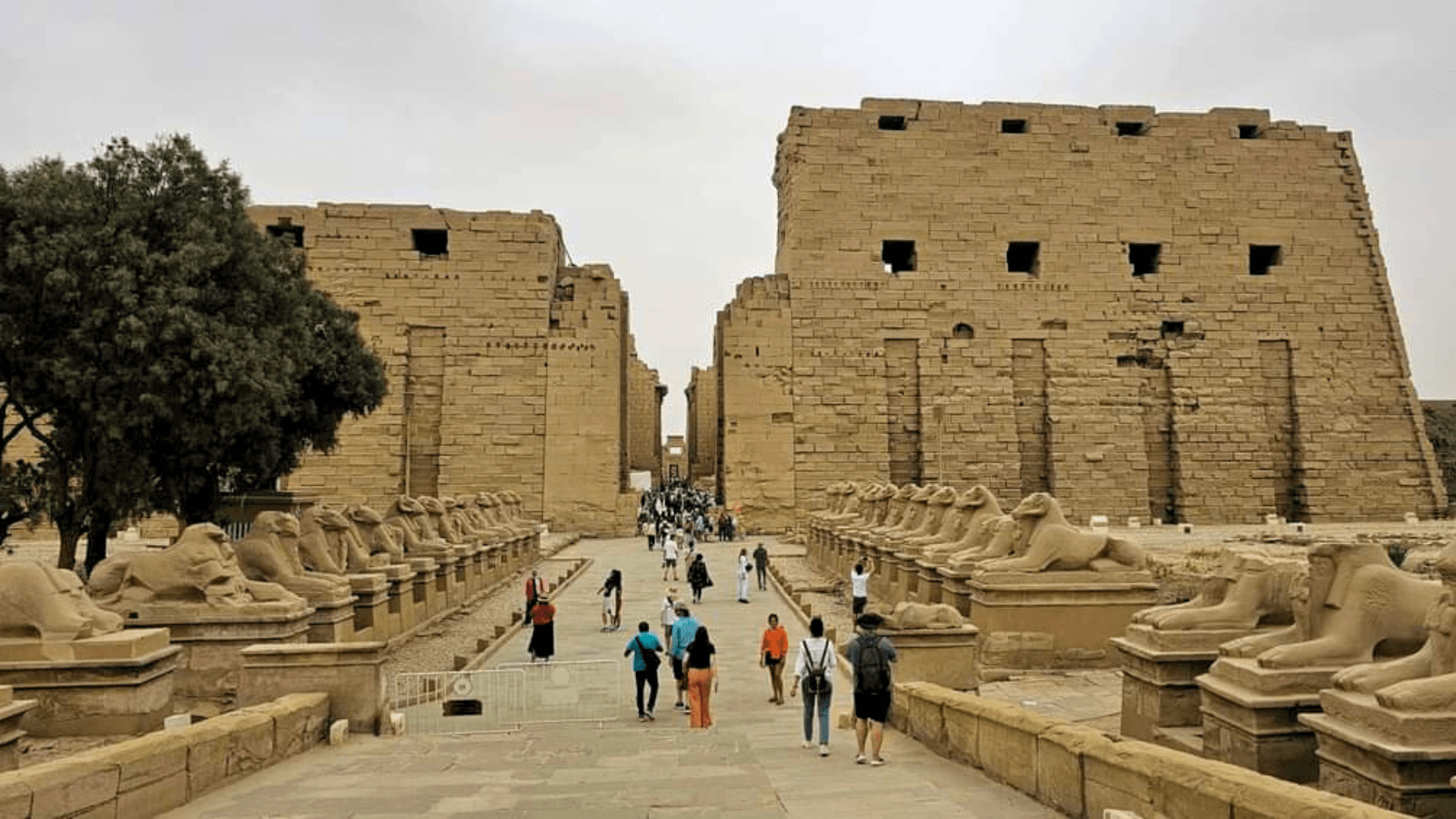
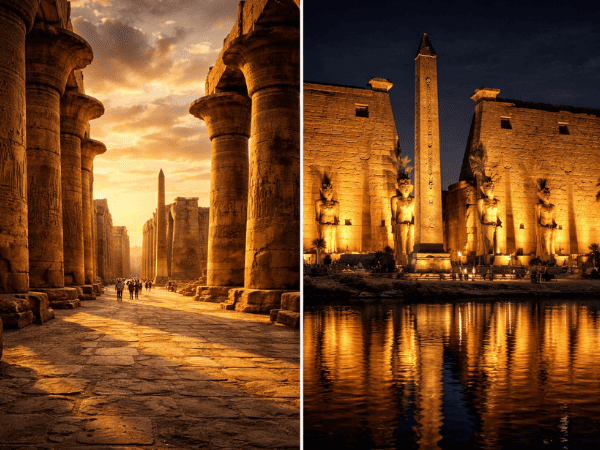
Karnak Temple is one of Luxor’s most important archaeological complexes and a natural addition to a Luxor Total Solar Eclipse itinerary.
Karnak is not a single temple. It is an extensive sacred complex developed by multiple rulers over many centuries. Its most famous feature is the Great Hypostyle Hall, which contains 134 monumental columns.
A focused visit normally requires around two to three hours. Early morning or late afternoon visits are generally more comfortable than midday sightseeing, particularly in August.
Visitors should avoid scheduling a long Karnak tour immediately before the eclipse. The viewing event requires its own transportation buffer, security planning and arrival time.
A better itinerary is to visit Karnak on August 1 or August 3, leaving eclipse day primarily dedicated to the observation program.
Exploring the Valley of the Kings
The Valley of the Kings is located on Luxor’s West Bank and contains the tombs of New Kingdom rulers and members of the royal family.
The standard entrance ticket normally provides access to a selection of open tombs. Certain famous tombs may require separate tickets, and the list of open tombs can change.
The Valley of the Kings is exposed to strong sunlight, so it should be visited early in the morning.
A classic West Bank route combines:
Travelers interested in a quieter or more detailed archaeological day may also add the Valley of the Queens, Deir el-Medina or Medinet Habu.
The Temple of Hatshepsut
The Temple of Hatshepsut rises beneath the cliffs of Deir el-Bahari on Luxor’s West Bank.
Its terraces, colonnades and connection with Queen Hatshepsut make it one of the most visually distinctive monuments in Egypt.
The temple’s setting is particularly relevant to visitors interested in the relationship between architecture, sacred geography and the solar traditions of ancient Egypt.
However, travelers should avoid making unsupported claims that ancient monuments were specifically designed for the 2027 eclipse. Ancient Egyptian religion included extensive solar symbolism, but this does not mean every temple or alignment was created to predict modern eclipse paths.
The Colossi of Memnon
The Colossi of Memnon are two monumental seated statues representing Pharaoh Amenhotep III.
They originally stood in front of the king’s mortuary temple and are normally visited as a short stop during a West Bank tour.
A visit often lasts between fifteen and thirty minutes and works naturally with the Valley of the Kings and Hatshepsut Temple.
Luxor Temple After the Eclipse
Located near the center of the modern city, Luxor Temple is particularly atmospheric in the late afternoon or evening.
Karnak and Luxor Temple form a natural East Bank combination. Karnak is larger and normally requires more time, while Luxor Temple offers a more compact experience that can suit an evening schedule.
Visitors should still avoid planning a tightly timed evening visit immediately after the eclipse. Traffic and return transfers could take longer than expected.
Combining the Eclipse with Cairo
Many international visitors will enter Egypt through Cairo.
Before traveling south to Luxor, consider adding:
- The Pyramids of Giza
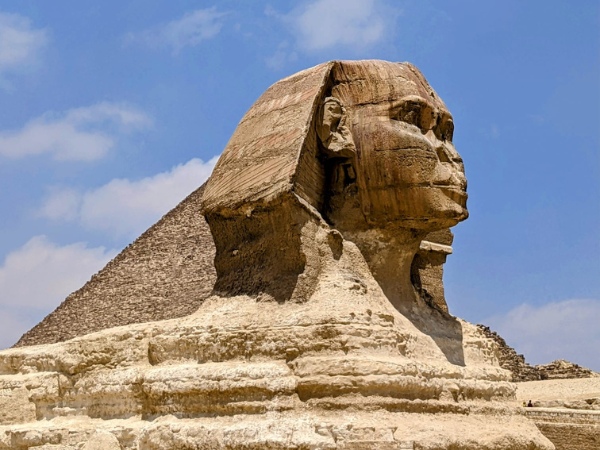
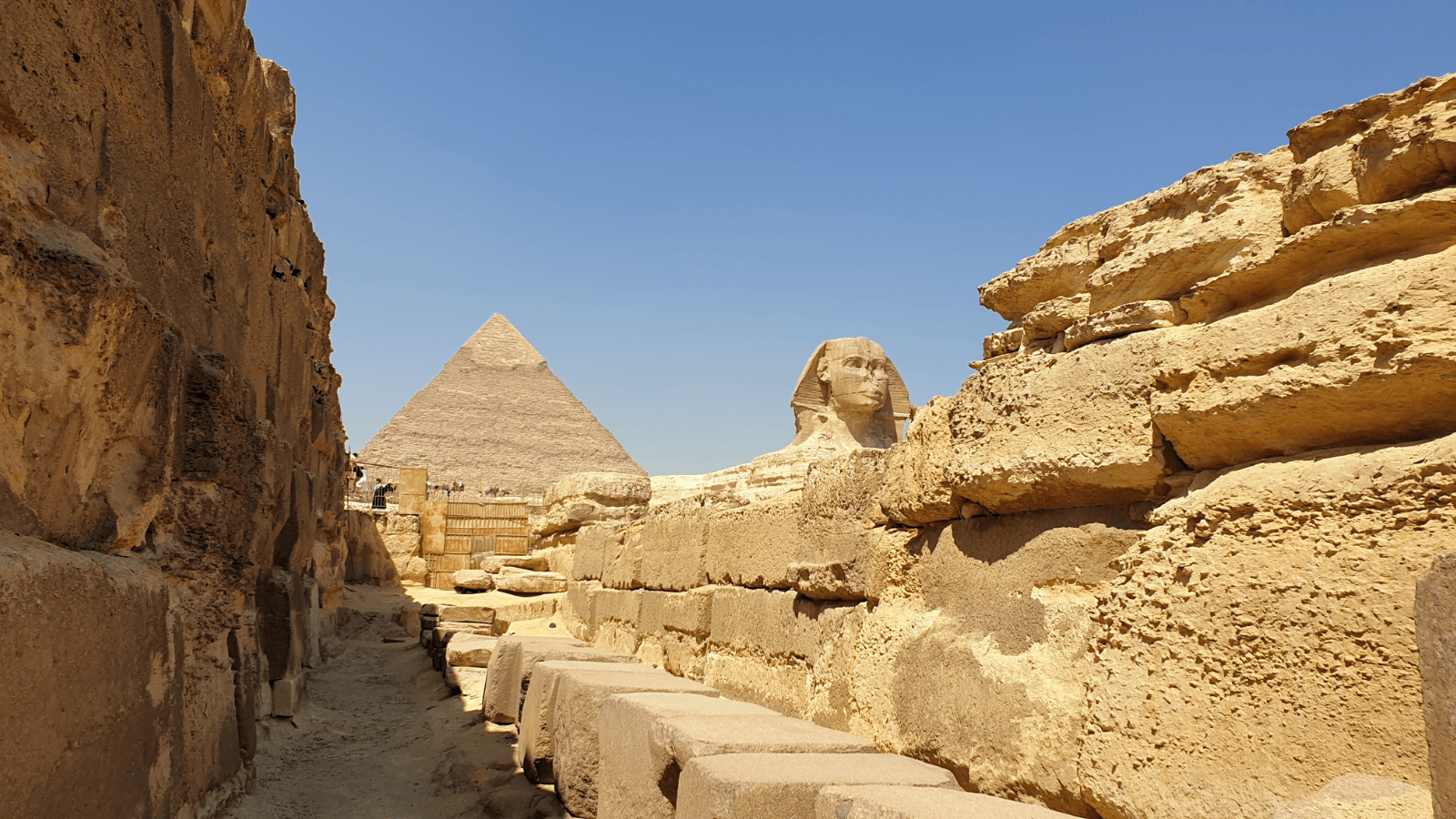
- The Great Sphinx
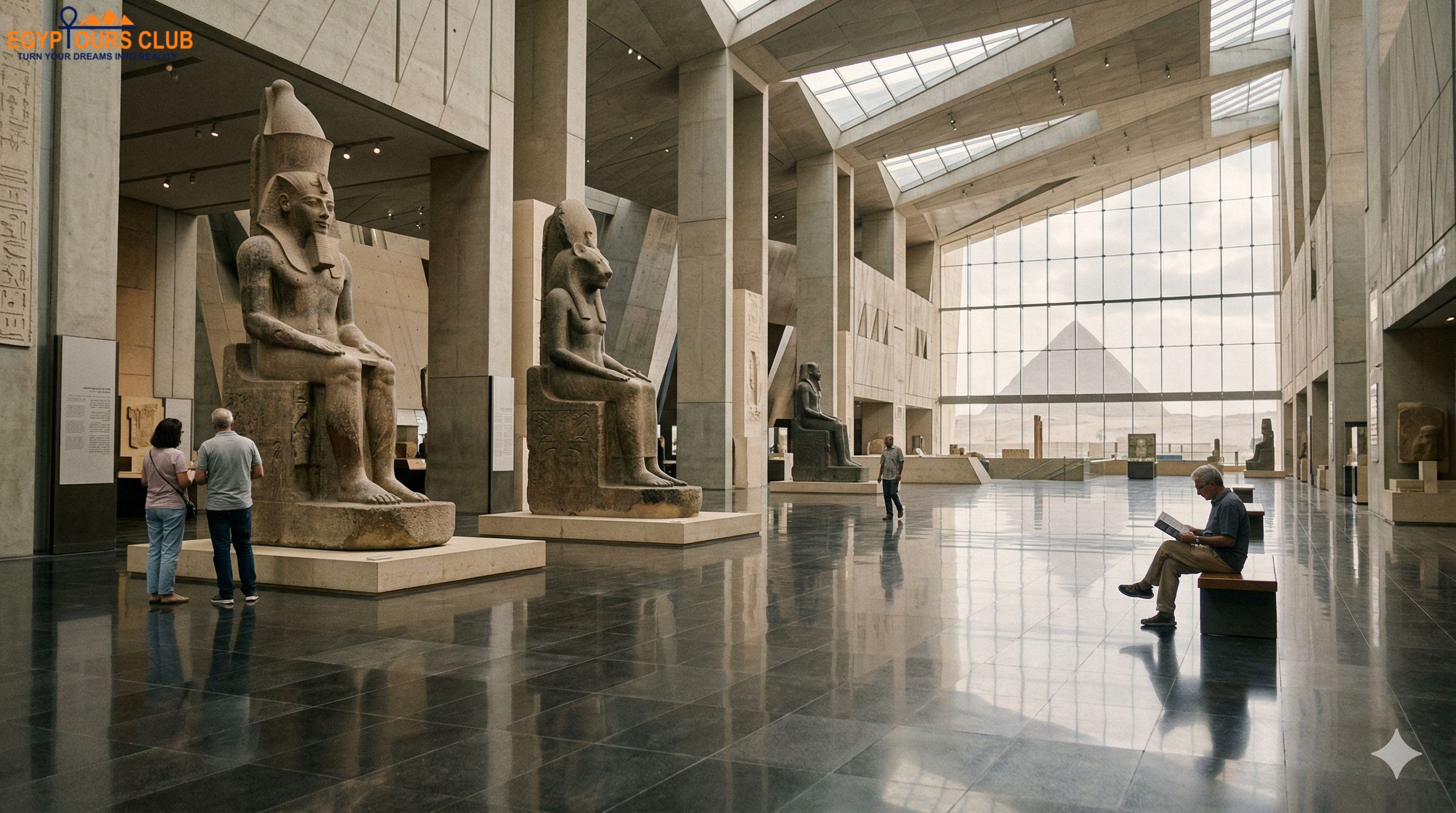
- The Grand Egyptian Museum
- Historic Cairo
- The Egyptian Museum
- Khan El Khalili
The Grand Egyptian Museum can be combined with the nearby Giza Plateau as part of a full Cairo sightseeing day.
A Cairo extension provides essential historical context before visitors continue to Luxor and the sacred landscape of ancient Thebes.
Continue to Aswan and Philae Temple
Aswan offers a slower Nile atmosphere and is a natural continuation after Luxor.
One of its essential monuments is Philae Temple, located on Agilkia Island and reached by boat.
The temple complex is strongly associated with the goddess Isis and can be visited during a private Aswan day tour or as part of a broader Nile journey.
Other Aswan experiences include:
- Felucca sailing
- Nubian villages
- The High Dam
- The Unfinished Obelisk
- Elephantine Island
- Kalabsha Temple
Add Abu Simbel to the Eclipse Itinerary
Travelers with sufficient time can continue south to Abu Simbel.
The temples of Ramses II and Queen Nefertari are among Egypt’s most recognizable monuments. Abu Simbel is normally reached by road or domestic flight from Aswan.
Because road departures often begin early, this excursion should not be scheduled immediately after a late or demanding eclipse program.
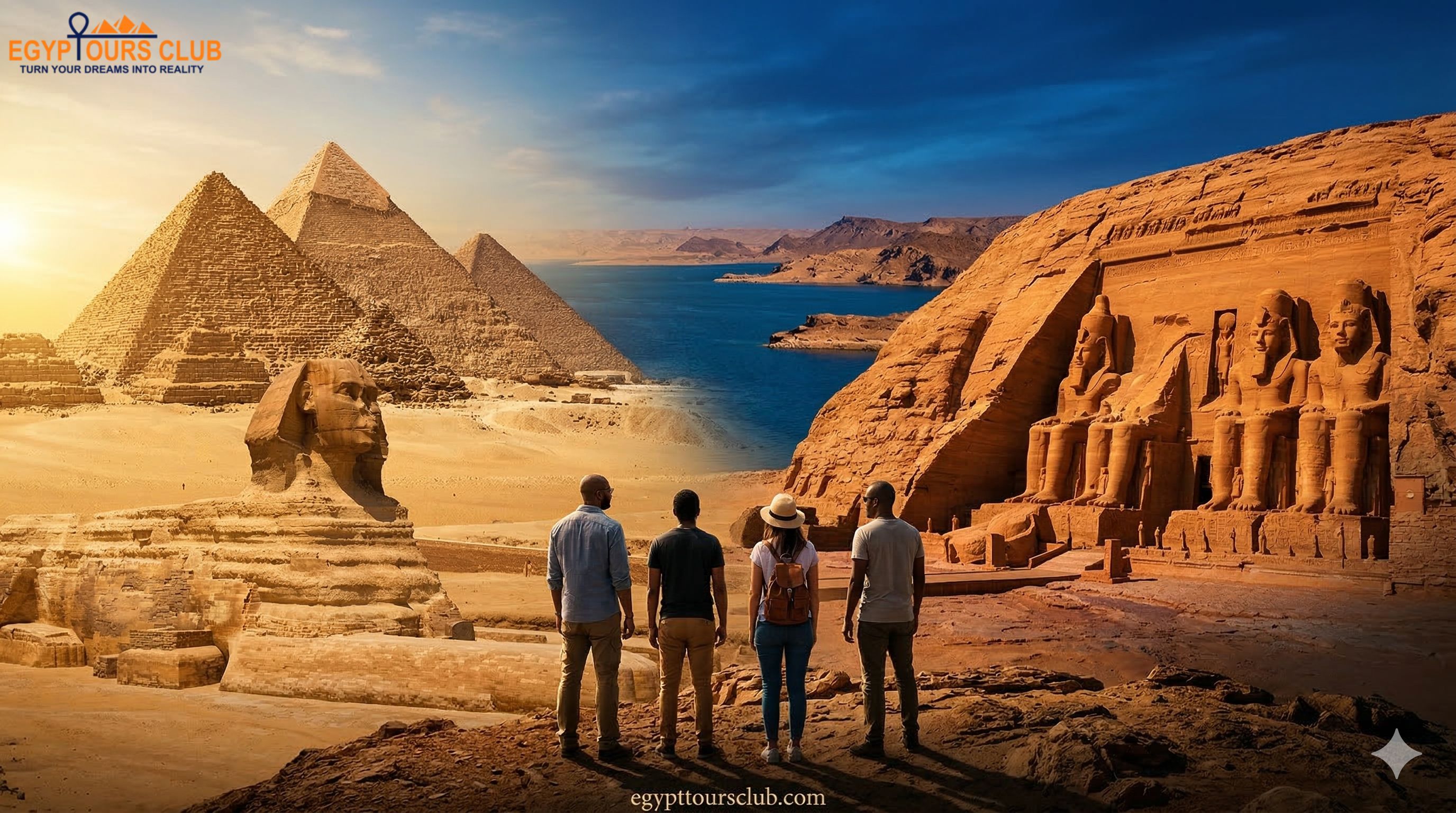
Multi-city packages connecting Cairo, Luxor, Aswan and Abu Simbel allow travelers to experience the eclipse within a broader historical journey. Egypt Tours Club currently offers routes that combine the Pyramids, the Grand Egyptian Museum, Luxor, Philae Temple, a Nile cruise and optional or included Abu Simbel visits.
Experience a Nile Cruise
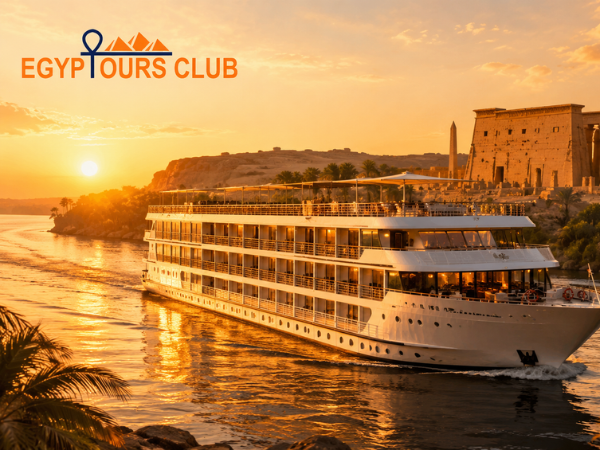
A Nile cruise packages">Nile cruise between Luxor and Aswan can turn the eclipse trip into a longer Upper Egypt experience.
Depending on the route and sailing schedule, cruises may include:
- Luxor
- Edfu Temple
- Kom Ombo Temple
- Aswan
- Philae Temple
- Optional Abu Simbel excursions
Cruise availability around the eclipse will depend on sailing schedules, waterway operations and demand. Travelers should confirm the exact embarkation date, vessel, cabin, meal basis and sightseeing inclusions before payment.
Add a Red Sea Stay in Hurghada
After the heat and activity of the eclipse, some travelers may prefer to finish the journey with several nights in Hurghada.
Hurghada offers:
- Red Sea beaches
- Resort accommodation
- Snorkeling and diving
- Boat trips
- Desert activities
- A more relaxed conclusion to the journey
Road travel between Luxor and Hurghada also makes it possible to combine Upper Egypt with the Red Sea in one itinerary.
Because August is a hot and popular travel period, hotel and transport availability should be secured early.
Recommended Luxor Eclipse Itinerary
Day 1: Arrival in Cairo
Airport assistance, private transfer and hotel check-in.
Day 2: Pyramids and Grand Egyptian Museum
Visit the Pyramids of Giza, the Sphinx and the Grand Egyptian Museum.
Day 3: Fly to Luxor
Transfer to Luxor and visit Karnak Temple and Luxor Temple, depending on arrival time.
Day 4: Luxor West Bank
Explore the Valley of the Kings, Hatshepsut Temple and the Colossi of Memnon.
Day 5: Eclipse Preparation
Attend an orientation briefing, test photography equipment and review safe-viewing procedures.
Day 6: August 2, 2027 Eclipse Day
Transfer early to the designated viewing site and experience the Luxor Total Solar Eclipse.
Day 7: Recovery or Flexible Luxor Day
Use this day for rest, an optional museum visit or a delayed archaeological visit if eclipse logistics affected the original schedule.
Day 8: Continue to Aswan
Travel by Nile cruise, train or private transfer, depending on the itinerary.
Day 9: Philae Temple and Aswan
Visit Philae Temple and enjoy a Nile or Nubian experience.
Day 10: Abu Simbel
Take an early road or flight excursion to Abu Simbel.
Day 11: Return to Cairo or Extend to Hurghada
Continue to the Red Sea or fly back to Cairo for departure.
What to Pack for the Luxor Total Solar Eclipse
Bring:
- Certified eclipse glasses
- Backup eclipse glasses
- Wide-brimmed hat
- Lightweight clothing
- Sunscreen
- Refillable water bottle
- Electrolyte sachets
- Comfortable walking shoes
- Portable charger
- Personal medication
- Travel insurance details
- Camera batteries
- Memory cards
- Solar filters for every optical device
- Small towel or cooling cloth
- Copies of travel documents
Do not rely on purchasing specialist eclipse equipment after arrival. Certified viewers, camera filters and telescope filters may sell out well before August 2027.
Eclipse Photography Tips
The 2027 eclipse will attract both amateur and professional photographers.
Prepare by:
- Practicing with the camera before traveling
- Using a secure solar filter during partial phases
- Testing exposure settings in advance
- Using a stable tripod
- Bringing multiple batteries and memory cards
- Preparing a wide-angle camera for the landscape
- Preparing a telephoto setup for the corona
- Automating exposure sequences where possible
- Avoiding last-minute equipment changes
The Sun will be very high during totality. Photographers hoping to include monuments or desert landscapes in the foreground should carefully scout composition and confirm access rules before the event.
Tripods and professional equipment may be restricted at archaeological sites. A designated viewing area is generally more practical than attempting to photograph from inside a monument.
Booking Advice for 2027
The Luxor Total Solar Eclipse is expected to create exceptional demand for:
- Hotels
- Nile cruises
- Domestic flights
- Private vehicles
- Egyptologist guides
- Viewing-site access
- Eclipse glasses
- Photography spaces
Travelers should avoid booking flights and hotels independently without confirming how they will reach an approved viewing site.
Before paying, request written confirmation of:
- The viewing location
- Transportation arrangements
- Hotel name and category
- Eclipse-day departure time
- Included meals
- Shade and water arrangements
- Guide or astronomer support
- Solar glasses
- Emergency support
- Cancellation terms
- Weather contingency policy
- Monument visits
- Domestic flights
- Cruise details
- Abu Simbel arrangements
Explore the current Egypt Solar Eclipse 2027 Tours or request a tailor-made route through Egypt Tours Club.
Frequently Asked Questions
When is the Luxor Total Solar Eclipse?
The eclipse will occur on August 2, 2027.
How long will totality last in Luxor?
Depending on the exact viewing position, totality is expected to last approximately six minutes and twenty-one to twenty-three seconds.
What time will totality begin?
Totality is expected to begin shortly after 1:00 p.m. local time, with the maximum eclipse around 1:05 p.m.
Is Luxor inside the path of totality?
Yes. Luxor lies within the path of totality for the August 2, 2027 eclipse.
Can I watch the eclipse from Karnak Temple?
Do not assume that eclipse viewing will be permitted inside Karnak Temple or any archaeological monument. Access will depend on official regulations, capacity and security arrangements.
Can I watch the eclipse from the Valley of the Kings?
Only if an authorized program is formally announced. The Valley of the Kings is an archaeological site with controlled access, limited shade and significant heat exposure.
Do I need eclipse glasses?
Yes. Certified eclipse glasses are required during every partial phase. They may only be removed during confirmed totality and must be replaced immediately when the Sun begins to reappear.
Is August too hot for Luxor?
August is extremely hot. Travelers should use shade, hydration, appropriate clothing and professionally managed transportation.
How many days should I spend in Luxor?
At least four nights are recommended around the eclipse. This provides time for East Bank and West Bank sightseeing, a preparation day, eclipse day and a recovery or contingency day.
Can I combine the eclipse with a Nile cruise?
Yes. A Luxor-to-Aswan or Aswan-to-Luxor Nile cruise can be added before or after the eclipse, subject to the confirmed sailing schedule.
Should I visit Cairo before Luxor?
Cairo is a strong starting point because it allows travelers to visit the Pyramids of Giza, the Sphinx and the Grand Egyptian Museum before flying south.
Can I include Aswan and Abu Simbel?
Yes. Both destinations can be added after Luxor, either through a Nile cruise or a land-and-flight itinerary.
Plan Your Luxor Total Solar Eclipse Journey
The Luxor Total Solar Eclipse will combine one of the century’s most significant celestial events with the temples, royal tombs and Nile landscapes of Upper Egypt.
The strongest journey will not depend only on seeing totality. It will depend on reliable viewing access, safe solar equipment, heat management, carefully timed sightseeing and a realistic multi-city itinerary.
Plan the journey through the dedicated Egypt Solar Eclipse 2027 Tours, explore the complete Luxor attractions guide, and compare wider Egypt tour packages that connect Cairo, Luxor, Aswan, Abu Simbel, the Nile and the Red Sea.
Book early, confirm every eclipse-day detail in writing and prepare to witness the sky darken above one of the world’s greatest ancient landscapes.
.png)
.png)
.jpeg)