

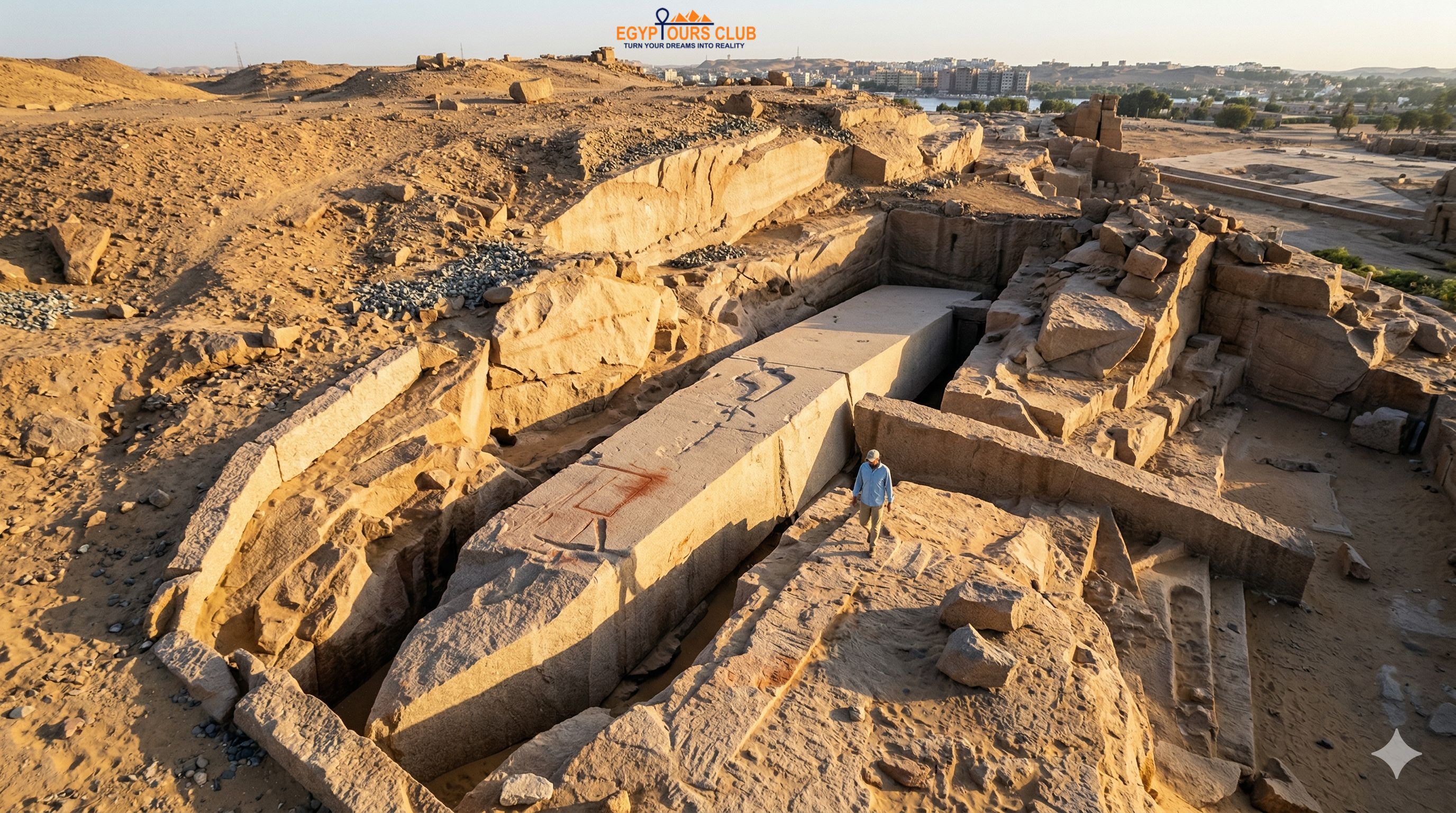
The carved channels
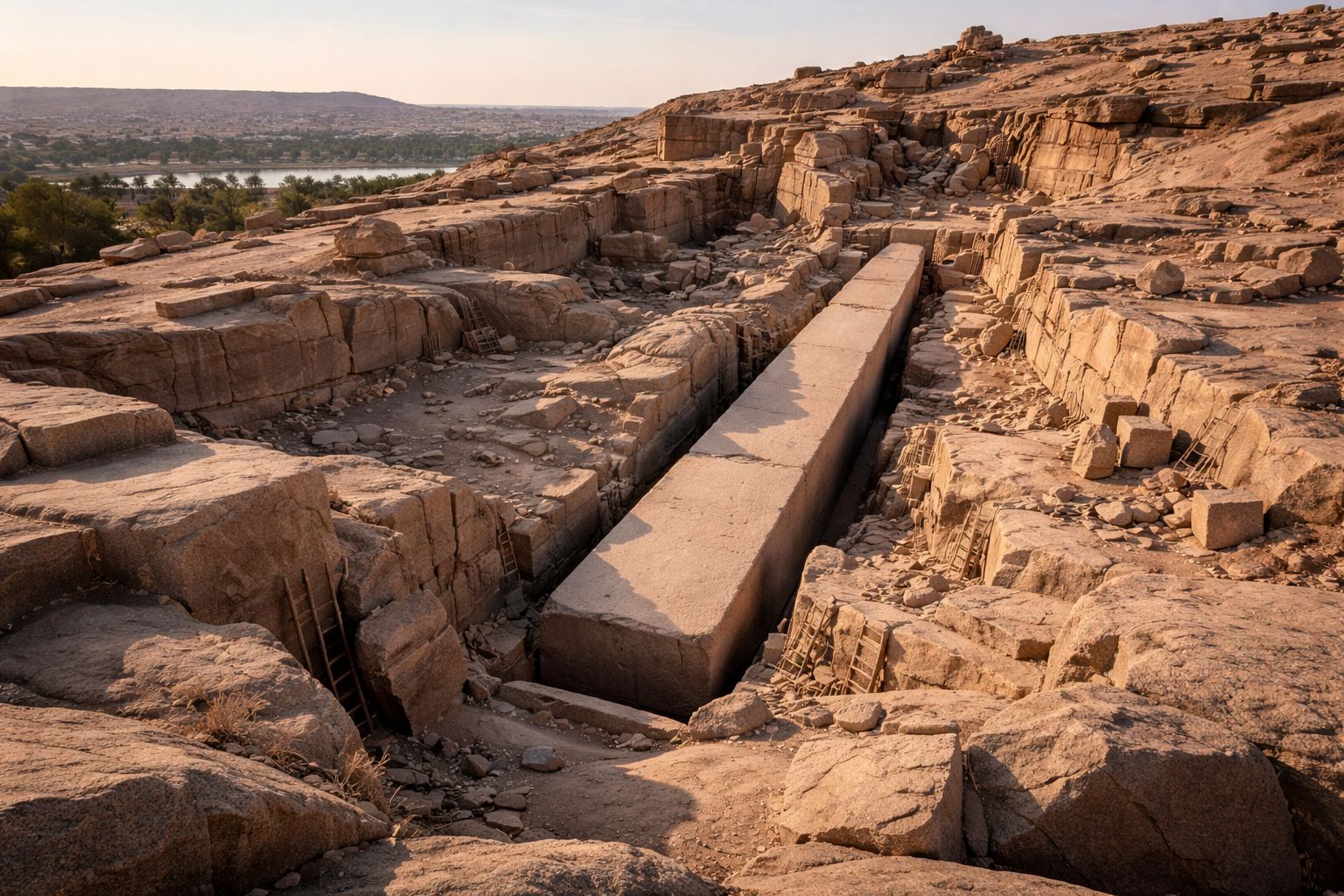
Look for the long cuts around the obelisk body. They show how workers separated the monument from the surrounding granite step by step.
A colossal monument that was never raised — and one of Egypt’s clearest lessons in ancient stone cutting.
The Unfinished Obelisk in Aswan Egypt lies exactly where ancient workers abandoned it inside the granite quarry. Its visible crack, carved channels and enormous scale reveal how Egyptian builders planned obelisks, shaped hard stone and faced one of the greatest construction challenges of the ancient world.
This is the main route table for the Unfinished Obelisk. It includes routes that naturally support the Aswan granite quarry, Philae Temple, High Dam, Abu Simbel, Nile Cruise and Aswan sightseeing goal.
The best Unfinished Obelisk Aswan tour is a guided Aswan route that combines the ancient granite quarry with Philae Temple, the High Dam and a clear explanation of the visible crack, stone cutting and obelisk construction process. The site is short to visit, but it becomes powerful when connected to ancient engineering, temple building and the wider Aswan story.
The Unfinished Obelisk is easy to photograph, but the real value is understanding the working site. A guided visit turns a large piece of granite into a clear story of planning, cutting, cracking and abandoned royal ambition.
Look for the long cuts around the obelisk body. They show how workers separated the monument from the surrounding granite step by step.
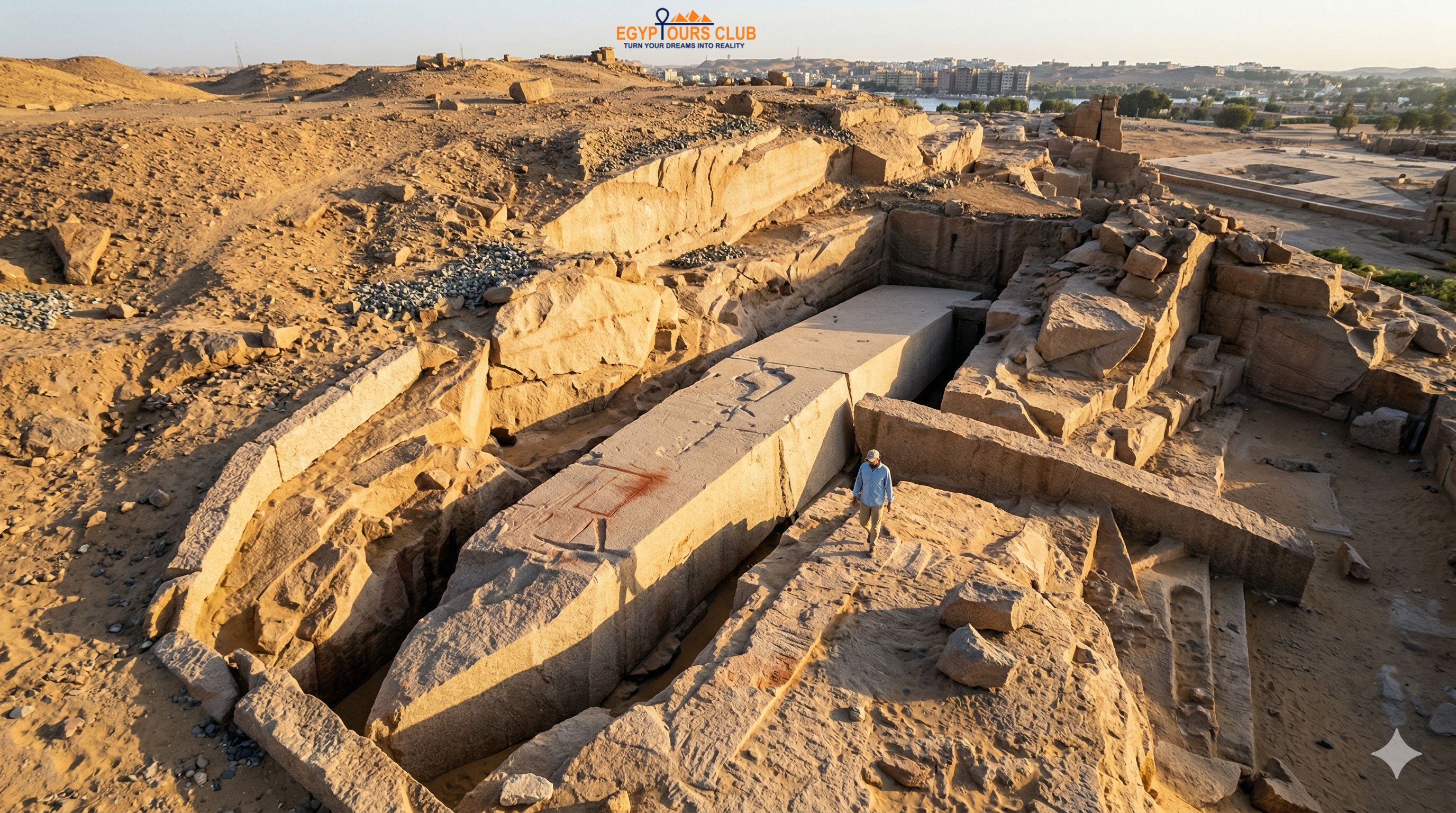
The visible fracture stopped the project, but it also preserved one of the clearest construction lessons from ancient Egypt.
The monument’s length and estimated weight help visitors understand how ambitious obelisk transport would have been before the stone ever reached a temple.
This is not a polished temple façade; the best photos come from angles that explain the quarry, the crack and the unfinished worksite.
The Unfinished Obelisk becomes stronger when visitors know what to look for instead of only taking one quick photo.
The space around the obelisk shows how workers needed room to cut, shape and separate the stone from the bedrock.
The surrounding granite was not background scenery; it was part of Aswan’s role as a major source of hard stone for Egyptian monuments.
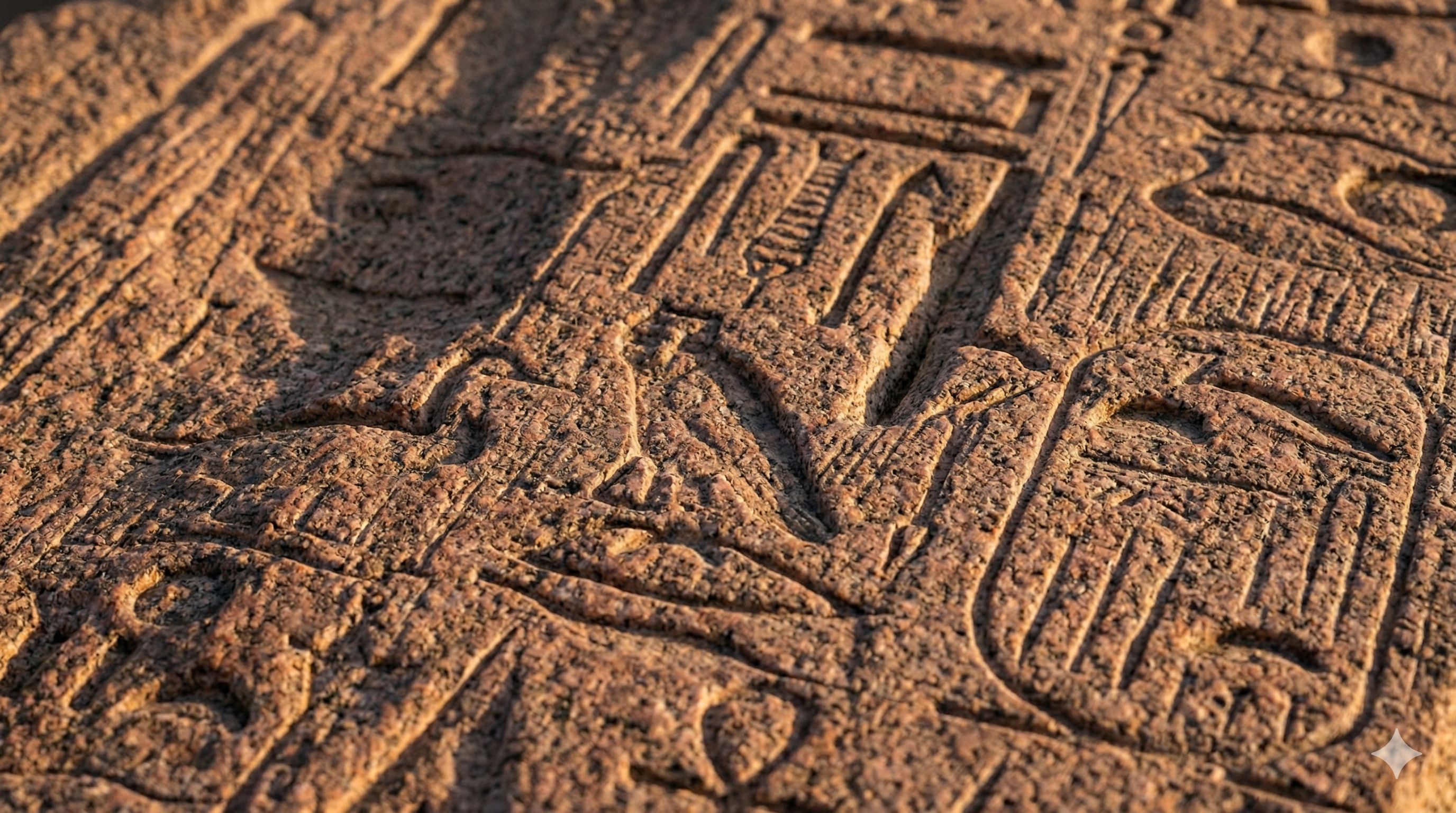
The roughness of the stone helps explain the difference between quarry work and the later polishing seen on finished monuments.
The site is compact, but timing matters if you want more than a quick stop.
| Visit Length | Best For | What to Do |
|---|---|---|
| 25–30 minutes | Fast Aswan stop | See the obelisk, take a wide photo and identify the crack. |
| 45–60 minutes | Best normal visit | Walk the quarry viewpoint, understand stone cutting, take detail photos and connect the site with Philae or the High Dam. |
| 75 minutes | Archaeology-focused travelers | Spend extra time on chisel marks, quarry surfaces, transport questions and wider Aswan granite history. |
The quarry needs explanation. Without the crack, cutting marks and transport story, the visit can feel too short.
The site is exposed. Morning or late afternoon usually makes walking, photos and listening to the guide easier.
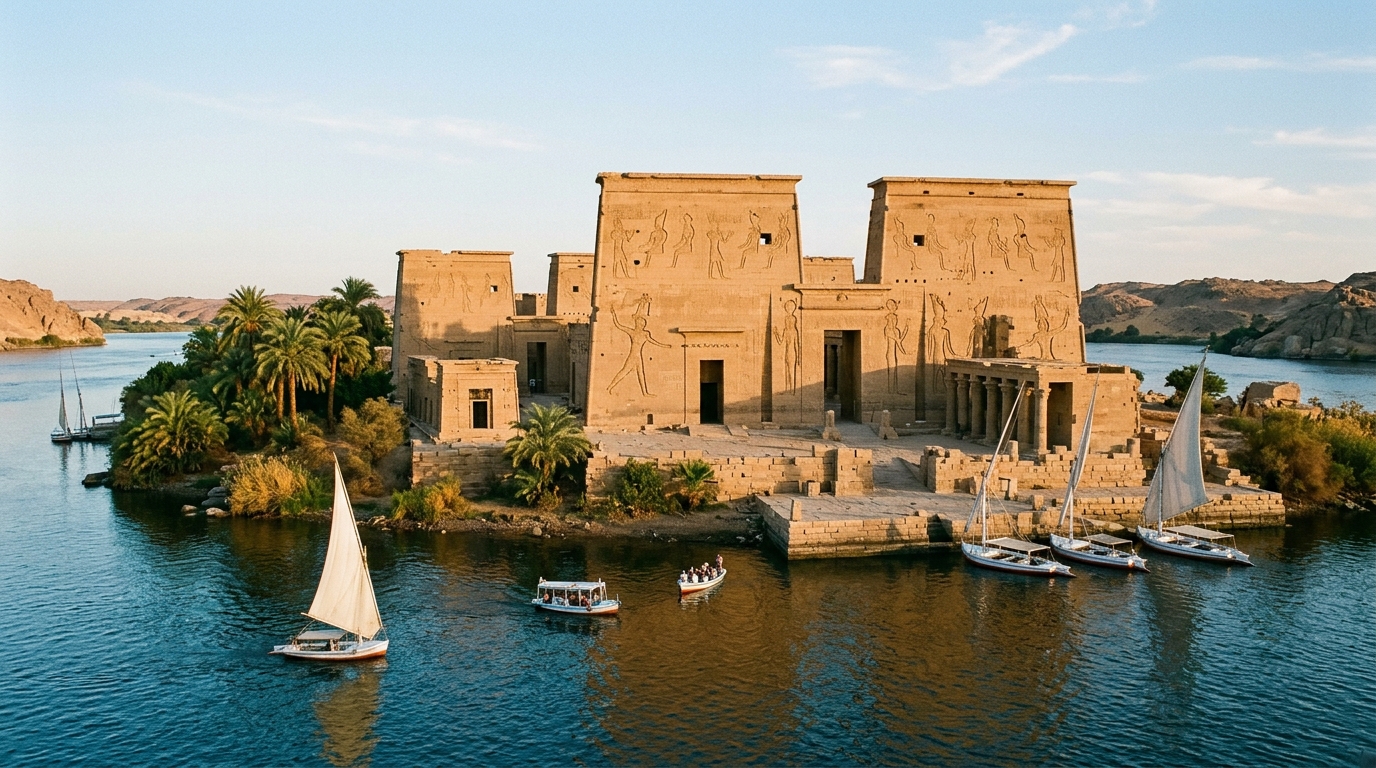
Philae Temple and the Unfinished Obelisk work well together because one shows sacred architecture and the other shows how stone monuments began.
Choose the route around your available time: a short quarry stop, a classic Aswan day tour, or a wider plan that connects the Unfinished Obelisk with Philae Temple, the High Dam, Abu Simbel or a Nile Cruise.
Best for visitors who want the granite quarry explained inside a clear Aswan day tours route.
Useful when the visitor only has time for the quarry, Philae Temple, the High Dam or a compact city route.
Best for hotel or cruise pickup planning when travelers want to start from Aswan and continue to nearby sites.
Connect the quarry and stone-cutting story with the island temple of Isis for a stronger Aswan experience.
Compare ancient Egyptian engineering at the quarry with modern Nile engineering at the Aswan High Dam.
Use the Unfinished Obelisk as part of a wider Aswan start before Kom Ombo, Edfu, Luxor and the Nile journey.
Many Egyptian monuments show finished beauty. The Unfinished Obelisk Aswan shows the work behind that beauty. Instead of seeing a polished obelisk standing at a temple, travelers see the raw granite bed, the cutting channels, the chisel marks and the fracture that stopped the entire project.
This makes the site different from almost every other ancient attraction in Egypt. It does not only tell you what the Egyptians built; it shows you how ancient Egyptian obelisks were made, how hard Aswan granite was shaped, and how a single flaw could change a royal building plan.
The site fits naturally inside an Aswan travel itinerary, especially when combined with Philae Temple in Aswan, the High Dam, Nile scenery and longer journeys toward Abu Simbel Temple from Aswan.
Unfinished Obelisk · Aswan Granite QuarryThe best views here focus on the granite bedrock, the abandoned obelisk, carved stone surfaces and the wider quarry landscape.


The site turns an abandoned project into a living explanation of ancient Egyptian construction, quarry planning and royal ambition.

If completed, the obelisk would have been among the most ambitious stone monuments ever attempted in ancient Egypt.

The quarry preserves channels, working edges and bedrock cuts that help visitors understand how hard granite was shaped.

The fracture explains why the project stopped and gives the monument its archaeological value as an unfinished worksite.

The project is commonly associated with the building ambition of Queen Hatshepsut’s period, when royal monuments reached extraordinary scale.

Aswan granite supplied monuments across Egypt, so this quarry connects directly to temples, obelisks, statues and royal architecture.

The strongest Aswan route pairs the quarry story with the island temple setting of Philae, giving Aswan both engineering and sacred beauty.
The site is easy to visit, but it is most rewarding when the guide connects the quarry to ancient construction, temple building and the wider Aswan landscape.
| Item | Planning Detail | Best Use |
|---|---|---|
| Recommended duration | 45–60 minutes | Enough for photos, walking the quarry and understanding the construction process. |
| Best route | Unfinished Obelisk → High Dam → Philae Temple | Classic Aswan half-day or full-day route. |
| Main theme | Ancient Egyptian obelisk construction | Explains quarrying, stone cutting, cracks and transport challenges. |
| Tickets | Usually available onsite or included in guided tours | Confirm current entrance fee before visiting. |
| Best time | Morning or late afternoon | Better light, cooler walking and clearer stone details. |
| Route | Best For | Suggested Flow | Useful Link |
|---|---|---|---|
| Classic Aswan Half Day | First-time visitors | Unfinished Obelisk → High Dam → Philae Temple by boat | View |
| Engineering and Nile Route | Curious travelers | Unfinished Obelisk → High Dam → Nile viewpoint → felucca option | View |
| Aswan Two-Day Route | Balanced travelers | Day 1: Philae + Obelisk + Nubian Village · Day 2: Abu Simbel | View |
| Nile Cruise Route | Upper Egypt travelers | Aswan sites → Nile cruise embarkation → Kom Ombo → Edfu → Luxor | View |
Use these nearby routes to continue from the Unfinished Obelisk into Philae Temple, the High Dam, Abu Simbel, Nile Cruise planning and wider Egypt travel.
It is a massive ancient Egyptian obelisk abandoned inside the Aswan granite quarry after a crack appeared during construction.
The best option is a guided Aswan route that combines the Unfinished Obelisk with Philae Temple, the High Dam and a clear explanation of ancient stone cutting.
A crack appeared in the granite while the stone was still being carved, making the monument unsafe to finish and move.
Yes. This is one of the most common Aswan routes and gives travelers a strong mix of sacred temple setting and ancient engineering.
Most travelers need about 45 to 60 minutes for walking, photos and a guide explanation.
Yes. It is easy to understand visually, especially when a guide explains the crack, the cutting process and why the obelisk was abandoned.
Visit the Unfinished Obelisk with a guided Aswan route, then connect the quarry story to Philae Temple, the High Dam, Nile scenery, Abu Simbel and a complete Upper Egypt itinerary.