

14 Best Memphis Egypt Tours | Ramses II Statue, & Cairo Trips | Egypt Tours Club
Memphis Open-Air Museum . banner

Memphis Open-Air Museum

Egypt Tours Club

Memphis planning · Ancient capital · Saqqara & Dahshur routes

Memphis · Mit Rahina · Ramesses II · Ptah

Memphis Open-Air Museum: Complete Visitor Guide to Ancient Egypt’s First Capital

Explore the surviving sculptures and archaeological remains of ancient Memphis at Mit Rahina, including the colossal statue of Ramesses II and the alabaster sphinx, while discovering the capital that stood behind the great pyramid fields of Saqqara, Dahshur and Giza.

Quick Travel Answer

Is Memphis Open-Air Museum worth visiting?

Yes—especially when combined with Saqqara and Dahshur. Memphis was one of ancient Egypt’s most important political, administrative and religious centers, even though relatively little monumental architecture remains standing today.

The museum gives essential urban context to the pyramid fields. Memphis was the city; Saqqara was one of its principal necropolises. Together they explain the political and religious landscape behind early Egyptian kingship and pyramid construction.
Best Things to See

Essential highlights at Memphis Open-Air Museum

The surviving sculptures and fragments reveal the royal, religious and artistic importance of a capital whose monumental cityscape has largely disappeared.

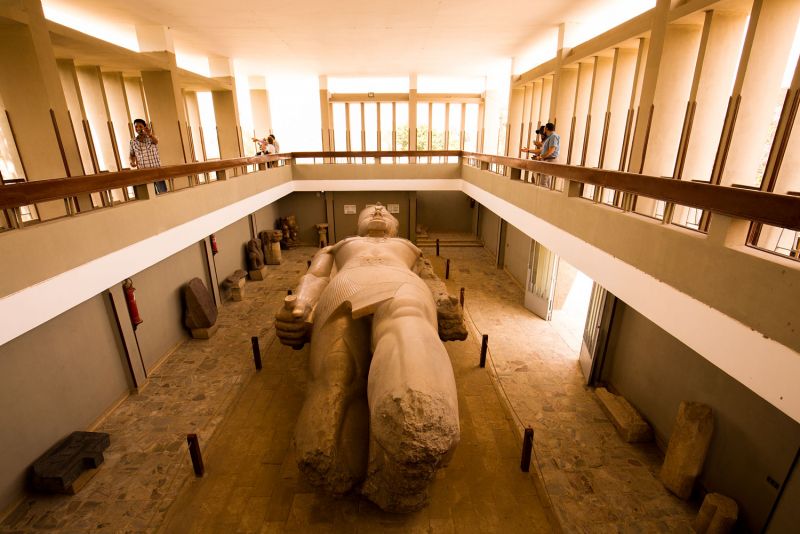
Colossal reclining limestone statue of Ramesses II at Memphis Open-Air Museum in Mit RahinaMuseum Highlight

Colossus of Ramesses II

The museum’s most famous object is the enormous limestone statue of Ramesses II. Displayed horizontally because of its damaged lower portion, it allows unusually close study of the king’s facial features, crown, proportions, inscriptions and sculptural craftsmanship.

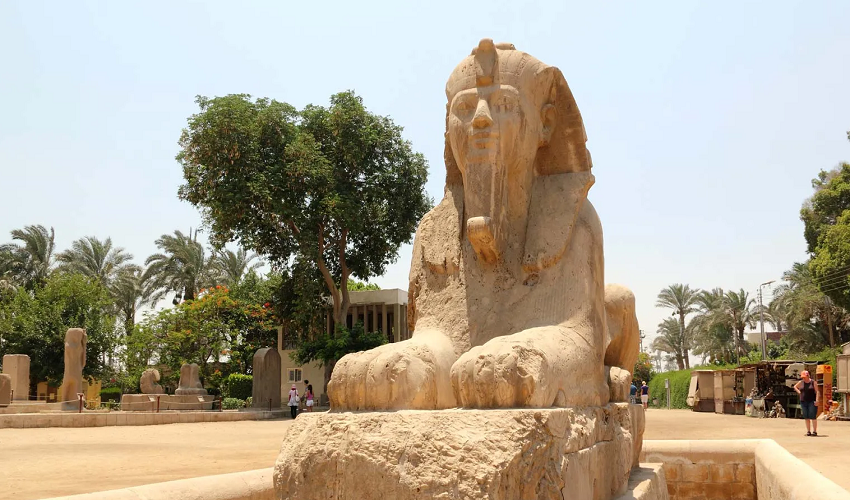
Alabaster Sphinx of Memphis at the open-air museum in Mit RahinaRoyal Symbolism

Alabaster Sphinx of Memphis

This monumental sphinx combines a lion’s body with a human royal head. Its exact royal identity remains debated, so it is best understood as an important example of the royal power and protective symbolism associated with sphinxes.

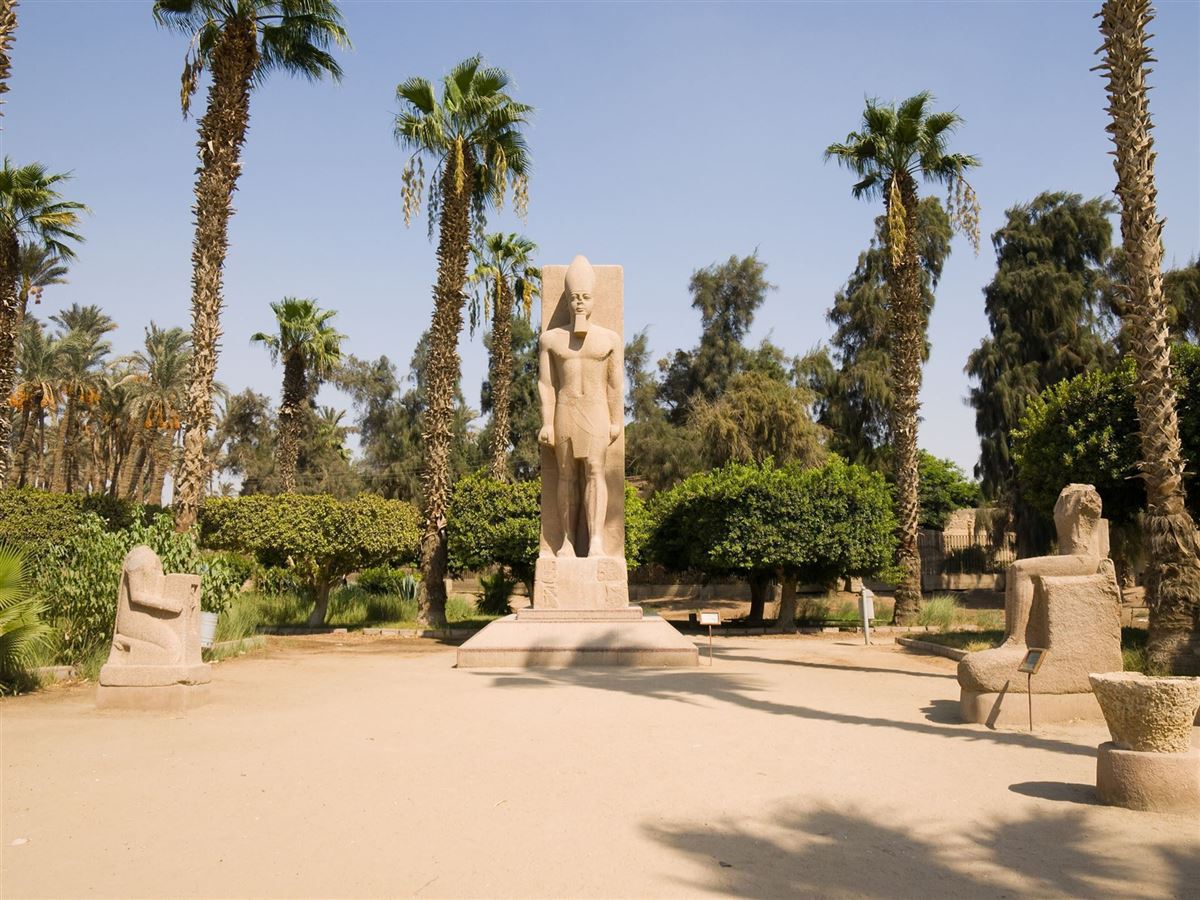
Standing royal statue of Ramesses II among archaeological remains at Memphis Open-Air MuseumArchaeological Evidence

Royal Statues and Temple Fragments

Smaller statues, inscribed stones and architectural blocks provide evidence for rulers, gods and temple institutions that once occupied Memphis. The collection is best approached as archaeology, not simply as two famous monuments.

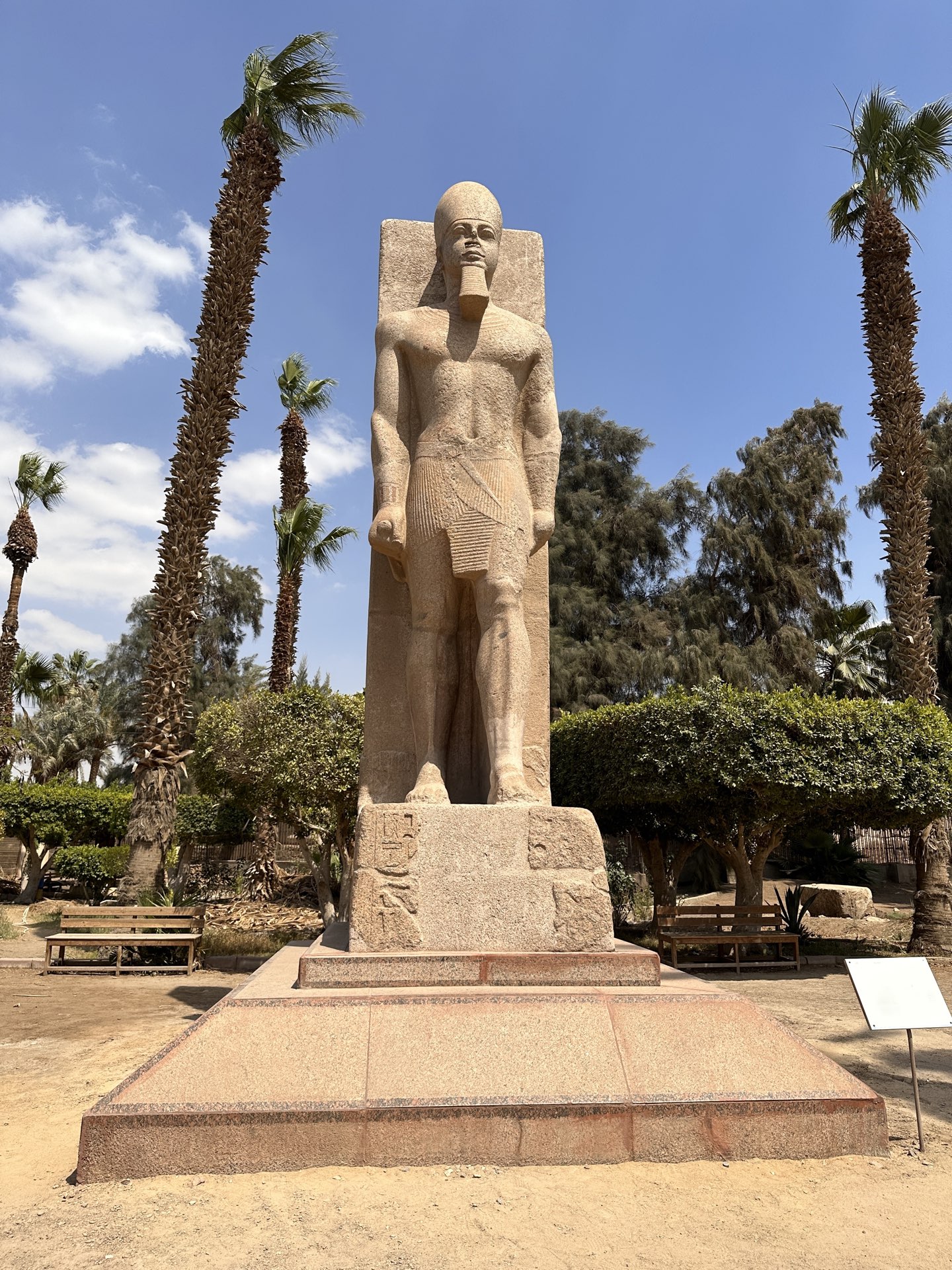
Open-air archaeological setting at Memphis Museum in Mit Rahina with monumental royal sculpture and palm treesThe Lost Capital

The Archaeological Landscape

Look beyond the individual objects. Later occupation, stone reuse, groundwater, agriculture and changing Nile channels explain why so little of ancient Memphis remains visible above ground.

Why Memphis Matters

The capital behind Egypt’s pyramid age

Memphis stood near the point where the Nile Valley opens into the Delta, giving it exceptional control over communication, trade, agriculture and administration between Upper and Lower Egypt.

Early Egypt

First Capital of a Unified Kingdom

Memphis is traditionally regarded as the first capital of politically unified Egypt, emerging very early as a central settlement linking Upper and Lower Egypt. Later tradition connects its foundation with Menes, while modern Egyptology treats that identification cautiously.

Old Kingdom

The City Behind the Pyramids

The state that built Djoser’s pyramid at Saqqara and the later pyramids at Dahshur and Giza depended on administrators, labor organization, royal workshops, priests, agricultural resources and Nile transport centered on the Memphite region.

Religion

Ptah and the Temple of Ptah

Ptah was the principal local god, associated with creation, craftsmen, architects and monumental production. The great Temple of Ptah was Memphis’s religious heart, although relatively little survives above ground today.

Sacred Landscape

Apis Bulls and the Serapeum

The sacred Apis bull was linked with Ptah. After death, sacred bulls were buried ceremonially at the Serapeum of Saqqara, creating a direct religious connection between Memphis and its necropolis.

New Kingdom

Ramesses II and Memphis

Memphis remained politically, militarily and religiously important long after the Old Kingdom. Ramesses II invested heavily in the city and used colossal royal imagery to connect himself with Egypt’s ancient kingship.

Later History

A City of Remarkable Longevity

Memphis remained significant through later periods, including the Ptolemaic era. Its decline was gradual as political power shifted toward Alexandria and later Fustat and Cairo.

Internal Link Map

Connect Memphis with the wider Memphite pyramid landscape

Memphis makes the most sense when connected with its royal cemeteries and the monuments that developed around the ancient capital.

Suggested Archaeological Routes

The best ways to combine Memphis, Saqqara, Dahshur and Giza

Essential pairing

Memphis + Saqqara

  • Ramesses II colossus
  • Alabaster sphinx
  • Step Pyramid of Djoser
  • Saqqara necropolis
Explore Saqqara Tours

Planning note: Opening hours, ticket prices, access conditions and photography rules can change. Check current official information before travel.

Memphis Open-Air Museum archaeological landscape at Mit Rahina

Official and Authoritative Sources

Verify current heritage and visitor information

The archaeological interpretation in this guide should be paired with current official information before visiting.

Frequently Asked Questions

Memphis Open-Air Museum questions before you go

Where is Memphis Open-Air Museum?

The museum is located at Mit Rahina, south of Cairo, within the archaeological area of ancient Memphis.

What was Memphis?

Memphis was one of ancient Egypt’s most important cities and is traditionally regarded as the first capital of a unified Egyptian state.

What is Memphis Open-Air Museum famous for?

It is best known for its colossal statue of Ramesses II and large alabaster sphinx.

Who was the main god of Memphis?

The principal local god was Ptah, creator deity and patron of craftsmen.

Is Memphis the same as Saqqara?

No. Memphis was the ancient city and capital; Saqqara was one of its principal necropolises. They are closely connected historically but are different archaeological sites.

How long should I spend at Memphis Open-Air Museum?

Around one to one and a half hours is suitable for most visitors.

What should I visit after Memphis?

Saqqara is the best next stop. For a full-day archaeological route, continue afterward to Dahshur.

Private Cairo Archaeology Planning

Build the right Memphis, Saqqara and pyramid route

Combine the ancient capital with Djoser’s Step Pyramid, Dahshur or Giza in a private route designed around your available time and interests.