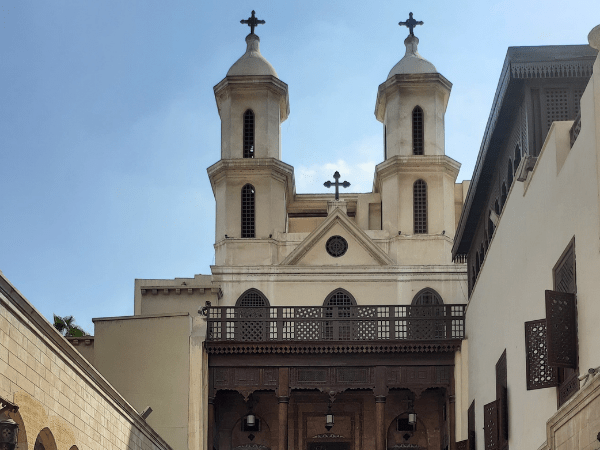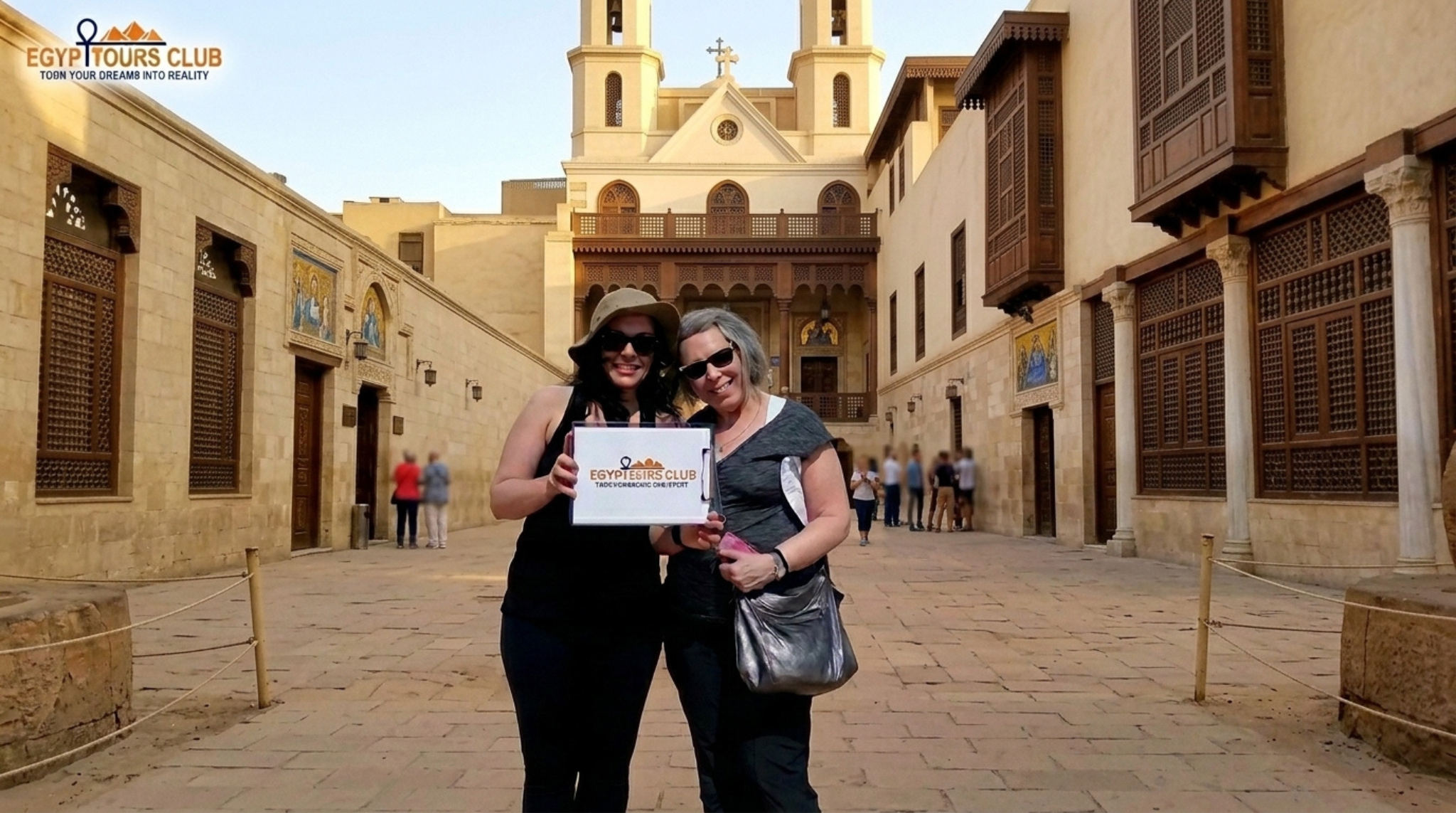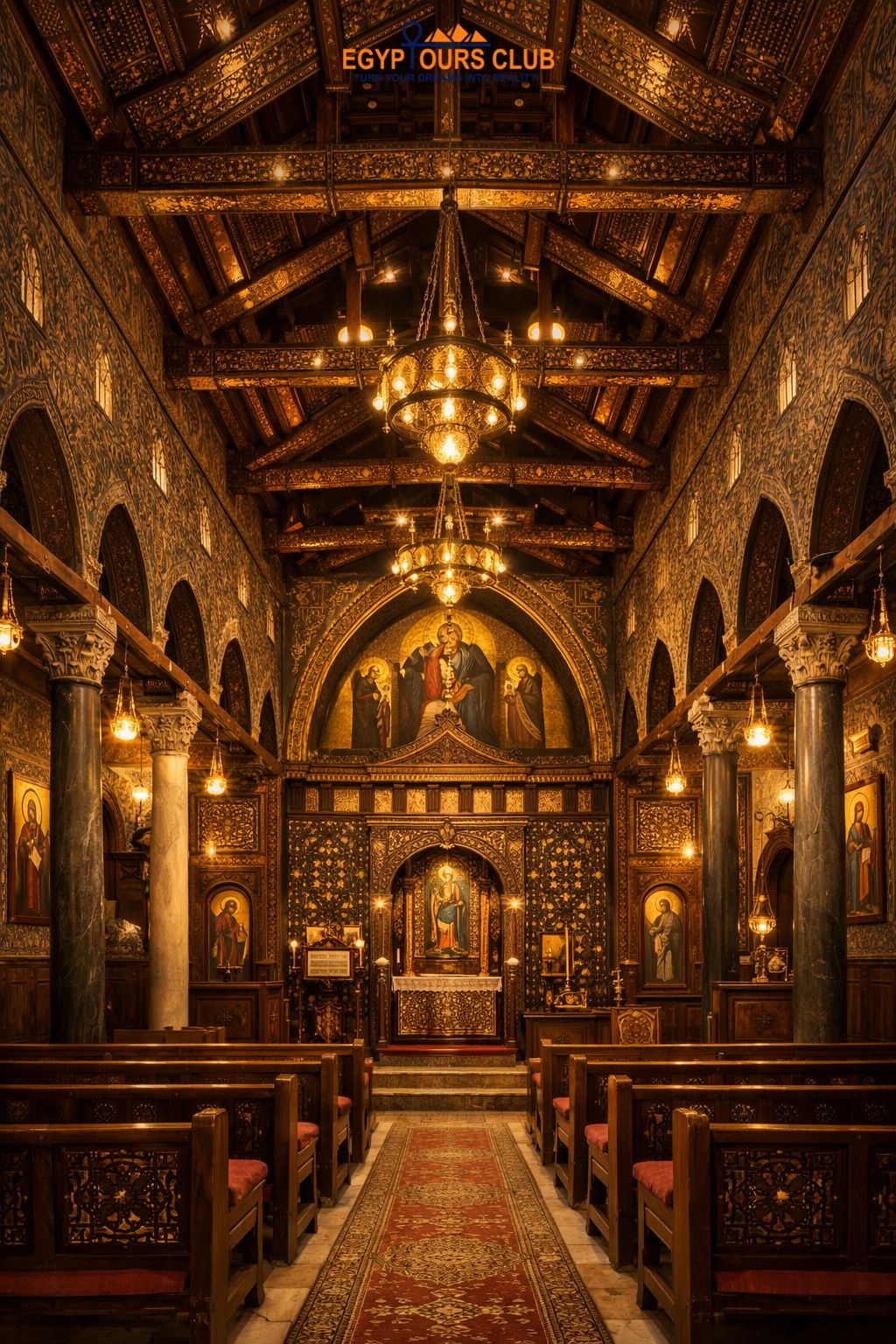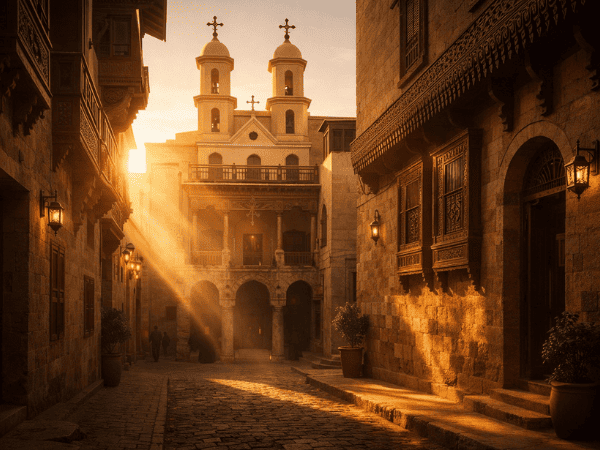


The strongest way to understand Islamic and Coptic Cairo is to stop treating it as a group of separate landmarks and start seeing it as a city timeline. Coptic Cairo takes you into the older religious heart of the city, where churches, synagogues and fortress walls sit close together in a compact district. The Hanging Church is not only important because it is beautiful; it matters because its position above the old Roman gate shows how Cairo’s faith communities built on earlier layers of the city. Abu Serga is also more than a church stop. For many visitors, it becomes the emotional center of the Coptic Cairo tour because of its connection to the Holy Family tradition and the quiet feeling of the lower chapel area.
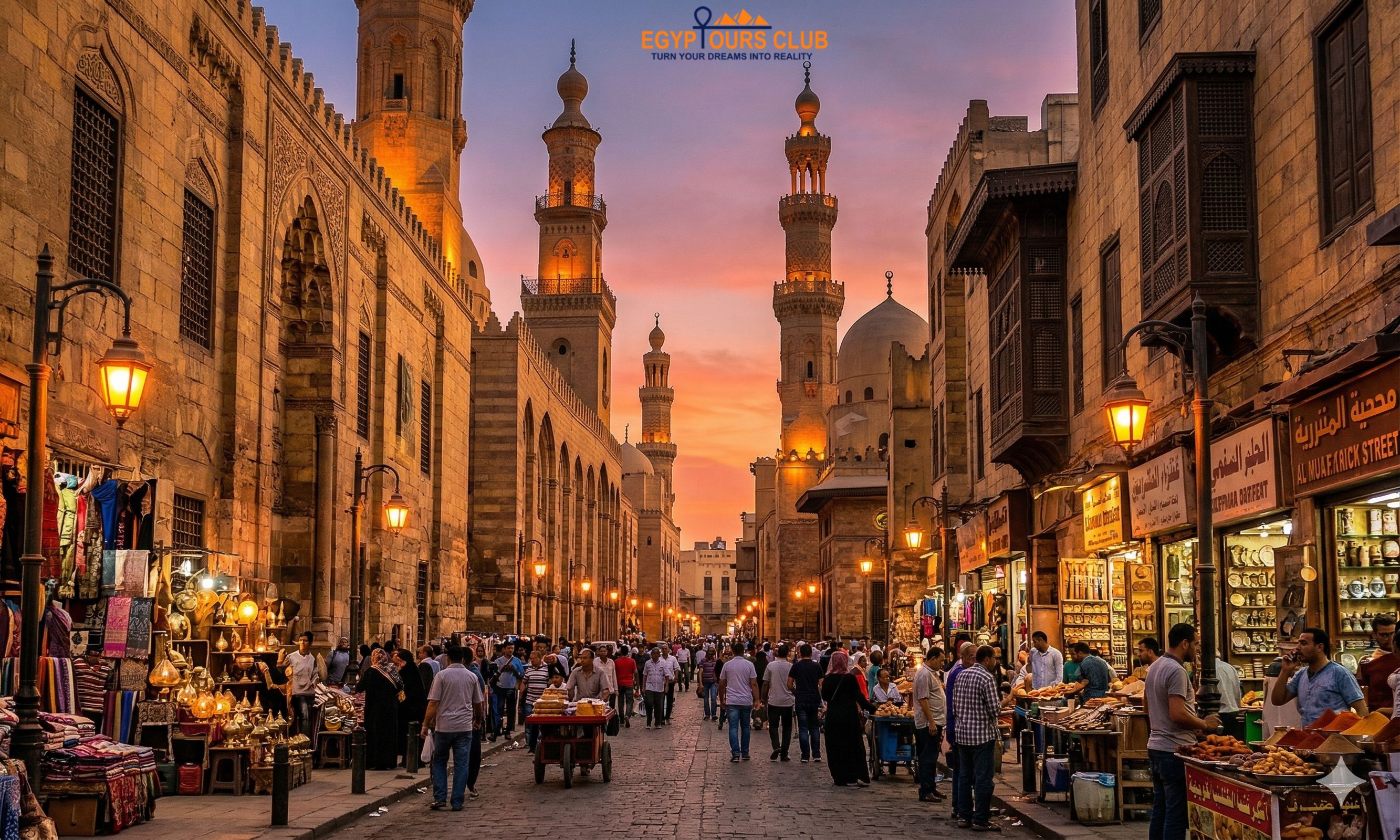
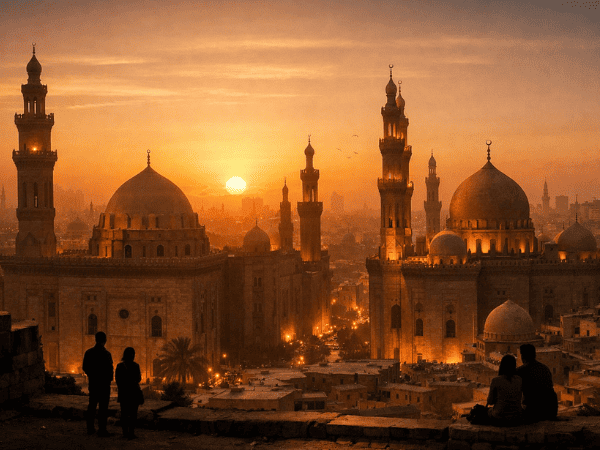
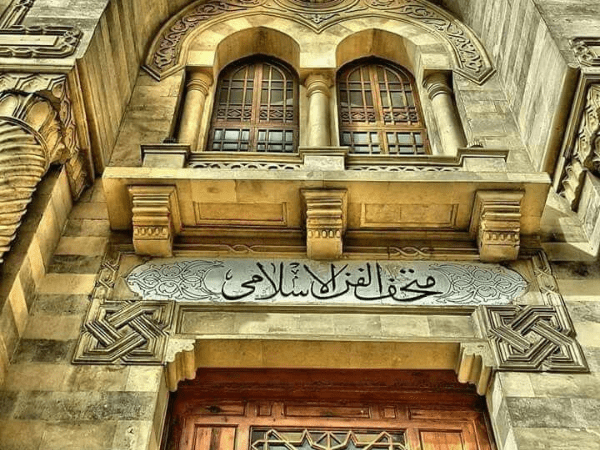
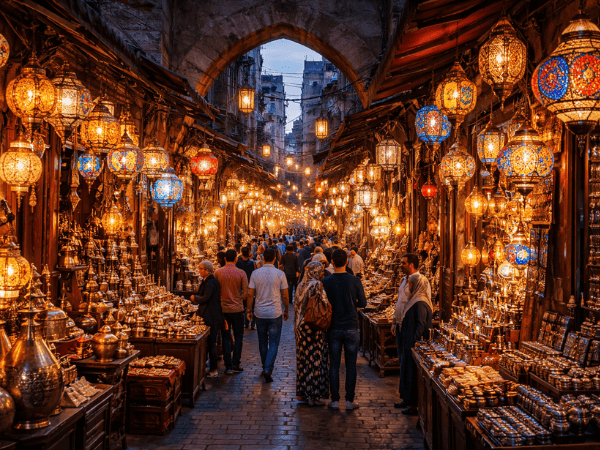
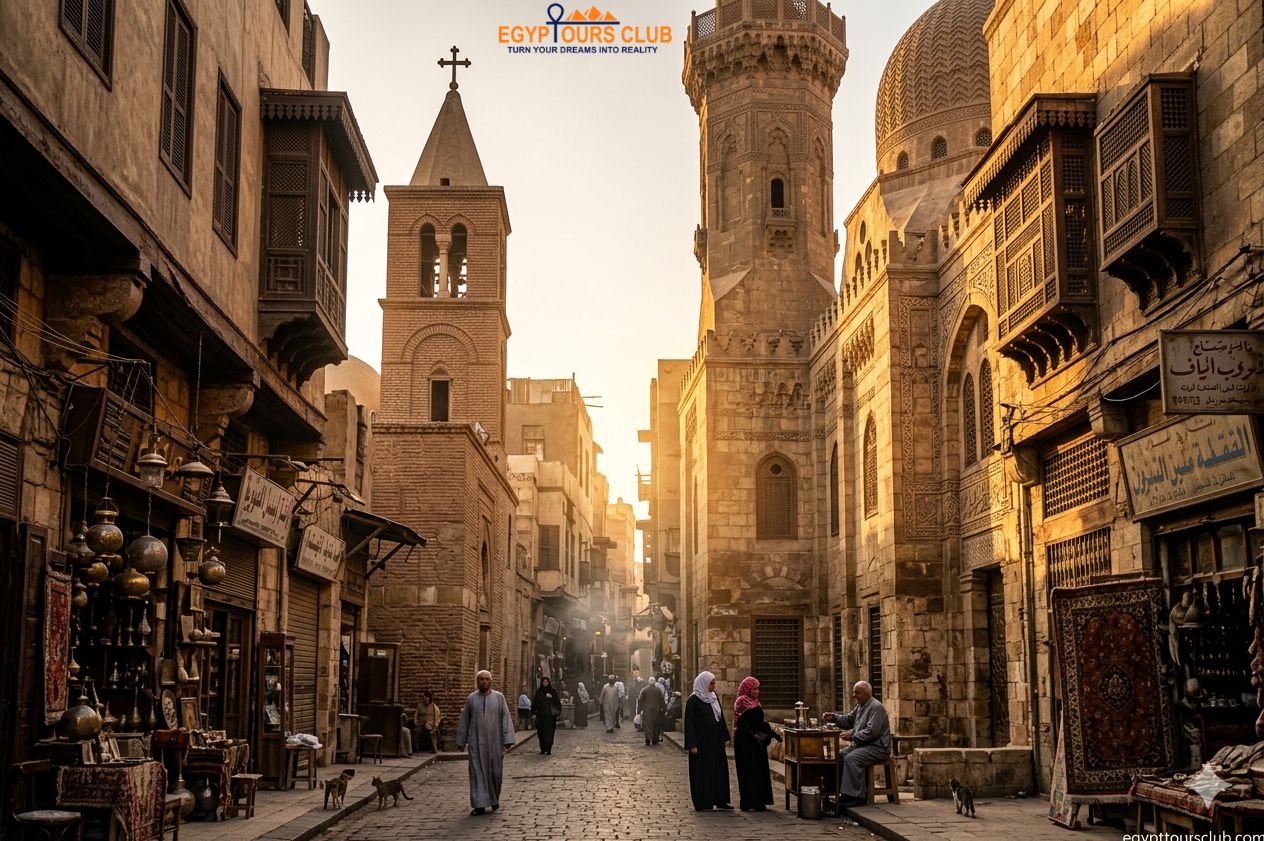
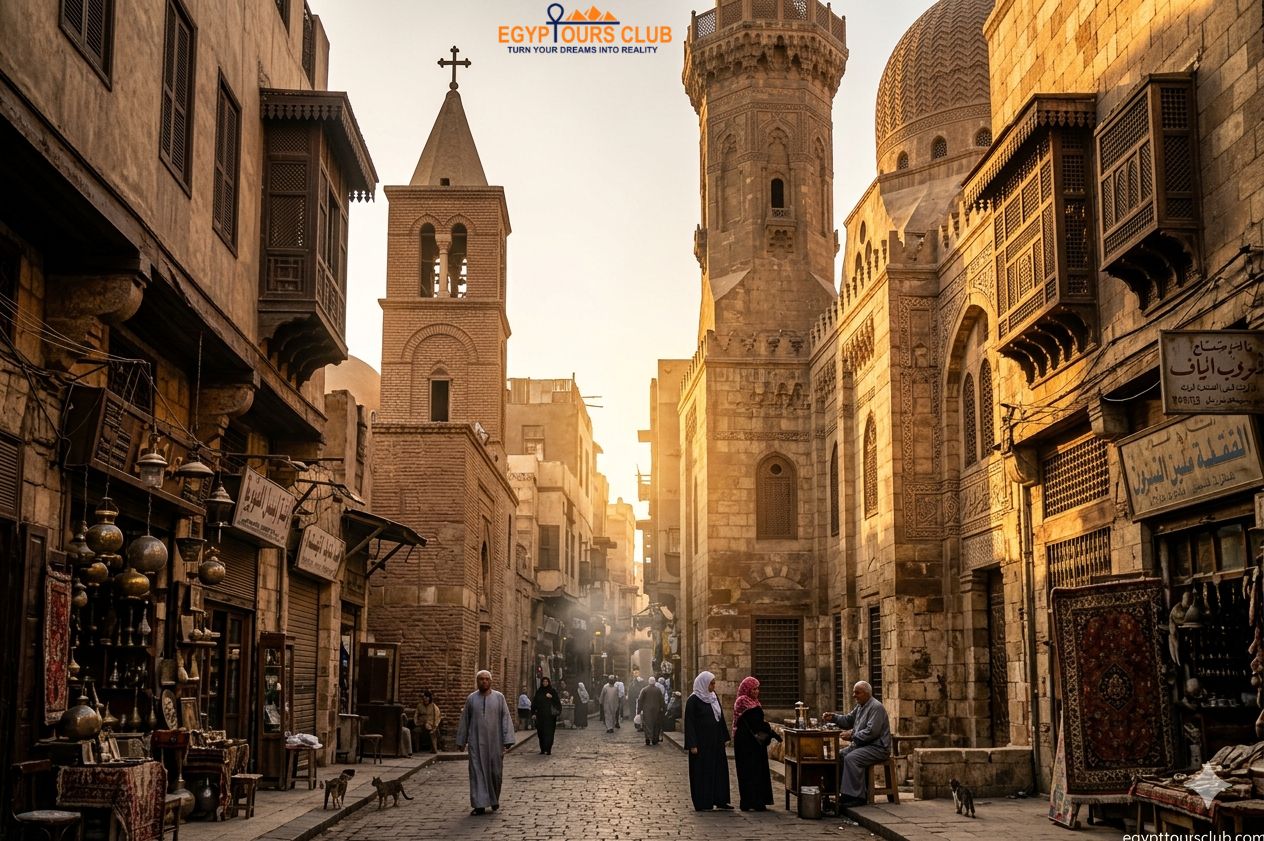
Islamic Cairo gives a different kind of depth. Al Muizz Street, the old gates, mosque façades, caravanserai-style buildings and market lanes show how Cairo became a medieval capital of power, craft and public life. The details are easy to miss if you walk quickly: carved stone patterns, wooden screens, old doorways, inscriptions, minaret shapes and the way light falls through narrow streets. This is why the best Islamic Cairo tour is not just a transfer between mosques; it is a guided walk where architecture, trade, religion and daily Cairo life are read together.
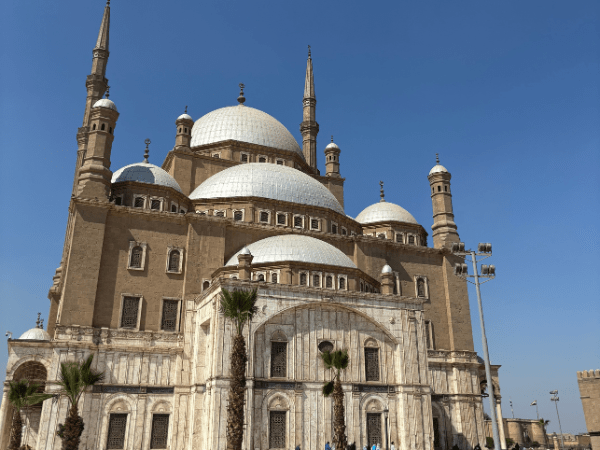
The Citadel works as the bridge between the two worlds for many visitors. From the elevated viewpoint, Cairo suddenly becomes easier to understand: old quarters, domes, minarets, modern neighborhoods and the desert edge appear in one wide scene. When combined carefully, Coptic Cairo, the Citadel, Al Muizz Street and Khan El Khalili make a balanced Old Cairo day tour. The route should not be rushed. It needs enough time for quiet church interiors, mosque etiquette, short walking breaks, photo stops and traffic-aware transfers between districts.
For families, seniors or travelers with limited time, the smarter choice is a focused route rather than trying to force every Cairo landmark into one day. For history lovers, a full private Cairo heritage tour is more rewarding because the guide can connect early Christianity, medieval Islamic rule, Ottoman-era architecture and modern bazaar life. The real value of Islamic and Coptic Cairo is not only what you see. It is how the city’s different layers still sit beside each other, sometimes only a few streets apart.