


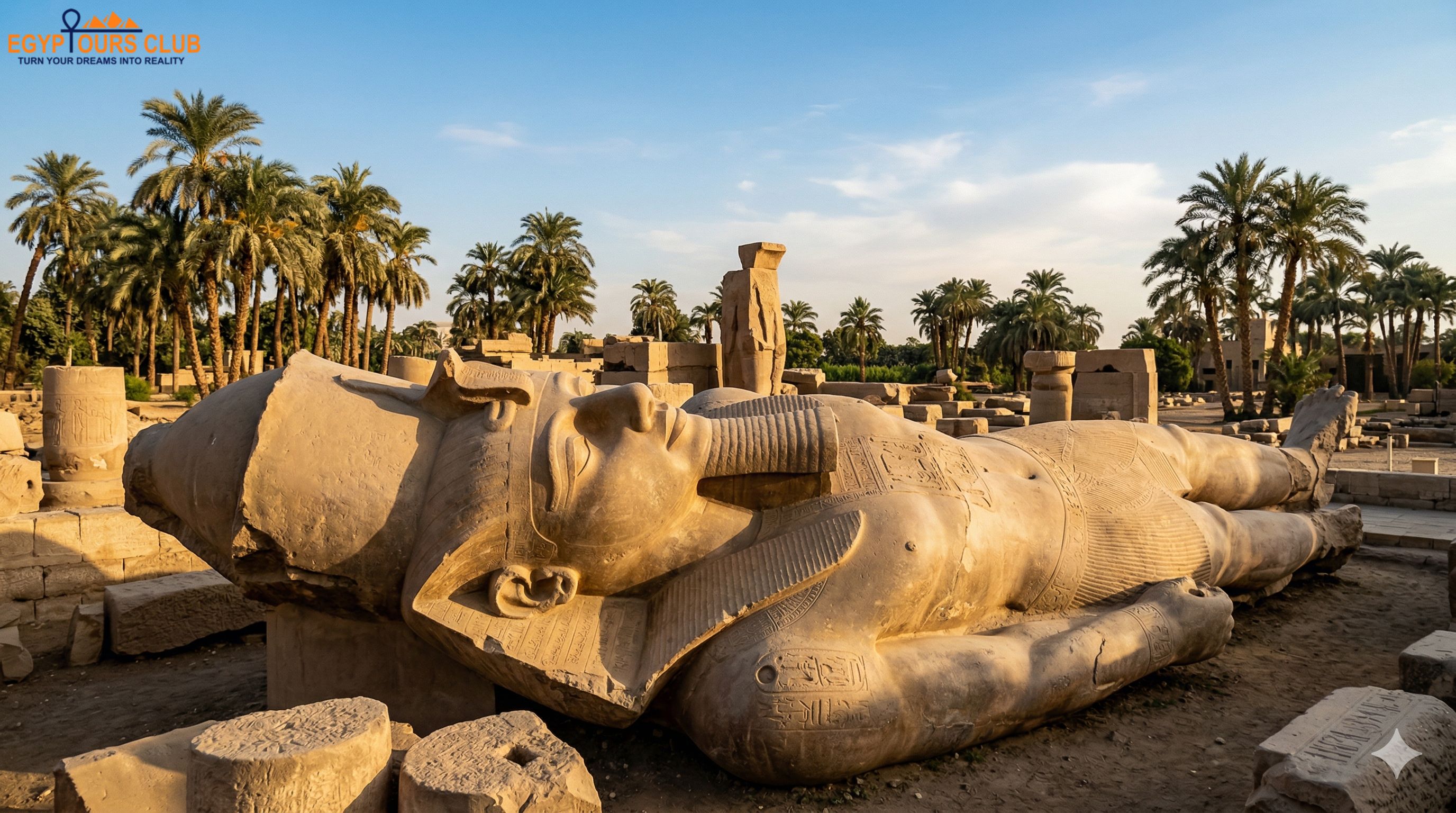
Colossal Statue of Ramses II
The fallen limestone statue is the site’s signature highlight and one of the most impressive surviving monuments in Memphis.
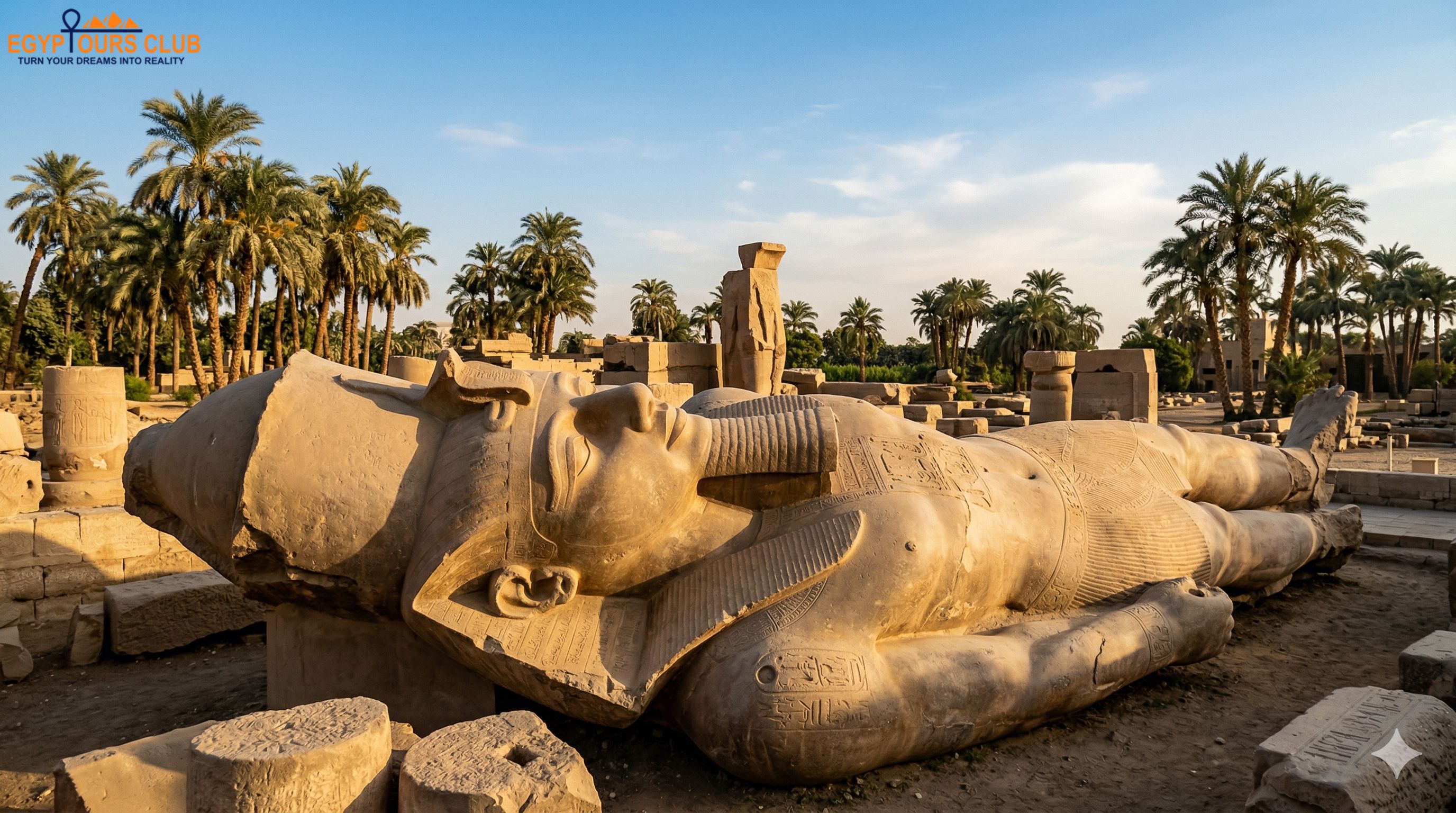
The city where ancient Egypt’s political story began, now preserved through statues, ruins and open-air archaeology.
Memphis Egypt was the first capital of ancient Egypt and one of the earliest centers of kingship, religion and administration. Today, the site near Saqqara preserves a raw open-air museum atmosphere, the colossal statue of Ramses II, sphinxes, stone fragments and the memory of a city that shaped Egyptian civilization.
Memphis Egypt was important because it served as the first capital of ancient Egypt and became a major political, religious and cultural center near the Nile. Its location connected Upper and Lower Egypt, while nearby Saqqara served as the city’s necropolis, making Memphis essential to understanding Egypt’s earliest royal civilization.
Memphis does not feel like a polished temple or a complete city. Its power is different. The site is an open-air archaeological field where statues, fragments, sphinxes and ruins point back to a capital that once controlled the heart of ancient Egypt.
The city rose near the meeting point of Upper and Lower Egypt. That strategic position helped Memphis become a center of royal administration, religion, trade and craft production. It was closely linked with the god Ptah, one of the most important creator deities in ancient Egyptian belief.
The connection between Memphis and Saqqara is the key to understanding the area. Memphis was the living capital; Saqqara was its vast burial ground. That is why travelers who visit the Step Pyramid of Djoser should not skip Memphis. Together, the two sites explain how early Egyptian kingship worked in life and death.
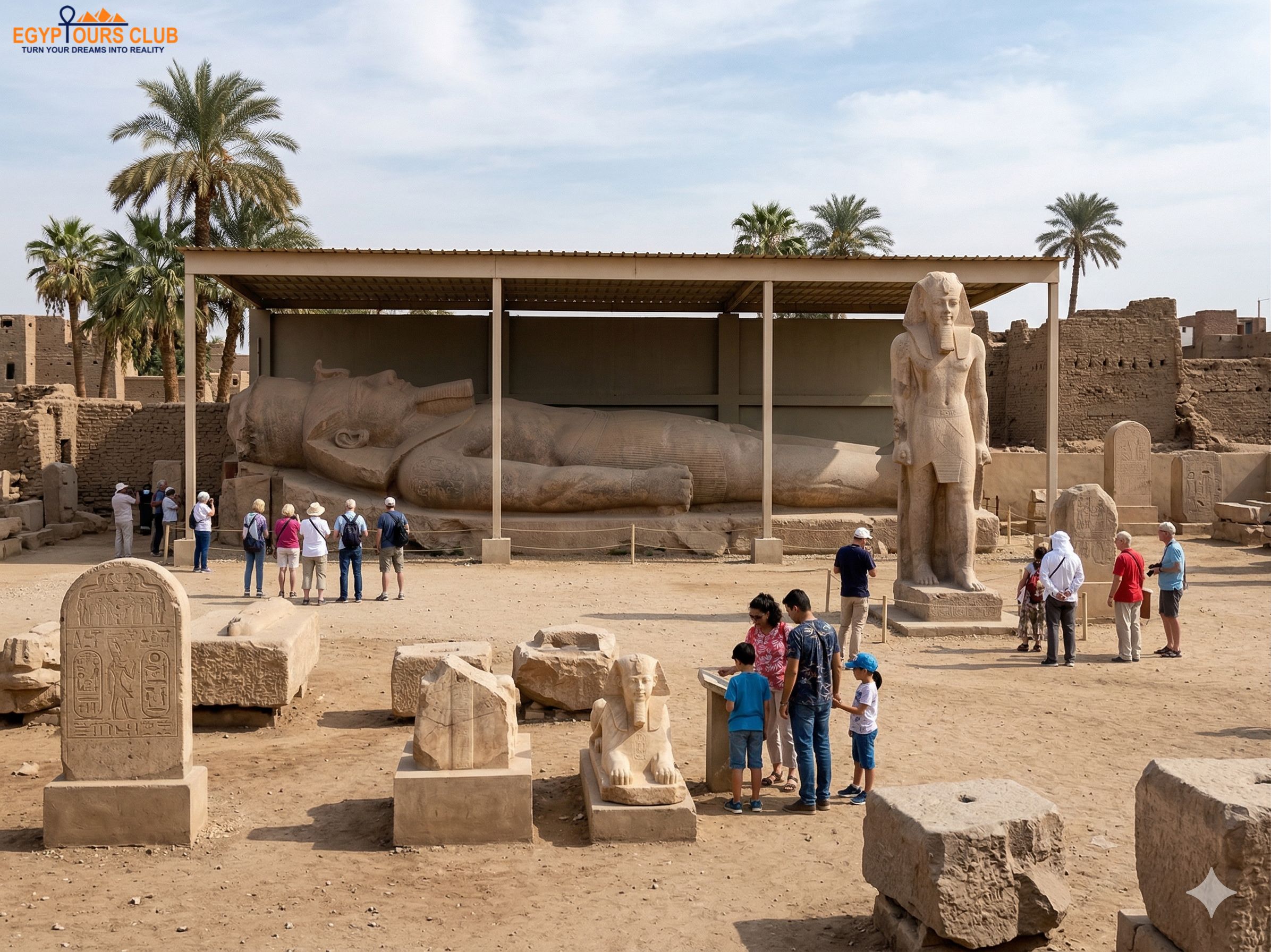 Open-Air Museum · Memphis Egypt
Memphis is best understood visually: the fallen colossal statue of Ramses II, palm-lined ruins, open-air museum fragments and the archaeological landscape that connects the capital with Saqqara.
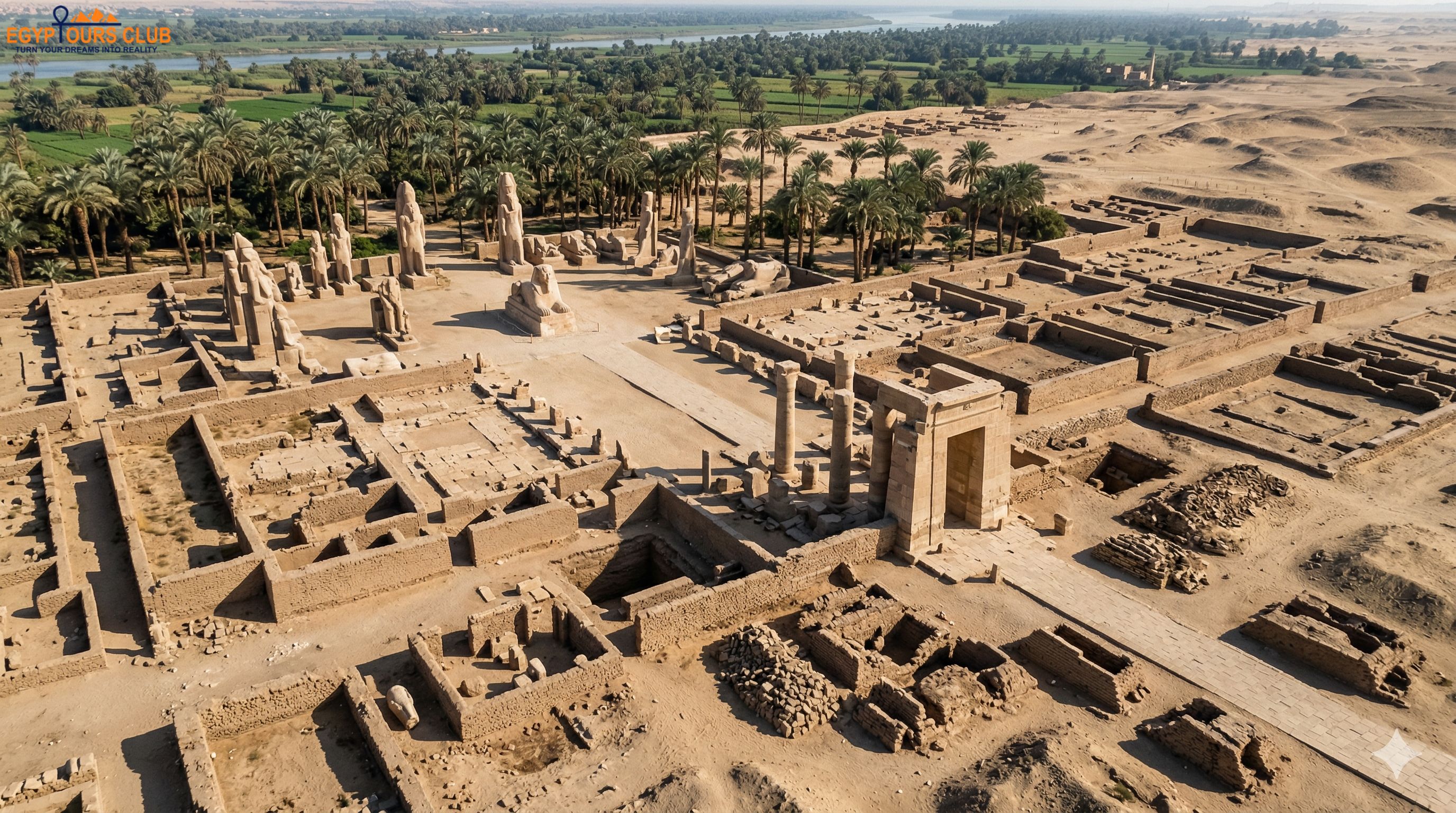
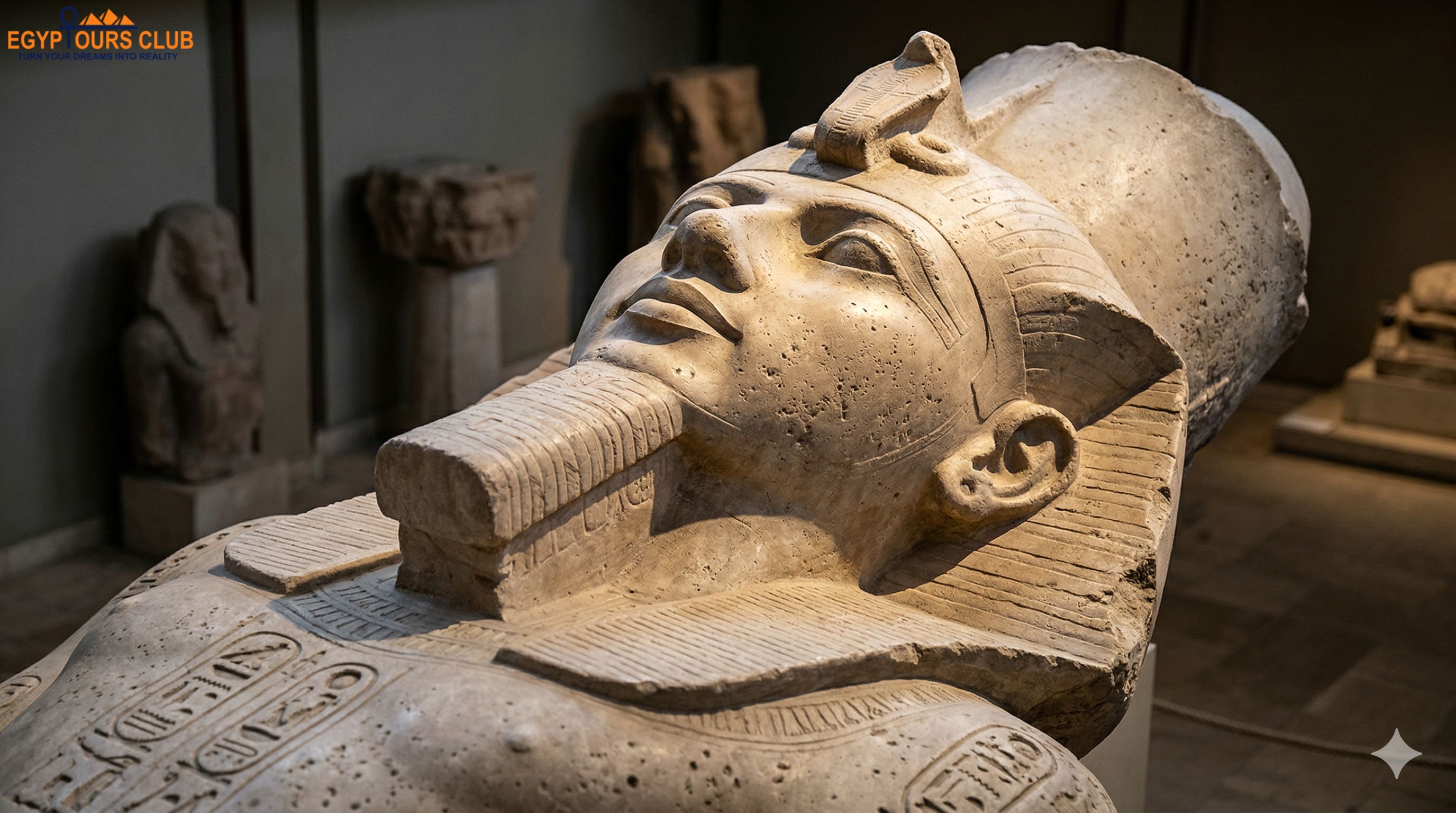
Memphis is a compact site, but every stop adds a useful layer to Cairo’s archaeological story, especially when paired with Saqqara and Giza.
The fallen limestone statue is the site’s signature highlight and one of the most impressive surviving monuments in Memphis.
Instead of one enclosed monument, Memphis presents fragments, statues and ruins in a raw archaeological setting.
The ruins help explain why this location mattered as a political and religious center near the Nile.
Close-up details of the statue reveal the scale, craftsmanship and royal image-making of ancient Egypt.
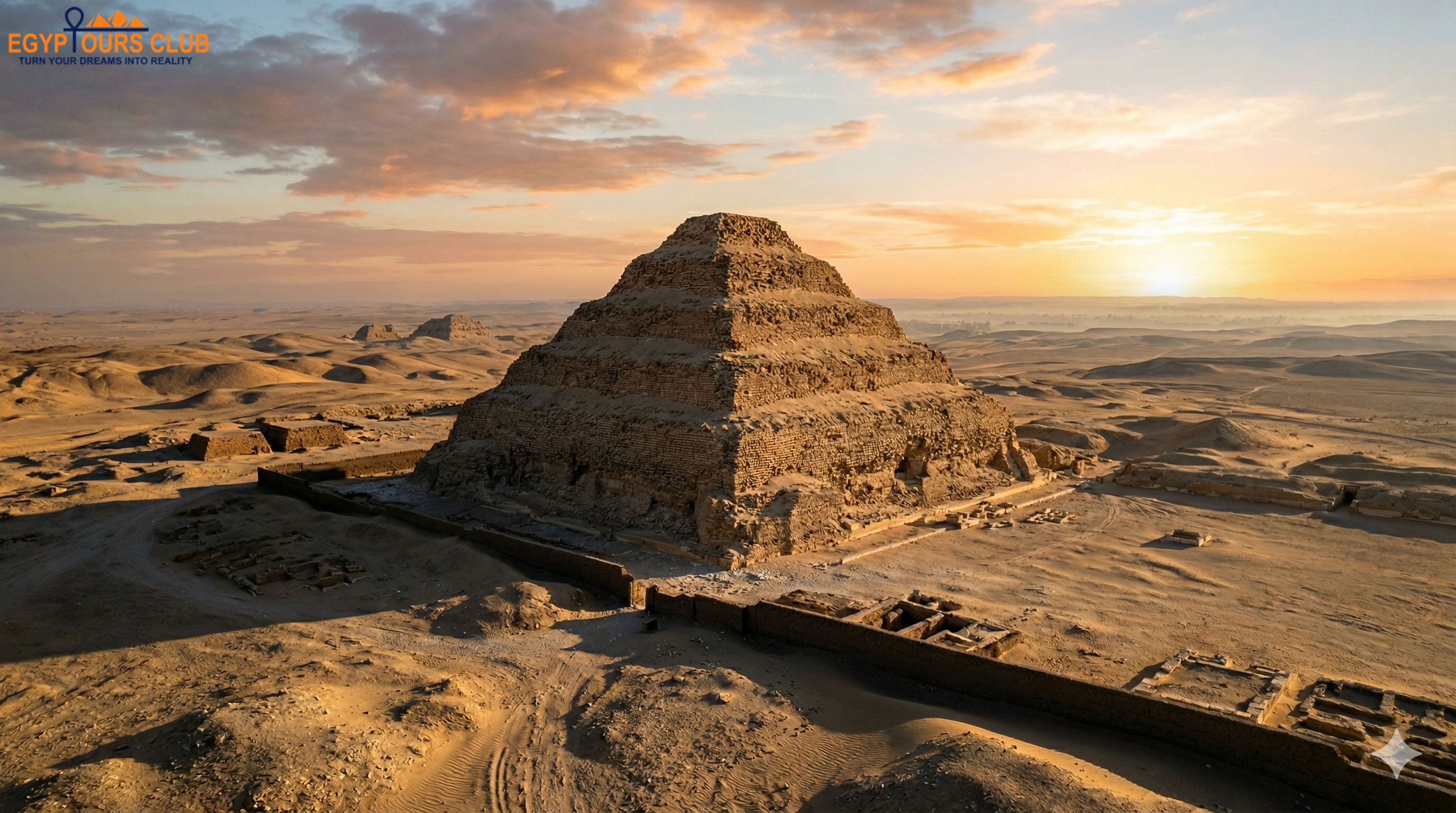
Memphis and Saqqara work as one story: city and necropolis, royal life and royal burial.
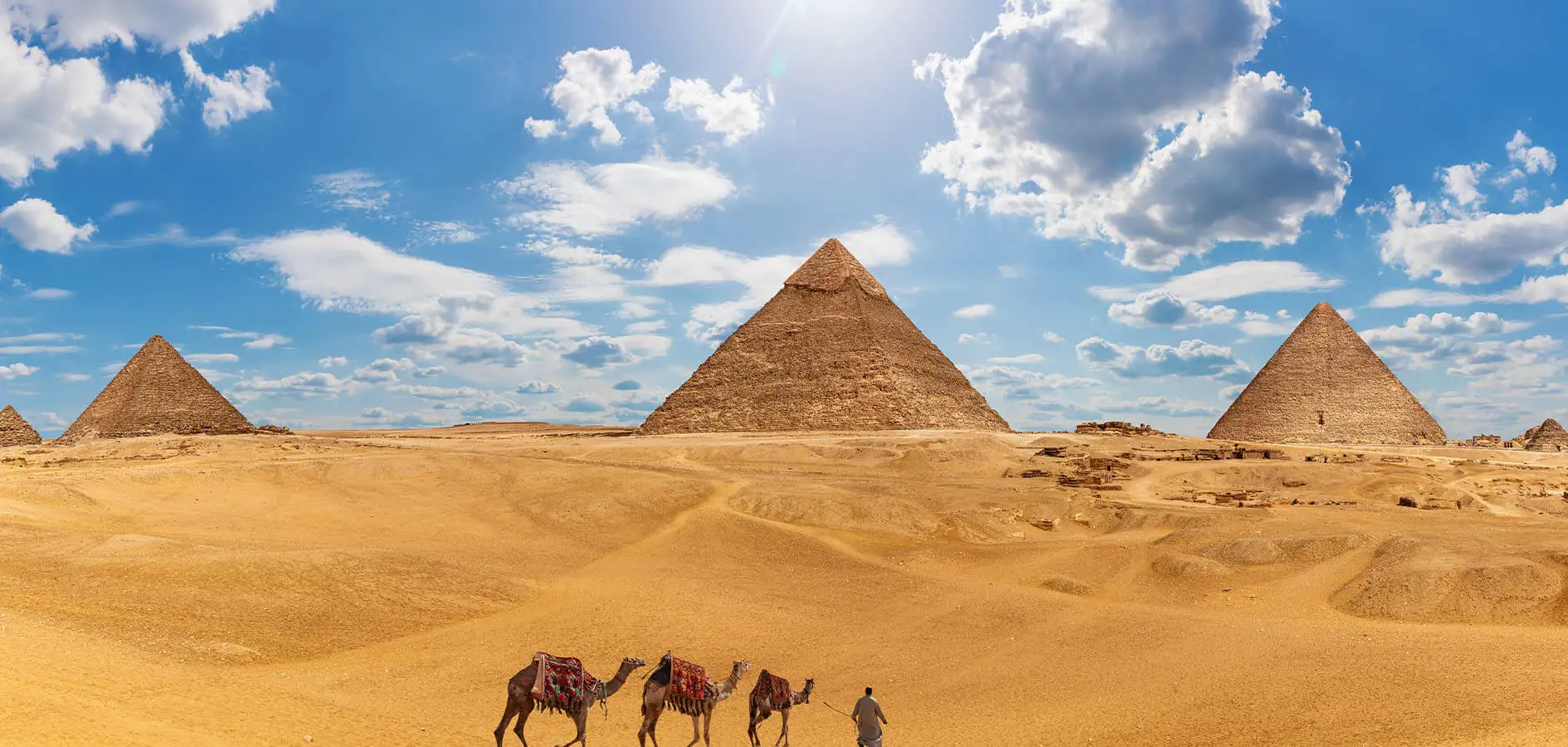
Add Giza to complete the journey from the first capital to the most famous pyramid landscape.
Memphis is easy to visit, but it becomes much stronger when it is placed in the right route with Saqqara and the wider Cairo archaeology circuit.
| Item | Planning Detail | Best Use |
|---|---|---|
| Recommended duration | 45–75 minutes | Enough for Ramses II statue, open-air museum and key ruins. |
| Best pairing | Saqqara Step Pyramid | Best historical connection: capital and necropolis. |
| Full-day route | Memphis + Saqqara + Dahshur + Giza | Strongest Cairo archaeology day for pyramid development and early kingship. |
| Best time | Morning | Better light and cooler walking conditions. |
| Travel style | Private guided tour | Best for understanding a site that is fragmentary rather than fully preserved. |
Memphis works best inside a full archaeological route rather than as an isolated stop.
A complete pyramid-development day that can place Memphis beside Saqqara for the capital-and-necropolis story.
View Details →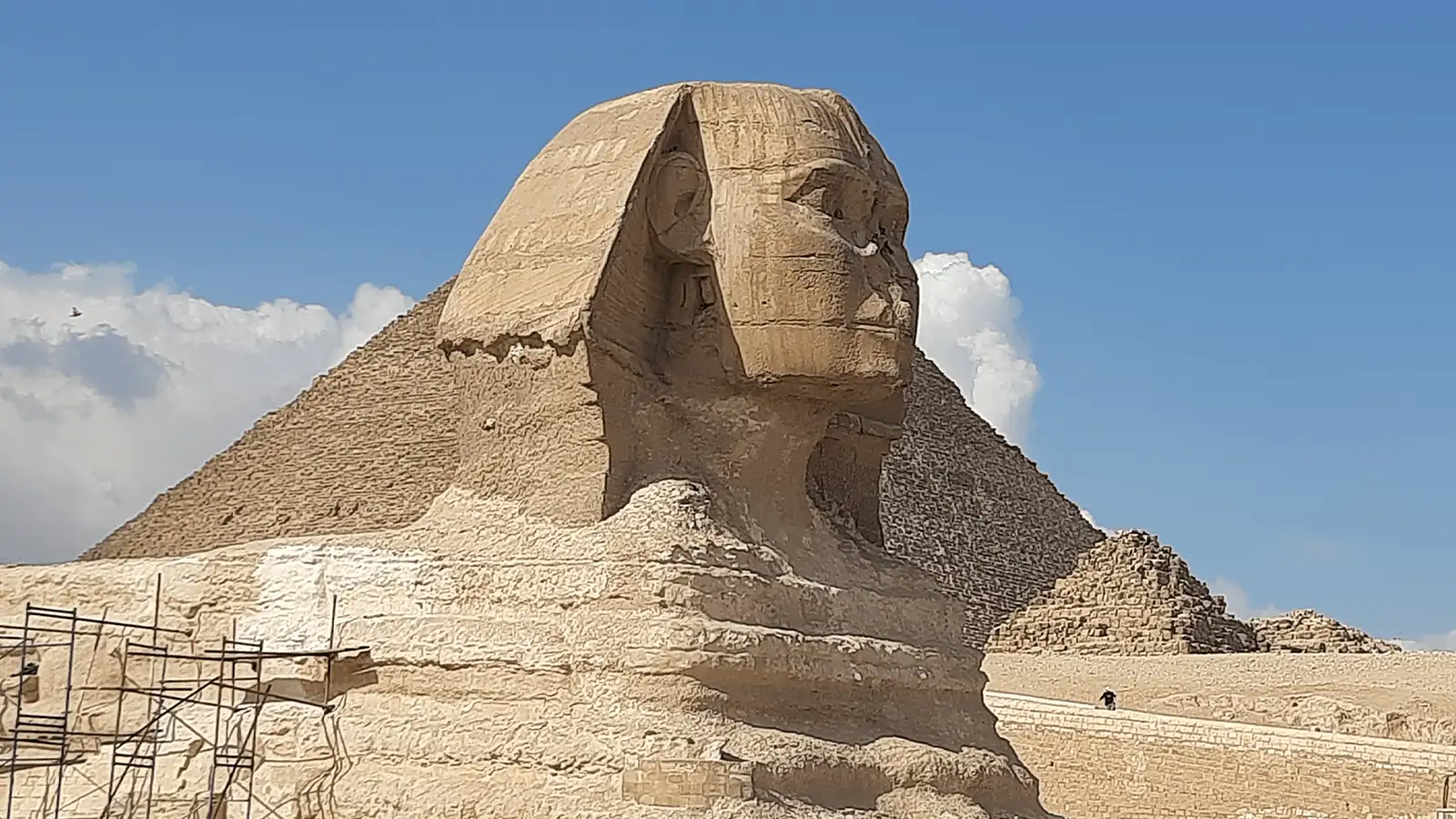
Useful for travelers who want to keep Giza separate and reserve another day for Memphis and Saqqara.
View Details →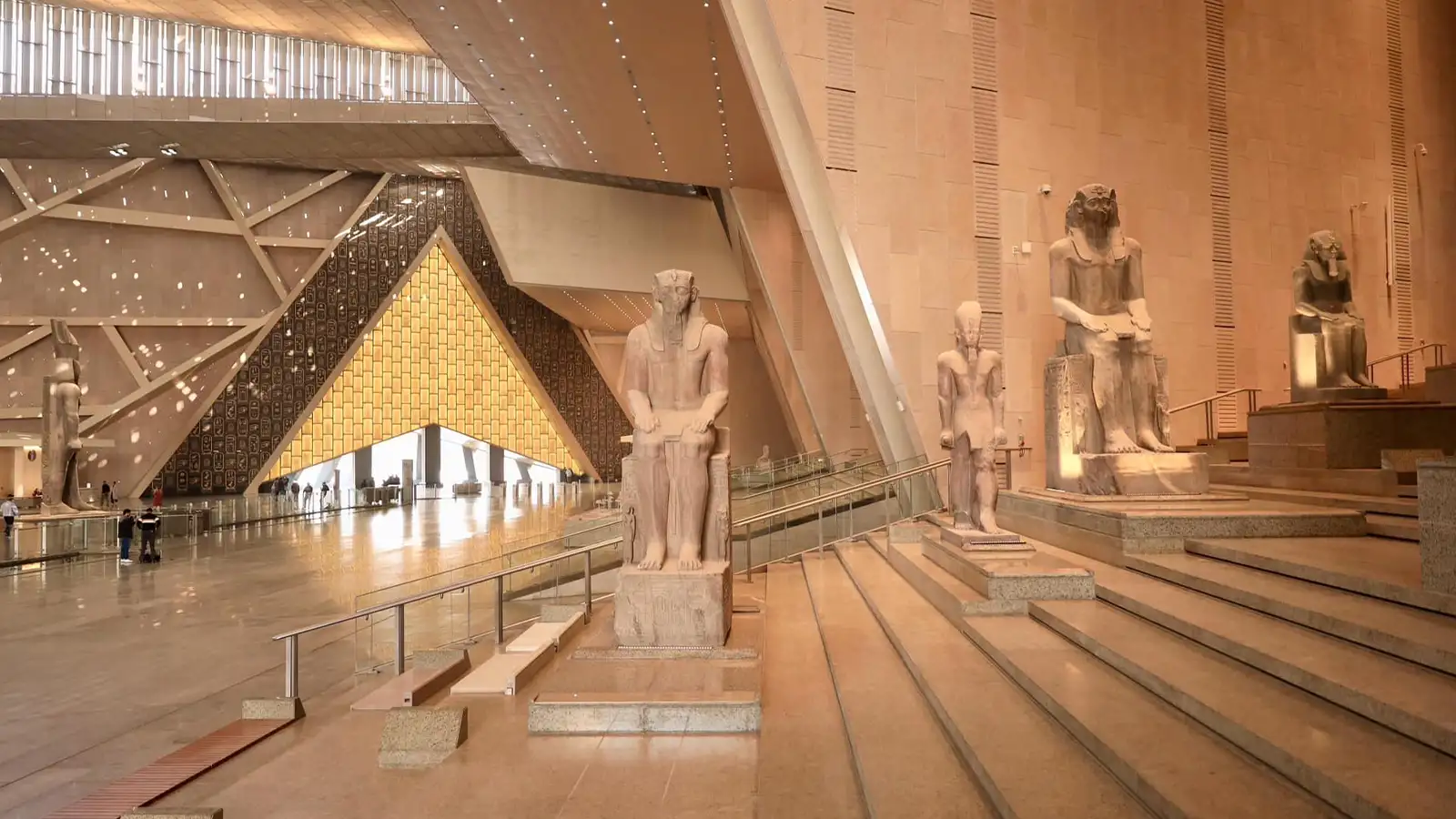
A strong museum-and-monument day before or after the Memphis and Saqqara archaeology route.
View Details →Live prices and routing can change by date, group size, pickup location, opening rules and optional additions. Use the live tour pages for final booking details.
Memphis connects naturally with Saqqara, Giza, Cairo’s museums, Old Cairo, Alexandria and full Egypt itineraries.
| Route | Best For | Suggested Flow | Useful Link |
|---|---|---|---|
| Capital and Necropolis Route | History lovers | Memphis → Saqqara → Dahshur | Saqqara Guide |
| Complete Pyramid Day | First-time archaeology travelers | Memphis → Saqqara → Dahshur → Giza | Saqqara, Dahshur and Giza Tour |
| Museum and Monument Day | Balanced Cairo visitors | Giza → Grand Egyptian Museum → optional Memphis/Saqqara day | GEM + Pyramids Tour |
| Cairo and Alexandria | Short packages | Cairo archaeology → Old Cairo → Alexandria | 4 Days Cairo and Alexandria |
Memphis Egypt was the first capital of ancient Egypt and an early center of politics, religion and culture. Today it is an open-air archaeological museum near Saqqara.
Memphis is located south of Cairo, near Saqqara, in the Mit Rahina area of Giza Governorate.
Visitors can see the colossal statue of Ramses II, ancient ruins, sphinxes, stone fragments and the open-air museum setting.
Memphis was important because it helped establish the political and religious foundation of ancient Egypt after the unification of Upper and Lower Egypt.
Yes. Memphis and Saqqara are commonly visited together because Memphis was the ancient city and Saqqara was its burial ground.
Most travelers need around 45–75 minutes at Memphis, especially when it is part of a wider Saqqara, Dahshur and Giza route.
Visit Memphis with a private guide, then connect the story to Saqqara, Dahshur, Giza and Cairo’s museums through a route that makes ancient Egypt’s earliest capital easier to understand.