Book an Egypt Mythology Tour: Egyptian Sun Gods Explained, from Ra to Amun-Ra | Egypt Tours Club
Book an Egypt Mythology Tour: Egyptian Sun Gods Explained, from Ra to Amun-Ra . banner

Book an Egypt Mythology Tour: Egyptian Sun Gods Explained, from Ra to Amun-Ra

Egyptian Sun Gods Explained: Ra, Khepri, Atum, Amun-Ra & Mythology Tours | Egypt Tours Club
☀ Ancient Egyptian Mythology

Egyptian Sun Gods Explained: Ra, Khepri, Atum & Amun-Ra

Discover how Egypt's solar gods shaped creation myths, royal power, temple symbolism, sacred alignments, and some of the most meaningful cultural journeys travelers can experience today.

Egypt Tours ClubUpdated May 202610 min readMythology · Temples · Cultural Travel

The Egyptian sun gods were not minor figures in ancient religion. They stood at the heart of creation, renewal, kingship, time, and sacred architecture. To understand Egypt's temples, royal titles, solar disks, and divine carvings, you first need to understand Ra, Khepri, Atum, Ra-Horakhty, Amun-Ra, and Aten.

Egyptian Sun Gods Explained: Why This Topic Matters

The world of ancient Egyptian sun gods is one of the strongest entry points into Egyptian religion and mythology. Solar deities expressed how the Egyptians understood life, death, rebirth, royal authority, divine order, and the rhythm of each day.

For travelers, this subject is more than a mythology lesson. The solar gods are visible across Egypt: in temple reliefs, royal names, sacred axes, solar disks, museum objects, and carefully designed spaces where light still becomes part of the experience. That is why a reader may begin with who were the Egyptian sun gods and naturally move toward a private Egypt mythology tour.

Quick Answer

The Egyptian sun gods represented creation, renewal, kingship, cosmic order, and the daily journey of the sun. Ra was the central solar deity, while Khepri, Atum, Ra-Horakhty, Amun-Ra, and Aten expressed different solar forms, phases, or theological traditions.

Who Were the Egyptian Sun Gods?

The Egyptian gods of the sun were not always treated as separate, isolated personalities. Ancient Egyptian religion often allowed one divine power to appear in multiple names and forms depending on time of day, local theology, royal ideology, or temple context.

The clearest framework is to see each solar form as part of a larger sacred language:

☀️

Ra / Re

The central solar and creator deity, strongly connected with kingship, order, and the visible power of the sun.

🪲

Khepri

The morning sun and the force of transformation, often symbolized through the scarab beetle.

🌅

Atum

The evening sun, completion, and the closing phase of the solar cycle before renewal.

🦅

Ra-Horakhty

A powerful merged form connecting Ra with Horus and the sun on the horizon.

👑

Amun-Ra

A major combined deity that brought together hidden divine power and supreme solar authority.

🔆

Aten

The visible solar disk, especially associated with the Amarna period and the religious reforms of Akhenaten.

This is why Egyptian sun gods explained simply should not reduce the topic to one god. The ancient Egyptians expressed solar divinity through overlap, transformation, merger, and sacred symbolism.

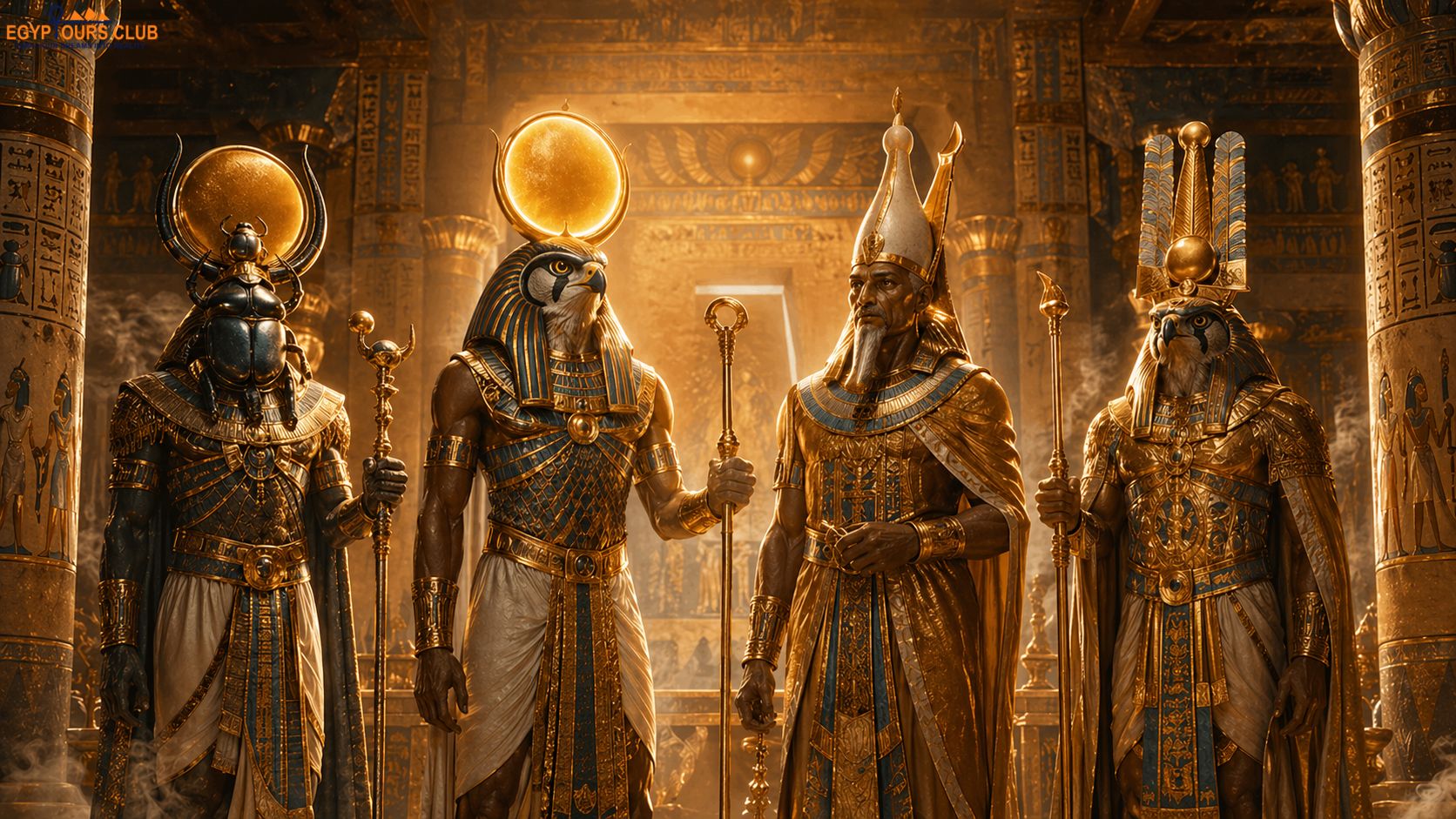
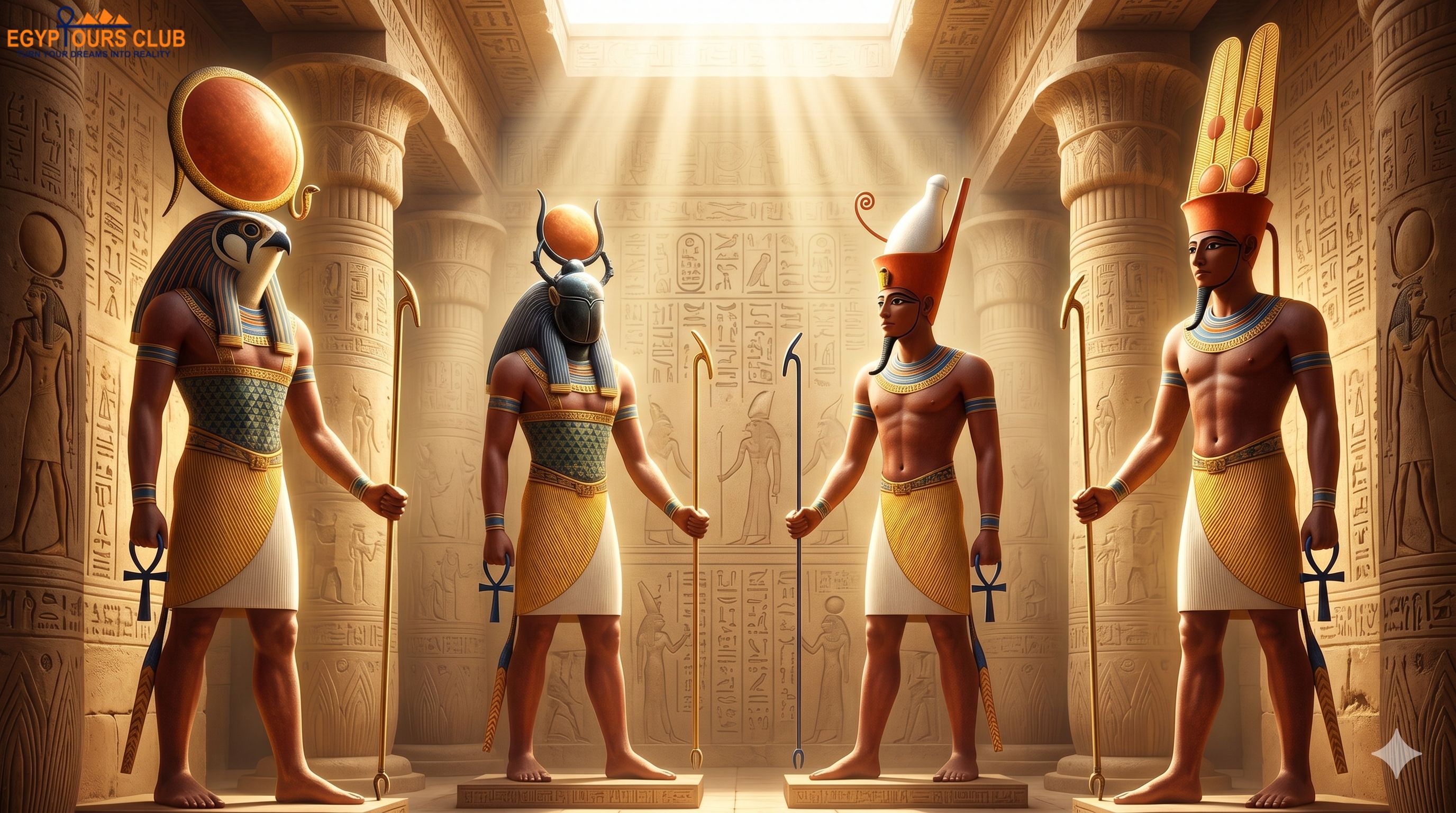
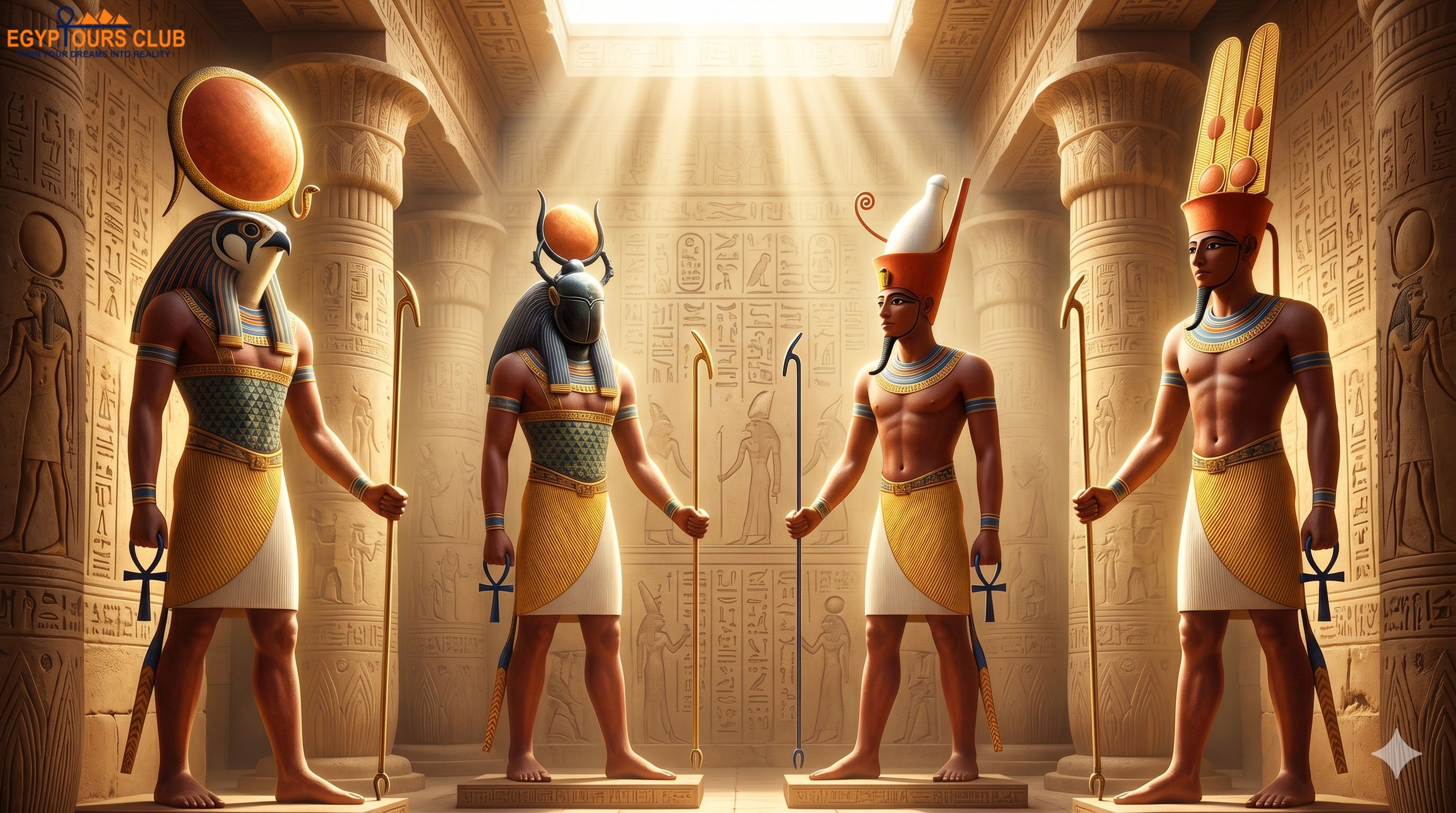
Ancient Egyptian sun gods including Ra, Atum, Khepri and Amun-Ra represented in a sacred temple setting
Egyptian solar theology often expressed one cosmic power through several forms: morning, noon, evening, royal, and universal.

What Did Egyptian Sun Gods Represent?

The answer is much bigger than “the sun.” The ancient Egyptian solar deities represented creation, rebirth, kingship, order, time, protection, and the daily renewal of the cosmos.

Solar PhaseMain MeaningBest Mythology Connection
Rising sunRebirth, emergence, transformationKhepri and the scarab symbolism of becoming.
Midday sunPower, visibility, royal authorityRa as supreme solar force and creator.
Horizon sunTransition, kingship, divine appearanceRa-Horakhty, the sun connected with Horus of the horizon.
Setting sunCompletion, return, death-and-renewal cycleAtum as the mature or evening solar form.
Solar diskVisible divine light and direct solar powerAten in Amarna religious expression.

For visitors, understanding these meanings changes how they experience temple walls. A carving is no longer only beautiful decoration; it becomes part of Egyptian solar religion and a visible expression of sacred power.

History of Egyptian Sun Gods

The history of Egyptian sun gods begins early and grows more complex across dynasties. Ra was one of the oldest and most important deities in the Egyptian pantheon. Over time, solar theology merged with other divine identities, producing forms such as Ra-Horakhty and Amun-Ra.

This matters because how many sun gods did ancient Egypt have is not best answered with a fixed number. The better answer is that ancient Egypt allowed solar power to appear through multiple divine names, each emphasizing a different layer of meaning.

Solar Gods Snapshot

Solar DeityMain AssociationHow to Understand It
Ra / ReCentral solar and creator powerThe great sun god linked to creation, order, and royal authority.
KhepriMorning sun and transformationThe sunrise as a daily act of becoming and renewal.
AtumEvening sun and completionThe sun at the end of its journey, ready for renewal.
Ra-HorakhtyRa connected with HorusA horizon form that links solar power with royal and celestial imagery.
Amun-RaCombined supreme divinityA major later form connecting Amun's hidden power with Ra's solar authority.
AtenSolar disk emphasisThe visible disk of the sun, especially central during the Amarna period.

Why Were Sun Gods Important in Ancient Egypt?

The sun gods in ancient Egypt were central because solar worship touched almost everything: creation theology, royal titles, temple ritual, cosmic order, and the idea of daily renewal.

The pharaoh's identity was closely tied to solar power, especially through ideas such as the king as son of Ra. This made solar religion not only spiritual but political, architectural, artistic, and national.

👑

Kingship

Solar theology helped express the king's divine legitimacy and cosmic responsibility.

🏛️

Temple Design

Solar ideas influenced temple imagery, axes, light effects, and sacred processional meaning.

🔁

Renewal

The sun's daily cycle gave Egypt a powerful model for rebirth, continuity, and cosmic order.

This is why a tailor-made Egypt itinerary focused on mythology can feel much richer than a standard sightseeing route. The story connects gods, kings, temples, and the landscape itself.

Egyptian Sun Gods in Temples, Artwork, and Carvings

The Egyptian sun gods in temples are one of the strongest visual angles for this subject. Searchers want to see solar disks, falcon-headed gods, sacred reliefs, royal scenes, and temple walls where mythology becomes visible.

In temple art, solar symbolism may appear through the sun disk, divine crowns, falcon imagery, scarabs, horizon signs, royal offering scenes, and wall reliefs that connect the king with divine life and cosmic order.

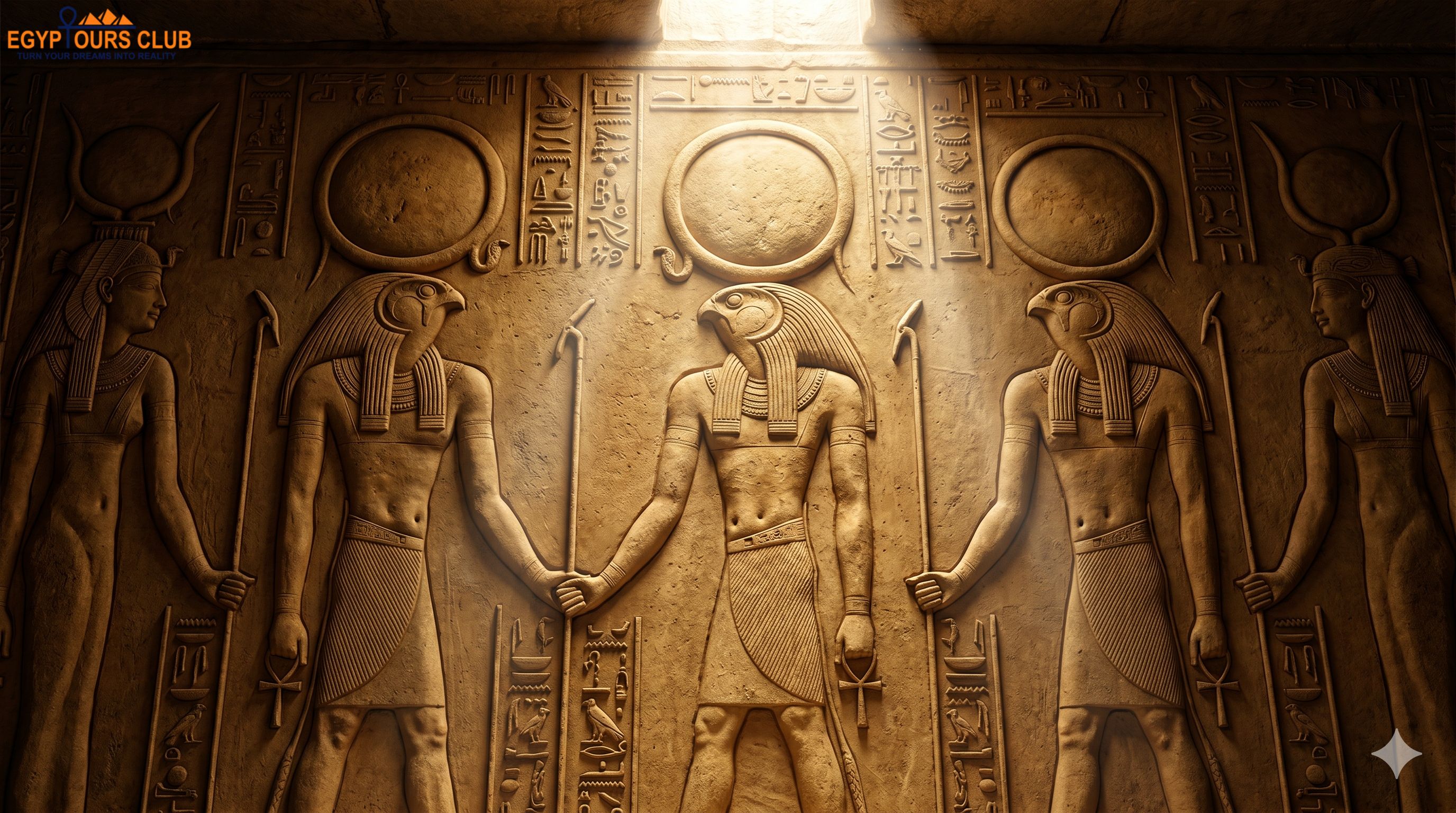
Ancient Egyptian solar deity carvings and sun god wall reliefs inside a temple in Egypt
Solar deity carvings and temple reliefs turn mythology into something travelers can see, read, and experience in person.

Why Interpretation Matters

Without an Egyptologist guide, many solar symbols look like decoration. With expert explanation, the same carvings become a map of creation, divine power, kingship, and sacred renewal.

Where to See Egyptian Sun Gods in Egypt

If someone searches where to see Egyptian sun gods in Egypt, they are already close to trip-planning intent. The strongest answer is to connect solar religion to real places travelers can visit.

Karnak Temple

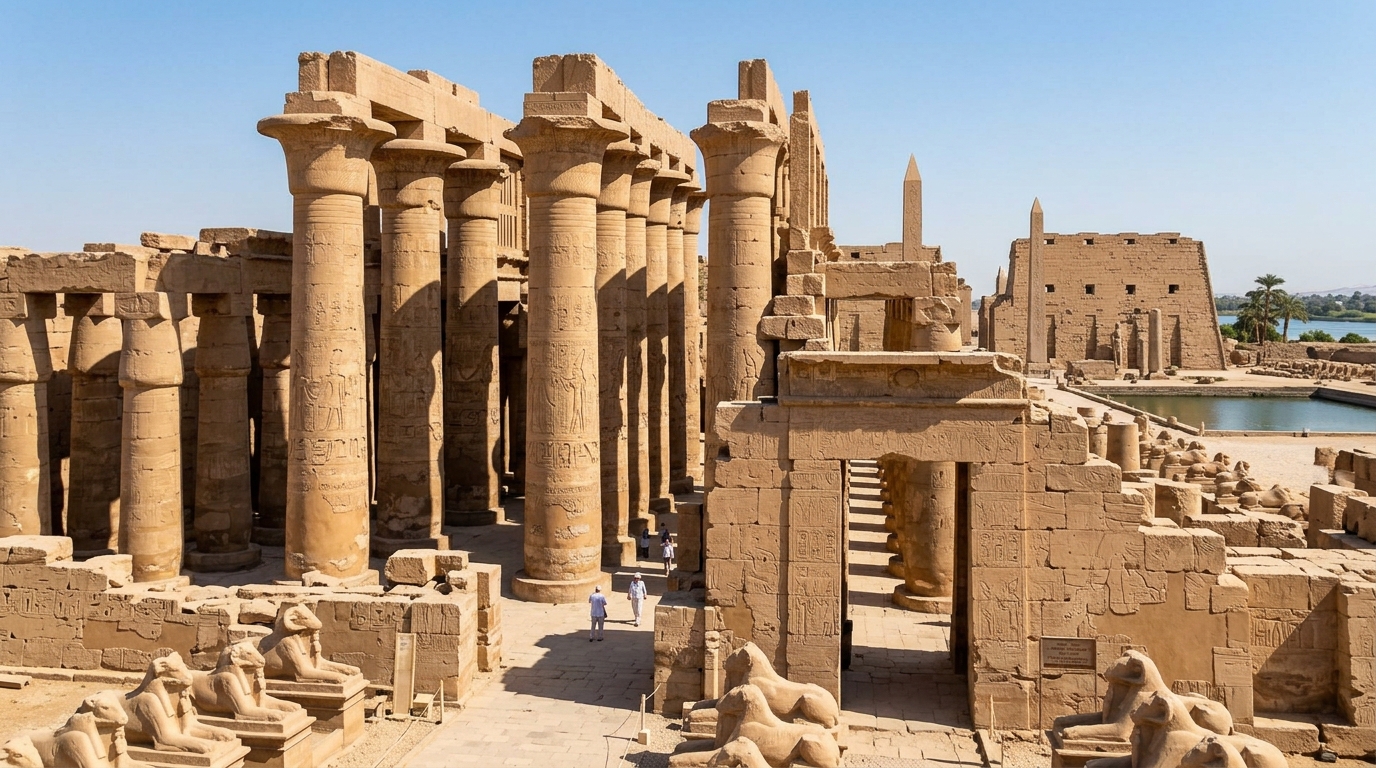
Karnak is one of Egypt's strongest sites for sacred architecture, solar symbolism, processional meaning, and Amun-Ra associations.

Read Karnak Temple Guide →

Luxor Temple

Luxor Temple helps visitors understand royal ideology, divine kingship, and the religious landscape of ancient Thebes.

Explore Luxor Day Tours →

Abu Simbel

Abu Simbel is unforgettable for solar alignment, monumental scale, and dramatic royal theology carved into the rock.

Explore Aswan & Abu Simbel Tours →

Philae Temple

Philae gives travelers a deeply atmospheric temple setting where divine imagery, sacred landscape, and mythic storytelling meet.

Read Philae Temple Guide →

Dendera & Abydos

These temples reward travelers who want deeper symbolism, rich reliefs, sacred narratives, and less-rushed cultural exploration.

Explore Dendera Temple →

Grand Egyptian Museum

Museum collections help visitors understand solar gods through statues, relief fragments, royal objects, amulets, and symbolic artifacts.

Grand Egyptian Museum Guide →

Why Booking a Private Egypt Mythology Tour Adds More Value

A traveler interested in Egyptian sun gods explained is rarely looking for a quick dictionary answer. They are often the type of traveler who wants a deeper, more curated, more intellectual Egypt experience.

A private Egypt mythology tour adds value because it connects the names, symbols, temples, carvings, and sacred landscapes into one coherent story.

User InterestBest Matching Travel OfferWhy It Works
Wants mythology explainedPrivate Egypt mythology tourTurns names like Ra, Atum, Khepri, and Amun-Ra into a clear story.
Loves symbols and templesGuided ancient Egypt religion tourExplains solar disks, reliefs, sacred axes, and divine imagery.
Wants premium historyLuxury Egypt history tourCombines comfort, pacing, expert interpretation, and cultural depth.
Wants a theme-based journeyEgypt cultural tour sun godsBuilds the itinerary around mythology rather than random sightseeing stops.
Ready to plan nowTailor-made Egypt tourAdapts Cairo, Luxor, Aswan, Abu Simbel, Dendera, and Abydos into one route.
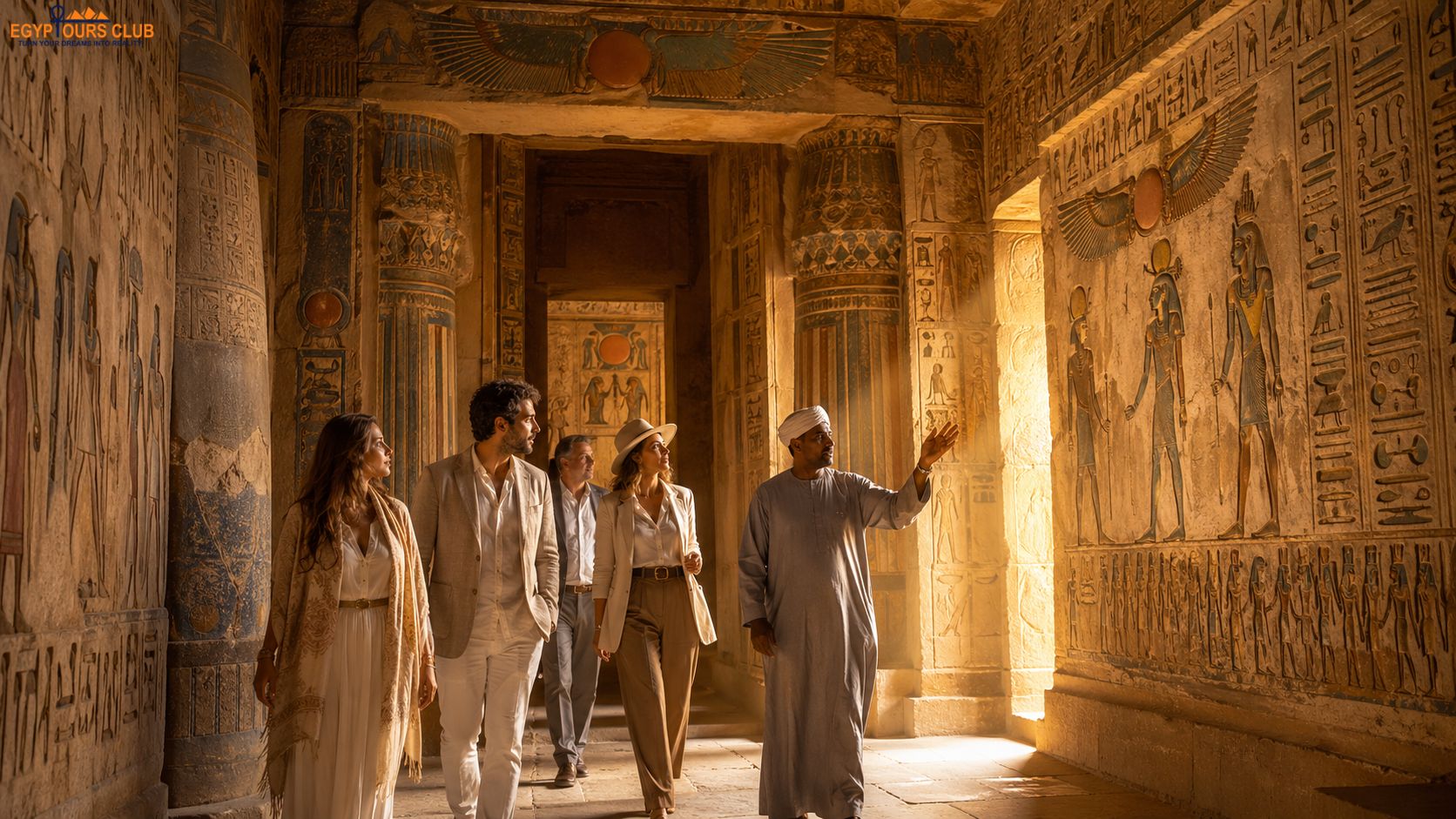
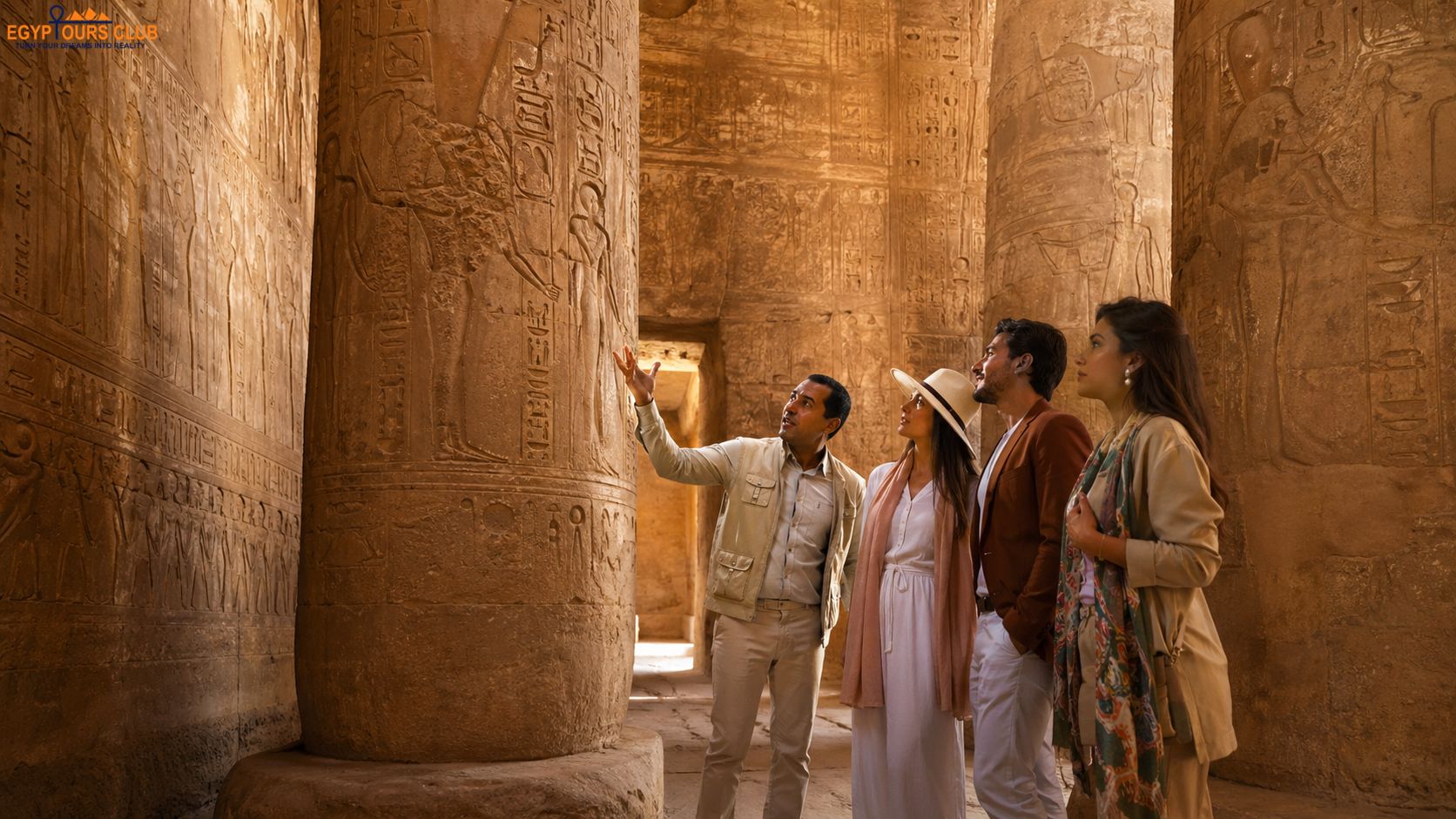
Travelers experiencing Egyptian sun gods themes on a private cultural tour in Egypt
A private mythology-focused route helps travelers understand Egypt through story, symbol, temple, and sacred landscape.

Explore More on Egypt Tours Club

Continue from Egyptian sun gods into temples, symbols, sacred sites, and expert-guided routes across Egypt.

FAQs About Egyptian Sun Gods

Who were the Egyptian sun gods?
The main Egyptian sun gods and solar forms include Ra or Re, Khepri, Atum, Ra-Horakhty, Amun-Ra, and Aten. Each one expresses a different layer of solar power, creation, kingship, renewal, or visible divine light.
What did Egyptian sun gods represent?
They represented creation, rebirth, royal authority, cosmic order, divine time, transformation, and the daily renewal of life through the sun's journey.
What is the difference between Ra, Atum, and Khepri?
Ra is the central solar and creator deity. Khepri represents the morning sun and transformation, while Atum is associated with the evening sun, completion, and the closing of the solar cycle.
Why were sun gods important in ancient Egypt?
They were central to kingship, temple ideology, creation myths, daily time, and the Egyptian understanding of divine order and renewal.
Where can I see Egyptian sun gods in Egypt?
You can see solar symbolism at Karnak, Luxor Temple, Abu Simbel, Philae, Dendera, Abydos, the Grand Egyptian Museum, and in selected temple reliefs and royal museum collections.
How can I book an Egypt mythology tour?
You can browse Egypt Tours Club day tours or request a tailor-made itinerary focused on ancient Egyptian gods, solar mythology, temples, tombs, museum objects, and sacred landscapes.

Final Thoughts: Follow the Sun Through Ancient Egypt

Egyptian sun gods explained is more than a mythology topic. It is a route into Egypt's deepest ideas: creation, kingship, time, sacred architecture, and the daily miracle of renewal.

For travelers, this topic becomes powerful when it moves from reading to experience. Stand in a temple. Look at a solar disk. Read the names of Ra, Amun-Ra, or Aten with a guide. Suddenly the wall is not silent anymore — it is speaking the language of ancient Egyptian religion.

Create Your Egypt Mythology Tour →