Egypt is a country where rich tapestry incredibly
Egypt is a country where rich tapestry incredibly intermingles with modern life in an eternal balance. . banner

Egypt is a country where rich tapestry incredibly intermingles with modern life in an eternal balance.

Egypt Culture & Travel Guide

Ancient and Modern Egypt: Where History Meets Everyday Life

Pyramids beside a working metropolis. Temple cities beside busy river towns. Historic streets, contemporary museums, Egyptian food, desert landscapes and the Red Sea. A practical guide to experiencing more than Egypt's monuments.

By Egypt Tours Club Editorial TeamUpdated 24 November 2026Egypt history, cities and local culture
Quick Answer

Ancient and modern Egypt are not separate worlds. Visitors can explore royal pyramids and contemporary museum architecture in Giza, experience medieval streets and active neighborhoods in Cairo, visit the temples and tombs of Luxor, and see how the Nile still shapes everyday life in Aswan. Alexandria, the Western Desert and the Red Sea reveal yet more dimensions of the country.

Core first tripCairo & Giza, Luxor, Aswan
Living heritageHistoric Cairo, neighborhoods, food
Modern landmarkGrand Egyptian Museum, Giza
Extra timeAlexandria, desert or Red Sea
Understanding the Country

Egypt's past is visible. Its present is all around you.

The strongest Egypt trip moves between different periods without confusing them. The historic sites tell you how previous societies lived; the cities and communities show how people live today.

Ancient landscapes

Pyramids, temples and tombs

At Saqqara, Giza and Luxor, architecture and inscriptions explain kingship, religion, engineering and how the ancient state worked. These sites are archaeological monuments, not living stages frozen in time.

Later centuries

Roman, Coptic and Islamic Egypt

Alexandria's Mediterranean history, Coptic Cairo's churches, and Historic Islamic Cairo's mosques and streets show that Egypt's history continued well beyond the pharaohs.

Egypt today

Working cities and communities

Markets, neighborhoods, universities, contemporary museums, transport networks and daily traditions matter too. Be curious, but respect that neighborhoods and places of worship are not tourist displays.

Planning principle: do not try to turn every part of Egypt into one sightseeing checklist. Choose a clear geographic route first, then allow time for local life, rest, meals and unexpected traffic.
Greater Cairo, Three Different Stories

Giza's pyramids, Saqqara's first experiments and the modern Grand Egyptian Museum

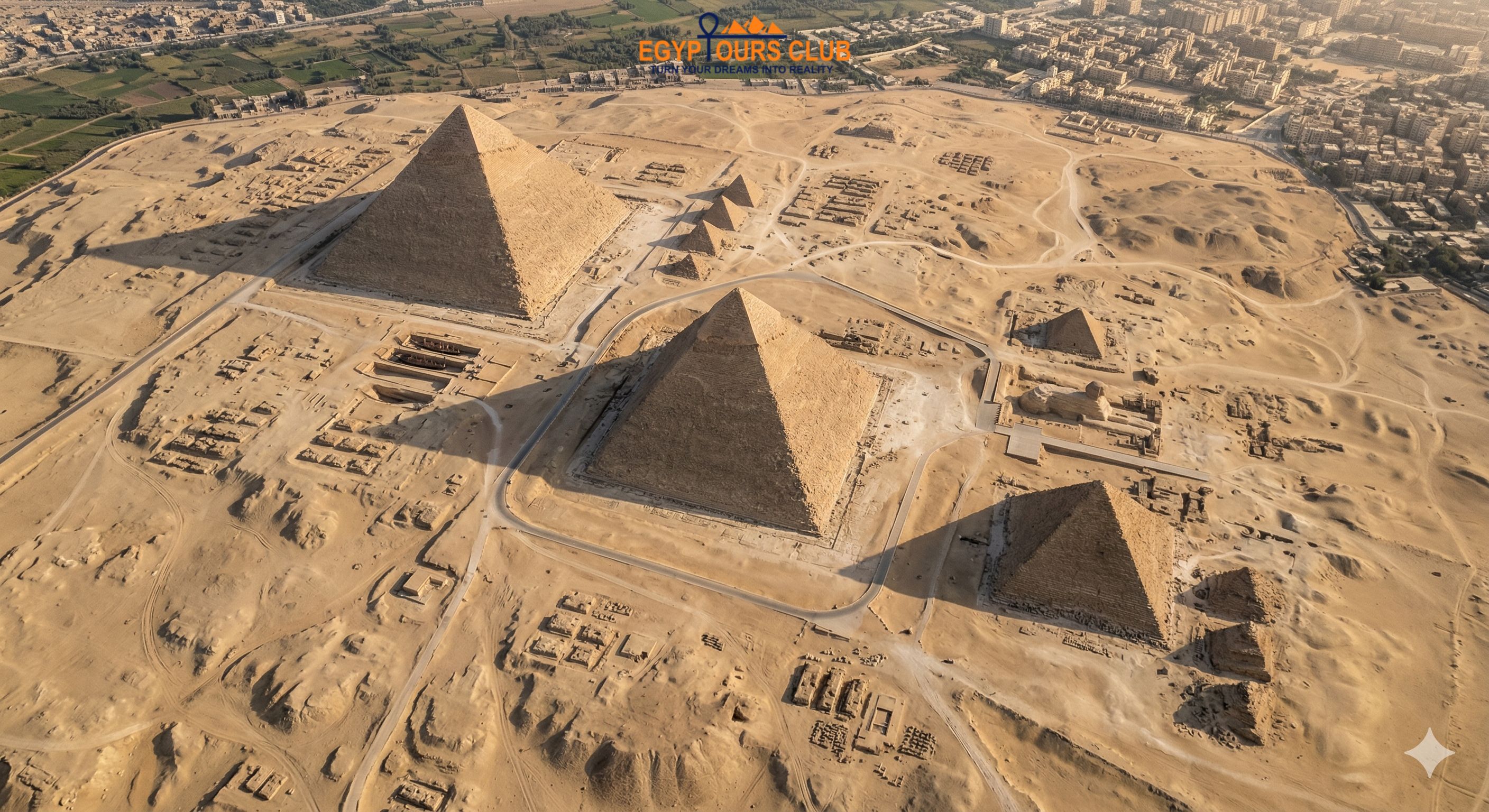
Aerial view of the three main pyramids and Giza Plateau beside greater Cairo
Aerial perspective of the Giza Plateau and the surrounding modern city.

Start with the archaeology, then connect the objects

The Giza Plateau is one of the world's clearest examples of Old Kingdom royal monument building. Visit Khufu, Khafre, Menkaure, the Sphinx and the wider plateau with enough time to understand what was built and why.

Saqqara adds the earlier Step Pyramid of Djoser and the development of monumental stone architecture. It deserves a separate archaeological visit if you want more than a quick pyramid photograph.

The Grand Egyptian Museum (GEM) provides a different experience: contemporary exhibition spaces displaying ancient Egyptian material culture. Combine it with Giza only if your schedule allows several hours for the museum.

Explore the Giza Pyramids  ·  Understand Saqqara  ·  Plan a GEM visit

Important correction to the old article: Khufu's first boat is no longer in the former Solar Boat Museum on the Giza Plateau. It was transferred to the Grand Egyptian Museum in August 2021. The article also no longer describes GEM as a future attraction. Check current museum display and ticket arrangements before visiting. Egypt Ministry confirmation.
The Ancient Nile Corridor

Luxor, Aswan and a river that still connects communities

A route through Upper Egypt links sacred temple spaces, rock-cut tombs and the modern settlements beside the Nile. The most useful question is not how many monuments fit on a map, but how much time each place deserves.

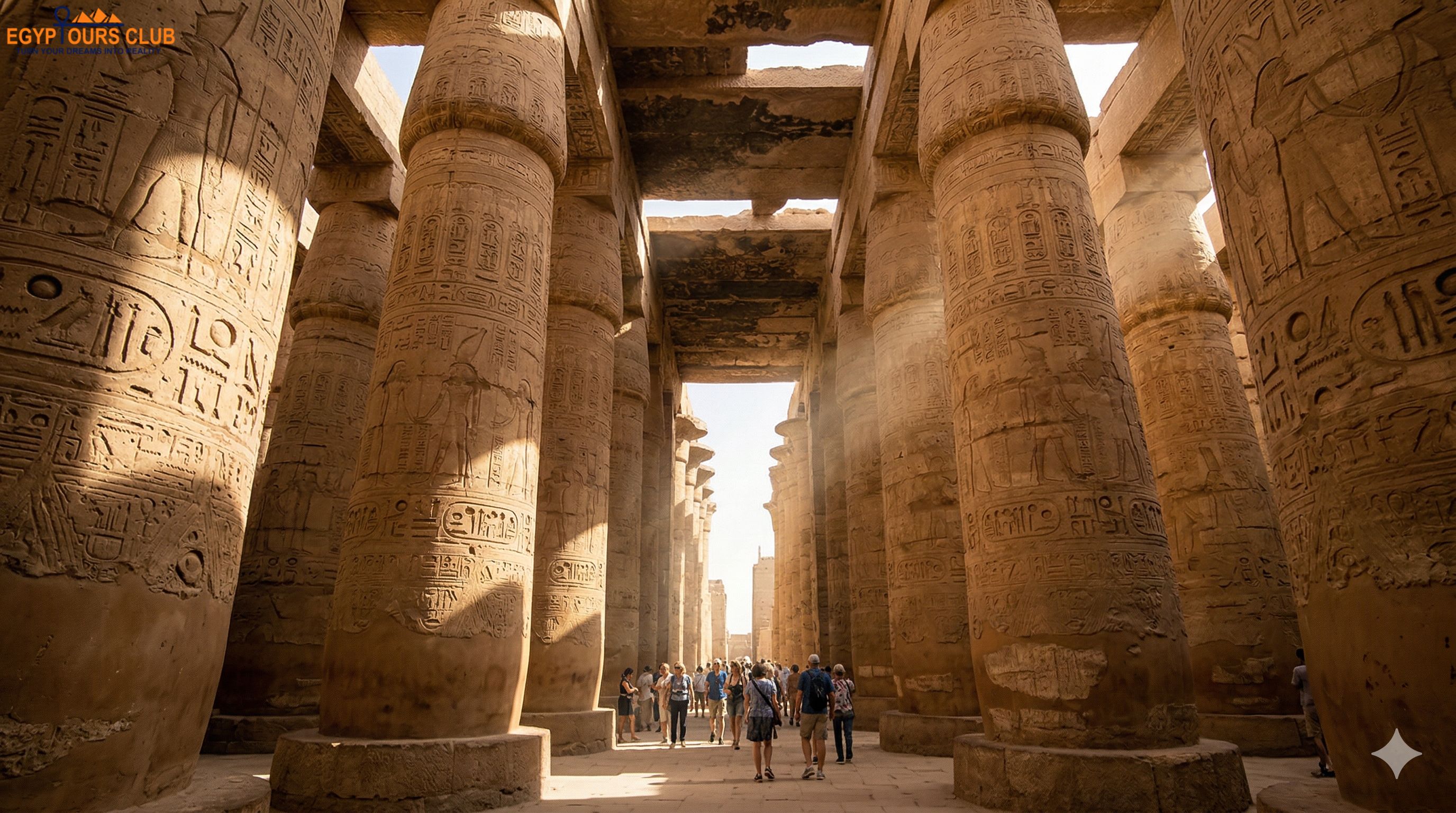
Carved columns of the Great Hypostyle Hall at Karnak Temple in Luxor
Luxor East & West Banks

Temple cities and royal tombs

Karnak's vast columned halls reflect centuries of temple construction. Across the river, the Valley of the Kings preserves decorated tombs made for New Kingdom rulers. Give the West Bank its own realistic visiting window.

Karnak visitor guide  ·  Valley of the Kings

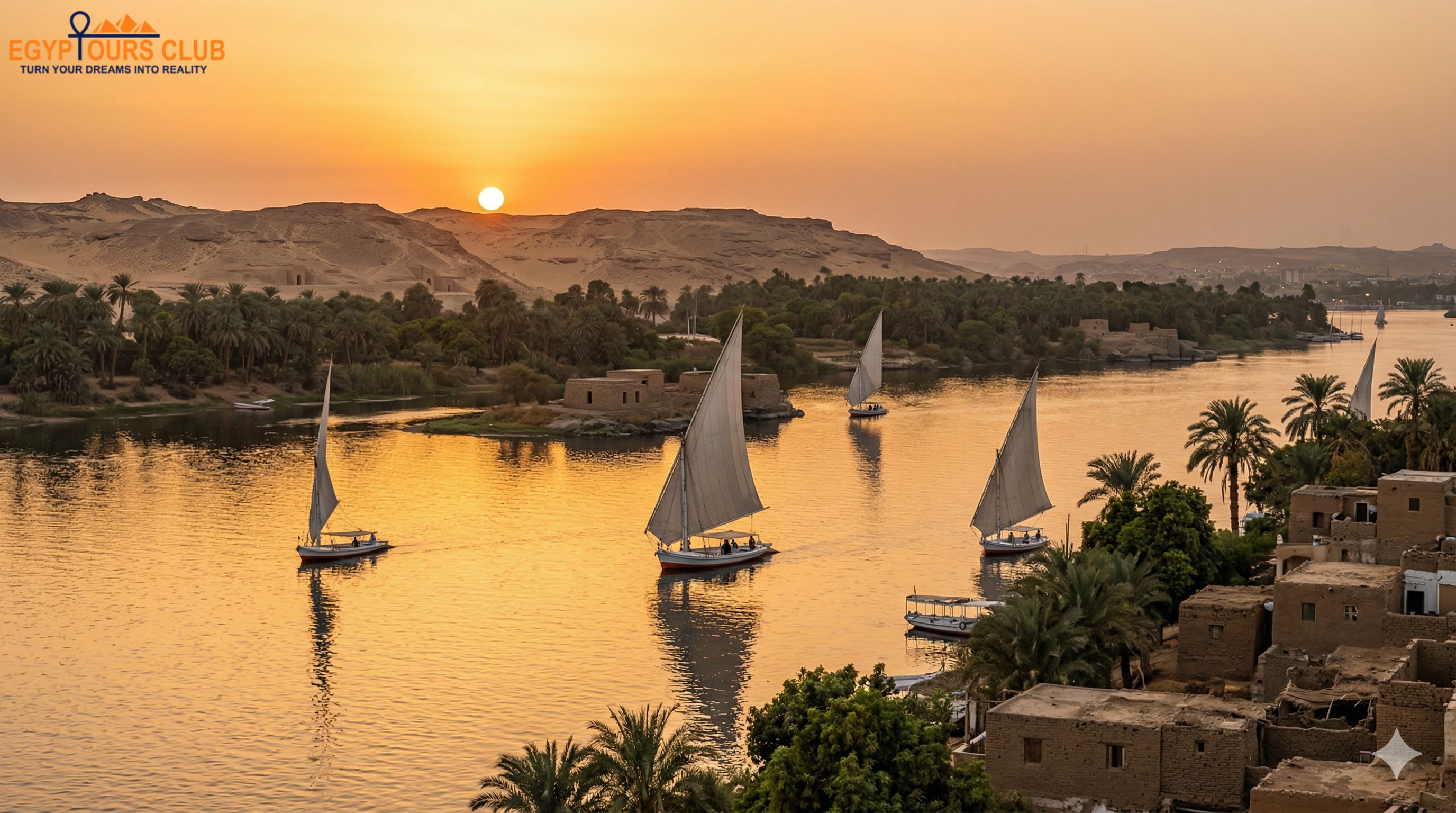
Felucca sailing boats moving across the Nile near Aswan at sunset
Aswan & Nile Life

River scenery, islands and southern heritage

Aswan combines felucca sailing, Nile islands, Nubian culture and the Temple of Isis at Philae. A Nile cruise also links Edfu and Kom Ombo with the wider Luxor-Aswan route, depending on direction and sailing schedule.

Aswan Nile guide  ·  Philae Temple  ·  Cruise options

Do not misplace Abu Simbel: the temples stand beside Lake Nasser in southern Egypt, not immediately alongside Aswan's city attractions. Visiting from Aswan usually requires a separate early-start excursion by road or an appropriate flight arrangement. Plan Abu Simbel carefully.
Living Urban Heritage

Cairo and Alexandria: two cities with many layers

Cairo is not one historic district

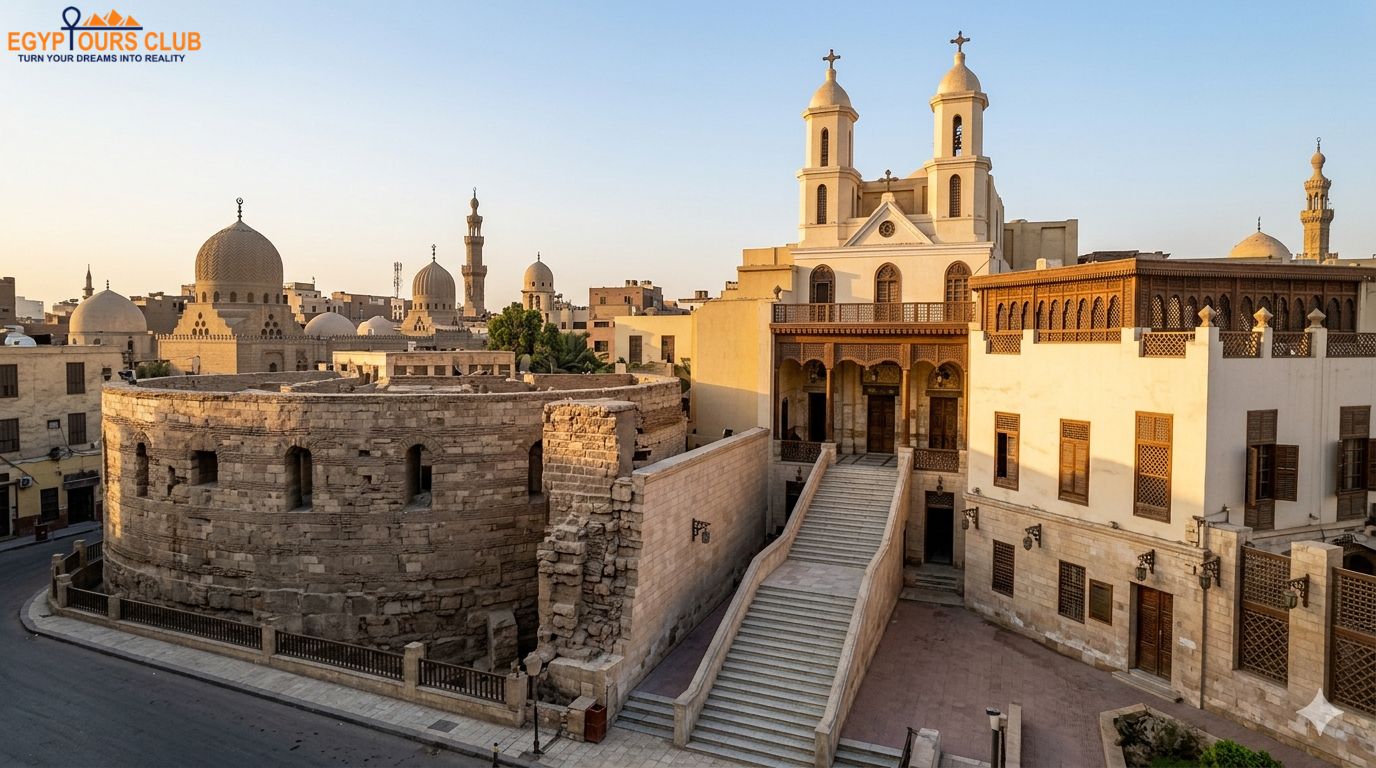
Coptic Cairo and Al-Fustat preserve Roman, Christian and early Islamic stories in the southern city. Al-Muizz Street, medieval architecture and Khan El Khalili belong to Historic Islamic Cairo farther north. Both areas are used by residents and worshippers today.

A good visit protects time for an actual neighborhood walk. Use a vehicle between distant districts instead of treating the entire old city as one continuous pedestrian route.

Discover Al-Muizz Street  ·  UNESCO Historic Cairo

Historic Coptic Cairo showing a church and the Roman Babylon Fortress tower
Coptic Cairo preserves Christian and Roman layers within a living district.
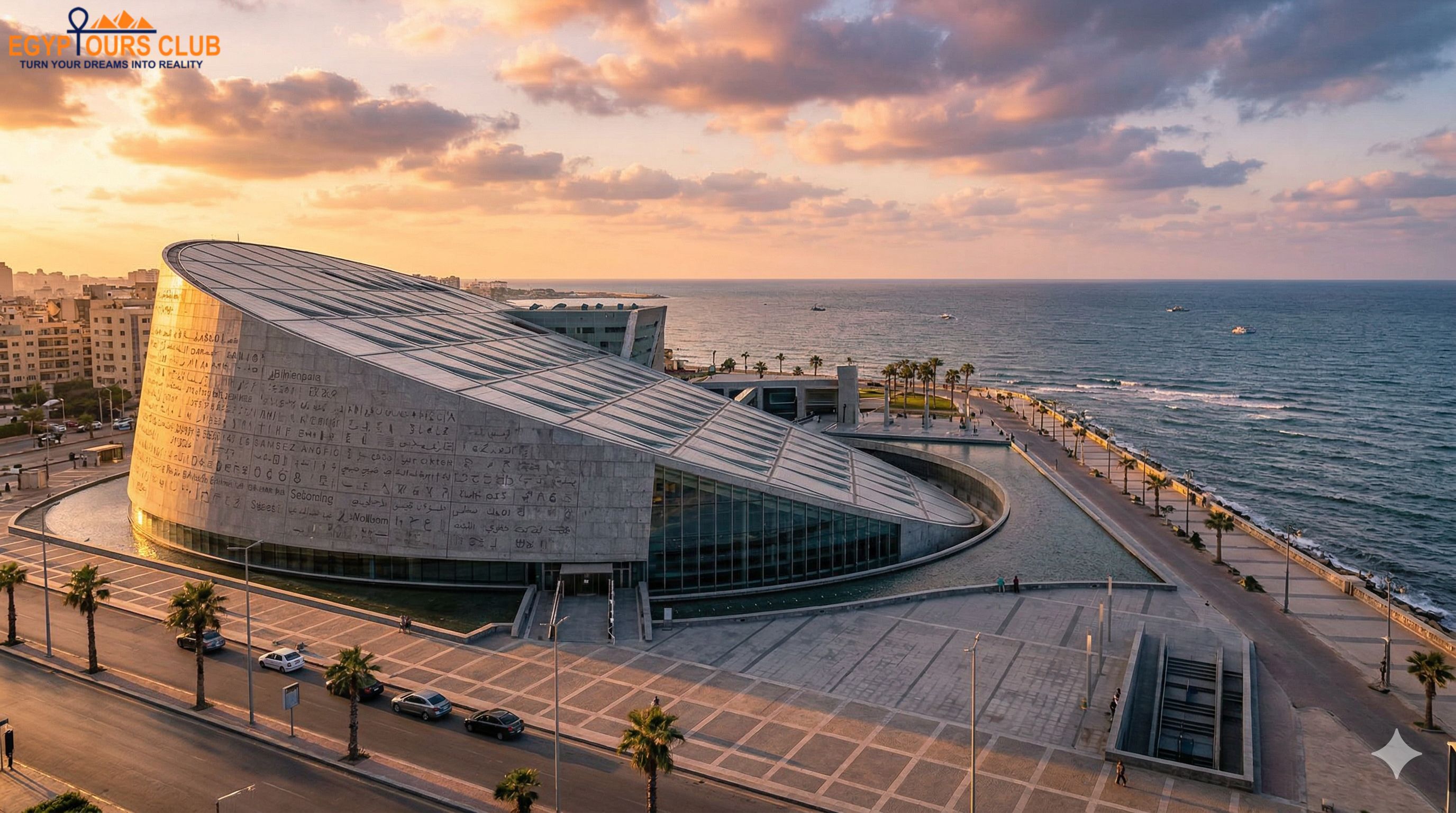
Bibliotheca Alexandrina beside the Mediterranean waterfront in Alexandria
Bibliotheca Alexandrina, Alexandria. Photograph: Egypt Tours Club.
Mediterranean Egypt

Alexandria's past and present

Alexander the Great founded the city in the 4th century BCE. Today, the modern Bibliotheca Alexandrina, coastal Corniche, Qaitbay Citadel and Greco-Roman archaeological sites show distinct historical chapters. The present fortress belongs to the Mamluk era, not the surviving structure of the ancient Pharos lighthouse.

Visit Bibliotheca Alexandrina

What to prioritize in Alexandria

  • Modern culture: Bibliotheca Alexandrina and its exhibitions
  • Coastal heritage: Qaitbay Citadel and the historic harbour setting
  • Classical archaeology: Select a Greco-Roman site if your schedule permits

For a Cairo round trip, allow an early departure and keep time for the return road journey.

Practical route · two realistic city days

Keep the city stops distinct

Cairo and Alexandria are different experiences. Choose a focused walking district in Cairo, and give Alexandria enough time for its museums, coastal sites and transfers.

01
Cairo · Heritage-focused dayTwo separate historic areas
  1. Morning: Explore Coptic Cairo, the Hanging Church area and Roman-era fortress remains.
  2. Transfer: Travel by vehicle to the medieval Islamic Cairo district.
  3. Later: Walk a selected section of Al-Muizz Street and finish around Khan El Khalili if time allows.
02
Alexandria · Dedicated full dayCoastal history and modern culture
  1. Start early: Allow substantial road travel if departing from Cairo.
  2. Choose priorities: Bibliotheca Alexandrina, Qaitbay Citadel or selected Greco-Roman sites.
  3. Finish: Leave time for a short Mediterranean waterfront stop and the return journey.

Planning rule: Do not squeeze Cairo's historic districts and Alexandria into a single sightseeing day. Verify opening times and transport before confirming a route.

Ask for a private city route
Beyond Temples and Museums

The Red Sea and Western Desert: Two Sides of Egypt

Egypt Tours Club photograph of a yacht trip, turquoise water and snorkeling in the Egyptian Red Sea
Red Sea yacht trips and snorkeling. Photograph: Egypt Tours Club.
The Red Sea

Hurghada, Sharm El Sheikh and Marsa Alam

The coast shifts the journey toward beaches, snorkeling, diving and resort stays. Choose operators carefully, assess swimming and sea conditions, and leave enough time between a Nile cruise and an onward beach transfer.

Which Red Sea destination? Hurghada can work after a Luxor road transfer. Sharm El Sheikh and Marsa Alam have different airport and transfer arrangements. Select the resort before fixing the travel route, and check the operator's sea-safety procedures for boat trips and diving.

Hurghada travel guide

White Desert chalk mushroom-shaped formation near Farafra in Egypt photographed by Egypt Tours Club
White Desert near Farafra. Photograph captured from an Egypt Tours Club page and embedded to avoid an unreliable media URL.
The Western Desert

White Desert, Bahariya and Siwa need their own time

The White Desert near Farafra is known for wind-shaped chalk formations and a protected desert landscape. Siwa Oasis lies much farther west and offers a different oasis history and environment. Neither should be added casually to a packed Cairo itinerary.

Travel note: desert journeys require specialist local arrangements, reliable communications, appropriate permissions and an up-to-date review of official travel advice. Access conditions can change.

White Desert visitor guide

Reality check: a sunset in the desert and a sunrise in Luxor do not fit together without significant travel time. Plan geography, not just photographs.
Daily Life and Cultural Context

Egyptian food, traditions and ordinary moments worth noticing

The experiences that stay with travelers are often unplanned: a bakery in the morning, a boat crossing, a family meal or a market in the evening. These are living communities, not performances arranged for visitors.

Food

Koshari, ful and baladi bread

Koshari combines rice, pasta, lentils and a spiced tomato sauce, commonly finished with crisp onions. Ful medames is made from fava beans, while taameya is the Egyptian form of falafel. Ask about ingredients if you have allergies.

Faith & community

Respect places of worship

Ramadan, major Islamic holidays and Coptic Christian celebrations affect daily schedules and neighborhood atmosphere. In churches and mosques, follow clothing, photography and visitor-access instructions.

Everyday Egypt

Markets, transport and river life

Markets are for local trade as well as visitors. Nile boats connect neighborhoods and attractions, and Egyptian cities operate on their own rhythms. Allow more time than a monument-only itinerary would suggest.

Festivals, performances, exhibitions and access arrangements change. Confirm any special event directly before planning travel around it.

Build the Journey

How much Egypt can you see without rushing?

Choose a route that matches your number of nights. These are planning examples, not guaranteed published packages. Departure times, cruise sailing days and opening arrangements affect the final plan.

Available timeBest routeWhat it gives youWhat to leave out
4-5 daysCairo, Giza and a focused museum dayPyramids, GEM, one historic neighborhood and breathing roomUpper Egypt and remote desert trips
7-8 daysCairo/Giza, Luxor and Aswan by airMain northern and southern archaeological chaptersToo many side trips or long extra beach stays
9-11 daysCairo/Giza plus a 3- or 4-night Nile cruiseDeeper Upper Egypt coverage without changing hotels every nightAssuming every cruise includes Abu Simbel
12+ daysMain historical route plus one chosen extensionAlexandria, Red Sea or a separate guided desert programTrying to fit all three extensions into one trip
01 · NORTHERN EGYPT

Cairo & Giza

Get oriented, see the Pyramids, visit GEM and explore one historic urban zone.

02 · UPPER EGYPT

Luxor

Give the East Bank temples and West Bank royal tombs separate time.

03 · NILE ROUTE

Edfu, Kom Ombo & Aswan

Use a confirmed cruise or planned transport to link river sites and southern heritage.

04 · OPTIONAL

Choose one extension

Abu Simbel, Alexandria, Red Sea or Western Desert, based on actual days available.

Before You Book

Six mistakes that weaken an Egypt itinerary

Using outdated museum information

GEM is open, and Khufu's first boat moved in 2021. Museum displays, tickets and entry rules should be checked close to the visit.

Calling every old neighborhood one place

Coptic Cairo, Al-Muizz and the Citadel are different areas. Use transport between them and leave time to walk inside each cluster.

Scheduling Abu Simbel as an Aswan add-on

The journey takes a substantial part of the day. Keep an early-start window and confirm return transport.

Ignoring cruise direction

Three- and four-night sailings often start in different cities. Match flights to embarkation and disembarkation.

Assuming all desert travel is casual

Use qualified local operators and check permits, restrictions and the actual desert route rather than relying on a generic tour claim.

Assuming all package services are included

Guide language, private vehicle, domestic flights, hotel standard, meals, entrance tickets and tipping depend on the written quotation.

Frequently Asked Questions

Ancient and Modern Egypt Travel FAQ

These answers explain the country and the main route choices. Always confirm changeable visitor details before travel.

No. The pyramids, temples and royal tombs are major attractions, but Egypt is also a living society with modern cities, universities, art, food, religious traditions, markets and coastal communities.

Start with Cairo and Giza for the Pyramids, the Grand Egyptian Museum and historic neighborhoods. Add Luxor for temples and tombs, then Aswan for Nile scenery and southern heritage. Add Alexandria or the Red Sea when time permits.

Yes. The Grand Egyptian Museum welcomes visitors to its main galleries and Tutankhamun exhibitions. Check current ticketing, galleries and visitor policies before your visit.

No. Khufu’s first boat was moved from its former Giza Plateau museum to the Grand Egyptian Museum in August 2021. Check current museum access and displays before planning your visit.

Coptic Cairo and Al-Fustat form a southern historic cluster with churches, a museum and Roman remains. Al-Muizz Street and Khan El Khalili belong to Historic Islamic Cairo farther north. Use transport between the main clusters.

Abu Simbel is a substantial separate excursion from Aswan, usually requiring a very early departure and several hours of road travel in each direction. Avoid planning a crowded Aswan sightseeing day around it.

Common scheduled routes include three nights from Aswan to Luxor and four nights from Luxor to Aswan. The exact vessel, sailing days, itinerary, guide format and inclusions depend on the confirmed booking.

Yes, but treat the Western Desert as a separate journey with realistic travel days, local operators, current permits and relevant official travel advice. Do not treat it as a quick Cairo stop.

Popular foods include koshari, ful medames, taameya, fresh baladi bread and regional dishes. Tell restaurants or your tour operator about any allergies or dietary restrictions before meals are arranged.

No. A package may include some or all of those services, but inclusions vary. Check the final written itinerary for hotels, cruise standard, flights, guide language, meals, tickets, transfers and anything excluded.

Checked References

Reliable sources for Egypt's heritage and museum updates

Historical context and site status are separate from tour sales. Use these institutional references for the underlying facts and check local operations near the date of your visit.

Editorial note: This guide was reviewed on 24 November 2026. Site access, cruise schedules, entry conditions and travel advisories can change. The photographs are from Egypt Tours Club media storage and were selected for the locations shown.
See Ancient and Modern Egypt Together

Plan a route with history, local life and enough time to enjoy both

Tell Egypt Tours Club your dates, travel party, preferred hotels, guide language and the places you most want to see. Get a day-by-day proposal with specific inclusions, rather than trying to combine every region on one map.